
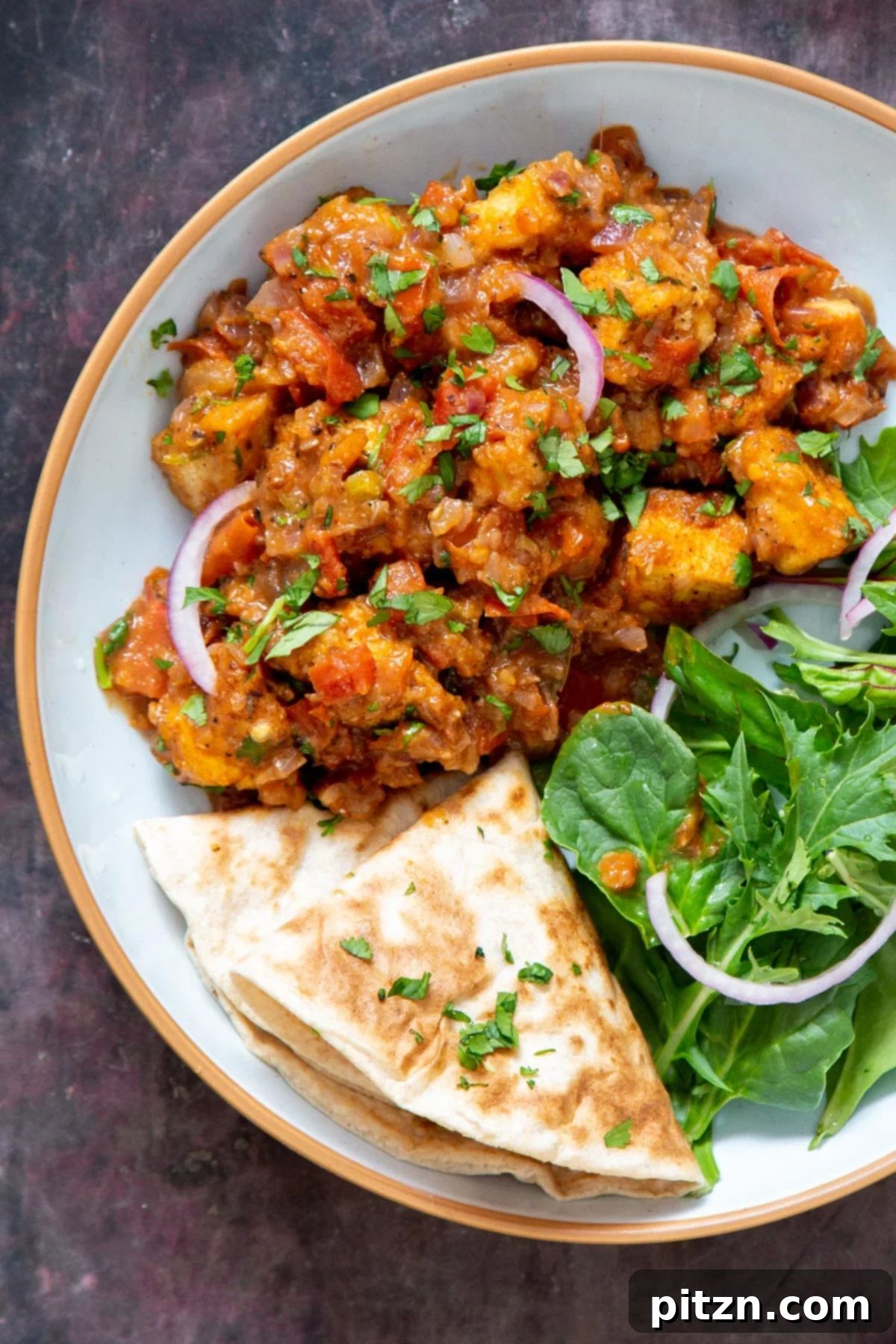
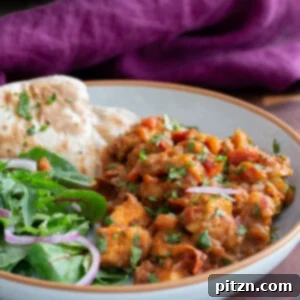
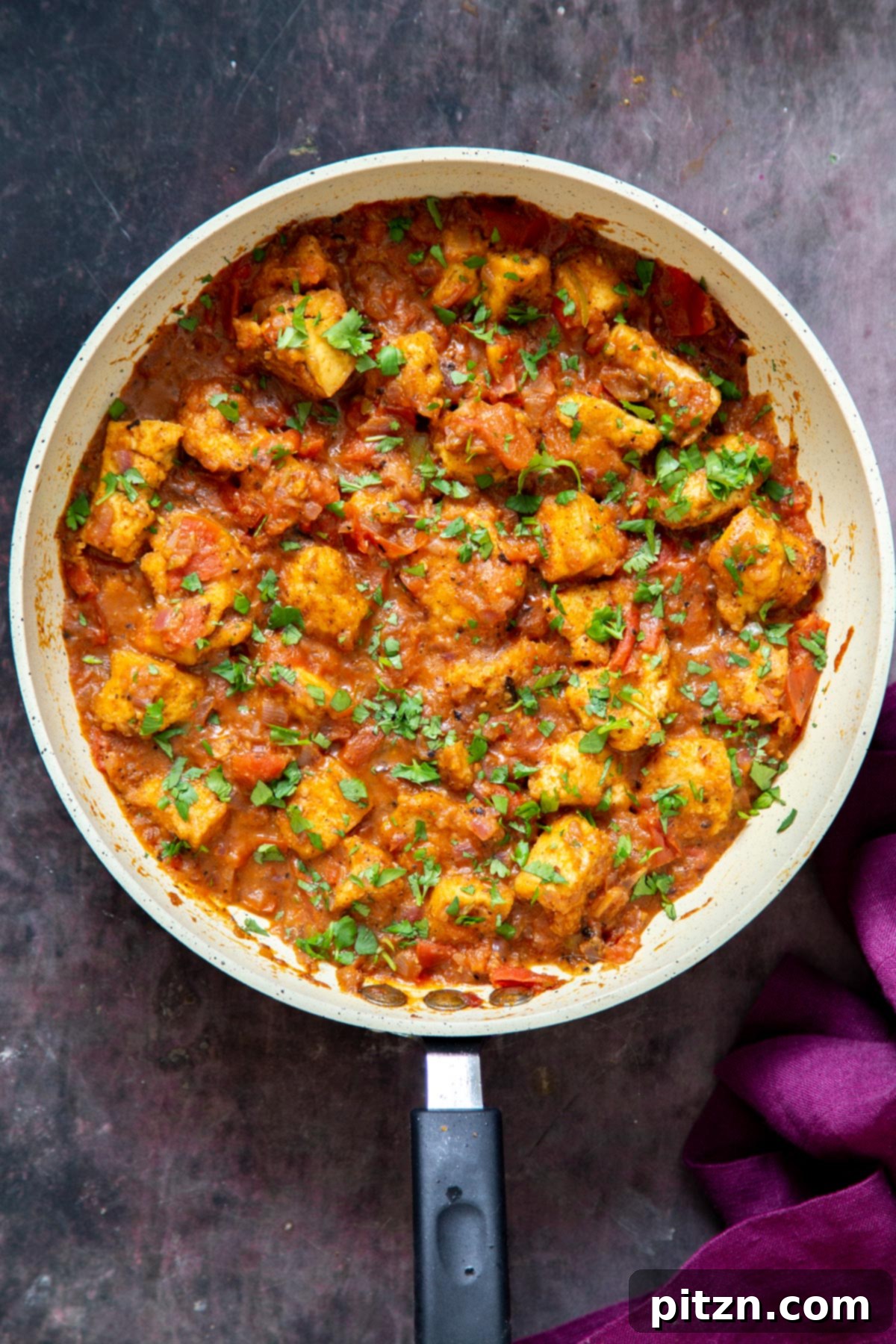
Embark on a culinary journey with this incredible **Vegan Khada Masala Murg**, a delightful Dhaba-style vegan chicken curry that will tantalize your taste buds. This recipe features perfectly oven-baked tofu, simmered in a profoundly aromatic sauce, expertly crafted with a blend of authentic Indian whole spices. Serve this rich, flavorful curry with fluffy rice or warm, freshly baked flatbread for a truly satisfying meal. This recipe is naturally gluten-free and nut-free, with an easy soy-free option available, ensuring everyone can enjoy its vibrant flavors.
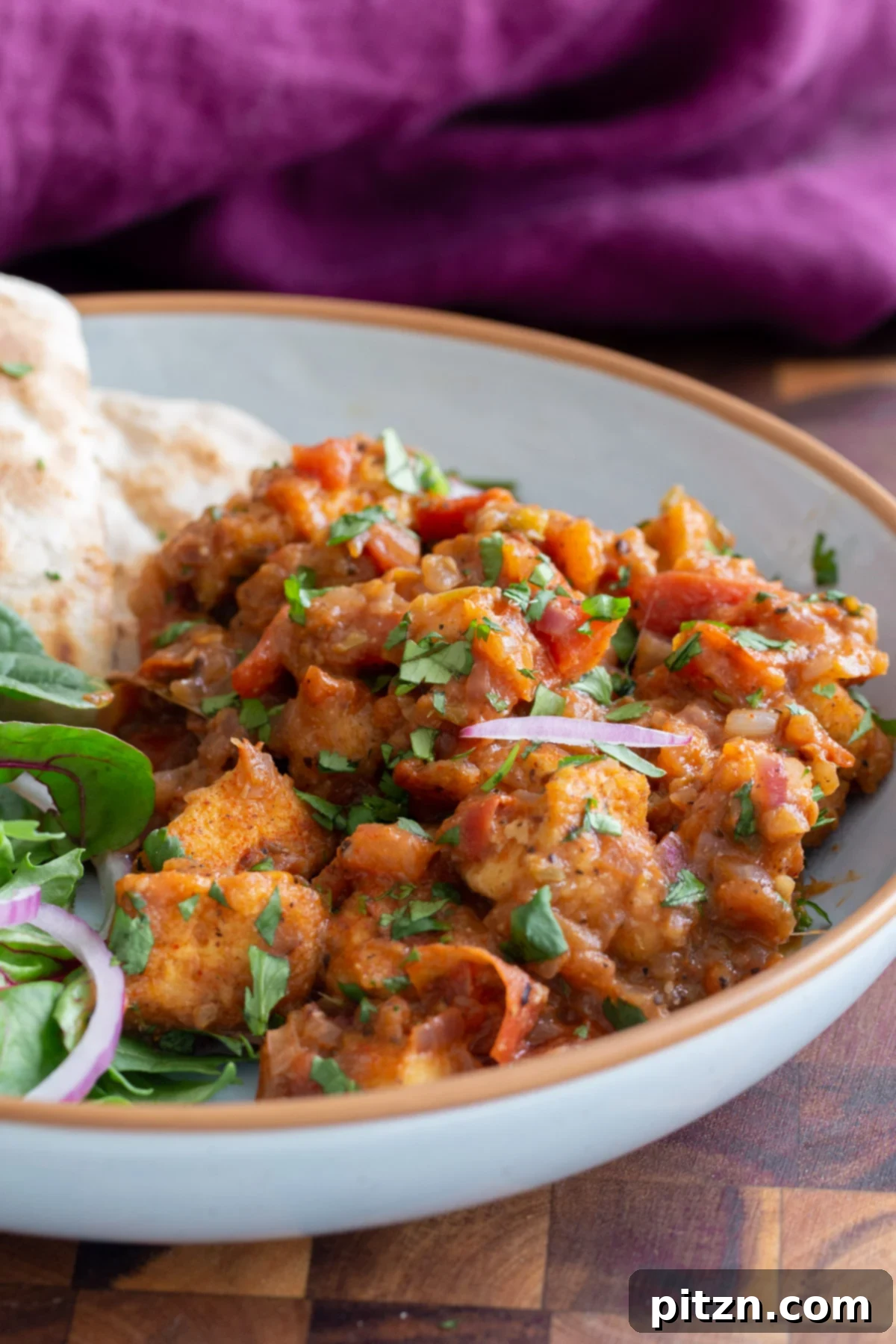
Discover the Authentic Flavors of Dhaba Style Indian Curry: Vegan Khada Masala Murg
For connoisseurs of robust Indian curries, especially those reminiscent of roadside eateries, our Vegan Khada Masala Murg is an absolute must-try. This recipe offers an authentic vegan interpretation of a classic Dhaba-style dish, where “Khada Masala Murg” translates to “whole spice chicken.” The essence of this curry lies in its intensely flavored sauce, which is infused with a harmonious blend of whole and coarsely crushed spices – a technique known as “Khada Masala.” This method ensures deep, layered flavors that are characteristic of traditional Indian cooking.
Dhabas, India’s beloved roadside restaurants, are renowned for their rustic, hearty, and incredibly flavorful fare. Our recipe captures this essence, bringing the vibrant spirit of Indian highway dining directly to your kitchen. While the original dish typically features chicken, we’ve innovatively used oven-baked tofu as a delicious and satisfying plant-based alternative. The beauty of this rich, aromatic sauce is its versatility; it pairs wonderfully not only with tofu but also with other vegan protein substitutes, cooked chickpeas, or a medley of roasted vegetables. The sauce truly is the star here, capable of transforming any ingredient into a gourmet experience.
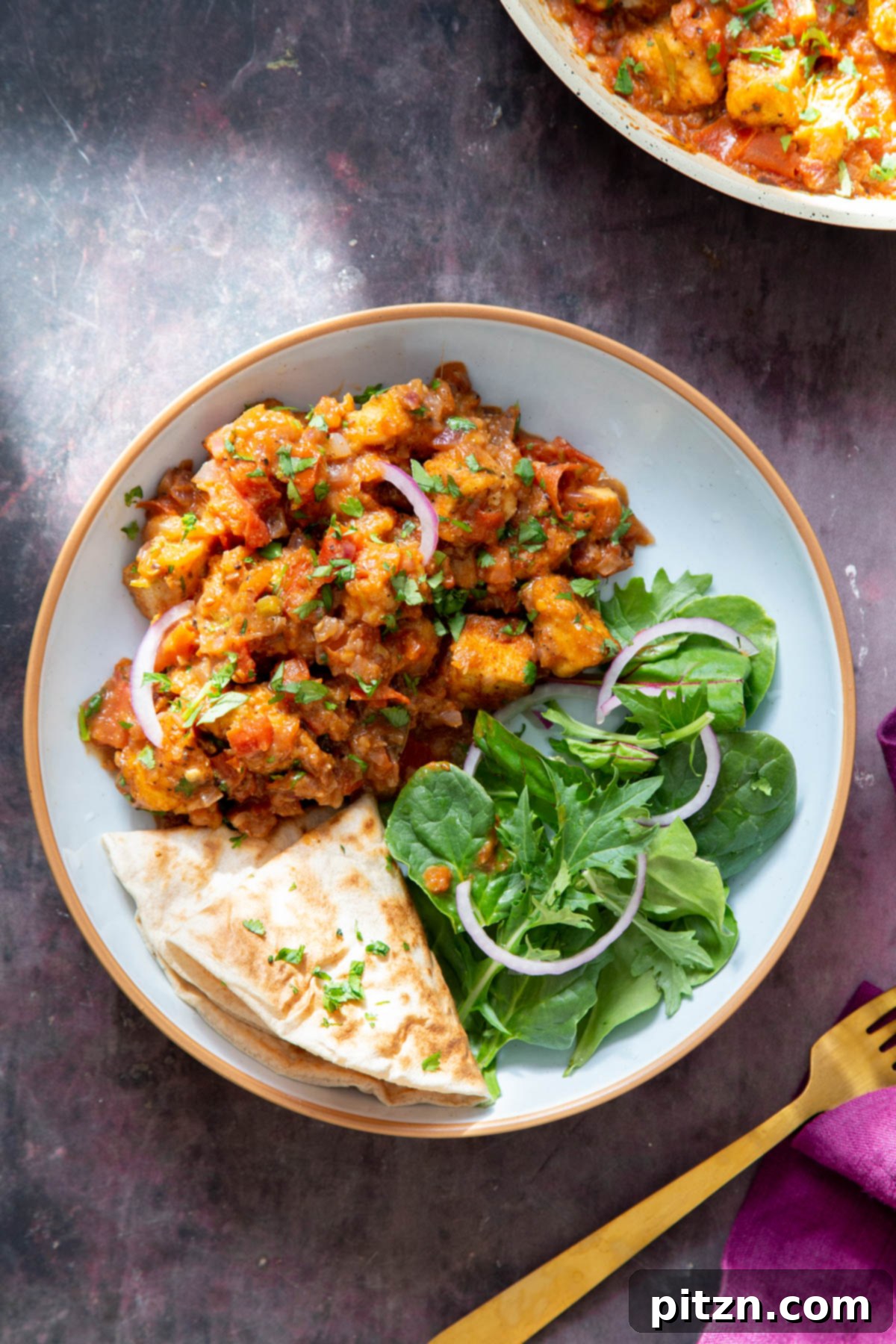
The inspiration for this exquisite sauce stems from a cherished family recipe, passed down through generations. My uncle, a masterful cook, was celebrated for his ability to craft complex, spicy gravies that beautifully complemented chicken and meat dishes. What made his sauces truly exceptional was that their entire flavor profile came from a meticulously balanced array of aromatics and spices, inherently plant-based. This realization sparked the idea: why confine such an incredible sauce to just meat? Its rich, seasoned depth is perfect for enhancing a variety of plant-based proteins and vegetables.
After visits to his favorite Dhabas, my uncle would often return home inspired, meticulously recreating their signature masala dishes. I vividly recall the layers of flavor, the intricate dance of whole spices, and the intoxicating aroma that filled his kitchen. This recipe is my tribute to his culinary artistry, a sincere effort to capture that signature masala magic. For the “chicken” component, we utilize baked tofu. We tear the tofu into irregular, bite-sized pieces, mimicking the texture of pulled chicken. These pieces are then coated in a special blend of spices and cornstarch, then baked until they achieve a delightful crispy, golden-brown exterior.
The soul of this curry lies in its specific selection of whole spices. Ingredients like fragrant cumin seeds, a robust cinnamon stick, aromatic bay leaves, and crucially, black cardamom pods, are essential. It’s important to note that black cardamom is distinct from its greener counterpart; it’s larger, darker, and offers a unique smoky, earthy, and slightly minty flavor profile. For an truly authentic and profound taste, I highly recommend using black cardamom. However, if it’s unavailable, green cardamom pods can be used as a substitute, though the flavor will be subtly different. Don’t miss out on this unique spice – I have many more recipes featuring black cardamom currently in development!

Why You’ll Adore This Khada Masala Curry
This Vegan Khada Masala Curry isn’t just a meal; it’s an experience. Here’s why it’s destined to become a staple in your recipe repertoire:
- **An Explosion of Flavor:** Each spoonful delivers a powerful punch of taste, making it an incredibly satisfying and memorable dish. The sauce is meticulously developed to be exceptionally rich and flavorful, ensuring every bite is a culinary delight.
- **Harmonious Spice Blend:** All the whole spices are carefully selected to work in perfect harmony, building multiple layers of complex flavor that unfold beautifully on the palate. This intricate balance is what truly sets this curry apart.
- **Flexible and Forgiving:** Don’t have every single spice on hand? No problem! The recipe is designed with a robust flavor foundation, meaning you can omit a spice or two without significantly compromising the overall excellent taste. Experimentation is encouraged, making it adaptable to your pantry.
- **Dietary-Friendly:** This recipe is thoughtfully crafted to be both **Nut-free** and **Gluten-free**, catering to common dietary restrictions without sacrificing an ounce of flavor or authenticity.
- **Easily Soy-Free:** For those avoiding soy, the protein can be effortlessly swapped. Use your preferred soy-free vegan chicken substitutes, hearty vegetables, or even a can of chickpeas to make this delicious curry entirely soy-free.
- **An Authentic Culinary Journey:** Much like our other Dhaba-style creations, this recipe serves as a wonderful introduction to distinct Indian flavors, traditional spices, and the rustic yet refined techniques of Dhaba-style cooking. It’s an opportunity to expand your culinary horizons and explore new tastes.
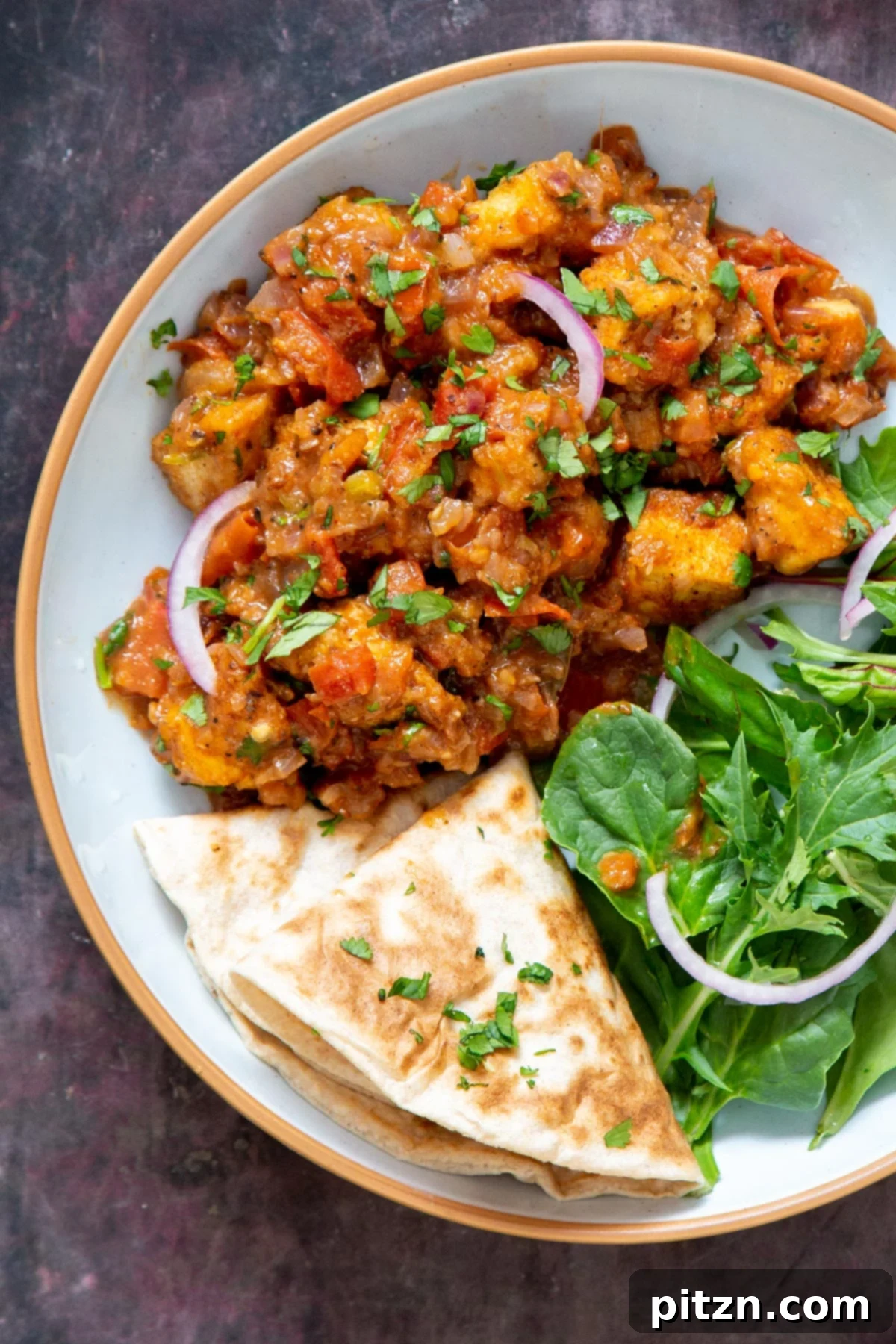
I’ve had the pleasure of preparing this incredible Khada Masala Murg for countless occasions – from intimate family dinners to lively weekend gatherings with friends, and even special celebrations. Without fail, it has always been met with resounding success and enthusiastic praise, making it a reliable crowd-pleaser.
More Irresistible Indian Tofu Curry Recipes:
- Vegan Tofu Rogan Josh (Tofu in Chili Yogurt Sauce)
- Tofu Vindaloo Recipe (Indian Tangy Chili Sauce)
- Baked Tofu Curry (Easy Tofu Makhani)
- Tofu Tikka Masala
- Tofu Dum Kali Mirch – Tofu in Creamy Black Pepper Tomato Sauce
- Amritsari Tofu (Tofu in Smoky Onion Tomato Sauce)
Khada Masala Murg Curry with Baked Tofu
Pin Recipe
Print Recipe
Ingredients
For the Tofu “Chikin”
- ▢ 14 ounce firm or extra firm tofu, pressed for at least 15 minutes
- ▢ ½ teaspoon garlic powder
- ▢ ¼ teaspoon cayenne or ½ teaspoon paprika
- ▢ 2 tablespoons corn starch
- ▢ ¼ teaspoon poultry seasoning, optional
For the Whole Spices (Khada Masala)
- ▢ ½ teaspoon cumin seeds
- ▢ 3 whole cloves
- ▢ 1 black cardamom pod
- ▢ ¼ teaspoon black peppercorns
- ▢ 1 cinnamon stick
- ▢ 3 bay leaves
For the Sauce
- ▢ 2 teaspoons oil
- ▢ 1 cup chopped red onion
- ▢ 1 hot green chili, such as serrano or Indian green chili , finely chopped (or 1 tablespoon chopped mild chili for less heat)
- ▢ 1 tablespoon ginger garlic paste
- ▢ 3 medium-large tomatoes, chopped small, (approximately 1 ¾ cups)
- ▢ ½ teaspoon garam masala
- ▢ ½ teaspoon Kashmiri chili powder or paprika
- ▢ 1 cup or more water as needed
- ▢ ½ teaspoon salt
- ▢ fresh cilantro and lemon juice for garnish
Instructions
-
Prepare the Tofu: Begin by pressing your firm or extra-firm tofu for at least 15 minutes to remove excess water. Once pressed, use your hands to tear the tofu into rustic, bite-sized pieces, aiming for an organic, chicken-like shape. Transfer these pieces to a mixing bowl.
-
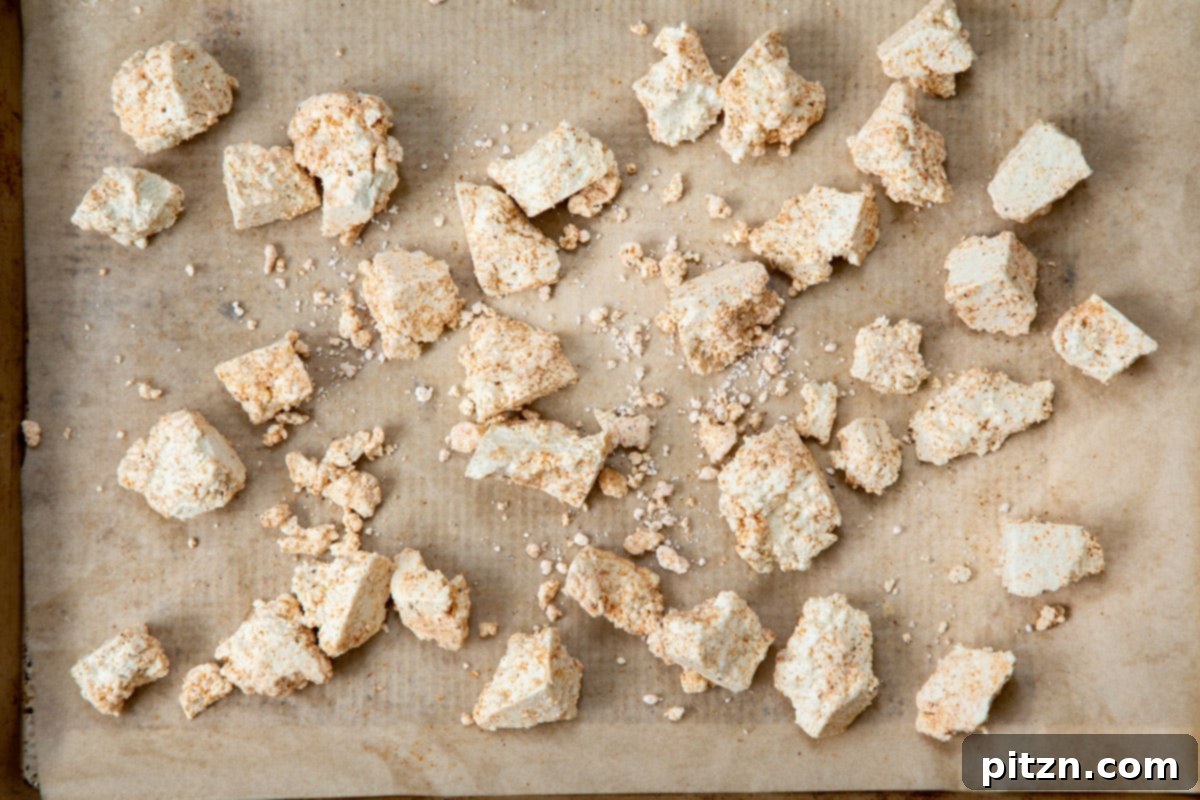
In a small bowl, combine the garlic powder, paprika (or cayenne), and poultry seasoning (if you’re using it) with the cornstarch. Sprinkle this seasoned cornstarch mixture evenly over the torn tofu pieces in the bowl. Toss thoroughly to ensure every piece is well coated. Spread the coated tofu in a single layer on a parchment-lined baking sheet. Bake in a preheated oven at 400°F (205°C) for 20-25 minutes, or until golden and slightly crispy.
-
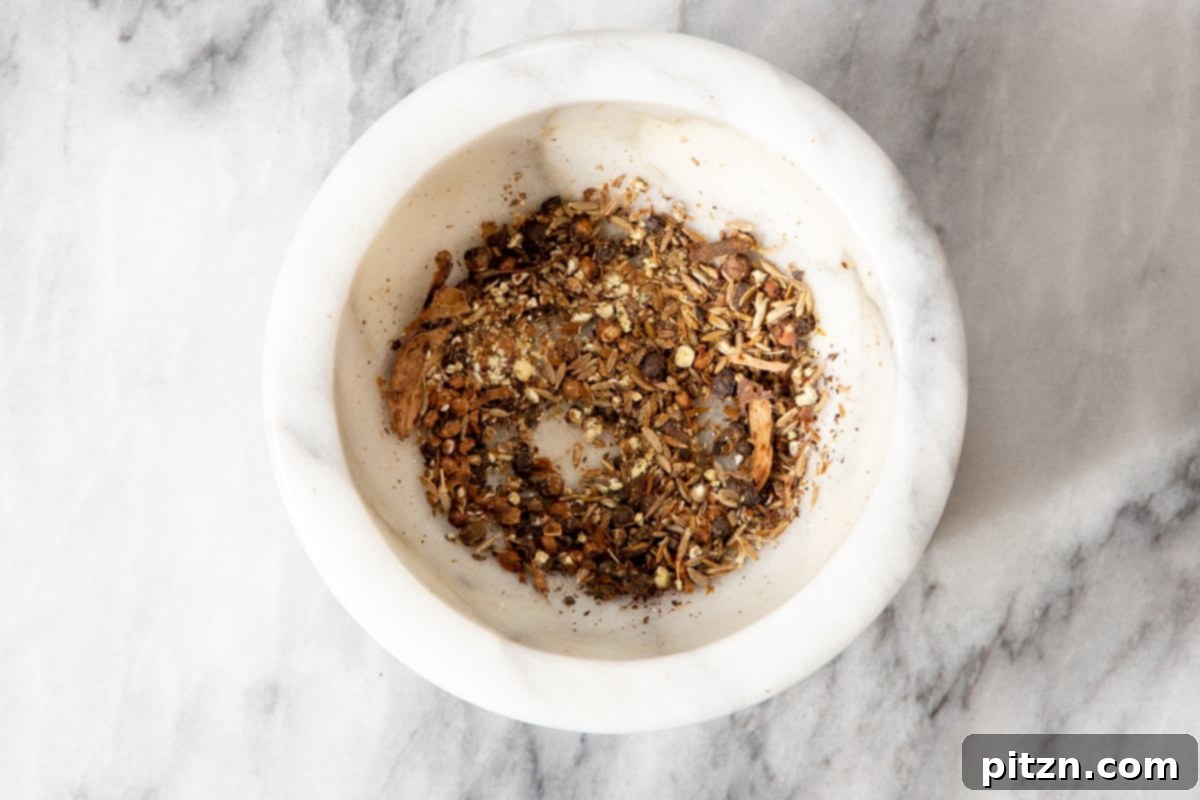
Crush the Whole Spices: Gather the cumin seeds, whole cloves, black cardamom pod, and black peppercorns. Add these to a mortar and pestle and crush them to create a coarse, aromatic mixture. Alternatively, you can pulse them briefly in a spice blender. The goal is a coarsely broken-down texture, not a fine powder, to release their distinct flavors effectively.
-
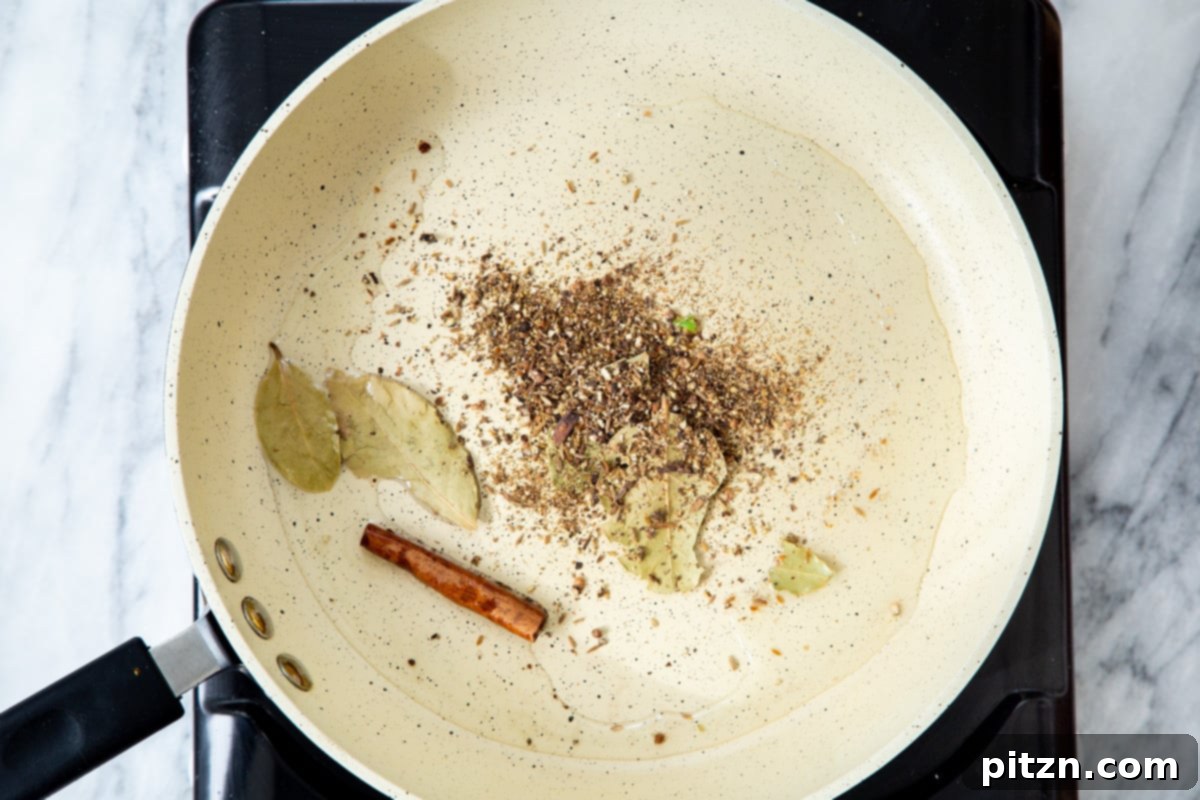
Build the Sauce Base: Heat the oil in a large skillet or pan over medium heat. Once the oil is shimmering, add the freshly crushed whole spices, along with the cinnamon stick and bay leaves. Cook these fragrant spices for about a minute, stirring constantly, until the bay leaves begin to slightly brown and the spices release their intoxicating aroma.
-
Next, add the chopped red onion and a generous pinch of salt to the skillet. Sauté the onions, stirring frequently, until they turn beautifully golden brown. Depending on your pan and onion moisture content, you might need to sprinkle a little water occasionally to deglaze the pan and aid in even browning. This process typically takes 5-8 minutes and is crucial for developing the deep flavor of the curry.
-
As the onions begin to caramelize to a golden hue, introduce the finely chopped green chili and the ginger garlic paste. Mix thoroughly and continue to cook for another minute or two, allowing the raw aroma of ginger and garlic to dissipate. Then, stir in the garam masala and Kashmiri chili powder (or paprika).
-
Stir the spice mixture well into the onion base. Add the chopped tomatoes and additional salt, mixing everything together. Cook this mixture until the tomatoes break down completely and become “jammy,” forming a rich, thick gravy. Add small sprinkles of water periodically to prevent sticking and ensure even cooking of the tomatoes. This should take about 5-7 minutes. Use the back of your spoon to mash any large tomato pieces. Once the tomatoes are deeply cooked and jammy, pour in ½ to ¾ cup of water and mix well to create a smooth sauce.
-
Bring the sauce mixture to a gentle boil. At this point, taste the sauce and adjust the salt and any other seasonings to your preference. Once the flavor is perfect, add the pre-baked tofu pieces to the skillet and gently toss them, ensuring they are thoroughly coated in the rich masala sauce.
-
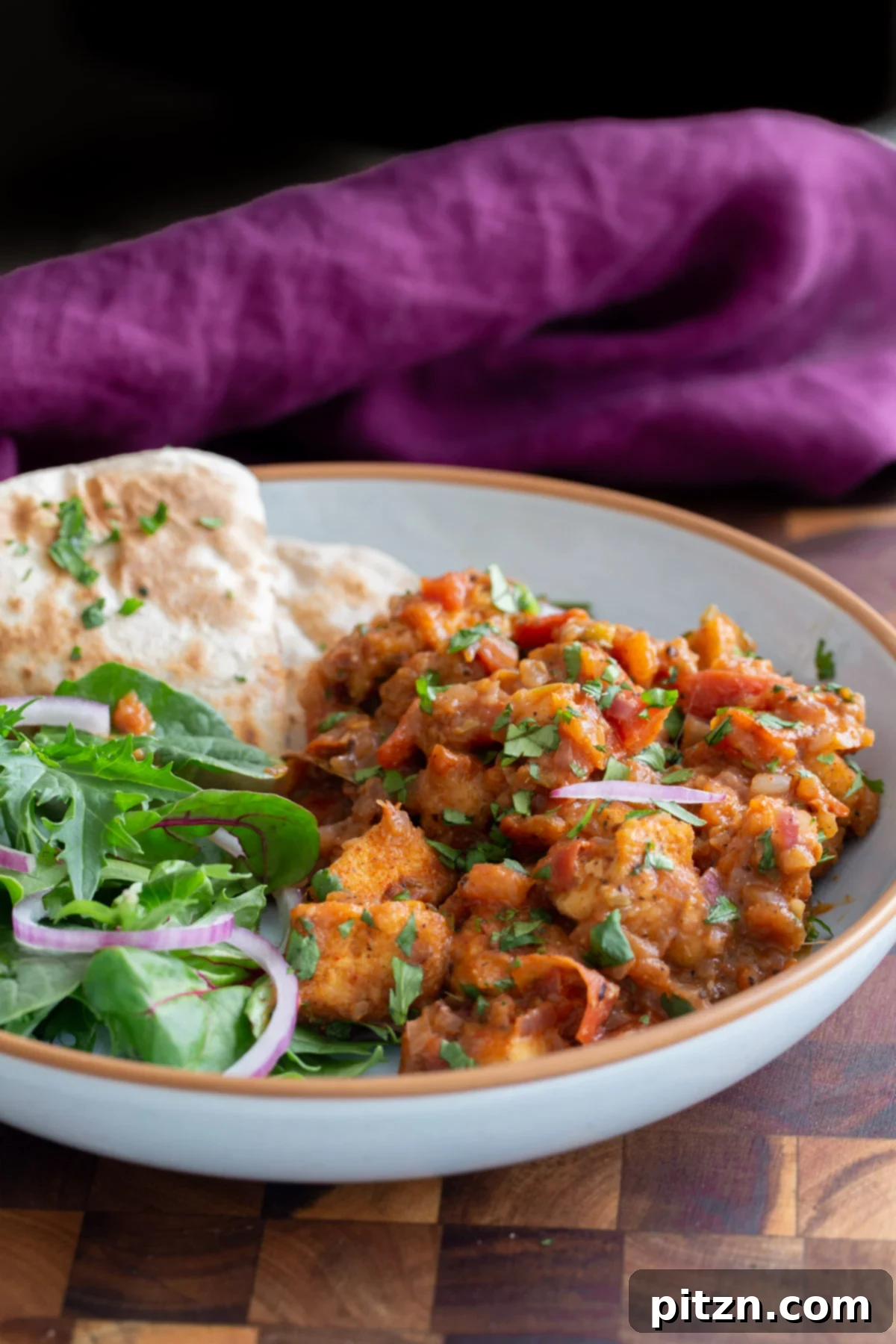
Allow the curry to simmer for just one or two minutes. This brief simmering time is key to allowing the tofu to absorb some of the sauce’s flavor while maintaining its desirable crisp texture. After a minute or two, turn off the heat. Garnish generously with fresh cilantro and a squeeze of lemon juice. Serve your exquisite Vegan Khada Masala Murg with warm flatbreads like Naan, garlic bread, or your favorite rice.
Video
Notes
- This recipe is designed to be quite spicy, delivering an authentic Dhaba-style kick. If you prefer a milder flavor, you can easily adjust the heat. Reduce the amount of black pepper, and consider omitting the cayenne or paprika entirely. To further mellow the spice, stir in some cashew cream or coconut cream to the sauce before adding the tofu. This will add richness and a creamy texture.
- Soy-Free Option: For a soy-free version, simply replace the tofu with your preferred soy-free vegan “chicken” substitutes, such as seitan (if gluten is not an issue), or use hearty vegetables like baked cauliflower or potatoes. Alternatively, a can of chickpeas (drained and rinsed) works wonderfully. If using chickpeas or other vegan chicken substitutes, there’s no need to pre-bake them; simply add them to the sauce and let them simmer for 5-7 minutes to absorb the flavors.
- **Paprika Variation**: Be mindful that some brands of paprika can be surprisingly hot. If you’re using paprika and are sensitive to heat, start with a smaller amount or opt to omit it completely if you’ve already included cayenne.
Nutrition
Nutrition information is automatically calculated, so should only be used as an approximation.
Did you make this recipe? Rate and comment below!
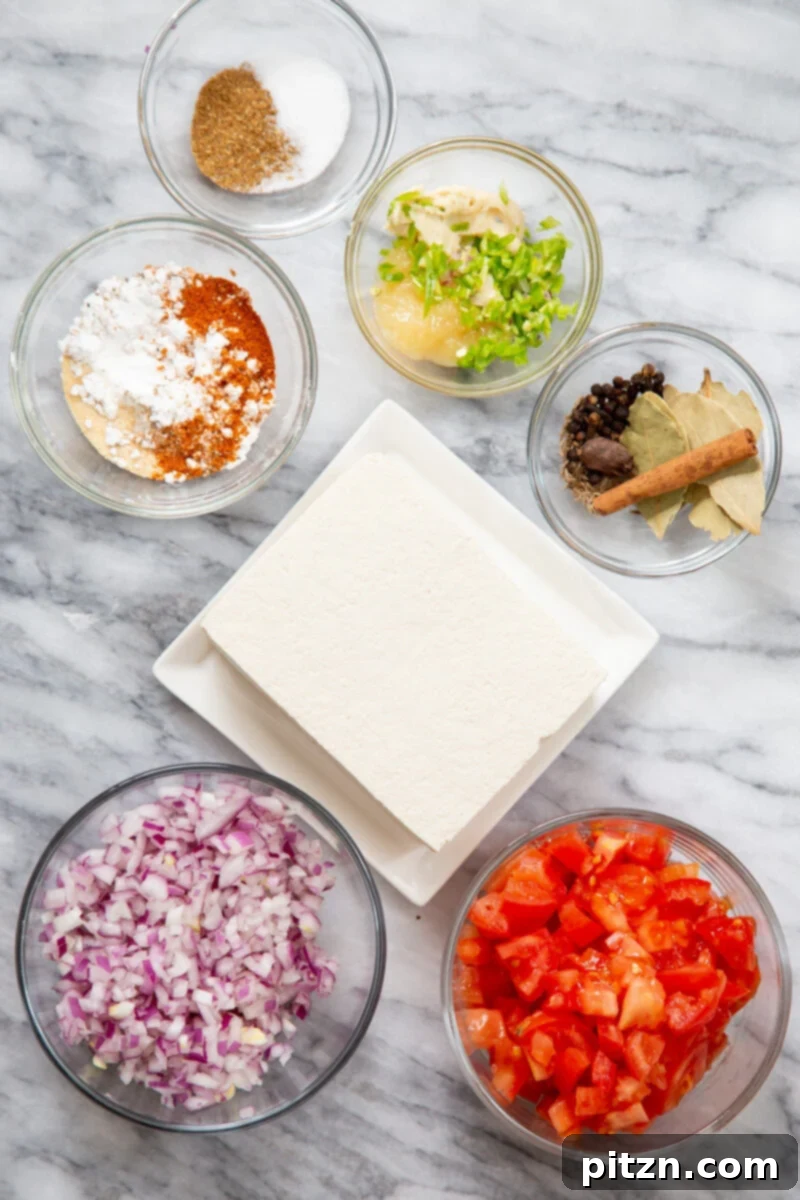
Essential Ingredients and Flavor Highlights:
Crafting the perfect Khada Masala Murg relies on a thoughtful selection of fresh produce and aromatic spices. Here’s a closer look at the key components and their contributions to the dish:
- **Tofu – The Vegan “Chicken”:** We use firm or extra-firm tofu, which is pressed to remove excess water. This creates a denser texture, ideal for tearing into irregular, bite-sized pieces that mimic chicken. It’s then coated in a mix of cornstarch, garlic powder, paprika, and optional poultry seasoning before baking, giving it a delightful crisp exterior and savory flavor.
- **Whole Spices for Tempering (Khada Masala):** This is where the magic happens! We gently crush whole cumin seeds, cloves, black cardamom pods, black peppercorns, cinnamon stick, and bay leaves. These are then briefly fried in oil, a process called tempering, which unlocks their full aromatic potential and infuses the oil with deep, complex flavors.
- **Black Cardamom – A Unique Aromatic:** Distinct from the more common green cardamom, black cardamom is larger and boasts a smoky, earthy, and subtly minty flavor profile. This unique essence pairs exquisitely with cinnamon, contributing significantly to the authentic Dhaba-style taste. For the true depth of flavor, I highly recommend sourcing black cardamom. If unavailable, green cardamom can be used, though the resulting taste will be lighter and less smoky.
- **The Heart of the Gravy:** After tempering, finely chopped red onion, vibrant green chili, and aromatic ginger-garlic paste form the foundation of our rich gravy. These ingredients are sautéed until golden and fragrant, building layers of savory depth.
- **Fresh Tomatoes:** Ripe, chopped tomatoes are crucial for lending both body and a pleasant tanginess to the gravy. They cook down to a luscious, jam-like consistency, creating a wonderfully smooth base for the curry.
- **Ground Spices – The Finishing Touch:** A blend of fragrant garam masala and colorful Kashmiri chili powder (or paprika) is incorporated into the gravy towards the end. These ground spices round out the flavor profile, adding warmth, a touch of heat, and beautiful color.
- **Salt:** Essential for balancing all the flavors, the amount can be adjusted precisely to your personal taste.
- **Fresh Garnish:** A sprinkle of fresh cilantro and a squeeze of bright lemon juice are added at the very end, providing a fresh contrast and elevating the overall presentation and taste of the curry.
Expert Tips for a Perfect Vegan Khada Masala Murg:
Achieving a truly exceptional Dhaba-style curry involves a few key considerations. Here are some tips to help you customize and perfect your Vegan Khada Masala Murg:
- **Adjusting the Spice Level:** This recipe is crafted to deliver a bold, spicy flavor typical of Dhaba cuisine. If you prefer a milder curry, you have several options: reduce the amount of black peppercorns, and either halve or completely omit the cayenne pepper and paprika. For an even creamier, milder sauce, consider stirring in a tablespoon or two of cashew cream or coconut cream into the gravy along with (or instead of) some of the water. This adds richness and helps to balance the heat.
- **Beware of Paprika Potency:** Not all paprika is created equal. Some brands, especially smoked paprika or certain regional varieties, can be surprisingly hot. If you’re using paprika, particularly if you’ve already added cayenne, I recommend starting with a smaller amount and tasting as you go. You can always add more, but you can’t easily take it away!
- **Soy-Free Alternatives:** Making this recipe soy-free is simple. Instead of tofu, you can use other vegan “chicken” substitutes that are explicitly soy-free. Seitan is a fantastic option if you don’t need the dish to be gluten-free. Hearty vegetables like cauliflower florets, chunks of sweet potato, or green beans can also be baked and incorporated. A convenient option is to use a can of chickpeas: simply drain and rinse them, then add directly to the sauce and simmer for 5-7 minutes. No pre-baking is required for chickpeas or most pre-made vegan chicken alternatives.
- **Crushing Spices for Maximum Flavor:** While a spice blender can work, using a mortar and pestle for the whole spices allows for better control over the texture. We aim for a coarse crush, not a fine powder, as this helps release the aromatic oils slowly and creates a more rustic, textured flavor profile, characteristic of authentic Khada Masala.
- **Browning Onions for Depth:** The step of cooking the onions until golden is critical. This caramelization adds a deep, sweet, and savory foundation to your sauce. Don’t rush this step. If your pan seems dry, a small splash of water will help deglaze and ensure even browning.
Step-by-Step Guide: How to Make Khada Masala Murg
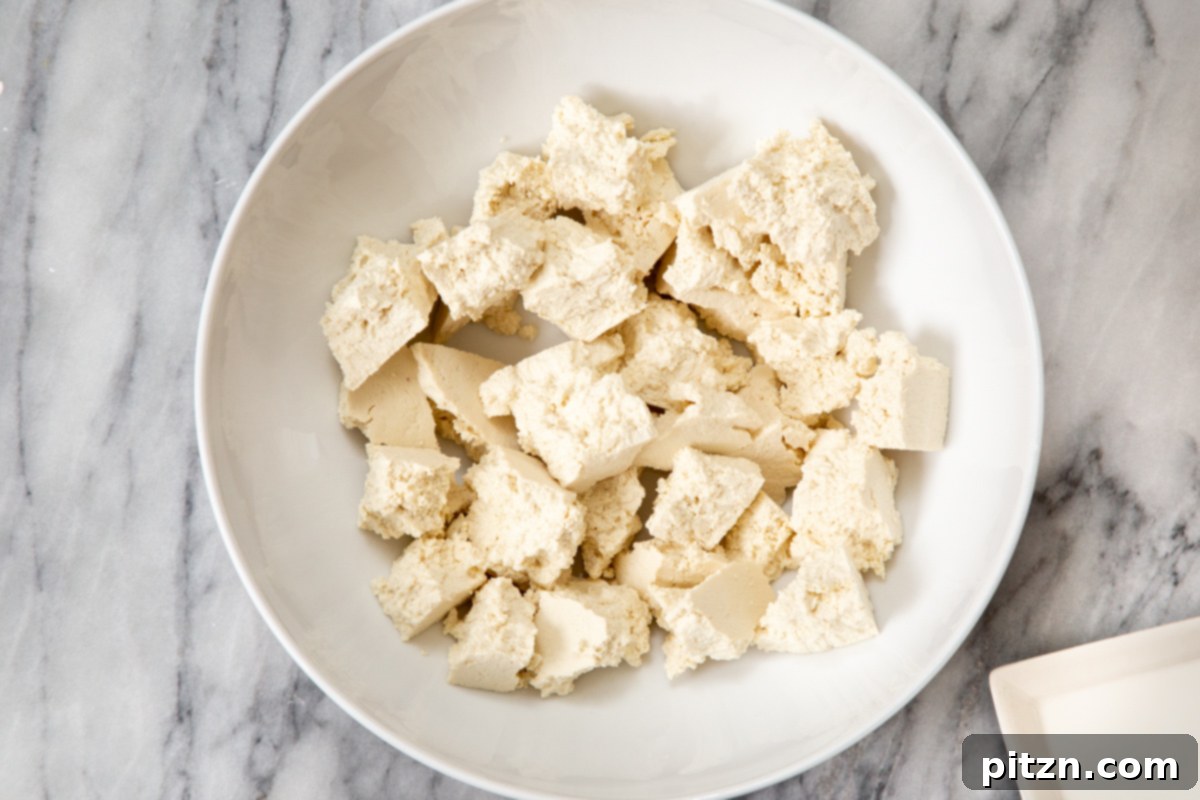
1. Prepare the Tofu: Begin by pressing your firm or extra-firm tofu for a minimum of 15 minutes. This crucial step extracts excess water, allowing the tofu to better absorb flavors and achieve a firmer texture. Once pressed, use your hands to tear the tofu into irregular, bite-sized pieces. This rustic tearing method creates unique, uneven surfaces that mimic the organic texture of cooked chicken and provides more nooks and crannies for the sauce to cling to. Transfer these torn tofu pieces into a mixing bowl.
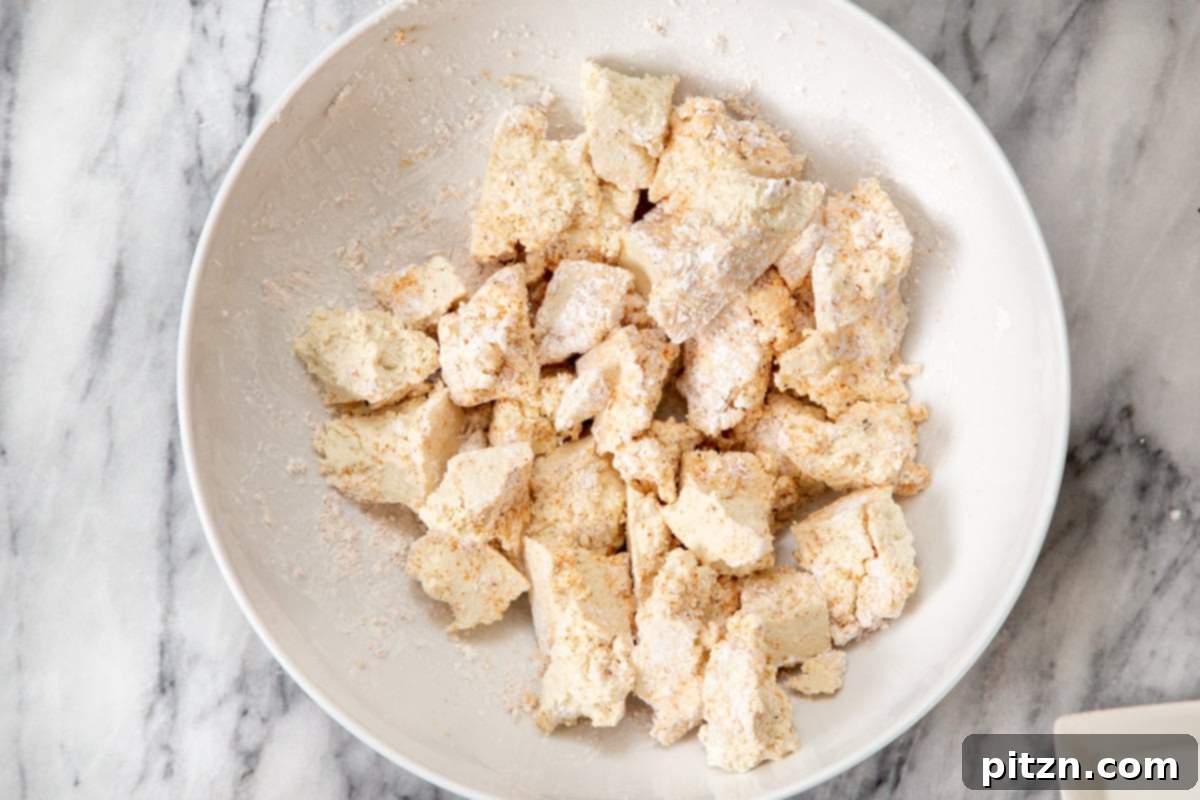
2. Season and Bake the Tofu: In a separate small bowl, combine the garlic powder, paprika (or cayenne, if preferred), and the optional poultry seasoning with the cornstarch. Sprinkle this dry spice and cornstarch mixture evenly over the torn tofu in the bowl. Toss vigorously to ensure every single piece of tofu is thoroughly coated. Spread the coated tofu in a single layer onto a baking sheet lined with parchment paper. Bake in a preheated oven at 400°F (205°C) for 20-25 minutes, or until the tofu pieces are beautifully golden brown and crispy.
3. Crush the Whole Spices for Khada Masala: For the heart of our Khada Masala, gather the cumin seeds, whole cloves, the distinctive black cardamom pod, and black peppercorns. Place these whole spices into a mortar and pestle and crush them. The goal is a coarse mixture, not a fine powder, allowing the individual flavors and textures of the spices to shine through. If you don’t have a mortar and pestle, you can pulse them briefly in a spice grinder, being careful not to over-process them into a fine powder.
4. Temper the Spices: Heat the oil in a large skillet or wide pan over medium heat. Once the oil is hot and shimmering, carefully add the coarsely crushed spices, along with the cinnamon stick and bay leaves. Cook these whole spices, stirring frequently, until the bay leaves begin to turn a light brown and the entire kitchen is filled with their incredible, fragrant aroma. This tempering step is crucial for unlocking their essential oils and building the flavor foundation of the curry.
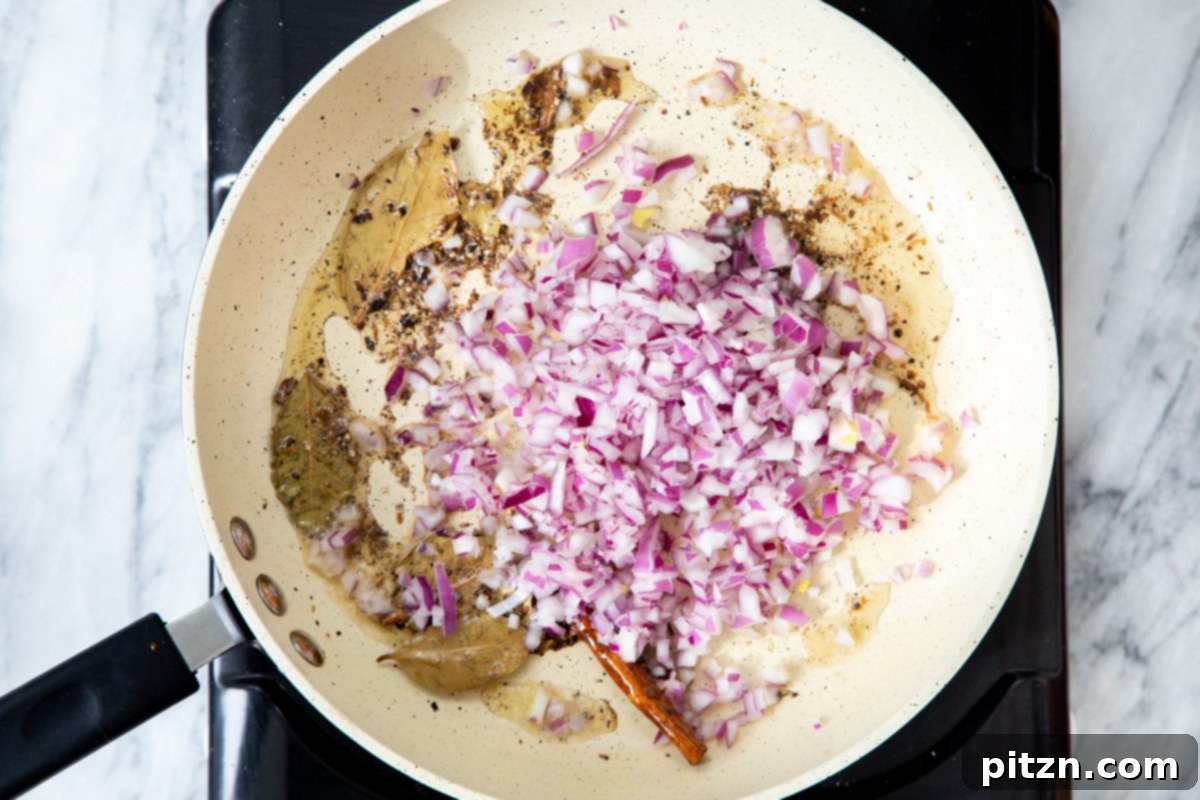
5. Sauté the Onions: Add the chopped red onion to the skillet with the tempered spices, along with a good pinch of salt. Sauté the onions, stirring regularly, until they turn beautifully golden brown. This caramelization process is key to developing a deep, sweet base for the gravy. The cooking time will vary, typically between 5-8 minutes. If your pan starts to look dry, a small sprinkle of water will help deglaze the bottom and ensure the onions brown evenly by facilitating heat transfer.
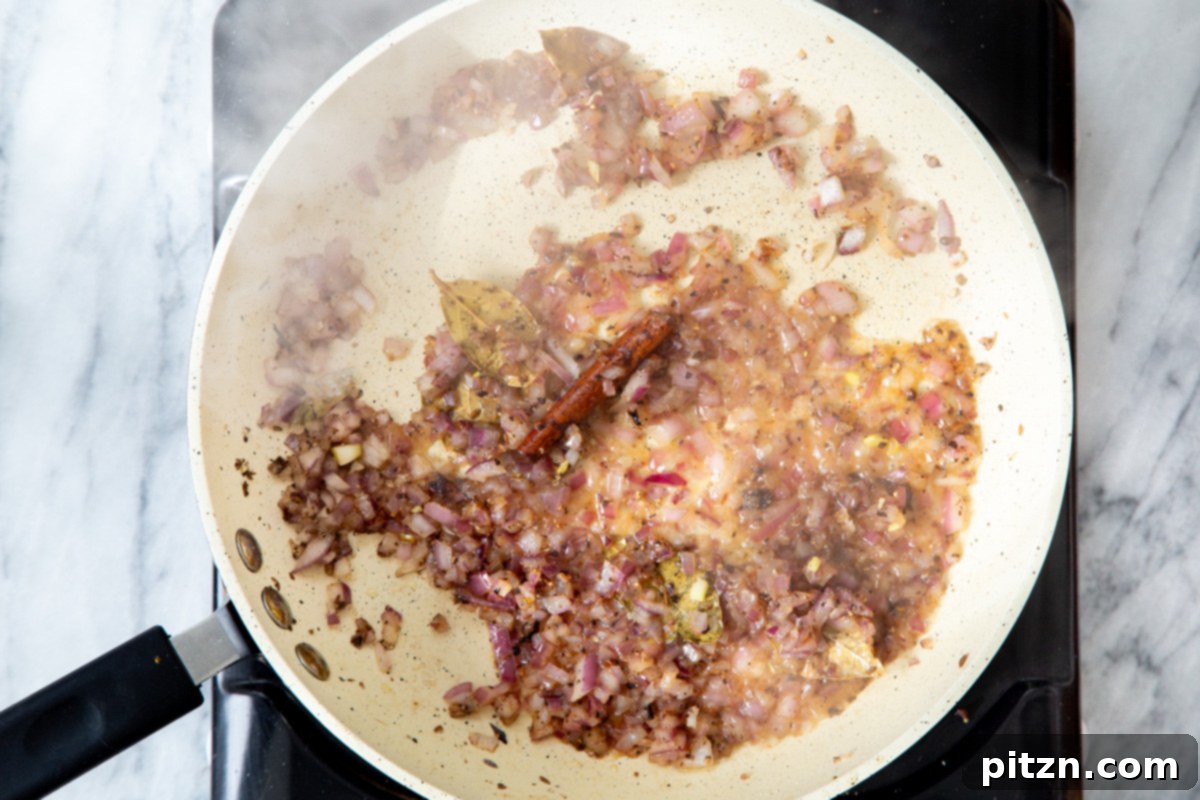
6. Build the Flavor Layers: Once the onions have achieved their golden hue, add the finely chopped green chili and the ginger garlic paste to the pan. Stir well and continue to cook for another minute or two, allowing the pungent raw flavors of ginger and garlic to mellow and integrate. Next, sprinkle in the garam masala and Kashmiri chili powder (or paprika), stirring continuously to ensure they are fully incorporated and gently toasted.
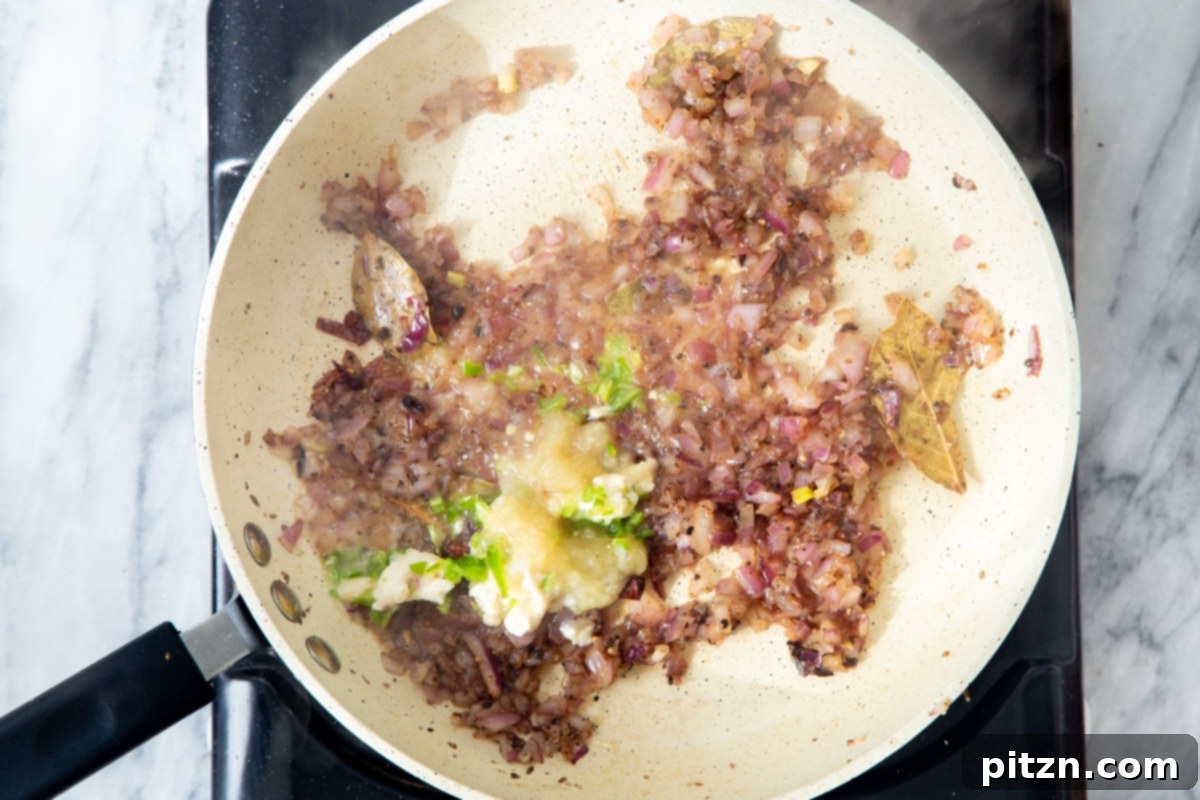
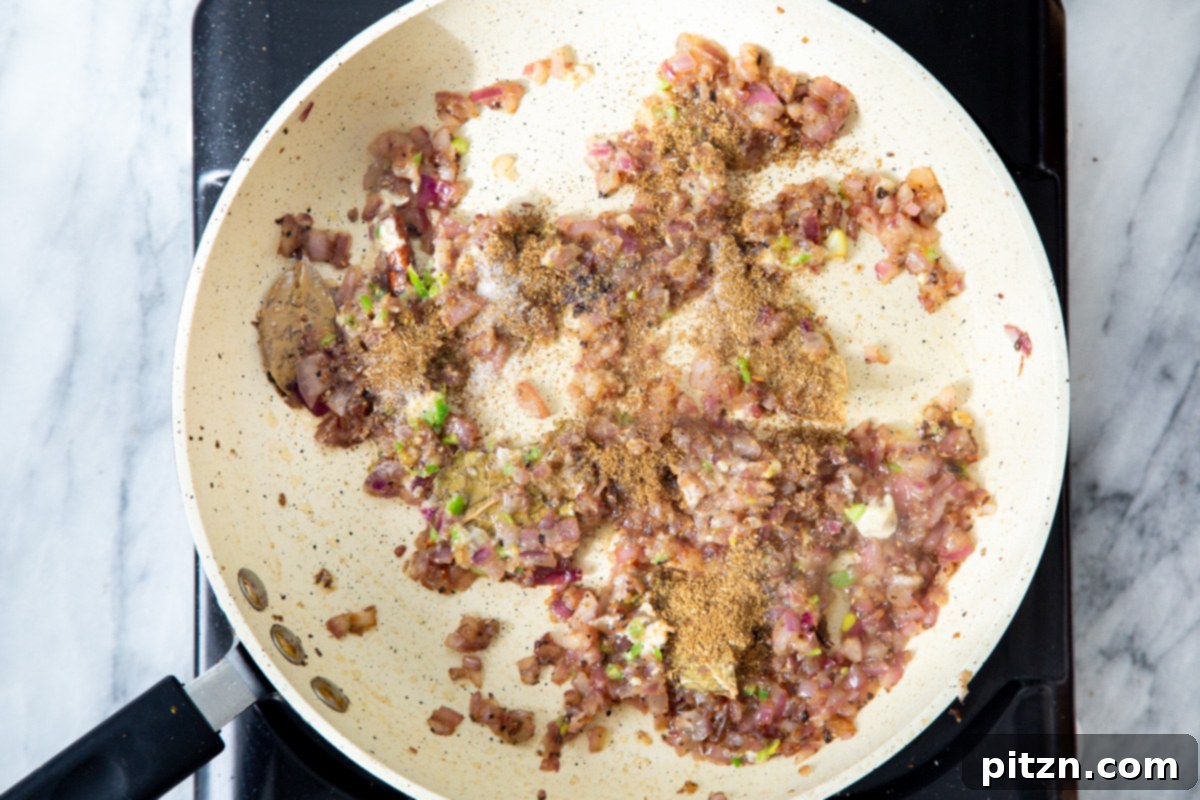
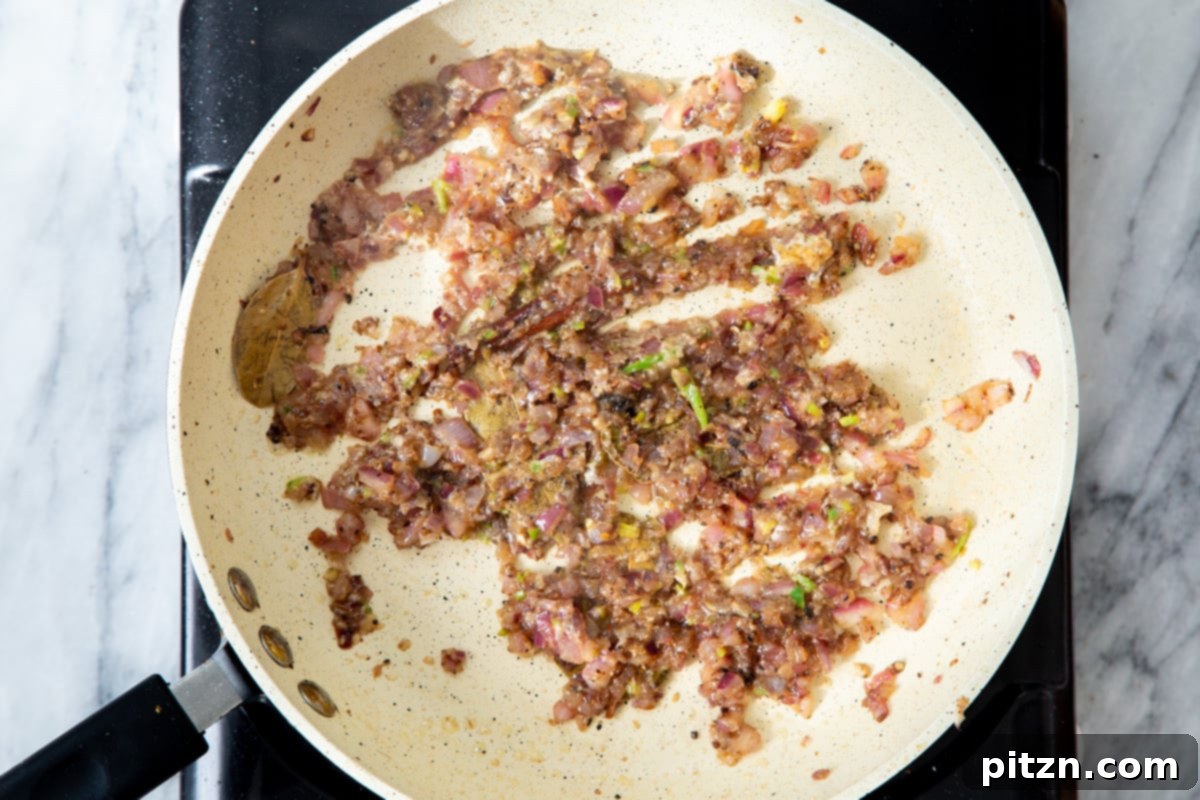
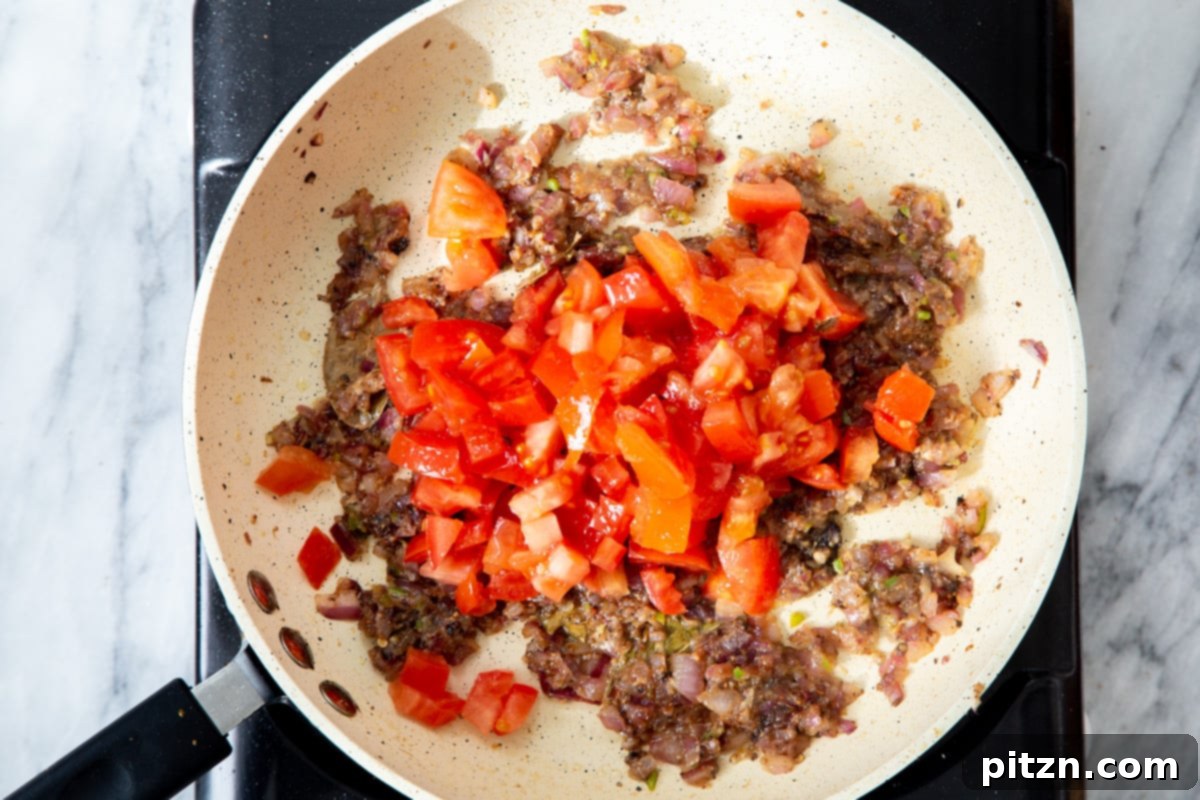
7. Create the Jammy Tomato Gravy: Stir the spiced onion mixture thoroughly, then add the chopped tomatoes and the remaining salt. Mix everything well and continue to cook, stirring occasionally, until the tomatoes completely break down and become “jammy” and thick. This process usually takes 5-7 minutes. If the mixture becomes too dry, add small sprinkles of water to help the tomatoes cook down evenly. Use the back of your spoon to mash any larger tomato pieces. Once the tomatoes have reached this jammy consistency, pour in ½ to ¾ cup of water and mix well to form a smooth, luscious gravy.
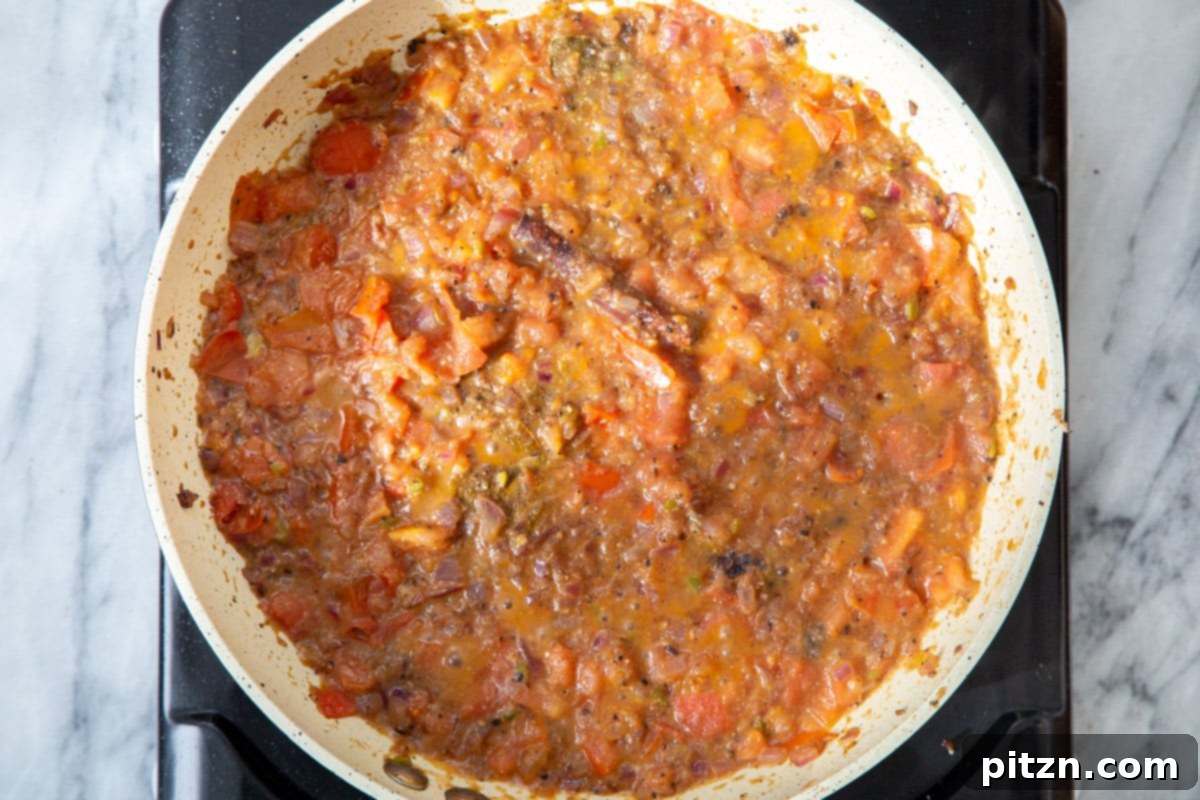
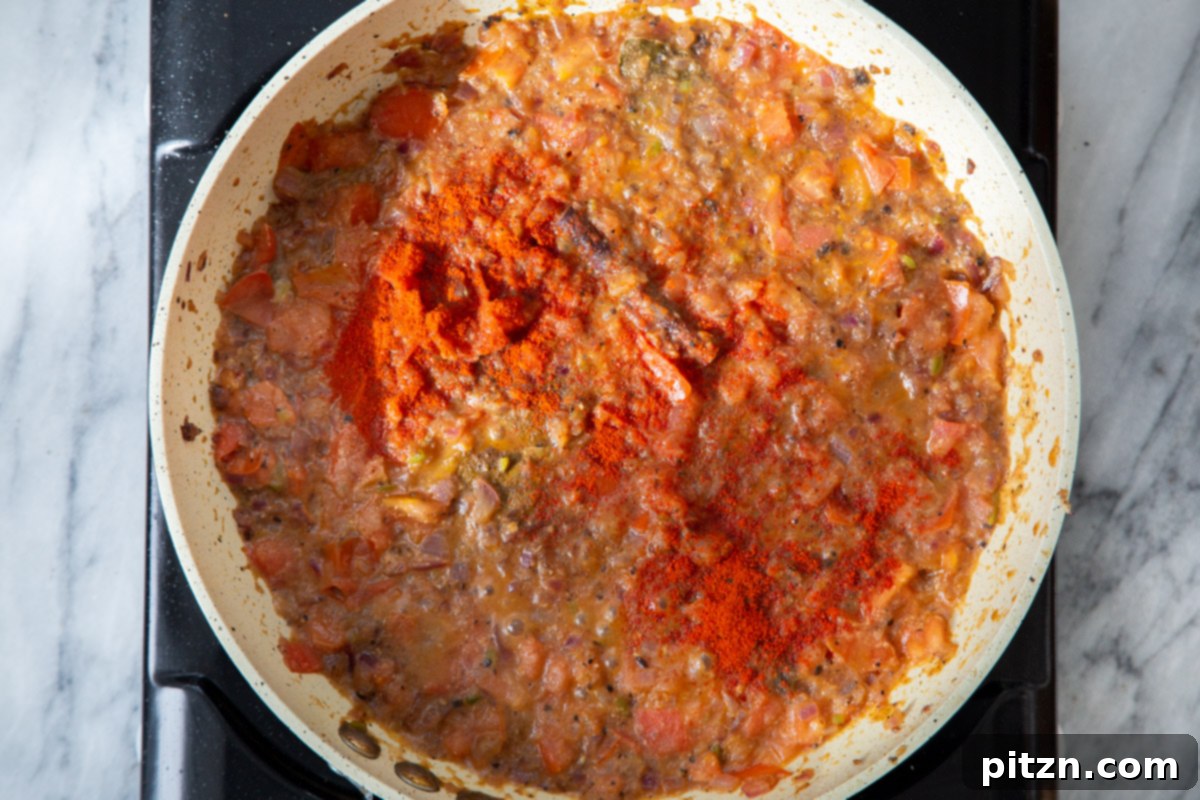
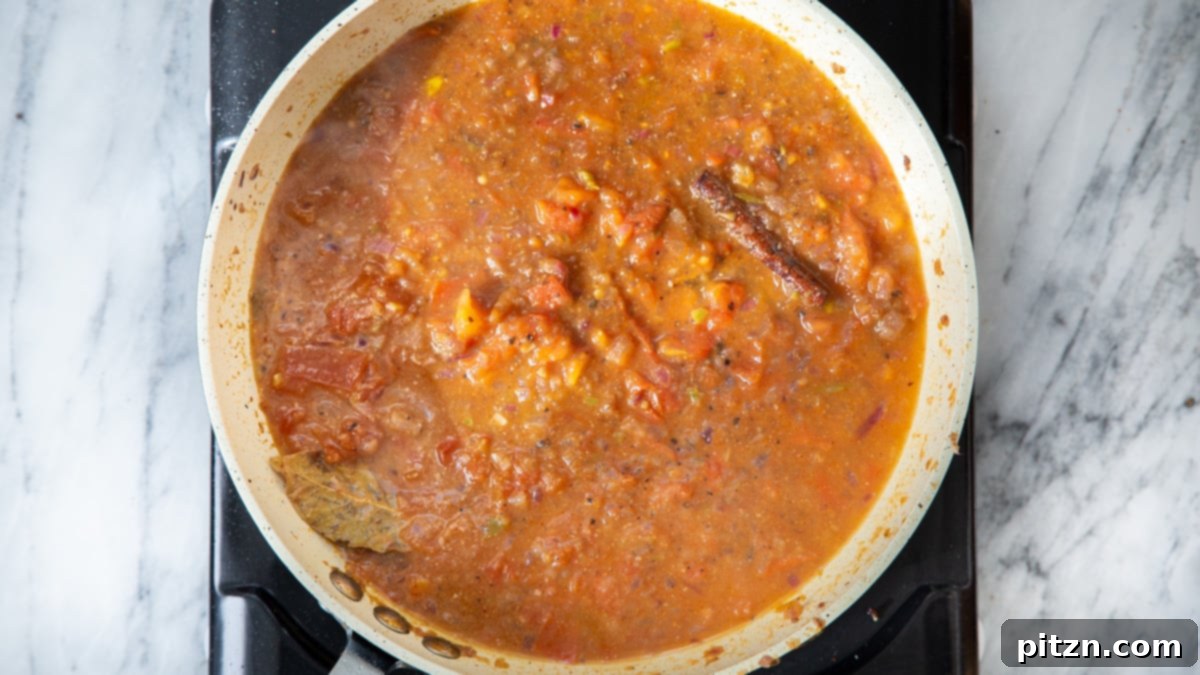
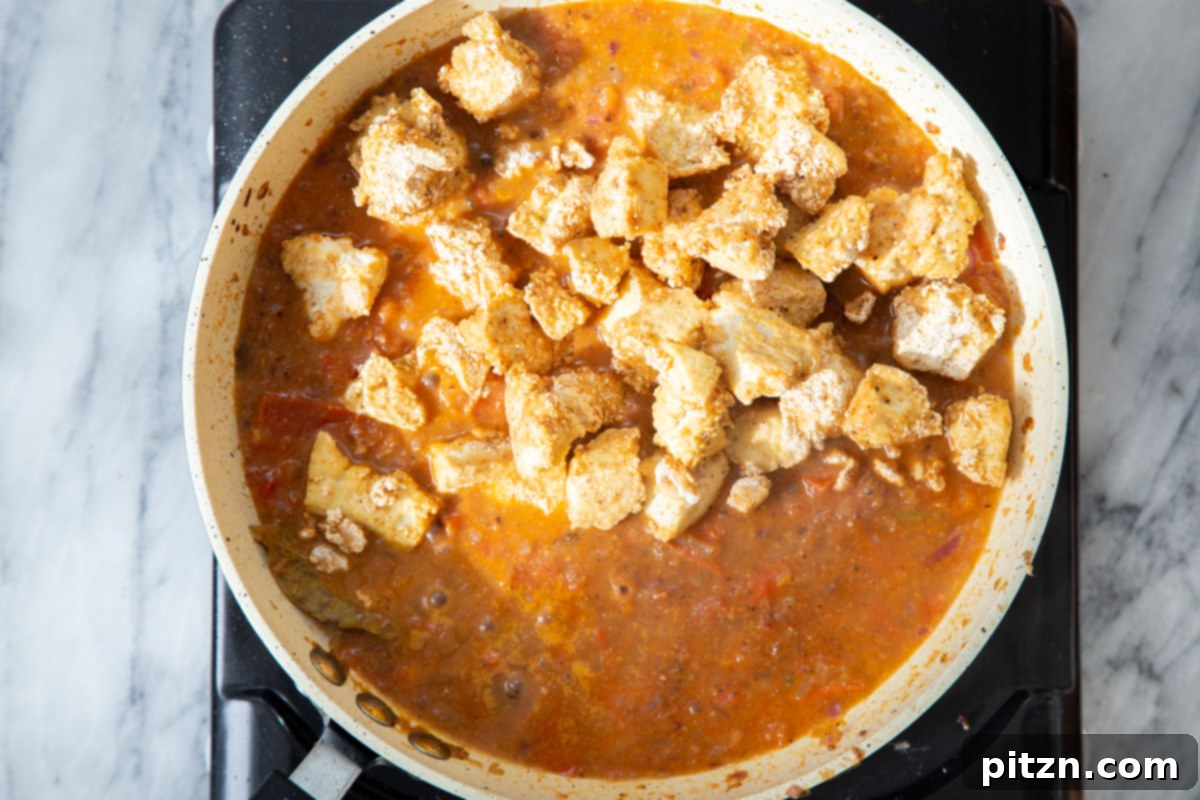
8. Combine and Finish: Bring the gravy mixture to a gentle boil. Take a moment to taste and adjust the salt and overall flavor of the sauce as needed. Once the gravy is seasoned to perfection, carefully add the baked tofu pieces to the pan. Gently toss them, ensuring each piece is thoroughly coated in the rich, aromatic Khada Masala sauce.
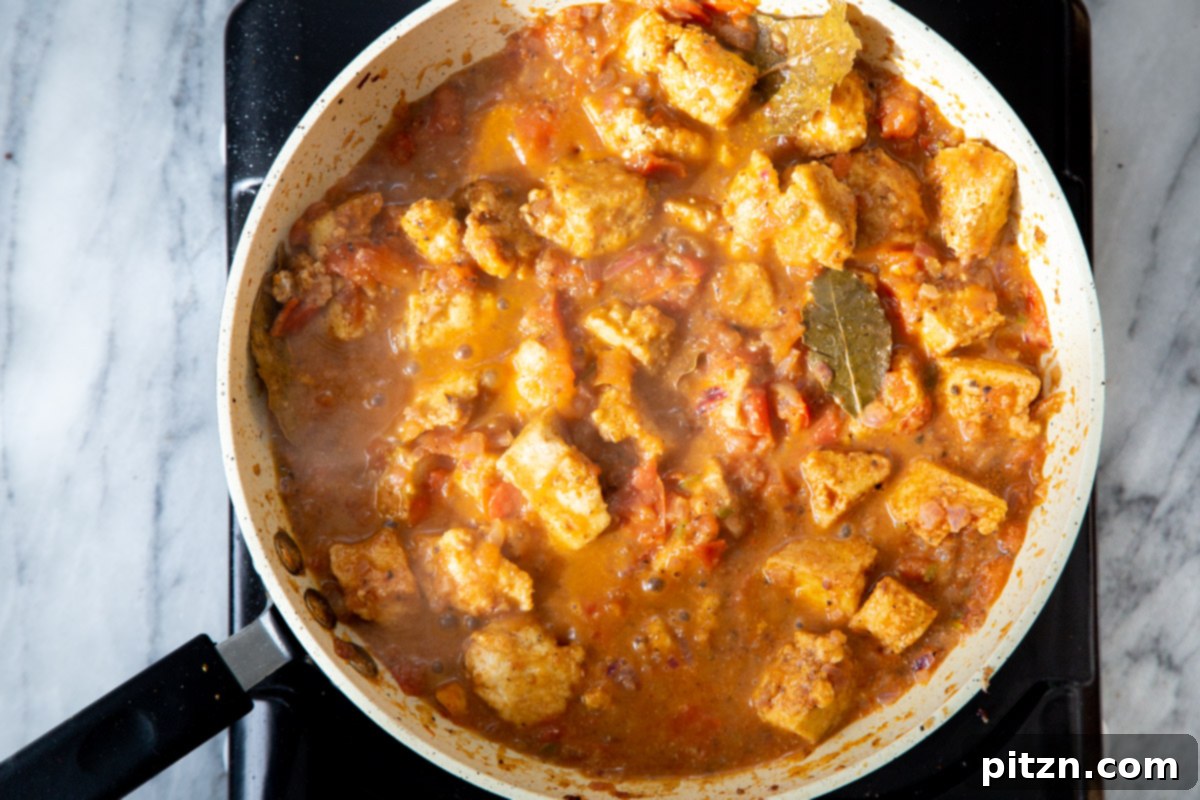
9. Serve: Allow the curry to simmer for just one minute. This brief simmering time is crucial; it allows the tofu to absorb the incredible flavors of the sauce without losing its desirable crisp texture. After a minute, turn off the heat. Garnish generously with fresh, chopped cilantro and a squeeze of bright lemon juice. Serve your exquisite Vegan Khada Masala Murg hot with warm flatbreads (such as Naan or Roti), garlic bread, or a steaming bowl of rice for a truly satisfying and authentic Indian dining experience.
Storage Guidelines:
This delicious Vegan Khada Masala Murg stores wonderfully, allowing you to enjoy leftovers or prepare ahead. Refrigerate any uneaten portions in an airtight container for up to 3 days. For longer storage, this curry freezes beautifully for up to a month. Thaw overnight in the refrigerator and gently reheat on the stovetop or in the microwave, adding a splash of water if needed to adjust consistency.
We hope you thoroughly enjoy this authentic Dhaba-style Vegan Khada Masala Murg, a dish that truly embodies the rich culinary heritage of India with a compassionate, plant-based twist. Its aromatic blend of whole spices and savory baked tofu creates a memorable meal that’s perfect for any occasion. Don’t hesitate to share your culinary creations and feedback!
Video
Notes
- This is quite a spicy recipe, so to tone it down you can use less black pepper and omit the cayenne and paprika altogether. You can also add in some cashew cream or coconut cream to the sauce to tone it down.
- Soyfree: Use vegan chicken subs of choice that are Soyfree or use seitan. Or use hearty vegetables. Bake the veggies instead of tofu. You can also use a can of chickpeas instead as well. No need to bake the chickpeas or vegan chicken. Just add to the sauce and simmer for 5-7 mins.
Nutrition
Nutrition information is automatically calculated, so should only be used as an approximation.
Did you make this recipe? Rate and comment below!
Essential Ingredients and Flavor Highlights:
Crafting the perfect Khada Masala Murg relies on a thoughtful selection of fresh produce and aromatic spices. Here’s a closer look at the key components and their contributions to the dish:
- **Tofu – The Vegan “Chicken”:** We use firm or extra-firm tofu, which is pressed to remove excess water. This creates a denser texture, ideal for tearing into irregular, bite-sized pieces that mimic chicken. It’s then coated in a mix of cornstarch, garlic powder, paprika, and optional poultry seasoning before baking, giving it a delightful crisp exterior and savory flavor.
- **Whole Spices for Tempering (Khada Masala):** This is where the magic happens! We gently crush whole cumin seeds, cloves, black cardamom pods, black peppercorns, cinnamon stick, and bay leaves. These are then briefly fried in oil, a process called tempering, which unlocks their full aromatic potential and infuses the oil with deep, complex flavors.
- **Black Cardamom – A Unique Aromatic:** Distinct from the more common green cardamom, black cardamom is larger and boasts a smoky, earthy, and subtly minty flavor profile. This unique essence pairs exquisitely with cinnamon, contributing significantly to the authentic Dhaba-style taste. For the true depth of flavor, I highly recommend sourcing black cardamom. If unavailable, green cardamom can be used, though the resulting taste will be lighter and less smoky.
- **The Heart of the Gravy:** After tempering, finely chopped red onion, vibrant green chili, and aromatic ginger-garlic paste form the foundation of our rich gravy. These ingredients are sautéed until golden and fragrant, building layers of savory depth.
- **Fresh Tomatoes:** Ripe, chopped tomatoes are crucial for lending both body and a pleasant tanginess to the gravy. They cook down to a luscious, jam-like consistency, creating a wonderfully smooth base for the curry.
- **Ground Spices – The Finishing Touch:** A blend of fragrant garam masala and colorful Kashmiri chili powder (or paprika) is incorporated into the gravy towards the end. These ground spices round out the flavor profile, adding warmth, a touch of heat, and beautiful color.
- **Salt:** Essential for balancing all the flavors, the amount can be adjusted precisely to your personal taste.
- **Fresh Garnish:** A sprinkle of fresh cilantro and a squeeze of bright lemon juice are added at the very end, providing a fresh contrast and elevating the overall presentation and taste of the curry.
Expert Tips for a Perfect Vegan Khada Masala Murg:
Achieving a truly exceptional Dhaba-style curry involves a few key considerations. Here are some tips to help you customize and perfect your Vegan Khada Masala Murg:
- **Adjusting the Spice Level:** This recipe is crafted to deliver a bold, spicy flavor typical of Dhaba cuisine. If you prefer a milder curry, you have several options: reduce the amount of black peppercorns, and either halve or completely omit the cayenne pepper and paprika. For an even creamier, milder sauce, consider stirring in a tablespoon or two of cashew cream or coconut cream into the gravy along with (or instead of) some of the water. This adds richness and helps to balance the heat.
- **Beware of Paprika Potency:** Not all paprika is created equal. Some brands, especially smoked paprika or certain regional varieties, can be surprisingly hot. If you’re using paprika, particularly if you’ve already added cayenne, I recommend starting with a smaller amount and tasting as you go. You can always add more, but you can’t easily take it away!
- **Soy-Free Alternatives:** Making this recipe soy-free is simple. Instead of tofu, you can use other vegan “chicken” substitutes that are explicitly soy-free. Seitan is a fantastic option if you don’t need the dish to be gluten-free. Hearty vegetables like cauliflower florets, chunks of sweet potato, or green beans can also be baked and incorporated. A convenient option is to use a can of chickpeas: simply drain and rinse them, then add directly to the sauce and simmer for 5-7 minutes. No pre-baking is required for chickpeas or most pre-made vegan chicken alternatives.
- **Crushing Spices for Maximum Flavor:** While a spice blender can work, using a mortar and pestle for the whole spices allows for better control over the texture. We aim for a coarse crush, not a fine powder, as this helps release the aromatic oils slowly and creates a more rustic, textured flavor profile, characteristic of authentic Khada Masala.
- **Browning Onions for Depth:** The step of cooking the onions until golden is critical. This caramelization adds a deep, sweet, and savory foundation to your sauce. Don’t rush this step. If your pan seems dry, a small splash of water will help deglaze and ensure even browning.
Step-by-Step Guide: How to Make Khada Masala Murg
1. Prepare the Tofu: Begin by pressing your firm or extra-firm tofu for a minimum of 15 minutes. This crucial step extracts excess water, allowing the tofu to better absorb flavors and achieve a firmer texture. Once pressed, use your hands to tear the tofu into irregular, bite-sized pieces. This rustic tearing method creates unique, uneven surfaces that mimic the organic texture of cooked chicken and provides more nooks and crannies for the sauce to cling to. Transfer these torn tofu pieces into a mixing bowl.
2. Season and Bake the Tofu: In a separate small bowl, combine the garlic powder, paprika (or cayenne, if preferred), and the optional poultry seasoning with the cornstarch. Sprinkle this dry spice and cornstarch mixture evenly over the torn tofu in the bowl. Toss vigorously to ensure every single piece of tofu is thoroughly coated. Spread the coated tofu in a single layer onto a baking sheet lined with parchment paper. Bake in a preheated oven at 400°F (205°C) for 20-25 minutes, or until the tofu pieces are beautifully golden brown and crispy.
3. Crush the Whole Spices for Khada Masala: For the heart of our Khada Masala, gather the cumin seeds, whole cloves, the distinctive black cardamom pod, and black peppercorns. Place these whole spices into a mortar and pestle and crush them. The goal is a coarse mixture, not a fine powder, allowing the individual flavors and textures of the spices to shine through. If you don’t have a mortar and pestle, you can pulse them briefly in a spice grinder, being careful not to over-process them into a fine powder.
4. Temper the Spices: Heat the oil in a large skillet or wide pan over medium heat. Once the oil is hot and shimmering, carefully add the coarsely crushed spices, along with the cinnamon stick and bay leaves. Cook these whole spices, stirring frequently, until the bay leaves begin to turn a light brown and the entire kitchen is filled with their incredible, fragrant aroma. This tempering step is crucial for unlocking their essential oils and building the flavor foundation of the curry.
5. Sauté the Onions: Add the chopped red onion to the skillet with the tempered spices, along with a good pinch of salt. Sauté the onions, stirring regularly, until they turn beautifully golden brown. This caramelization process is key to developing a deep, sweet base for the gravy. The cooking time will vary, typically between 5-8 minutes. If your pan starts to look dry, a small sprinkle of water will help deglaze the bottom and ensure the onions brown evenly by facilitating heat transfer.
6. Build the Flavor Layers: Once the onions have achieved their golden hue, add the finely chopped green chili and the ginger garlic paste to the pan. Stir well and continue to cook for another minute or two, allowing the pungent raw flavors of ginger and garlic to mellow and integrate. Next, sprinkle in the garam masala and Kashmiri chili powder (or paprika), stirring continuously to ensure they are fully incorporated and gently toasted.
7. Create the Jammy Tomato Gravy: Stir the spiced onion mixture thoroughly, then add the chopped tomatoes and the remaining salt. Mix everything well and continue to cook, stirring occasionally, until the tomatoes completely break down and become “jammy” and thick. This process usually takes 5-7 minutes. If the mixture becomes too dry, add small sprinkles of water to help the tomatoes cook down evenly. Use the back of your spoon to mash any larger tomato pieces. Once the tomatoes have reached this jammy consistency, pour in ½ to ¾ cup of water and mix well to form a smooth, luscious gravy.
8. Combine and Finish: Bring the gravy mixture to a gentle boil. Take a moment to taste and adjust the salt and overall flavor of the sauce as needed. Once the gravy is seasoned to perfection, carefully add the baked tofu pieces to the pan. Gently toss them, ensuring each piece is thoroughly coated in the rich, aromatic Khada Masala sauce.
9. Serve: Allow the curry to simmer for just one minute. This brief simmering time is crucial; it allows the tofu to absorb the incredible flavors of the sauce without losing its desirable crisp texture. After a minute, turn off the heat. Garnish generously with fresh, chopped cilantro and a squeeze of bright lemon juice. Serve your exquisite Vegan Khada Masala Murg hot with warm flatbreads (such as Naan or Roti), garlic bread, or a steaming bowl of rice for a truly satisfying and authentic Indian dining experience.
Storage Guidelines:
This delicious Vegan Khada Masala Murg stores wonderfully, allowing you to enjoy leftovers or prepare ahead. Refrigerate any uneaten portions in an airtight container for up to 3 days. For longer storage, this curry freezes beautifully for up to a month. Thaw overnight in the refrigerator and gently reheat on the stovetop or in the microwave, adding a splash of water if needed to adjust consistency.
We hope you thoroughly enjoy this authentic Dhaba-style Vegan Khada Masala Murg, a dish that truly embodies the rich culinary heritage of India with a compassionate, plant-based twist. Its aromatic blend of whole spices and savory baked tofu creates a memorable meal that’s perfect for any occasion. Don’t hesitate to share your culinary creations and feedback!