

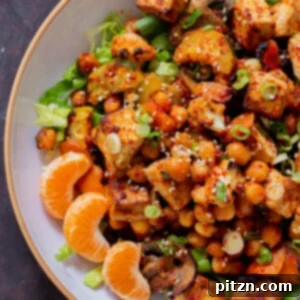
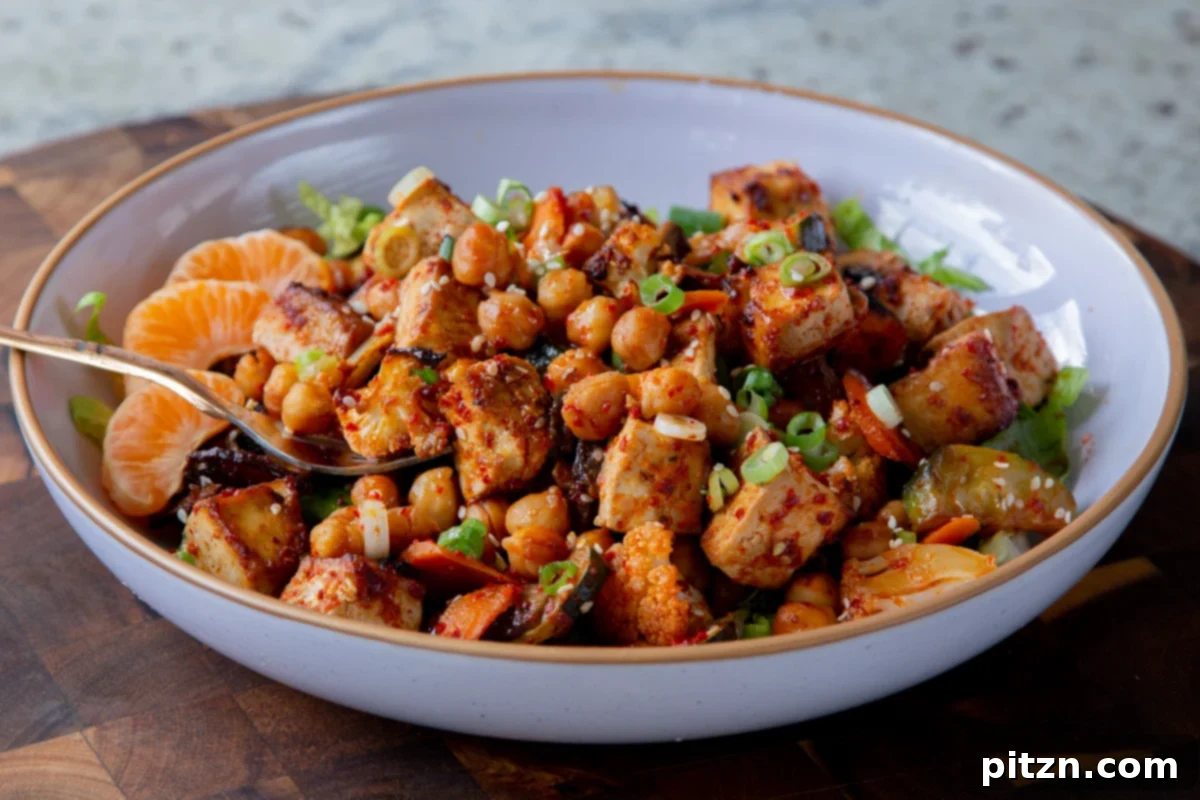
Welcome to your new favorite weeknight dinner: the **Sheet Pan Gochujang Bowl**! This incredibly easy and flavor-packed recipe is a brilliant way to transform simple ingredients into a vibrant, satisfying meal. Imagine tender tofu, hearty chickpeas, and an array of colorful vegetables, all coated in a rich, spicy, and slightly sweet Gochujang marinade, then roasted together on a single baking sheet. The result? A fuss-free, delicious, and healthy dish that’s perfect for a quick dinner or efficient meal prep.
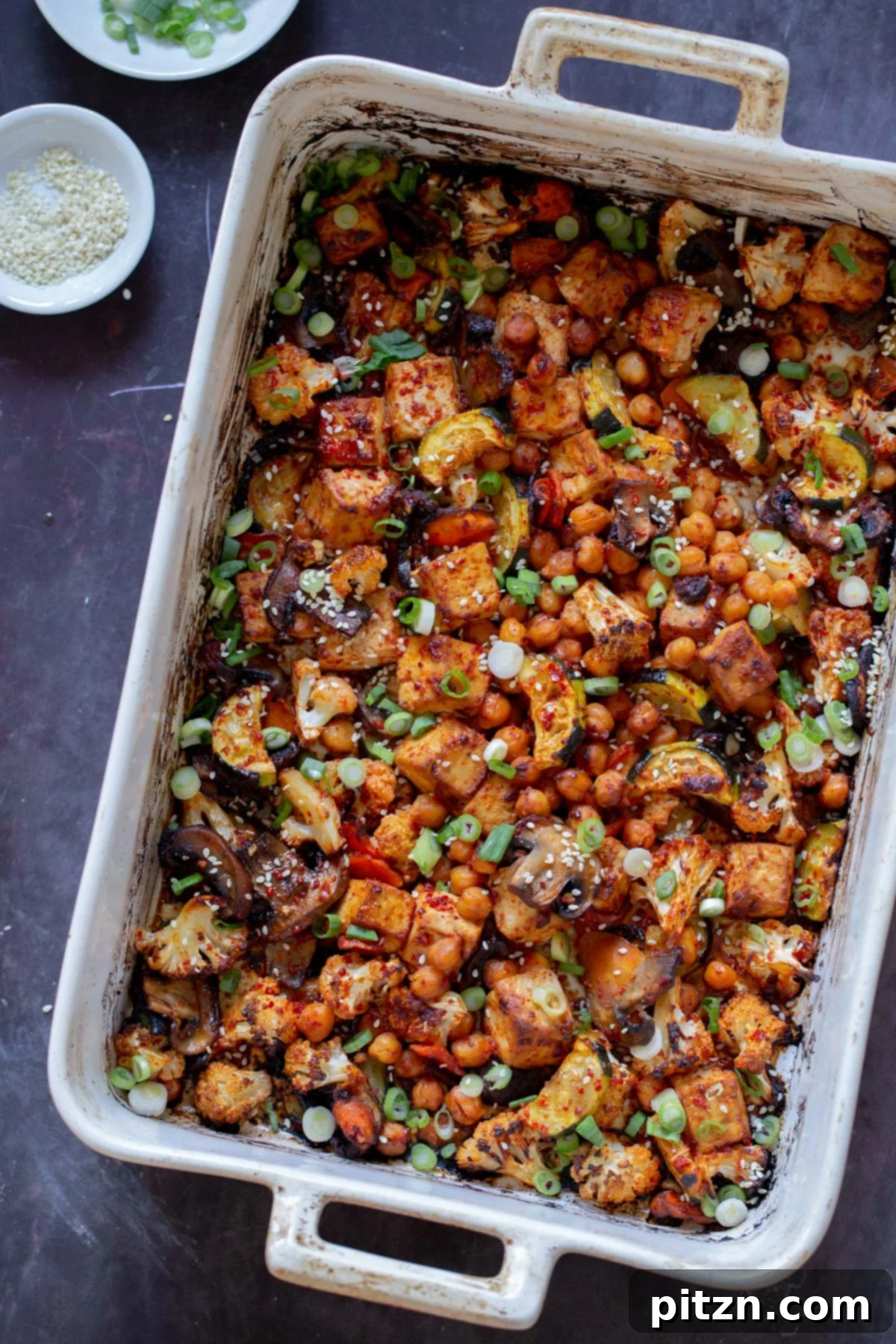
Table of Contents
- Introduction to Gochujang: The Flavor Powerhouse
- The Magic of Sheet Pan Dinners
- Why You’ll Adore These Gochujang Bowls
- More Korean-Inspired Recipes
- Sheet Pan Gochujang Bowl Recipe
- Ingredients for Your Perfect Bowl: Choices and Substitutions
- Expert Tips for Success
- Step-by-Step Guide: Crafting Your Gochujang Bowls
- Serving and Customization Ideas
- Storage and Meal Prep
- Frequently Asked Questions
Introduction to Gochujang: The Flavor Powerhouse
If you’re new to the wonders of Gochujang, prepare for a culinary revelation! Gochujang is a cornerstone of Korean cuisine, a fermented chili paste celebrated for its unique blend of spicy, savory, and subtly sweet notes. Its deep red hue and complex umami profile make it an indispensable ingredient for marinades, sauces, and stews. It’s more than just heat; it’s a rich, flavorful foundation that elevates any dish it touches.
In this recipe, we amplify that incredible flavor by pairing Gochujang paste with Gochugaru flakes. Gochugaru, often referred to as Korean chili powder, is made from sun-dried chili peppers and is the very chili used to create Gochujang paste. By incorporating both, we create a truly profound and authentic Korean chili flavor that permeates every bite of our tofu and vegetables. This “double Gochujang” approach ensures a depth of flavor that is both bold and incredibly satisfying, making your sheet pan dinner an unforgettable experience.
The Magic of Sheet Pan Dinners
The beauty of a sheet pan meal lies in its simplicity and efficiency. Imagine preparing a full, balanced meal with minimal cleanup, all while achieving perfectly roasted textures and concentrated flavors. That’s the promise of the sheet pan method! For busy weeknights, meal prepping, or simply when you crave a delicious homemade dinner without the fuss, sheet pan recipes are an absolute game-changer. Everything cooks together on one or two baking sheets, meaning less time washing dishes and more time enjoying your meal.
This particular sheet pan Gochujang bowl exemplifies this convenience. We’re talking about a vibrant medley of plant-based protein and colorful vegetables, all roasted together in that magnificent Gochujang marinade. While your oven does all the hard work, you can effortlessly whip up a tangy, refreshing dressing to drizzle over your finished bowls. This innovative dressing, featuring vinegar, a touch of Gochugaru, and maple syrup, adds a bright counterpoint to the rich roasted flavors, creating a harmonious and utterly delicious meal.
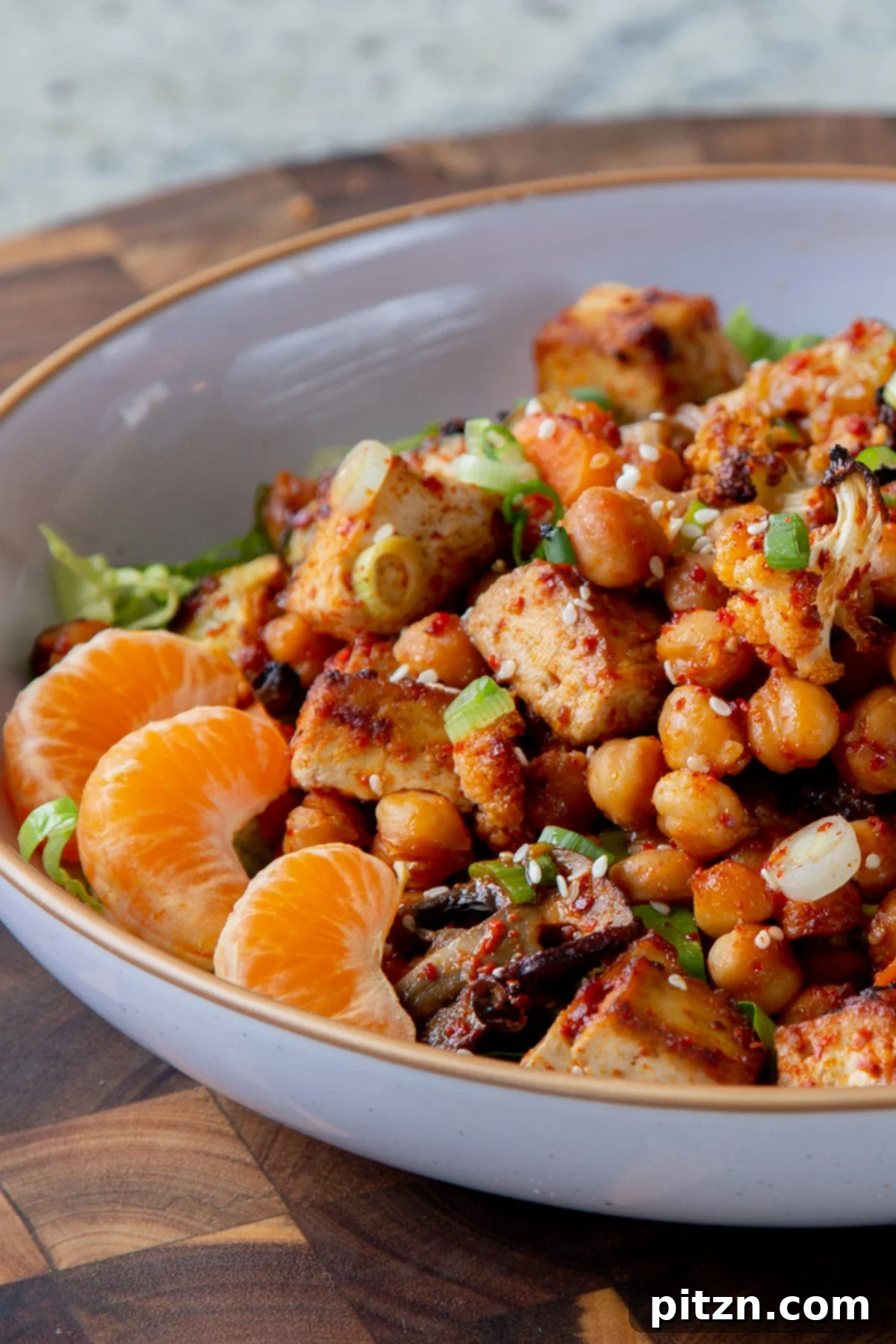
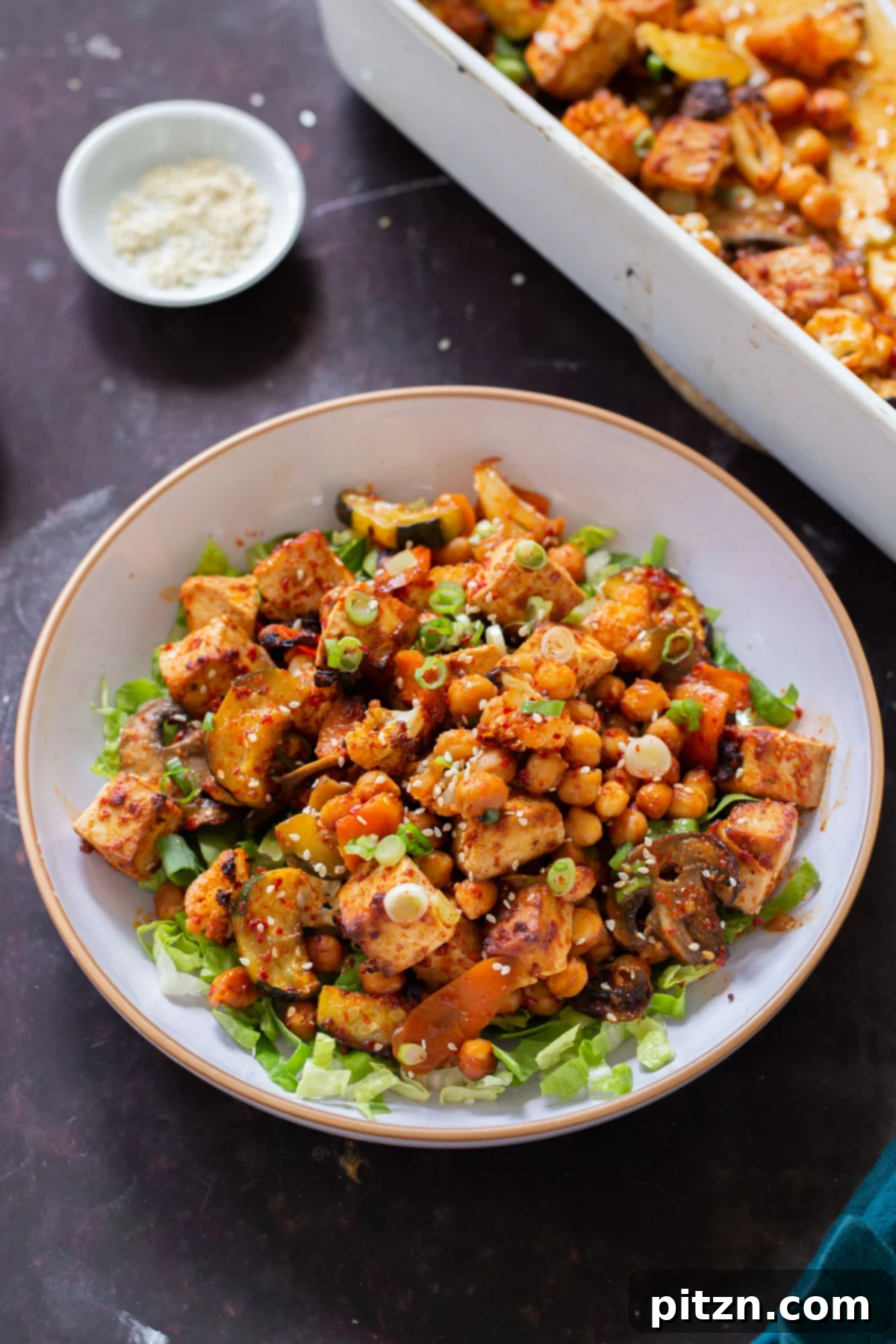
Once baked to perfection, your flavorful tofu and veggies are simply dressed and ready to serve. Whether you enjoy them as a standalone dish, piled high over fluffy rice, tossed with noodles, or as a vibrant salad with fresh spring greens, these Gochujang bowls are incredibly versatile. You can even tuck the mixture into wraps for a portable lunch or serve it as a hearty entrée with a side of steamed greens. The possibilities are endless!
And let’s not forget that dressing! Its bright, zesty profile truly livens up the entire bowl. For an extra layer of freshness and delightful crunch, consider adding quick-pickled vegetables like thinly sliced onions, cucumbers, or carrots. These crunchy additions complement the tender roasted ingredients beautifully, creating a dynamic texture and flavor experience. Get ready to elevate your dinner routine with this gorgeous and easy sheet pan meal!
My Winning Formula for Banging Sheet Pan Dinners!
- **Diverse Veggies:** Select a variety of your favorite vegetables and chop them into similar-sized pieces for even cooking.
- **Robust Proteins:** Incorporate a mix of plant-based proteins. Cubed tofu, chickpeas, tempeh, or seitan are excellent choices, often paired with beans or nuts.
- **Bold Flavor Profile:** Choose a distinct flavor theme. Options include spicy savory profiles like Cajun, Berbere, chipotle pepper, Gochugaru pepper, Indian garam masala, or Jamaican jerk.
- **Toss and Bake:** Coat your chosen ingredients in a delicious marinade or seasoning, then spread them evenly on a sheet pan and bake.
- **Complementary Dressing:** Pair your roasted creations with a zingy lemon dressing, a creamy sauce, or a sweet and tangy vinaigrette to elevate the flavors.
- **Versatile Serving:** Serve as a wholesome bowl, alongside bread, over rice, or with crunchy greens or lettuce.
Why You’ll Adore These Gochujang Bowls
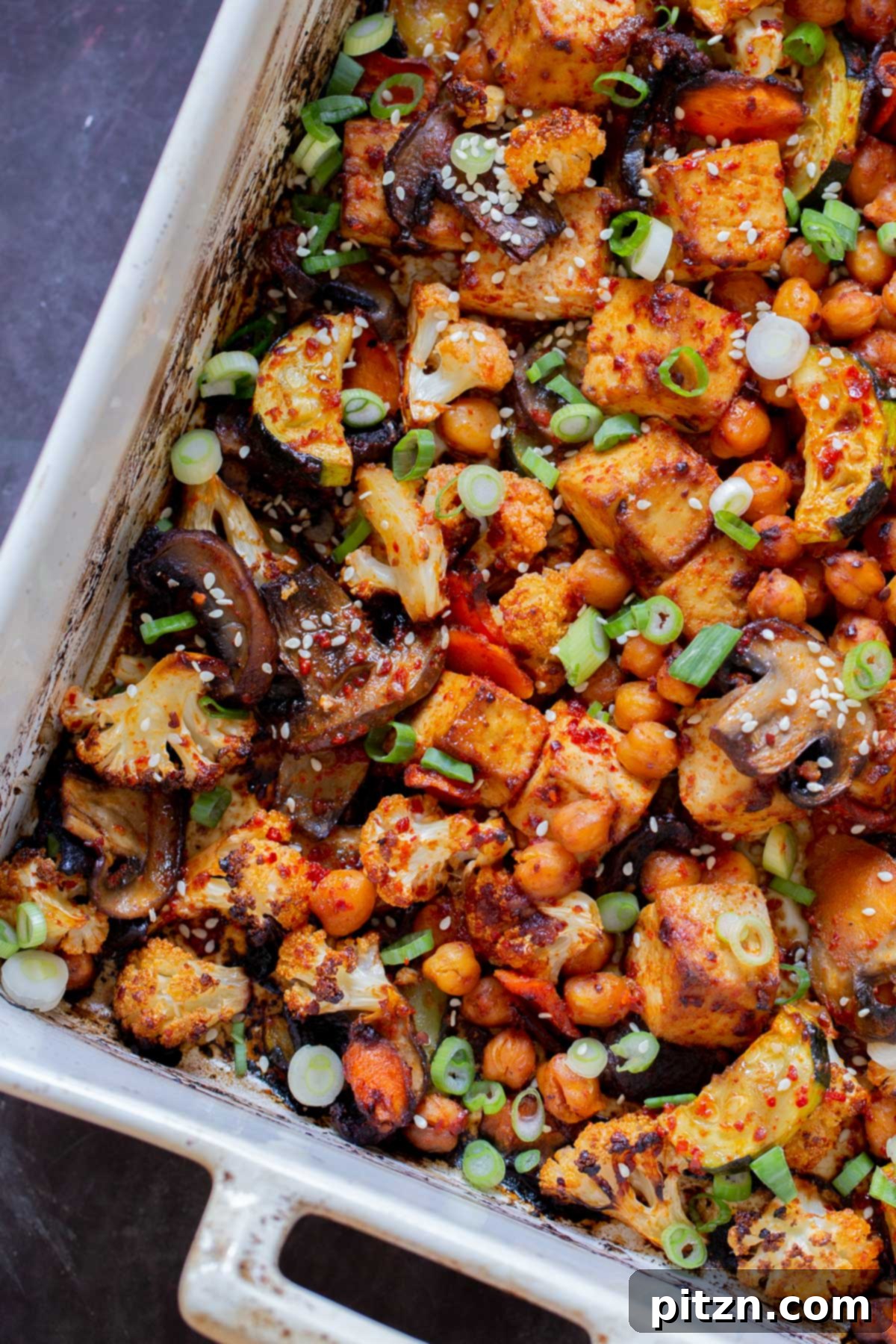
These Sheet Pan Gochujang Bowls aren’t just a meal; they’re a culinary experience designed for convenience and flavor. Here’s why this recipe will quickly become a staple in your kitchen:
- **Effortless One-Pan Cooking:** Say goodbye to stacks of dirty dishes! This entire meal comes together on a single baking sheet, significantly cutting down on cleanup time. It’s the ultimate solution for busy evenings when you want a homemade, healthy dinner without the extensive kitchen work.
- **Unbeatably Versatile:** This recipe is a true chameleon. It encourages you to use whatever vegetables you have on hand, making it perfect for reducing food waste. Serve it over fluffy rice, sturdy noodles, crisp lettuce, or even tucked into warm wraps – the choice is yours, adapting effortlessly to your cravings or what’s available.
- **Bold, Double Gochujang Flavor:** We take Korean flavor seriously! By incorporating both Gochujang paste and Gochugaru chili flakes, this dish achieves an extraordinary depth of flavor. The paste delivers fermented umami richness, while the flakes add a vibrant, authentic chili kick, creating a truly memorable taste profile.
- **Optional Fresh & Crunchy Additions:** Elevate your bowl with quick-pickled vegetables. A simple addition of thinly sliced cucumbers, carrots, or onions, lightly dressed in a tangy vinaigrette, provides a refreshing crunch and bright acidity that perfectly complements the rich roasted components.
- **Dietary Friendly & Adaptable:** This recipe is naturally nut-free, catering to common allergens. With simple modifications, it can also be easily made gluten-free (using tamari and gluten-free Gochujang) and soy-free (using chickpea flour tofu and coconut aminos), ensuring everyone can enjoy this delicious meal.
More Korean-Inspired Recipes to Explore
If you’re loving the flavors of Gochujang, be sure to try these other fantastic Korean-inspired vegan recipes:
- Gochujang Banh Mi Inspired Sandwich
- Hearty Gochujang Lentils
- Quick Gochujang Tofu Stir Fry
- Creamy Peanut Gochujang Rice
- Unique Blackberry Gochujang Tofu
Sheet Pan Gochujang Bowl
Vegan Richa
15 mins
35 mins
50 mins
4
Main, Main Course
Korean
Print Recipe
A Sheet Pan Gochujang Bowl is an incredibly easy, flavor-packed, and versatile meal. It’s perfect for using up leftover veggies and creating a wholesome dish with minimal effort. Tofu, mixed vegetables, and chickpeas are generously tossed in a delicious Gochujang marinade and baked until perfectly tender and slightly crisp. Serve these delightful bowls over rice, fresh lettuce, or noodles for a complete and satisfying plant-based meal. Naturally nut-free, with gluten-free and soy-free options available.
Ingredients
For the Baked Tofu & Veggies
- 7 ounces firm or extra firm tofu, pressed for 15 minutes and then cubed
- 1 cup cooked chickpeas (canned, drained & rinsed)
- 4 ounces mushrooms (white, baby portabella, or cremini), quartered
- 2 cups cauliflower florets
- 1/2 cup chopped carrots
- 1/2 cup or more chopped zucchini
For the Gochujang Marinade
- 1 tablespoon soy sauce (use tamari for gluten-free or coconut aminos for soy-free)
- 1 tablespoon sesame oil
- 2 tablespoons Gochujang paste
- 1 tablespoon Gochugaru flakes
- 1 teaspoon garlic powder
- 1/2 teaspoon onion powder
- 1/2 teaspoon salt
For the Zesty Gochugaru Dressing
- 1 tablespoon white vinegar (or rice vinegar)
- 1 tablespoon maple syrup
- 1/2 teaspoon Gochugaru flakes
- 1-2 tablespoons water
- 1/2 teaspoon garlic powder (or 1 small clove of garlic, minced, for fresher flavor)
- Sesame seeds, green onion for garnish
Instructions
Part 1: Bake the Tofu and Veggies
-
Preheat your oven to 400° F (205° C). Prepare a large baking sheet by lining it with parchment paper for easy cleanup.
-
If you haven’t already, cube the pressed tofu and chop all your vegetables into roughly similar-sized pieces. This ensures everything cooks evenly. Transfer the cubed tofu, chickpeas, mushrooms, cauliflower florets, carrots, and zucchini to a large mixing bowl.
-
In a separate small bowl, whisk together all the marinade ingredients: soy sauce, sesame oil, Gochujang paste, Gochugaru flakes, garlic powder, onion powder, and salt until thoroughly combined.
-
Pour the prepared Gochujang marinade over the tofu and vegetables in the large bowl. Toss everything gently but thoroughly until every piece is evenly coated. Spread this marinated mixture in a single layer (or as close to a single layer as possible) onto your parchment-lined baking sheet. Bake for 35 to 45 minutes, stirring the mixture once halfway through to ensure even roasting and beautiful caramelization. The vegetables should be tender-crisp, and the tofu lightly golden and slightly chewy.
Part 2: Prepare the Gochugaru Dressing
-
While the tofu and veggies are baking, prepare the refreshing dressing. In a small bowl, combine white vinegar, maple syrup, Gochugaru flakes, water, and garlic powder (or minced fresh garlic). Whisk until well blended. Add a small pinch of salt to taste. Set aside until serving.
Part 3: Assemble Your Gochujang Bowls
-
Once the tofu and veggies are perfectly cooked, with a delightful crispness on the tofu, remove the baking sheet from the oven. Drizzle a generous amount of the prepared Gochugaru dressing over the hot mixture.
-
Transfer the flavorful roasted tofu and vegetables into individual serving bowls. Garnish with sesame seeds and freshly chopped green onions, if desired. Serve immediately on their own, over a bed of fluffy rice, hearty quinoa, Asian-style noodles, or fresh chopped greens for a lighter option. You can also use this versatile mixture as a filling for wraps or sandwiches. Enjoy!
Video Tutorial
Recipe Notes
For optimal results with sheet pan meals, I recommend using a ceramic or stoneware baking dish. These materials help promote more even cooking and prevent the vegetables from drying out excessively, resulting in perfectly tender-crisp textures.
To prepare quick-pickled veggies to accompany your bowl: Thinly slice 1/2 to 1 cucumber, some julienned carrots, and a bit of onion. In a bowl, mix these vegetables with a double batch of the Gochugaru dressing and an additional 2 to 3 tablespoons of water. Allow the vegetables to marinate for 15 to 20 minutes at room temperature, or for at least an hour in the refrigerator, to develop their tangy flavor and crunch before serving.
These Gochujang bowls are inherently nut-free, making them suitable for those with nut allergies. To make the recipe **gluten-free**, ensure you use a certified gluten-free Gochujang paste and substitute soy sauce with tamari.
For a soy-free version of this recipe: Opt for chickpea flour tofu instead of regular tofu, and replace soy sauce with coconut aminos. You can also easily **make your own soy-free Gochujang** by combining 2 teaspoons each of Gochugaru pepper flakes, chickpea miso, and coconut aminos with 1 teaspoon of maple syrup.
Nutrition Information (Approximate Per Serving)
Calories: 193 kcal | Carbohydrates: 24g | Protein: 12g | Fat: 7g | Saturated Fat: 1g | Sodium: 589mg | Potassium: 518mg | Fiber: 6g | Sugar: 8g | Vitamin A: 2731 IU | Vitamin C: 30mg | Calcium: 111mg | Iron: 2mg
Nutrition information is automatically calculated and should be used as an approximation only.
Did you try this Sheet Pan Gochujang Bowl recipe? We’d love to hear from you! Rate and comment below to share your experience.
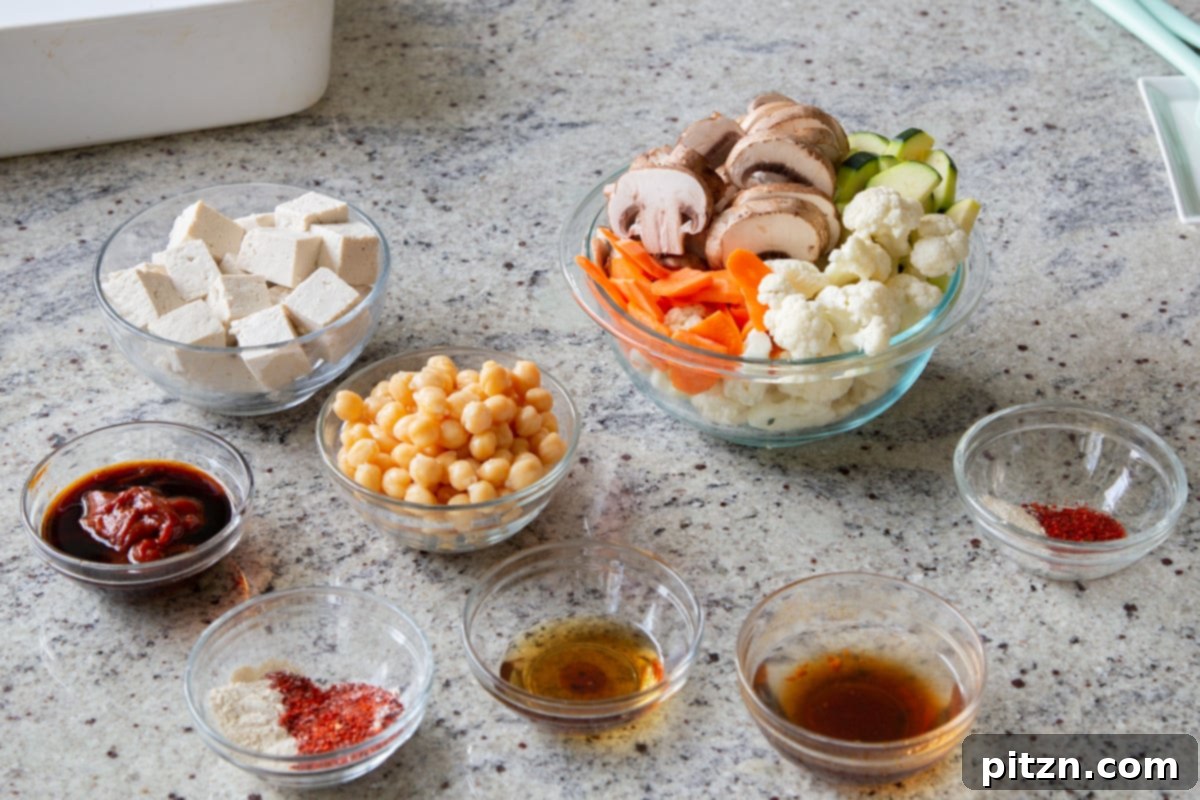
Ingredients for Your Perfect Bowl: Choices and Substitutions
Crafting the perfect Sheet Pan Gochujang Bowl starts with selecting quality ingredients. Here’s a closer look at what you’ll need and how you can adapt the recipe to fit your preferences or dietary needs:
- **Tofu:** This serves as the primary protein in our plant-based bowl. Opt for **firm or extra-firm tofu**, as it holds its shape best and gets wonderfully crispy when baked. Remember to press it beforehand to remove excess water, which helps it absorb the marinade and crisp up nicely. For a soy-free alternative, chickpea flour tofu works beautifully.
- **Chickpeas:** Cooked or canned chickpeas (drained and rinsed) add another layer of protein and a delightful texture. They become slightly chewy and infused with flavor during roasting. You can substitute with other beans like cannellini or black beans if preferred, though chickpeas are classic.
- **Mushrooms:** Hearty mushrooms like white button, baby portabella, or cremini are ideal. Their earthy flavor complements the spicy Gochujang, and they develop a lovely texture when roasted. Quartering them ensures they cook evenly with the other vegetables.
- **Veggies:** Our recipe features cauliflower, carrots, and zucchini for a balanced mix of textures and nutrients. However, this is where you can truly customize! Feel free to use whatever seasonal vegetables you have on hand or need to use up. Excellent additions include bell peppers (any color), broccoli florets, asparagus, green beans, or even sweet potato cubes (cut smaller for quicker cooking). Just ensure all vegetables are cut to a similar size for uniform cooking.
- **Soy Sauce:** Essential for adding deep umami and saltiness to the marinade. If you need a **gluten-free option**, readily substitute with tamari. For a **soy-free alternative**, coconut aminos provide a similar savory depth.
- **Sesame Oil:** This ingredient is key for both flavor and texture. It contributes a rich, nutty aroma and helps the tofu and vegetables achieve a beautiful crispiness in the oven. Use toasted sesame oil for maximum flavor.
- **Gochujang Paste:** The star of the show! You can find this spicy Korean fermented chili paste in most Asian markets or well-stocked grocery stores. Look for varieties clearly labeled as gluten-free if needed. For a **homemade, soy-free, and gluten-free Gochujang**, mix 2 teaspoons each of Gochugaru pepper flakes, chickpea miso, and coconut aminos with 1 teaspoon of maple syrup.
- **Gochugaru Flakes:** These Korean chili flakes are used in both the marinade and the dressing, doubling down on that authentic spicy flavor. They offer a clean, vibrant heat without being overwhelmingly hot. Adjust the amount to your spice preference.
- **Garlic Powder & Onion Powder:** These aromatic powders provide a foundational savory depth to the marinade. For the dressing, while garlic powder is convenient, a minced fresh clove of garlic can offer an even fresher and more pungent garlic punch.
- **Vinegar:** White vinegar or rice vinegar gives the dressing its essential tangy brightness, cutting through the richness of the roasted dish. Apple cider vinegar can be used in a pinch for a slightly different flavor profile.
- **Maple Syrup:** A touch of maple syrup in the dressing balances the tanginess of the vinegar and the heat of the Gochugaru, adding a subtle sweetness that rounds out the flavors beautifully. Agave nectar can be a suitable substitute.
- **Garnishes:** Don’t forget the finishing touches! Toasted sesame seeds add a delightful crunch and nutty flavor, while freshly chopped green onions provide a burst of color and a mild oniony bite.
Expert Tips for a Perfect Gochujang Bowl
Achieving a perfectly cooked and incredibly flavorful Sheet Pan Gochujang Bowl is easy with these simple tips:
- **Uniform Chopping is Key:** When preparing your vegetables, ensure they are all chopped into roughly similar sizes. This is crucial for even cooking, preventing some pieces from becoming overcooked while others remain undercooked. Aim for bite-sized pieces that will roast consistently within the recommended time frame. For denser vegetables like cauliflower or carrots, slightly smaller pieces might be beneficial.
- **Don’t Overcrowd the Pan:** A common mistake with sheet pan meals is overloading the baking sheet. For best results, spread your marinated tofu and vegetables in a single, even layer. If your pan is too crowded, the ingredients will steam instead of roast, leading to soggy textures instead of crispy, caramelized goodness. If necessary, use two baking sheets.
- **Parchment Paper is Your Best Friend:** Always line your baking sheet with parchment paper. This not only prevents sticking but also makes cleanup incredibly easy – often just a quick rinse of the pan is all you need!
- **Press Your Tofu Thoroughly:** For truly flavorful and firm tofu, pressing out excess water is essential. This allows the tofu to better absorb the Gochujang marinade and achieve a crispier exterior when roasted. Press it for at least 15-30 minutes using a tofu press or by wrapping it in paper towels and placing a heavy object on top.
- **Stir Halfway Through:** Giving the ingredients a good stir about halfway through the baking time helps ensure even cooking and allows all sides of the tofu and vegetables to get nicely caramelized and coated in the marinade.
- **Meal Prep Savvy:** To save time on busy days, you can prep the tofu (press and cube), chop all your vegetables, and even whisk together the marinade and dressing a day in advance. Store everything separately in airtight containers in the refrigerator, then combine and bake when ready.
- **Taste and Adjust the Dressing:** The Gochugaru dressing provides a vital fresh, tangy, and sweet counterpoint. Before serving, taste it and adjust the sweetness (maple syrup) or tang (vinegar) to your liking. A little extra water can thin it if it’s too thick.
Step-by-Step Guide: Crafting Your Gochujang Bowls
Follow these easy steps to create your delicious Sheet Pan Gochujang Bowls:
Part 1: Prepare and Bake the Tofu and Veggies
Begin by preheating your oven to a robust 400° F (205° C). While the oven heats, line a large, sturdy baking sheet with parchment paper to ensure easy release and minimal cleanup. This step is crucial for perfect roasting.
Next, focus on your ingredients. If you haven’t already, cube your pressed tofu into bite-sized pieces. Then, prepare your chosen vegetables: chop the mushrooms into quarters, and cut the cauliflower, carrots, and zucchini into pieces of roughly the same size. Consistency in size is key here; it ensures all your ingredients cook through at a similar rate, resulting in perfectly tender-crisp vegetables and nicely browned tofu. Avoid pieces that are too large (they won’t cook in time) or too small (they might burn). Transfer all these ingredients – cubed tofu, cooked chickpeas, mushrooms, cauliflower florets, carrots, and zucchini – into a spacious mixing bowl.
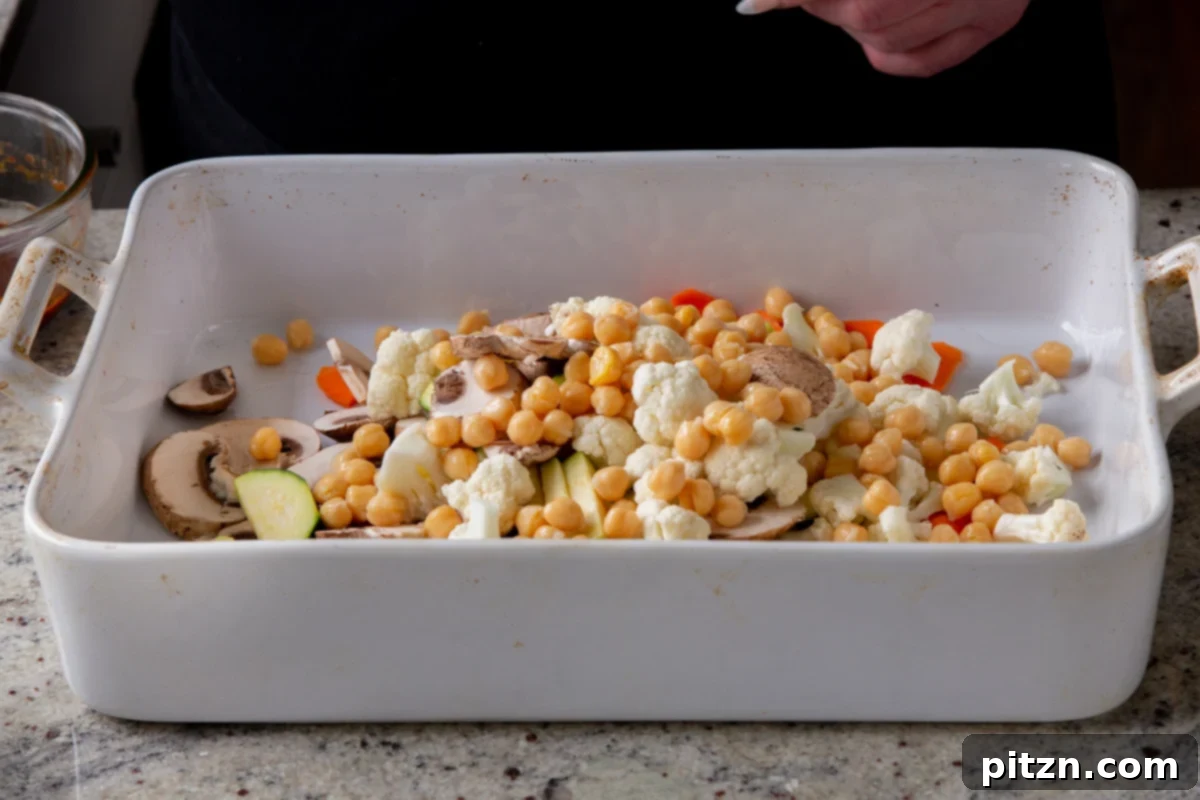
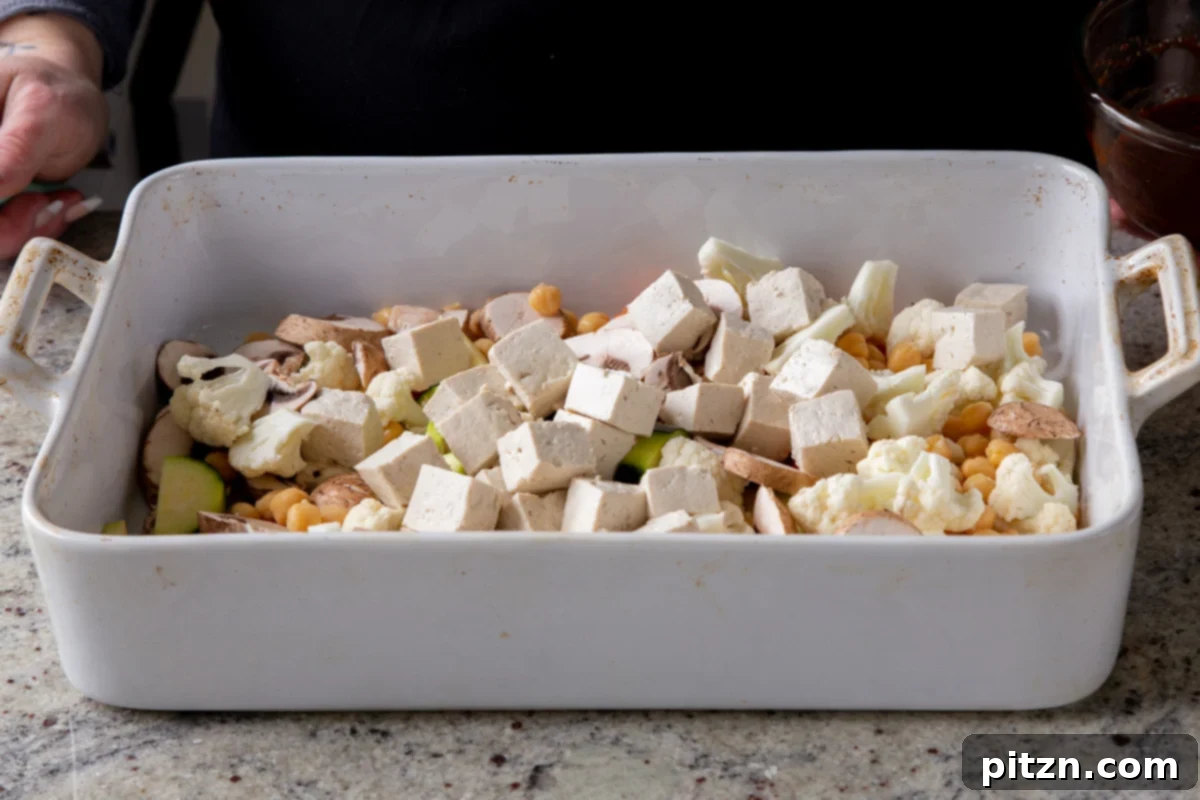
Now, it’s time to create the star of the show: the Gochujang marinade. In a separate small bowl, combine the soy sauce (or tamari/coconut aminos), sesame oil, Gochujang paste, Gochugaru flakes, garlic powder, onion powder, and salt. Whisk vigorously until all ingredients are thoroughly blended into a smooth, aromatic paste.
Pour this rich Gochujang marinade over the tofu and vegetables in the large mixing bowl. Using your hands or a large spoon, toss everything together meticulously, ensuring every single piece of tofu, every chickpea, and every vegetable floret is beautifully coated in the vibrant red marinade. Then, spread this entire mixture evenly onto your prepared parchment-lined baking sheet. Make sure the ingredients are spread in a single layer as much as possible to allow for optimal roasting, not steaming. Bake in the preheated oven for 35 to 40 minutes. Remember to give everything a good stir once halfway through the cooking time to encourage even browning and caramelization. You’re looking for tender-crisp vegetables and slightly golden, chewy tofu.
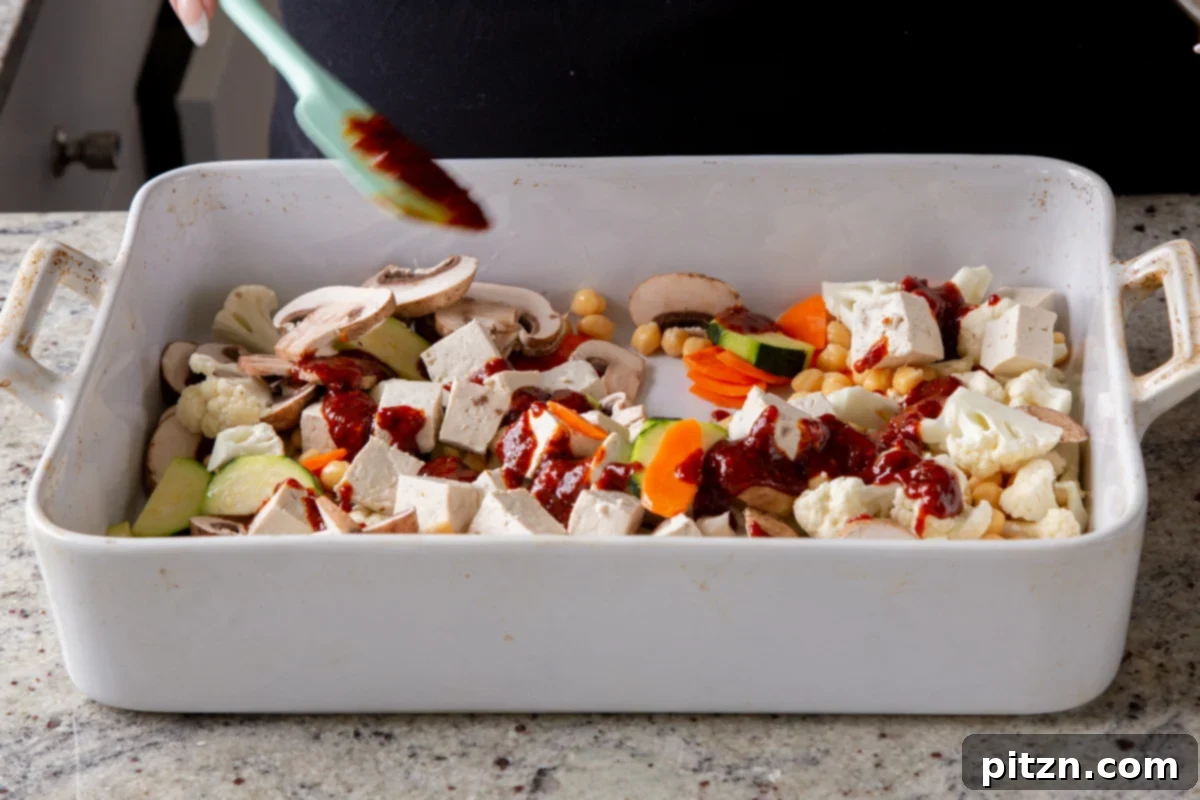
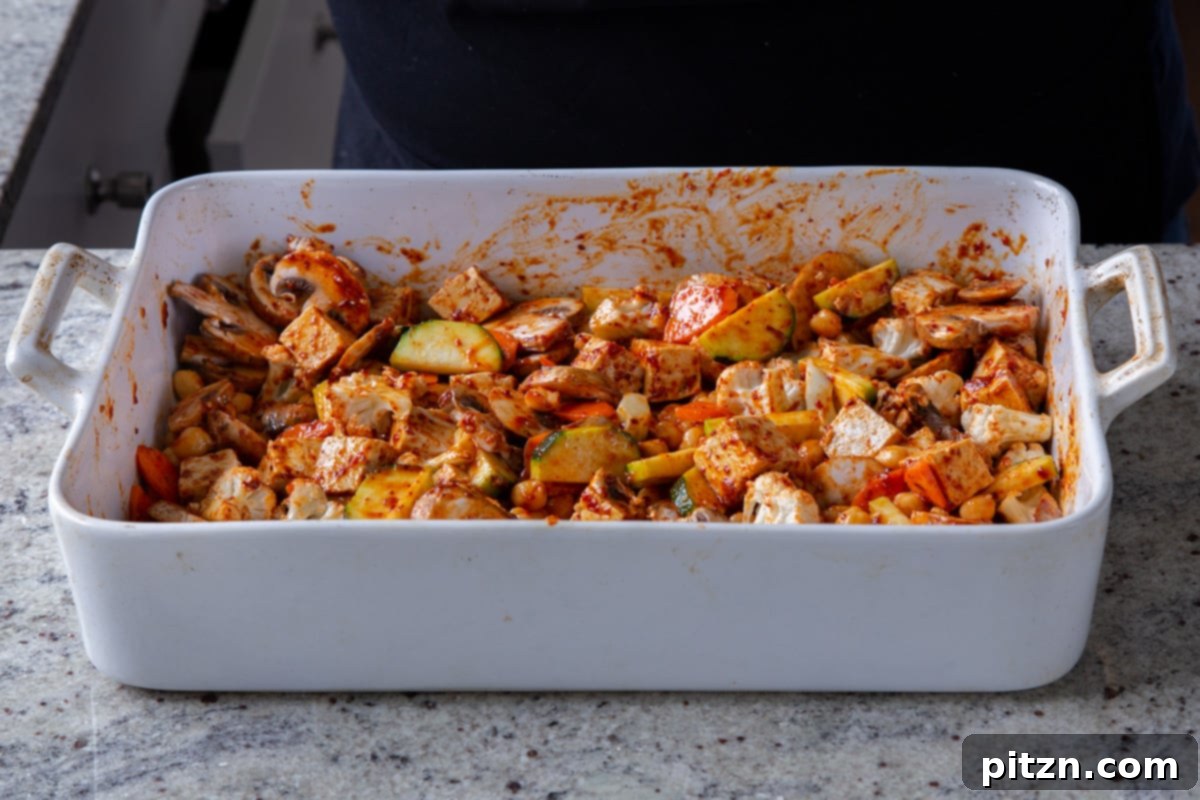
Part 2: While Baking, Prepare the Zesty Dressing
While your delightful tofu and veggies are roasting in the oven, take a few moments to prepare the essential tangy dressing. In another small bowl, whisk together the white vinegar (or rice vinegar), maple syrup, Gochugaru flakes, 1-2 tablespoons of water, and garlic powder (or minced fresh garlic). Mix until all ingredients are fully incorporated and the dressing is smooth. Taste and add a tiny pinch of salt if needed. Set this aside; its bright flavors will provide a refreshing contrast to the rich roasted components.
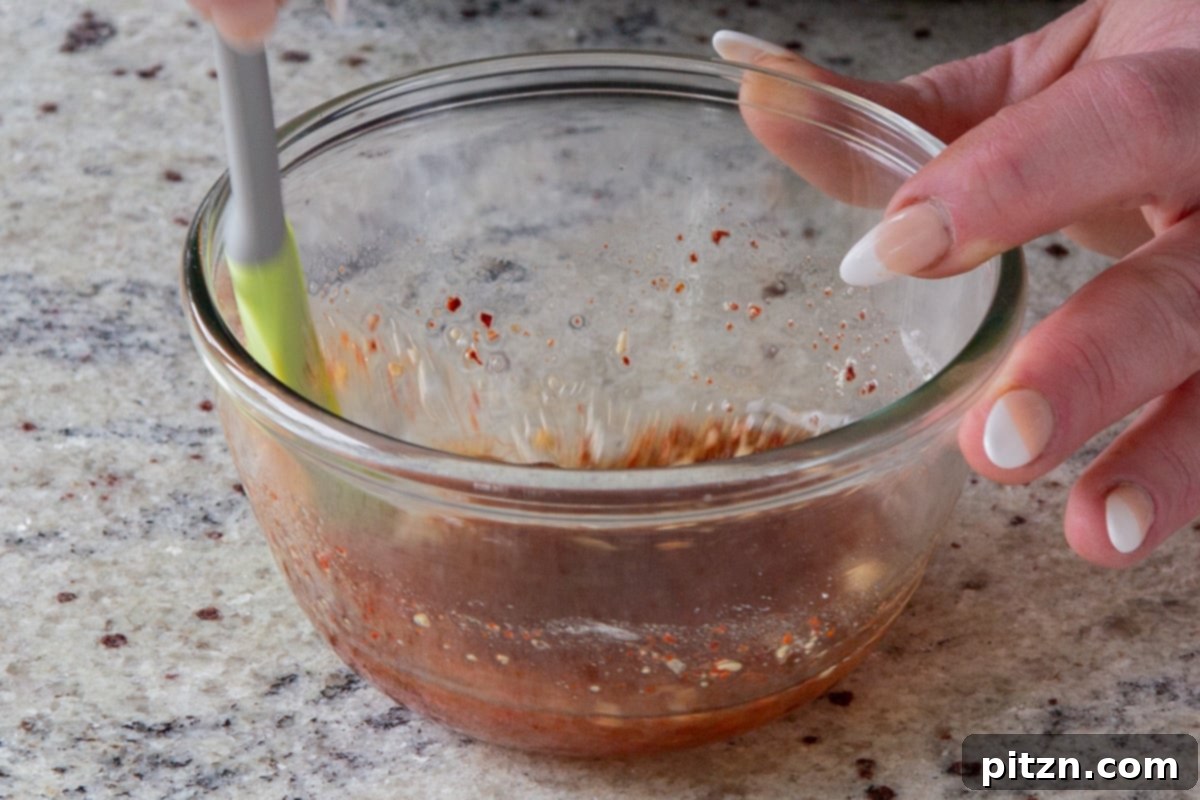
Part 3: Assemble Your Gochujang Bowls
Once your vegetables are perfectly cooked through and the tofu has achieved that enticingly crisp, golden-brown edge, carefully remove the baking sheet from the oven. The aromas filling your kitchen will be incredible!
Now, it’s time to bring it all together. Generously drizzle some of your freshly prepared Gochugaru dressing over the hot, roasted tofu and vegetable mixture directly on the baking sheet. This adds an immediate burst of fresh flavor and moisture.
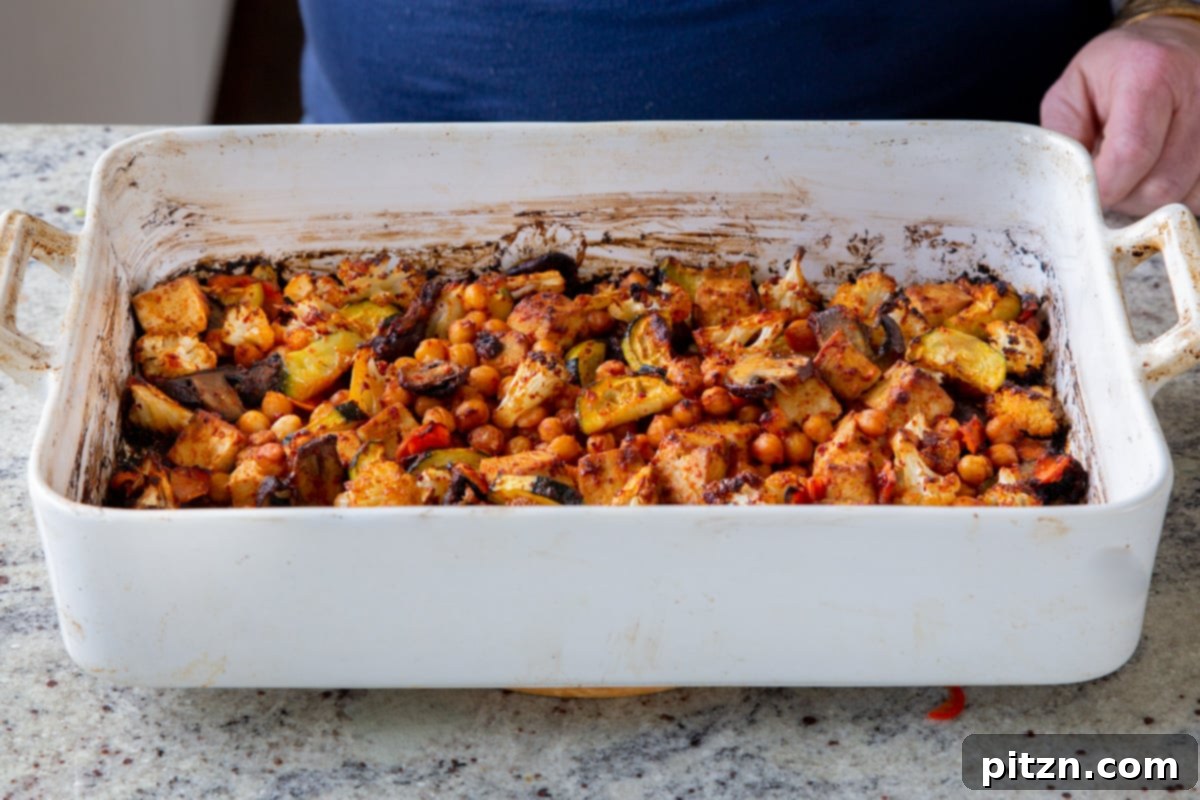
Finally, transfer the cooked, savory veggies and crisp tofu into your chosen serving bowls. This meal is incredibly versatile in how it can be enjoyed. Serve them on their own for a low-carb option, or for a more substantial meal, pile them over a bed of fluffy steamed rice, hearty quinoa, or your favorite noodles. For a refreshing twist, serve them with a generous helping of chopped spring greens or crisp lettuce, transforming them into a hearty salad. Don’t hesitate to get creative – they also make a fantastic filling for wraps, tacos, or even unique sandwiches. Garnish with sesame seeds and fresh green onions for a final flourish. Enjoy every flavorful bite of your homemade Sheet Pan Gochujang Bowls!
Serving and Customization Ideas
The beauty of these Sheet Pan Gochujang Bowls lies in their incredible versatility. While delicious straight from the pan, here are some ideas to elevate your meal and make it uniquely yours:
- **Over Grains:** Classic choices include fluffy white rice, nutty brown rice, or protein-rich quinoa. The grains soak up the extra sauce and make the meal incredibly satisfying.
- **With Noodles:** For an Asian-inspired twist, serve the mixture over a bed of warm ramen noodles, rice vermicelli, or even spiralized zucchini noodles for a lighter option.
- **As a Salad:** Layer the warm Gochujang tofu and veggies over a generous bed of fresh spring greens, chopped romaine lettuce, or baby spinach. The contrast of warm and cool, soft and crisp, is delightful.
- **Wraps & Tacos:** Spoon the mixture into warm flour tortillas, corn tortillas, or crisp lettuce cups for a fun, interactive meal. Add a dollop of vegan sour cream or a sprinkle of fresh cilantro.
- **Sandwich Filling:** Get creative and use the roasted mixture as a unique and flavorful filling for sandwiches or even a vegan “bahn mi” style baguette.
- **Add-ins for Extra Flavor & Texture:**
- **Kimchi:** A spoonful of fermented kimchi adds a probiotic boost and a fantastic tangy, spicy kick.
- **Avocado:** Creamy avocado slices offer a cooling contrast and healthy fats.
- **Fresh Herbs:** Cilantro, mint, or basil can add an unexpected layer of freshness.
- **Crunchy Toppings:** Beyond sesame seeds, consider chopped peanuts (if not nut-free), crispy fried onions, or even a sprinkle of nori flakes.
- **Spicy Boost:** A dash of sriracha or extra Gochugaru flakes for those who love more heat.
- **Different Veggies:** Don’t limit yourself to the recipe’s suggestions. Bell peppers, broccoli, asparagus, green beans, or even small chunks of sweet potato can be excellent additions. Just ensure they are cut to similar sizes for even cooking.
Storage and Meal Prep
These Sheet Pan Gochujang Bowls are fantastic for meal prepping, allowing you to enjoy delicious, healthy meals throughout the week with minimal effort. Here’s how to store and prep them efficiently:
- **Storage:** Allow any leftovers to cool completely to room temperature before transferring them to an airtight container. They can be stored in the refrigerator for up to 3-4 days. The dressing should be stored separately in a small airtight container in the fridge for up to 5-7 days.
- **Reheating:** Reheat the tofu and vegetables in the microwave until warmed through, or for best results, spread them on a baking sheet and warm in a preheated oven (350°F/175°C) for 10-15 minutes until heated and slightly re-crisped. Drizzle with fresh dressing just before serving.
- **Meal Prep Strategy:**
- **Day 1 (Prep Day):** Press and cube your tofu. Chop all your chosen vegetables. Prepare both the Gochujang marinade and the Gochugaru dressing. Store all components in separate airtight containers in the refrigerator.
- **Cooking Day:** On the day you want to eat, simply combine the tofu and vegetables with the marinade, spread on a sheet pan, and bake. This reduces active cooking time significantly, allowing for a quick, fresh meal in minutes.
- **Freezing:** While the roasted vegetables and tofu can be frozen (in an airtight container for up to 2 months), the texture of the tofu and some vegetables (like zucchini) may become softer upon thawing. It’s generally best enjoyed fresh or refrigerated. The dressing does not freeze well.
Frequently Asked Questions About Sheet Pan Gochujang Bowls
Yes, these Gochujang bowls are designed to be quite allergy-friendly! They are naturally **nut-free**, making them a great option for those with nut allergies. To make the recipe **gluten-free**, ensure you use a certified gluten-free Gochujang paste and substitute soy sauce with tamari. For a completely **soy-free version**, you can use chickpea flour tofu instead of traditional tofu, replace soy sauce with coconut aminos, and make your own soy-free Gochujang. A simple homemade Gochujang can be made by mixing 2 teaspoons each of Gochugaru pepper flakes, chickpea miso, and coconut aminos with 1 teaspoon of maple syrup.
Creating quick-pickled vegetables to complement your Gochujang bowl is very simple and adds a wonderful tangy crunch. Start by thinly slicing 1/2 to 1 cucumber, some julienned carrots, and a bit of onion. In a mixing bowl, combine these sliced vegetables. Then, prepare a double batch of the Gochugaru dressing from the recipe, and add an additional 2 to 3 tablespoons of water to it. Pour half of this expanded dressing over the sliced vegetables and toss to coat thoroughly. Let the vegetables marinate at room temperature for 15 to 20 minutes, or for an even deeper flavor, refrigerate them for at least an hour before serving. They add a bright, refreshing counterpoint to the rich roasted flavors.
Absolutely! This recipe is incredibly adaptable. While we suggest cauliflower, carrots, zucchini, and mushrooms, feel free to substitute or add other vegetables you enjoy or have on hand. Great alternatives include bell peppers (any color), broccoli florets, green beans, asparagus, or even small cubes of sweet potato. The key is to cut all vegetables into similar sizes to ensure they cook evenly. Denser vegetables may need to be cut slightly smaller or roasted for a few extra minutes.
Gochugaru flakes add an authentic Korean chili flavor and a pleasant heat to both the marinade and the dressing. If you don’t have them, you can still make a delicious meal. For the marinade, you can slightly increase the amount of Gochujang paste (if you like more heat) or add a pinch of cayenne pepper or regular chili flakes, though the flavor profile will differ slightly. For the dressing, you can omit the Gochugaru and rely on the tang of the vinegar and sweetness of the maple syrup. However, for the most authentic experience, we highly recommend sourcing Gochugaru flakes as they are distinct.
We hope you enjoy creating and savoring these incredibly flavorful and easy Sheet Pan Gochujang Bowls. They are a testament to how simple ingredients can come together to form a truly memorable and wholesome meal. Happy cooking!