
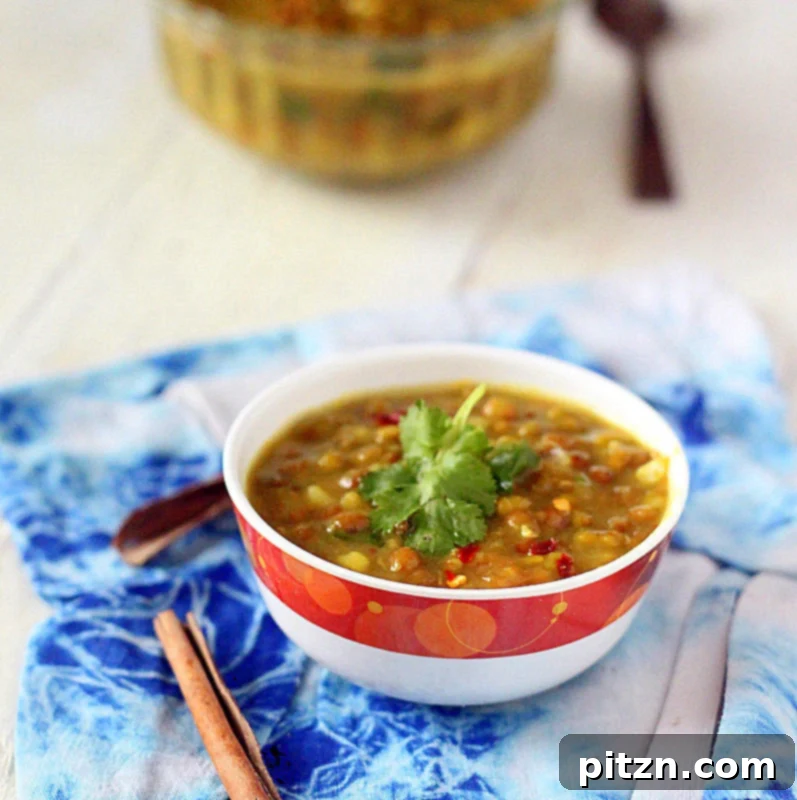
Discover the heartwarming embrace of a truly authentic **Mung Bean Daal Soup**, a staple in Indian cuisine renowned for its incredible flavor and nourishing benefits. This simple yet profound dish, often referred to as Indian lentil soup, is a testament to the power of whole foods and aromatic spices. Our recipe brings together the earthy goodness of whole red lentils and vibrant mung beans, simmered to perfection with a fragrant tempering of shallots and tomatoes. It’s a naturally vegan and gluten-free delight, making it an ideal meal for almost any dietary preference.
Jump to Recipe
The Enduring Appeal of Indian Daal: A Nutritional Powerhouse
After exhilarating culinary adventures, like perfecting gluten-free naan flatbreads, there’s nothing quite like returning to the comforting embrace of a classic Indian Daal. This lentil stew isn’t just a meal; it’s a culinary hug, a dish that nourishes both body and soul. Daal, a cornerstone of Indian cooking, is celebrated for its incredible versatility, depth of flavor, and impressive nutritional profile. It’s a dish that gracefully finds its place on the everyday dinner table, offering warmth and sustenance with every spoonful.
What makes daal particularly special for modern dietary needs? Most daal recipes are inherently **gluten-free** and, when prepared without butter or cream, entirely **vegan**. This makes them an excellent choice for a wide array of eaters seeking healthy, plant-based options. Packed with plant-based protein, dietary fiber, and essential minerals, lentils contribute significantly to a balanced diet. We often incorporate greens like kale and chard into our daals, not only to boost their nutritional content but also to add an extra layer of flavor and vibrant color.
Whether you’re new to Indian cuisine or a seasoned enthusiast, daal offers endless possibilities. From quick yellow lentil recipes to complex five-lentil preparations, there’s a daal for every palate and occasion. Explore more of our Daal posts here for a deeper dive into this incredible world of legumes.
Understanding the Rich Diversity of Indian Lentils
The term “daal” encompasses a vast array of lentils and beans, each with its unique texture, flavor, and cooking properties. These can be used whole, split with or without their skins, and often in delightful combinations. My father’s favorite, for instance, is the Paanch Rangi Daal, which translates to “five-color daal.” This traditional dish creatively blends five different types of lentils and beans, resulting in a complex and harmonious flavor profile that is truly unforgettable.
The beauty of Indian daal lies in its adaptability. While the basic cooking method for the lentils remains consistent, the true magic often happens in the “Tadka” or tempering. This technique involves blooming spices in hot oil or ghee, creating a fragrant base that defines the character of the daal. A simple change in the spices used for the tadka can completely transform the taste, offering an endless palette of flavors to explore. Here’s a closer look at how you can customize your tempering:
Crafting the Perfect Tadka: A Symphony of Spices
The Tadka is the soul of any daal, a crucial step where whole and ground spices are gently fried in oil or ghee to release their full aroma and flavor. This fragrant infusion is then added to the cooked lentils, elevating a simple stew into a culinary masterpiece. While the basic components often include oil, whole spices, chili, ginger, garlic, onion, and tomato, the specific combination and timing of these ingredients offer vast possibilities for customization:
- **Classic Pairings:** Fennel (Saunf) and Nigella (Kalonji) seeds are a match made in heaven, especially with split lentils, offering a delicate anise-like flavor. Mustard and cumin seeds, or mustard and coriander seeds, provide a robust and earthy base. Cumin and carom (Ajwain) seeds deliver a slightly pungent, carminative note that aids digestion.
- **Aromatic Enhancements:** Incorporate a bay leaf for a subtle, woodsy aroma, or add whole cloves (Laung) for a warm, spicy undertone. A pinch of garam masala, added towards the end of the tempering, imbues the daal with a rich, complex warmth.
- **Fresh & Fiery Notes:** Fry finely chopped fresh cilantro with the spices to add a burst of freshness. For those who enjoy a bolder flavor, allow the chopped garlic to crisp and brown in the oil before adding other ingredients, developing a nutty depth.
- **Tailored Aromatics:** Depending on your preference or dietary needs, you can simplify the tadka. Use only garlic or only ginger for a distinct flavor profile. Skip onions/shallots or tomatoes entirely for a lighter, purer lentil taste. Adding fried onions or shallots at the end offers a sweet, caramelized crunch.
Regional preferences also play a significant role in tadka variations. Some Indian regions favor mustard seeds in almost all their temperings, while others, like my mom, consider cumin indispensable. I personally enjoy fennel seeds with whole lentils like red and mung beans, finding that their sweetness complements the earthy legumes beautifully. For yellow lentils, a combination of coriander, nigella, and mustard seeds creates a wonderfully balanced and aromatic experience.
Don’t be intimidated by the array of spices. A simple yet flavorful tadka can be achieved by heating oil, adding some garam masala, then sautéing onion and tomato before stirring in your cooked lentils. This streamlined approach still delivers a delicious result. While commercially available curry powder is a convenient blend, it’s a modified version of traditional garam masala, often with added spices that deviate from authentic Indian flavors. For the purest taste, try to source freshly ground garam masala or, even better, make your own! It truly makes a difference.
Whole Red Lentil and Mung Bean Daal Stew with Shallots and Tomatoes (Sabut Masoor aur Mung)
Print Recipe
Ingredients
- 1/2 cup whole red lentils/brown lentils, masoor
- 1/2 cup whole mung beans, green gram
- 1 teaspoon salt or to taste
- 3 cups of water, less for thicker stew
Tempering/Tadka:
- 1 teaspoon oil
- 1/2 teaspoon mustard seeds
- 1/2 teaspoon cumin or fennel seeds
- 1 teaspoon coriander powder
- 1 bay leaf
- 1 Serrano chili pepper
- 5 cloves garlic chopped
- 1/2 inch ginger chopped
- 6-8 curry leaves
- 1/8 teaspoon asafetida hing
- 5-6 shallots chopped
- 1 medium tomato chopped
- 1/2 teaspoon turmeric powder
- chopped cilantro for garnish.
Instructions
-
Soak the lentils and beans for at least 2 hours, or preferably overnight. Drain the water thoroughly and set them aside. This step significantly reduces cooking time and improves digestibility.
-
In a pressure cooker, add the oil and heat it over medium flame. For those not using a pressure cooker, a deep, heavy-bottomed pot with a lid will also work.
-
Once the oil is hot, add the mustard seeds and cumin or fennel seeds. Cover the cooker immediately, as the seeds will sputter and pop as they toast. This blooming process releases their essential oils and deepens their flavor.
-
Uncover and quickly add the curry leaves, asafetida (hing), coriander powder, and green chili. Stir continuously for a few seconds until fragrant. Be careful not to burn the spices.
-
Next, add the chopped ginger, garlic, and shallots. Sauté for approximately 2 minutes, or until the shallots turn a light golden brown and become translucent. This creates a rich aromatic base.
-
Stir in the chopped tomato and turmeric powder. Mix well, ensuring the spices are evenly distributed. Cook for 3-4 minutes, or until the tomatoes soften and become mushy, forming a flavorful paste. This entire sautéed mixture constitutes your Tadka.
-
Add the pre-soaked, drained, and washed lentils and beans into the cooker, along with the measured water and salt. Stir everything together. Pressure cook on medium heat for 3-4 whistles, which typically takes about 20 minutes under high pressure.
-
Allow the pressure to release naturally before opening the cooker lid. This ensures the lentils are perfectly tender and prevents a sudden release of steam. Serve the daal hot, garnished generously with fresh chopped cilantro for a burst of freshness.
-
**To refresh the daal or add a final flourish:** Prepare a fresh, small tempering. Heat a teaspoon of oil in a separate small pan, add 1/4 teaspoon mustard seeds, 1/4 teaspoon cumin seeds, and a pinch of red pepper flakes. Once the seeds splutter, pour this hot tempering directly over the cooked daal just before serving. This “second tadka” adds a wonderful aroma and texture.
-
**Alternative Cooking Method (Pre-cooked Lentils):** You can also pressure cook or slow cook the lentils and beans separately until they are tender and then store them. Before serving, prepare the tempering (tadka) as described in steps 2-5, then add the pre-cooked lentils, simmer for 10 minutes to allow the flavors to meld, and serve.
-
**Stovetop Cooking (without pressure cooker):** If you don’t have a pressure cooker, use a deep pan with a tight-fitting lid. Follow steps 1-5 to create the tadka. Then add the soaked lentils and beans, water, and salt. Bring to a boil, then reduce heat to medium-low, cover, and cook for 15 minutes. After this, reduce the heat to low and continue simmering for an additional 30 minutes or more, checking periodically, until both the red lentils and mung beans are thoroughly tender and have absorbed the flavors. Add more hot water if the stew becomes too thick.
-
Serve this delicious Mung Bean Daal hot alongside traditional Indian flatbreads such as Roti, Paratha, or Naan. It also pairs perfectly with steamed Basmati rice, jeera rice, or a fragrant pilaf. For a complete meal, add a side of pickle, chutney, or a dollop of vegan yogurt.
Notes
Nutrition Information (per serving)
Carbohydrates: 76g,
Protein: 27g,
Fat: 3g,
Sodium: 188mg,
Potassium: 1459mg,
Fiber: 25g,
Sugar: 11g,
Vitamin A: 715IU,
Vitamin C: 81.6mg,
Calcium: 160mg,
Iron: 8.5mg
Nutrition information is automatically calculated, so should only be used as an approximation.
The Health Benefits of Lentils: Why Daal is a Superfood
Lentils, the star ingredient of any daal, are nutritional powerhouses. These humble legumes are an excellent source of plant-based protein, making them indispensable in vegan and vegetarian diets. They are also remarkably rich in dietary fiber, which is crucial for digestive health, blood sugar regulation, and promoting a feeling of fullness. This makes daal not only satisfying but also beneficial for weight management and overall well-being. Beyond protein and fiber, lentils provide an abundance of essential minerals such, iron, folate, and potassium, contributing to energy production, red blood cell formation, and maintaining healthy blood pressure.
Incorporating different varieties of lentils, as exemplified by the “Paanch Rangi Daal,” further enhances the nutritional diversity and flavor complexity of the dish. Each lentil type brings its unique texture and subtle taste, from the earthy richness of whole red lentils (Masoor) to the slightly sweet and nutty profile of mung beans (Moong). These legumes are also naturally low in fat and cholesterol-free, aligning perfectly with heart-healthy eating patterns.
Tips for Perfecting Your Mung Bean Daal
Achieving a perfect daal stew is a blend of art and technique. Here are some additional tips to ensure your Mung Bean Daal is consistently delicious:
- **Soaking is Key:** While often overlooked, soaking whole lentils and beans for at least 2 hours (or overnight) is crucial. It reduces cooking time, makes the lentils more digestible, and helps them cook evenly, resulting in a creamier texture.
- **Don’t Rush the Tadka:** The tempering is where most of the flavor develops. Allow the whole spices to splutter, the onions and shallots to caramelize, and the ginger and garlic to release their full aroma. A well-executed tadka can elevate a simple daal to extraordinary heights.
- **Adjust Consistency:** Daal can be served thick like a stew or thinner like a soup. Adjust the amount of water in the final stages of cooking to achieve your preferred consistency. If the daal is too thick, add a splash of hot water until it reaches your desired texture. If it’s too thin, simmer it gently without a lid for a few minutes to allow some liquid to evaporate.
- **Freshness Matters:** Always garnish your daal with fresh cilantro. Its bright, herbaceous notes provide a refreshing counterpoint to the rich, savory flavors of the lentils and spices.
- **Make Ahead & Reheat:** Daal often tastes even better the next day as the flavors continue to meld. It stores well in the refrigerator for up to 3-4 days. When reheating, you might need to add a little water to thin it down to your desired consistency. A fresh mini-tadka (as described in the recipe) can truly revive leftover daal, making it taste freshly cooked.
This Mung Bean Daal recipe is a fantastic introduction to the vibrant world of Indian home cooking. It’s a comforting, nutritious, and incredibly flavorful dish that will quickly become a cherished part of your culinary repertoire. Enjoy the process of creating this wholesome meal and savor the rich, authentic tastes of India in your own kitchen.