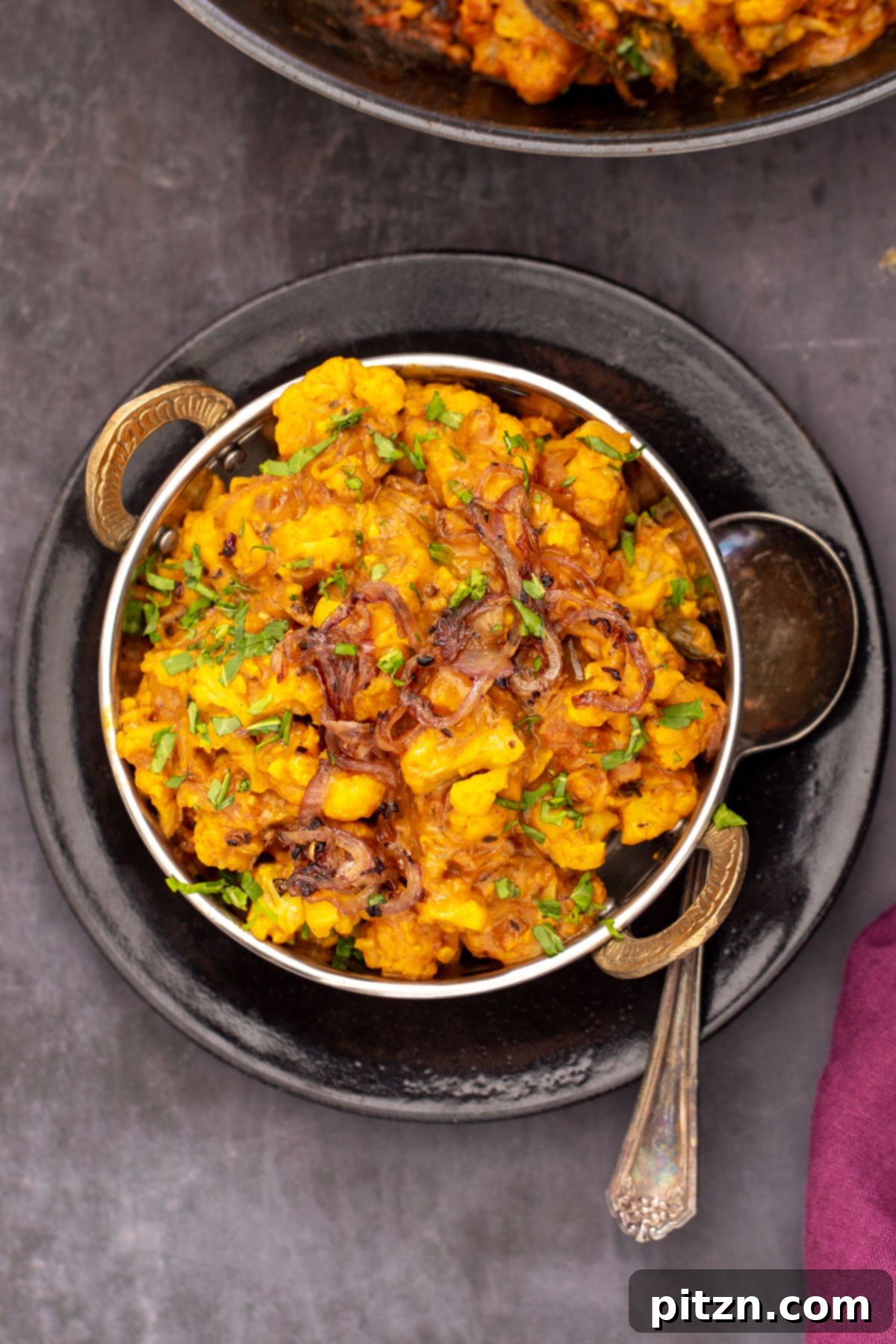
Gobi Do Pyaza: The Ultimate Indian Cauliflower Curry in Double Onion Sauce
Embark on a culinary journey to India with Gobi Do Pyaza, a cherished and popular Indian cauliflower curry. This exquisite dish features tender, pan-fried cauliflower florets lovingly simmered in a rich, creamy, and undeniably delicious “double onion” sauce. A harmonious blend of aromatic spices and caramelized onions creates a depth of flavor that is truly irresistible. Best of all, this recipe is naturally gluten-free and can be easily adapted to be soy-free and nut-free, making it a versatile and inclusive meal for everyone to enjoy. Serve this fragrant gobi curry with your favorite rice or warm Indian bread for a complete and satisfying experience.

Indian cuisine is renowned for its diverse and flavorful sauces, which are often the heart and soul of a dish. The intricate interplay of whole and ground spices, combined with fresh ingredients, contributes to the incredible variety in tastes and textures found across the subcontinent. Gobi Do Pyaza is a prime example, with its sauce built around the foundational sweetness and pungency of onions and a medley of warming whole spices. The term “Do Pyaza” literally translates to “two onions” (Do means two, Pyaaz means onion), highlighting the unique technique of incorporating onions at two distinct stages of cooking: first, as a caramelized base for the main gravy, and then again as a vibrant, fragrant tempering added at the very end. Today, we’re pairing this magnificent sauce with cauliflower to create a truly delightful Gobi Do Pyaza! This versatile sauce also pairs wonderfully with other proteins like tofu, chickpeas, or even plant-based chicken alternatives.
This Indian cauliflower curry showcases beautifully pan-fried cauliflower florets, providing a slightly crisp texture that contrasts perfectly with the velvety, rich, and deeply savory onion sauce. Its robust flavor profile makes it an excellent choice as a standout main course, ideal for scooping up with fluffy rice or warm flatbreads. Alternatively, it serves as a remarkably flavorful plant-based side dish, complementing an array of other Indian culinary creations. Whether it’s the centerpiece of your meal or an addition to a grand feast, Gobi Do Pyaza promises an unforgettable taste experience.
A key element that elevates this cauliflower curry is the final tempering, or “tadka.” Tempering is a revered technique in Indian cooking where whole or ground spices are briefly heated in hot oil or ghee (clarified butter) to release their essential oils and intensify their aromas. This fragrant mixture is then added to a dish, either at the beginning of the cooking process to build a foundational flavor, or at the very end as a powerful aromatic finishing touch. For our Gobi Do Pyaza, the tempering is ingeniously applied at the end, infusing the curry with a fresh burst of flavor and a second layer of caramelized onion goodness – truly embodying the “double onion” philosophy. This final step involves sautéing coriander seeds, fresh green chili, and thinly sliced red onions in seasoned oil, then pouring this sizzling, aromatic blend directly into the finished curry. This is the secret behind its exceptional depth and why it’s famously called a double onion sauce.
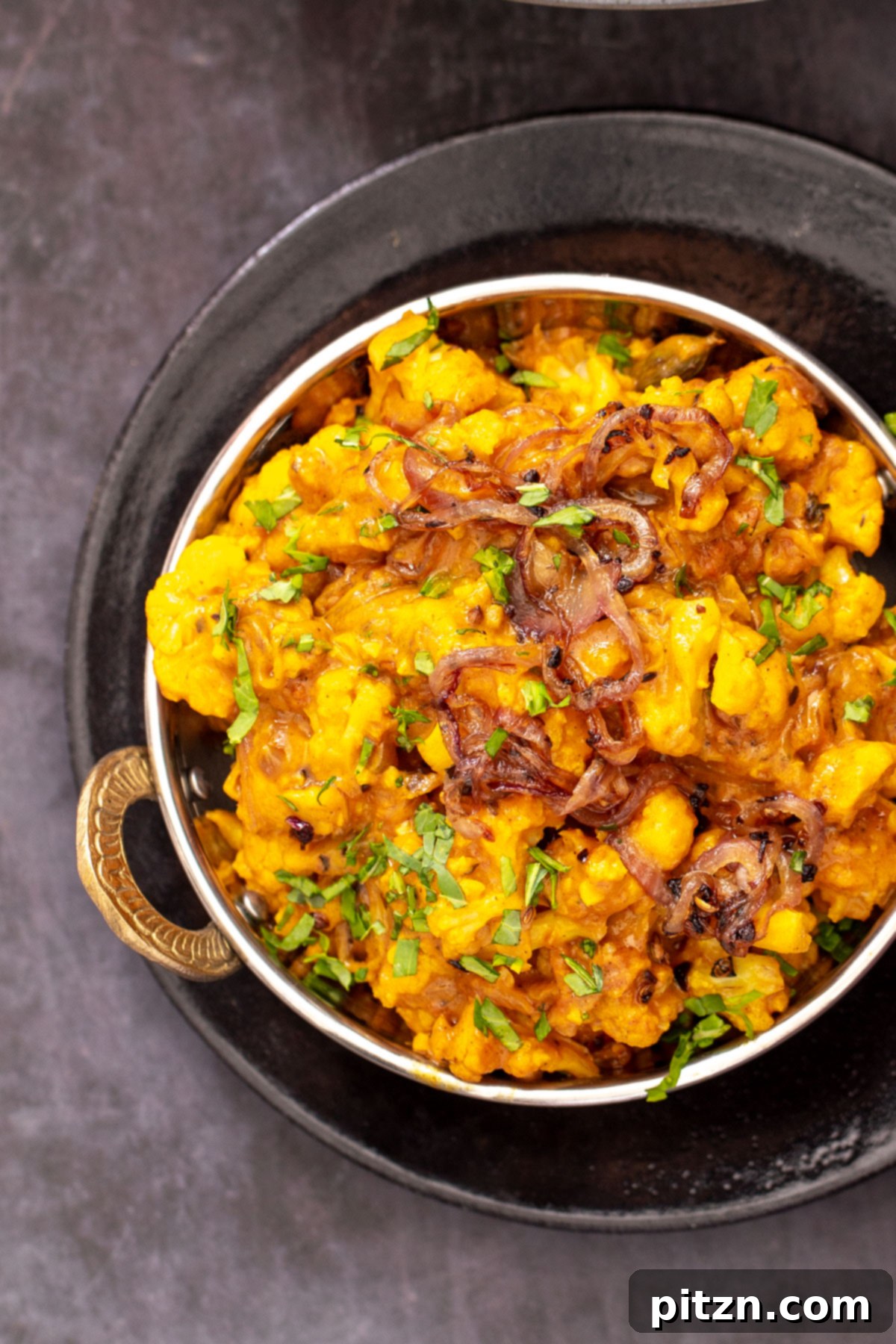
Prepare to impress with this spectacular cauliflower curry; it’s a dish so delectable, it’s sure to disappear from your plates in no time! The creamy, spiced gravy clings perfectly to the cauliflower, making every bite a delight. Be sure to scoop up every last drop with warm, pillowy chunks of roti, parathas, or naan bread. This recipe is an absolute keeper, a staple for any lover of Indian food. Moreover, its inherently plant-based nature, coupled with being gluten-free, soy-free, and offering nut-free options, makes it a fantastic addition to any festive meal, including special occasions like Diwali. It’s a testament to how traditional Indian flavors can be enjoyed by everyone, regardless of dietary preferences.
Explore More Indian-Inspired Vegan Recipes:
- Creamy Vegan Butter Tofu
- Effortless Instant Pot Tikka Masala Sauce (with Cauliflower)
- Authentic Tofu Amritsari Masala
- Luxurious Vegan Malai Kofta
- Hearty Mushroom Matar Masala
- Classic Bombay Potato and Peas
- Nutritious Tofu in Spinach Curry – Palak Tofu
Cauliflower in Double Onion Sauce (Gobi Do Pyaza)

Pin
Ingredients
For the cauliflower:
- 1 teaspoon oil
- 1 head cauliflower , chopped into florets about 4 cups
For the sauce:
- 1 teaspoon oil
- 1/2 teaspoon cumin seeds
- 2 bay leaves
- 2 green cardamom pods, slightly opened
- 1 clove (spice)
- 1/2 teaspoon Dried fenugreek leaves (Kasuri Methi)
- 1 cup Packed thinly sliced onion
- 1/2 teaspoon ground turmeric
- 1 teaspoon ground coriander
- 1/2 teaspoon cayenne or Indian Red Chili Powder
- 1/8 teaspoon ground cinnamon
- 1/8 teaspoon black pepper
- 3 cloves garlic minced
- 1/2 inch ginger minced
- 1 tablespoon tomato paste , or 1/4 cup canned tomato puree or you can also use fresh
- 1/2 cup non-dairy yogurt, or use cashew cream or 1 cup full-fat coconut milk
- 1/2 teaspoon salt
- cilantro for garnish
For tempering
- 1 teaspoon oil
- 1/2 teaspoon crushed coriander seeds, (use ground coriander if you prefer a smoother texture)
- 1/2 hot green chili finely chopped, or use a milder chili like Anaheim or Serrano to taste
- 1/2 cup thinly sliced red onion
Instructions
-
Begin by heating 1 teaspoon of oil in a large skillet or wok over medium-high heat. Ensure the oil is shimmering before adding the cauliflower.
-
Once the oil is hot, add your cauliflower florets. Cook them for 8-10 minutes, stirring occasionally, until some edges turn golden brown and slightly crispy. For more even cooking, cover the skillet after the first 4 minutes.
-
Carefully remove the pan-fried cauliflower from the skillet and set aside. Add another 1 teaspoon of oil to the same skillet for preparing the sauce.
-
When the oil for the sauce is hot, add the whole spices: cumin seeds, bay leaves, slightly opened green cardamom pods, and the clove. Cook for about 30-60 seconds, stirring constantly, until the cumin seeds splutter and become fragrant, turning a darker shade but not burning. This process is crucial for building the flavor base.
-
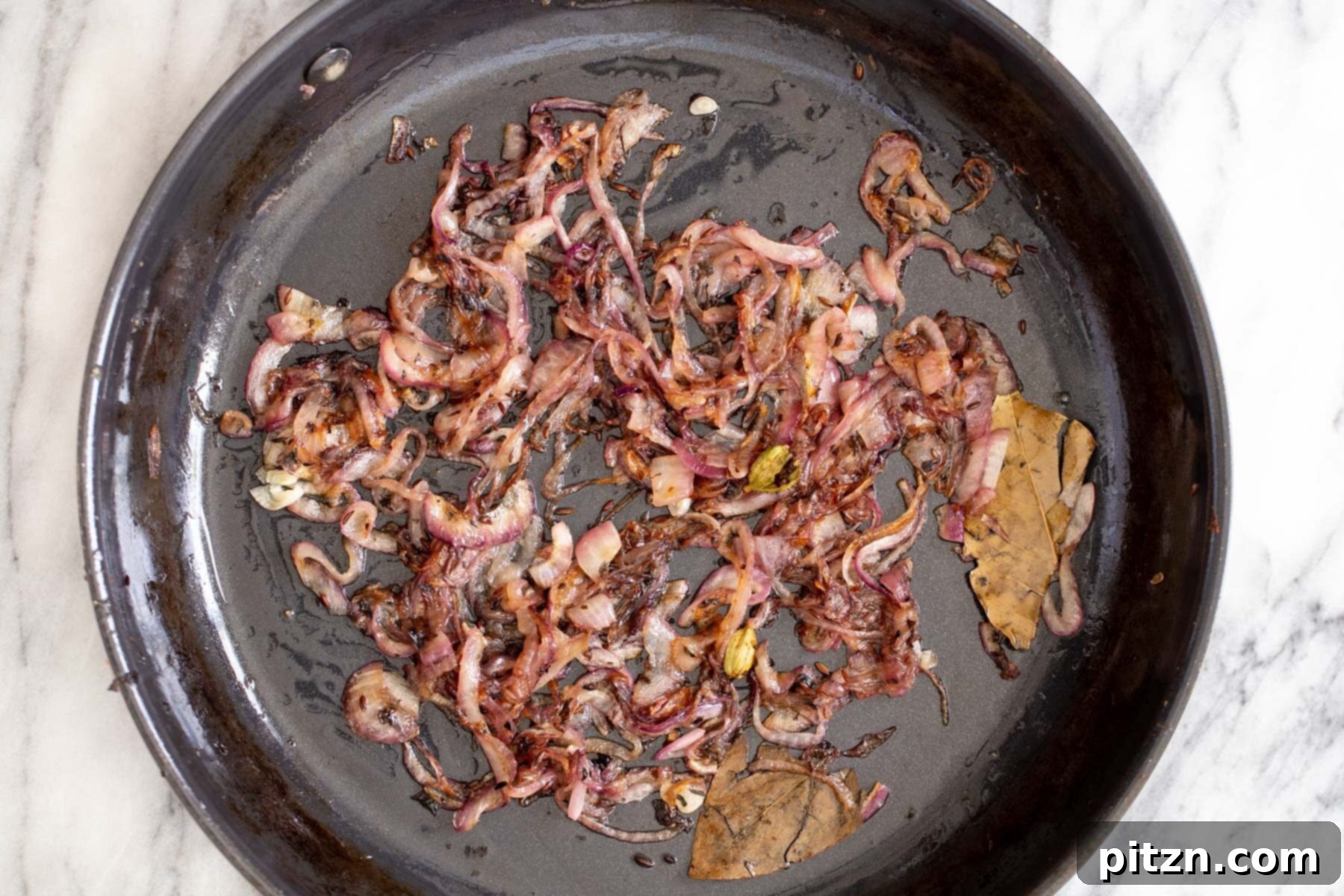
Next, add the thinly sliced onion along with a generous pinch of salt. Mix thoroughly and continue to cook, stirring frequently, until the onion turns a rich golden brown and softens completely, approximately 8-10 minutes. This caramelization is key to the sauce’s depth.
-
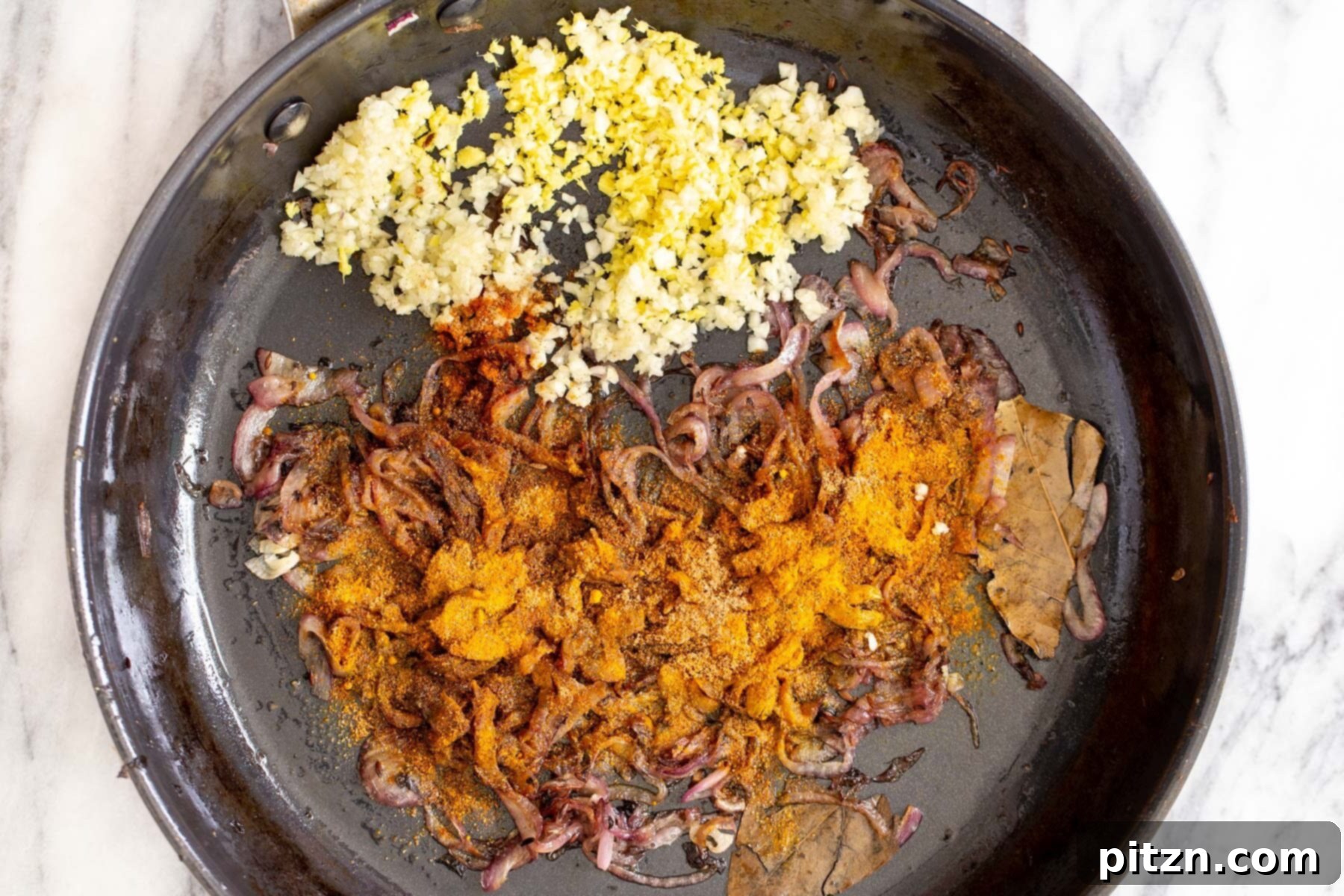
Now, stir in the ground spices: turmeric, ground coriander, cayenne or Indian red chili powder, ground cinnamon, and black pepper. Add the minced garlic and ginger. Mix well, ensuring all the aromatics and spices are evenly coated. Continue to cook for another 2-3 minutes, allowing the spices to toast and release their flavors. If the mixture starts to stick to the bottom of the pan or burn, add a few splashes of water to deglaze the pan, scraping up any browned bits.
-
Incorporate the tomato paste, mixing it thoroughly into the spice and onion mixture. If you are using fresh tomato puree instead of paste, cook it here for 2-3 minutes until it thickens slightly and the raw tomato smell dissipates.
-
Stir in the non-dairy yogurt and 1/2 teaspoon of salt, mixing until fully combined. Bring the sauce to a gentle boil. Then, pour in 1 cup of water and add the previously cooked, golden-brown cauliflower florets.
-
Mix everything really well to ensure the cauliflower is coated in the flavorful sauce. Cover the skillet and cook over medium heat for about 7-10 minutes, or until the cauliflower reaches your desired tenderness.
-
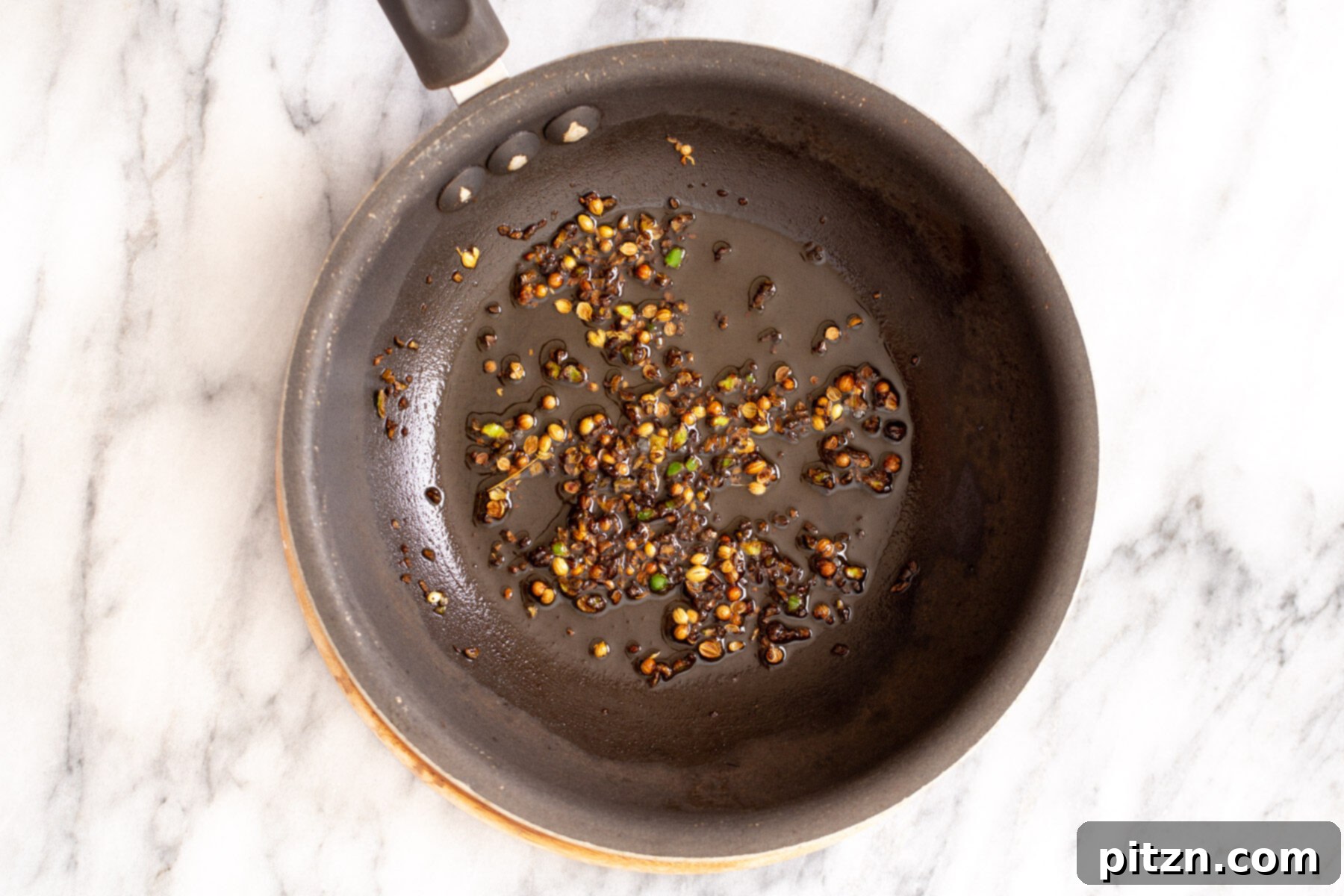
While the cauliflower simmers, prepare the tempering. Heat 1 teaspoon of oil in a separate small skillet over medium heat. Once hot, add the crushed coriander seeds and finely chopped green chili. Cook for 1-2 minutes until the green chili begins to turn golden and fragrant, and the coriander seeds release their aroma.
-
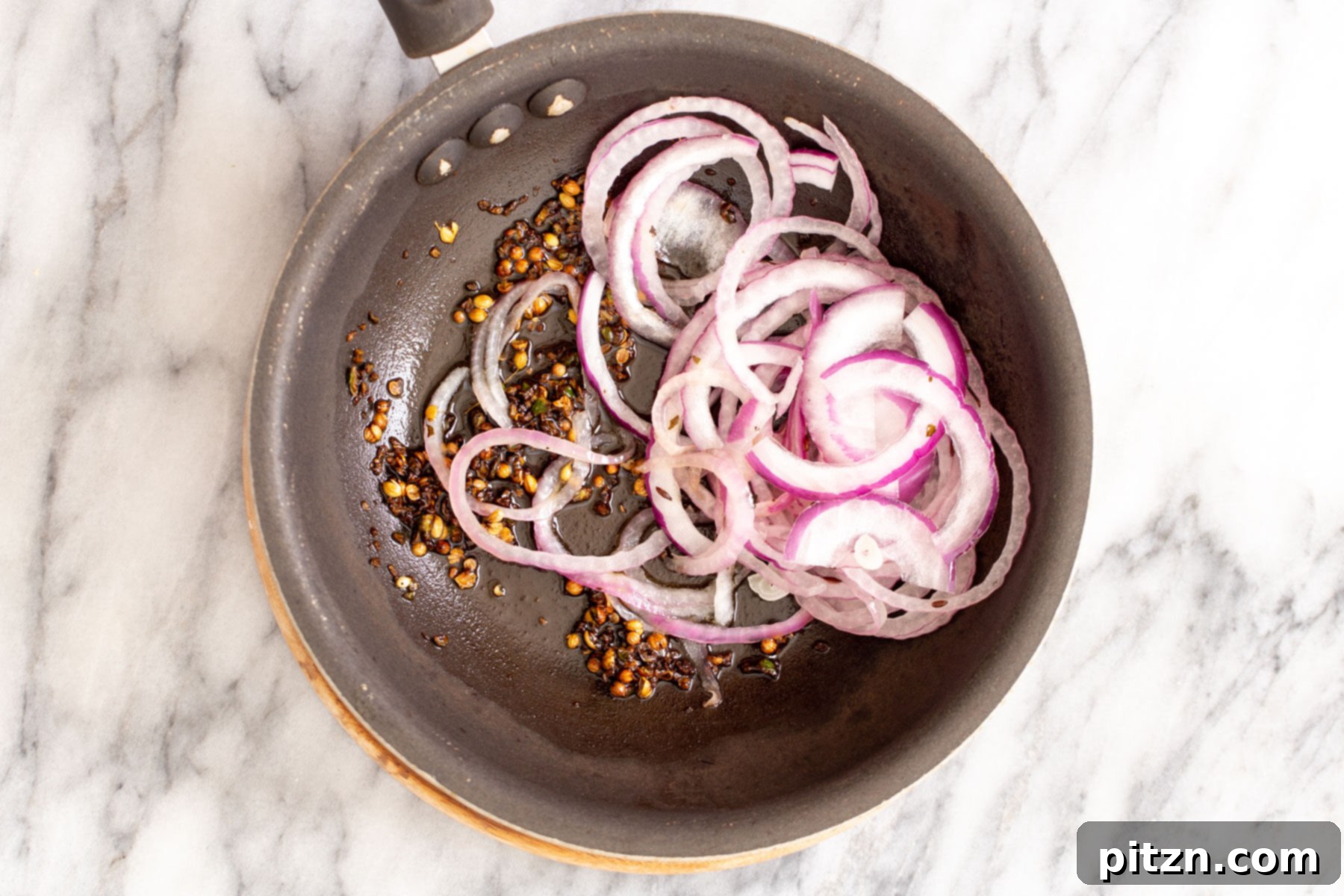
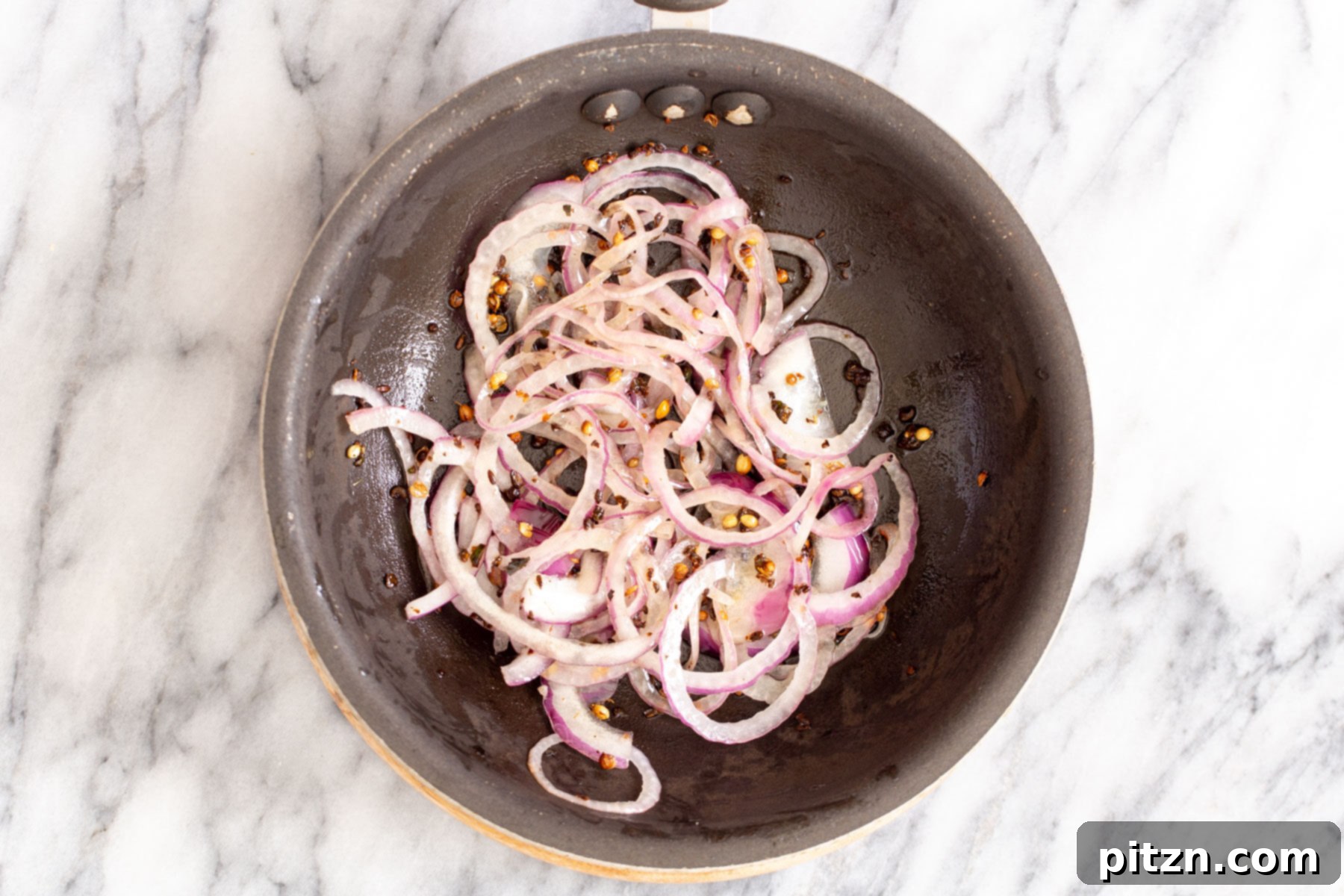
Add the thinly sliced red onion to the small skillet with the tempering spices. Add a small pinch of salt and mix well. Continue to cook until the red onion also turns golden brown and softens, approximately 3-5 minutes. This second layer of caramelized onion is the “do pyaaza.” Pour this fragrant tempering mixture directly over the cauliflower curry just before serving.
-
Before presenting the dish, if you prefer, you can carefully remove the whole bay leaves, clove, and cardamom pods that were added at the beginning. Serve your Gobi Do Pyaza hot with fresh naan flatbreads, soft pita bread, traditional rotis, or fluffy basmati rice. Garnish with fresh cilantro.
Video
Notes
- This recipe is incredibly versatile! You can easily make it with tofu. Simply use about 10 ounces of firm or extra-firm tofu, pressed and cut into cubes. Crisp the tofu in a separate pan, just as you would the cauliflower in the first step, then add it to the curry when you incorporate the non-dairy yogurt. This ensures the tofu retains its texture and absorbs the sauce beautifully.
- Chickpeas are another fantastic addition or substitute. There’s no need to crisp them; just add one 15-ounce can (rinsed and drained) or about 1 1/2 cups of cooked chickpeas directly into the sauce along with the non-dairy yogurt. They will warm through and absorb the rich flavors.
- If you can’t find dried fenugreek leaves (Kasuri Methi), you can substitute them with 1/4 teaspoon of powdered fenugreek seeds. Be mindful that the powdered form is more potent, so use sparingly.
- For a richer, creamier sauce without yogurt, you can use homemade cashew cream (blend soaked cashews with water until smooth) or an equal amount (1 cup) of full-fat coconut milk. Adjust consistency with water as needed.
Nutrition
Nutrition information is automatically calculated, so should only be used as an approximation.
Did you make this recipe? Rate and comment below!
Key Ingredients for an Authentic Gobi Do Pyaza:
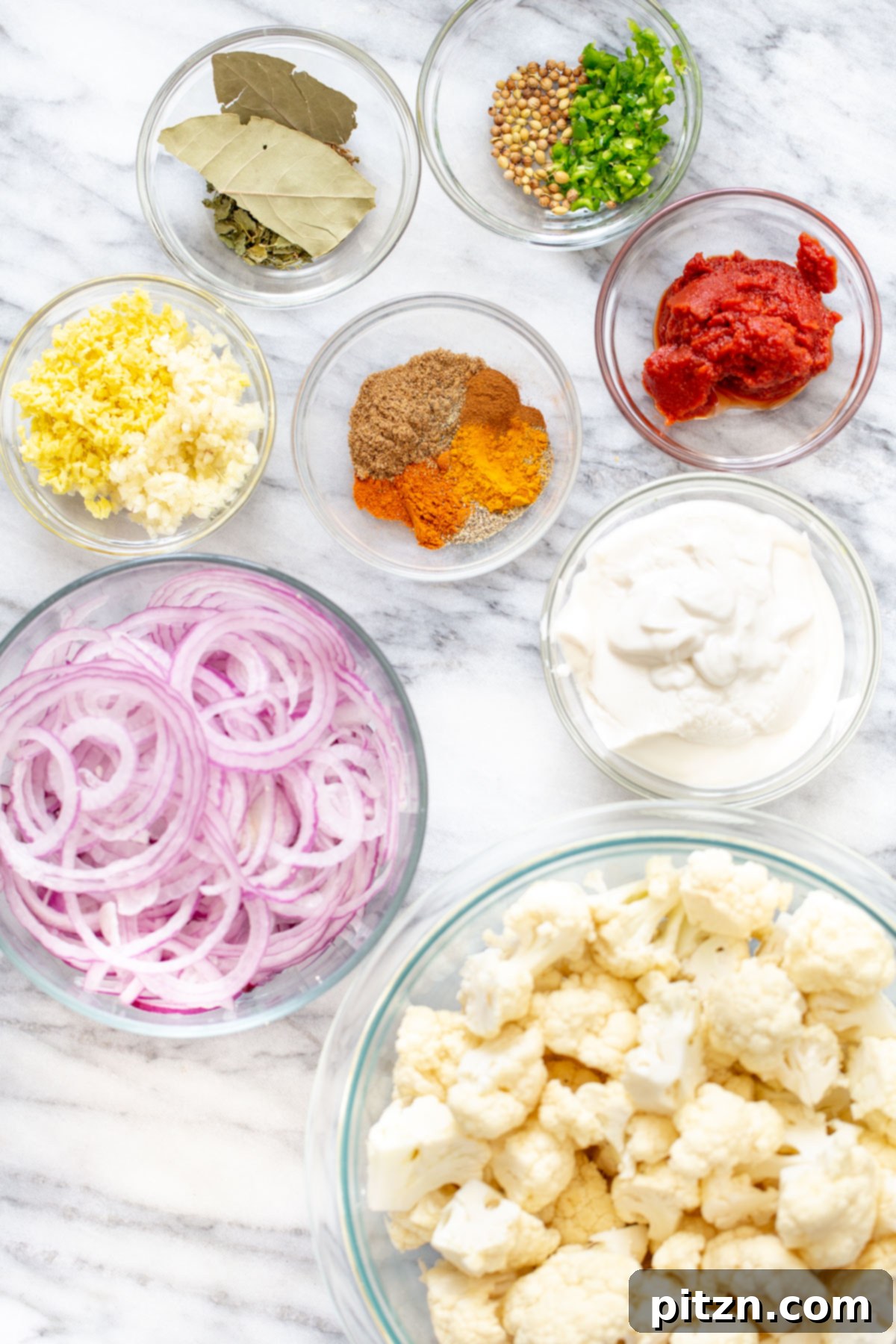
Creating an authentic Gobi Do Pyaza relies on a thoughtful selection of fresh ingredients and aromatic spices. Here’s a breakdown of what you’ll need and why each component is essential:
- Cauliflower: The star of the dish, chopped into florets of uniform size to ensure even cooking and a consistent texture. Pan-frying them first adds a layer of flavor and a pleasing slight crispness.
- Whole Spices for the Gravy: A foundational blend including cumin seeds for an earthy base, bay leaves for subtle warmth, green cardamom pods for a floral aroma, a single clove for pungent depth, and dried fenugreek leaves (Kasuri Methi) for their distinctive, slightly bitter, and herbaceous notes. These spices are tempered early to infuse the oil with their complex flavors.
- Aromatics and Ground Spices: Thinly sliced onions are caramelized to form the sweet and savory base of the sauce. Minced garlic and ginger provide pungent freshness. The ground spices – turmeric for color and subtle earthiness, ground coriander for a citrusy depth, cayenne or Indian red chili powder for heat, ground cinnamon for warmth, and black pepper for a mild kick – are added to build the curry’s robust flavor profile.
- Tomato Paste: Adds a concentrated umami flavor and helps to naturally thicken the gravy, contributing to its rich consistency and a hint of tang.
- Non-Dairy Yogurt: Essential for achieving the creamy texture and balancing the spice with a pleasant tang. For a nut-free option, ensure your yogurt is not cashew-based. Alternatively, rich cashew cream or full-fat coconut milk can be used for a luxurious, dairy-free creaminess.
- Salt: Crucial for seasoning and enhancing all the flavors in the curry.
- Tempering (Tadka) Ingredients: For the final “double onion” touch, you’ll prepare a separate tempering with fresh oil, crushed coriander seeds for a burst of fresh, bright flavor, a finely chopped hot green chili for a hint of heat and visual appeal, and more thinly sliced red onion, which is caramelized until golden to add a second, distinct layer of sweet onion flavor and texture just before serving.
- Fresh Cilantro: Used as a vibrant garnish, adding a fresh, herbaceous finish to the rich curry.
Expert Tips & Ingredient Substitutions for Your Gobi Do Pyaza:
To ensure your Gobi Do Pyaza turns out perfectly every time, and to accommodate various dietary needs or pantry staples, consider these helpful tips and substitutions:
- Tofu Variation: For a protein-packed alternative or addition, this recipe works beautifully with tofu. Use approximately 10 ounces of firm or extra-firm tofu, pressed to remove excess water, then cubed. Pan-fry or air-fry the tofu until crispy, mimicking the first step with the cauliflower. Add the crisped tofu to the gravy when you introduce the non-dairy yogurt, allowing it to simmer and absorb the rich flavors without losing its texture.
- Chickpea Power: Chickpeas are another excellent plant-based option. You won’t need to crisp them; simply drain and rinse one 15-ounce can (or use about 1 1/2 cups of pre-cooked chickpeas) and add them to the curry along with the non-dairy yogurt. They provide a wonderful texture and readily soak up the delicious sauce.
- Tomato Alternatives: If fresh tomato paste isn’t available, or you prefer a different tomato base, you have options. Use 1/4 cup of canned tomato puree or diced fresh tomatoes (about 1 medium-sized tomato, finely chopped). If using fresh tomatoes, cook them longer, stirring frequently, until they break down and the oil separates from the mixture, which indicates that their raw flavor has mellowed.
- Spice Level Adjustment: The recipe calls for 1/2 teaspoon of cayenne or Indian red chili powder and 1/2 hot green chili. If you prefer a milder curry, reduce the amount of chili powder and use a milder green chili like Anaheim, or omit the green chili entirely. For a spicier kick, increase the chili powder or add another hot green chili.
- Storage and Reheating: Leftover Gobi Do Pyaza stores wonderfully in an airtight container in the refrigerator for up to 3-4 days. To reheat, gently warm on the stovetop over medium-low heat, adding a splash of water or non-dairy milk if the sauce has thickened too much. It can also be frozen for up to 2-3 months; thaw overnight in the fridge before reheating.
How to Prepare Gobi Do Pyaza: Step-by-Step with Pictures
Follow these detailed steps to create your own irresistible Gobi Do Pyaza, visually guided to ensure perfection.
To start, heat 1 teaspoon of oil in a large skillet or frying pan over medium-high heat. Wait until the oil is shimmering slightly, indicating it’s hot enough for cooking.
Once the oil is hot, carefully add your cauliflower florets to the pan. Cook them for approximately 8-10 minutes, stirring occasionally. You’re looking for the edges of the cauliflower to turn a beautiful golden brown, developing a slightly crispy texture. After the initial 4 minutes of cooking, cover the skillet to help the cauliflower soften while still achieving that desired golden exterior.
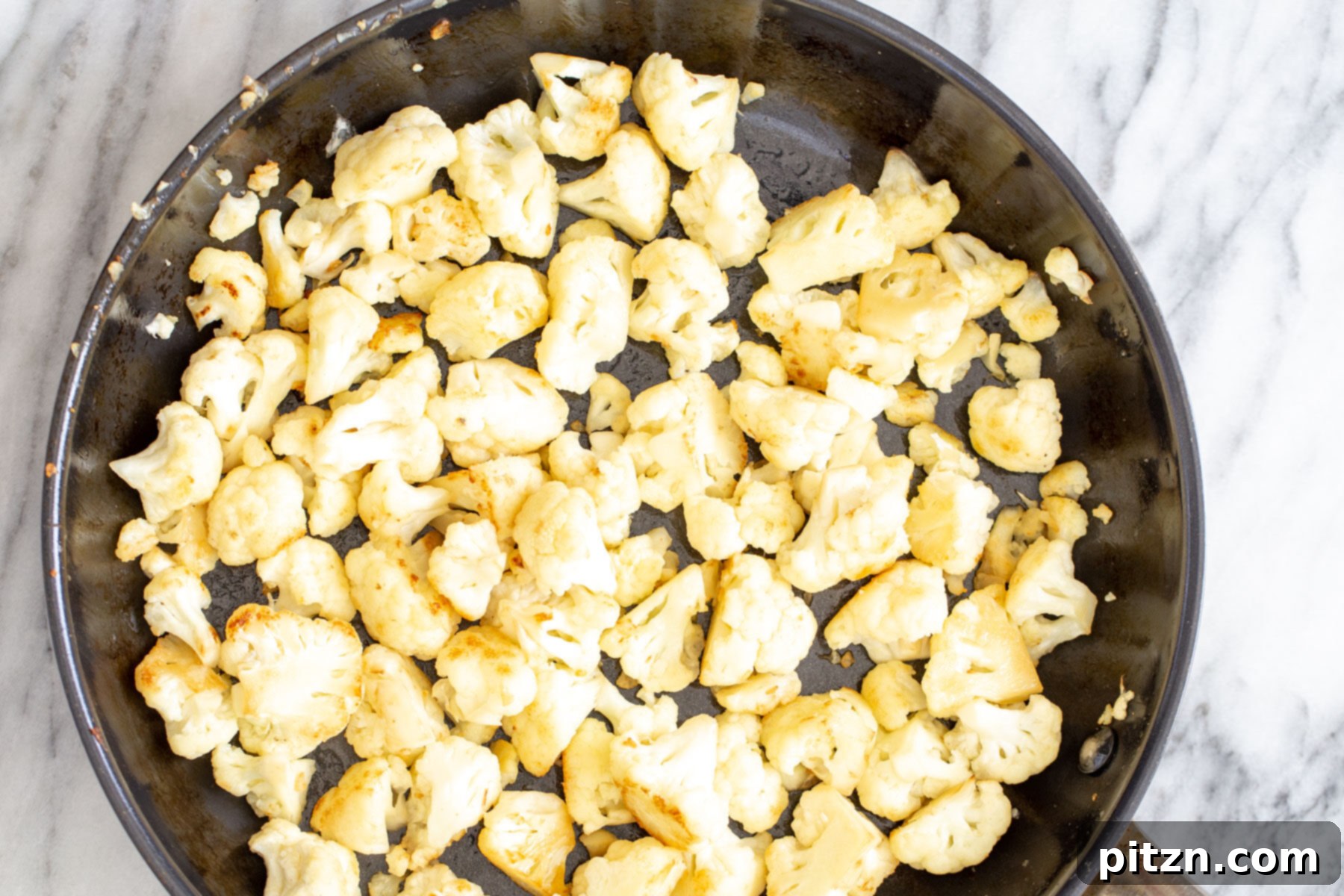
Once the cauliflower has achieved a lovely golden hue, carefully remove it from the skillet and set it aside. Add another teaspoon of oil to the same skillet; this will be the base for our flavorful sauce.
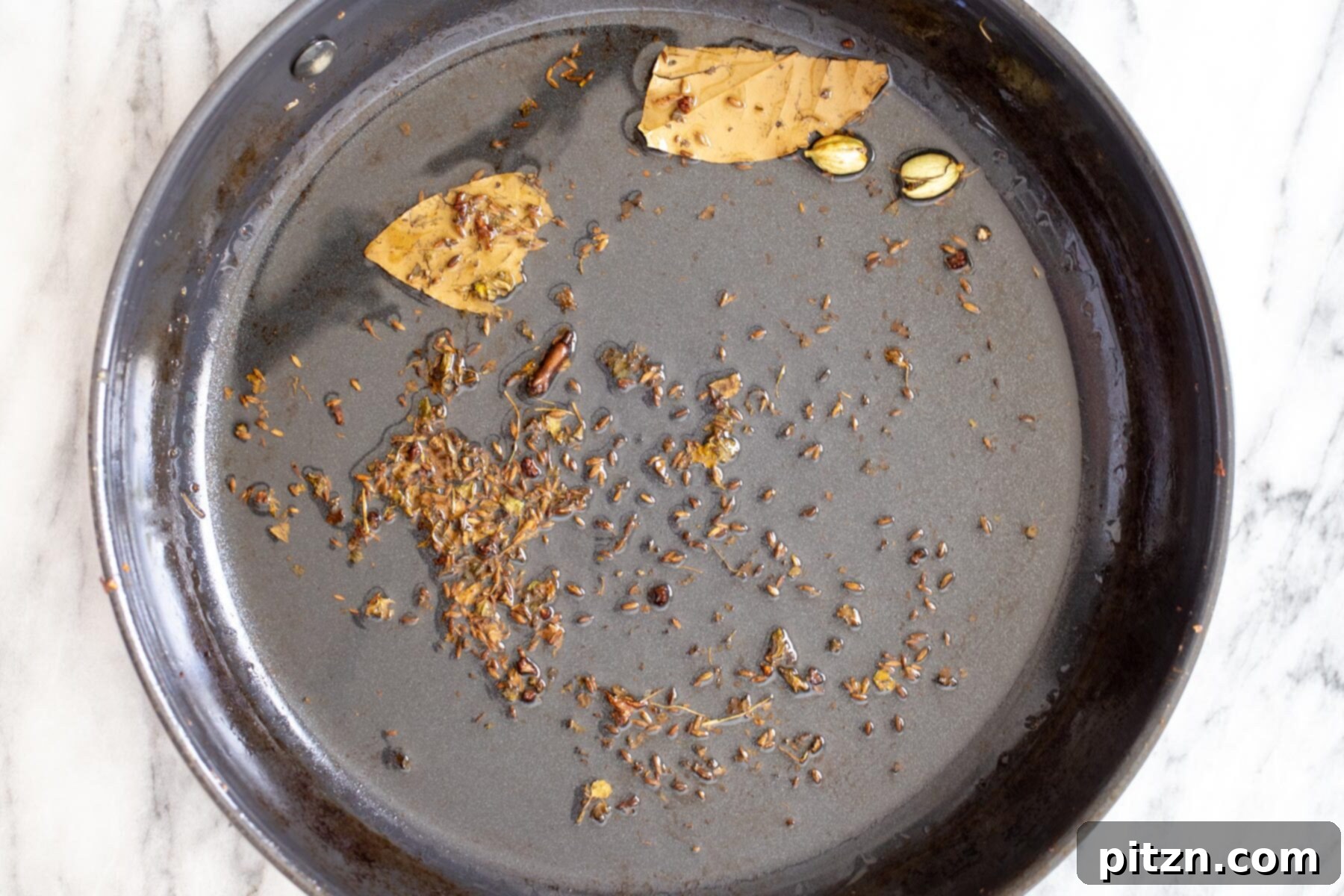
As the oil heats up again, add the whole spices: cumin seeds, bay leaves, green cardamom pods (slightly opened to release more flavor), and the single clove. Allow these to cook for about 30-60 seconds, stirring continuously. The cumin seeds should splutter and darken slightly, becoming wonderfully fragrant, which signifies they’ve released their essential oils.
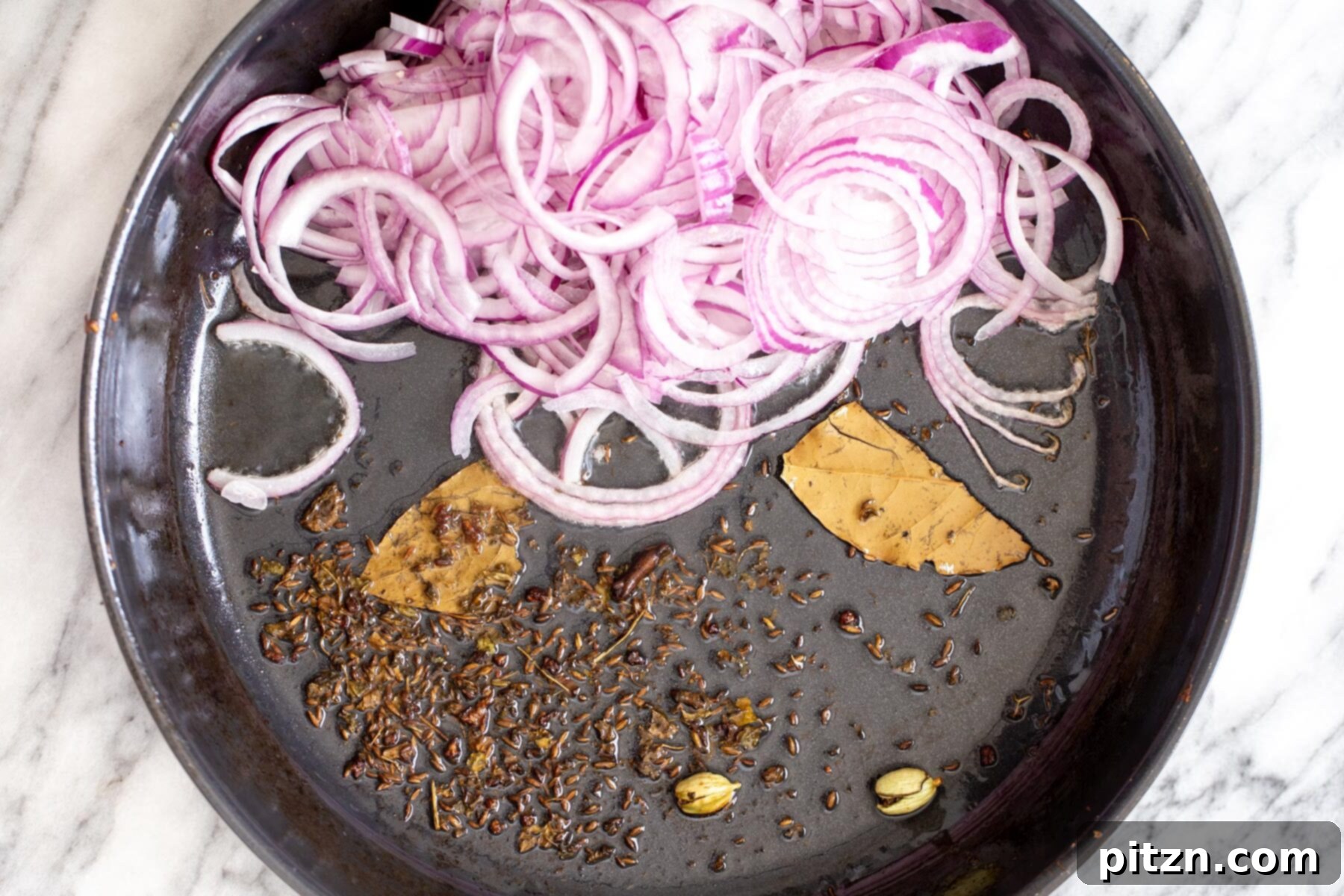
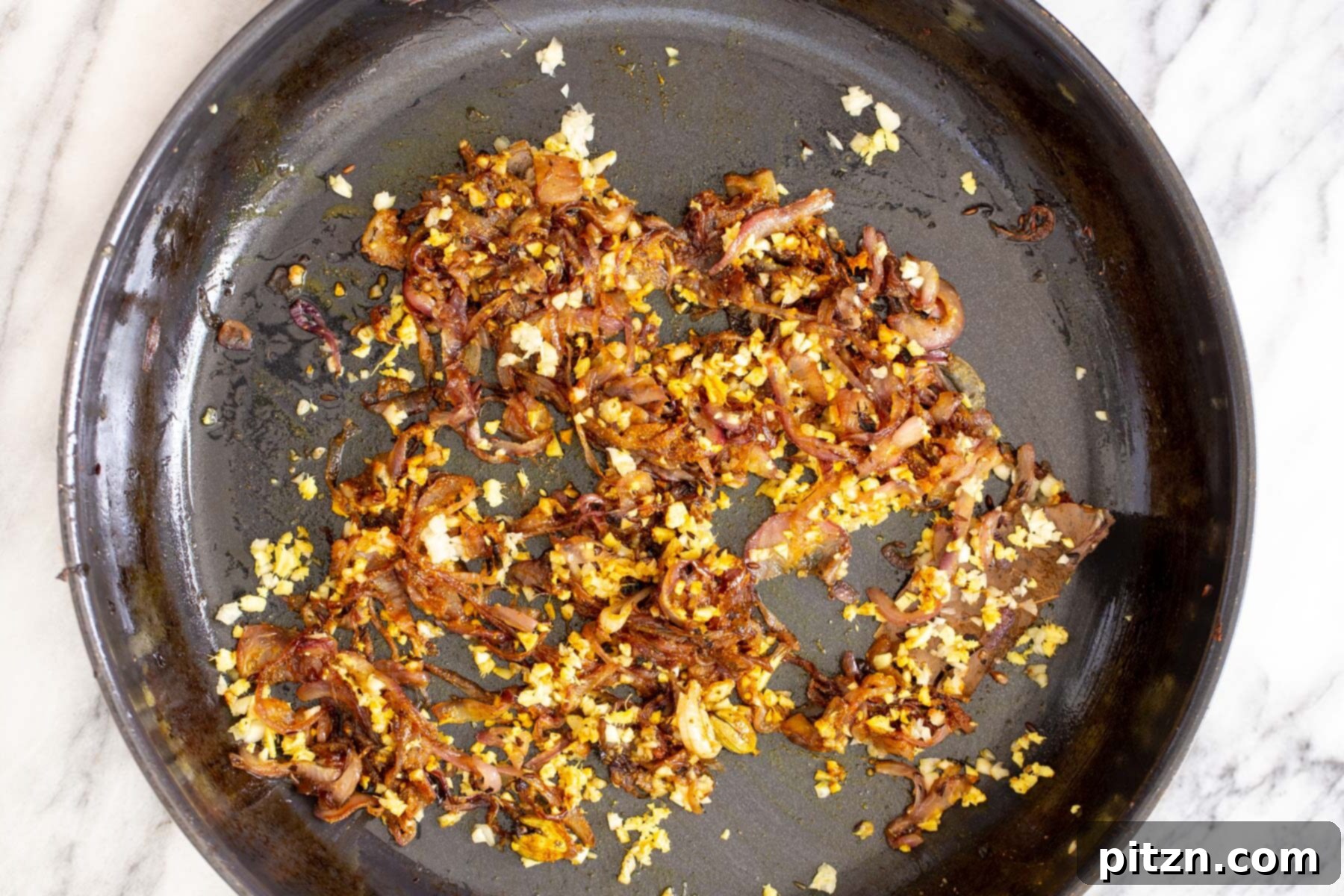
Next, add the thinly sliced onion to the skillet along with a generous pinch of salt. Mix everything thoroughly, ensuring the onions are well coated. Continue to cook, stirring frequently, until the onions soften completely and turn a beautiful, rich golden-brown color. This caramelization is crucial for the depth of flavor in the sauce.
Now, it’s time to add the ground spices: turmeric, ground coriander, cayenne or Indian red chili powder, ground cinnamon, and black pepper. Immediately follow with the minced garlic and ginger. Mix all ingredients thoroughly, ensuring the ground spices are well distributed and toasted. Continue to cook for another 2-3 minutes, allowing the spices and aromatics to meld and release their full flavors.
If at any point during cooking, the mixture begins to stick to the bottom of the pan or shows signs of burning, add a few splashes of water. This helps to deglaze the pan, incorporating all those flavorful browned bits into the sauce.
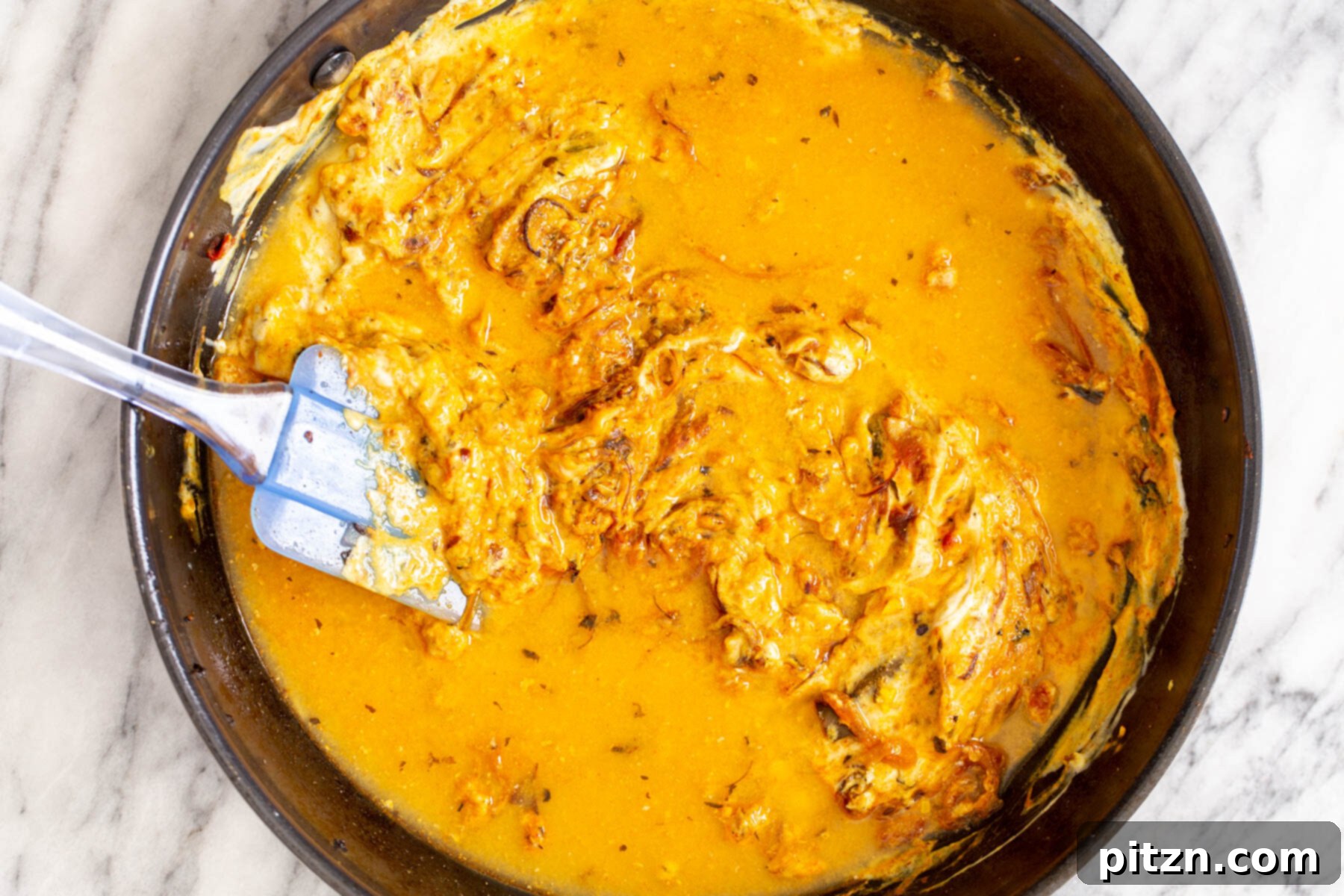
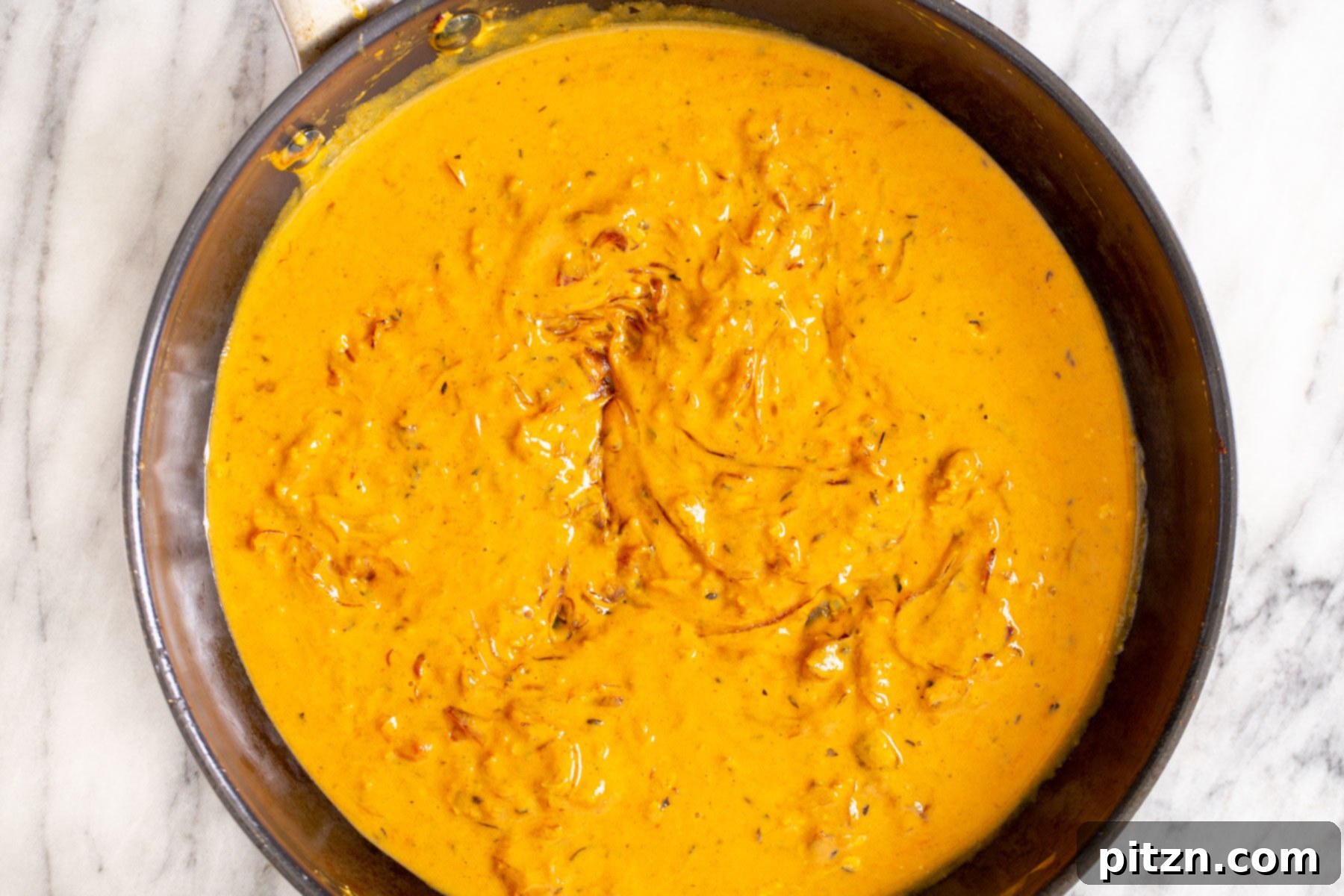
Stir in the tomato paste, mixing it well into the aromatic base. If you opted for fresh tomato puree instead, cook it here for 2-3 minutes until it slightly thickens and reduces. Then, add the non-dairy yogurt and the remaining salt. Mix thoroughly until the yogurt is fully incorporated, and bring the sauce to a gentle boil, ensuring it’s smooth and creamy.
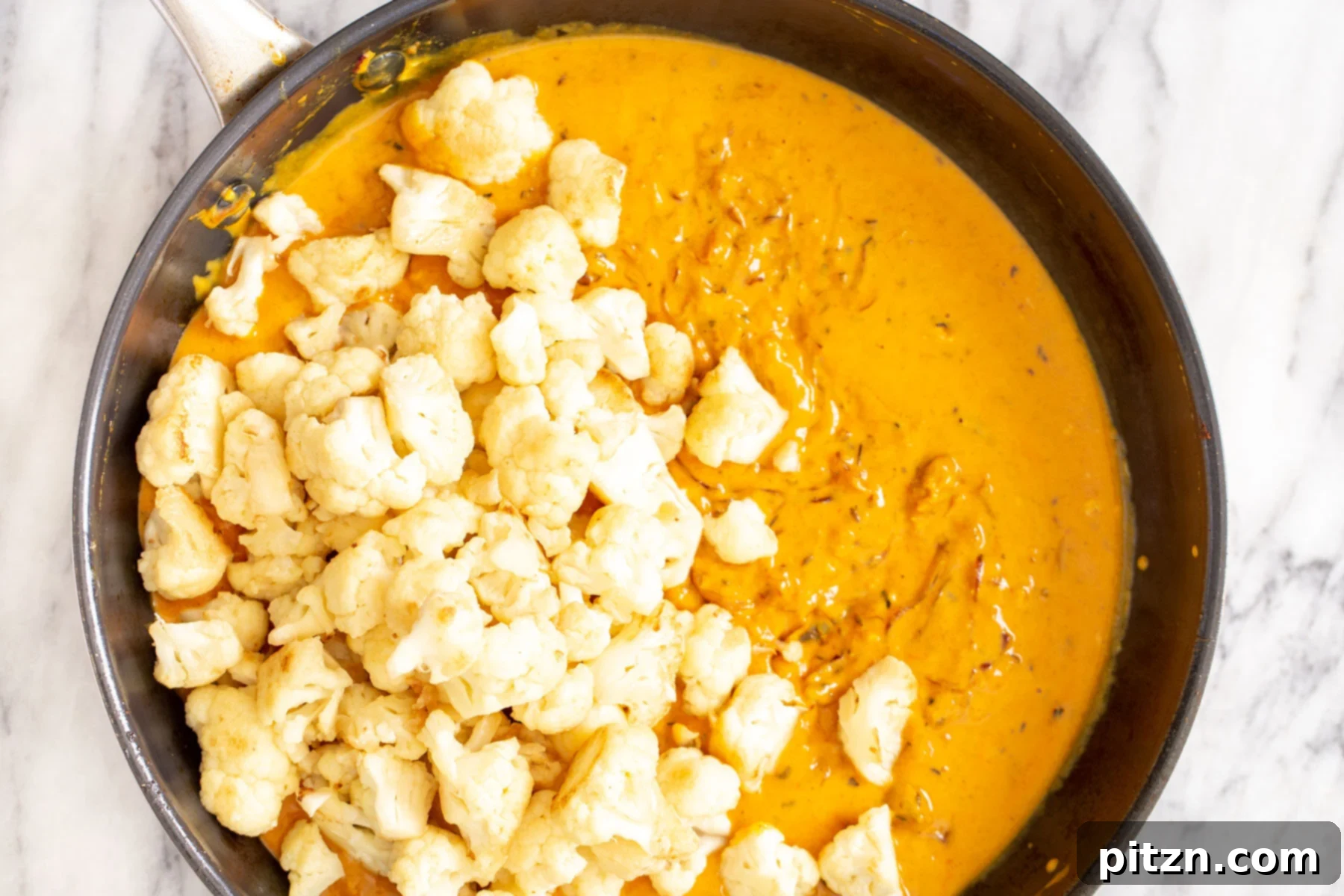
Pour in 1 cup of water and carefully add the previously cooked, golden-brown cauliflower florets to the sauce. Stir everything together very well, ensuring that all the cauliflower is coated with the rich gravy. Cover the skillet and let it cook over medium heat for about 7-10 minutes, or until the cauliflower reaches your preferred level of tenderness.

Crafting the Perfect Tempering (Tadka):
The tempering is a vital final step that brings a fresh burst of flavor and aroma to your Gobi Do Pyaza.
While your cauliflower curry is simmering, prepare the tempering. Heat 1 teaspoon of oil in a small skillet over medium heat. Once the oil is hot and shimmering, add the crushed coriander seeds and the finely chopped green chili. Cook these for about a minute, stirring constantly, until the green chili begins to turn golden and the coriander seeds become fragrant and slightly darker. This process is crucial for extracting their aromatic compounds.
Next, add the thinly sliced red onion to the small skillet. Add a tiny pinch of salt to help draw out moisture and aid caramelization. Mix well and continue to cook, stirring frequently, until the red onion turns a beautiful golden brown and softens considerably. This second layer of perfectly caramelized onion is what truly defines the “Do Pyaza” characteristic of this dish.
Just before serving, generously pour this aromatic tempering mixture over the simmering cauliflower curry. The sizzle and aroma will instantly elevate the dish. If desired, you can carefully remove the larger whole spices (bay leaves, clove, and cardamom pods) from the main curry before serving, though many enjoy them as part of the authentic experience.
Perfect Pairings: What to Serve with Gobi Do Pyaza Cauliflower Curry
Gobi Do Pyaza is a versatile curry that pairs wonderfully with a variety of accompaniments, transforming a simple meal into a delightful feast. The rich, creamy sauce is perfect for soaking up with different types of bread or complementing with grains. Consider these serving suggestions:
- Indian Flatbreads: Classic choices like soft, fluffy Naan bread (especially garlic naan!), traditional whole wheat Rotis, or flaky Parathas are ideal for scooping up every last bit of the delicious gravy. Pita bread can also serve as a convenient alternative.
- Rice: A staple pairing, plain steamed Basmati rice provides a perfect neutral canvas for the curry’s bold flavors. For added aroma, consider serving it with fragrant jeera rice (cumin rice) or a simple vegetable pulao.
- Side Salads: A refreshing kachumber salad (a simple Indian salad with chopped cucumber, tomato, onion, and a lemon dressing) or a crisp green salad can provide a lovely contrast to the richness of the curry.
- Raita: A cooling cucumber raita (yogurt dip) can help balance the spices, offering a refreshing counterpoint.
No matter how you choose to serve it, this Gobi Do Pyaza promises a memorable and satisfying meal.