
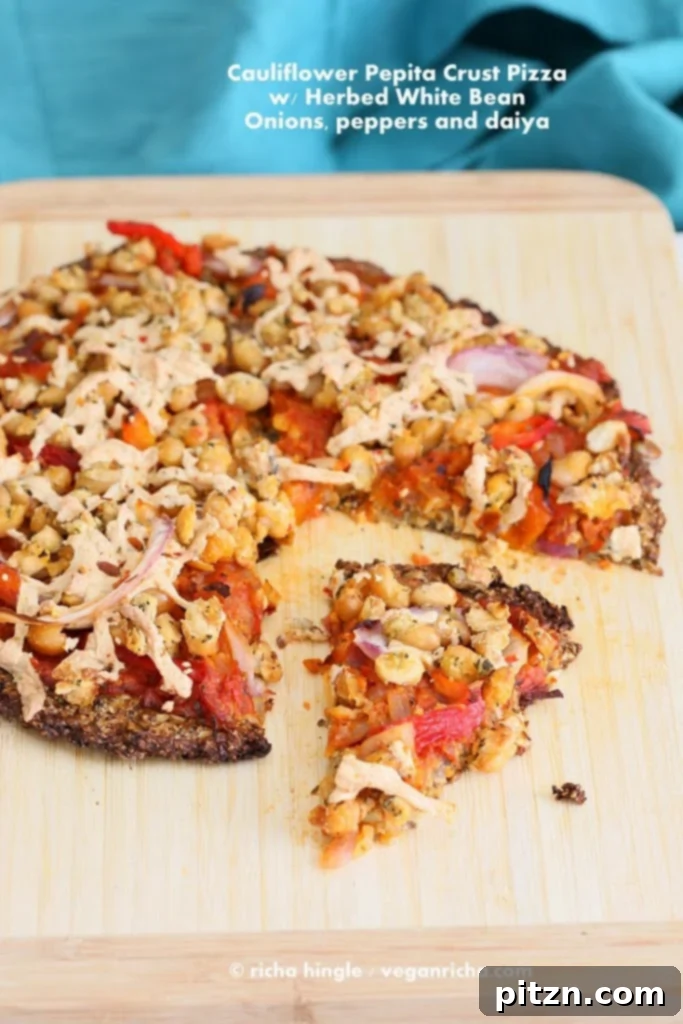
The Ultimate Vegan Cauliflower Crust Pizza: Nut-Free, Gluten-Free & Delicious
Prepare to be amazed by this incredible **vegan cauliflower crust pizza**! If you’re searching for a healthy, delicious, and allergy-friendly pizza alternative, look no further. This recipe crafts a robust, flavorful crust without relying on traditional flour, nuts, or even soy. Instead, it ingeniously uses pumpkin seeds and a thick chia gel as binders, resulting in a perfectly crispy and satisfying base for all your favorite toppings.
Crafting a **gluten-free and grain-free pizza crust** can often feel like a challenge, especially when trying to avoid common allergens like nuts and soy. This recipe addresses those concerns head-on, offering a simple yet effective method to create a versatile and sturdy foundation for your pizza cravings. With just a few attempts, you’ll master the art of choosing the perfect toppings and crust size that work best for your palate.
For those who love exploring different healthy crust options, you might recall my other popular creation: the Cauliflower Potato Crust Pizza, a delightful deconstructed Gobi Paratha. While I confess a special fondness for that one, thanks to its vibrant Indian spices and the superior binding power of potato, this pure **cauliflower pizza crust** is truly a close second. Potatoes do indeed make everything more delicious, but cauliflower, with its mild flavor and nutritional benefits, is a fantastic choice for a lighter base.
Why Choose a Cauliflower Crust for Your Pizza?
The rise of **cauliflower crust pizza** isn’t just a trend; it’s a testament to its incredible versatility and health benefits. Opting for a cauliflower base offers numerous advantages:
- Gluten-Free & Grain-Free: Ideal for individuals with celiac disease, gluten sensitivity, or those following a paleo or low-carb diet.
- Nutrient-Rich: Cauliflower is packed with vitamins C and K, folate, and fiber, making your pizza a surprisingly healthy meal.
- Low-Carb: A fantastic option for managing carbohydrate intake without sacrificing the joy of pizza.
- Allergen-Friendly: This particular recipe is explicitly designed to be **nut-free, soy-free, and gum-free**, addressing multiple common dietary restrictions. It can even be made **oil-free** and **yeast-free** if desired.
- Delicious & Versatile: The neutral flavor of cauliflower allows your toppings to shine, while the crust achieves a delightful crispiness around the edges and a tender interior.
This specific recipe showcases a brilliant combination of cauliflower, lightly roasted pumpkin seeds (pepitas), and a robust chia seed gel. These ingredients come together with a blend of aromatic herbs to create a flavorful crust. We’ve topped this pizza with a classic marinara, savory herbed white beans, crisp onions, vibrant peppers, and a generous sprinkle of vegan cheese. Initially, I used these heavier toppings to rigorously test the crust’s durability. While the marinara can add moisture, a thicker, perhaps garlicky white sauce, often proves to be an even better companion. Imagine topping it with celery seeds or ranch seasoning, and beans tossed in buffalo sauce – truly a culinary dream I can’t wait to explore!
Beyond the Basics: Explore More Grain-Free & Gluten-Free Crusts
If you’re enjoying the journey into alternative pizza crusts, my blog offers a variety of other creative **gluten-free and grain-free (or adaptable to be grain-free) crusts** to inspire your kitchen adventures:
- Black Eyed Pea Crust with Roasted Cauliflower and Blackberry Tomato Chutney: A hearty and flavorful option.
- Cauliflower Potato Crust Topped with Raita: For those who love Indian-inspired flavors and a sturdier base.
- Chickpea Quinoa Chard Crust: A nutrient-dense crust offering a unique texture.
- Mung Bean Sprouts and Spinach Crust: Light, fresh, and surprisingly robust.
- Millet Chickpea Kale Crust Topped with Okra, Olives, Peppers: A wholesome and earthy choice.
This particular **cauliflower pepita chia crust** is also fantastic for individual servings. Imagine making smaller, four-inch crusts, topping them with your favorite ingredients, or even fresh greens, veggies, and a dressing of your choice for a light and healthy meal.
Crafting Your Cauliflower Pizza: Step-by-Step Visuals
The journey to a perfect cauliflower crust begins with careful preparation. You’ll start by allowing the chia and flax seeds to gel, creating a powerful binder, while your cauliflower florets get a light roast to reduce moisture.
Once your crust is shaped, it’s crucial to bake it thoroughly until it’s firm and no longer squishy in the center. This foundational bake ensures a stable base before you add any toppings.
I wanted to demonstrate how remarkably well this crust can hold up, even with a generous layer of beans! I confess to taking a tiny bite of that slice before it had a chance to fully cool, because it was simply irresistible. It’s truly loaded, much like a traditional pizza. The key to its integrity lies in packing the crust well, baking it thoroughly, and ensuring your chosen toppings aren’t excessively wet. If the center retains too much moisture from an insufficient bake time or overly moist toppings, it might become a little fragile. However, rest assured, it will still taste absolutely amazing, and you can always enjoy it gracefully with a fork and knife!
Cauliflower Pepita Chia Crust with Herbed Beans, Peppers, and Onions
This recipe creates a fantastic **vegan cauliflower pizza crust** that is naturally free of many common allergens, making it an excellent choice for a wide range of dietary needs.
Allergen Information:
Free of Dairy, Egg, Corn, Soy, Gluten, and Grains. Can be made yeast-free by omitting nutritional yeast, and oil-free by adjusting the baking method or replacing oil with a small amount of plant-based milk or water if needed for dough consistency.
Makes 1 (9-inch) crust
Ingredients:
For the Cauliflower Crust:
- 3 Tbsp chia seeds
- 1 Tbsp flaxmeal
- 1/2 cup water
- 1/2 head of cauliflower (approx. 2.5 cups of florets, packed)
- 1/4 cup pumpkin seeds (also known as pepitas; sunflower or hemp seeds can be substituted for variety)
- 1/2 tsp garlic powder
- 1/2 tsp dried thyme
- 1/2 tsp dried rosemary
- 2 tsp extra virgin olive oil (optional, for crispiness; omit for oil-free)
Suggested Toppings:
- Pizza sauce, thick marinara, or a creamy, thick white garlic sauce
- Thinly sliced red onion
- Roasted red peppers (jarred or freshly roasted)
- Vegan cheese shreds (such as Daiya, Miyoko’s, or your favorite brand)
For the Herbed White Bean Topping:
- 1 (15 oz) can great northern beans (or any white beans), rinsed and drained, or 1.5 cups cooked beans
- 2 tsp nutritional yeast (optional, for cheesy flavor)
- 1/4 tsp salt (adjust to taste)
- 1/2 tsp dried basil
- 1/2 tsp fresh thyme, finely chopped (or 1/4 tsp dried)
- 1 tsp lemon juice
Method:
- Prepare Chia-Flax Gel: In a small bowl, combine chia seeds, flaxmeal, and water. Stir well. Refrigerate for at least 30 minutes, stirring again after 15 minutes to prevent clumping and ensure even gelling. This will form a thick, egg-like binder.
- Preheat Oven & Prepare Cauliflower: Preheat your oven to 425°F (220°C). Pulse the pumpkin seeds in a food processor until they form a coarse meal. Add the cauliflower florets and pulse again until the mixture resembles fine rice or couscous. Be careful not to over-process into a paste.
- Lightly Roast Cauliflower Mixture: Remove the cauliflower-pepita mix from the food processor and spread it evenly on a parchment-lined baking sheet. Bake for 7 minutes to gently dry out the cauliflower. This step is crucial for a crispier crust.
- Form the Dough: Transfer the lightly roasted cauliflower mixture to a large bowl and let it cool slightly. Add the prepared chia-flax gel, garlic powder, dried thyme, dried rosemary, and olive oil (if using). Mix thoroughly until all ingredients are well combined and a soft, pliable dough forms.
- Shape the Crust: On a fresh piece of parchment paper, press the dough firmly into a 1/4-inch thick, 8-9 inch round crust. Ensure it is packed very well and evenly. A well-packed crust is a sturdy crust!
- First Bake (Crust Only): Bake the crust for 30 to 35 minutes, or until it is golden brown around the edges and firm to the touch in the center. Baking time can vary depending on the moisture content of your cauliflower and your oven. Turn the baking sheet around halfway through (after about 20 minutes) for even baking. If the edges start to brown too quickly, you can lightly spray them with water to prevent over-browning.
- Prepare White Bean Topping: While the crust bakes, combine all ingredients for the Herbed White Bean Topping in a small bowl. Mix well.
- Add Toppings & Final Bake: Carefully remove the partially baked crust from the oven. Spread your chosen pizza sauce, then layer with onions, the herbed white beans, peppers, and finally, your vegan cheese shreds.
- Second Bake (with Toppings): Return the pizza to the oven and bake for another 10-15 minutes, or until the cheese is melted and bubbly, and the toppings are heated through.
- Serve: Sprinkle with salt and pepper to taste. Let the pizza cool for 5 minutes before slicing to allow the crust to firm up further. Serve immediately. This crust is best enjoyed fresh and does not store well for extended periods.
Tips for a Sturdier Crust:
If you find your crust starts to brown too quickly, simply reduce the oven temperature to 375°F (190°C) and continue baking until done. I continue to test the boundaries of this **cauliflower pizza crust**. For optimal sturdiness and crispness, especially when adding heavier toppings like the beans used here, consider the following:
- Dryer Sauces: Opt for a slightly drier sauce or use less marinara to prevent excessive moisture from seeping into the crust.
- Lighter Toppings: If you’re new to making cauliflower crusts, start with lighter toppings.
- Individual Crusts: For the most predictable and sturdy results, consider making smaller, individual pizza crusts. These tend to be more robust.
- Boost Binding: If your cauliflower dough seems too moist before shaping, you can experiment with adding a tablespoon or two of a gluten-free flour (like oat flour or chickpea flour) to the mixture to absorb excess moisture.
- Add Vegan Cheese to Crust: For an even stronger crust, you can mix a small amount of vegan cheese shreds into the cauliflower mixture before shaping it. This can help with binding and create a richer flavor.
Remember, while this **vegan cauliflower pizza crust** can handle a good amount of toppings, it will soften slightly if left to sit for a long time due to moisture from toppings. However, the incredible flavor makes it worth every bite, whether you enjoy it with your hands or a fork and knife!
Feel free to experiment with any of my vegan cheese recipes as a delightful topping for this versatile crust.