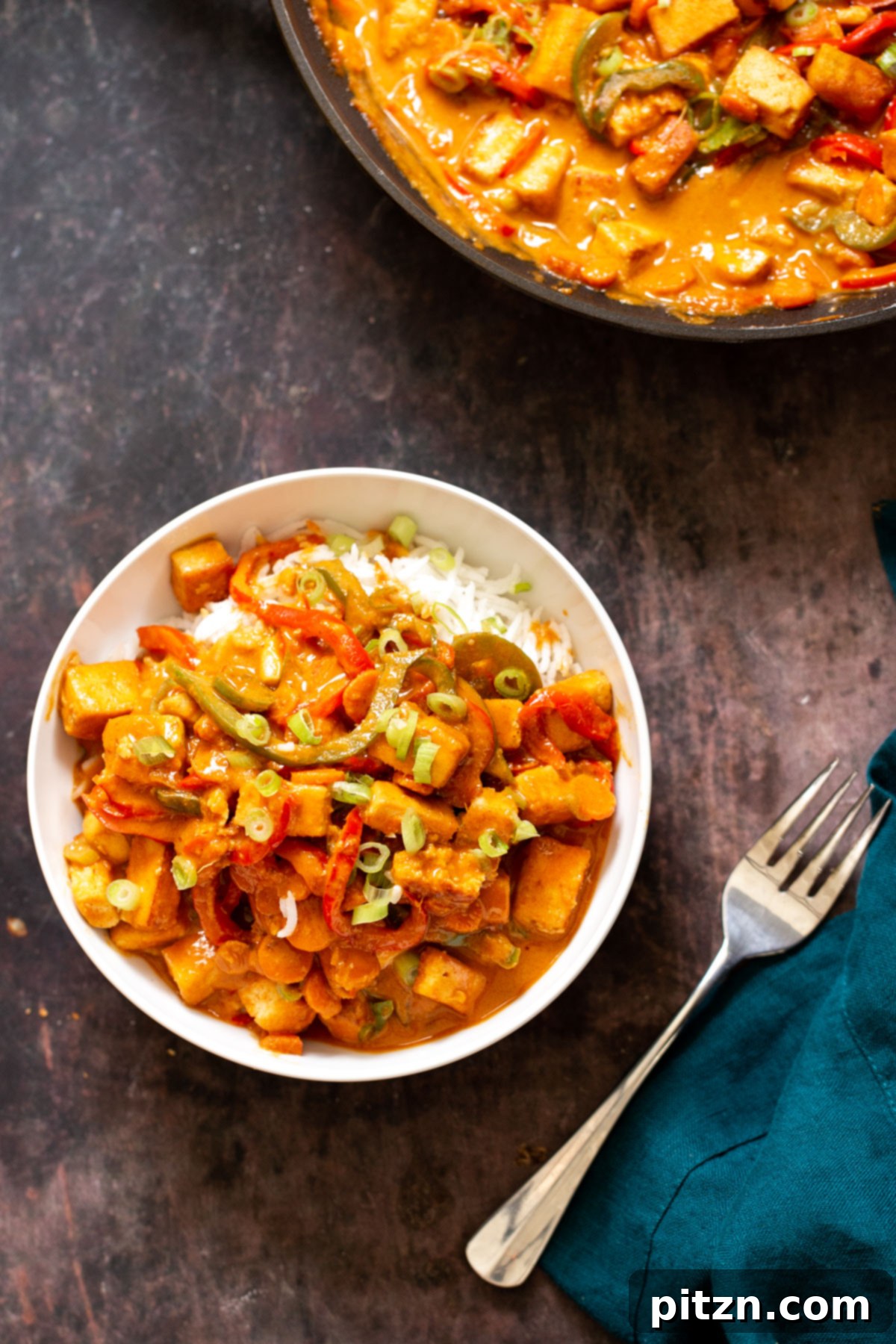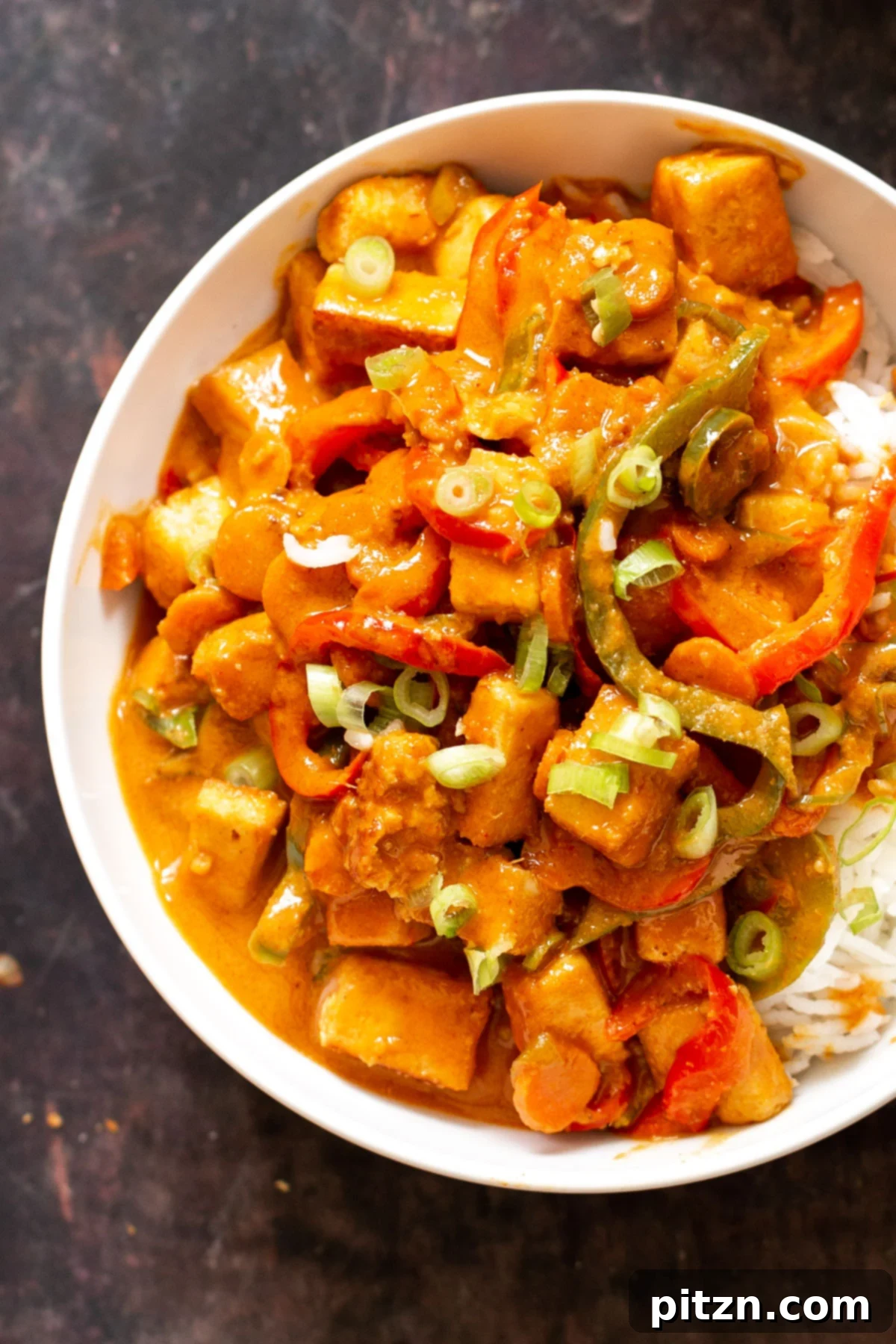
Transform your weekly meal routine with this incredibly flavorful Peanut Butter & Miso Gochujang Tofu Stir-fry. This isn’t just another quick vegan stir-fry; it’s a culinary journey that brings the vibrant tastes of Korea right to your kitchen. Boasting a perfectly balanced sweet, savory, and spicy peanut miso sauce, this dish consistently outperforms even your favorite takeout. We understand dietary needs vary, which is why we’ve included both nut-free and soy-free options, ensuring everyone can enjoy this delightful creation.
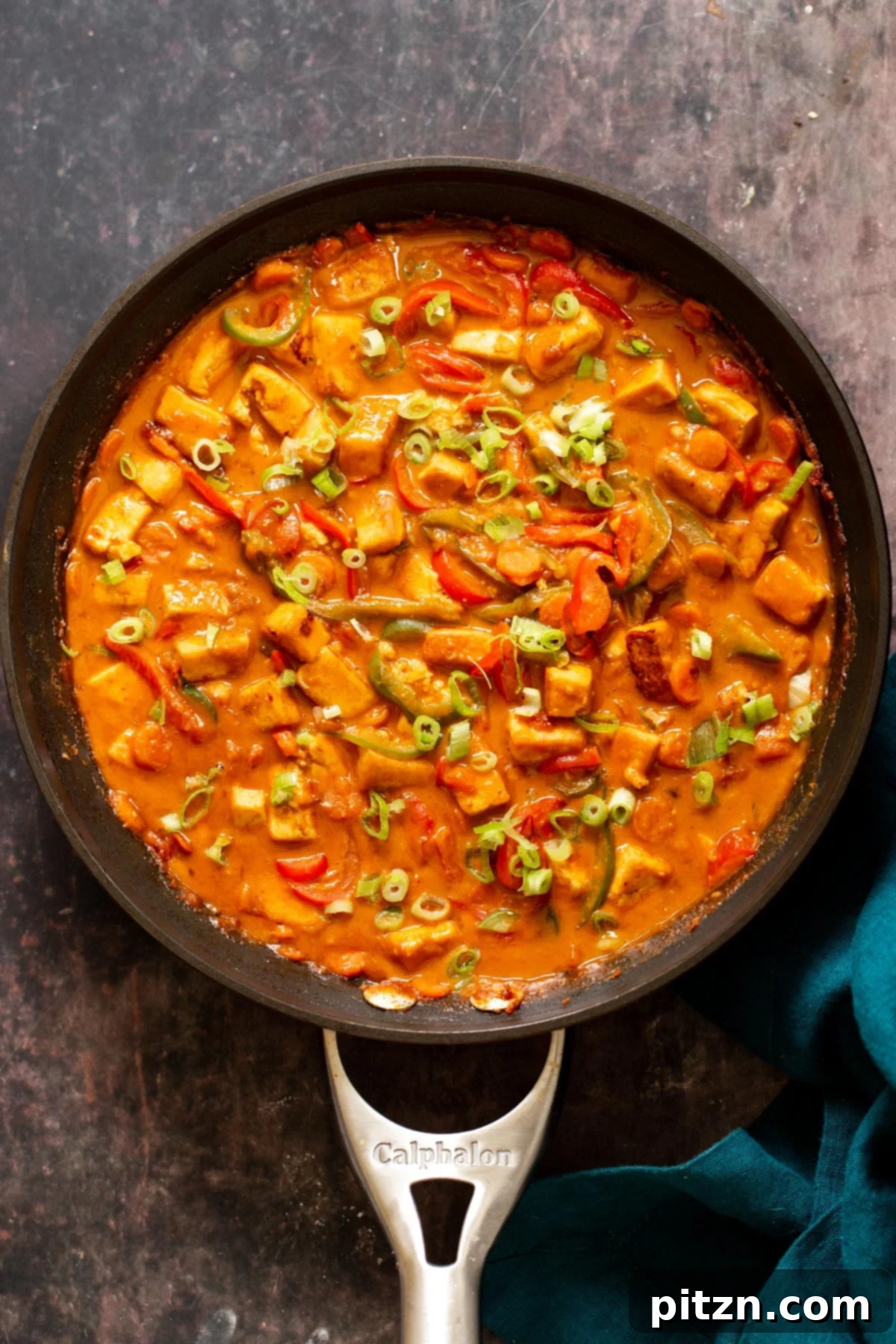
There’s hardly a week that passes where I don’t find myself craving a comforting, salty, and savory Asian-inspired meal. Often, as mid-morning approaches, my thoughts drift to the convenience of takeout arriving magically at my doorstep. But what if you could create something even more delicious, healthier, and quicker right at home? Good news: this easy Korean gochujang tofu stir-fry, featuring our luscious miso peanut sauce, can be on your table in under 40 minutes – significantly faster than waiting for delivery! It’s a game-changer for busy weeknights or when those intense takeout cravings hit.
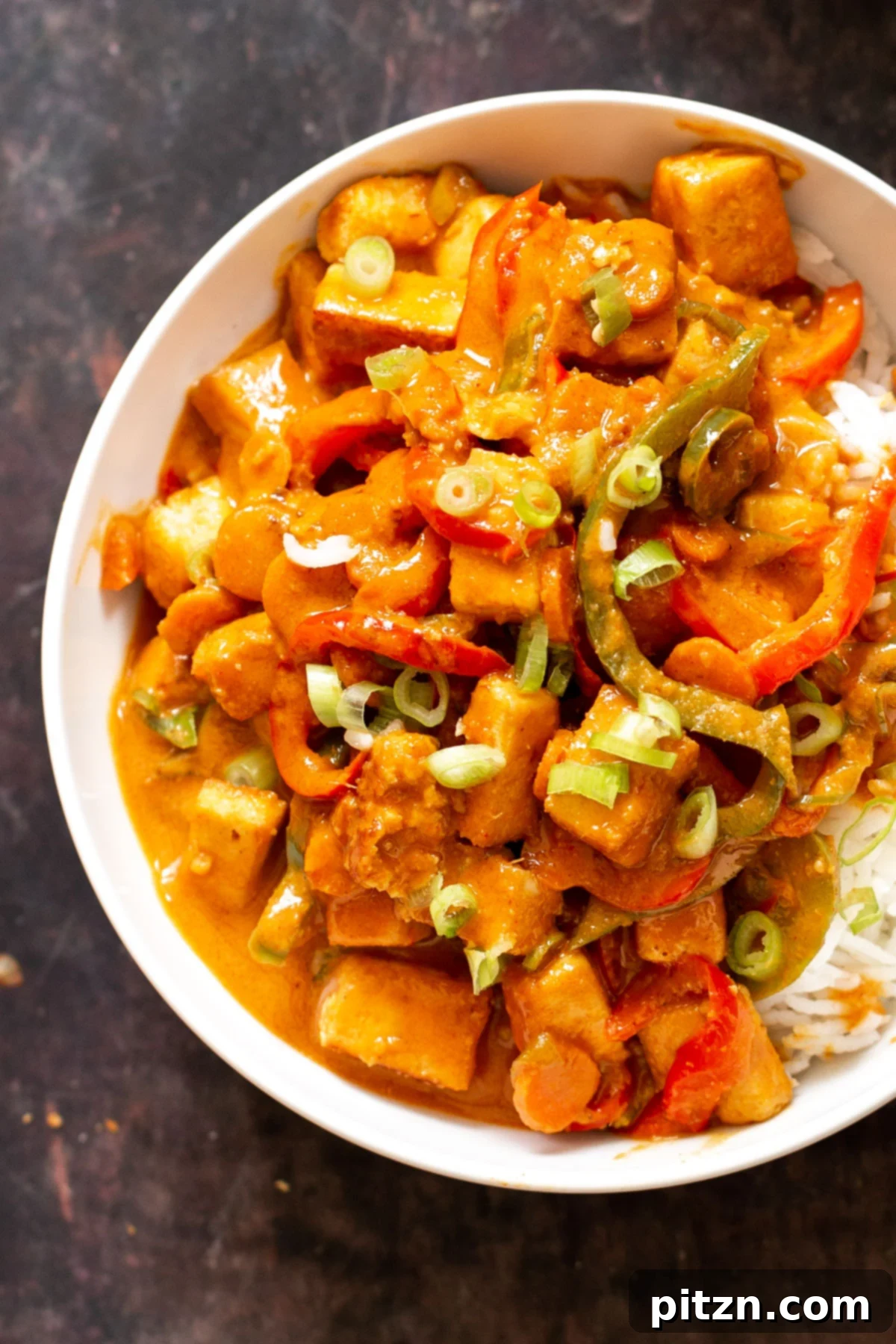
Crafting the ideal sweet and spicy peanut sauce is my go-to strategy for breathing new life into any vegetables lingering in my fridge at the end of the week. Combine that with some perfectly cooked tofu, and you have a brilliantly simple, Korean-inspired stir-fry that feels gourmet without the fuss. This recipe is designed to be versatile, allowing you to use whatever fresh produce you have on hand, making it a fantastic solution for reducing food waste and enjoying fresh, vibrant flavors.
The star ingredients truly are peanut butter, miso paste, and gochujang. This formidable trio forms a dream team, creating a stir-fry sauce that is profoundly flavorful and addictive. Let’s delve a little deeper into these culinary powerhouses:
- Gochujang: This isn’t just any chili paste; it’s a staple in Korean cuisine. Gochujang is a fermented red chili paste known for its complex profile – savory, subtly sweet, and wonderfully spicy. Its fermentation process lends it a deep umami flavor that can’t be replicated by regular chili flakes. It’s a key condiment used extensively in various Korean dishes, from vibrant bibimbap to hearty stews and marinades. If you find yourself with extra gochujang after making this stir-fry, don’t worry! It’s incredibly versatile and can elevate many other recipes, adding a distinctive Korean flair.
- Miso Paste: A Japanese fermented soybean paste, miso contributes a rich, salty, and umami depth to the sauce. Depending on the type (white, yellow, or red), miso can range from mild and sweet to robust and earthy. For this recipe, a yellow or white miso works beautifully, offering a balanced flavor that harmonizes with the gochujang and peanut butter. It’s packed with probiotics, adding a healthy boost to your meal.
- Peanut Butter: Beyond its creamy texture, peanut butter provides a grounding richness and nutty sweetness that perfectly balances the spicy heat of gochujang and the umami of miso. It creates a velvety sauce that clings beautifully to the tofu and vegetables, ensuring every bite is packed with flavor. For those with nut allergies, almond butter or sunflower seed butter are excellent alternatives that maintain the desired creaminess and mouthfeel.
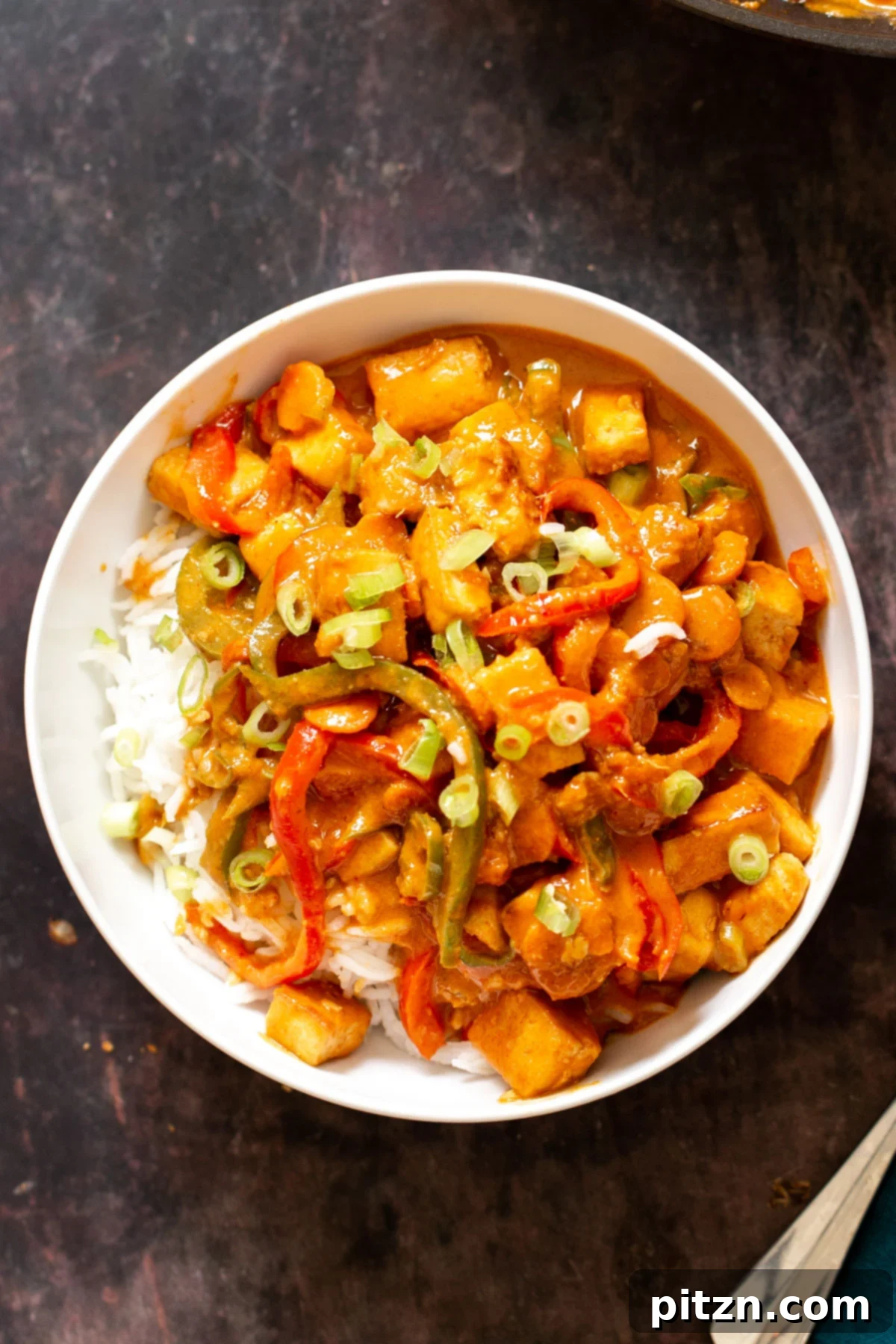
The combination of miso, gochujang, and peanut butter is truly magical. Many of you adored our miso gochujang baked whole cauliflower recipe, so we’ve taken that same incredible flavor profile and adapted it for this quick tofu and veggie stir-fry. What can we say? A flavor explosion is absolutely guaranteed with every single bite!
Why You Will Love This Quick & Saucy Stir-fry
This Peanut Butter & Miso Gochujang Tofu Stir-fry isn’t just a recipe; it’s an experience waiting to happen. Here’s why it’s destined to become a staple in your meal rotation:
- **Effortless & Speedy:** Life is busy, and sometimes cooking needs to be efficient without sacrificing taste. This recipe excels in both. The sauce comes together in minutes with a quick blend, the tofu roasts to perfection, and the vegetables are swiftly stir-fried. The entire process is designed for maximum flavor with minimal effort, making it ideal for a weeknight dinner when time is of the essence.
- **Unforgettable Flavors:** Prepare your taste buds for an adventure! This stir-fry delivers a powerful combination of tried-and-tested flavors. The rich nuttiness of peanut butter, the fiery yet nuanced heat of Korean gochujang, the deep umami of miso, and the aromatic kick of fresh ginger and garlic create a symphony of tastes that is both bold and harmonious. It’s a flavor profile that truly stands out.
- **One-Pan Wonder:** Who loves doing dishes? Nobody! This recipe minimizes cleanup by utilizing a single pan for the stir-fry component. From browning the tofu to simmering the sauce with the vegetables, everything happens in one skillet, saving you precious time and effort in the kitchen.
- **Dietary Inclusivity:** We believe delicious food should be accessible to everyone. That’s why this recipe comes with flexible options to cater to various dietary needs. Whether you’re avoiding nuts, soy, or aiming for an oil-free meal, we’ve got you covered with simple and effective substitutions that don’t compromise on flavor or texture. This makes it a perfect dish for households with diverse dietary preferences.
Explore More Stir-fry Recipes:
If you’re a fan of quick, flavorful, and versatile stir-fries, you’re in for a treat! This Miso Gochujang Peanut Tofu Stir-fry is just one of many exciting options you can whip up for a satisfying meal. Here are some other fantastic stir-fry creations that bring vibrant flavors and easy cooking to your table:
- Hoisin Tofu Noodles: A classic and beloved combination of savory hoisin sauce with tender tofu and wholesome brown rice noodles.
- Curried Tofu for Banh Mi: While traditionally served in a sandwich, this curried tofu stir-fry is amazing on its own or over rice, bursting with aromatic spices.
- Sticky Sesame Tofu: Crispy tofu coated in a sweet and savory ginger-sesame glaze, paired with colorful vegetables for a delightful meal.
- Sweet and Sour Tofu and Veggies: A timeless favorite, offering that perfect balance of tangy and sweet flavors with satisfying tofu and fresh vegetables.
- Dragon Chicken Soycurls: For those who love a bit of heat and texture, these soycurls are cooked in a spicy “Dragon” sauce, creating a truly unique stir-fry experience.
- General Tso Soy Curls: A vegan take on a popular Chinese-American dish, featuring crispy soy curls tossed in a sticky, savory, and slightly spicy General Tso’s sauce.
Miso Gochujang Peanut Tofu Stir Fry
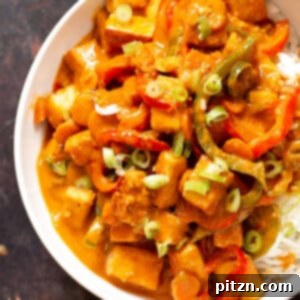
Ingredients
For the sauce:
- 1 tablespoon Korean Gochujang, gochujang varies in heat based on brand. Use a bit less or more to preference
- 1 tablespoon Sambal oelek or other Asian chili sauce, use less for less heat
- 3 tablespoons soy sauce, use tamari for Glutenfree
- 1/4 cup smooth peanut butter or almond butter, use 1/3 cup if you like your sauce to be thicker and more peanut buttery flavor
- 2 tablespoons maple syrup
- 2 teaspoons yellow or white miso, or use chickpea miso to keep it soy-free
- 1 tablespoon white or rice vinegar
- 1/2 inch ginger
- 2 cloves garlic
- 1/2 cup water
For the stir fry:
- 2 teaspoons sesame oil
- 14 ounce of firm or extra firm tofu, pressed for at least 15 minutes and cubed
- 1/2 cup thinly sliced carrots
- 1/2 cup thinly sliced red bell pepper
- 1/2 cup thinly green bell pepper
- 1/8 teaspoon salt
- green onion for garnish
Instructions
-
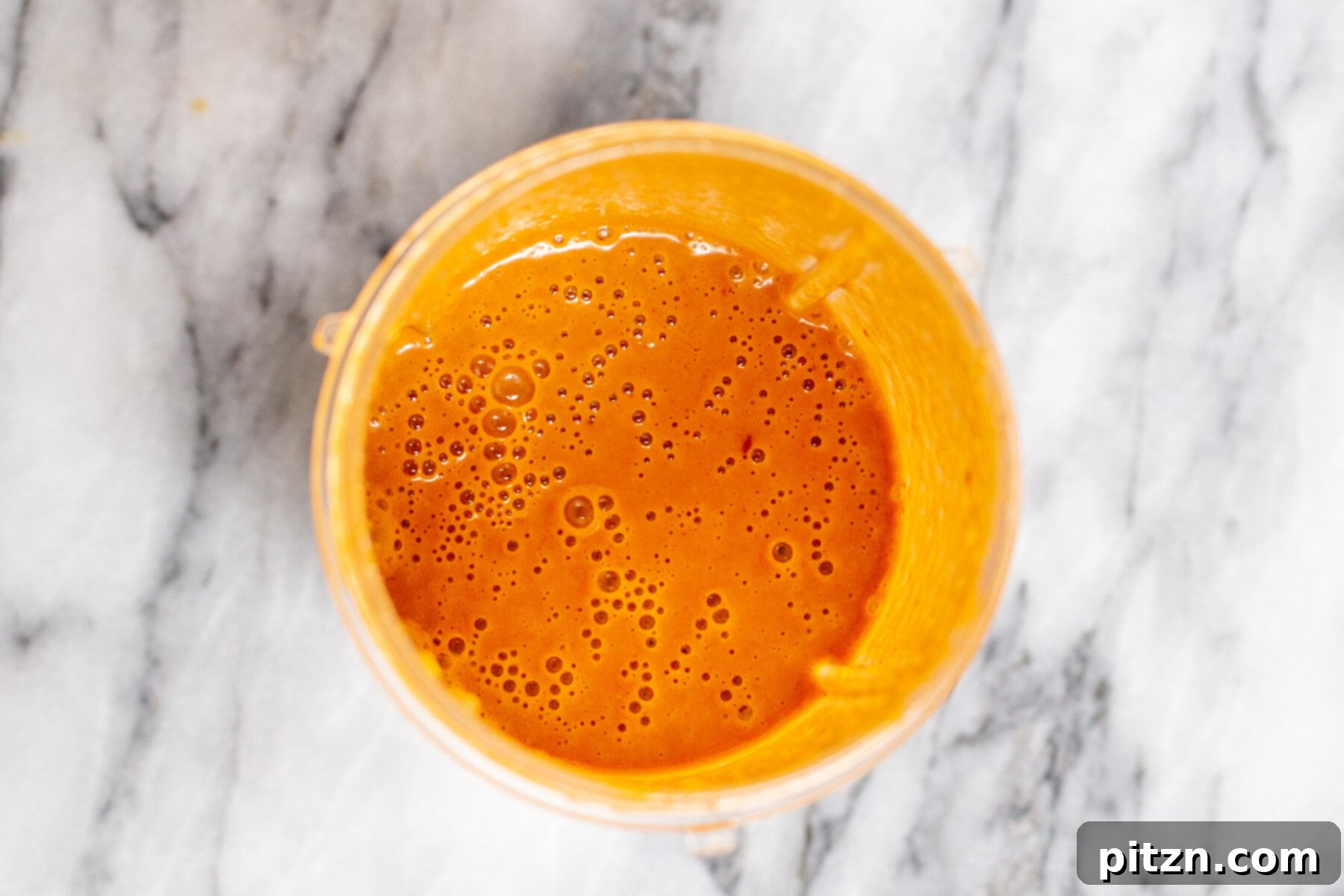
Prepare the sauce: In a blender, combine all the sauce ingredients: Korean Gochujang, Sambal oelek (or other Asian chili sauce), soy sauce (or tamari for gluten-free), smooth peanut butter (or almond/sunflower seed butter), maple syrup, yellow or white miso (or chickpea miso for soy-free), white or rice vinegar, ginger, garlic, and water. Blend until the mixture is completely smooth and creamy. Set this vibrant sauce aside. (Optional: If you prefer a thicker sauce, you can add 1 teaspoon of flour or cornstarch to the blender at this stage and blend it in.)
-
Start the stir-fry: Heat the sesame oil in a large skillet or wok over medium heat. Ensure the pan is hot before adding the tofu.
-
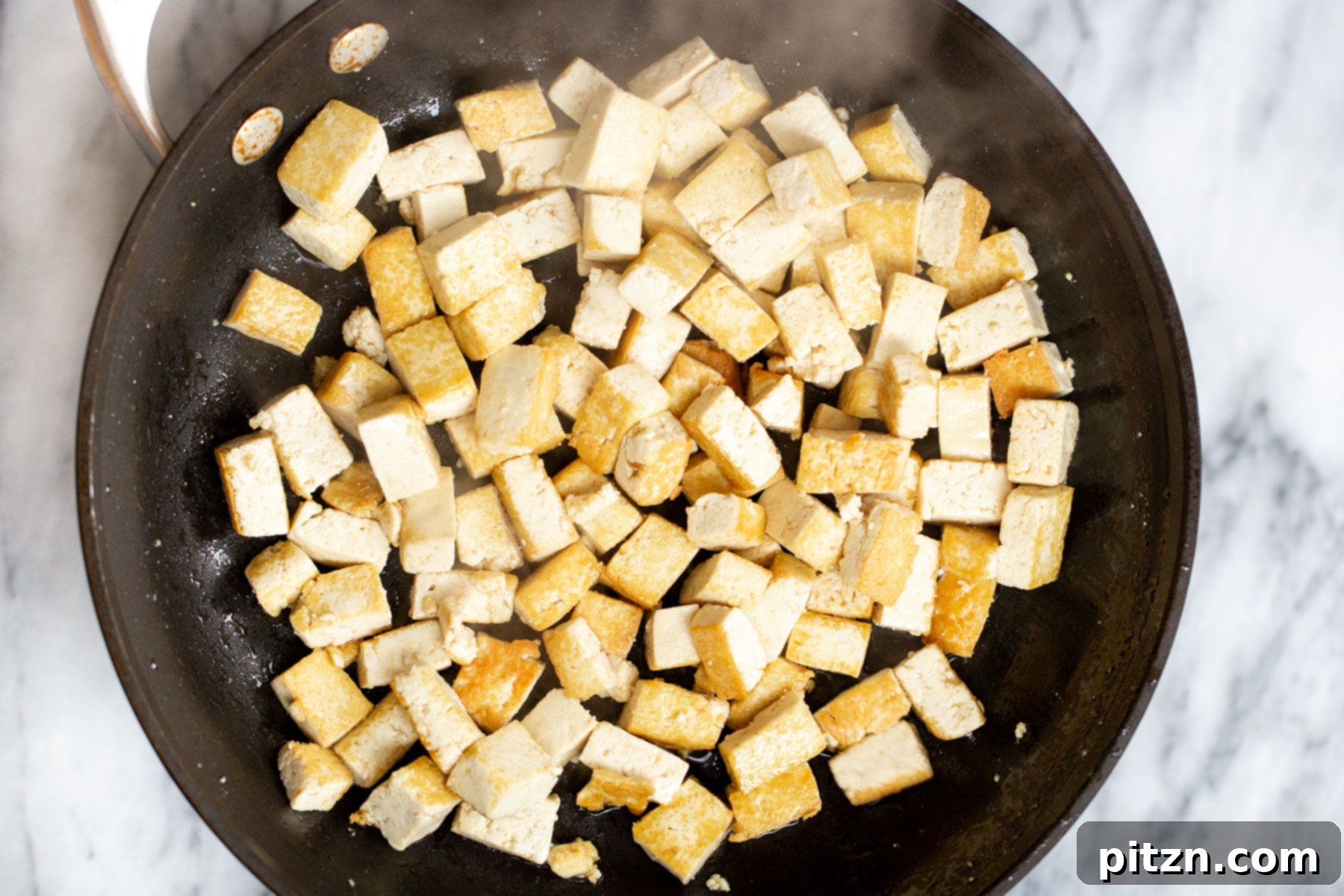
Once the oil is shimmering, add the pressed and cubed tofu to the skillet. Cook the tofu, turning occasionally, until it achieves a beautiful golden-brown crispness on most of its edges. This usually takes about 5-7 minutes. Perfectly browned tofu adds a wonderful texture to the dish.
-
Next, add the thinly sliced bell peppers (red and green) and carrots to the skillet with the tofu. Sprinkle in the 1/8 teaspoon of salt. Stir-fry for about two minutes, allowing the vegetables to soften slightly while retaining a pleasant crunch.
-
Pour the blended sauce into the skillet with the tofu and vegetables, mixing well to ensure everything is evenly coated. To ensure you get every last drop of that delicious sauce, add an additional 1/4 cup of water to your blender, swirl it around, and add this to the skillet.
-
Bring the sauce to a gentle boil, then reduce the heat and let it simmer for another two minutes. This allows the flavors to meld beautifully and the sauce to thicken slightly.
-
Taste the stir-fry and adjust the seasoning as needed. You might want to add a touch more salt, a hint more sweetness with maple syrup, or an extra kick of gochujang for more heat. Once perfected, remove the skillet from the heat. Serve this mouth-watering stir-fry immediately over a bed of fluffy rice or nutrient-rich quinoa. Garnish generously with freshly chopped green onions for a burst of color and fresh flavor.
For an even thicker sauce, continue cooking for a few extra minutes until it reaches your desired consistency. This thicker version is perfect for serving in crisp lettuce wraps or even alongside creamy mashed potatoes for a unique twist.
Video
Notes and Substitutions
- Peanut-free option: For those with peanut allergies or preferences, simply swap out the peanut butter for an equal amount of almond butter or cashew butter. These alternatives still provide the creamy texture and nutty depth without peanuts.
- Nut-free option: To make this recipe completely nut-free, use sunflower seed butter as a substitute for peanut butter. It offers a similar richness and texture profile, ensuring the sauce remains luscious.
- Oil-free preparation: If you’re looking to reduce oil, you can easily omit the sesame oil. Instead of frying, bake the tofu until golden and crispy. For sautéing the vegetables, use a splash of vegetable broth or water to prevent sticking and still achieve a tender-crisp texture.
- Soy-free modification: Making this dish soy-free is straightforward. Replace traditional tofu with chickpea tofu, or use cooked chickpeas or a greater variety of vegetables as your protein base. Omit the soy sauce and instead add about 1/2 teaspoon more salt to taste. For gochujang, which sometimes contains soy, substitute it with sambal oelek or another preferred chili sauce that is soy-free.
- Vegetable variations: Feel free to get creative with your choice of vegetables! Quick-cooking options like snow peas, zucchini, baby corn, green beans, or even broccoli florets would make fantastic additions, allowing you to tailor the stir-fry to your taste and what’s in season.
- Serving versatility: While delicious over steamed rice or quinoa, this stir-fry is incredibly versatile. Consider serving it with brown rice noodles, cauliflower rice for a low-carb option, or even as a flavorful filling for crisp lettuce wraps.
Nutrition
Nutrition information is automatically calculated, so should only be used as an approximation.
Did you make this recipe? Rate and comment below!
Key Ingredients for the Perfect Stir-fry:
Understanding the role of each ingredient is key to appreciating the depth of flavor in this Peanut Butter & Miso Gochujang Tofu Stir-fry. We select each component not just for taste, but for how it contributes to the overall texture, aroma, and nutritional profile of the dish.
- Tofu: For this recipe, we highly recommend using firm or extra-firm tofu. These varieties hold their shape beautifully during stir-frying and absorb the rich sauce wonderfully. The crucial step here is to press the tofu for at least 15 minutes before cubing it. Pressing removes excess water, allowing the tofu to crisp up better and soak up more flavor.
- Sesame Oil: This aromatic oil is indispensable in Asian cooking. It’s not just for frying the tofu; its distinct nutty flavor adds a silky mouthfeel and deep, complex notes that round out the entire dish. A little goes a long way in creating an authentic taste.
- Miso Paste: As discussed earlier, miso is a powerhouse of umami. Its fermented richness adds a savory depth to the stir-fry sauce that is unparalleled. Combined with fresh garlic, ginger, and soy sauce (or tamari), miso forms the backbone of our flavorful sauce, infusing the dish with an authentic Asian essence.
- Gochujang: This Korean red chili paste is what gives our stir-fry its signature spicy kick and authentic Korean flavor. Its unique blend of sweet, savory, and spicy notes creates a dynamic and irresistible taste profile that is much more complex than just heat.
- Maple Syrup: To perfectly balance the heat from the gochujang and the savoriness of miso and soy sauce, maple syrup provides a natural sweetness. It helps to create a harmonious blend of flavors without being overly sugary.
- Peanut Butter: Beyond its creamy texture, peanut butter adds a vital richness and body to the sauce. It tames the spice, provides a delicious nutty base, and helps the sauce cling to every piece of tofu and vegetable, ensuring maximum flavor in every bite.
- Fresh Vegetables: We love a vibrant and colorful mix for visual appeal and a range of textures. Thinly sliced carrots and red and green bell peppers are our go-to choices. They cook quickly, add natural sweetness, and contribute essential nutrients and a satisfying crunch.
Expert Tips for Stir-fry Success:
Achieving a perfect stir-fry is an art, but these simple tips will guide you to culinary success, ensuring your Peanut Butter & Miso Gochujang Tofu Stir-fry is nothing short of amazing:
- Gochujang Alternatives: If authentic gochujang is hard to find, don’t let that stop you! You can substitute it with Sriracha chili sauce or another Asian chili paste like sambal oelek. For a different flavor profile, a touch of lemon juice can brighten the dish, or even harissa paste can offer a unique spicy warmth if you enjoy Middle Eastern flavors.
- Protein Swaps: Not a tofu fan? No problem! This recipe is incredibly adaptable. You can easily substitute tofu with seitan or soy curls. If using soy curls, first soak them in vegetable broth until rehydrated, then drain well. Toss them lightly in cornstarch before stir-frying until they’re golden and slightly crispy on the edges. This preparation method ensures they have a great texture and absorb the sauce beautifully.
- Maximize Your Veggies: Stir-fries are perfect for using up whatever vegetables you have on hand. Experiment with additions like tender baby corn, crisp snow peas, vibrant green asparagus, sliced zucchini, or even crunchy broccoli florets. Just remember to cut vegetables into similar sizes for even cooking and add tougher vegetables earlier than quicker-cooking ones.
- Creative Serving Ideas: While traditionally served over steamed rice, don’t limit yourself! This versatile stir-fry is also excellent over fluffy quinoa, lighter cauliflower rice, or even as a flavorful filling for crisp lettuce wraps. For a truly indulgent meal, try it with noodles like ramen or udon.
- Nut-Free & Allergy-Friendly: To cater to nut allergies, always opt for almond butter or cashew butter if avoiding peanuts. For a completely nut-free version, sunflower seed butter is a fantastic alternative that provides the necessary creaminess and richness to the sauce without any nuts.
- Gluten-Free Adaptation: Making this dish gluten-free is simple. Just replace conventional soy sauce with tamari, a gluten-free alternative that offers the same savory depth.
- Oil-Free Cooking: For an oil-free stir-fry, skip the sesame oil. Instead of frying, bake your pressed tofu until it’s golden and firm. When sautéing vegetables, use a splash of vegetable broth or water to prevent sticking and aid in cooking.
- Soy-Free Options: To make this recipe soy-free, use chickpea tofu, cooked chickpeas, or focus on a wider variety of vegetables as your main components. Omit soy sauce entirely and add about 1/2 teaspoon more salt (or to taste) to compensate for the savory notes. Additionally, ensure your gochujang is soy-free, or substitute it with sambal oelek or another soy-free chili sauce.
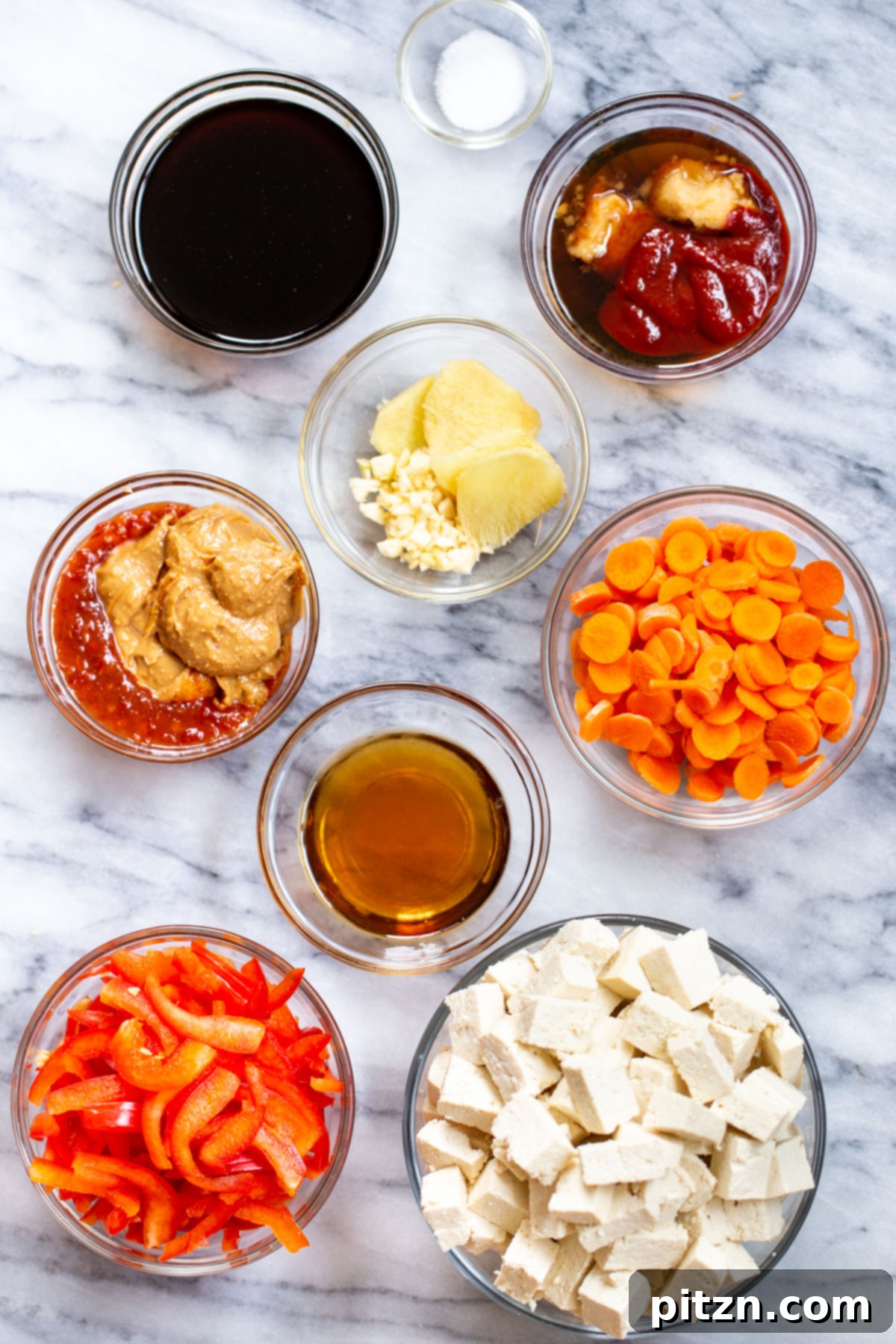
How to Master Peanut Butter Miso & Gochujang Tofu Stir-fry
Creating this delicious and vibrant stir-fry is a straightforward process that yields incredibly rewarding results. Follow these steps to prepare a meal that’s bursting with flavor and far superior to any takeout.
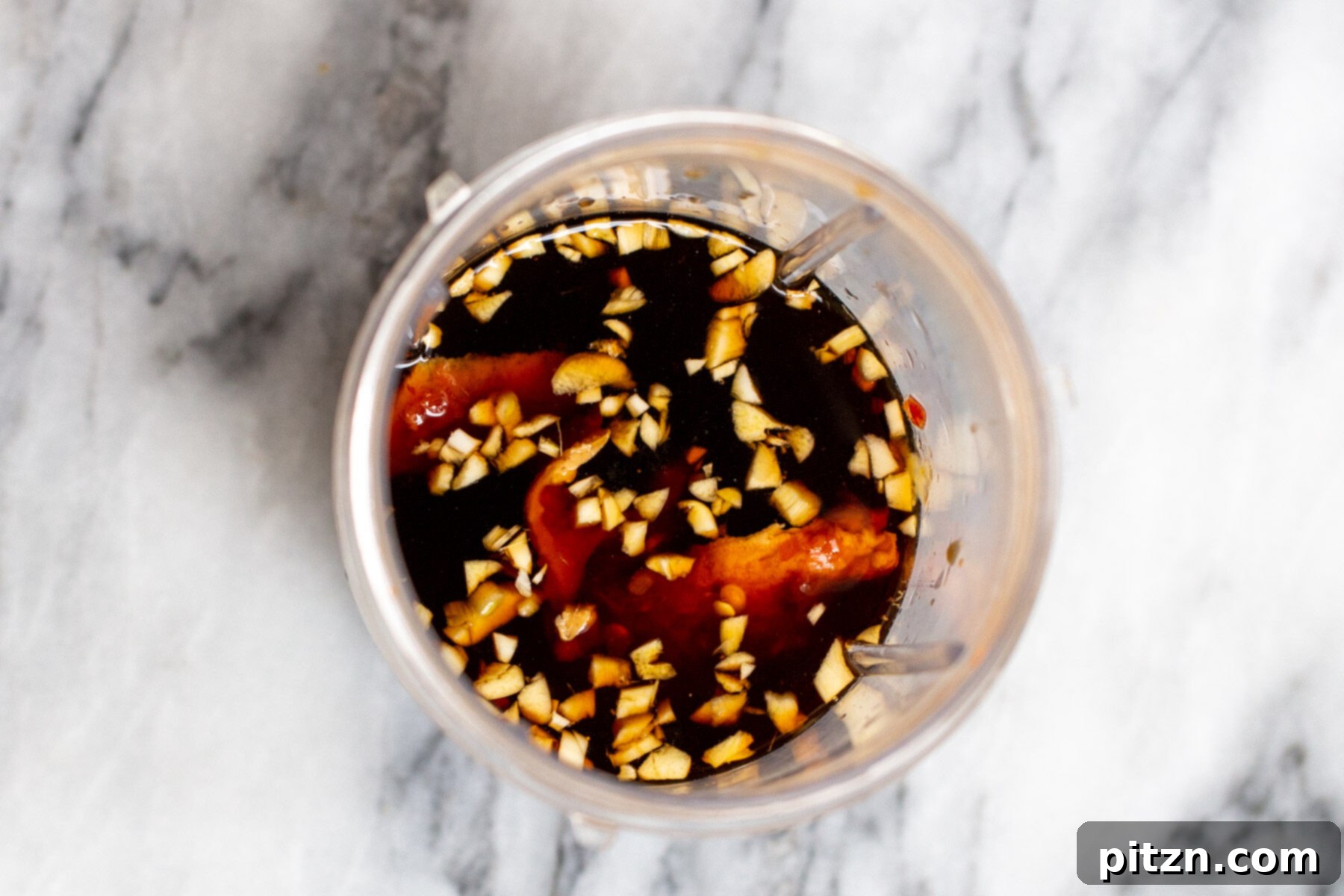
Step 1: Craft the Perfect Sauce. Begin by gathering all your sauce ingredients. Place the Korean Gochujang, Sambal oelek (or alternative chili sauce), soy sauce (or tamari), smooth peanut butter (or your chosen nut/seed butter), maple syrup, yellow or white miso (or chickpea miso), white or rice vinegar, fresh ginger, garlic cloves, and water into a blender. Blend these ingredients until they form a completely smooth, uniform, and creamy sauce. Once blended, set this flavorful mixture aside. This sauce is the heart of your stir-fry, so ensure it’s well combined.
Step 2: Prepare for Stir-frying. Heat the sesame oil in a large skillet or wok over medium heat. It’s important to allow the pan to heat sufficiently before adding ingredients; a hot pan ensures a good sear and prevents food from steaming instead of stir-frying.
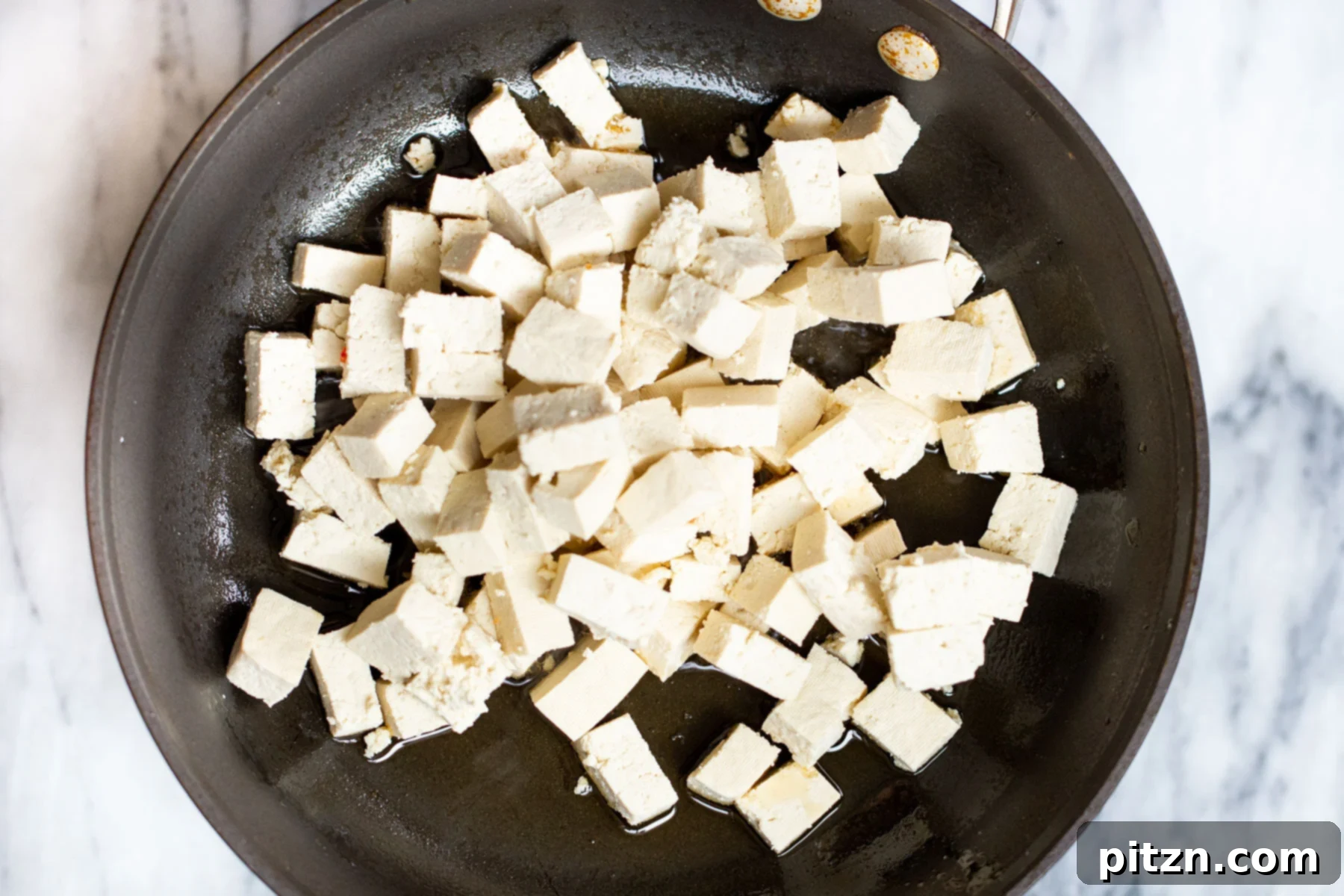
Step 3: Sear the Tofu to Perfection. Once the oil is hot and shimmering, carefully add the pressed and cubed tofu to the skillet. Cook the tofu, turning the pieces occasionally, until they develop a beautiful golden-brown color and a slightly crispy texture on most sides. This step is crucial for adding depth and substance to the tofu, making it irresistibly appealing.
Step 4: Introduce the Vegetables. After the tofu is nicely browned, add the thinly sliced bell peppers (both red and green) and carrots to the skillet. Sprinkle with 1/8 teaspoon of salt. Continue to stir-fry for about two minutes. The goal here is to soften the vegetables slightly while ensuring they retain a delightful crispness, adding a fresh contrast to the tender tofu.
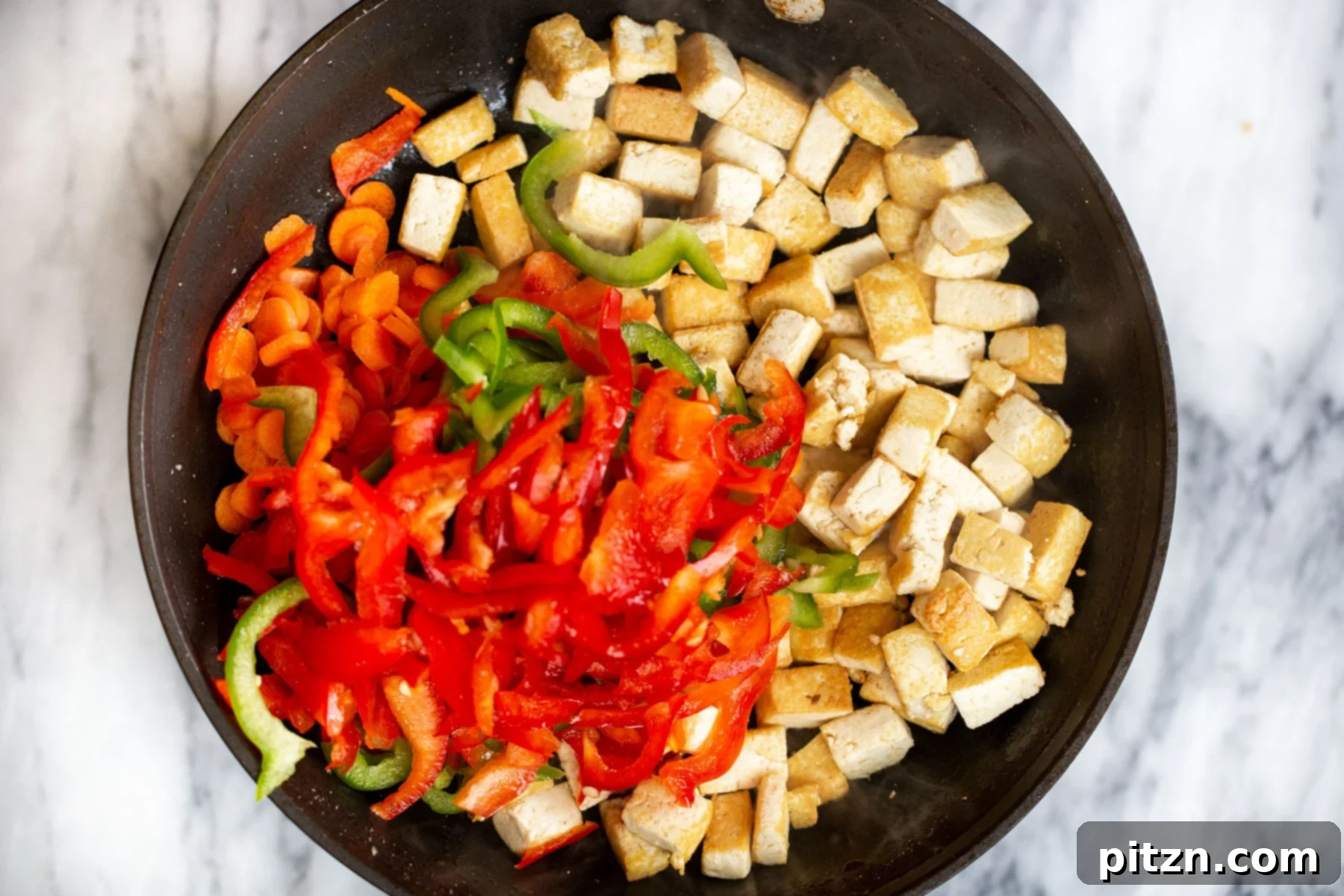
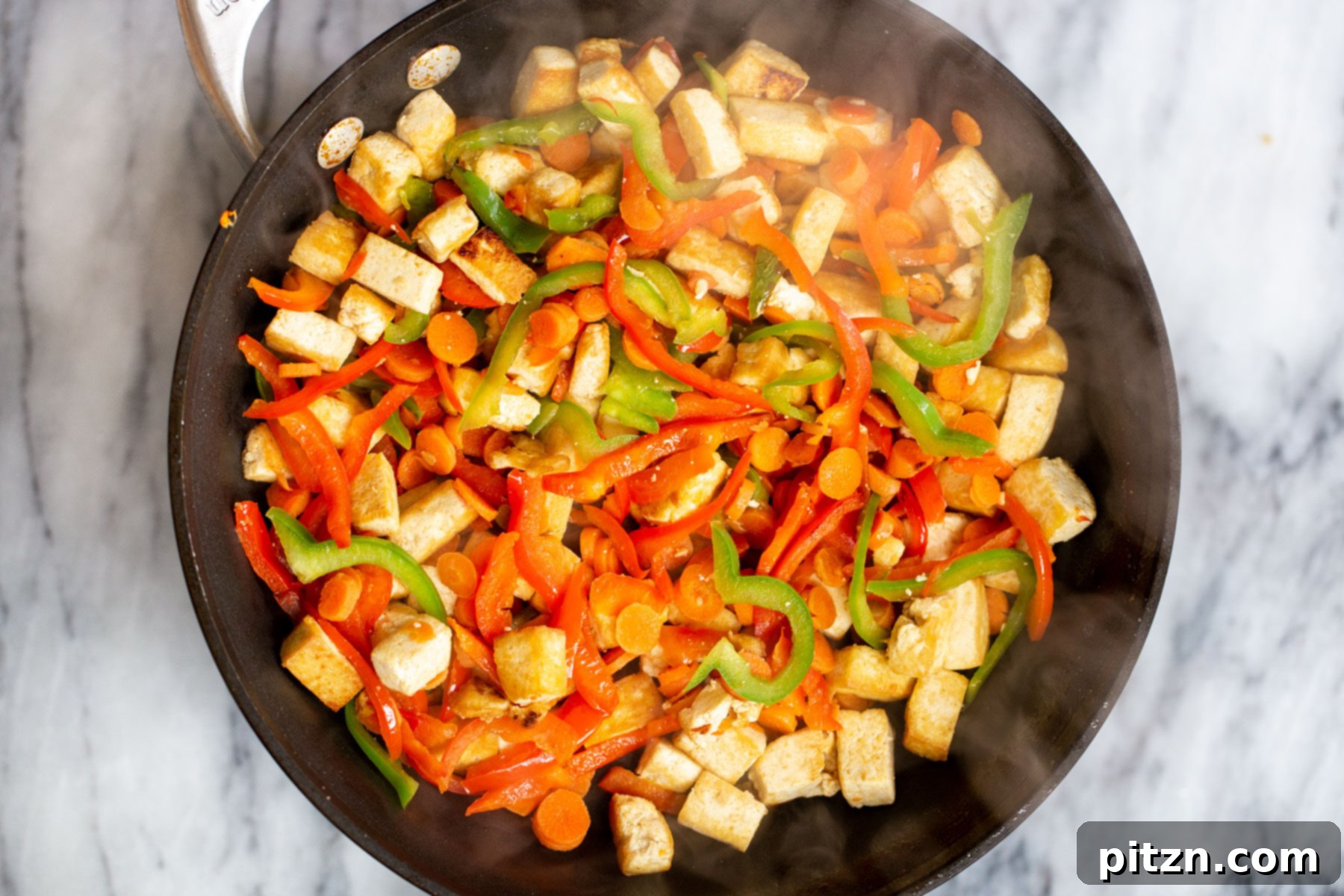
Step 5: Combine with the Flavorful Sauce. Pour the previously blended sauce directly into the skillet with the tofu and vegetables. Stir thoroughly to ensure all ingredients are beautifully coated in the rich, creamy sauce. To maximize flavor and minimize waste, add an additional 1/4 cup of water to your blender, swirl it around to loosen any remaining sauce, and then add this to the skillet. This helps to extend the sauce and incorporate all the delicious remnants.
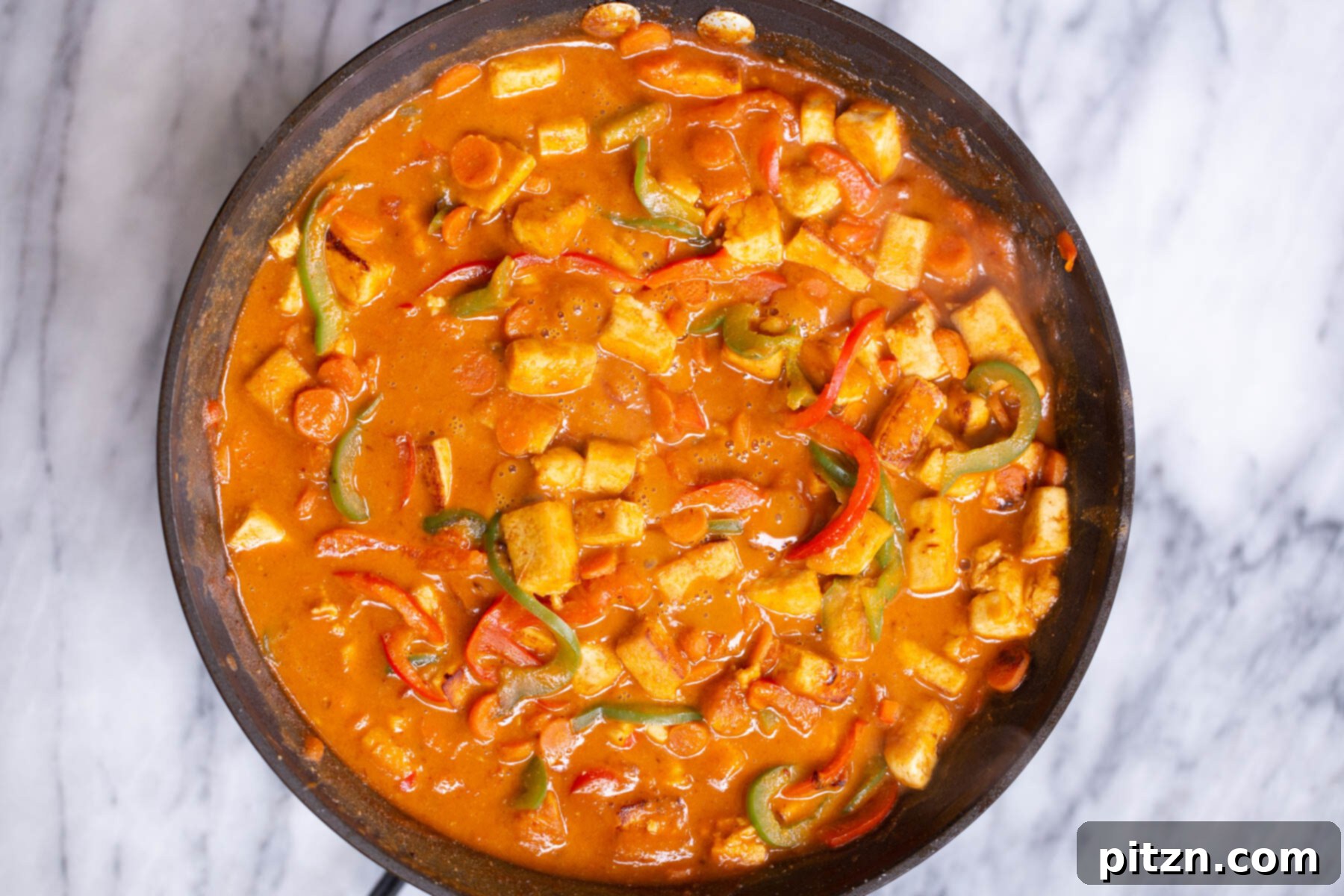
Step 6: Simmer to Perfection. Bring the sauce in the skillet to a gentle boil, then reduce the heat to a simmer and let it cook for another two minutes. This simmering period allows the flavors to fully meld together and the sauce to thicken to a luxurious consistency, clinging beautifully to the tofu and vegetables.
Step 7: Final Adjustments and Serving. Before taking the stir-fry off the heat, taste and adjust the seasoning as needed. You might find it benefits from a pinch more salt, a dash more maple syrup for sweetness, or an extra touch of gochujang if you prefer more heat. Once perfected, remove the skillet from the heat. Serve this mouth-watering Peanut Butter & Miso Gochujang Tofu Stir-fry hot over a generous bed of steamed rice or quinoa. Finish with a lavish sprinkle of freshly chopped green onions for a bright, fresh garnish and an extra layer of flavor. Enjoy your homemade, better-than-takeout meal!