
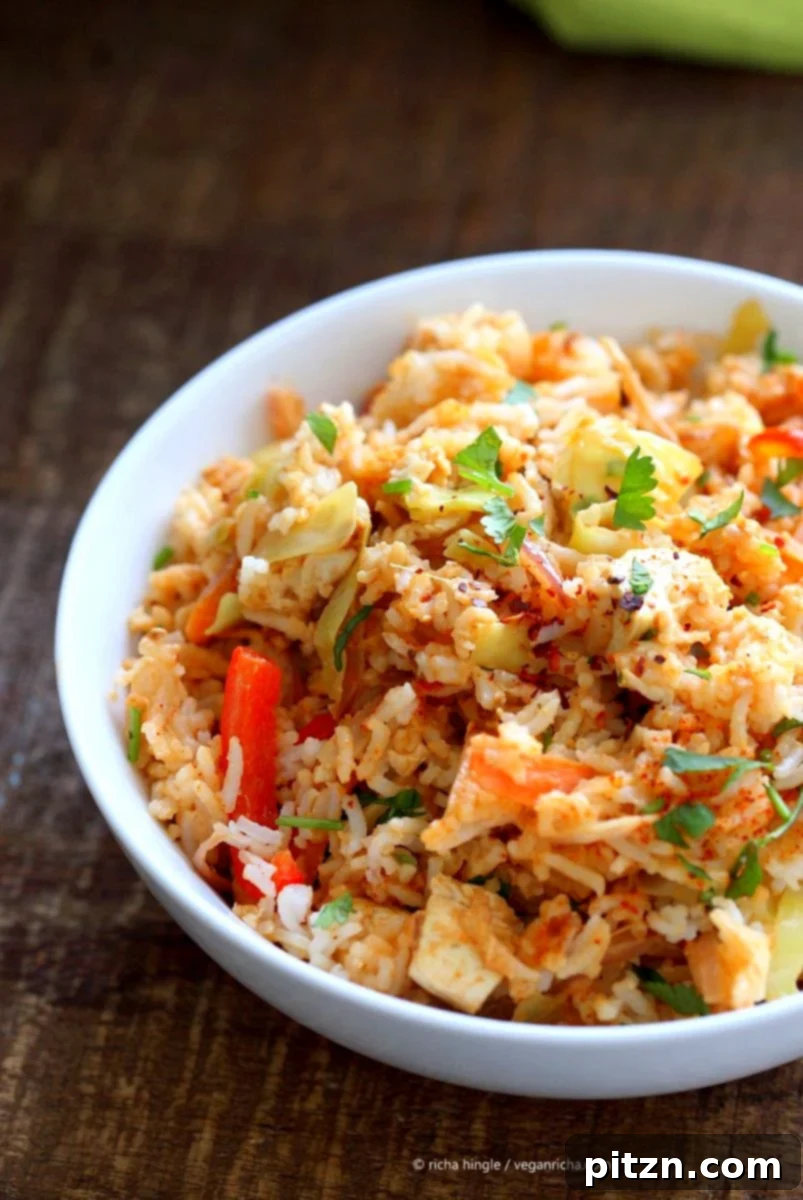
Welcome to your new favorite weeknight meal: a truly effortless, one-pot Peanut Sauce Fried Rice. This vibrant, flavorful dish is packed with wholesome ingredients like crispy tofu, tender carrots, crisp red bell pepper, and crunchy cabbage, all coated in a rich, savory, and slightly spicy peanut butter sauce. It’s not just delicious; it’s a brilliant way to use up those lingering vegetables and grains in your fridge, transforming them into a culinary masterpiece. Whether you’re a seasoned chef or a kitchen novice, this recipe is designed for simplicity and maximum flavor, proving that healthy, plant-based eating can be both easy and incredibly satisfying. Plus, it’s naturally vegan and can be easily adapted to be gluten-free and even soy-free, making it a versatile option for various dietary needs.
Jump to Recipe
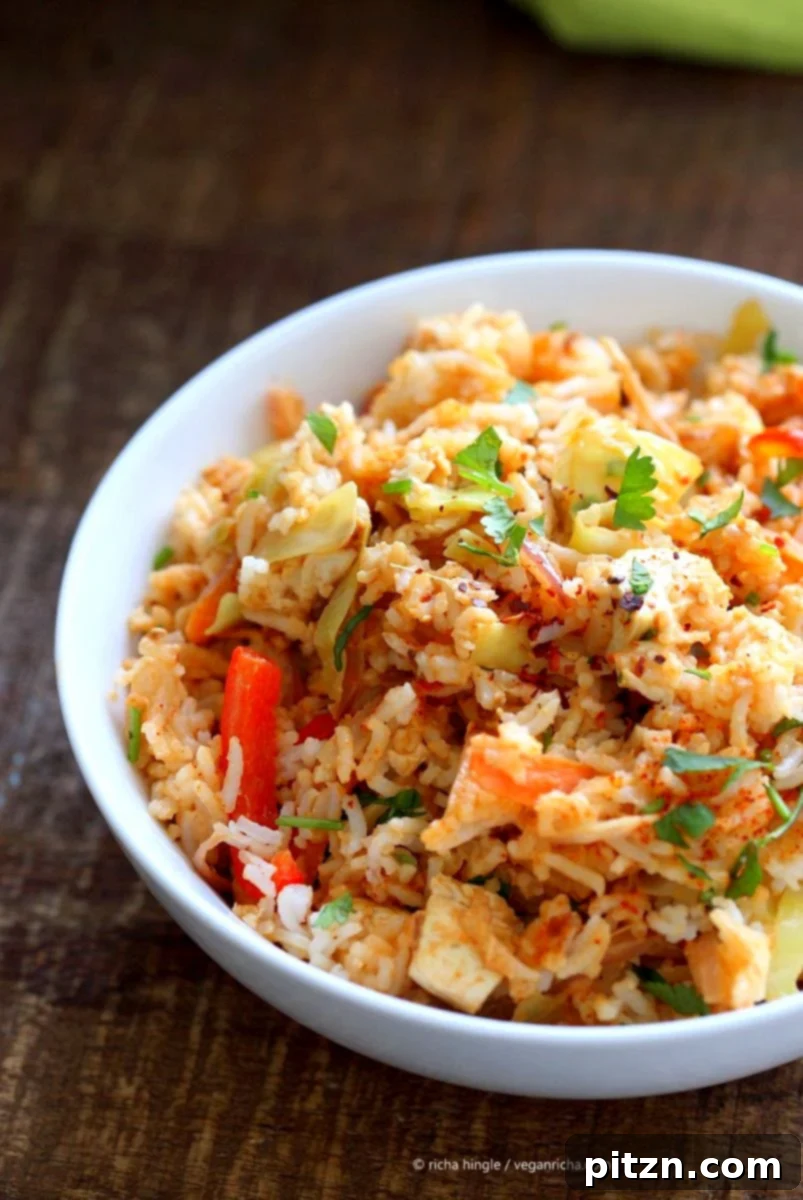
Why You’ll Love This Easy One-Pot Fried Rice Recipe
This Peanut Sauce Fried Rice isn’t just a recipe; it’s a solution for busy weeknights and a celebration of flavor. Here’s why it’s destined to become a staple in your kitchen:
- Effortless One-Pot Wonder: True to its name, this dish cooks entirely in a single pot or skillet, minimizing cleanup and maximizing your free time. Perfect for those evenings when you crave a delicious homemade meal without the hassle.
- Bursting with Flavor: The star of the show is undeniably the homemade peanut sauce. A harmonious blend of nutty, sweet, savory, tangy, and spicy notes, it elevates simple ingredients to an extraordinary culinary experience.
- Healthy and Wholesome: Loaded with fresh vegetables, plant-based protein (tofu or chickpeas), and nourishing grains, this fried rice is a complete and balanced meal. It’s a fantastic way to boost your daily veggie intake.
- Dietary-Friendly: Naturally vegan and gluten-free (when using tamari or coconut aminos). With a simple swap, it can also be made entirely soy-free or nut-free, accommodating various dietary preferences and allergies.
- Customizable and Flexible: This recipe is a canvas for your creativity. Feel free to swap in your favorite vegetables or proteins based on what you have on hand, making it a fantastic “fridge clean-up” meal.
- Quick to Prepare: From prep to plate, this dish comes together in under 35 minutes, making it an ideal choice for quick lunches or fast dinners after a long day.
Life can be hectic, and sometimes, you just need a flavorful meal that comes together quickly. This past week, for instance, has been a bit of a blur. Our sweet Chewie has been battling a nasty cough, leaving us all with limited sleep. Thankfully, his heart and lungs checked out fine, so it’s all about managing his cough so he can get some rest. The meds, unfortunately, make him a bit nauseous, so our home currently resembles a gourmet pet restaurant with five different food bowls available in both the living room and bedroom! It’s in times like these that a simple, satisfying, and quick meal like this peanut sauce fried rice becomes an absolute lifesaver.
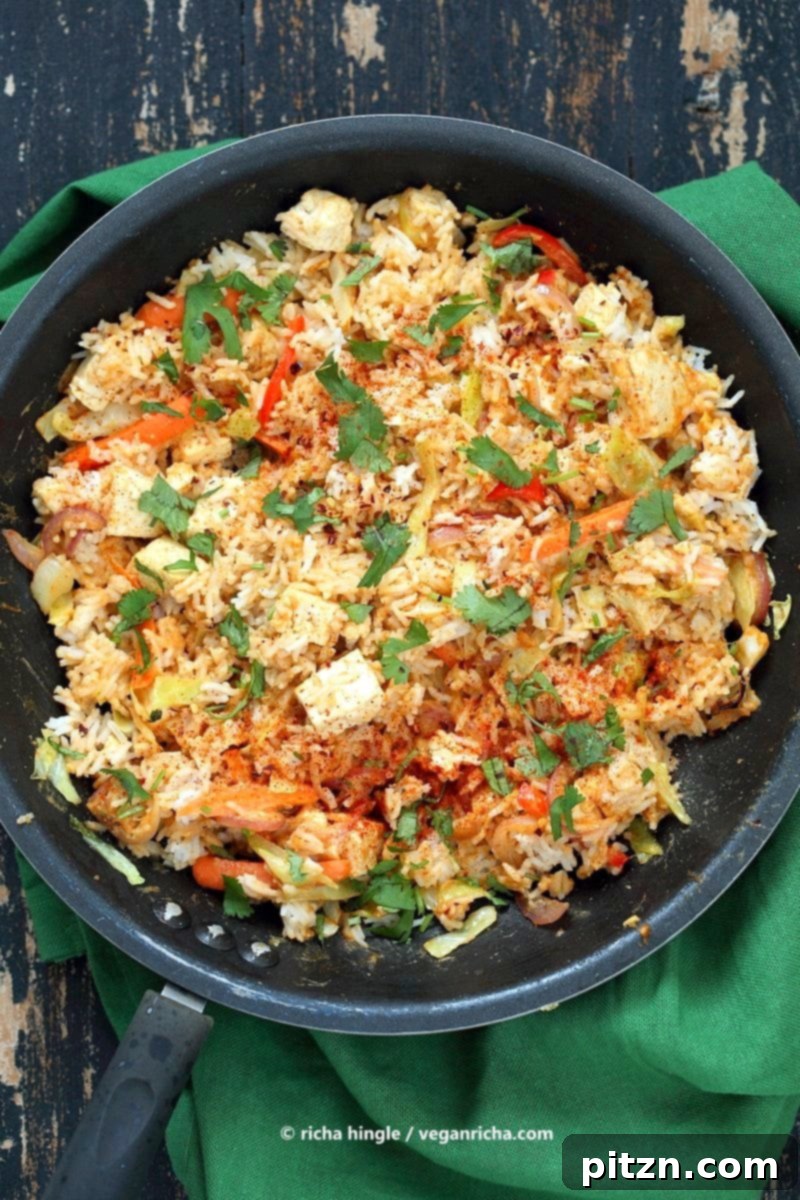
The Secret is in the Sauce: Crafting Your Perfect Peanut Butter Blend
The soul of this fried rice lies in its incredibly versatile and potent peanut sauce. Don’t be intimidated by the list of ingredients – each component plays a crucial role in building layers of complex flavor. This isn’t just a simple sauce; it’s a flavor explosion that balances sweet, savory, spicy, and tangy notes, transforming everyday vegetables and grains into a culinary delight. You can whip up this sauce in minutes, and it’s so good, you might just want to make a double batch to have on hand for other stir-fries or as a dipping sauce.
Key Components of the Peanut Sauce:
- Nut Butter Base: Smooth peanut butter is classic, providing a creamy, rich foundation. For a soy-free or a different flavor profile, almond butter or even sunflower seed butter (for a nut-free option) works wonderfully.
- Aromatic Kick: Fresh ginger and garlic are non-negotiables, offering a pungent, warm base that is essential to Asian-inspired dishes. Coarsely chopped for easy blending, their flavors deepen beautifully.
- Umami and Salinity: Soy sauce delivers that essential umami depth and saltiness. If you need a soy-free alternative, coconut aminos are an excellent substitute, providing a similar savory profile with a hint of sweetness.
- Citrus Brightness: Lime juice and kaffir lime zest (or regular lime zest) cut through the richness of the nut butter, adding a refreshing, zesty tang that brightens every bite.
- Fresh Herbs: Cilantro is blended directly into the sauce, infusing it with its distinctive fresh, herbaceous notes, enhancing the overall aroma and taste.
- Heat and Spice: Sriracha or any Asian chili sauce, along with a dash of cayenne, provides a customizable level of heat. Adjust to your preference – from a subtle warmth to a fiery kick.
- Sweetness Balance: A touch of sugar or your preferred sweetener balances the spicy and tangy elements, creating a well-rounded flavor profile.
- Sesame Essence: Sesame oil adds a nuanced, nutty aroma that is characteristic of many East Asian dishes.
- Creaminess and Consistency: Coconut milk or another non-dairy milk helps to achieve the perfect pourable consistency for the sauce, allowing it to coat the rice and vegetables evenly.
Once you blend these ingredients, give it a taste. This is your chance to make it truly yours. Need more heat? Add more Sriracha. Prefer it tangier? A little extra lime juice will do the trick. A touch sweeter? Adjust with more sugar. This sauce is incredibly forgiving and designed to be tailored to your palate.
Versatile Ingredients for a Flavorful Meal
This recipe thrives on its adaptability, allowing you to create a delicious meal with whatever fresh produce and staples you have on hand. The combination of ingredients listed below provides a balanced and vibrant flavor profile, but don’t hesitate to get creative with your additions!
- Oil: A neutral cooking oil like avocado, grapeseed, or canola oil is perfect for stir-frying.
- Aromatics: Thinly sliced red onion and finely chopped garlic form the aromatic backbone of the fried rice, layering a foundational sweetness and pungency.
- Crunchy Vegetables: Sliced carrots and red bell pepper add beautiful color, essential nutrients, and a delightful crisp-tender texture. They hold up well to high-heat cooking.
- Leafy Greens: Chopped cabbage (or alternatives like broccoli, bok choy, or spinach) wilts down beautifully, adding volume and a slightly sweet, earthy flavor.
- Protein Powerhouse: Pressed and cubed tofu is an excellent plant-based protein, soaking up the sauce beautifully. For a soy-free version, cooked chickpeas are a fantastic alternative, offering a similar texture and a good protein boost. You can also experiment with tempeh, edamame, or even lentils for variety.
- Grains of Choice: Cooked rice is the base of any fried rice. Day-old, chilled rice works best as it separates easily and prevents a mushy texture. A mix of half brown and half white rice offers a delightful textural contrast and added fiber, but feel free to use jasmine, basmati, or even quinoa or farro for a different twist.
- Seasoning: Salt, red pepper flakes (or more cayenne), and a final dash of lime or lemon juice are crucial for adjusting the flavor right before serving.
- Garnish: Fresh cilantro adds a bright, herbaceous finish, and a sprinkle of red pepper flakes offers an extra visual and flavorful kick.
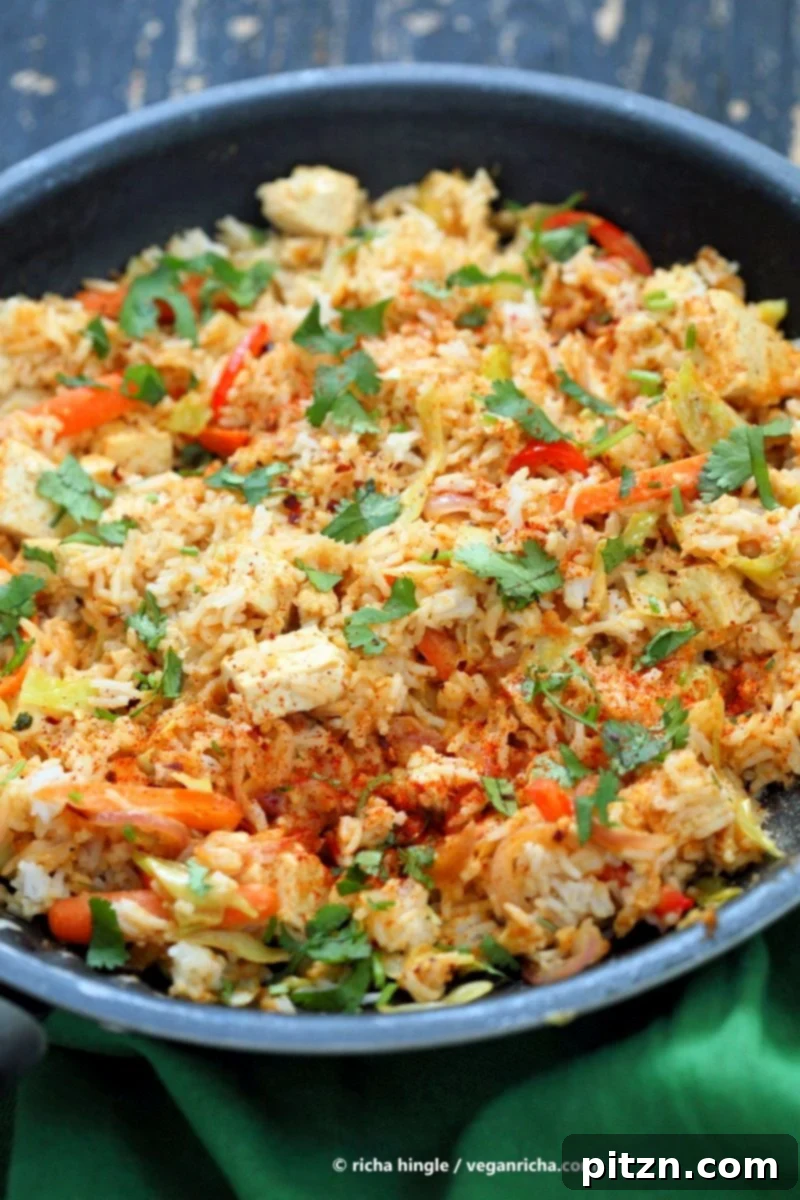
Step-by-Step Cooking Guide for Perfect Peanut Sauce Fried Rice
Creating this flavorful one-pot meal is straightforward. Follow these steps for a delicious and satisfying dish every time:
- Prepare the Peanut Sauce: In a blender or food processor, combine all the peanut sauce ingredients (peanut butter, ginger, garlic, soy sauce/coconut aminos, lime juice, kaffir lime zest, cilantro, Sriracha, cayenne, salt, sugar, sesame oil, coconut milk). Blend until completely smooth and creamy. Taste and adjust the seasoning – add more spice, salt, or sweetness to match your preference. Set the sauce aside.
- Sauté the Aromatics: Heat the oil in a large skillet or wok over medium-high heat. Once hot, add the thinly sliced red onions along with a pinch of salt. Sauté for 2 to 3 minutes, stirring frequently, until they soften slightly and become fragrant.
- Add the Harder Vegetables: Introduce the finely chopped garlic, sliced carrots, and thinly sliced red bell pepper to the skillet. Toss well with the onions and continue to cook for another 2 minutes, allowing the vegetables to crisp-tenderize without becoming too soft.
- Incorporate Tofu and Cabbage: Add the pressed and cubed tofu (or chickpeas/other protein) and the chopped cabbage. Toss all the ingredients thoroughly to combine. Cook for 2 to 3 minutes, stirring, until the tofu begins to brown lightly and the cabbage starts to wilt.
- Introduce the Peanut Sauce: Pour the prepared peanut sauce over the vegetables and tofu in the skillet. Mix everything together until all ingredients are evenly coated. Reduce the heat to medium. Cover the skillet and let it cook for 2 to 3 minutes, or until the sauce begins to bubble gently and thickens slightly.
- Combine with Rice: Add the cooked rice (or other grains) and a generous pinch of salt to the skillet. Mix everything thoroughly, ensuring the rice is fully integrated with the sauce and vegetables. Taste and adjust the salt and spice levels as needed. If you desire more heat, sprinkle in additional cayenne or red pepper flakes. If the mixture seems too dry, a splash of non-dairy milk can help achieve a creamier consistency. Cover the skillet again and cook for just 1 minute.
- Rest and Finish: Turn off the heat and let the fried rice sit covered for another few minutes. This allows the flavors to meld beautifully and the rice to absorb any remaining sauce. Before serving, add a good dash of fresh lemon or lime juice for brightness. Garnish with extra chopped cilantro and red pepper flakes or cayenne for a final flourish. Serve hot and enjoy!
Customization and Dietary Adaptations
One of the best aspects of this One-Pot Peanut Sauce Fried Rice is its incredible versatility. It’s designed to be adaptable, allowing you to tailor it to your personal taste preferences and any dietary needs. Here are some popular ways to customize and adapt your dish:
Soy-Free Version:
For those avoiding soy, making this recipe soy-free is simple:
- Tofu Alternative: Instead of tofu, use cooked chickpeas, lentils, or even pan-fried mushrooms as your protein source. These options provide excellent texture and readily absorb the sauce’s flavors.
- Soy Sauce Replacement: Swap out the regular soy sauce for coconut aminos in your peanut sauce. Coconut aminos offer a similar umami depth and a touch of sweetness without any soy.
Nut-Free Version:
If nuts are a concern, you can easily make this recipe completely nut-free:
- Peanut/Almond Butter Substitute: Replace the peanut or almond butter with an equal amount of sunflower seed butter (like SunButter). This provides the same creamy base and nutty flavor profile without any nuts. Ensure all other ingredients are also certified nut-free.
Vegetable Swap-Ins:
Embrace the “fridge clean-up” philosophy and use any vegetables you have on hand. Great additions or substitutions include:
- Broccoli florets or broccolini
- Mushrooms (cremini, shiitake, or oyster)
- Green beans or snap peas
- Spinach or kale (add at the very end to just wilt)
- Zucchini or yellow squash
- Corn or peas
Protein Boosters:
Beyond tofu and chickpeas, consider adding:
- Edamame (shelled) for extra protein and a pop of green.
- Seitan, finely chopped and browned, for a meatier texture.
- More beans like black beans or cannellini beans for a heartier meal.
Spice Level Adjustments:
The beauty of homemade is control. Increase or decrease the Sriracha and cayenne pepper in the sauce to match your heat preference. You can also add more fresh chilies (like serrano or jalapeño) when sautéing the aromatics for an extra kick.
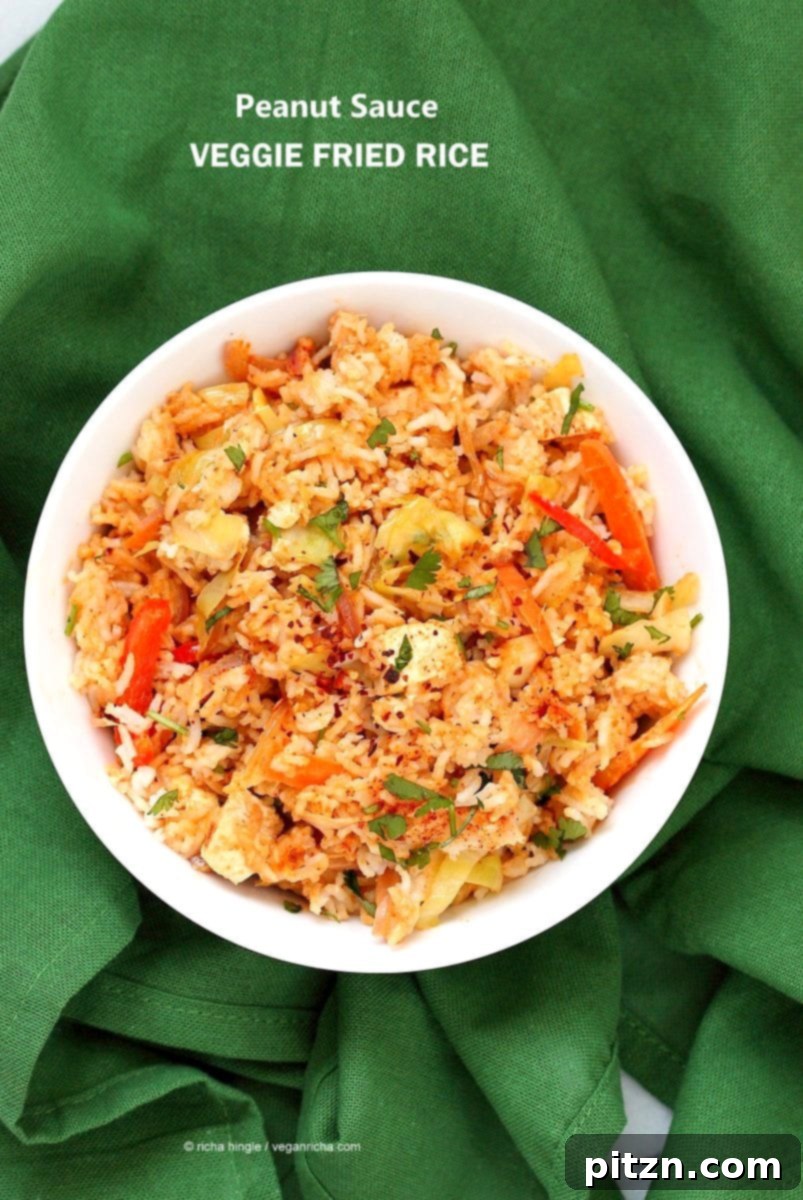
Essential Tips for the Best Fried Rice
While this recipe is simple, a few expert tips can elevate your One-Pot Peanut Sauce Fried Rice from great to extraordinary:
- Use Day-Old, Chilled Rice: This is perhaps the most crucial tip for any fried rice. Freshly cooked, warm rice tends to be too moist and sticky, leading to a mushy result. Day-old rice, stored in the refrigerator, dries out slightly, allowing the grains to separate beautifully and absorb the sauce without clumping. If you’re short on time, spread freshly cooked rice on a baking sheet and refrigerate it for at least an hour to speed up the drying process.
- High Heat is Key: Fried rice needs high heat for that signature “wok hei” (breath of the wok) flavor and a slight char on the vegetables. Ensure your skillet or wok is very hot before adding any ingredients. This helps achieve crisp-tender vegetables and prevents them from steaming.
- Don’t Overcrowd the Pan: Cooking in batches, if necessary, is better than overcrowding your skillet. An overcrowded pan lowers the temperature, causing ingredients to steam rather than fry, resulting in a soggy dish. Ensure there’s enough space for the ingredients to make direct contact with the hot surface.
- Press Your Tofu: If using tofu, pressing it is essential. This removes excess water, allowing the tofu to absorb flavors better and achieve a firmer, crispier texture when cooked. You can use a tofu press or wrap it in paper towels and place a heavy object on top for at least 20-30 minutes.
- Taste and Adjust: Always taste your sauce and the final fried rice before serving. Flavors can vary based on the specific brands of soy sauce, nut butter, and chili sauce you use. Adjust salt, spice, sweetness, and tanginess (with lime/lemon juice) to suit your palate.
- Fresh Aromatics: Don’t skimp on fresh ginger and garlic. Their vibrant flavors are foundational to the sauce and the fried rice itself, providing depth and aromatic complexity.
- Garnish Generously: A sprinkle of fresh cilantro and a squeeze of lime juice at the end aren’t just for show. They add a burst of freshness and brightness that beautifully complements the rich, savory sauce.
Frequently Asked Questions (FAQs)
Can I prepare this meal ahead of time?
Absolutely! The peanut sauce can be made up to 3-4 days in advance and stored in an airtight container in the refrigerator. You can also chop all your vegetables ahead of time. Cooked rice is best day-old, so consider making your rice the day before. The assembled fried rice is best enjoyed fresh but reheats well in a skillet or microwave.
What kind of rice is best for fried rice?
Day-old, chilled medium or long-grain white rice (like jasmine or basmati) is ideal for fried rice because it’s less sticky and results in a better texture. However, a mix of brown and white rice also works, and you can even use other grains like quinoa or farro for a healthier twist.
How can I make this spicier (or milder)?
To increase the heat, add more Sriracha or Asian chili sauce, and cayenne pepper to the peanut sauce. You can also add fresh chopped chilies (like serrano) when sautéing the onions and garlic. For a milder version, reduce or omit the Sriracha and cayenne.
Can I add other vegetables?
Yes, this recipe is highly customizable! Feel free to add or substitute with vegetables like broccoli, mushrooms, green beans, snap peas, bell peppers of different colors, or even spinach. Add softer vegetables towards the end of the cooking process so they don’t get overcooked.
Is this recipe freezer-friendly?
While fried rice is best enjoyed fresh or reheated from the fridge, you can freeze leftovers in an airtight container for up to 1-2 months. Reheat gently on the stovetop or in the microwave, adding a splash of water or non-dairy milk if it seems dry.
More One-Pot Vegan Delights
If you loved this easy one-pot meal, you’ll be thrilled to explore more simple and delicious plant-based recipes:
- Thai Basil Fried Rice (GF)
- Pad Thai (GF)
- Lentils & Veggies in Thai Peanut Sauce (GF)
- Garlic Vegetable Fried Rice (GF)
- Tofu Broccoli Bok Choy and Soba Noodles with Garlic Sesame Sauce (easily GF)
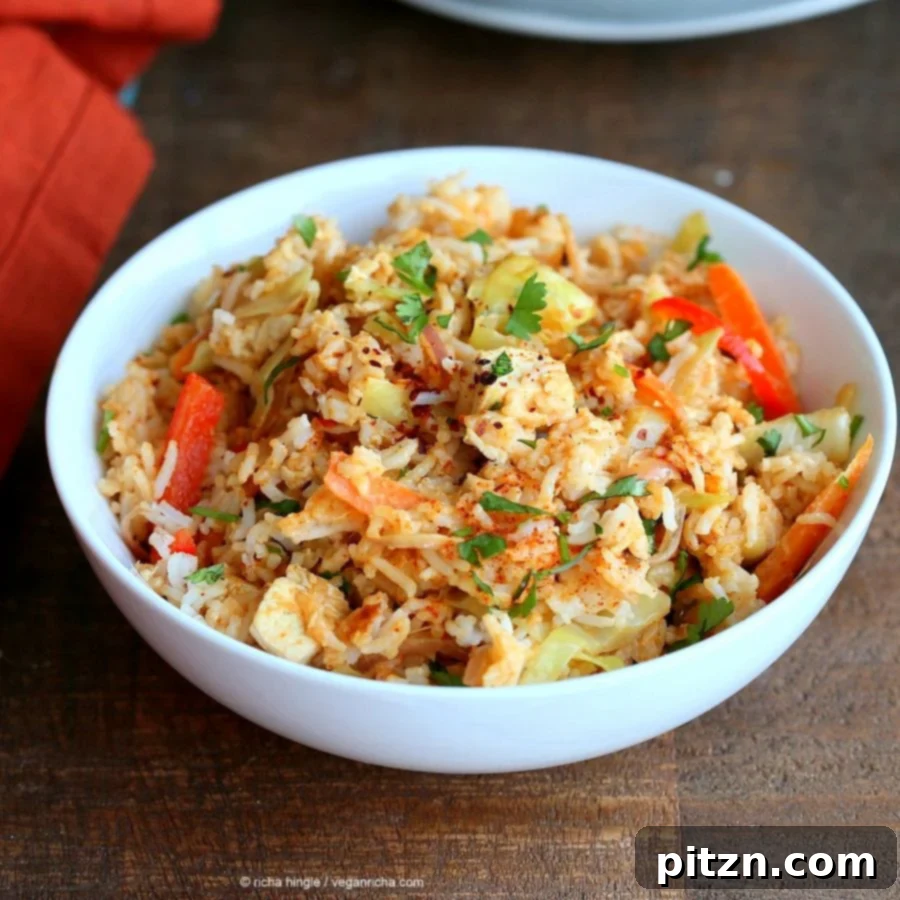
Peanut Sauce Fried Rice with Tofu, Carrots, Red Bell Pepper, Cabbage
Ingredients
For the Peanut Sauce:
- 3 to 4 tbsp smooth peanut butter or almond butter, I usually use almond butter
- 1 inch piece of fresh ginger, coarsely chopped
- 2 cloves of garlic
- 2 tsp soy sauce, or use coconut aminos to make soy-free
- 1 to 2 tsp lime juice
- zest of ½ a kaffir lime , or regular lime
- 2 tbsp chopped cilantro
- 2 to 3 teaspoons Sriracha sauce or Asian chili sauce, to taste
- ¼ tsp or more cayenne
- ¼ tsp salt
- 1 Tbsp or more sugar or other sweetener
- ½ tsp sesame oil
- 1/4 cup or more coconut milk , or other non-dairy milk
For the Fried Rice:
- 2 tsp oil
- 1/2 red onion thinly sliced
- 3 cloves of garlic finely chopped
- 1/2 cup sliced carrots
- 1/2 red pepper thinly sliced
- 7 oz Tofu pressed and cubed, or use more veggies or cooked chickpeas
- 3/4 cup loosely packed chopped cabbage , or other veggies like broccoli
- 2.5 cups cooked rice or other grains of choice, I usually use half brown and half white rice
- salt to taste
- red pepper flakes or cayenne as needed
- lime or lemon juice to taste
- 1/4 cup loosely packed chopped cilantro for garnish
Instructions
-
Blend all the ingredients under peanut sauce until smooth. Taste and adjust spice, salt, and sweetness as desired. Keep aside.
-
In a large skillet or wok, heat oil over medium-high heat. When the oil is hot, add the thinly sliced onions and a pinch of salt. Toss and cook for 2 to 3 minutes until softened.
-
Add the chopped garlic, sliced carrots, and thinly sliced bell pepper. Toss well and cook for another 2 minutes, stirring constantly.
-
Add the pressed and cubed tofu (or chickpeas/other protein) and the chopped cabbage. Toss well to combine and cook for 2 to 3 minutes, allowing the tofu to brown slightly and the cabbage to wilt.
-
Pour the prepared peanut sauce into the skillet and mix well until all ingredients are evenly coated. Reduce heat to medium. Cover and cook for 2 to 3 minutes, or until the sauce starts to bubble and thicken slightly.
-
Stir in the cooked rice and additional salt to taste. Mix thoroughly. Taste and adjust salt and spice levels as needed, adding more cayenne or red pepper flakes if desired. If the rice feels too dry, sprinkle in a few tablespoons of non-dairy milk and mix well. Cover the skillet and cook for one more minute. Let the rice sit covered off the heat for another few minutes to allow flavors to meld.
-
Finish with a good dash of fresh lemon or lime juice. Garnish generously with fresh cilantro and a sprinkle of red pepper flakes or cayenne. Serve hot and enjoy!
Notes
Peanut-Free Option: Use almond butter instead of peanut butter.
Nut-Free Option: Use sunflower seed butter (like SunButter) for the sauce.
Soy-Free Option: Omit the tofu and use cooked chickpeas or more veggies. Replace soy sauce with coconut aminos.
Nutrition
Nutrition information is automatically calculated, so should only be used as an approximation.
Did you make this recipe? Rate and comment below!
Serving and Storage Suggestions
This One-Pot Peanut Sauce Fried Rice is a complete meal on its own, perfect for lunch or dinner. You can serve it immediately after cooking, garnished with fresh cilantro and a squeeze of lime juice for an extra burst of freshness. For added texture and flavor, consider a sprinkle of toasted sesame seeds or chopped roasted peanuts (if not making it nut-free).
Storage:
Leftovers can be stored in an airtight container in the refrigerator for up to 3-4 days. It’s a fantastic meal prep option for healthy lunches throughout the week!
Reheating:
To reheat, simply warm in a skillet over medium heat, adding a splash of water or non-dairy milk if the rice seems a bit dry. You can also reheat it in the microwave until thoroughly warm.
I genuinely hope you try this recipe and love it as much as we do. It’s a testament to how simple ingredients can create something truly extraordinary. If you make something from the blog, do tag me on Instagram #veganricha. Also, Pin this post! Happy cooking!