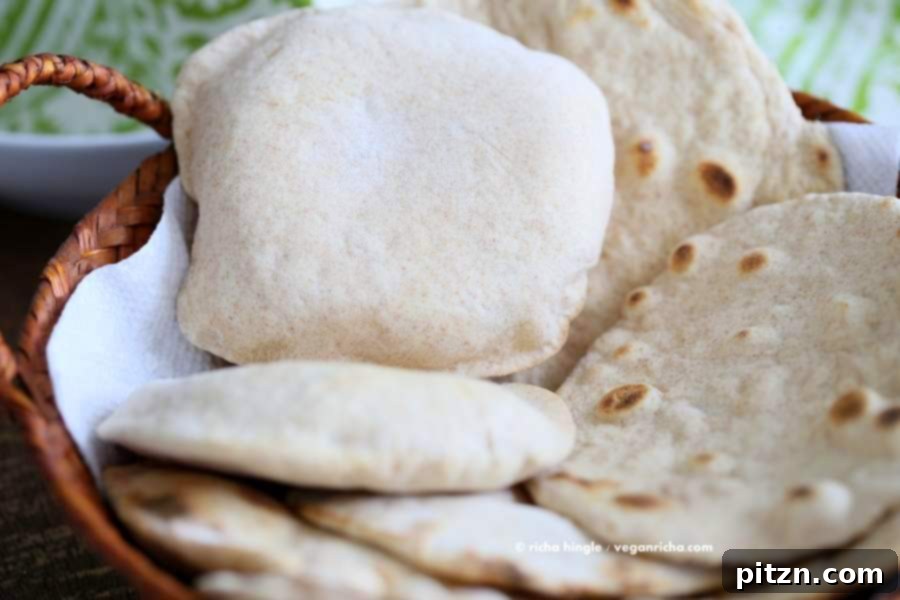
Flatbreads are a cornerstone of culinary traditions worldwide, gracing tables from the Mediterranean to South Asia and beyond. More than just a simple side, they serve as versatile culinary canvases – perfect for scooping up rich stews and curries, creating hearty sandwiches, or simply enjoying on their own with a flavorful dip. The sheer variety, from thin, crispy lavash to soft, chewy naan, highlights their universal appeal and adaptability. Preparing these delicious breads at home allows for unmatched freshness and the satisfaction of creating something truly wholesome from scratch. This comprehensive guide will walk you through crafting a delightful vegan, yeast-free flatbread and pita bread, offering a quick and satisfying alternative to traditional yeasted versions.
Jump to Recipe
Embracing the World of Flatbreads: From Rotis to Pillowy Pitas
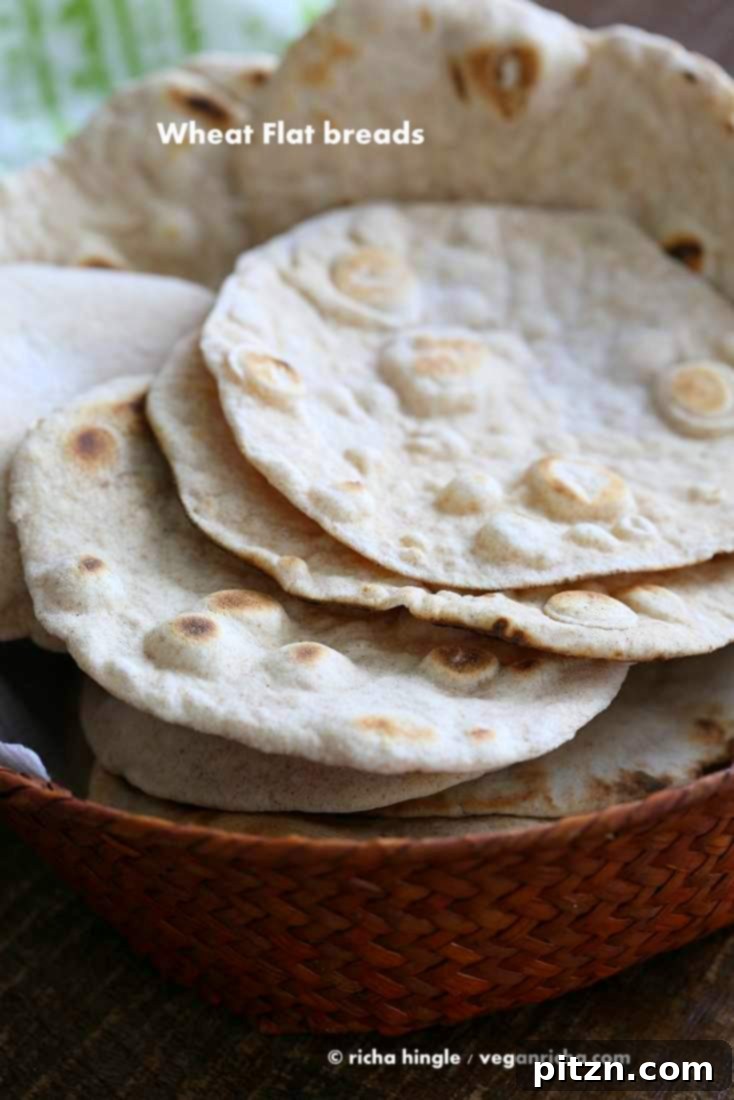
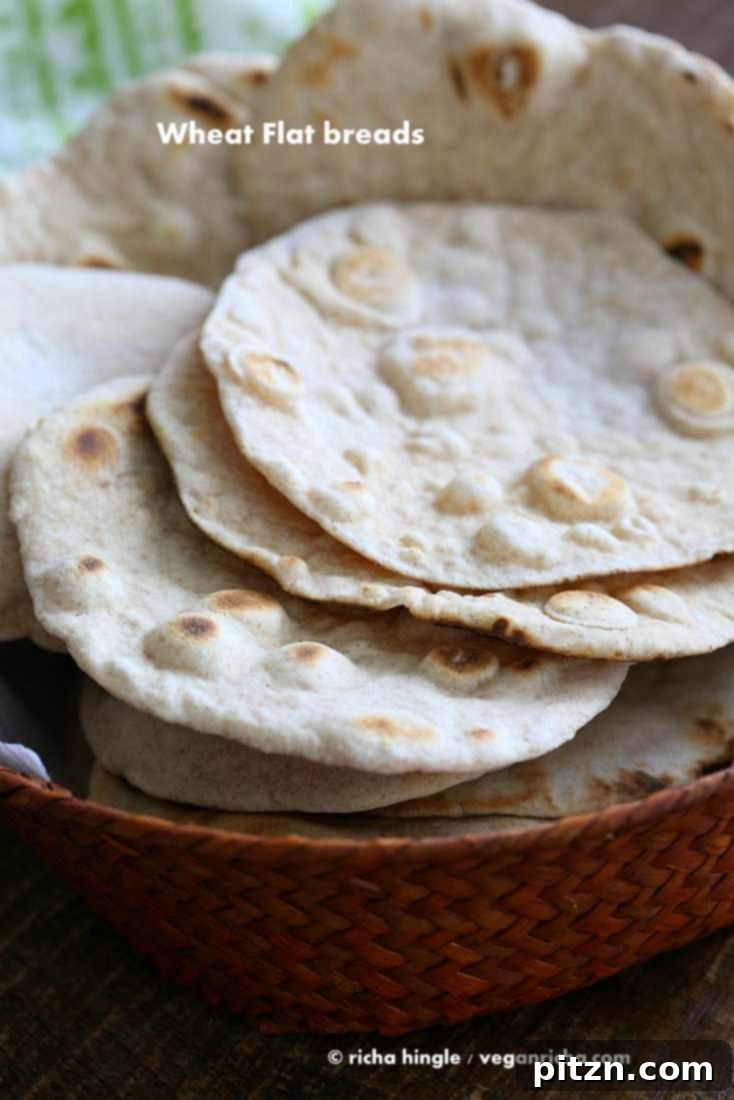
Our journey into flatbreads often begins with familiar, unleavened varieties like Rotis or Chapatis, especially prevalent in Indian cuisine. These thin, whole wheat flatbreads are traditionally cooked on a hot griddle (tava) until they develop beautiful golden spots, sometimes even puffing up dramatically directly on the stove flame. Their simplicity and pure flour-and-water base make them a staple, perfect for balancing out saucy or soupy dishes. For those interested in mastering the art of these classic unleavened flatbreads, a detailed recipe can be found in my cookbook.
While unleavened flatbreads have their distinct charm, leavened versions, made with yeast or baking powder, introduce a delightful new texture. These flatbreads are typically thicker and heartier, offering a more substantial bite. Leavening the dough with either yeast or baking powder transforms a simple flatbread into a versatile base for pockets, wraps, and more. A significant advantage of leavened doughs, particularly those made with baking powder, is their enhanced pliability, making them incredibly easy to roll out. Unlike the precise, round shapes often desired for rotis, the aesthetic of these thicker flatbreads is much more forgiving, allowing for a relaxed and enjoyable cooking process.
The Magic of Yeast-Free: Quick, Delicious, and Convenient
This recipe focuses on a fantastic yeast-free flatbread, achieving its wonderful lift and texture through the clever combination of baking powder and baking soda. For those who might be sensitive to yeast, prefer a quicker preparation time, or simply don’t have yeast on hand, this recipe is a game-changer. While I personally lean towards the yeasted version of pita bread for its slightly superior puff and enduring softness, this yeast-free alternative stands shoulder-to-shoulder in terms of deliciousness and ease of preparation. Both methods yield superb results, whether cooked on a stovetop or baked in the oven. For an extra layer of aromatic flavor, consider adding a pinch of toasted cumin seeds to the dough; it truly elevates the experience.
Choosing a yeast-free flatbread means you bypass the traditional waiting periods required for yeast activation and proofing. This significantly cuts down on the overall preparation time, making it an ideal choice for busy weeknights or when unexpected cravings strike. The baking powder and baking soda react with the liquid and acid (from non-dairy yogurt or similar ingredients) in the dough, producing carbon dioxide bubbles that create a light and airy texture. This chemical leavening process is immediate, allowing you to mix, knead, and cook your flatbreads within a much shorter timeframe compared to their yeasted counterparts. The resulting bread, while perhaps a touch denser than a perfectly puffed yeasted pita, still offers a satisfying chew and a delightful texture perfect for various culinary uses.
More Delicious Vegan Breads to Explore:
- Whole Grain Za’atar Tomato Flatbread for Virtual Vegan
- Naan Flatbread
- Gluten-Free Vegan Pretzel Bites
- Tomato Quinoa Flatbread
For those seeking a gluten-free and yeast-free puffable flatbread or pita bread, a special recipe is also available in my cookbook!
These versatile flatbreads are also perfect for making incredible Shawarma Cauliflower Wraps.

Crafting Your Perfect Vegan Yeast-Free Flatbread: A Step-by-Step Guide
Making these flatbreads is a rewarding experience, transforming simple ingredients into soft, chewy goodness. The process involves a few straightforward steps: preparing the dough, allowing it to rest for optimal texture, dividing it into uniform portions, and finally, cooking them to golden perfection. Whether you choose the stovetop or oven method, you’ll find the process incredibly forgiving and adaptable.
Step 1: Preparing the Dough
In a large mixing bowl, begin by whisking together the dry ingredients: the whole wheat flour (or your chosen alternative like spelt, whole wheat pastry, or white whole wheat flour), unbleached white or all-purpose flour, salt, baking powder, and baking soda. Ensure these are well combined to distribute the leavening agents evenly. Next, add the non-dairy yogurt (or thick coconut milk/aquafaba) and oil. Incorporate these wet ingredients into the dry mixture until a coarse, crumbly texture forms. Gradually add the warm water, kneading the mixture for one to two minutes until it comes together into a slightly sticky dough. The warmth of the water helps activate the baking powder and baking soda, contributing to a better texture. Cover the bowl with a clean kitchen towel or plastic wrap and let the dough rest for 20 to 30 minutes. This resting period is crucial as it allows the gluten to relax, making the dough easier to handle and roll out, and also gives the leavening agents a head start.
Step 2: Shaping the Flatbreads
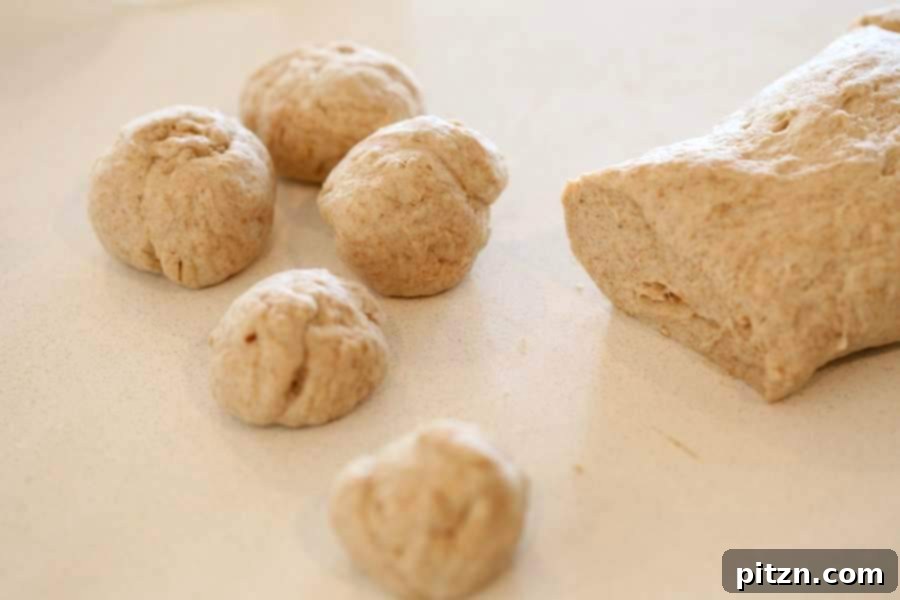
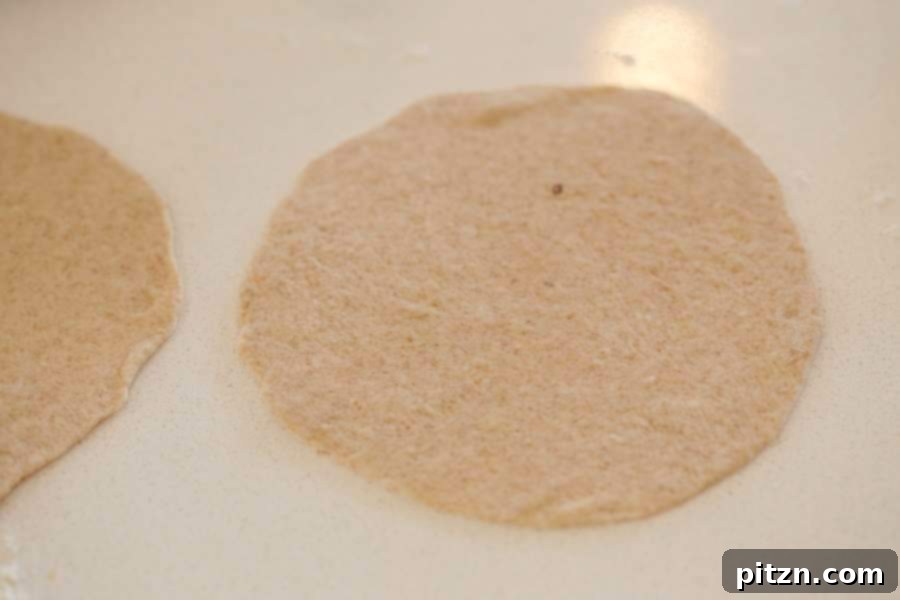
After the dough has rested, uncover it and knead for another minute until it becomes smooth and pliable. If the dough is still too sticky to handle, you can add a tablespoon of flour at a time, incorporating it until the dough is just barely tacky. Roll the dough into a log shape, then use a pizza cutter or a sharp knife to divide it into 12 to 14 equal portions. The goal is to have uniform pieces for consistent flatbreads. Roll each portion into a smooth ball. As you work, keep the remaining dough balls covered with a kitchen towel to prevent them from drying out. Using a light dusting of flour on your work surface and rolling pin, roll each ball into a flatbread approximately 7 inches in diameter. Aim for an even thickness, but don’t stress about perfect circles – the rustic charm of homemade flatbreads is part of their appeal. A useful tip for efficiency: roll out the next flatbread while the previous one is cooking, or for oven baking, prepare a half batch before transferring to the oven.
Step 3: Cooking Your Flatbreads
Stovetop Method:
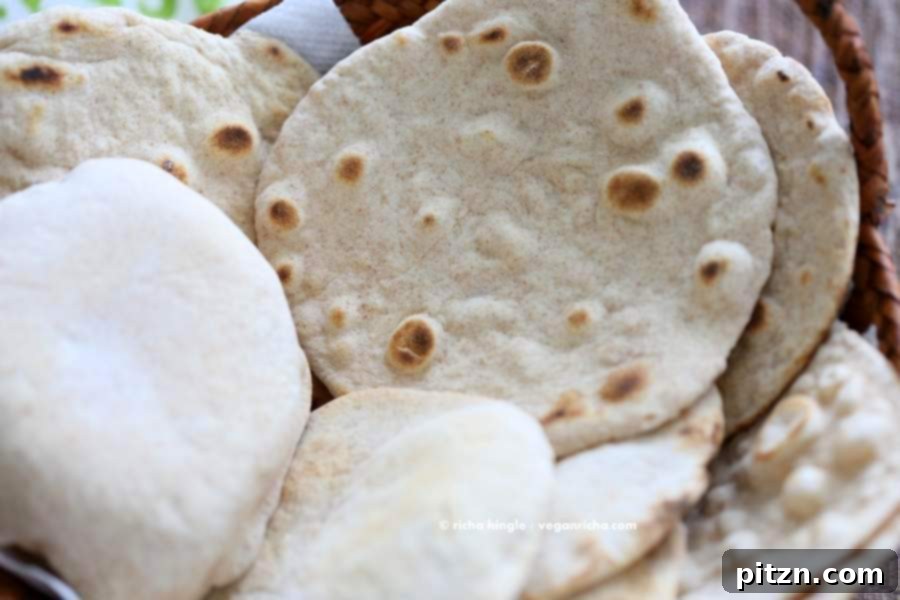
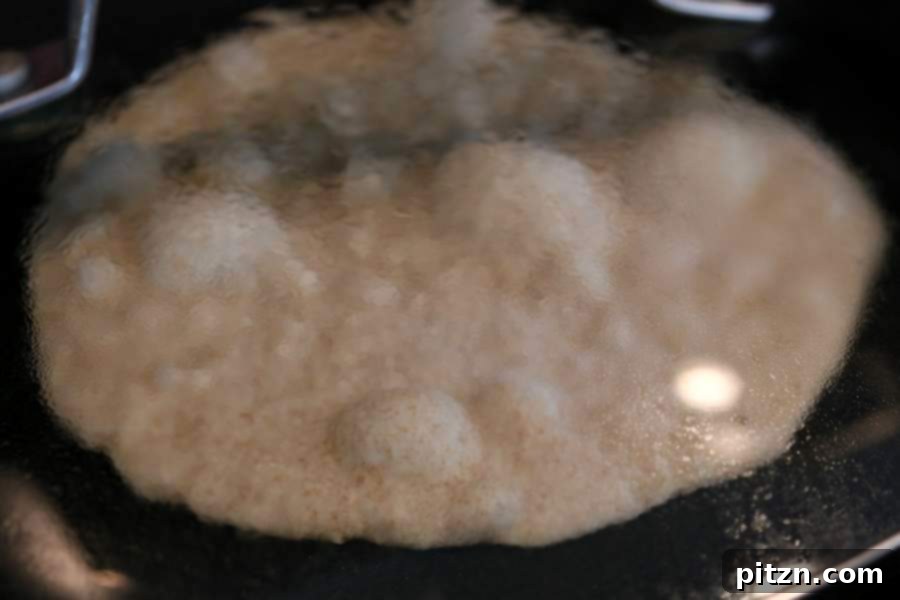
Heat a heavy-bottomed skillet or cast-iron pan over medium-high heat until it’s quite hot. Place one rolled-out flatbread onto the hot skillet. Immediately cover the skillet with a lid and cook for about 2 minutes. This covering creates a steamy environment that helps the flatbread puff up. You’ll notice bubbles forming on the surface. Remove the lid, flip the flatbread, and cook the other side for another 1 to 2 minutes, or until it’s golden brown and cooked through. Repeat with the remaining flatbreads. Keep the cooked flatbreads stacked and covered with a clean kitchen towel to keep them warm and soft.
Oven Method for Puffier Pita Bread:
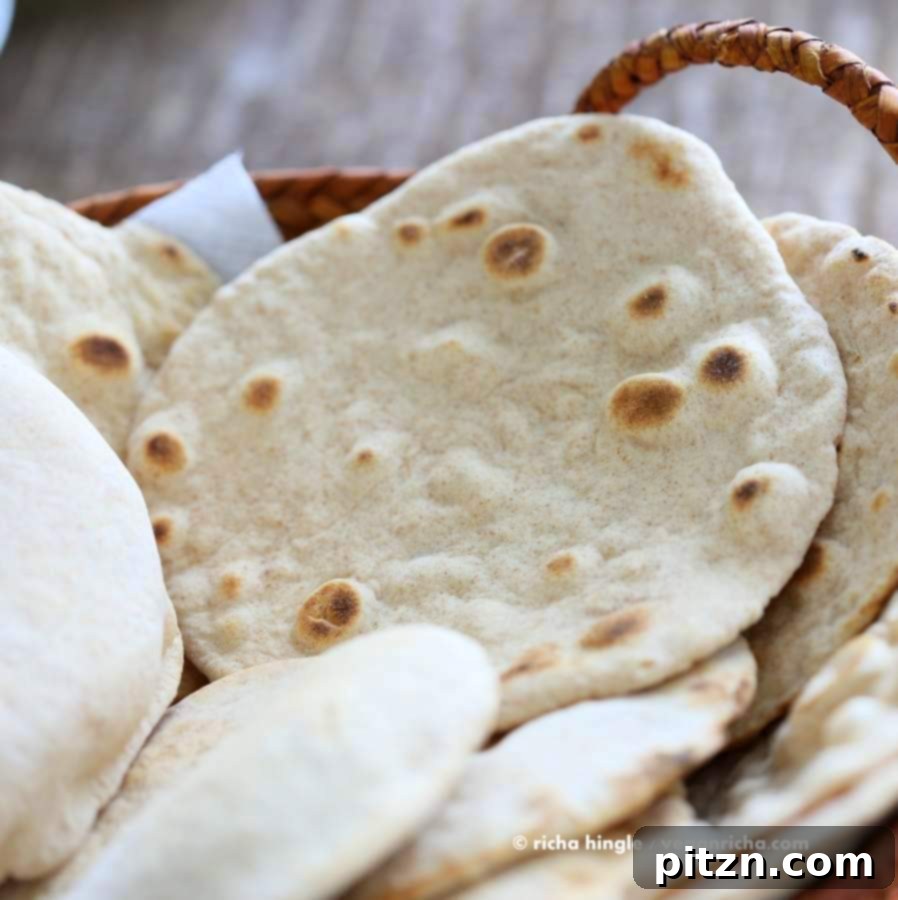
Preheat your oven to 450 degrees F (230°C). Crucially, place a large pizza stone or a thick baking sheet in the oven while it preheats and let it heat up for at least 20 minutes. This creates a searing hot surface similar to a traditional pita oven, which is key for getting that characteristic puff. Carefully place 3 to 4 rolled-out flatbreads onto the hot stone or baking sheet, depending on its size. Bake for 3 to 6 minutes, or until the breads puff up beautifully and the tops are just starting to turn golden. If your oven tends to run cooler and the breads aren’t puffing sufficiently, you can briefly switch the oven to high broil for a minute or two, watching them very closely to prevent burning. Remove the puffed breads carefully from the oven and transfer the next batch to the hot stone. The evenness of your rolling will directly impact how well they puff up, creating wonderful pockets that are perfect for stuffing.
Store your freshly cooked flatbreads on the counter, covered with a kitchen towel, to maintain their softness throughout the day. For longer storage, see the tips below.
Vegan Yeast-Free Flatbread and Pita Bread
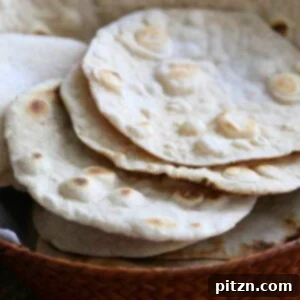
Ingredients
- 1 cup whole wheat, spelt, whole wheat pastry or white whole wheat flour
- 1.5 cups unbleached white flour , or all-purpose flour
- 1/2 to 2/3 tsp salt
- 2.5 teaspoons baking powder
- 1/2 teaspoon baking soda
- 3 tablespoons non-dairy yogurt, or use thick coconut milk or Aquafaba
- 2 tablespoons oil
- 3/4 cup warm water
- flour for rolling
Instructions
-
In a bowl, whisk the flours, salt, baking powder and soda.
-
Add yogurt and oil and mix in.
-
Add water and knead for a minute or 2 until a slightly sticky dough forms. Cover and let sit for 20 to 30 minutes.
-
Add a tablespoon of flour if needed and knead for a minute until smooth.
-
Roll out the dough into a log and using a pizza cutter cut into 12 to 14 equal parts. Roll each into a ball and store under a towel while you roll out the flatbreads. Roll each ball into about a 7-inch flatbread. I usually roll out the next flatbread when the first is cooking on the stovetop. For baking, I roll out a half batch, bake, then roll the other half and bake.
-
Cook on the stovetop:
-
Heat a heavy bottom skillet over medium-high heat. Once hot, place a rolled-out flatbread on the skillet. Cover with a lid and cook for 2 minutes or until bubbles form. Remove cover, flip, and cook the other side for 1 to 2 minutes or until golden.
-
Bake in oven:
-
Pre-heat oven to 450 degrees F / 230ºc and place a large pizza stone or thick baking sheet in the oven to heat up for at least 20 minutes.
-
Place the rolled-out breads 3 to 4 at a time depending on the size of the stone. Bake for 3 to 6 minutes or until the breads puff up and get just about golden on top. Switch the oven to high broil if your oven runs less hot and pita breads take too long to puff up.
-
Remove carefully from the oven and place the next batch on the stone. The baked breads will puff up like a pita bread if they were rolled out evenly. These puffed breads can be used as pita pockets.
Notes
Note: Unleavened flatbread such as roti can also be used to make puffed up flat bread. Rotis are much thinner than pita breads.
Nutritional values based on one serving
Nutrition
Carbohydrates: 16g,
Protein: 2g,
Fat: 2g,
Sodium: 145mg,
Potassium: 111mg,
Vitamin C: 0.5mg,
Calcium: 45mg,
Iron: 1mg
Nutrition information is automatically calculated, so should only be used as an approximation.
Did you make this recipe? Rate and comment below!
Serving Suggestions and Customization
Once your vegan yeast-free flatbreads are ready, the possibilities are endless! Their soft, pliable texture makes them ideal for a multitude of dishes. Use them as wraps for your favorite fillings, such as roasted vegetables, falafel, or grilled plant-based proteins. If your flatbreads puffed up to form pockets (especially when baked in the oven), they are perfect for stuffing with hummus, tabbouleh, fresh salads, or a hearty lentil mixture. They also make an excellent accompaniment to saucy curries, flavorful stews, or a simple bowl of soup. Serve them alongside a vibrant bean dip or a classic baba ghanoush for a delightful appetizer or snack.
Feel free to customize your flatbreads with various additions to enhance their flavor profile. As mentioned, toasted cumin seeds mixed into the dough add a warm, earthy note. You could also experiment with dried herbs like oregano, thyme, or rosemary. Minced garlic, a sprinkle of nutritional yeast for a cheesy flavor, or a dash of chili flakes for a subtle kick are other fantastic options. Brushing the cooked flatbreads with a little olive oil infused with garlic and fresh parsley right after they come off the heat adds another layer of deliciousness.
Storage and Reheating Tips
Freshly made flatbreads are always best, but these vegan yeast-free flatbreads store quite well. Keep them at room temperature for up to two days, wrapped tightly in a clean kitchen towel and then placed in an airtight container or a resealable bag. This helps to maintain their moisture and prevents them from drying out.
For longer storage, these flatbreads freeze beautifully. Once cooled completely, stack them with parchment paper in between to prevent sticking, then wrap them tightly in plastic wrap and place them in a freezer-safe bag. They can be stored in the freezer for up to 2-3 months. To reheat from frozen, you can gently warm them in a skillet over medium heat, in a microwave for 30-60 seconds, or quickly pop them into a toaster oven until soft and pliable again. A light sprinkling of water before reheating can help restore their softness.
Enjoy the versatility and deliciousness of these homemade vegan yeast-free flatbreads. They are a testament to how simple ingredients can create truly satisfying and wholesome food!