
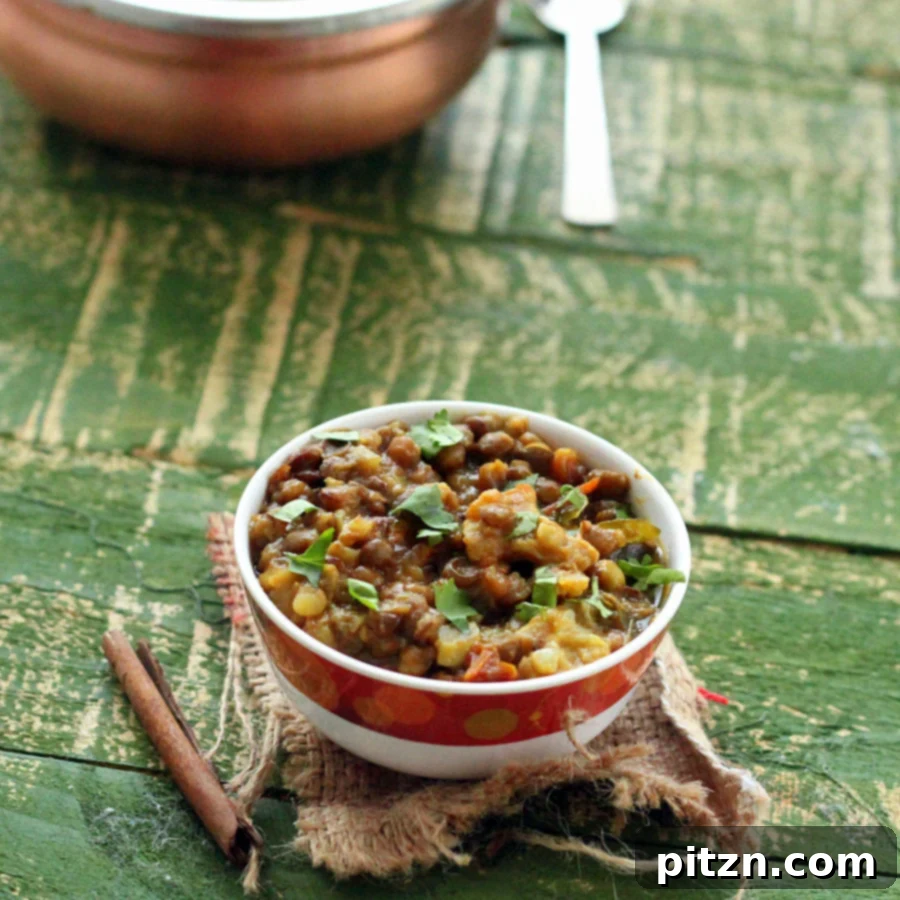
Gobi Waali Sabut Masoor: A Flavorful Curried Whole Red Lentil and Cauliflower Stew
Dive into the rich, earthy flavors of Indian cuisine with our irresistible Gobi Waali Sabut Masoor. This hearty and wholesome stew features whole brown-red lentils, commonly known as Sabut Masoor or Massar, paired perfectly with tender cauliflower florets. These unique lentils, with their distinct brown exterior and delicate pinkish-orange interior, are celebrated for their ability to create a deeply satisfying and nourishing meal. Our recipe elevates this classic lentil dish with a thoughtful blend of aromatic spices and fresh ingredients, promising a vegan and gluten-free delight that will warm your soul and tantalize your taste buds.
The Essence of Sabut Masoor: Whole Brown-Red Lentils
Sabut Masoor lentils are more than just a pantry staple; they are a cornerstone of many traditional Indian meals, cherished for their robust texture and earthy, nutty flavor. Unlike their split counterparts, these whole lentils retain their protective skin, which contributes significantly to their firm yet tender bite when cooked, as well as a higher fiber content. This makes them exceptionally beneficial for digestive health and provides sustained energy throughout the day. Beyond their delightful taste, Sabut Masoor are nutritional powerhouses, packed with plant-based protein, iron, and folate, making our Gobi Waali Sabut Masoor an excellent choice for anyone seeking a balanced and wholesome diet. Soaking them before cooking is a crucial step that not only reduces cooking time but also enhances their digestibility and nutrient absorption, ensuring every spoonful is both delicious and beneficial.
A Symphony of Spices and Aromatics: The Soul of Indian Cooking
The distinctive and captivating taste of this curried lentil stew comes from a harmonious blend of spices that have been carefully selected to complement the earthy notes of Sabut Masoor and fresh cauliflower. Each ingredient plays a vital role in building the layers of flavor that make this dish truly exceptional.
Fresh Curry Leaves: An Irreplaceable Fragrance
Fresh curry leaves are a culinary gem and a game-changer in this recipe, imparting a unique, slightly citrusy, pungent, and warm aroma that is simply irreplaceable. They are a signature flavor in many South Indian dishes. Often readily available at Indian grocery stores, these vibrant leaves can be stored effectively in an airtight container in the freezer for several months, ensuring you always have this essential ingredient on hand. For those who may not have access to fresh leaves, dried curry leaves or curry leaf powder can be found online. While dried leaves offer a milder flavor, they are a convenient alternative for year-round use, especially if you plan on making daals frequently. Their distinct profile is wonderfully versatile and works impeccably in a wide variety of lentil and vegetable preparations.
Fenugreek Leaves (Methi): A Bitter-Sweet Intrigue
Fenugreek leaves, known as Methi, whether used fresh or in their dried form (Kasoori Methi), introduce a wonderfully bitter yet intriguing and slightly sweet flavor profile that deepens the complexity of this lentil stew. Their presence adds an unparalleled depth that transforms the entire dish, creating an authentic and memorable taste experience. Methi has a long and storied history in Indian cooking, cherished for its unique taste and aromatic qualities, and it pairs exceptionally well with beans and lentils, creating truly profound flavors.
Subtle Warmth: Cinnamon and Cardamom
Beyond the foundational spices, delicate hints of cinnamon and cardamom are introduced to elevate this daal to an amazing new level of sophistication. These warm, aromatic spices add a layer of subtle sweetness and warmth, preventing the stew from being one-dimensional and infusing it with an exotic allure that will surprise and delight your palate.
The Tempering (Tadka): Unlocking Full Flavor
The art of “Tadka” or tempering is a fundamental technique in Indian cooking and is absolutely crucial for unlocking the full flavor potential of this stew. This process involves briefly frying whole spices like mustard and cumin seeds in hot oil or ghee (for non-vegan versions). The sizzling and popping of these spices release their essential oils, creating a deeply fragrant and aromatic base that permeates and enhances the entire dish. Asafetida (Hing), an optional but highly recommended ingredient, is often added at this stage for its pungent aroma that mellows into a savory, garlic-like flavor and is also known to aid digestion. This step is a flavor explosion, setting the stage for the deliciousness to come.
Cauliflower (Gobi): The Perfect Partner
The inspired addition of cauliflower, or Gobi, is what makes this Sabut Masoor truly special and gives it its unique character. Its tender florets are adept at absorbing the rich, complex flavors of the curried lentils and aromatic spices beautifully, adding a delightful textural contrast and a significant boost of essential nutrients. Cauliflower is celebrated for its high content of vitamin C and K, as well as being an excellent source of dietary fiber, making this stew even more wholesome and satisfying. As the cauliflower cooks down in the stew, it becomes wonderfully tender yet retains a slight, pleasant bite, complementing the soft, creamy lentils perfectly.
Explore More Whole Masoor Recipes
If you’ve enjoyed the rich flavors and wholesome goodness of this Gobi Waali Sabut Masoor, you might be keen to explore other delicious and authentic ways to prepare whole Masoor lentils. This versatile legume lends itself to a multitude of culinary creations. Here are some of our favorite recipes that showcase the incredible potential of whole Masoor:
- Whole Masoor and Mung Bean Stew: A delightful and aromatic combination with shallots and fresh tomatoes, offering a different textural and flavor profile that many find to be a definite favorite.
- Missir Wot: Experience the vibrant and spicy flavors of Ethiopia with this traditional and intensely satisfying red lentil stew, a dish rich in cultural heritage and taste.
- Dassana’s North Indian Style Sabut Masoor: Another fantastic and authentic interpretation of this classic lentil, cooked in the rich and robust North Indian style, perfect for a comforting meal.
For a broader culinary adventure and to discover more plant-based delights, browse our extensive and diverse
Collection of Lentil and Bean Stews and Curries. You’re sure to find something new to love!
Preparing Your Gobi Waali Sabut Masoor: A Visual Guide
Follow these step-by-step visuals to bring this aromatic and comforting curried lentil stew to life in your kitchen. Each image illustrates a key stage of the preparation, making the cooking process intuitive and enjoyable.
Step 1: Soak the Lentils
The journey to a perfect lentil stew begins with proper soaking. Start by thoroughly soaking your whole brown red lentils (Sabut Masoor) for at least 2 hours, or ideally overnight. This crucial step not only softens the lentils, significantly reducing their cooking time, but also aids in better digestion and nutrient absorption.
Step 2: Prepare Your Vegetables
While your lentils are undergoing their essential soak, take this time to diligently chop up all the necessary vegetables. This includes onions, tomatoes, chili peppers, garlic, ginger, and of course, your cauliflower florets. Having all your ingredients prepped and ready (mise en place) makes the subsequent cooking process smooth, efficient, and much more enjoyable.
Step 3: Gather Fresh Curry Leaves
Do not underestimate the power of fresh curry leaves! Before you begin cooking, ensure you have a handful ready. Their distinctive, aromatic fragrance is absolutely vital for developing the authentic and complex flavor profile that characterizes this delicious daal.
Step 4: Create the Tadka (Tempering)
This essential and aromatic step is where the magic begins. Heat oil in your cooking vessel and add mustard and cumin seeds. Cook them until they vigorously sputter and release their fragrance. Then, add the fresh curry leaves, asafetida (if using), chopped chili, minced ginger, finely chopped garlic, and finally the chopped onions. This aromatic, sizzling base, known as the Tadka, is the heart and soul of your stew’s deep and complex flavor.
Step 5: Combine and Cook
Once your Tadka is perfectly golden and fragrant, add the drained and rinsed soaked lentils, the tender chopped cauliflower, water, salt, and the remaining powdered spices (garam masala, turmeric). Stir all the ingredients thoroughly to ensure everything is well combined. Then, cook until the lentils become wonderfully tender and the cauliflower is soft, allowing all the individual flavors to meld beautifully into a cohesive and delicious stew.
Step 6: Serve and Enjoy
Your labor of love culminates here! Serve your rich and aromatic curried lentil and cauliflower stew piping hot. This versatile dish is wonderfully adaptable to various accompaniments – enjoy it simply as is, perhaps with a decadent drizzle of cashew cream, alongside crusty bread rolls or crackers, or as a traditional daal served with a variety of warm Indian flatbreads like Roti or Naan.
Curried Lentil Stew with Cauliflower: Gobi Waali Sabut Masoor Recipe
This comforting and deeply nutritious Red Lentil Stew with Cauliflower, famously known as Gobi Waali Sabut Masoor, is a beloved staple in many Indian households and is perfectly suited for a healthy, plant-based meal. It is naturally dairy-free, egg-free, corn-free, soy-free, yeast-free, and gluten-free, making it an inclusive option for various dietary needs and preferences without compromising on flavor.
Yields: 2-4 servings
Ingredients:
- 1/2 cup dry whole red lentils (Sabut Masoor), soaked for at least 2 hours to overnight
- 2 cups water
- 2 teaspoons Oil (vegetable, coconut, or any preferred cooking oil)
- 1/4 teaspoon mustard seeds
- 1/4 teaspoon cumin seeds
- A generous pinch of asafetida (hing, optional, but highly recommended for authentic flavor and digestion)
- 6-8 fresh curry leaves
- 1/2 medium onion, finely chopped
- 1 Serrano chili pepper, chopped (or chili flakes to taste for adjustable heat)
- 4-5 garlic cloves, finely chopped
- 1/2 inch ginger, minced or grated
- 1-2 medium tomatoes, chopped
- 1/2 teaspoon salt, or to taste
- 1/2 teaspoon garam masala
- 1/4 teaspoon turmeric powder
- 3/4 cup cauliflower florets, chopped into bite-sized pieces
- Fresh cilantro, chopped, for garnish
Flavorful Variations:
Experiment with these suggestions to customize your Gobi Waali Sabut Masoor and discover new dimensions of flavor:
- Spice Alternatives: For a distinctly different aromatic twist, consider using fennel seeds instead of mustard and cumin seeds in your initial tadka. Their sweet, anise-like flavor can provide a lovely contrast.
- Add More Vegetables: Enhance both the nutritional profile and textural complexity by incorporating other vegetables. Great additions include finely chopped celery, carrots, broccoli florets, fresh spinach, or tender kale. Add firmer vegetables along with the cauliflower, and leafy greens towards the end of cooking.
- Lentil Substitutions: While Sabut Masoor offers a unique and authentic texture, you can certainly experiment with similar whole lentils such as Spanish pardina, green, or Puy lentils. Be mindful that cooking times may vary slightly with different lentil types.
- Adjust Heat Level: Tailor the spiciness to your preference. Increase the amount of Serrano chili for an extra kick, or add a pinch of red pepper flakes. For a milder stew, simply reduce the chili or omit it entirely.
- Aromatic Boost: A small pinch of cinnamon or a single green cardamom pod added to the tadka can introduce a subtle, warm, and exotic note.
Method:
- Prepare Lentils: Begin by ensuring your whole red lentils are thoroughly soaked for at least 2 hours, or ideally overnight, for optimal results. Once soaked, drain the water completely and rinse the lentils well under cold water. Keep them ready.
- Initiate Tempering (Tadka): In a pressure cooker or a sturdy, heavy-bottomed pot, add the oil and heat it over medium heat. Once the oil is hot and shimmering, add the mustard and cumin seeds. Immediately cover the pot (if using a regular pot) or pressure cooker lid to contain the seeds as they will sputter vigorously.
- Build Aromatics: Once the sputtering subsides, carefully remove the lid. Add the fresh curry leaves, asafetida (hing, if you are using it), and the chopped Serrano chili. Stir constantly for a few seconds until these aromatics become fragrant.
- Sauté Onions, Ginger, Garlic: Next, add the minced ginger, finely chopped garlic, and the chopped onions to the pot. Sauté this mixture for 4-5 minutes, stirring occasionally, until the onions become soft and translucent.
- Incorporate Tomatoes and Spices: Stir in the chopped tomatoes, garam masala, and turmeric powder. Mix all ingredients well. Continue to cook for another 3-4 minutes, pressing the tomatoes gently with the back of your spoon until they break down and become mushy, creating a rich base. This fragrant mixture is your well-developed Tadka.
- Add Lentils, Cauliflower, and Water: Now, add the previously drained and rinsed whole lentils, the bite-sized cauliflower florets, 2 cups of water, and the salt to the pot. Stir all the ingredients thoroughly to combine them evenly.
- Pressure Cooker Method: If using a pressure cooker, secure the lid firmly. Cook on low-medium heat until the cooker reaches 3 whistles. After the third whistle, reduce the heat to low and allow it to cook for an additional 10 minutes. Crucially, let the pressure release naturally and completely by itself before attempting to open the cooker for safety.
- Stovetop/Pan Method: If cooking in a regular pot or pan, after adding the lentils, cauliflower, water, and salt, bring the mixture to a gentle boil. Once boiling, reduce the heat to low-medium. Partially cover the pot and simmer until the lentils are wonderfully tender and begin to slightly disintegrate, and the cauliflower is cooked through. This process will typically take approximately 45-55 minutes for soaked lentils. If you are using pre-cooked lentils, simmer for about 20 minutes to allow all the rich flavors to meld beautifully.
- Final Adjustments: Taste the stew and adjust the salt and any spices as needed to suit your personal preference. If the stew appears too thick for your liking, add a little hot water to achieve your desired consistency.
- Serve: Ladle the hot, aromatic Gobi Waali Sabut Masoor into individual bowls. Garnish generously with freshly chopped cilantro for a burst of vibrant color and freshness before serving.
Serving Suggestions:
This incredibly versatile lentil stew can be enjoyed in a myriad of delicious ways, making it a perfect addition to any meal:
- Traditional Pairing: For an authentic Indian experience, serve your Gobi Waali Sabut Masoor alongside freshly made Indian flatbreads such as soft Roti, fluffy Naan, or warm, flaky parathas.
- With Rice: A timeless and comforting combination, especially with fragrant basmati rice, brown rice, or jeera rice. The rice beautifully absorbs the rich, aromatic curry flavors.
- As a Hearty Soup: Enjoy it as a substantial and warming soup, perfect for cooler evenings, accompanied by crusty bread rolls or crunchy crackers.
- Creamy Vegan Finish: For an added touch of indulgence and richness, consider drizzling a spoonful of homemade cashew cream over each serving before you present it.
- Fresh Garnishes: Always finish your dish with a generous sprinkle of fresh, chopped cilantro for a vibrant burst of freshness. A squeeze of fresh lemon or lime juice can also brighten and elevate all the flavors of the stew beautifully.
Reviving Leftovers:
Leftover daal often tastes even better the next day! To refresh and significantly enhance its flavors, prepare a quick, fresh tadka. Simply heat a small amount of oil in a separate small pan, add a pinch of mustard and cumin seeds until they sputter, and optionally include a tiny pinch of red pepper flakes for extra zing. Pour this hot, aromatic tempering directly over the reheated daal just before serving. This simple trick brings the dish back to life with renewed vibrancy.
This delightful and wholesome stew has garnered attention and been shared across various popular platforms, including Slightly Indulgent Tuesdays, Allergy Free Wednesdays, and Ricki’s Wellness Weekend. We genuinely hope you thoroughly enjoy preparing and savoring this incredibly flavorful and nourishing meal as much as we do! Happy cooking!