

Delicious Mung Bean Vegan Omelet with Savory Breakfast Potatoes
Embark on a culinary adventure with our exquisite Vegan Omelet, perfectly crafted from a unique mung bean egg mixture. This recipe stands out as a phenomenal soy-free, gluten-free, and grain-free alternative to traditional eggs, offering a delightful and wholesome start to your day. Forget complicated ingredients or the need for chickpea flour; our easy moong dal batter simplifies the process, making incredible vegan omelets or savory pancakes accessible to everyone. Coupled with a side of perfectly seasoned breakfast potatoes, this meal is a guaranteed crowd-pleaser for any plant-based breakfast enthusiast. We even offer a nut-free option, ensuring that this flavorful dish can be enjoyed by all.

The Magic of Mung Beans in Vegan Cuisine
Mung beans, a versatile legume cherished in Indian cuisine, are celebrated for their nutritional benefits and remarkable adaptability. Traditionally used to prepare a variety of savory dishes like pancakes and crepes (often referred to as ‘dosas’ or ‘chillas’), these small but mighty legumes offer a fantastic foundation for innovative plant-based cooking. Moong Dal, which consists of green mung beans that have been split and had their skins removed, boasts a wonderfully mild, nutty flavor. This subtle taste is often preferred over chickpea flour for its less assertive profile, making moong dal an exceptional choice for creating incredibly convincing and delicious egg-free omelets.
The quest for the perfect vegan egg substitute has seen many ingredients tested, and mung beans have firmly established themselves as a leading contender. While a moong dal omelet recipe was first introduced many years ago, the accessibility of moong dal has significantly improved since then. What was once primarily found in specialty Indian or Asian markets is now much more widely available in mainstream grocery stores and online retailers. This increased availability has made it easier than ever for home cooks to experiment with this versatile ingredient, solidifying its place as a plant-based pantry essential and a cornerstone for creative vegan recipes.
Crafting Your Ideal Vegan Omelet Texture and Flavor
As with any plant-based adaptation of classic dishes, personal preference plays a significant role in achieving perfection. The true beauty of this moong dal batter lies in its remarkable flexibility. Whether you desire your omelet to be thin and delicate, similar to a crepe, or thick and fluffy, with a heartier bite, the consistency of the batter and the cooking time can be easily adjusted to match your preferred texture. This adaptability also extends to flavor; feel free to infuse your omelet with a diverse array of herbs, spices, and vegetable fillings to create a truly personalized breakfast experience. Don’t hesitate to experiment with different additions and cooking durations until you discover your ultimate vegan omelet masterpiece.
Essential Ingredients for Your Mung Bean Vegan Omelet
Creating a truly authentic and flavorful vegan omelet begins with selecting the right ingredients. Each component in this recipe contributes to the overall taste, texture, and the desired ‘eggy’ experience. Here’s a breakdown of what you’ll need and why:
- Moong Dal (Split Mung Beans): This is the foundation of our incredible omelet. Moong dal refers to green mung beans that have been processed to remove their outer skins and split, resulting in small, yellowish lentils. When purchasing, it’s crucial to confirm you are getting split mung beans, as their English labeling can sometimes vary (they might be identified as “petite yellow lentils” in some regions). You can typically find high-quality moong dal in Indian grocery stores, most well-stocked Asian markets, larger supermarkets with international sections, and readily available online. Its naturally mild and slightly nutty flavor provides an excellent and subtle base for our egg substitute.
- Key Flavor Enhancers (Salt, Garlic Powder, Onion Powder, Black Pepper): These fundamental seasonings are vital for building a robust and savory profile for your omelet. Salt is essential for overall taste balance, while the pungent notes of garlic powder and savory depth of onion powder (or fresh, finely minced versions) contribute aromatic qualities that expertly mimic traditional omelet flavors. A dash of black pepper adds a subtle, warming kick.
- Turmeric: Included primarily for its beautiful, vibrant golden color, turmeric gives the omelet that characteristic yellow hue, making it visually appealing and familiar. Only a small amount is necessary; using too much can introduce a distinct earthy or bitter flavor that may not be desired in this application.
- Kala Namak (Indian Black Salt): This ingredient is absolutely indispensable for achieving that authentic ‘eggy’ flavor in vegan dishes. Kala namak is a unique volcanic rock salt with a high sulfur content, which imparts a distinct sulfuric aroma and taste remarkably reminiscent of cooked eggs. It typically appears pinkish-grey when ground. There is no true substitute for kala namak if you are aiming for that specific eggy note, so we highly recommend sourcing it from Indian stores, specialty grocery stores, or online. While the omelet will still be delicious without it, it will significantly lack the signature eggy taste.
- Non-Dairy Milk: Unsweetened non-dairy milk is used to create the smooth, pourable consistency of the batter. Excellent options include unsweetened almond milk, cashew milk (see notes for homemade option), or light coconut milk. It is important to ensure that the milk is unsweetened to avoid altering the savory profile of the omelet.
Step-by-Step: How to Prepare Your Mung Bean Vegan Omelet
Creating this delicious vegan omelet is surprisingly simple and requires just a few key steps. Follow these instructions carefully for a perfect plant-based breakfast experience:
1. Soaking the Moong Dal
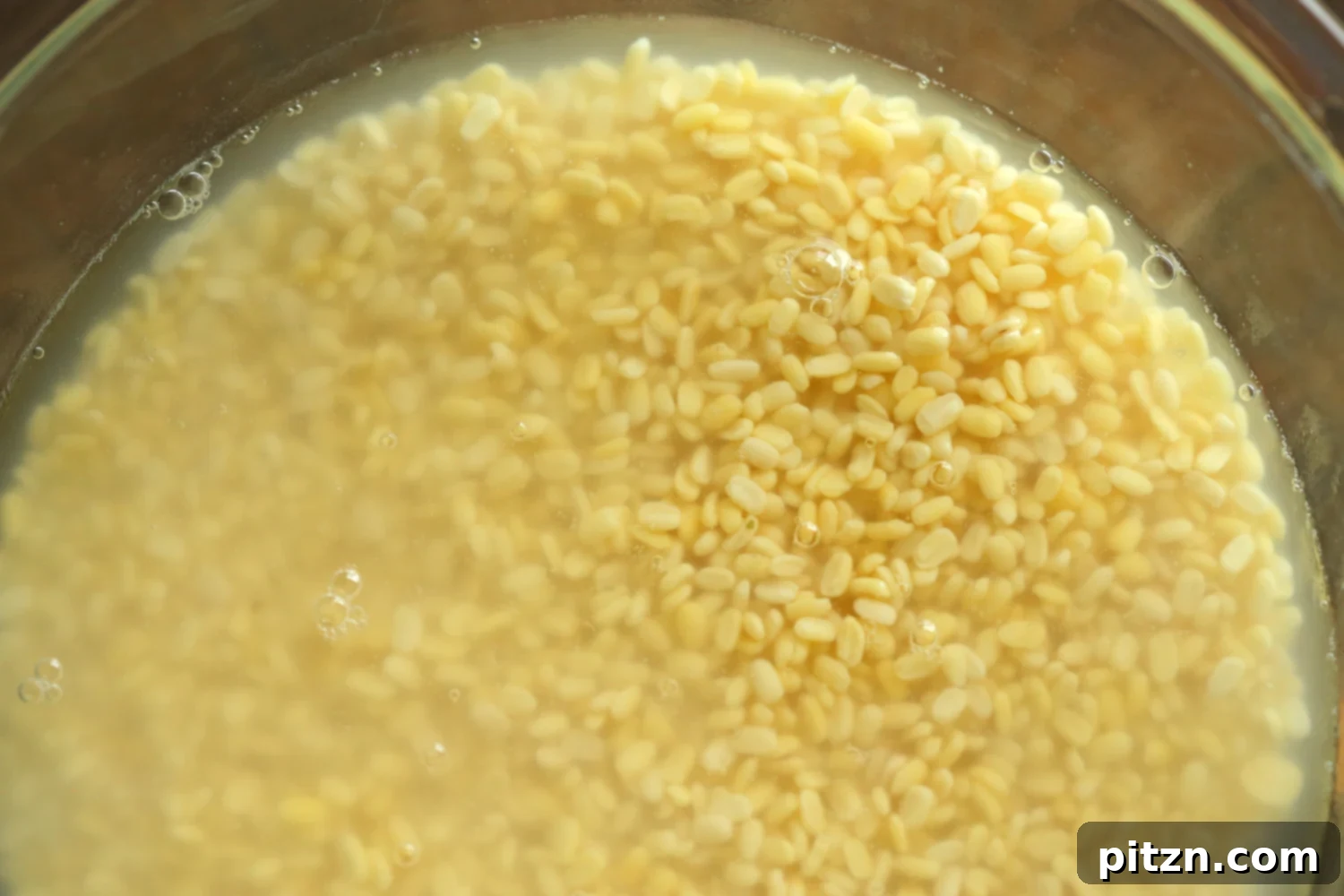
The first crucial step is to properly prepare your moong dal. Begin by rinsing 1 cup of moong dal thoroughly under cold running water until the water runs completely clear. This helps remove any impurities and excess starch. Transfer the rinsed dal to a large bowl and cover it generously with approximately 3 cups of fresh water. Allow the moong dal to soak overnight, or for a minimum of 8 hours. Soaking is essential as it softens the beans, making them much easier to blend into a perfectly smooth batter and also aids in their digestibility.
2. Blending the Omelet Batter
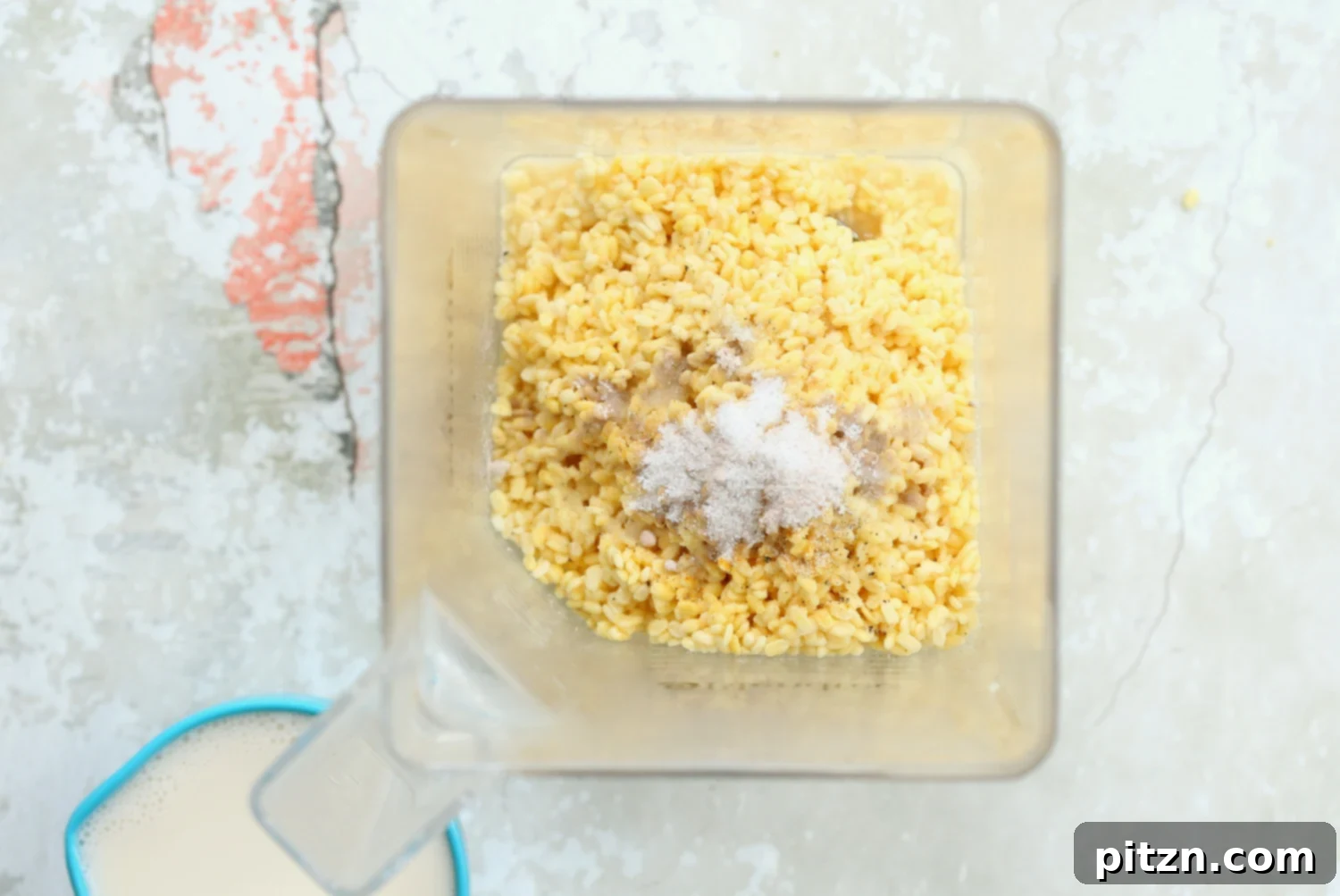
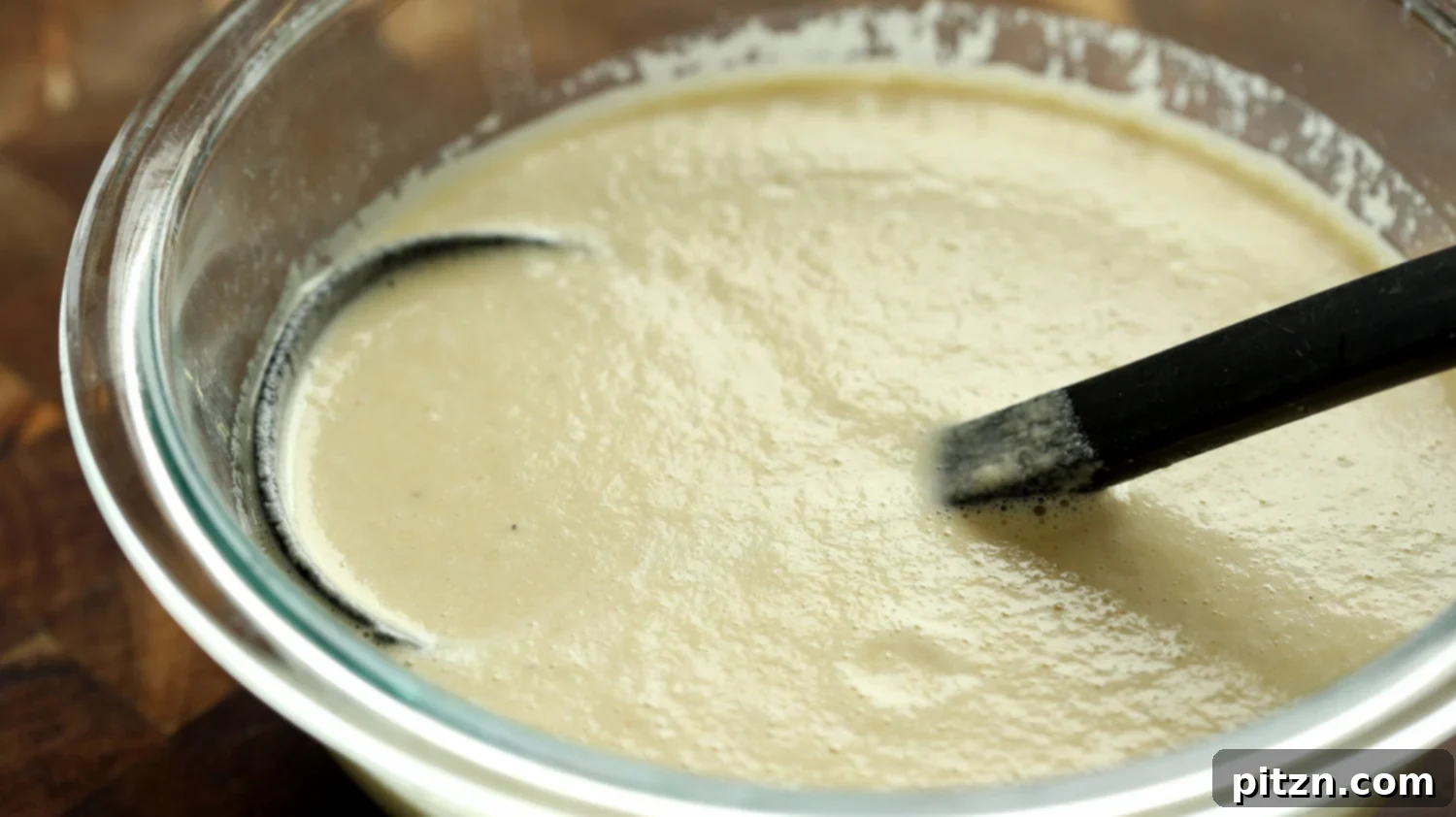
Once the moong dal has finished its soaking period, drain it completely, discarding the soaking water. Transfer the softened dal to a high-speed blender. Add all the remaining omelet ingredients: 1/2 teaspoon salt, 3/4 teaspoon kala namak, 1/4 teaspoon each of garlic powder and onion powder, 1/8 teaspoon black pepper, 1/4 teaspoon turmeric (if using, for color), 1 teaspoon of oil, and 1 cup of your chosen non-dairy milk. Blend the mixture thoroughly for about one minute until it begins to emulsify and break down. Stop the blender, scrape down the sides with a spatula to ensure everything is incorporated, and let the mixture rest for a brief moment. Blend again for another minute or until the batter is completely smooth, lump-free, and fluffy. The consistency should be similar to a slightly thick pancake batter, easily pourable but not watery. If you prefer a thinner omelet, you can gradually add an additional 2-4 tablespoons of non-dairy milk, blending until well combined. For an extra fluffy omelet, you have the option to incorporate 1/2 teaspoon of baking powder at this stage and blend briefly to mix.
While baking powder can certainly enhance fluffiness, many enthusiasts find that a freshly blended batter offers the best natural texture and allows the unique kala namak flavor to shine most brightly without needing additional leavening agents. We highly recommend using the batter fresh for optimal results.
3. Cooking Your Vegan Omelet to Perfection
Heat a cast iron skillet or a good quality non-stick pan over medium heat. It is absolutely crucial for the pan to be adequately hot before you add the batter; a sufficiently heated pan prevents sticking and ensures even cooking. Once the pan is hot, drizzle a few drops of oil (if you are not preparing an oil-free version) and spread it evenly across the entire surface using a paper towel. This step is key to creating a non-stick surface and helps achieve that desirable golden-brown finish.
For a Plain Vegan Omelet:
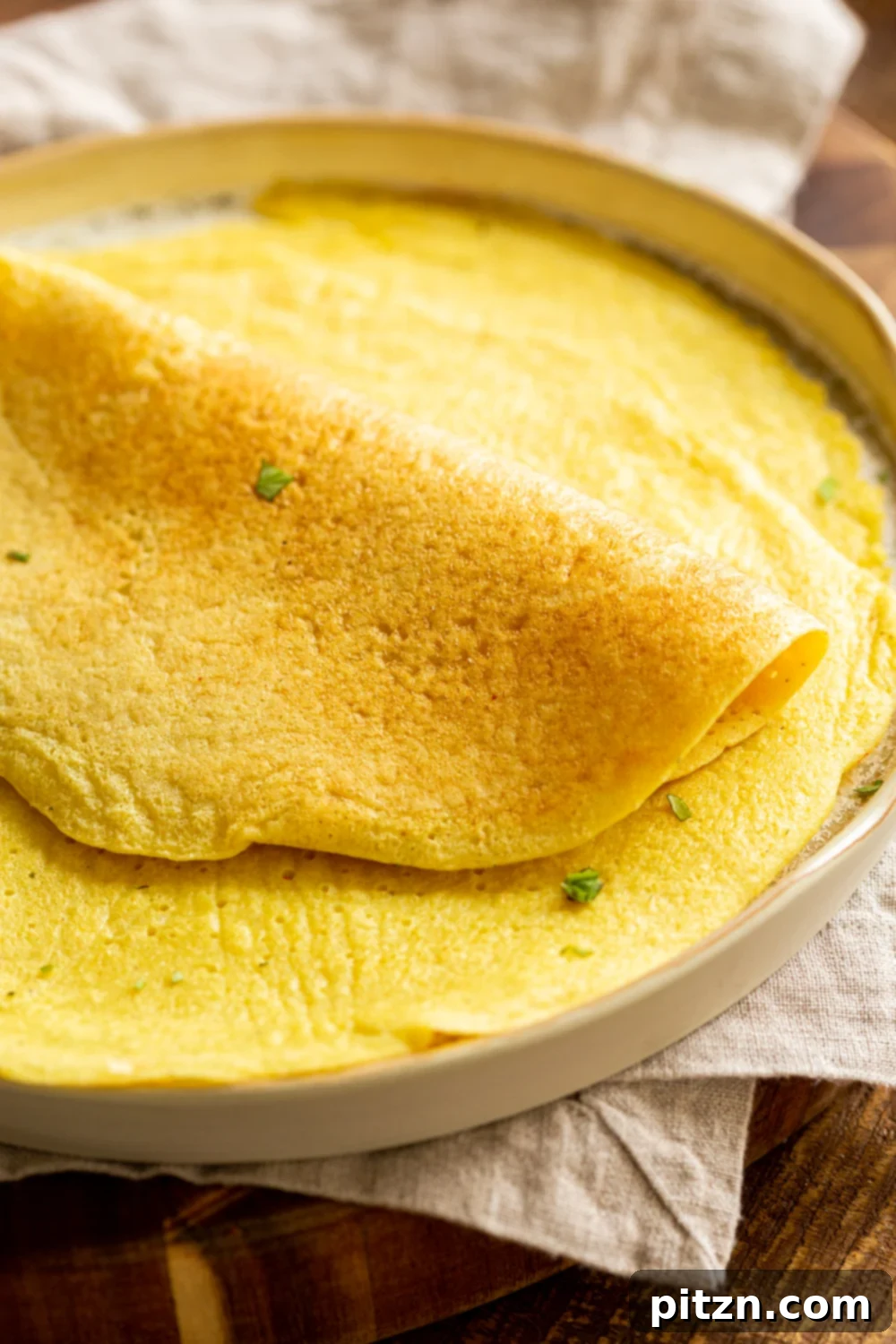
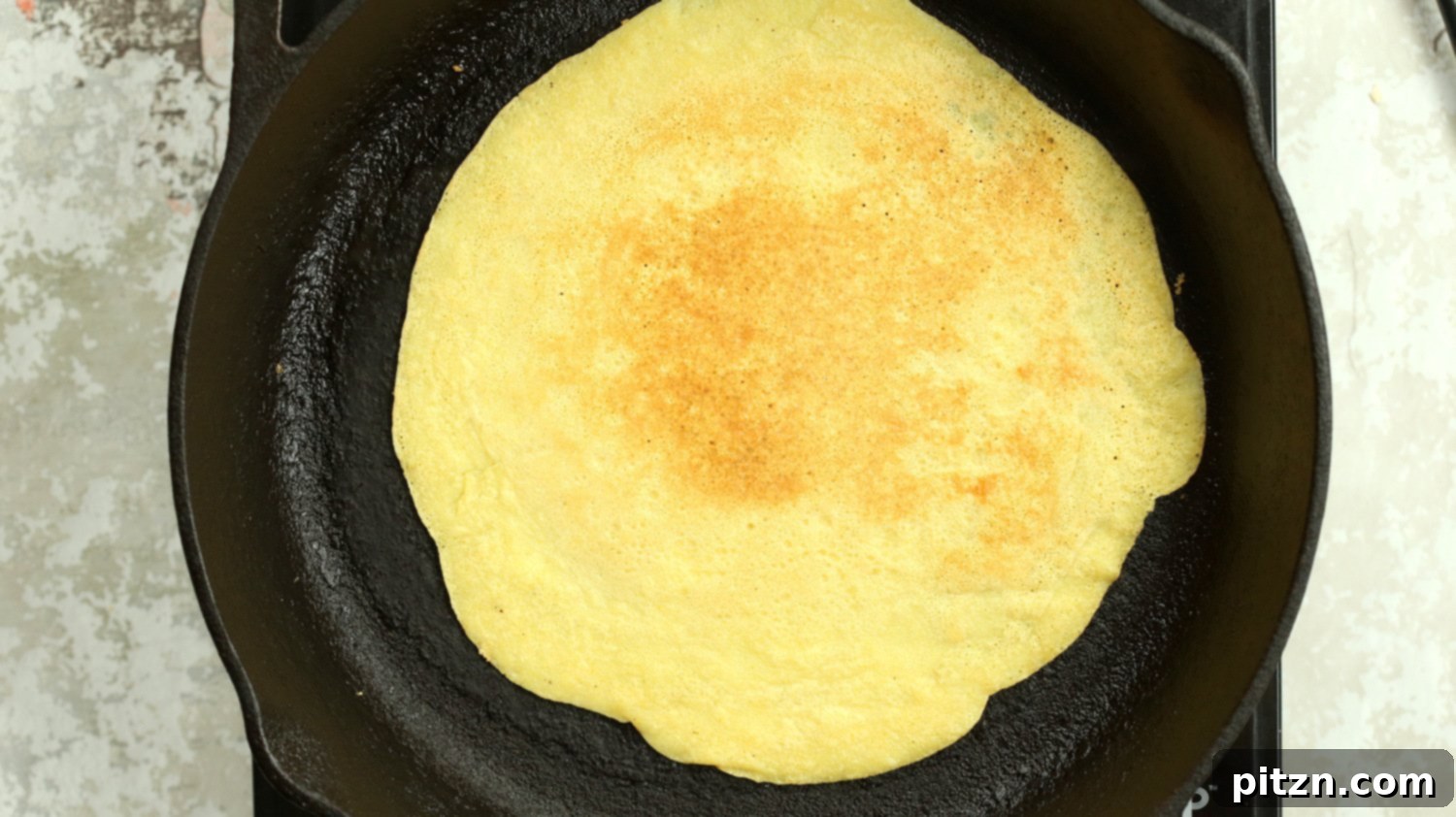
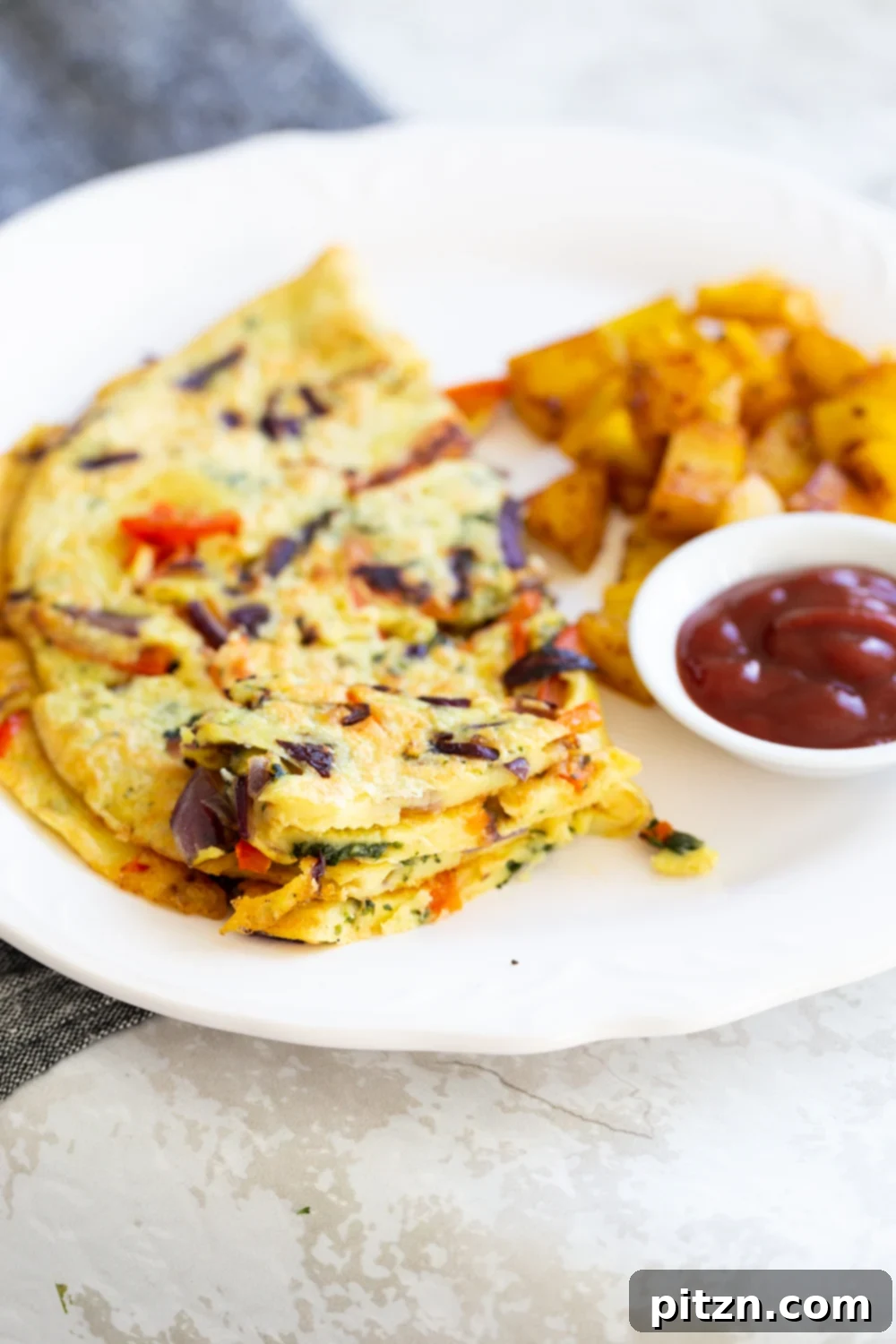
Pour a ladleful (approximately 1/3 cup or more, depending on your desired omelet size) of the prepared batter onto the hot skillet. Gently spread the batter using the back of the ladle or by carefully tilting and swirling the skillet until you achieve an even, circular shape. Cover the skillet with a lid and cook for 1-3 minutes. The exact cooking time will vary based on your stove’s heat intensity, the type of pan you are using, and the thickness of your batter. You’ll know it’s ready to flip when the edges appear dry and slightly firm, and the center is mostly set. Carefully loosen the omelet from the skillet with a thin spatula and then gently flip it over. Continue to cook for another minute on the second side until both sides are lightly golden and thoroughly cooked through. Serve immediately, perhaps folded and stuffed with your savory breakfast potatoes or alongside a selection of roasted vegetables.
For a Veggie-Filled Vegan Omelet:
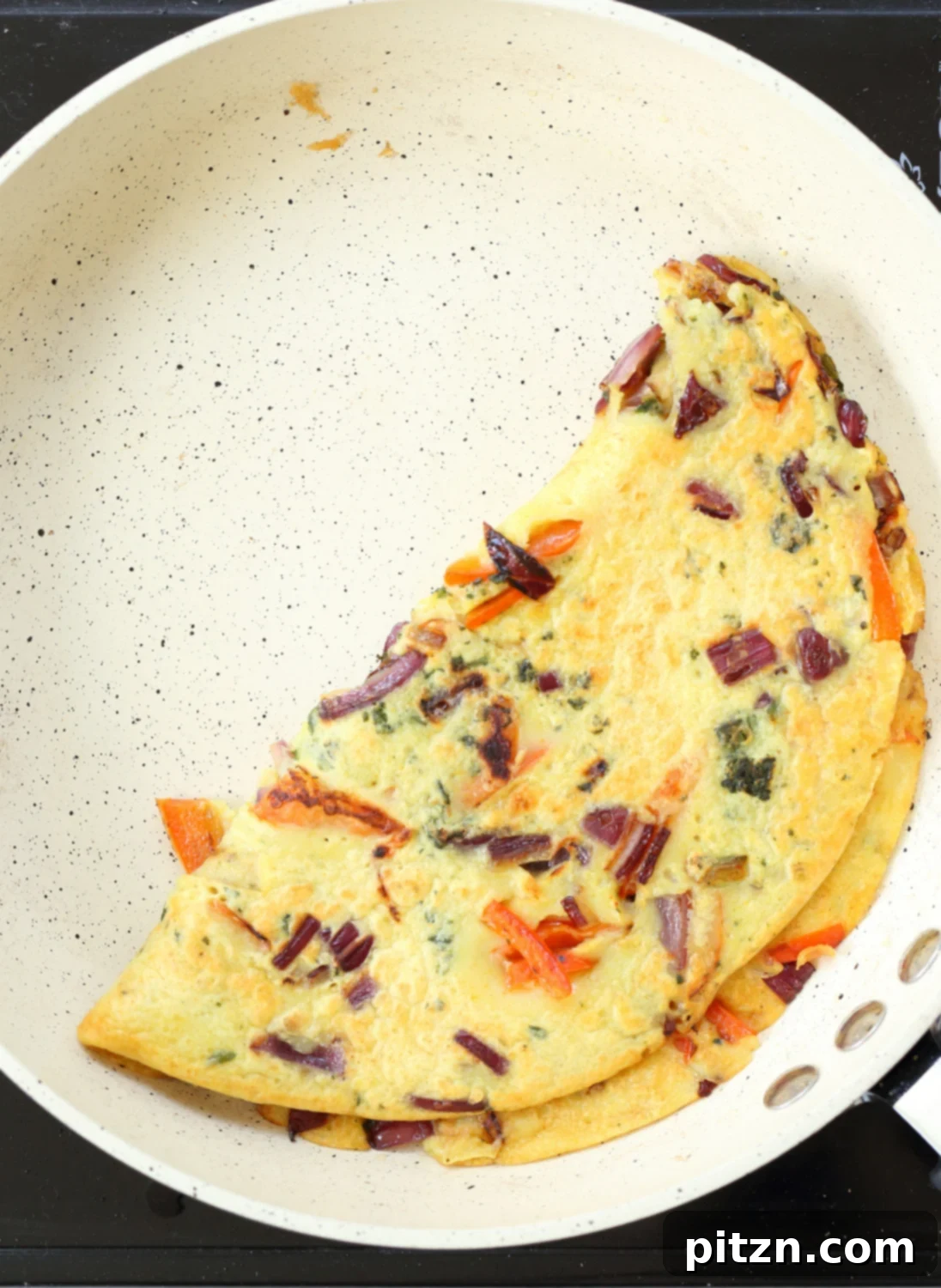
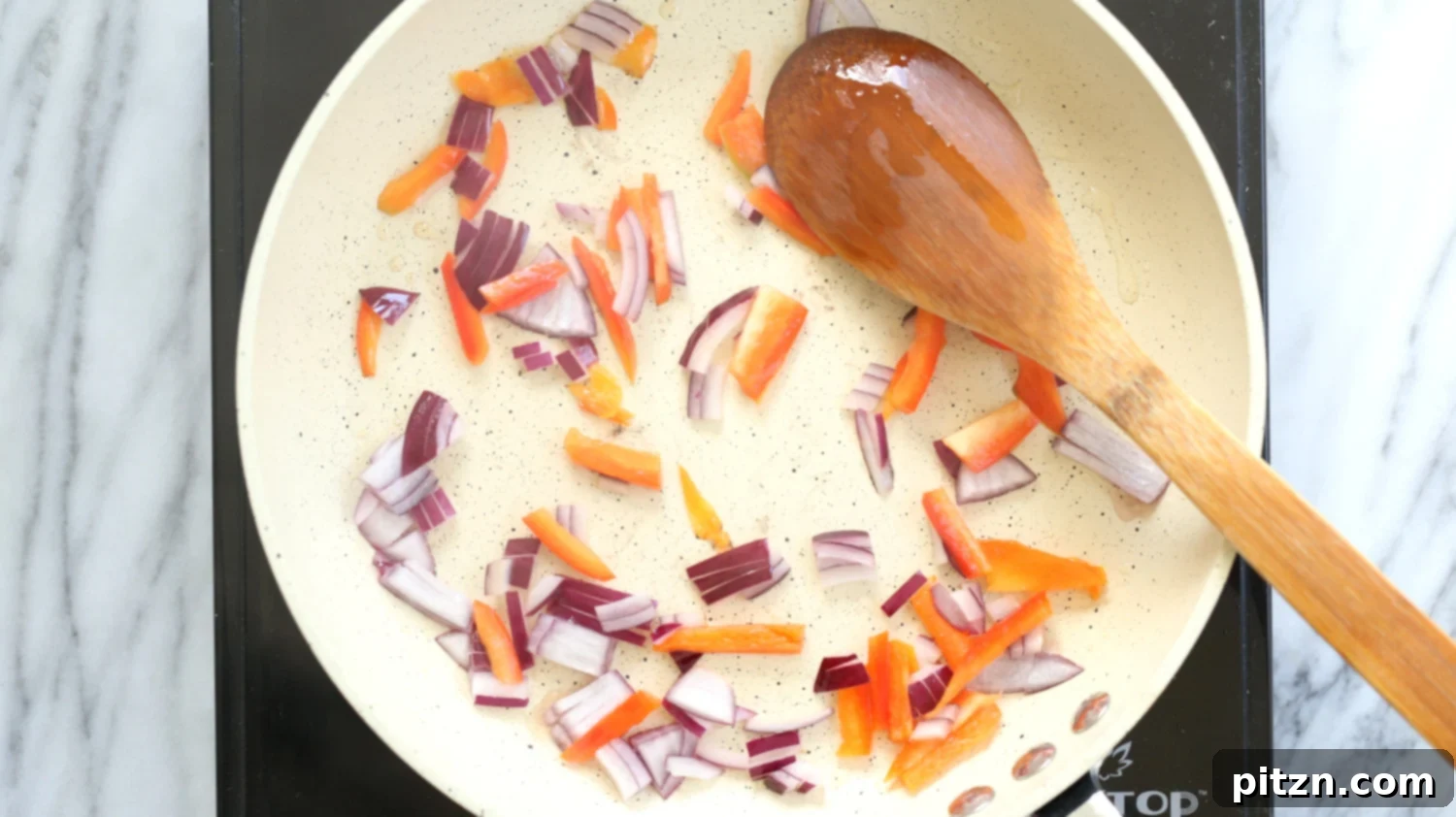
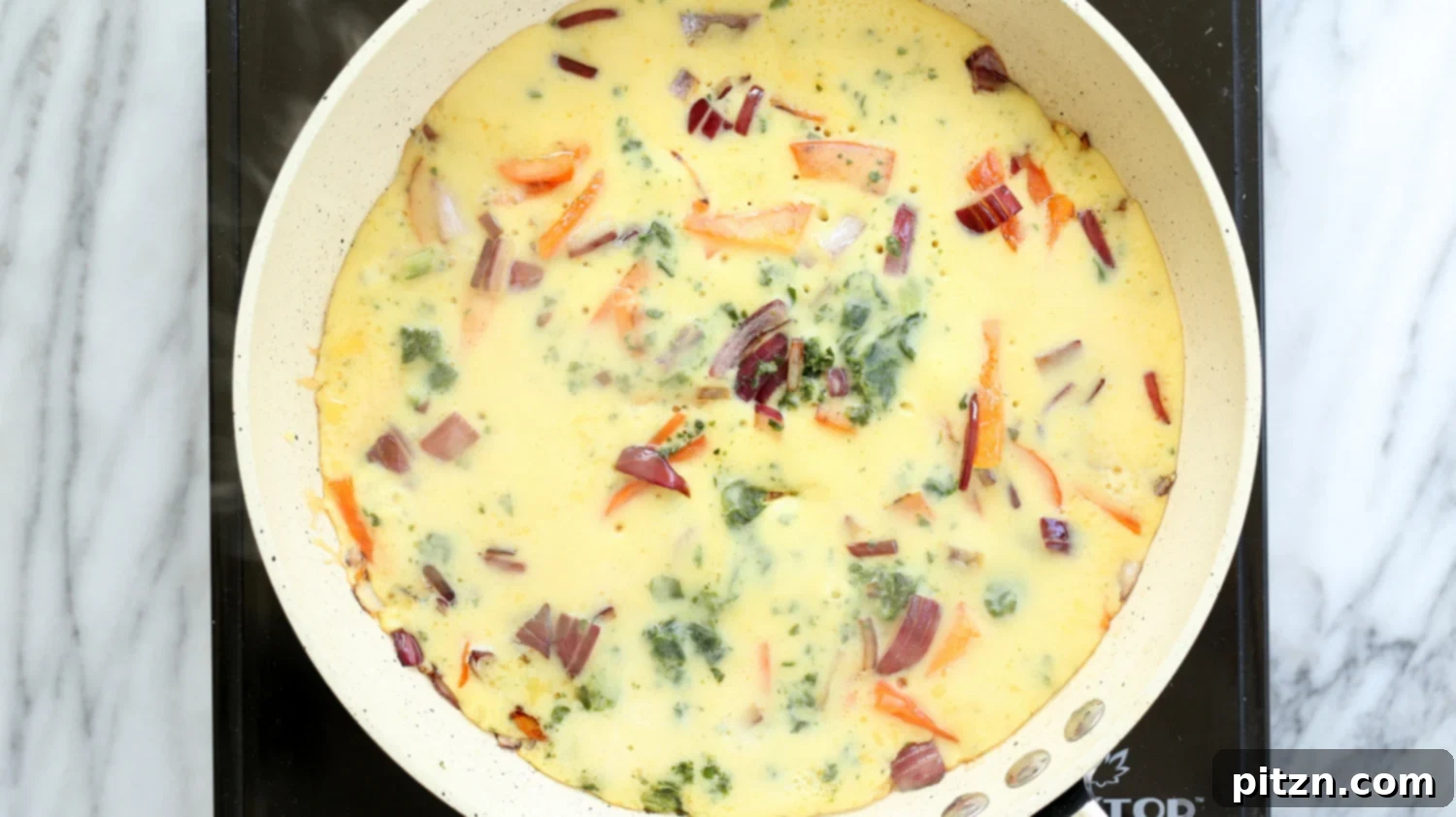
To incorporate fresh vegetables into your omelet, begin by adding your desired thinly sliced or finely chopped vegetables, such as onions, bell peppers, mushrooms, or spinach, directly to the hot skillet with a few drops of oil. Sauté for about a minute or two until they are slightly softened and fragrant. If using delicate greens like spinach or fresh herbs, add them at this stage and mix them in briefly. Then, drizzle enough mung bean batter over the vegetables to cover them completely and evenly. Cover the skillet with a lid and cook for 1-3 minutes, following the same cues as for a plain omelet. Once the edges are set and the batter is mostly firm, flip the omelet and cook for an additional 1-2 minutes on the second side. For an extra treat, you can sprinkle some shredded vegan cheese on top just before folding the omelet in half (this step is entirely optional). Serve your vibrant veggie omelet immediately with your favorite dressings, a side of toast, or a fresh salad.
Perfectly Roasted Breakfast Potatoes
No truly satisfying breakfast is complete without a side of perfectly seasoned, crispy breakfast potatoes. They provide a delightful textural contrast and a hearty element that complements the fluffy vegan omelet beautifully.
Making the Breakfast Potatoes:
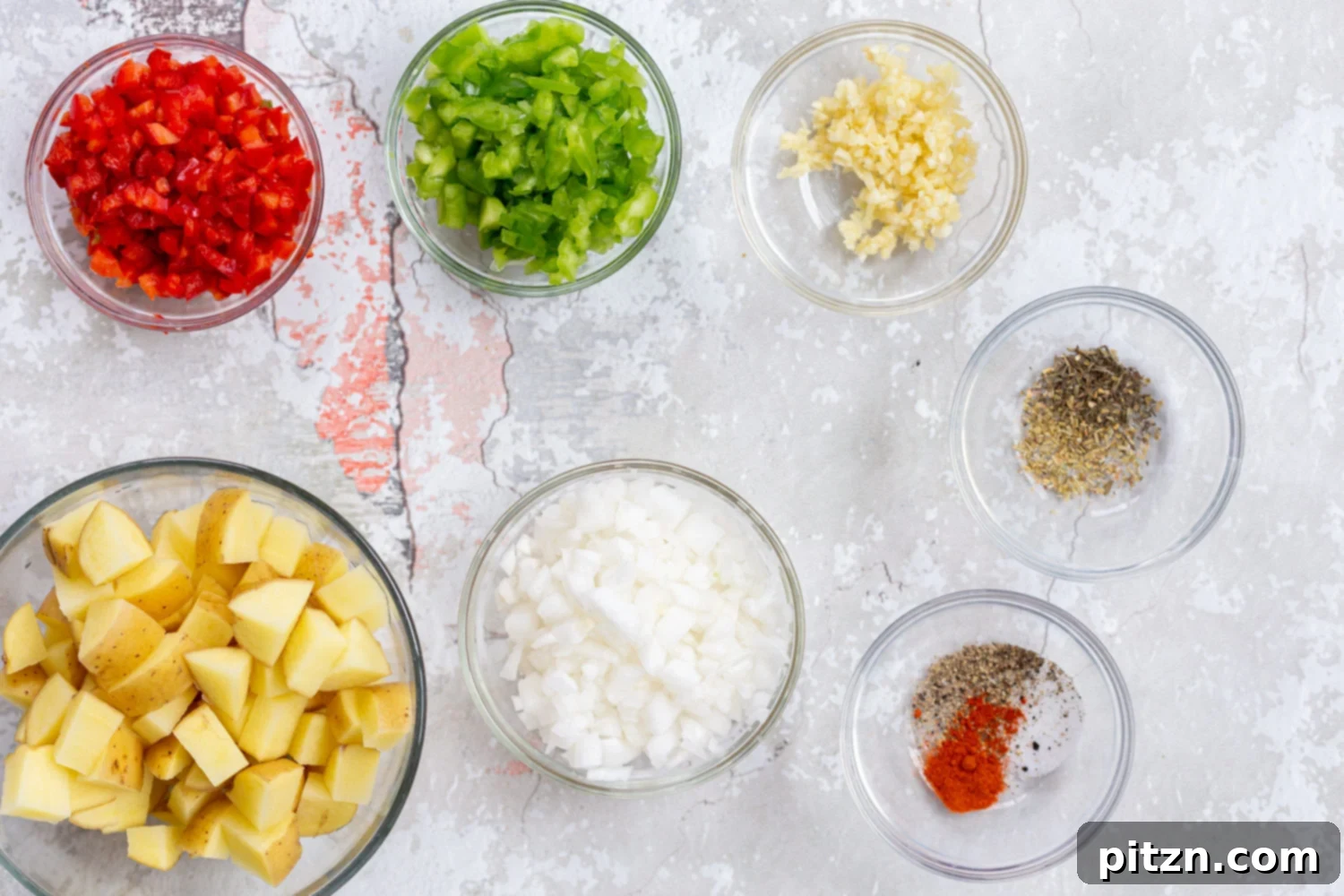
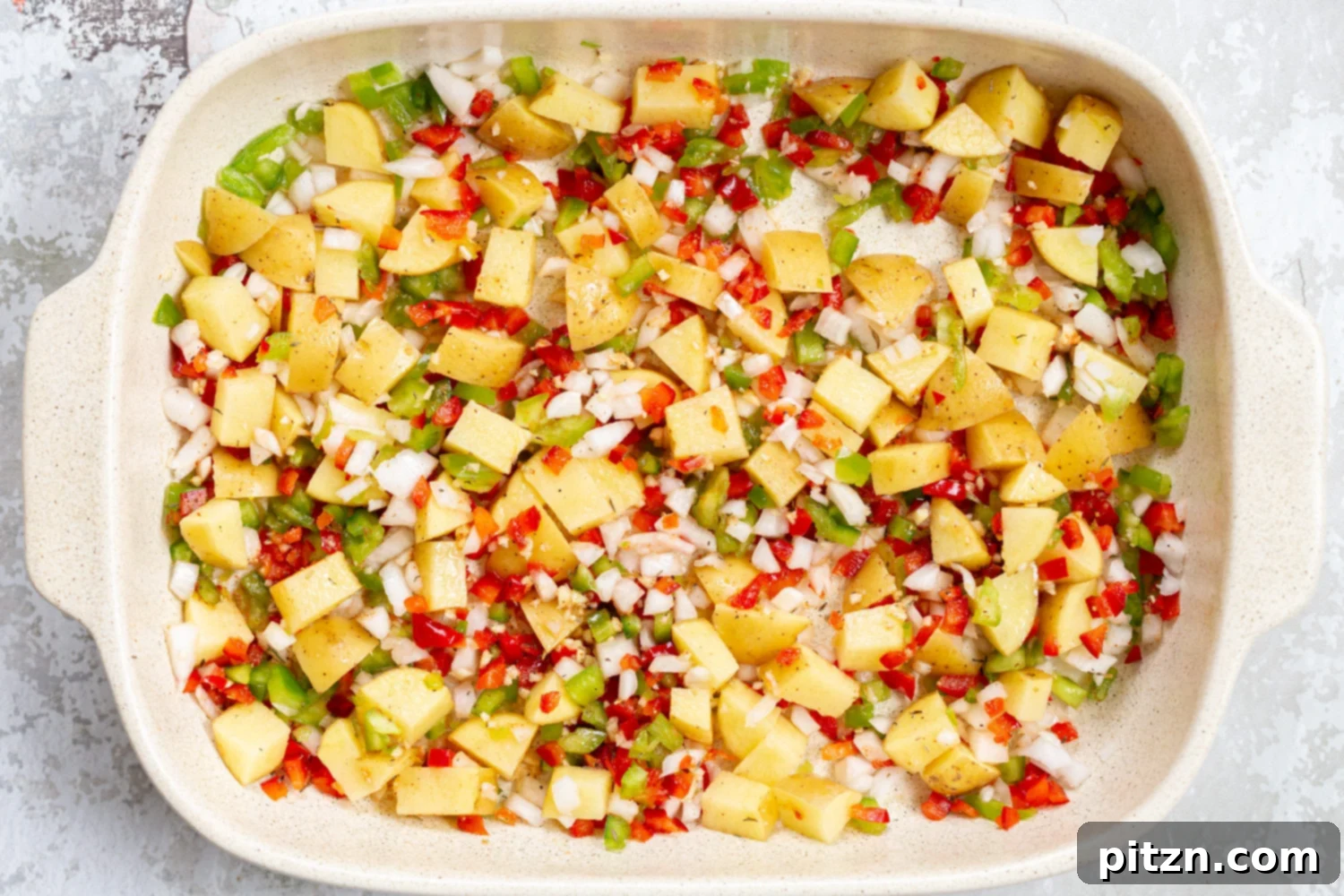
Preheat your oven to 400°F (205°C). In a large baking dish, combine the following ingredients for your breakfast potatoes: 2 medium-sized potatoes, peeled and uniformly cubed to approximately 1/4 inch pieces; 1/2 a finely chopped onion; 3 cloves of finely chopped garlic; 1 cup of finely chopped bell pepper (you can use red, green, or a colorful mix); 1/2 teaspoon of salt; 1/2 teaspoon of a dried herb blend (thyme and rosemary work wonderfully together, or use 2 teaspoons of fresh, finely chopped herbs); 1/4 teaspoon of cayenne pepper for a gentle warmth; and a generous dash of freshly ground black pepper. Drizzle 2 teaspoons of your preferred oil over all the ingredients. Toss everything together thoroughly, ensuring that the potatoes and vegetables are evenly coated with the seasonings and oil. Spread the mixture out in a single layer in the baking dish; this is crucial for even cooking and achieving maximum crispiness. Bake for 25 to 35 minutes, or until the potatoes are tender when pierced with a fork and beautifully golden brown. For an extra crispy exterior, you can broil them for the last minute, keeping a very close watch to prevent any burning.
Serving Suggestions for Your Vegan Breakfast Feast
Once your fluffy mung bean omelets and crispy breakfast potatoes are ready, it’s time to assemble your truly delicious and nourishing meal. These omelets are fantastic served simply on their own, allowing their unique flavor to shine, but they truly become an extraordinary feast when paired thoughtfully. You can serve them alongside a dollop of creamy vegan sour cream, a sprinkle of fresh, vibrant herbs like cilantro or chives, or a generous drizzle of your favorite hot sauce for an added kick. For a heartier and incredibly satisfying meal, consider stuffing the warm, fluffy omelets with the savory breakfast potatoes, creating a complete and delicious handheld breakfast. They also make an excellent and creative base for breakfast tacos, burritos, or even a savory pancake stack. Don’t forget to add a side of fresh fruit or a light green salad to complement the richness and complete your vibrant plant-based spread.

Tips for Crafting the Best Mung Bean Omelets
Achieving the perfect vegan omelet with mung beans requires a little practice and attention to detail, but these expert tips will help you master the art and enjoy consistently delicious results every time:
- Embrace the Chilla Connection: This recipe is beautifully adapted from the traditional Indian Moong Dal Chilla, which are savory lentil pancakes or crepes. While traditional chilla batter is often thicker and yields a more paste-like or dense texture, our omelet batter is specifically designed to be thinner and more flexible, allowing you to create omelets that are either delicate and thin or wonderfully thick and substantial, entirely to your preference. Understanding its culinary roots can help you appreciate the versatility and potential of this batter.
- Thickness Matters: The thickness of your omelet batter and, consequently, the resulting cooked omelet, significantly impacts its final texture. For plain omelets, a slightly thinner batter often works best, yielding a more delicate, crepe-like consistency that is easy to fold. When you plan to incorporate a generous amount of vegetables or other fillings, a slightly thicker batter can provide much-needed structural integrity, preventing the omelet from tearing. If you make the omelet too thick, it will inevitably lean more towards a sturdy, dense pancake texture rather than a tender, pliable omelet. Experiment with slight adjustments to the batter’s liquid content to find your perfect balance.
- Baking Powder for Fluffiness (Optional): While not strictly necessary for a delicious omelet, adding about 1/2 teaspoon of baking powder to your batter can make the omelets noticeably lighter and fluffier. This is an entirely optional addition, depending on whether you prefer a denser, more traditional omelet texture or a lighter, airier one. If you use it, blend it in briefly right before cooking.
- Mastering Cooking Time and Texture Evolution: The final texture of your omelet is highly dependent on how long you cook it. For a softer, slightly gooey interior (similar to a classic French omelet), cook the omelet for a shorter duration, just until it is set at the edges and still slightly moist in the center. For a firmer, more pancake-like consistency, cook until thoroughly set throughout. Be aware that the texture will continue to evolve as the omelet cools; any gooey parts may become more gel-like upon cooling, while thicker, very well-cooked omelets might become slightly drier or more cake-like.
- Strategic Storage Considerations: If you intend to store cooked omelets for later consumption, it is generally advisable to cook them to a thinner consistency. Thinner omelets tend to hold up better in the refrigerator for up to 2-3 days without becoming overly dry, rigid, or rubbery when reheated.
- The Paramount Importance of Your Pan: Just like with chickpea-flour-based omelets or traditional egg preparations, the quality and type of pan you use are absolutely paramount to success. A good quality non-stick skillet or a very well-seasoned cast iron pan will yield the best results, preventing sticking and ensuring easy flipping and a beautiful golden crust. It’s worth noting that a non-stick pan that is frequently used for everyday stir-fries and high-heat cooking might gradually lose its optimal non-stick properties over time. For this reason, consider dedicating a specific pan solely for delicate batter-based items like pancakes, crepes, and omelets to maintain its superior non-stick performance.
Recipe: Mung Bean Vegan Omelet with Breakfast Potatoes
Vegan Omelet with Mung Bean Egg Substitute
By: Vegan Richa
Prep: 15 mins | Cook: 25 mins | Soak time: 8 hrs | Total: 40 mins (plus soaking)
Servings: 4 | Course: Breakfast | Cuisine: American

Vegan Omelet with Delicious Breakfast Potatoes. Mung Bean egg mixture makes a great soy-free egg substitute. Easy Moong Dal Batter for omelets or savory pancakes. No Chickpea flour! Vegan Gluten-free Grain-free soy-free Recipe Nut-free option.
Ingredients
Moong Dal Omelet:
- 1 cup moong dal (split Mung beans)
- 1/2 tsp salt
- 3/4 tsp kala namak (Indian sulphur salt)
- 1/4 tsp each garlic powder, onion powder
- 1/8 tsp black pepper
- 1/4 tsp turmeric, for color (too much will add flavor)
- 1 tsp oil
- 1 to 1 1/4 cup non-dairy milk (such as unsweetened almond milk, light coconut milk, or cashew milk**)
Breakfast Potatoes:
- 2 potatoes, peeled and cubed to a 1/4 inch
- 1/2 onion, finely chopped
- 3 cloves garlic, finely chopped
- 1 cup bell pepper, finely chopped (red or green or both)
- 1/2 tsp salt
- 1/2 tsp dried thyme + rosemary, or both (or use 2 tsp fresh)
- 1/4 tsp cayenne
- A good dash of black pepper
- 2 tsp oil
- Optional add-ins for omelet: 1/2 teaspoon baking powder for fluffier omelets, 1-2 tablespoons tapioca starch for reducing lentil texture
Instructions
- Wash and then soak the Moong Dal/split Mung Beans in 3 cups water overnight or at least 8 hours.
- Drain the soaked dal and add to a blender. Add the rest of the omelet ingredients (salt, kala namak, garlic powder, onion powder, black pepper, turmeric, 1 tsp oil) and 1 cup non-dairy milk. Blend for a minute, then let it rest and blend again for another minute. The mixture should be smooth and fluffy. Depending on the thickness of the omelet you prefer, you can add 2-4 tbsp more non-dairy milk. For an extra fluffy omelet, add 1 tsp baking powder and blend again.
- For best flavor and fluffiness, we recommend using this mix fresh, as the kala namak flavor is stronger.
- Heat a cast iron or non-stick thick-bottom skillet over medium heat. When hot, drizzle a few drops of oil and spread using a paper towel.
- For a plain omelet: Add a ladleful (1/3 cup or more) of the batter and spread using the ladle or by moving the skillet. Cover the skillet with a lid and cook for 1-3 minutes. Time will depend on your stove, pan, and batter thickness. Once the edges are dry and the center is just about getting dry, loosen from the skillet and flip. Continue to cook for another minute and serve stuffed with breakfast potatoes or roasted veggies.
- For a veggie omelet: Add vegetables such as thinly sliced onion, red bell pepper, etc., to the skillet. Add a few drops of oil and cook for a minute. Add greens such as finely chopped spinach or fresh herbs and mix in. Drizzle enough batter on the skillet to cover the veggies. Cover the skillet with a lid and cook for 1-3 minutes, then flip and cook for another 1-2 minutes. You can add some vegan cheese on top and fold over (optional). Serve immediately with dressings of choice and toast.
- Make the Breakfast Potatoes: Add all of the breakfast potato ingredients except oil to a baking dish. Drizzle oil and mix well to coat evenly. Bake at 400°F (205°C) for 25 to 35 minutes or until the potatoes are tender. Broil for a minute for extra crispness.
- Store: You can refrigerate the batter as well as the cooked omelet for up to 2 days. Refrigerate cooked omelets in a closed container. The batter might separate slightly; just blend and use.
Video
Notes
** Homemade Cashew Milk: Make your own cashew milk by blending 3 tablespoons of cashews with 1 cup of water. Alternatively, soak the cashews along with the lentils and then add 1 cup of water when blending the omelet batter.
Oil-free Option: You can prepare the omelet completely oil-free by omitting the oil from the batter and using a good quality non-stick skillet.
Flavor Variations: For a cheesy flavor, consider adding nutritional yeast to the batter. Baking powder can be added for extra fluffiness, as noted in the instructions.
Breakfast Sandwiches: Transform your veggie omelets into fantastic breakfast sandwiches. Fold the cooked omelets and add them to toasted bread with hummus, vegan cheese, vegan bacon, or other favorite fillings.
Frittata or Quiche: The versatile mung bean batter can also be used to create a delightful frittata or quiche. For these dishes, keep the mixture slightly thicker. Follow a dedicated frittata recipe for best results.
French Toast: The batter can even be adapted for French toast, either savory or sweet. If making sweet French toast, remember to reduce the amount of both salts.
Nutrition information provided is for 1 serving of omelet only and does not include the breakfast potatoes.
Nutrition
Calories: 201.69 kcal
Carbohydrates: 30.73 g
Protein: 13.45 g
Fat: 2.46 g
Saturated Fat: 0.08 g
Sodium: 332.58 mg
Fiber: 5.23 g
Sugar: 1.11 g
Vitamin A: 99.96 IU
Calcium: 113.75 mg
Iron: 1.85 mg
Nutrition information is automatically calculated, so should only be used as an approximation.
Did you make this recipe? We’d love to hear your thoughts! Rate and comment below.
Explore More Savory Plant-Based Breakfast Ideas
If you loved this Mung Bean Vegan Omelet, you’re in for a treat! The world of savory plant-based breakfasts is rich and diverse, offering countless delicious ways to start your day. Expand your morning meal repertoire with these other wholesome and flavorful options, perfect for any occasion:
- Tofu Scramble Wrap: A classic for a reason, perfect for a quick, protein-packed, and satisfying meal on the go. These mung bean omelets can also be added for extra protein and flavor in your wraps!
- Chickpea Flour Frittata: Another excellent egg-free option, offering a slightly different texture and flavor profile that’s equally impressive and versatile.
- Savory Oats Hash: A comforting and hearty dish, this Indian-inspired savory oatmeal is a fantastic and unique alternative to traditional sweet oatmeal.
- Chickpea Chilaquiles: A vibrant and incredibly flavorful Mexican-inspired breakfast that’s both satisfying and easy to customize with your favorite toppings.
- Tofu Bhurji (Indian Scramble): A spicy and aromatic Indian take on scrambled eggs, bursting with a medley of traditional Indian spices and fresh ingredients.
- Sweet Potato Hash: A naturally sweet and savory hash that’s both nutritious and delicious, combining the goodness of sweet potatoes with hearty black-eyed peas.
- Lentil Frittata: Another protein-packed frittata option that leverages the wholesome power of lentils, perfect for a fulfilling and healthy breakfast or brunch.
- Sprouted Lentil Avocado Toast: A fresh, healthy, and modern option, ideal for a lighter yet incredibly filling breakfast or a gourmet snack.