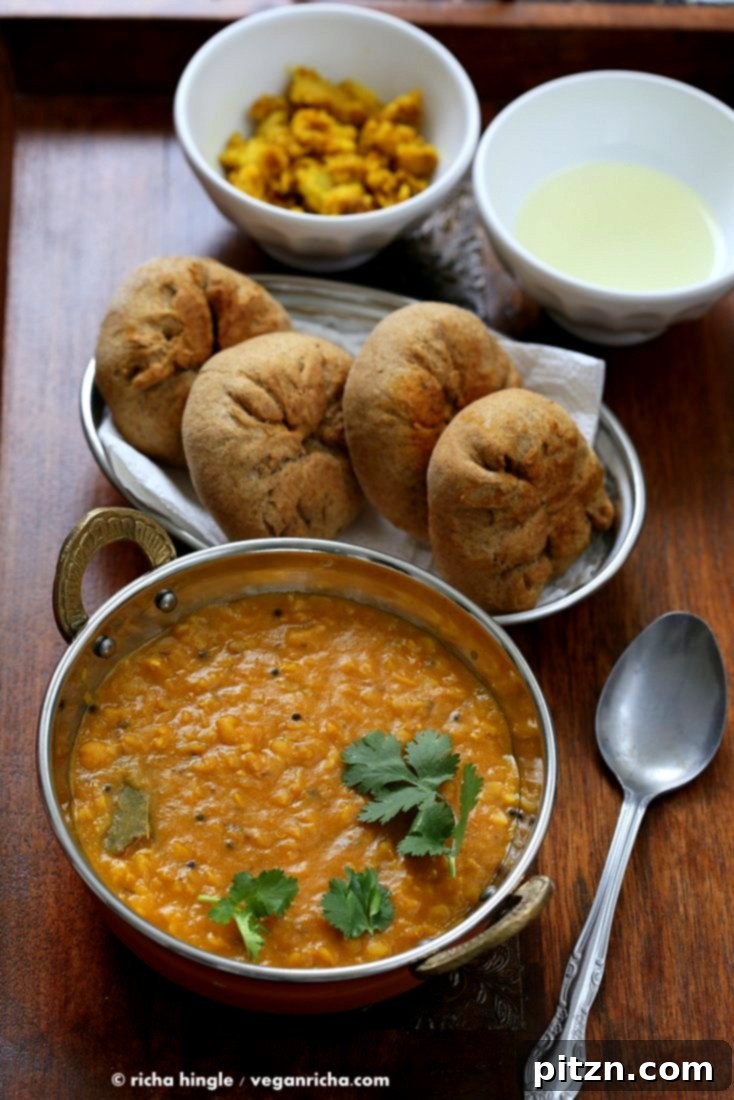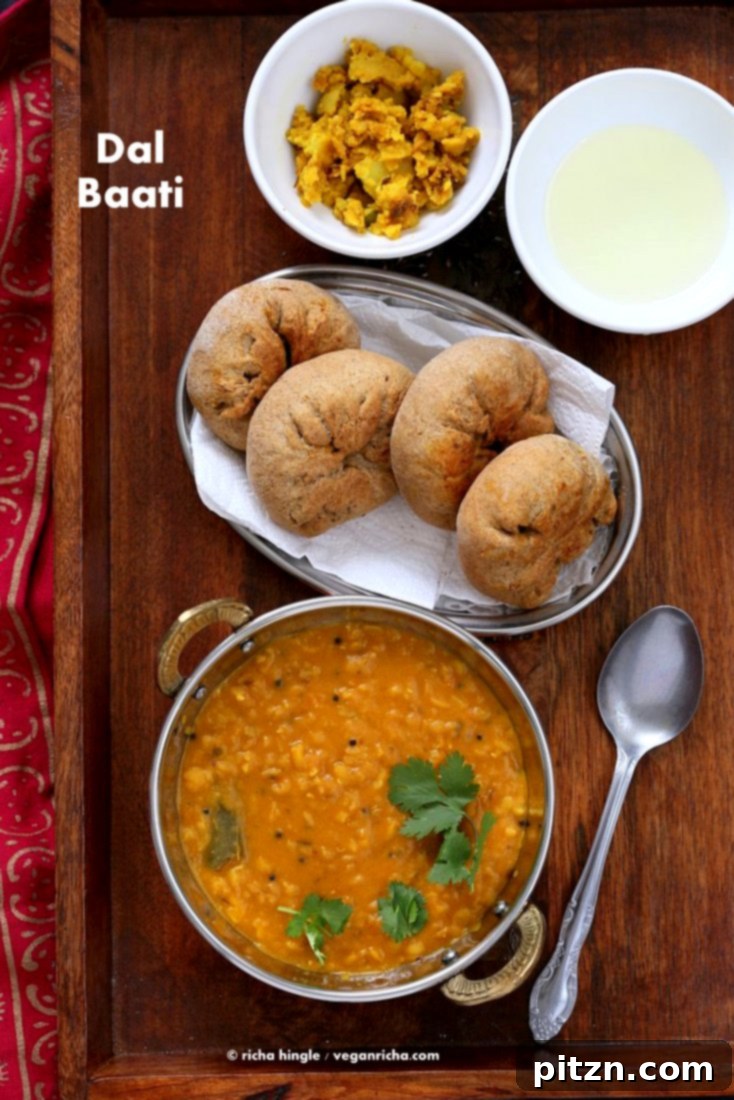
Authentic Vegan Dal Baati: A Rich Rajasthani Delicacy (Dairy-Free & Soy-Free)
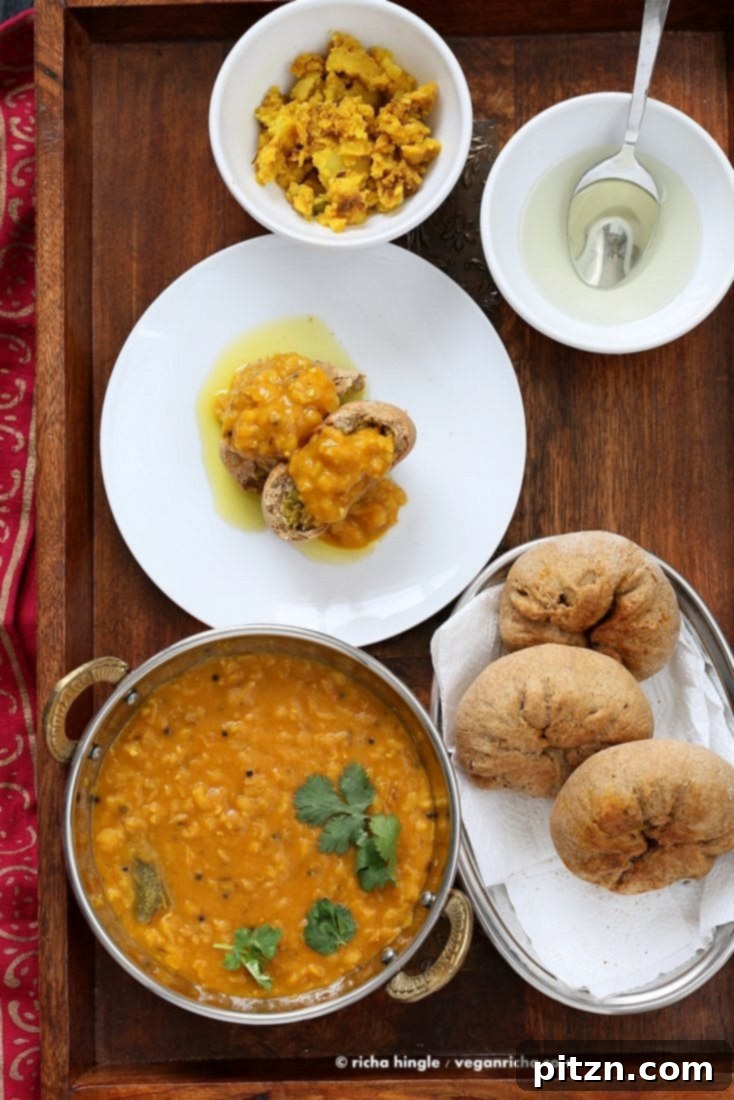
Embark on a culinary journey to the heart of Rajasthan, India, with this incredibly satisfying and authentic Vegan Dal Baati recipe. Dal Baati is more than just a meal; it’s a cultural experience, deeply rooted in the traditions of Rajasthan and parts of Madhya Pradesh, especially within Marwari cuisine. This beloved dish consists of two primary components: a flavorful, comforting lentil soup (Dal) and baked, savory wheat balls (Baati). Our plant-based rendition captures all the traditional essence, making it accessible to everyone without compromising on taste or texture. Prepare to be delighted by the rich flavors and hearty satisfaction this dish brings to your table.
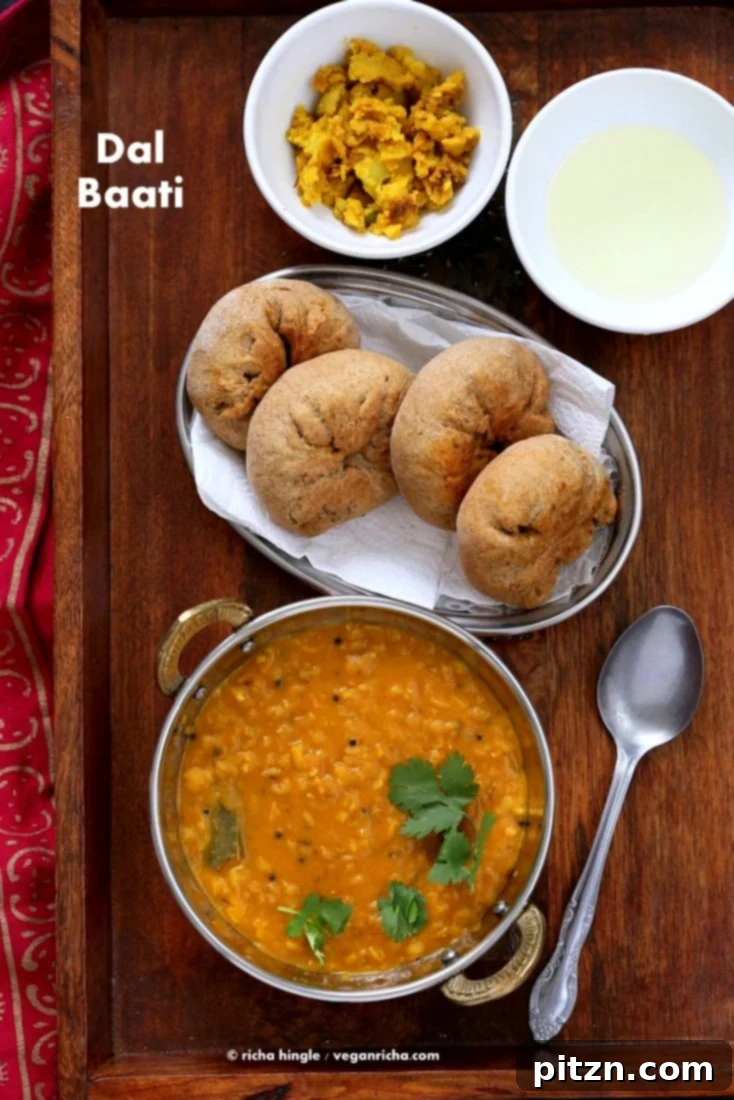
For me, Dal Baati holds a special place, not just for its incredible taste but also for the memories it evokes. My husband, being Marwari, introduced me to this staple, and I fondly recall a wedding feast where I was served Dal Baati alongside two generous bowls of ghee – a true testament to its traditional preparation! Creating a vegan version was a delightful challenge, especially for a special occasion like our anniversary. While traditionally served with Churma or Ladoo, which are often sweet accompaniments, for this recipe, we’ll focus on the magnificent Dal and Baati, ensuring a truly fulfilling and wholesome meal.
Understanding the Heart of Dal Baati Cuisine
Dal Baati is a quintessential representation of Indian comfort food, offering a symphony of textures and flavors. Its popularity stems from its hearty nature, making it a perfect meal for the arid regions of Rajasthan, where it originated. Let’s delve into the individual components that make this dish so unique and cherished.
The Baati: Golden Baked Wheat Balls
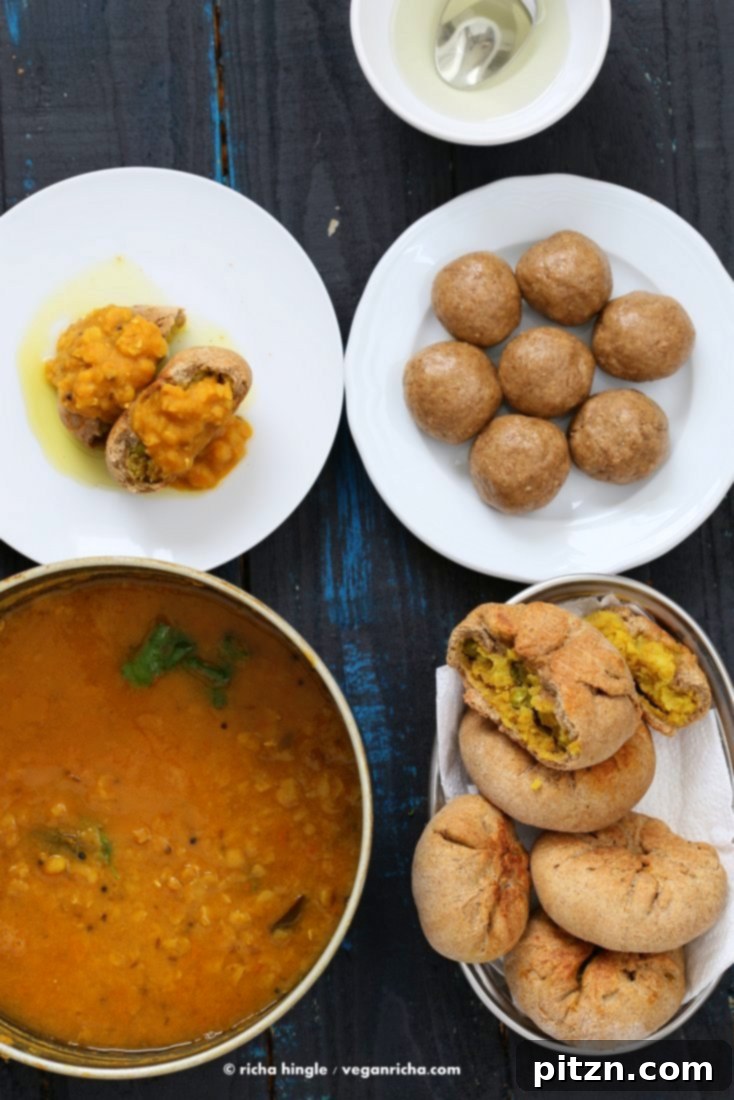
The Baati are dense, unleavened wheat balls, typically baked in a traditional Indian clay oven until they develop a beautiful golden-brown crust. This baking process gives them a firm exterior and a slightly crumbly, yet tender, interior. Traditionally, after baking, these Baati are broken into pieces and generously drizzled with copious amounts of ghee (clarified butter), allowing them to soak up the rich, nutty flavor before being served. For our vegan adaptation, we’ve replaced ghee with olive oil or melted vegan butter, achieving a similar richness and ensuring a completely dairy-free experience.
What elevates these Baati even further in our recipe is the addition of a spicy, mashed potato filling. This ingenious twist transforms the humble Baati into a self-contained, flavorful pastry, making it a more substantial and complete meal on its own. This stuffing makes each bite an explosion of savory spices, perfectly complementing the textures of the wheat dough. While it might sound like a complex endeavor, with a little planning, the preparation comes together surprisingly quickly, especially when you work on the Dal and Baati in parallel.
The Dal: A Soul-Soothing Lentil Stew
The Dal component of this dish is a flavorful lentil soup, most commonly prepared with toor dal (split pigeon peas). However, variations exist, incorporating a mixture of other lentils like chana dal (split chickpeas), urad dal (split black lentils), and moong dal (split yellow lentils). Our recipe utilizes split pigeon peas for their classic taste and creamy texture, but you can certainly experiment with split yellow peas or petite yellow lentils (mung dal) if preferred. This lentil stew is simmered with aromatic spices, fresh ginger, garlic, and tomatoes, creating a rich, savory, and deeply comforting broth that perfectly balances the dry, baked Baati.
Crafting the Vegan Dal Baati Experience: Flavor & Simplicity
Creating an authentic Dal Baati that is entirely vegan required thoughtful substitutions without compromising the rich, traditional flavors. The use of olive oil or vegan butter for glazing the Baati ensures they remain moist and flavorful, mimicking the role of ghee beautifully. The dal, naturally plant-based at its core, is made even more vibrant with a careful selection of spices and fresh ingredients.
Each element of this meal is delicious enough to stand alone. The Dal, for instance, makes a fantastic, protein-rich soup, much like any traditional Indian lentil preparation. The spicy potato filling is incredibly versatile; consider using it to stuff savory French toasts, grilled sandwiches, or even wraps for a quick and flavorful snack. The stuffed Baati pastries themselves, with their delightful potato filling, make an excellent snack served with your favorite chutneys, ketchup, or a cooling yogurt-free dip. For those feeling adventurous, the Baati can also be filled with other savory stuffings, such as spicy chickpeas or even a plant-based sloppy joe mixture for a fusion twist.
More Indian Inspired Plant-Based Delights
If you’ve enjoyed this culinary adventure, you might like to explore more Indian-inspired plant-based options from our collection:
- Bisi Bele Bath Pressure Cooker Split Pea Brown Rice Soup
- South Indian Quinoa with Tamarind & Pumpkin
- Kashmiri Dal – Split Pea & Yellow Lentil Soup
- Crunchy Spicy Potatoes
- Palak Tofu – Tofu in Spinach Sauce
Once both the Dal and Baati are ready, serving is simple yet ceremonial. Break a warm Baati pastry in half, generously drizzle it with melted vegan butter or olive oil, allowing the pastry to soak up the richness. Then, ladle over a generous amount of the hot Dal soup. Garnish with fresh cilantro and a squeeze of lemon juice for a bright finish. Serve immediately to enjoy the harmonious blend of flavors and textures.
And for those eager to delve deeper into plant-based cooking, be sure to check out my book! Pre-order now and send your receipt to [email protected] to be added to our list for exclusive giveaways at launch!
Vegan Dal Baati Recipe
Allergen Information: This recipe is entirely free of dairy, eggs, corn, soy, yeast, and nuts.
Ingredients:
For the Baati – Savory Wheat Pastries:
- 3/4 cup whole wheat flour
- 1/4 cup white flour (unbleached or all-purpose)
- 3 tbsp semolina flour
- 1/3 tsp carom seeds (ajwain) or cumin seeds for an alternative flavor
- 1/2 tsp salt
- 1/4 tsp baking soda
- 2 tbsp vegan butter (cold, cut into small pieces)
- 1 tbsp non-dairy yogurt
- 1/4 to 1/3 cup water (as needed for dough)
For the Baati Filling:
- 3 medium potatoes, boiled until tender and thoroughly mashed
- 2 tsp oil (vegetable or any neutral oil)
- 1/4 tsp cumin seeds
- 1/2 inch fresh ginger, minced (about 2 tsp)
- 1 hot green chili, minced (adjust to your spice preference)
- 1/2 tsp coriander powder
- 1/4 tsp cumin powder
- 1/2 tsp turmeric powder
- 1/4 to 1/2 tsp cayenne pepper or red chili powder (for heat)
- 3/4 to 1 tsp dry mango powder (amchoor) or fresh lemon juice to taste
- 1/2 to 3/4 tsp salt (adjust to taste)
- 1/2 cup thawed or fresh green peas
To Serve:
- Melted vegan butter or olive oil, as needed for drizzling
Method:
Preparing the Baati Dough:
- In a large mixing bowl, combine all the dry ingredients for the Baati (whole wheat flour, white flour, semolina, carom seeds, salt, and baking soda). Whisk them together thoroughly to ensure even distribution.
- Add the cold vegan butter and non-dairy yogurt to the dry mixture. Using your fingertips or a large spoon, rub the butter into the flour until the mixture resembles coarse breadcrumbs. This step helps create a tender Baati.
- Gradually add water, a few tablespoons at a time, kneading the mixture until a smooth, firm dough forms. The dough should not be too soft or too stiff.
- Cover the dough with a damp cloth and let it rest for at least 15 minutes. This resting period allows the gluten to relax and the semolina to hydrate, resulting in a better texture.
Making the Potato Filling:
- Ensure your boiled potatoes are well-mashed and set them aside in a bowl.
- Heat oil in a medium skillet over medium heat. Once the oil is hot, add the cumin seeds and let them sizzle until fragrant and they begin to change color, about 1 minute.
- Add the minced ginger and green chili to the skillet and sauté for another minute until their raw aroma dissipates.
- Stir in the coriander powder, cumin powder, turmeric, and cayenne/red chili powder along with the green peas. Cook for about a minute, stirring constantly to prevent the spices from burning.
- Add the mashed potatoes to the skillet. Mix everything thoroughly, ensuring the spices are evenly incorporated. Cook for 2 minutes, stirring occasionally. If the potato mixture appears too dry, add a tablespoon or so of water to loosen it slightly.
- Stir in the dry mango powder (amchoor) or lemon juice and salt. Taste and adjust seasoning as needed.
- Remove from heat and allow the filling to cool completely before proceeding to stuff the Baati.
Assembling and Baking the Baati:
- Preheat your oven to 450 degrees F (230 degrees C).
- Divide the prepared dough into 6 to 8 equal portions. Roll each portion into a smooth ball.
- On a lightly floured surface, roll out each ball into a circular disc, approximately 4 inches in diameter.
- Place 2 to 3 tablespoons of the cooled potato filling in the center of each dough circle.
- Carefully bring the edges of the dough together over the filling and seal them tightly, forming a ball or a crescent-shaped pastry. Ensure there are no cracks to prevent the filling from escaping during baking.
- Place the sealed pastries seam-side down on a baking sheet. Cover them with a clean kitchen towel while you work on the remaining pastries to prevent them from drying out.
- Bake in the preheated oven for 10 minutes.
- Carefully flip the Baati and continue baking for another 4 minutes, or until both sides are beautifully golden brown and the Baati are cooked through.
- Remove from the oven and let them cool slightly before serving.
For the Toor/Arhar Dal (Split Pigeon Pea Soup):
Ingredients:
- 1/2 cup split pigeon peas (toor dal) or split yellow peas, soaked for at least an hour
- 2 medium tomatoes, roughly chopped
- 1 inch fresh ginger, chopped
- 1 green chili (adjust to your preferred level of heat)
- 2 cloves of garlic
- 1/2 tsp salt (or to taste)
- 1 tsp oil (vegetable or preferred cooking oil)
- 1/2 tsp cumin seeds
- 1/2 tsp mustard seeds
- 10 fresh curry leaves (optional, but highly recommended for authentic flavor)*
- 2 tbsp fresh cilantro, chopped (for the dal base)
- 1/2 tsp coriander powder
- 1/2 tsp garam masala
- 1/4 to 1/2 tsp cayenne pepper (for additional heat, optional)
- 1/4 tsp turmeric powder
- 1 tsp lemon juice (for finishing)
- Fresh cilantro for garnish
Method:
- Drain the soaked split peas thoroughly and set them aside.
- In a blender, combine the chopped tomatoes, ginger, green chili, garlic, and salt. Blend until you achieve a smooth puree. Set aside.
- Heat oil in a pressure cooker or a heavy-bottomed saucepan over medium heat.
- Once the oil is hot, add the cumin seeds and mustard seeds. Cook until they begin to splutter and pop, usually about 1 minute. This is the tempering (tadka) and adds a burst of flavor.
- Immediately add the curry leaves (if using) and the 2 tablespoons of chopped cilantro. Stir quickly.
- Add all the powdered spices: coriander powder, garam masala, cayenne, and turmeric. Mix well and cook for about 30 seconds until fragrant, being careful not to burn them.
- Pour in the blended tomato mixture. Cook, stirring occasionally, until the mixture thickens slightly and the oil begins to separate from the sides, approximately 4 to 5 minutes.
- Add the drained split peas to the cooked masala. Stir to combine.
- For Pressure Cooker (Instant Pot or stovetop): Add 2 cups of water. Close the lid. For an Instant Pot, cook on Manual/Pressure Cook for 10 minutes, then allow for natural pressure release. For a stovetop pressure cooker, cook for 1 whistle at medium-high heat, then 2 whistles at medium-low heat.
- For Saucepan: Add 3 cups of water. Bring to a boil, then reduce heat to low, cover, and simmer for 45 minutes to an hour, or until the split peas are tender and easily mashable. Mash some of the dal against the side of the pot with a spoon to thicken it to your desired consistency.
- Taste the dal and adjust salt and spices if needed. If it’s too thick, add a little hot water to reach your desired consistency.
- Stir in the lemon juice and garnish generously with fresh cilantro just before serving.
To Serve Your Vegan Dal Baati:
Presentation is key to enjoying this delightful meal. Follow these steps for an authentic serving experience:
- Take a warm Baati pastry and gently break it into two halves.
- Drizzle a generous amount of melted vegan butter or olive oil over the broken Baati pieces. The warm pastry will absorb the fat, enhancing its flavor and texture.
- Ladle a generous portion of the hot, aromatic Dal over the Baati. You can add an extra teaspoon of melted vegan butter on top of the dal for an even richer finish.
- Garnish with a sprinkle of fresh cilantro.
- Serve immediately. For an added layer of flavor, accompany your Dal Baati with a side of fresh mint cilantro chutney or your favorite Indian pickle.
Tips and Variations:
- Gluten-Free Baati: To make the Baati pastries gluten-free, you can adapt a gluten-free biscuit dough. Consider using a recipe like our Jalapeno cheese gluten-free biscuits, simply omitting the jalapenos and cheese, and adjusting the texture as needed for stuffing.
- Curry Leaves: *Curry leaves are distinct from “curry powder” and are fresh leaves used in South Indian cuisine for their unique aromatic flavor. You can typically find them at Indian grocery stores or order them online (both fresh or dried). While they add an authentic depth of flavor, they can be omitted if unavailable without compromising the overall deliciousness of the dal.
- Make Ahead: Both the potato filling and the dal can be prepared a day in advance and stored in the refrigerator, making the final assembly quicker on the day of serving.
- Baati Texture: For extra crispy Baati, you can shallow-fry them in a bit of oil after baking, just until they develop a deeper golden crust.
Enjoy this wholesome and deeply satisfying Vegan Dal Baati, a true celebration of Indian culinary heritage!