
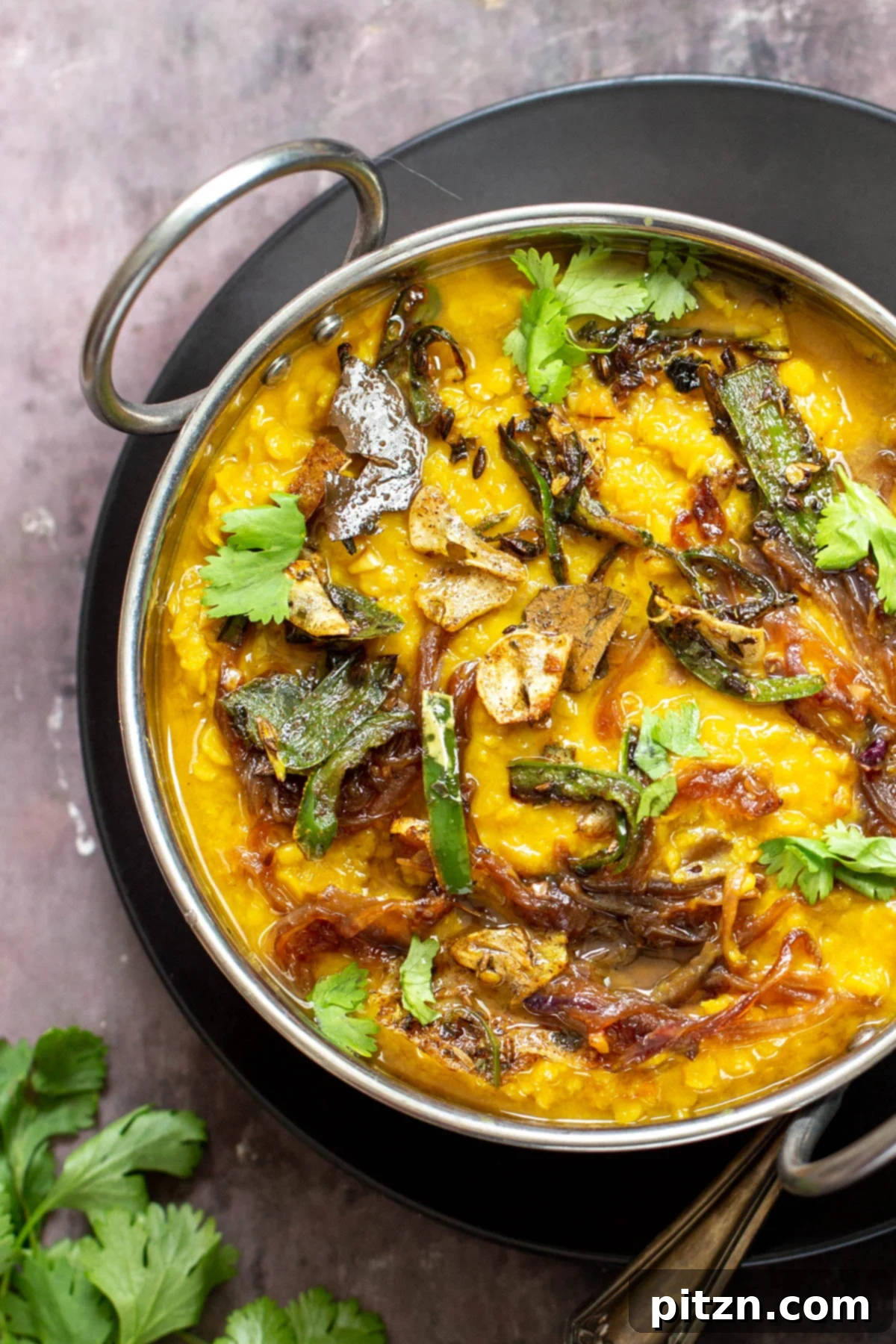
Restaurant-Style Masoor Dal Tadka: A Creamy & Flavorful Indian Red Lentil Delight
Indulge in the rich, comforting flavors of Restaurant-Style Masoor Dal Tadka, a truly exquisite Indian Split Red Lentil Dal tempered with aromatic whole spices. This classic dish is renowned for its quick preparation, incredibly creamy texture, and deeply satisfying taste. Perfect for any meal, it’s also naturally gluten-free, soy-free, and nut-free, making it a wonderful choice for various dietary preferences.
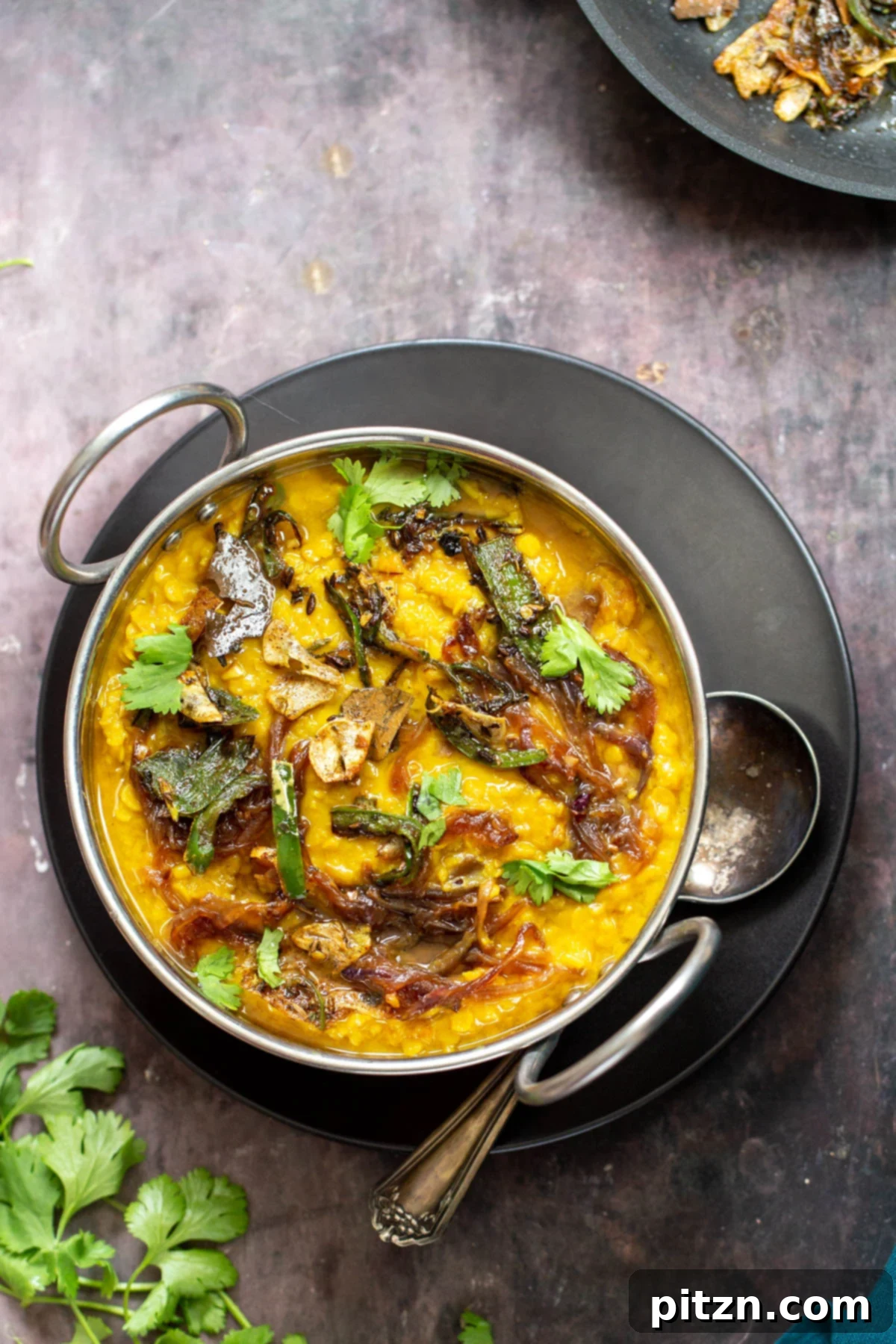
For enthusiasts of Indian cuisine and lentil dishes, this creamy Restaurant-Style Masoor Dal Tadka is an absolute must-try. It embodies the essence of homemade comfort while delivering the complex, vibrant flavors you’d expect from your favorite Indian restaurant.
Understanding Dal: A Culinary Cornerstone
Dal (also commonly spelled dhal, daal, or dahl) represents one of the most beloved and versatile categories of meals in Indian cooking. These lentil-based dishes are celebrated for their health benefits, filling nature, and warming qualities, making them perfect for any season, especially on a chilly day. They form a staple in countless households across the Indian subcontinent.
Masoor dal, specifically, refers to split red lentils. These small, coral-hued legumes are widely available in grocery stores worldwide, including the US, and are remarkably affordable. Their quick cooking time makes them an excellent choice for a simple yet nutritious weeknight dinner. While this recipe focuses on split red lentils, whole red lentils can also be used; just extend the cooking time by a few minutes to achieve the desired tenderness.
The beauty of dal lies in its adaptability. It can be prepared to a thick, hearty consistency or a lighter, soupier texture, and nearly any variety of lentil can be used. The magic often happens with the ‘tadka’ or ‘tempering’—a technique of heating whole or ground spices in oil or ghee and then adding this fragrant infusion to the cooked lentils. This process layers complex flavors, transforming a simple lentil dish into an aromatic masterpiece. The tadka can be stirred directly into the dal or elegantly drizzled on top as a final garnish.
This particular restaurant-style Masoor Dal Tadka takes flavor enhancement to another level by featuring not one, but two distinct temperings. This double-tadka approach ensures every spoonful is bursting with incredible depth. A subtle hint of vegan yogurt or non-dairy cream introduces a pleasant tang, harmonizing all the flavors. Additionally, a pinch of ground cloves elevates the savory notes of garlic and other spices, making this dal truly unforgettable. If you prefer a thinner consistency, simply add extra water or non-dairy milk to transform it into a warming, hearty soup.
Is Dal a Soup or a Curry? A Culinary Distinction
It’s common to find Indian dals translated into English as either “soups” or “curries.” However, neither term fully captures the unique essence of a dal. While they share similarities with both, dals are, fundamentally, dals. They are a distinct category of dish in Indian cuisine, typically consisting of various types of lentils and beans, cooked with or without vegetables and other ingredients, and often finished with a tempering of whole or ground spices, or simply aromatics.
A traditional everyday dal, unlike some Western interpretations of “lentil curry,” usually doesn’t involve added cream or coconut milk for richness. Split lentils, when cooked thoroughly, naturally break down and become wonderfully creamy on their own. If a firmer texture is preferred, simply adjust the cooking time. While some specific dals, like Dal Makhani, might incorporate cream, restaurant versions often add butter or cream to enhance their appeal to a broader palate.
Translating ethnic cuisines can be challenging, and “lentil curry” is a prime example. While a logical approximation, it often conjures images of lentils cooked with generic curry powder (which isn’t authentic Indian) and coconut milk, resulting in a creamy, higher-fat, and slightly sweet profile. This differs significantly from the savory, lighter, water-based, and spice-focused dals that are the heart of Indian home cooking. Dals are simply that—savory, light, and utterly unique.
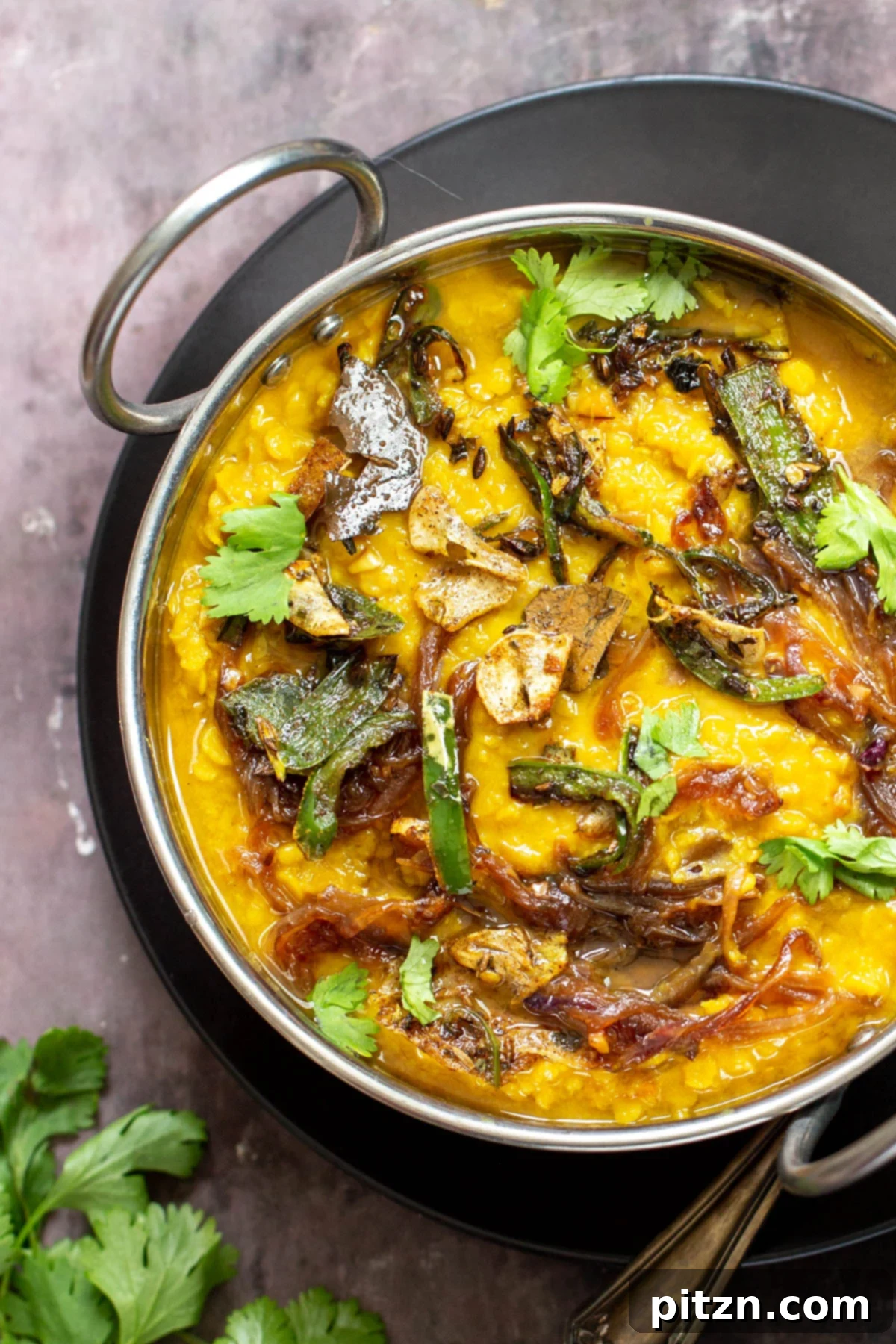
Explore More Vegan Dal Recipes
If you’ve enjoyed this Masoor Dal Tadka, be sure to explore other delightful vegan dal recipes that showcase the incredible diversity and flavor of Indian lentils:
- Punjabi Dal Fry
- Urad Dal
- Lentil Curry Casserole
- Easy Chana Dal
- Kashmiri Dal
- Dal Tadka Mix in a Jar
- Oil-Free Spicy Garlic Dal
- Hubbs’ Dal Fry
- Dal Makhani
Vegan Masoor Dal Tadka Indian Split Red Lentil Dal
By: Vegan Richa
Prep: 10 mins
Cook: 40 mins
Total: 50 mins
Servings: 4
Course: Main Course
Cuisine: Indian
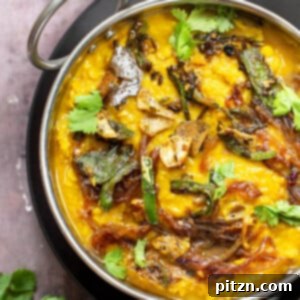
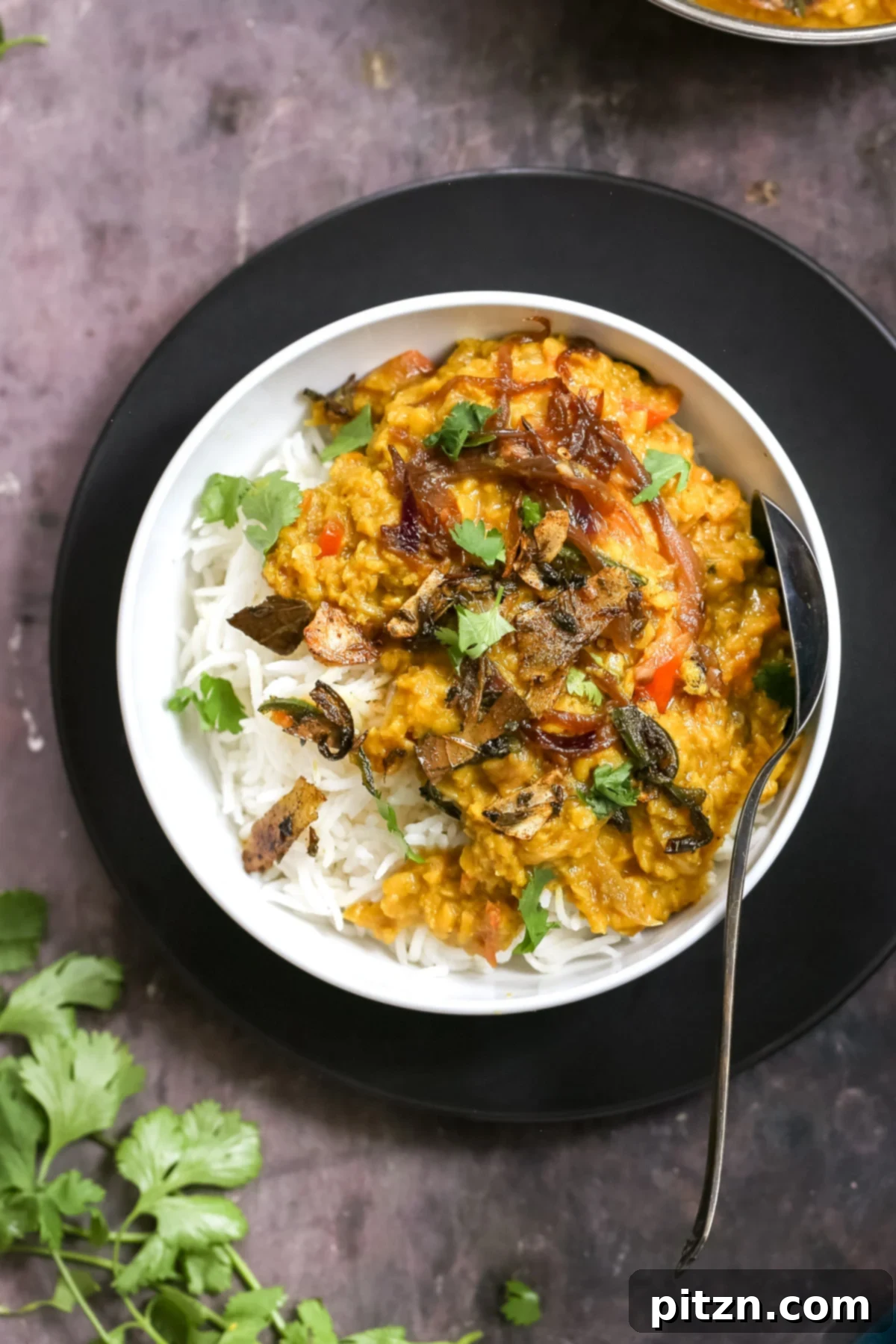
Restaurant-Style Masoor Dal Tadka (Indian split Red lentil Dal tempered with whole spices) is easy and to make, super comforting, creamy, and oh so flavorful! Gluten-free, Soy-free, Nut-free, Coconut-free.
Ingredients
- 1 cup split red lentils (masoor dal)
- 3 cups water
- 1/2 teaspoon salt
- 1/4 teaspoon turmeric
For the first tempering:
- 1 teaspoon oil
- 1 medium-size red onion, thinly sliced
- 2 garlic cloves, minced
- 1 teaspoon minced ginger
- 1 teaspoon ground coriander
- 1/2 teaspoon ground cumin
- 1 medium tomato, chopped
- 1/4 teaspoon salt
- 1 tablespoon yogurt or 2 tablespoon coconut cream (dairy-free option)
For the second tempering:
- 2 teaspoons oil
- 1/2 teaspoon cumin seeds
- 2 bay leaves
- 2 hot Indian green chilies or serrano pepper, slit or sliced (or use 2 dried red chilies, or mild chilies of choice)
- 1/2 teaspoon dried fenugreek leaves (kasuri methi)
- 1 garlic clove, julienned
- 1/2 inch ginger, thinly sliced or julienned
- 1/4 teaspoon paprika
- A good pinch of ground cloves
- Cilantro and lemon juice for garnish
Instructions
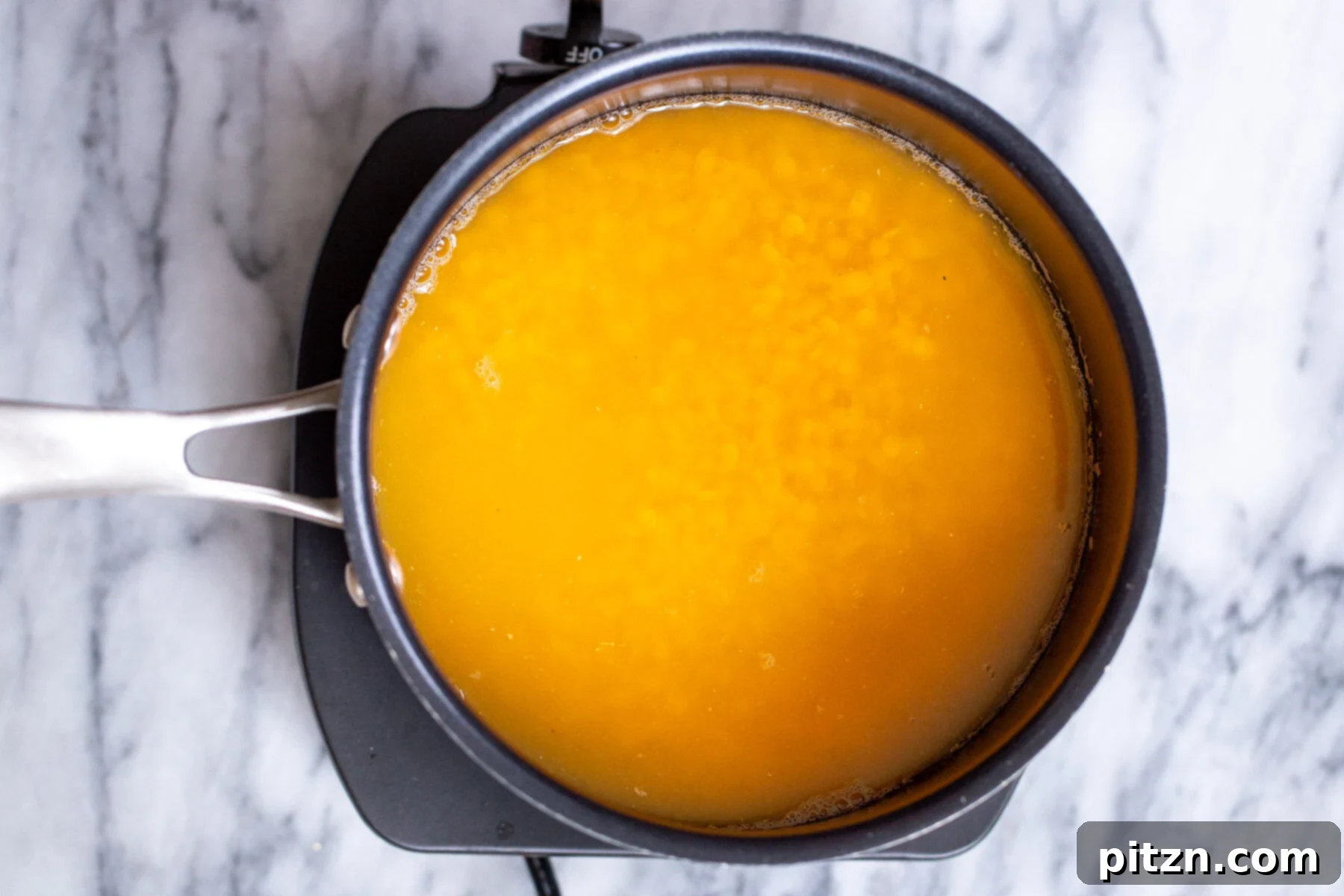
- Make your dal: Wash the lentils thoroughly, then soak in water for 10 minutes. Drain and transfer to a saucepan with 3 cups of water, 1/2 teaspoon salt, and 1/4 teaspoon turmeric. Cook over medium heat, partially covered, until the lentils reach your preferred tenderness (15-20 minutes). Add more water after 15 minutes if the dal becomes too thick. For an Instant Pot, pressure cook for 3 minutes, then quick release after 10 minutes.
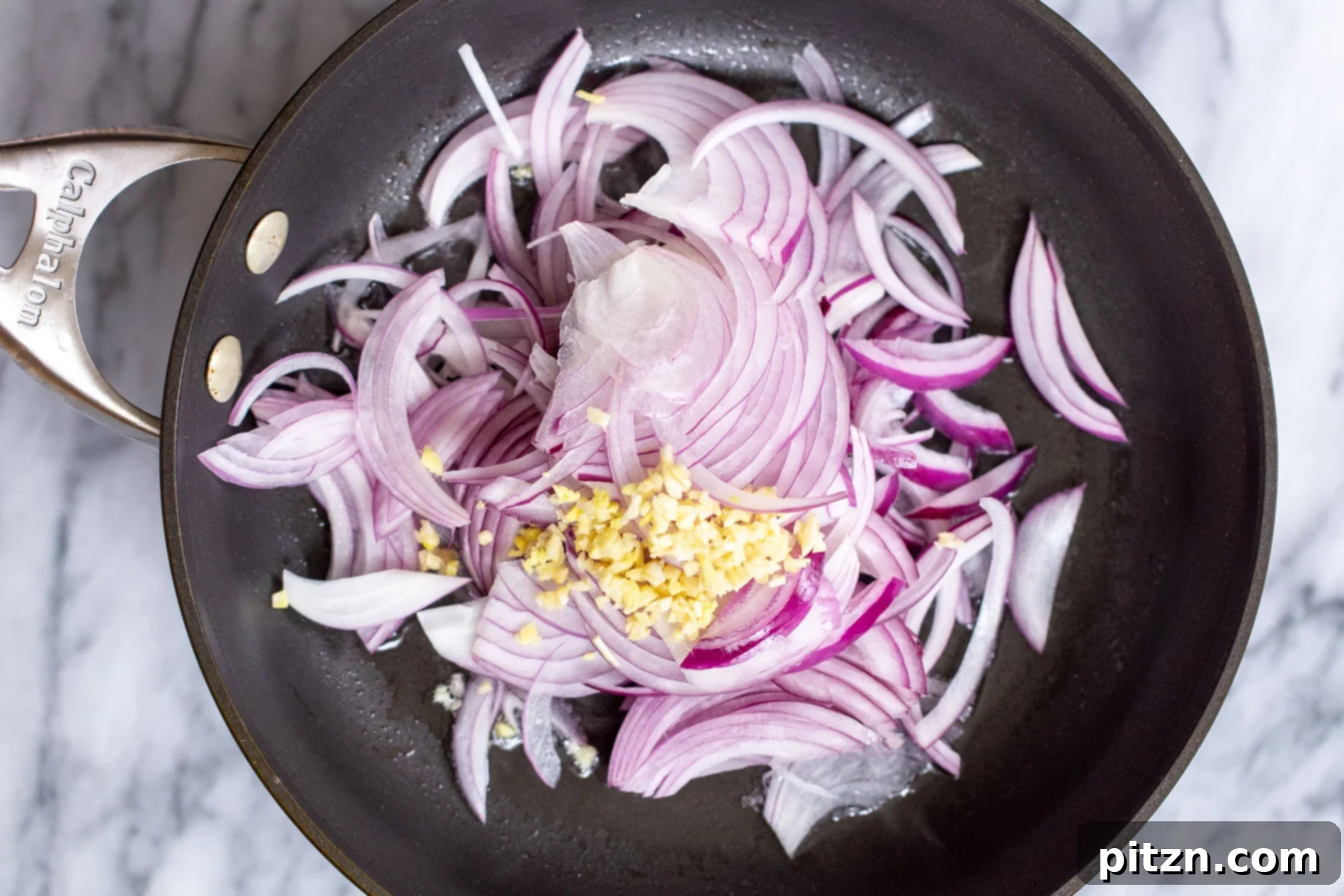
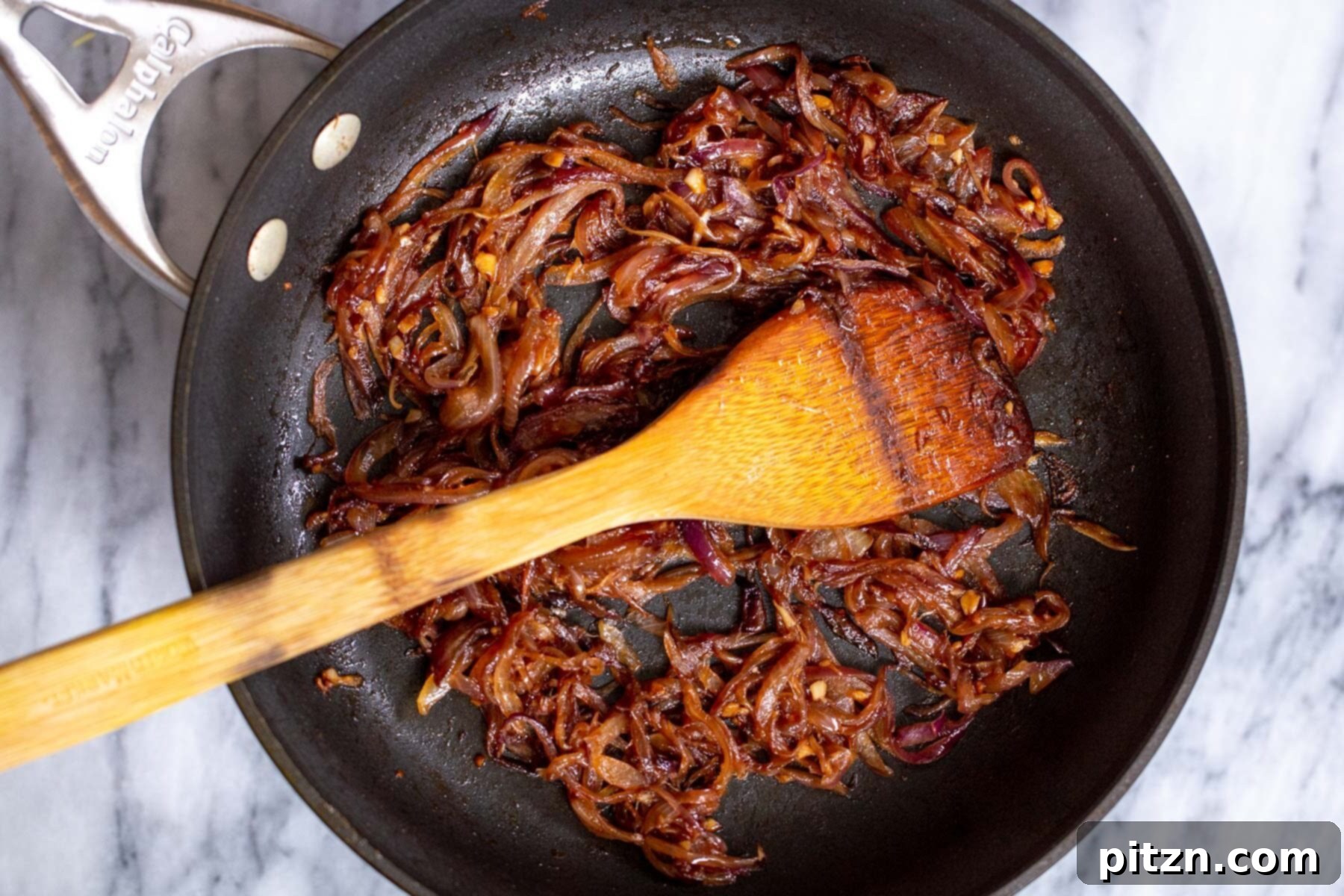
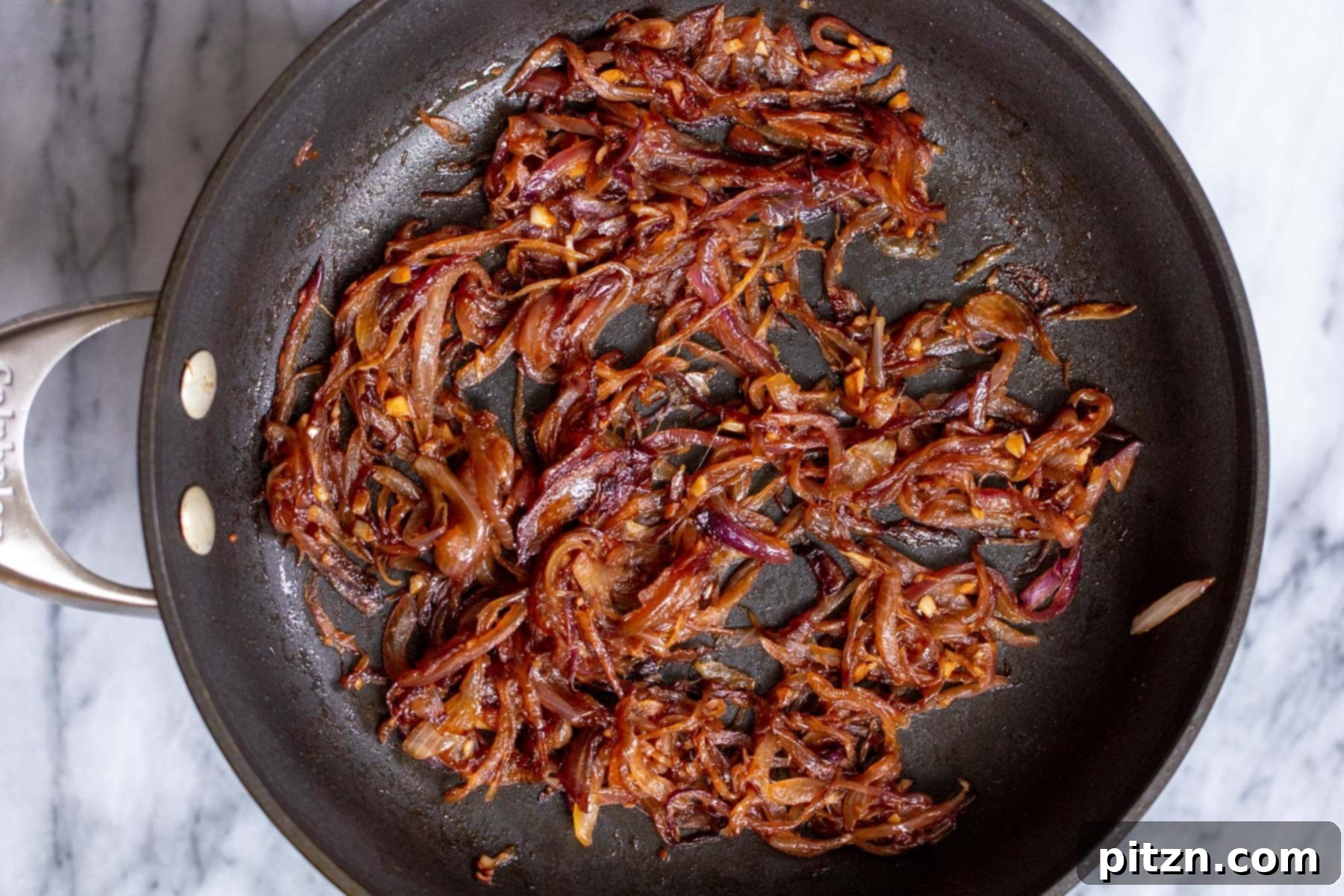
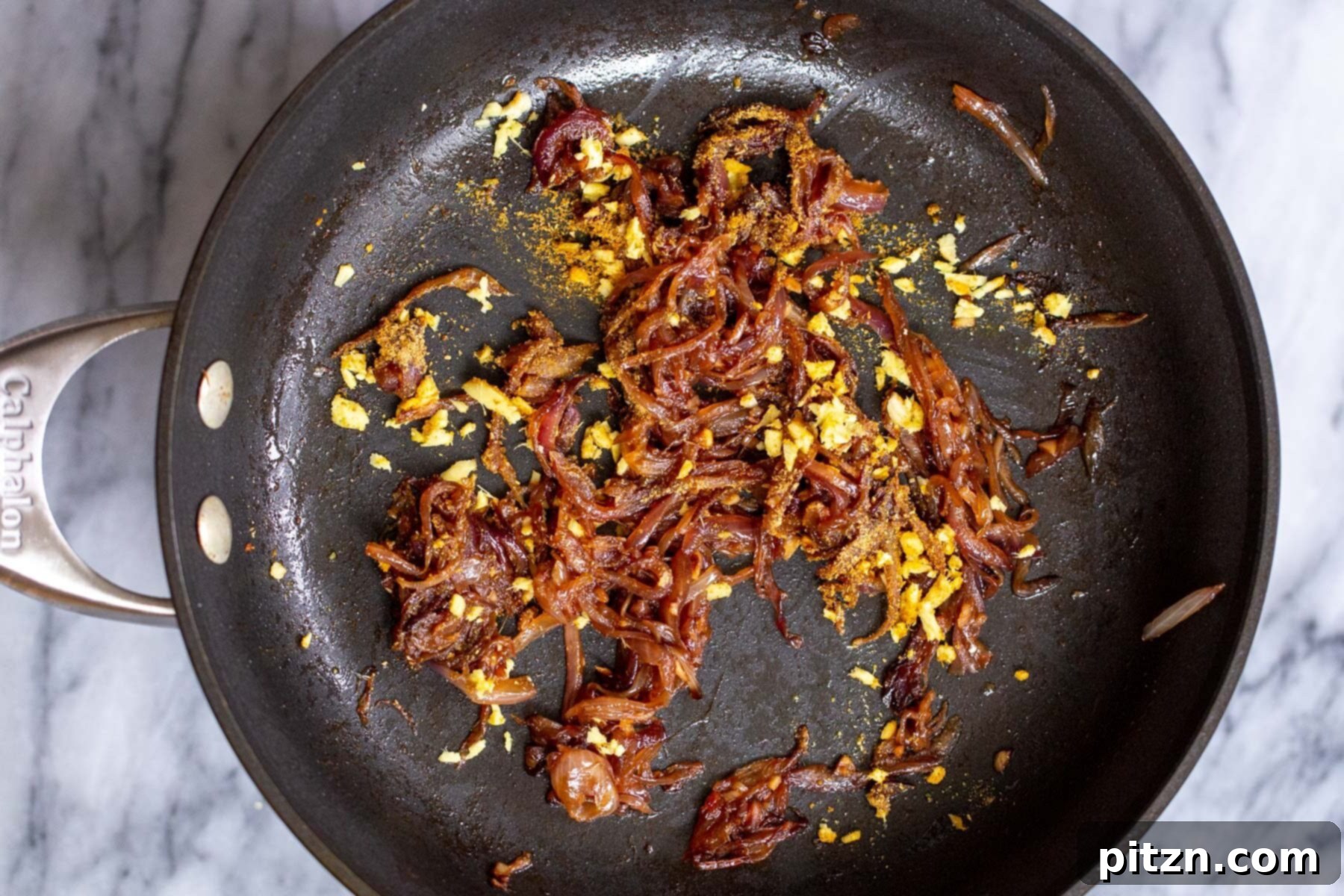
- Make the first tempering: In a medium skillet, heat 1 teaspoon oil. Add the thinly sliced onion and 2 minced garlic cloves along with a pinch of salt. Cook until the onion turns golden brown, adding a few drops of water to deglaze if sticking.
- Once the onion is golden brown, transfer half of this mixture to a separate bowl; this will be used as a garnish later.
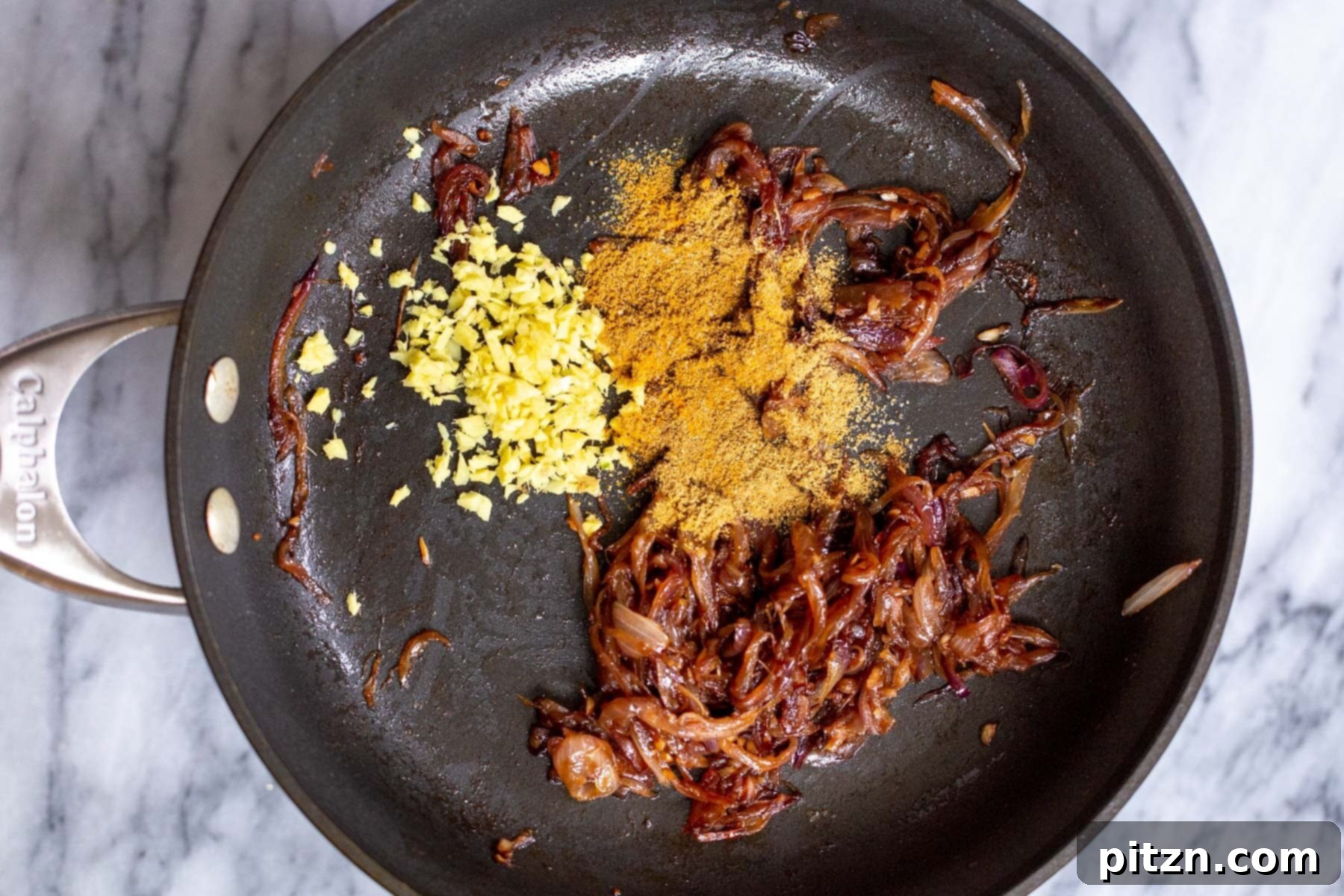
- To the remaining onion mixture in the skillet, add 1 teaspoon minced ginger, 1 teaspoon ground coriander, and 1/2 teaspoon ground cumin. Mix well and cook for about a minute.
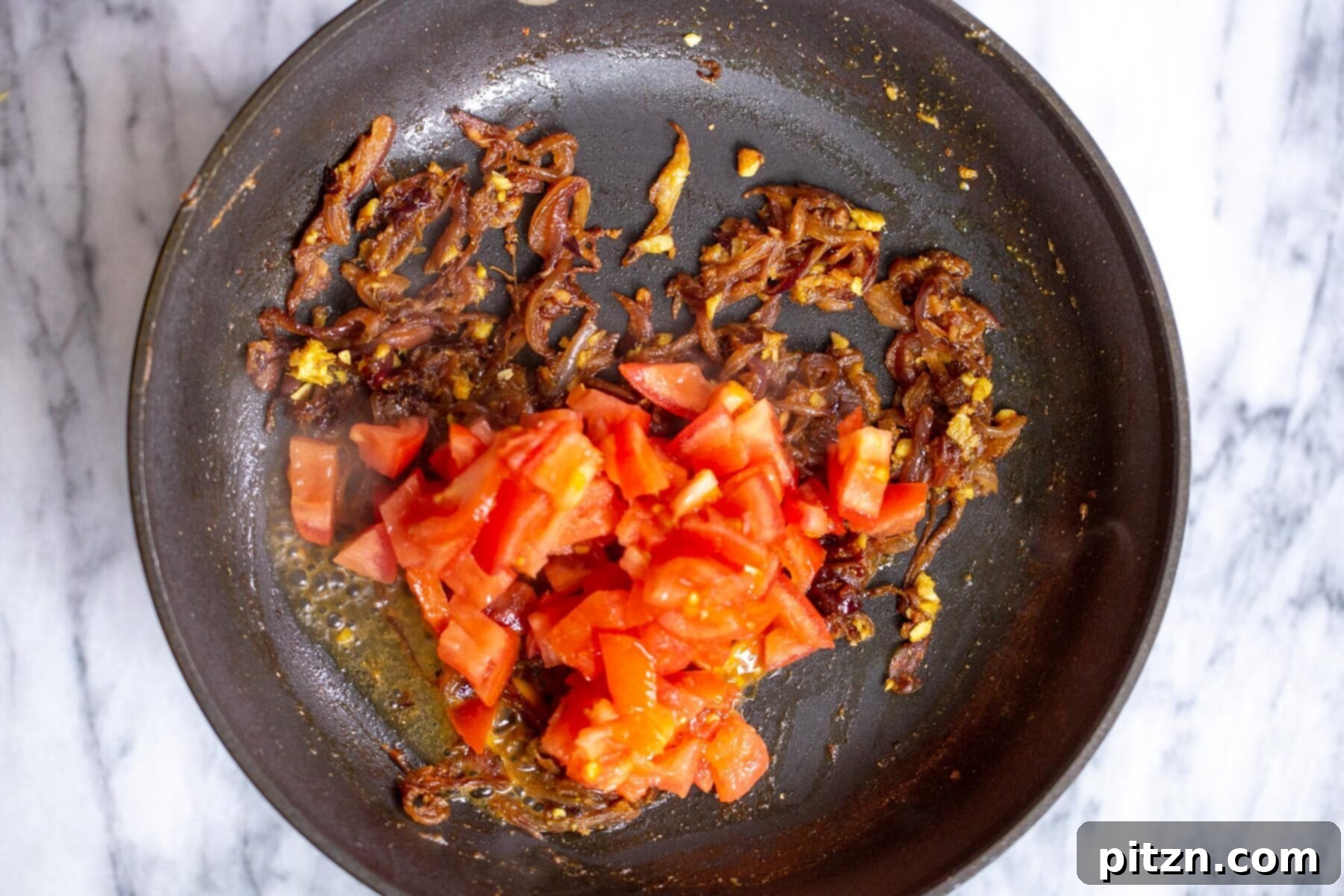
- Stir in the chopped tomato, 2 tablespoons water, and 1/4 teaspoon salt. Mix thoroughly and continue to cook until the tomato softens.
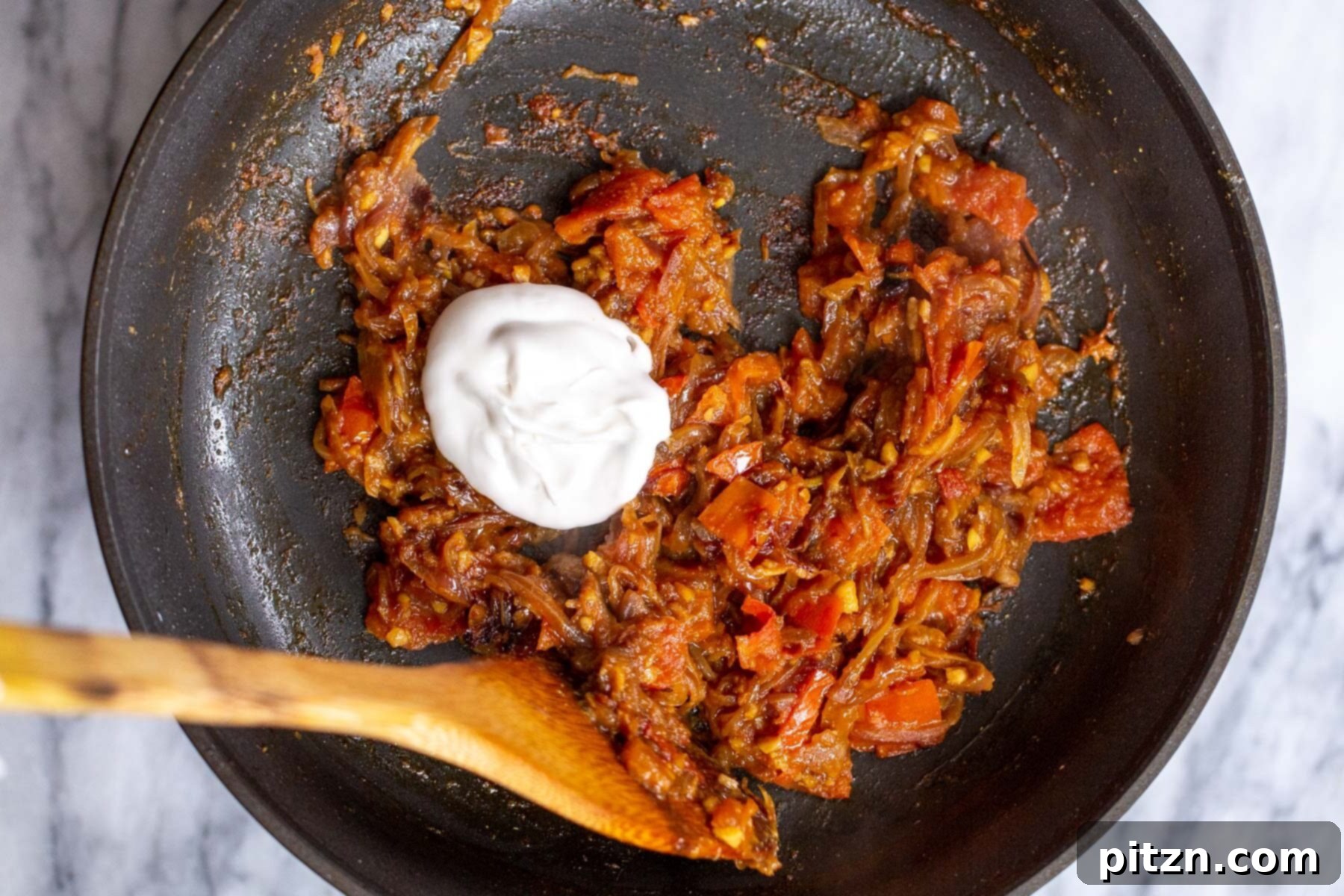
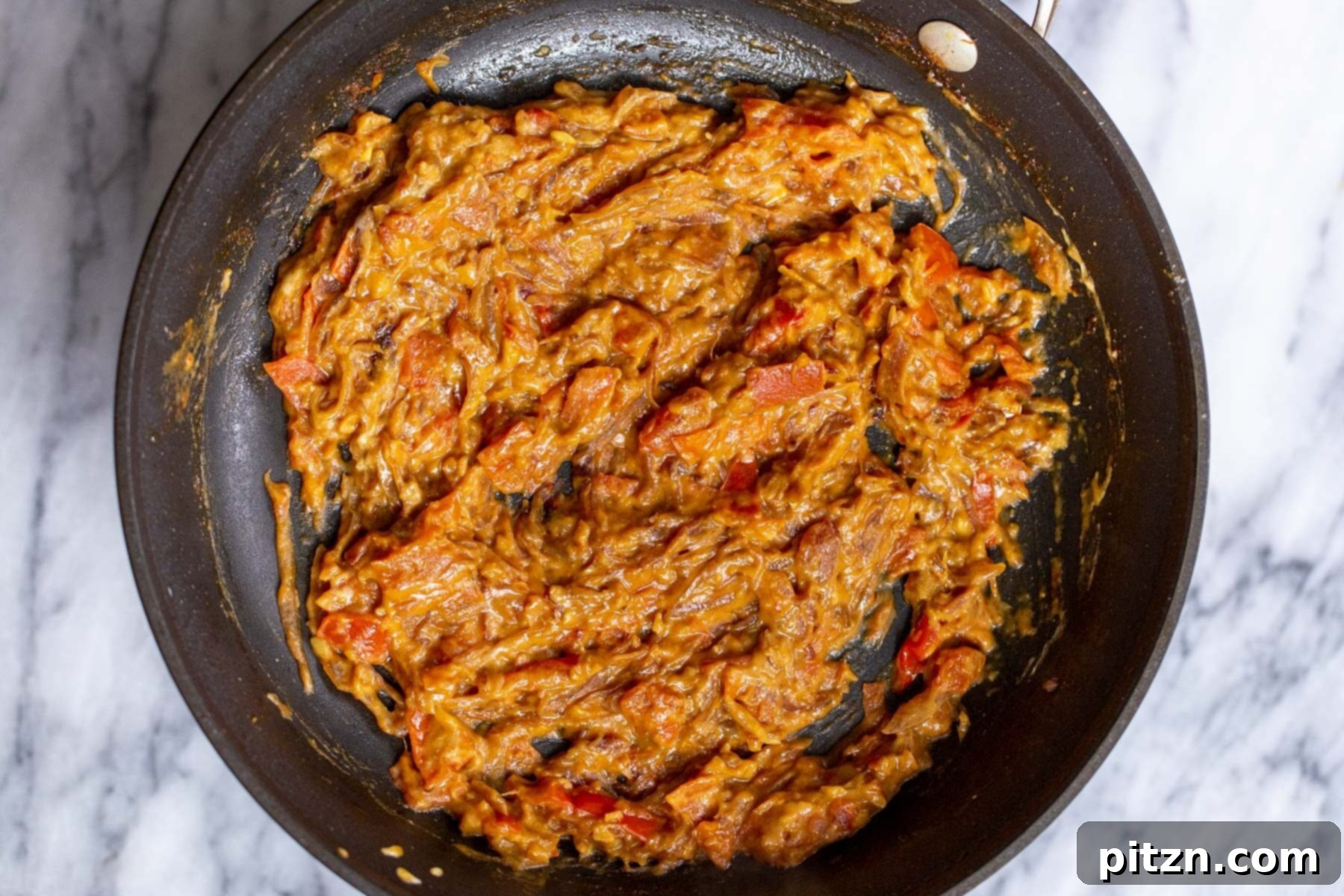
- Mash any large pieces of tomato, then stir in 1 tablespoon of dairy-free yogurt or 2 tablespoons of non-dairy cream (like cashew cream or coconut cream).
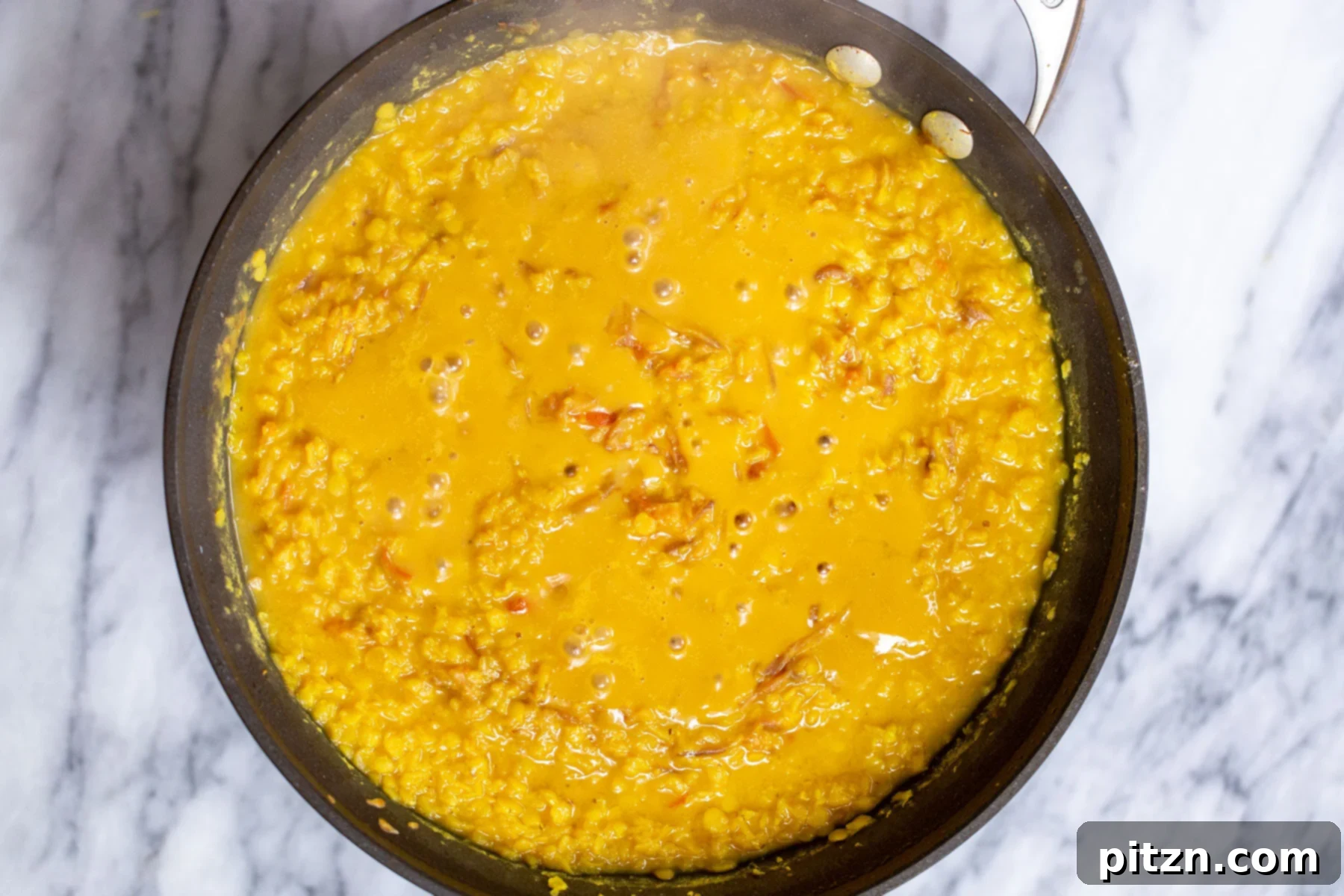
- Combine this first tempering with the cooked dal in a pot and bring it to a boil. Taste and adjust salt and other seasonings as needed. Adjust the consistency by adding more water for a thinner dal, then bring it back to a gentle boil. Transfer the masoor dal to your serving dish.
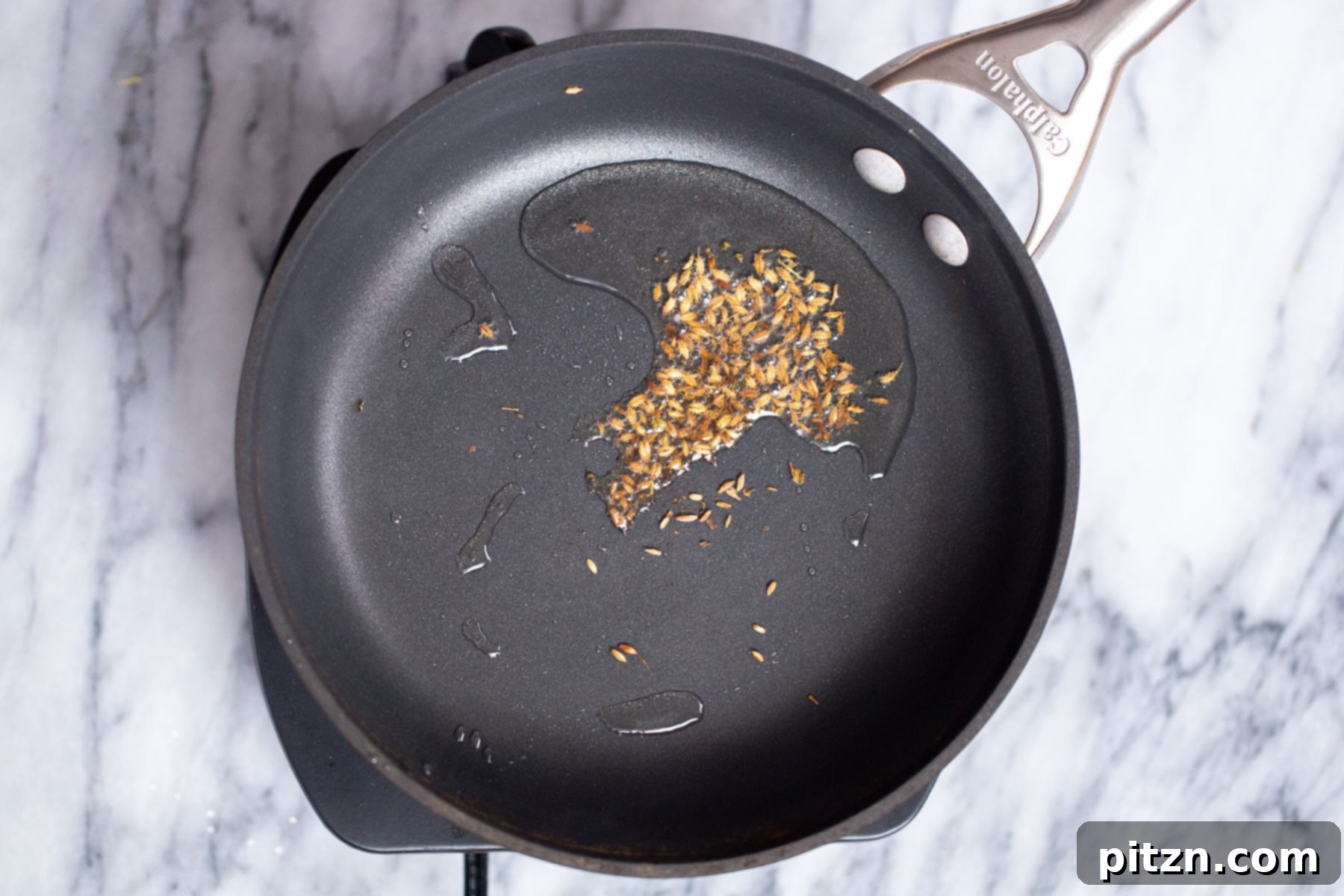
- Now make the second tempering: Heat 2 teaspoons oil in a small skillet. Once hot, add 1/2 teaspoon cumin seeds and let them splutter and become fragrant, turning a darker color.
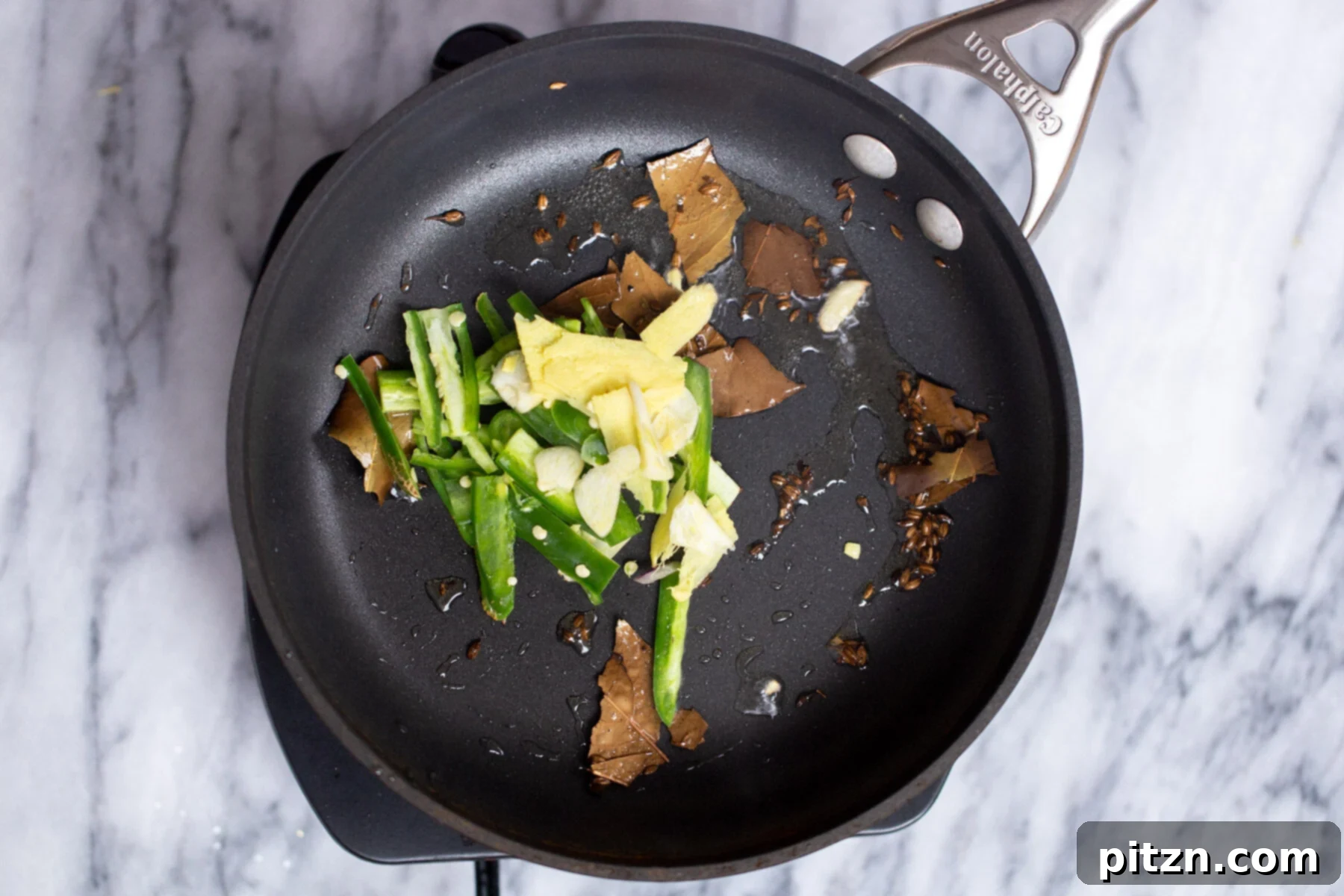
- Add the bay leaves, green chilies, dried fenugreek leaves (kasuri methi), julienned ginger, and 1 julienned garlic clove. Mix well and cook until the chilies and garlic are lightly golden.
- Stir in 1/4 teaspoon paprika and a pinch of ground cloves. Mix and immediately remove from heat to prevent burning.
- Add the reserved caramelized onion from the first tempering to this second tadka and swirl it in. Drizzle this fragrant tempering generously over the dal in the serving dish.
- Garnish with fresh cilantro and a squeeze of lemon juice if desired. Serve hot with your choice of accompaniments.
Video
Notes and Expert Tips
- Lentil Substitutions: While Masoor Dal is perfect, you can experiment with other split dals or a combination. Petite yellow lentils (moong dal) will cook in about 25 minutes on the stovetop or 8 minutes in an Instant Pot. Split pigeon peas (toor dal) require 35 minutes on the stovetop or 10-14 minutes in an Instant Pot. Split black gram lentils (Urad dal) cook in 25 minutes on the stovetop or 4 minutes in an Instant Pot. Whole red lentils need about 25 minutes on the stovetop or 6 minutes in an Instant Pot. Cooking lentils separately ensures they reach ideal tenderness before tempering, preventing a “one-note” flavor.
- No Onion/Garlic Option: For an allium-free version, replace the onion with julienned zucchini, cooking it until golden on the edges. Omit garlic and instead add a pinch of asafetida (hing) during tempering or an extra 1/2 teaspoon of dried fenugreek leaves (kasuri methi).
- Scaling the Recipe: This recipe is easily scaled up for larger batches. When doubling or tripling, you’ll generally need slightly less water for cooking the lentils. Also, remember to adjust the heat level; start with fewer chilies and spicy components and add more to taste if desired.
- Seasoning is Key: Proper seasoning with salt is crucial. Salt helps “bloom” the flavors on your palate, bringing out the best in the spices and lentils. Always taste and adjust salt as you go.
- Recipe Origin & Inspiration: This specific Masoor Dal Tadka recipe is an adaptation of a version from my Indian kitchen cookbook. The addition of toasted fenugreek leaves is inspired by the aromatic depth achieved in various baked Indian casseroles. The inclusion of ground cloves draws inspiration from the nuanced dal recipes of Chef Ranveer Brar.
Nutrition
- Calories: 222 kcal
- Carbohydrates: 32g
- Protein: 13g
- Fat: 5g
- Saturated Fat: 1g
- Sodium: 452mg
- Potassium: 586mg
- Fiber: 15g
- Sugar: 3g
- Vitamin A: 347 IU
- Vitamin C: 9mg
- Calcium: 51mg
- Iron: 4mg
Nutrition information is automatically calculated and should be used as an approximation.
Key Ingredients for an Authentic Masoor Dal Tadka
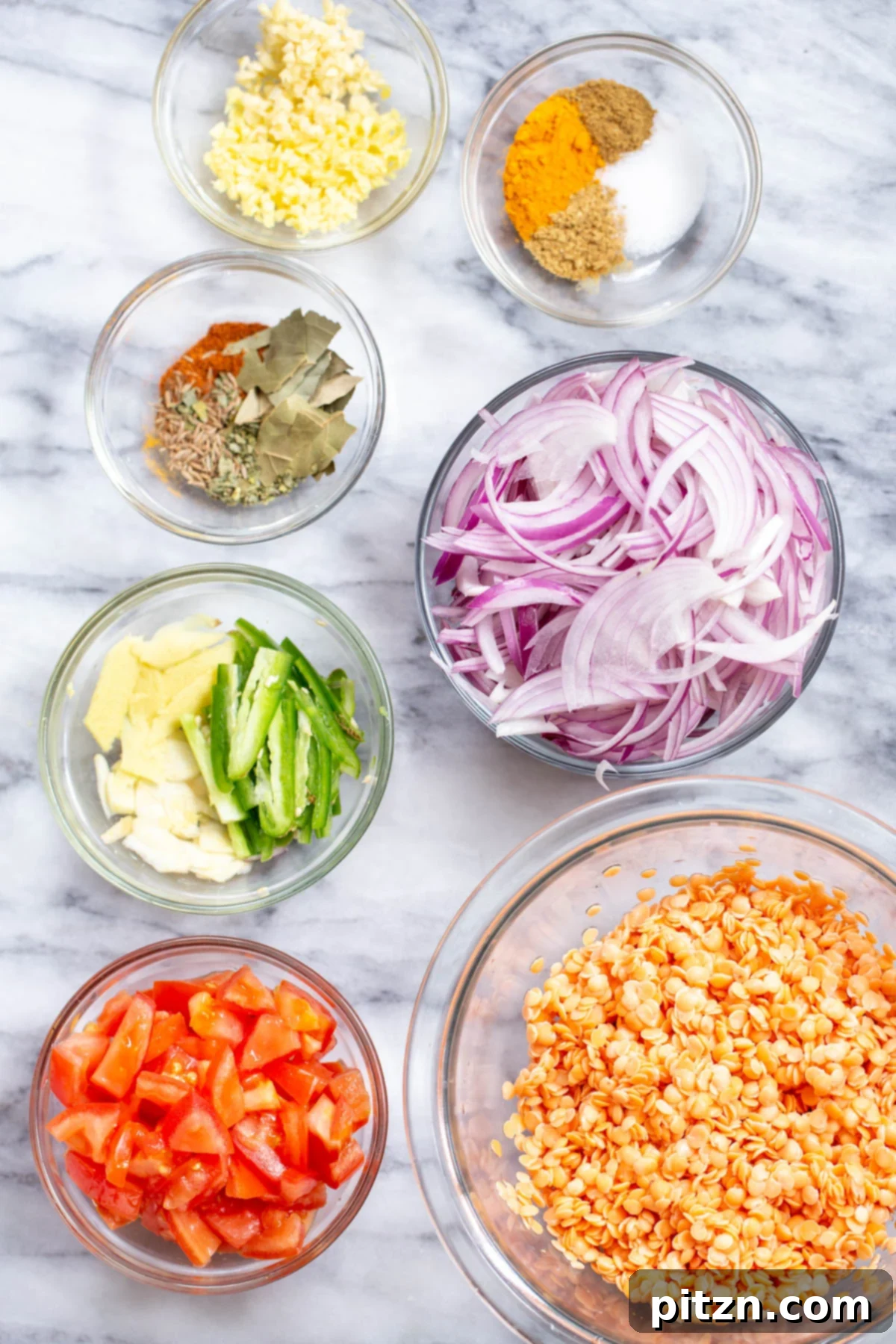
Crafting the perfect Restaurant-Style Masoor Dal Tadka relies on a thoughtful selection of ingredients and the interplay of its two distinct temperings. Here’s a closer look at what makes this dish so special:
- Red Lentils (Masoor Dal): The star of the dish, masoor dal, are split red lentils that cook quickly and become wonderfully creamy. Cooking them separately ensures they reach optimal tenderness without becoming mushy or having their flavor overpowered by spices too early. This method allows the dal to develop its own subtle, earthy base before the aromatic temperings are introduced.
- First Tempering (Base Flavor): This initial tempering builds a foundational layer of flavor. It typically includes thinly sliced red onion, minced garlic cloves, fresh ginger, ground coriander, and ground cumin, all sautéed in oil until fragrant. The addition of chopped tomatoes brings a delightful acidity and body to the dal, while a touch of vegan yogurt or non-dairy cream helps to meld these diverse flavors into a cohesive, tangy profile.
- Second Tempering (Aromatic Finish): The second tempering is where the “restaurant-style” magic truly happens, adding a burst of fresh, toasted aromas right before serving. This involves heating oil and blooming whole cumin seeds, allowing their nutty fragrance to develop. Bay leaves contribute an earthy depth, while hot green chilies (or serrano pepper) provide a vibrant kick. Dried fenugreek leaves (kasuri methi) impart a unique, slightly bitter, and herbaceous note that is characteristic of many Indian dishes. Freshly julienned garlic and ginger add pungent, spicy highlights. Finally, paprika offers a mild, sweet peppery flavor and a beautiful reddish hue, while a good pinch of ground cloves introduces a warm, subtly sweet, and complex dimension, enhancing the overall savory experience.
- Garnish: Fresh cilantro and a squeeze of lemon juice are essential for brightening the flavors and adding a fresh, herbaceous finish to the rich dal.
Add in the paprika, ground cloves, mix in and take off heat. 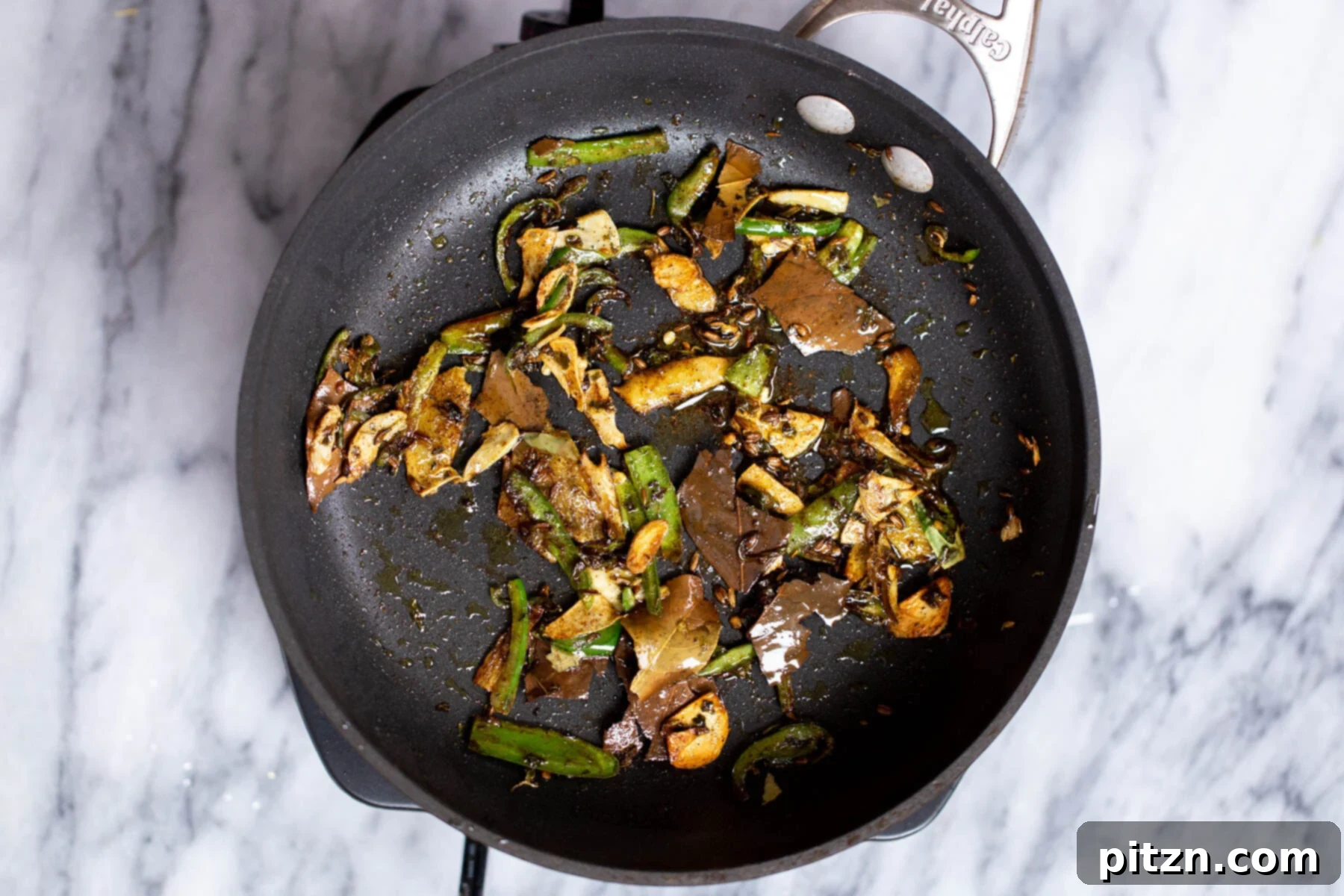
Drizzle this fragrant tempering all over the dal in the serving dish and add the caramelized onion as well, swirling it in for extra flavor and visual appeal.
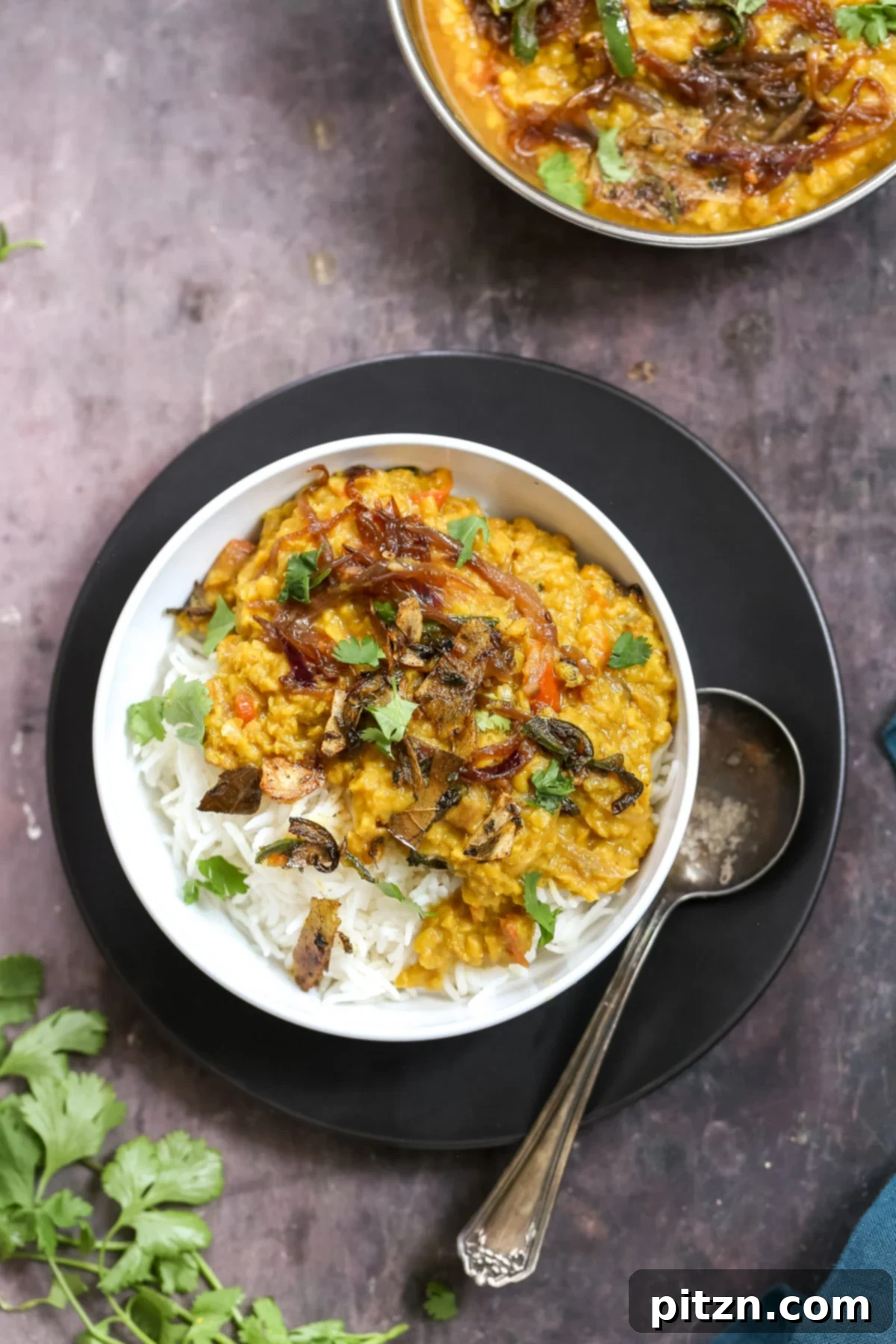
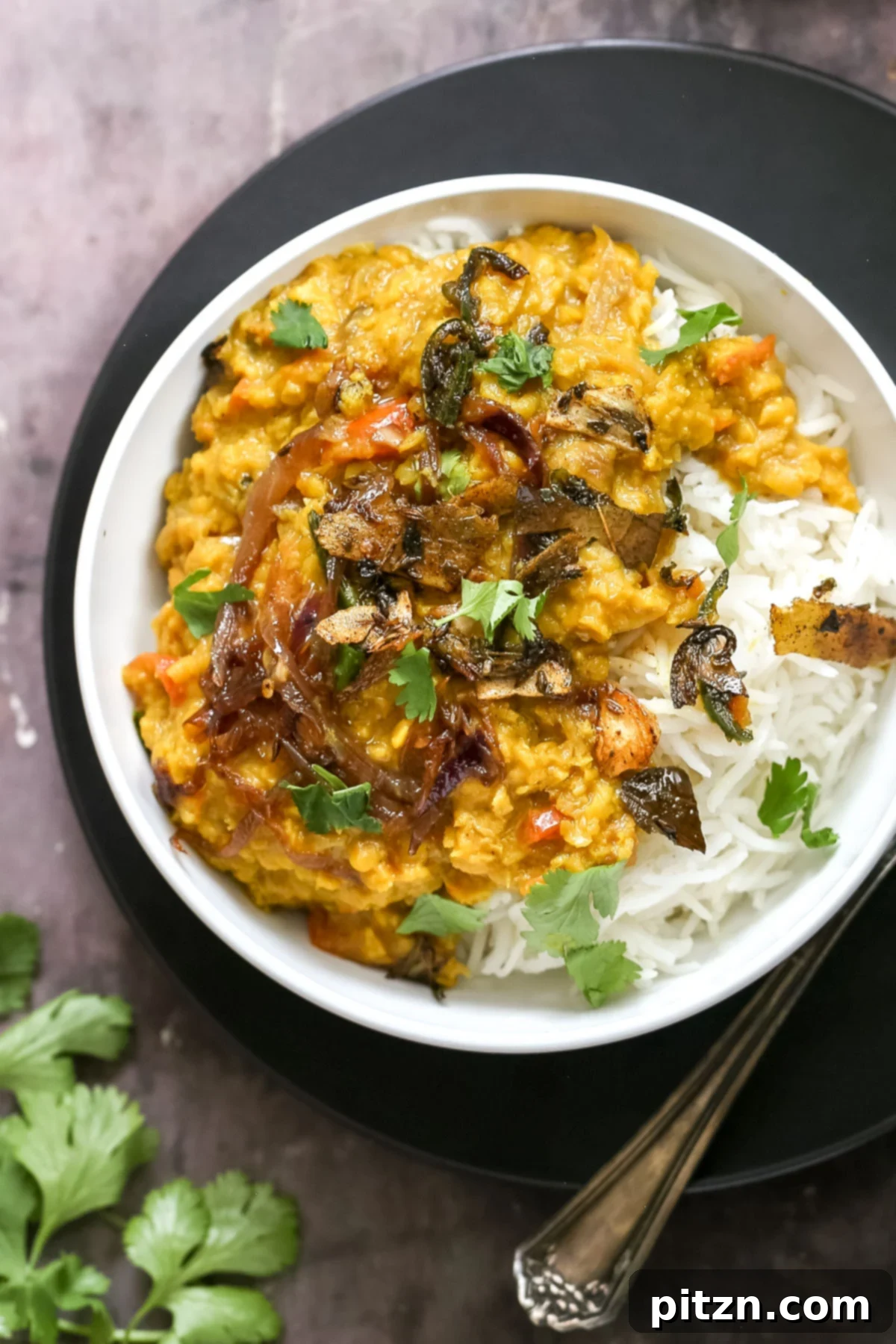
Garnish generously with fresh cilantro and a squeeze of lemon juice to elevate the vibrant flavors. Serve this delightful dal hot with your favorite Indian breads or rice for a complete and satisfying meal.
What to Serve with Masoor Dal Tadka?
Masoor Dal Tadka, with its rich and aromatic profile, pairs beautifully with a variety of traditional Indian accompaniments. A side of spiced vegetables, along with freshly cooked basmati rice or warm flatbreads, creates a perfectly balanced and fulfilling meal. Here are some fantastic serving suggestions:
- Fluffy Basmati Rice: The most classic pairing, a bowl of steaming basmati rice perfectly soaks up the creamy, flavorful dal.
- Indian Breads:
- Naan: Soft, chewy leavened bread is ideal for scooping up every last drop of dal.
- Roti or Chapati: Simpler, whole wheat flatbreads offer a wholesome contrast.
- Gluten-Free Naan or Gluten-Free Flatbread: Excellent options for those with dietary restrictions, ensuring everyone can enjoy the meal.
- Spiced Vegetable Sides:
- Gobi Aloo (Cauliflower Potatoes): A dry curry of spiced cauliflower and potatoes complements the dal’s creaminess.
- Bhindi Masala (Spiced Okra): Tangy and flavorful okra, a popular choice.
- Indian Cabbage and Peas: A simple, quick stir-fry.
- Poriyal (Spiced Green Bean Carrot): A South Indian style dry vegetable dish with fresh flavors.
- Simple Salad or Raita: A refreshing cucumber and tomato salad, or a cooling vegan raita (yogurt dip), can provide a lovely contrast to the warm, spicy dal.
- Pickle or Chutney: A small side of Indian pickle or a sweet-tangy chutney can add an extra layer of flavor and zest to your meal.
No matter how you choose to serve it, this Restaurant-Style Masoor Dal Tadka promises a nourishing and incredibly delicious experience, bringing the authentic tastes of India right to your table.