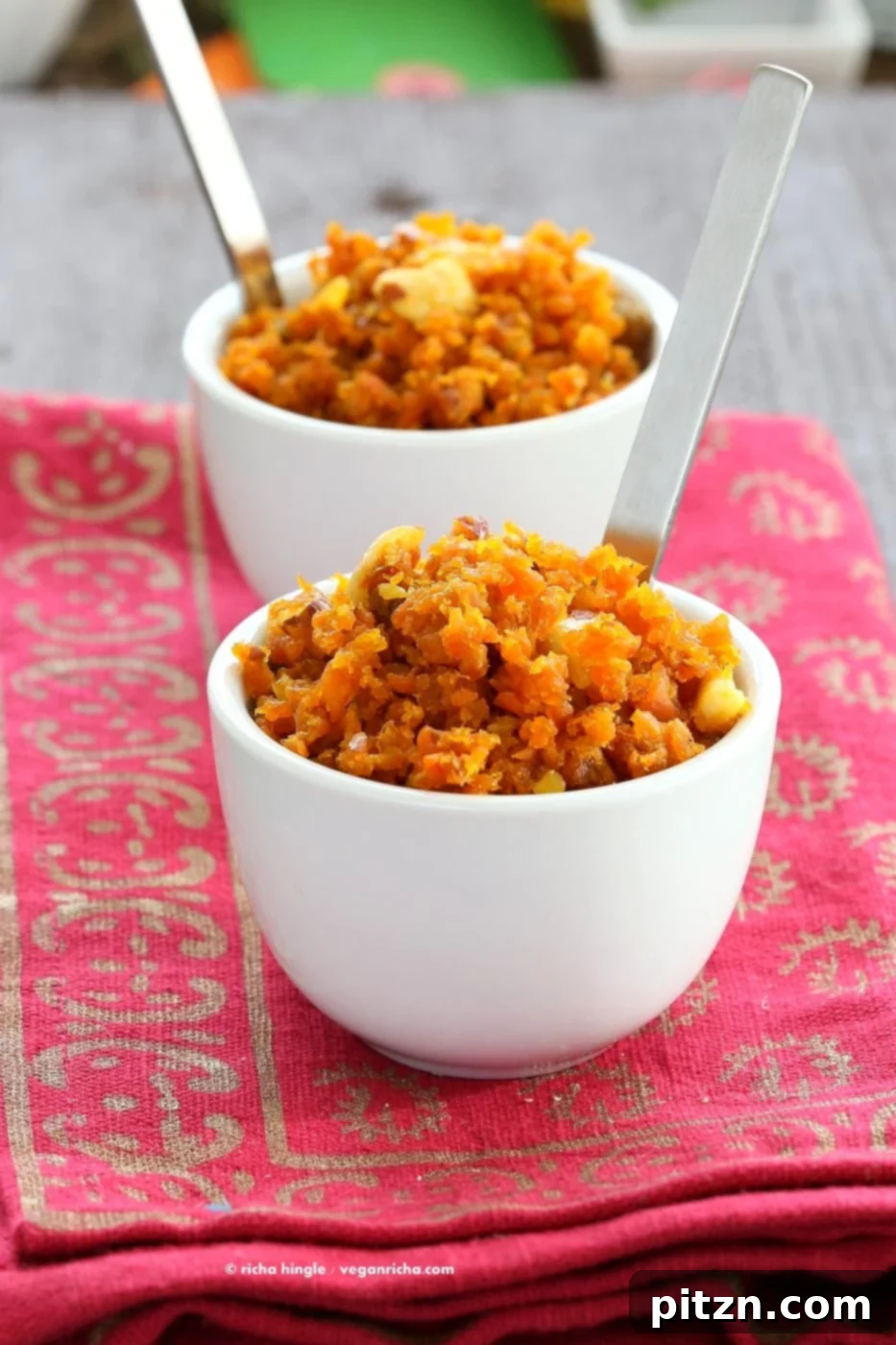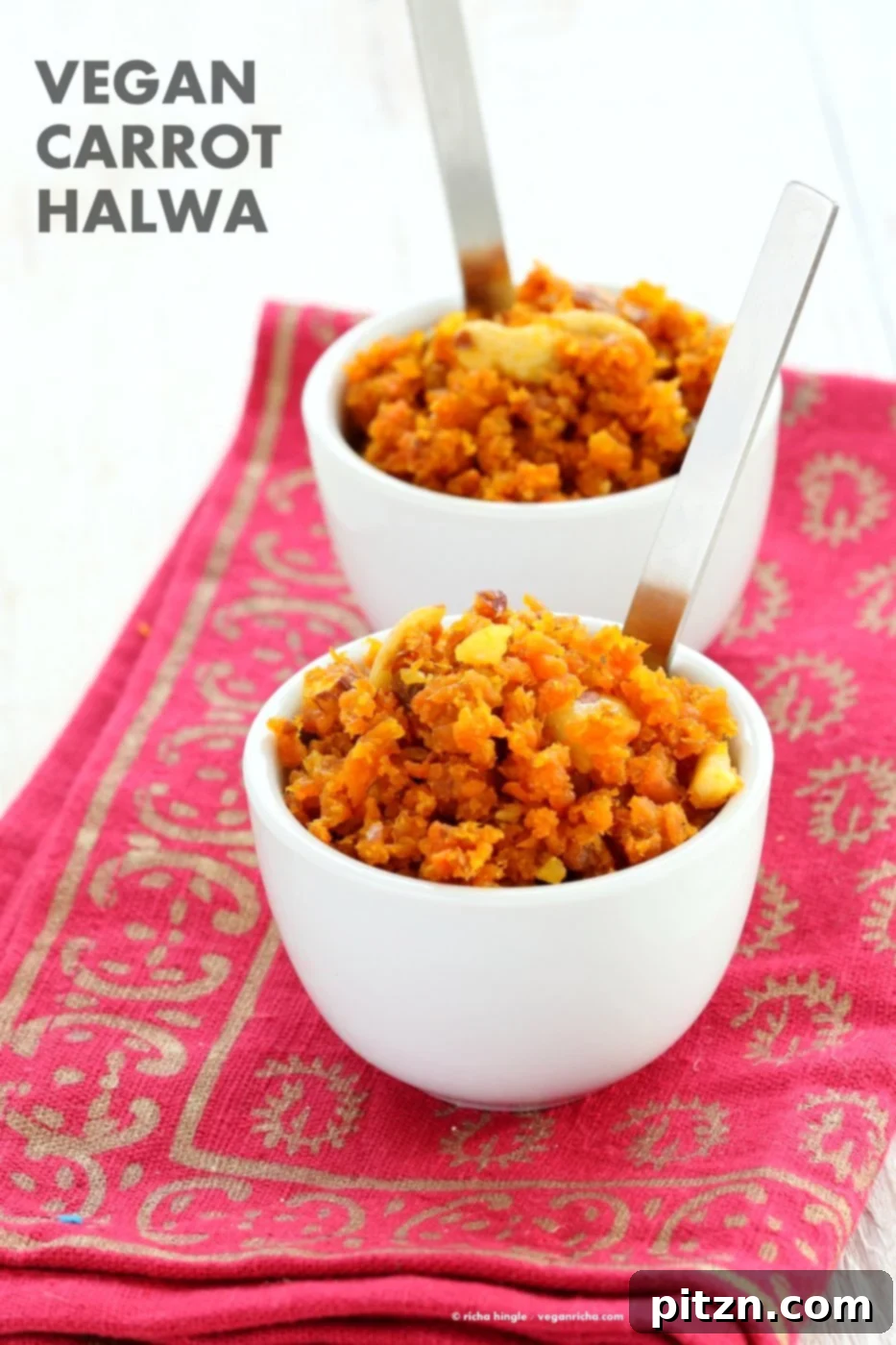
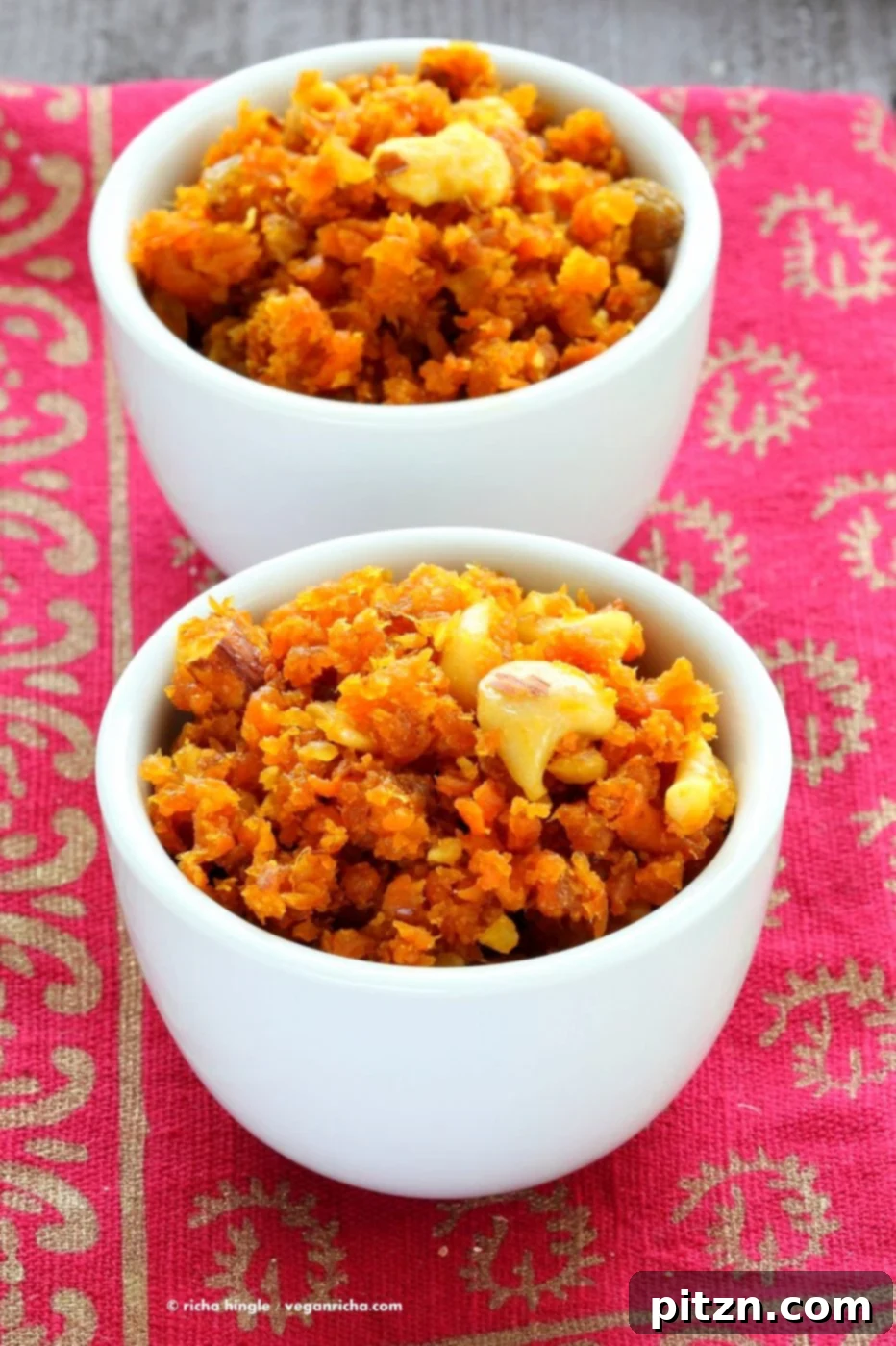
Welcome to the delightful world of Vegan Carrot Halwa, famously known as Gajar Ka Halwa! This classic Indian dessert, celebrated for its rich, sweet, and comforting flavors, has been lovingly reimagined into a plant-based masterpiece. Forget about heavy dairy and hours of intensive cooking; this recipe delivers all the melt-in-your-mouth goodness with a fraction of the effort, making it a perfect treat for any occasion. Imagine the moist, cardamom-infused crumble of a roasted carrot cake, but even more exquisitely decadent – that’s the magic of this vegan Gajar Halwa. It’s not just dairy-free; it’s also naturally gluten-free and soy-free, ensuring everyone can indulge in its sweet charm without compromise. Get ready to transform simple carrots into an extraordinary dessert that will delight your senses and impress your guests. Pin this irresistible recipe for later and embark on a flavorful culinary journey!
Jump to Recipe
The Allure of Gajar Halwa: A Traditional Delight Reimagined for Modern Palates
Gajar Ka Halwa, a beloved dessert originating from the Indian subcontinent, is a symphony of flavors and textures that has captivated generations. Traditionally, this comforting sweet is meticulously crafted from finely grated carrots, slowly simmered with generous amounts of rich ghee (clarified butter), full-fat milk, and often khoya (milk solids). Sweetened with sugar and deeply infused with fragrant cardamom or saffron, the authentic preparation of Gajar Halwa is a testament to culinary patience and skill. The process can be quite elaborate, often taking hours as the carrots are patiently roasted and reduced, absorbing all the luxurious dairy goodness until they achieve a deep, caramelized red-brown hue. Different regions and family recipes proudly showcase their unique twists – some prefer a fudgier, wetter consistency, while others cook it until the carrots are almost candied, often studded with an assortment of roasted nuts and dried fruits.
My own mother, a culinary artist in her own right, dedicates a significant part of her day to preparing her Gajar Ka Halwa. She starts early in the morning, carefully selecting vibrant deep-red carrots, which are then slowly roasted with ample ghee, rich cream, and khoya. This meticulous process continues for hours, allowing the carrots to transform into a deeply flavorful, dark red-brown delicacy. The slow caramelization of the carrots, combined with the luxurious addition of butter and milk solids, creates an incredibly pleasing, melt-in-your-mouth experience that is truly unforgettable. It’s a labor of love that results in a dessert embodying warmth, tradition, and profound culinary heritage.
While the traditional Gajar Halwa holds a special place in many hearts, my rendition offers a contemporary and compassionate twist. This recipe is entirely plant-based, remarkably quicker to prepare, and uses significantly less oil without sacrificing any of the indulgent flavor. This vegan version captures the authentic taste and comforting essence of the classic dessert, but without any dairy, making it accessible to those with dietary restrictions or ethical preferences. It requires just about 15 minutes of active preparation, with the remaining time dedicated to allowing the carrots to slowly simmer and develop their deep, sweet flavors over low heat, yielding a truly spectacular result.
To achieve the creamy texture and profound richness typically provided by dairy, I ingeniously use non-dairy milk and a touch of almond meal. This combination replicates the body and luscious mouthfeel of traditional halwa, making it equally, if not more, delicious. For those with nut allergies, pumpkin seed meal can be used in place of almond meal, and various other non-dairy milks (such as oat or cashew milk) can be substituted seamlessly for almond milk. This festive season, why not elevate your celebrations with this exquisite Vegan Carrot Halwa, alongside other incredible plant-based Indian sweets? Consider delectable treats like Cashew Fudge (Kaju Katli), a delightful variety of Vegan Burfis, the classic Gulab Jamun, or delightful Ladoo Balls. All made without dairy, they are a testament to the fact that compassion tastes just as sweet and brings immense joy. Happy Ganesh Chaturthi, indeed!
The Ethical Imperative: Why Embrace Dairy-Free Desserts?
The choice to embrace dairy-free alternatives extends far beyond simple dietary preferences; it’s a profound ethical stance against the systemic issues prevalent in the dairy industry, even in countries like India. Despite cultural and religious sentiments often associated with cows, India stands as the largest exporter of beef and veal in the world. This startling fact exists without a single beef lot or cattle explicitly raised for beef production within the country. The sheer volume of beef and veal exported—millions of tonnes annually—is a direct and often overlooked byproduct of the massive, ever-growing dairy industry.
Even with bans on cow slaughter in certain regions, often upheld due to vegetarianism linked to religious beliefs, countless cattle are subjected to illegal and inhumane transportation. These animals are deprived of food and water, destined for illicit slaughterhouses in other states where such bans are not enforced. A particularly devastating and often hidden consequence of the dairy industry is the tragic fate of tens of millions of male calves. Considered surplus to dairy production because they cannot produce milk, these young animals, often just days or weeks old, are discarded or killed each year. Whenever someone suggests I simply “take a bite” of traditional dairy desserts during celebrations or social gatherings, I cannot help but visualize the profound suffering of these innocent calves and their mothers, a painful reality hidden within that single bite.
Consider these sobering statistics that highlight the sheer scale of the issue: an astounding 2.4 million tonnes of beef and veal are exported from India each year. Almost all of this meat comes directly from “spent” dairy female cows who are no longer productive enough for milk, and from baby male calves – an estimated 38.5 million animals per year. To put that into perspective, that’s approximately 105,900 animals every single day, or an astonishing 4,390 per hour. This immense scale of suffering, all for something as fleeting as a particular taste or texture, is incredibly difficult to reconcile, especially when delicious and virtually indistinguishable plant-based alternatives are readily available. Many shops and restaurants are increasingly offering vegan options if you simply ask to omit dairy ingredients. This easy Vegan Carrot Halwa serves as a delicious testament that the joy of festivals, the cherished memories, and the rich culinary experience can be fully preserved and even enhanced with equally delightful Vegan Indian sweets, all without contributing to animal cruelty or supporting an industry with such profound ethical concerns.
Mastering Your Vegan Gajar Halwa: Expert Tips and Versatile Variations
This adaptable recipe for Vegan Carrot Halwa draws inspiration from my acclaimed cookbook, Vegan Richa’s Indian Kitchen, a comprehensive guide to crafting authentic plant-based Indian cuisine available in both print and digital formats worldwide. The core principles of this recipe allow for wonderful flexibility, ensuring that everyone can enjoy this delightful dessert, regardless of specific dietary restrictions, allergies, or ingredient availability.
To make this halwa completely nut-free, a simple substitution is all that’s required. You can easily omit the cashews and replace the almond meal with an equal amount of pumpkin seed meal. For the liquid component, coconut milk can be used instead of almond milk, which not only accommodates nut-free preferences but also adds a lovely creamy texture and a subtle tropical note that complements the carrots beautifully. If you’re looking to explore beyond carrots, this exact recipe can be wonderfully adapted to create a vibrant beetroot halwa by simply substituting an equal amount of finely grated beetroot for carrots. The result is a stunningly colorful and equally delicious dessert with a unique earthy sweetness.
For those aiming for an oil-free version, it’s entirely possible and still incredibly delicious! Just omit the oil from the ingredients list and ensure you use a good quality non-stick pan to prevent any sticking during the cooking process. You might find you need to stir a little more frequently to achieve the desired consistency, but the results will still be wonderfully flavorful and wholesome. Additionally, for an even quicker preparation method that doesn’t compromise on taste or texture, consider making our Instant Pot Carrot Halwa, a convenient adaptation that streamlines the cooking time significantly.
When selecting carrots for your Gajar Halwa, aim for vibrant, deep orange or red varieties if available, as these often boast a naturally sweeter flavor and contribute significantly to the dessert’s beautiful, rich color. Grating them finely ensures a smoother, more uniform texture, allowing them to cook down beautifully and absorb the intricate flavors of the non-dairy milk and aromatic spices more effectively. The subtle sweetness of the carrots, when balanced with the ground raw sugar, creates a well-rounded and comforting flavor profile. Remember, you can always adjust the sugar content to your personal preference towards the end of the cooking process, tasting as you go. This truly is a recipe that invites personalization and creativity, allowing you to craft a halwa that perfectly suits your palate and dietary needs.
Vegan Carrot Halwa (Gajar Halwa) Recipe
Vegan Richa
15 minutes
1 hour
1 hour
15 minutes
4
Dessert
Indian

Pin
Want to ensure you don’t lose this amazing recipe? Don’t forget to bookmark this page or use the “Pin” button above to easily save it for later! For weekly updates, new recipes, and plant-based inspiration, consider subscribing to our newsletter.
Ingredients
- 2 teaspoons safflower or other neutral oil
- 3 tablespoons chopped or halved raw cashews
- 2 tablespoons raisins
- 2 tablespoons chopped pistachios
- 2 1/2 cups or more grated or shredded carrots (about 4-5 medium carrots)
- 1/4 cup almond meal or coarsely ground almonds (pumpkin seed meal for nut-free)
- 1 1/4 cup almond milk (or other non-dairy milk like coconut or oat milk)
- 1/4 cup ground raw sugar (adjust to taste)
- 1 tablespoon vegan butter or additional safflower oil
- Generous pinch of salt
- 1/4 teaspoon cardamom powder or a few saffron strands
Instructions
-
1. Prepare the Nuts and Dried Fruits: Heat 2 teaspoons of safflower or another neutral oil in a large skillet or wok over medium heat. Add the chopped or halved raw cashews and cook for approximately 2 minutes, stirring frequently, until they turn a light golden color and become fragrant. Next, add the raisins and chopped pistachios to the skillet and continue to cook for another 1 to 2 minutes, stirring gently, until the raisins puff up and the pistachios are lightly toasted. Once ready, remove the toasted nuts and raisins from the skillet and set them aside in a small bowl; they will be used for a delightful garnish or mixed into the halwa at the end to retain their appealing crunch.
-
2. Cook the Carrots with Non-Dairy Milk: Using the same skillet (you typically won’t need to add more oil, but do so if the pan seems too dry), add the finely grated carrots. Cook the carrots for 5 minutes over medium heat, stirring occasionally to ensure even cooking and to allow some of their moisture to evaporate. This initial sautéing helps to slightly soften the carrots and begin the crucial flavor development. Subsequently, stir in the almond meal (or pumpkin seed meal for a nut-free option) and the almond milk (or your chosen non-dairy milk), mixing thoroughly to combine all ingredients until no dry spots remain. Reduce the heat to low-medium and let the mixture simmer gently for about 15 minutes. During this phase, the carrots will continue to soften, absorb the rich non-dairy milk, and the almond meal will begin to thicken the halwa, contributing to its creamy texture.
-
3. Sweeten, Flavor, and Reduce: Now, add the ground raw sugar, vegan butter (or an additional tablespoon of safflower oil if you prefer), a generous pinch of salt to balance the flavors, and the aromatic cardamom powder or saffron strands to the carrot mixture. Mix everything in exceptionally well until the sugar fully dissolves and all the spices are evenly distributed throughout the halwa. Continue to cook the halwa for another 20 to 30 minutes over low heat, stirring occasionally to prevent any sticking to the bottom of the pan and to promote even cooking. The primary goal during this stage is for the almond milk to be almost entirely absorbed, and for the carrots to reach a tender, slightly caramelized consistency. The exact cooking time may vary slightly depending on the moisture content of your carrots and the specific heat retention of your stove, so monitor closely.
-
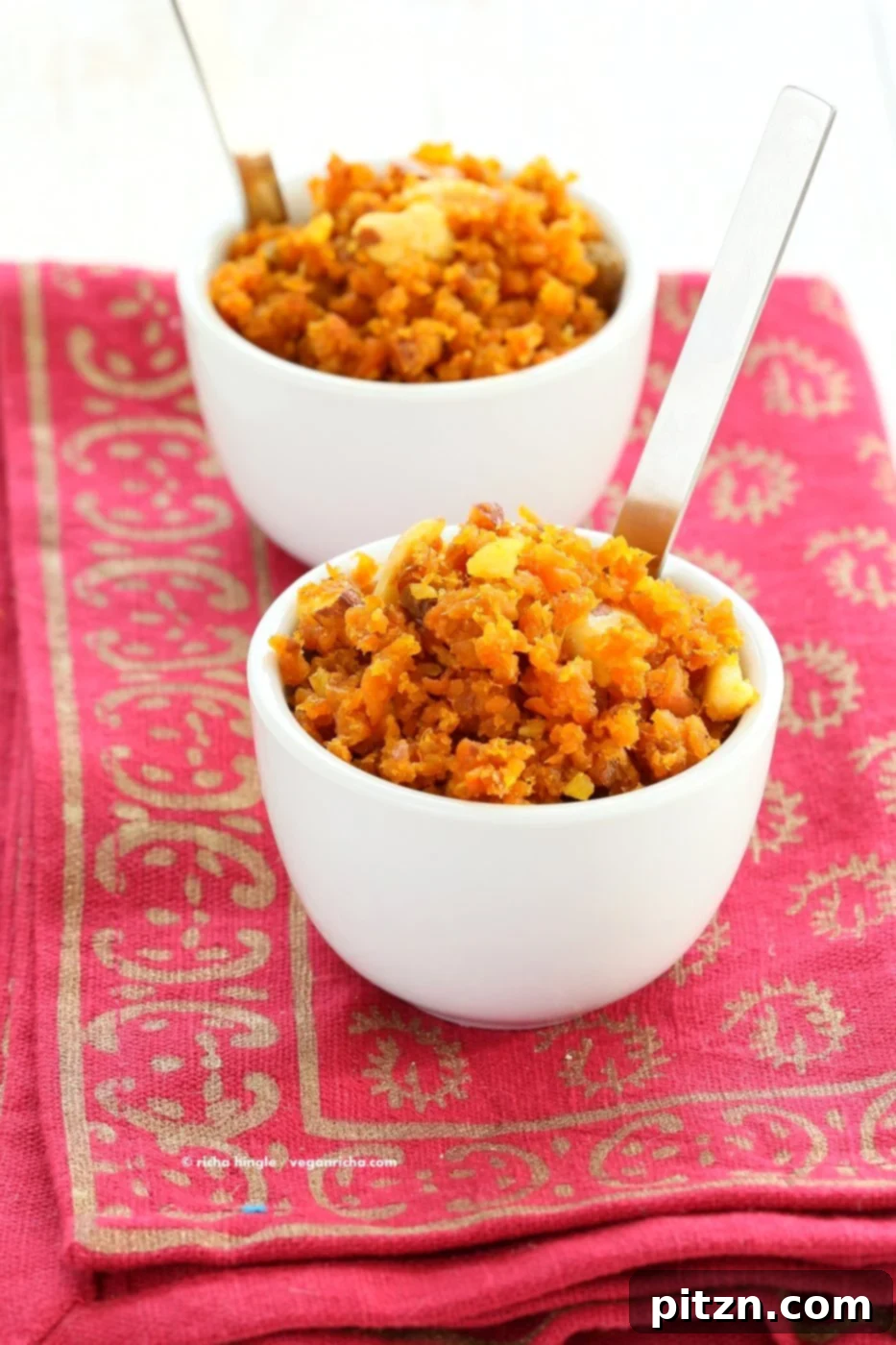
4. Final Adjustments and Serving: Once the halwa has cooked down and thickened, give it a taste test and adjust the sweetness if desired, adding a little more sugar if you prefer it sweeter. If you prefer a richer, more roasted flavor and a darker, deeper color, continue to cook for a few more minutes, stirring constantly to avoid burning, until the halwa reaches your preferred consistency and hue. Once perfectly cooked, remove the skillet from the heat. Serve your exquisite Vegan Carrot Halwa warm or chilled, garnished generously with the toasted cashews, raisins, and pistachios that you prepared earlier. It’s a delightful and comforting dessert that can be enjoyed on its own, with a refreshing scoop of vegan vanilla ice cream, or even alongside a cup of hot, spiced chai.
Notes
Nutrition information provided here is for 1 of 4 serves and is an approximation.
Storage: To maintain its freshness and flavor, store any leftover Vegan Carrot Halwa in an airtight container in the refrigerator for up to 3-4 days. It can be gently reheated on the stove over low heat or briefly in the microwave before serving.
Serving Suggestions: While delicious on its own, this halwa pairs wonderfully with a dollop of vegan whipped cream, a scoop of vanilla bean vegan ice cream, or as a sweet accompaniment to a warm beverage like chai tea.
Nutrition
Carbohydrates: 31g,
Protein: 4g,
Fat: 13g,
Saturated Fat: 1g,
Sodium: 182mg,
Potassium: 405mg,
Fiber: 4g,
Sugar: 17g,
Vitamin A: 13515IU,
Vitamin C: 5.4mg,
Calcium: 142mg,
Iron: 1.4mg
Nutrition information is automatically calculated and should therefore only be used as an approximation. Individual results may vary.
Did you make this recipe? We’d love to hear from you! Rate and comment below to share your experience!