
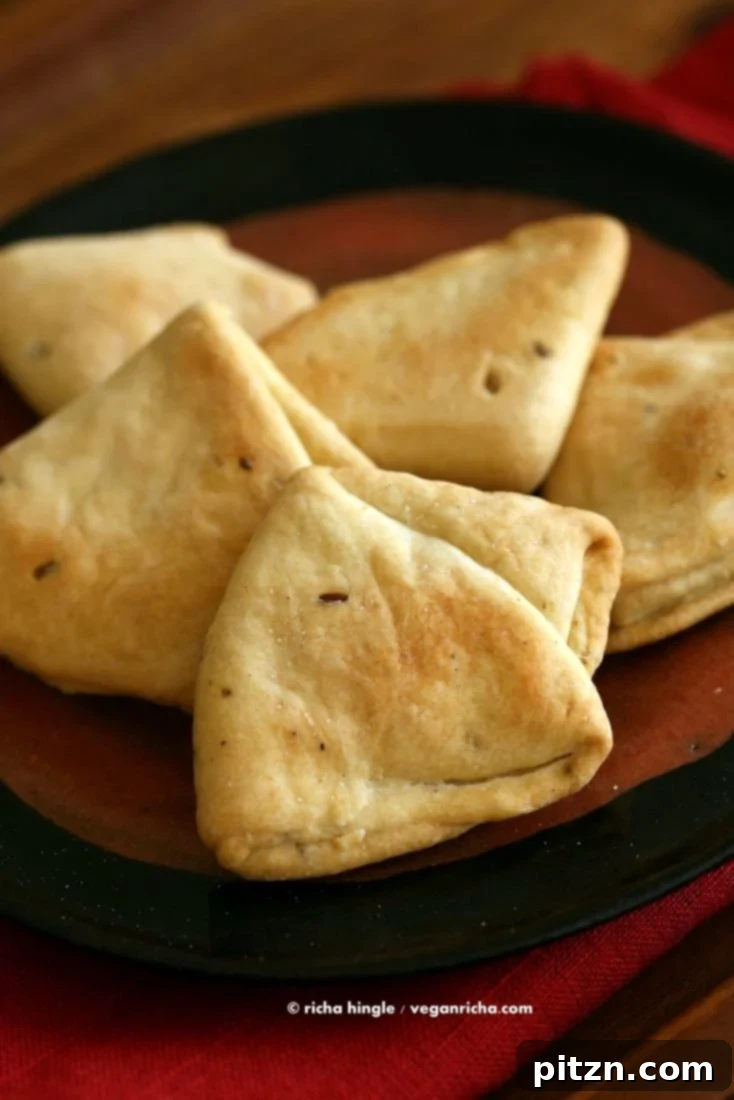
Maida Papdi, a beloved staple of Indian cuisine, are delightfully crisp crackers, subtly spiced with the warm, earthy notes of toasted cumin seeds. These versatile snacks offer the perfect accompaniment to a variety of chutneys or your favorite dips, making them an ideal treat for any occasion. This recipe specifically focuses on a vegan preparation, free from palm oil, aligning with conscious dietary choices while delivering authentic Indian flavors, especially cherished during the vibrant Holi festival. Whether you choose to bake them for a healthier twist or traditionally fry them for ultimate indulgence, Maida Papdi promises a satisfying crunch and a burst of flavor.
Jump to Recipe
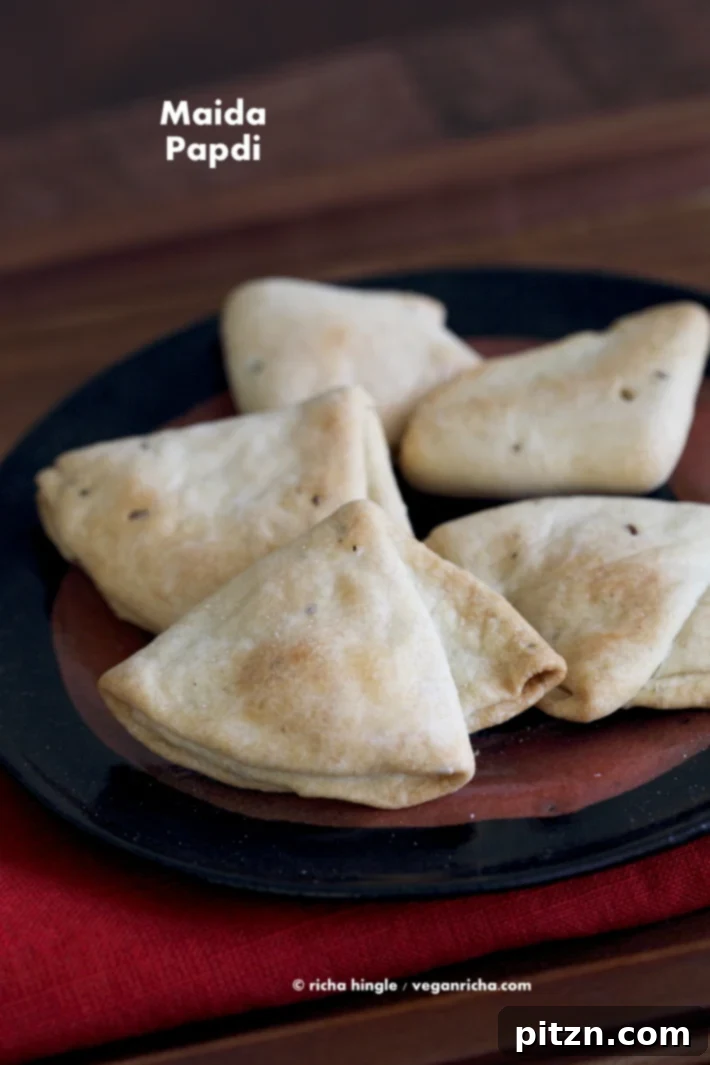
Celebrate Holi with Homemade Maida Papdi: A Festival of Flavors and Colors
Happy Holi to all! As spring graces us with its arrival, it heralds the joyous and colorful festival of Holi, a time when communities come alive with vibrant hues, laughter, and an abundance of delicious food. Holi, much like other Indian festivals, is inextricably linked with culinary traditions, boasting an array of sweet and savory delights that define the festive spirit. Indian snacks, in particular, are renowned for their incredible diversity and, often, their deep-fried nature. From crispy chickpea noodles (sev) to hearty samosas, flaky kachoris, crunchy Mathri and Papdi crackers, sweet Shakkar Para, intricate Chakhli wheels, and mixed farsan – the list of fried delicacies is extensive.
The prevalence of fried foods in Indian festive cooking is rooted in practicality and tradition. Frying acts as a natural preservative, extending the shelf life of snacks without the need for refrigeration, a significant advantage in historical contexts. Moreover, the technique of deep frying requires minimal specialized equipment – essentially just a deep pan and oil – making it accessible for preparation anywhere, from bustling kitchens to makeshift outdoor cooking stations. This ease of preparation and preservation has cemented fried snacks as an integral part of Indian celebrations.
Embracing Healthier Choices: The Art of Baking Maida Papdi
Over the years, many, including myself, have gradually transitioned away from the traditional frying method, opting for healthier alternatives without compromising on taste. The reasons are numerous: the laborious process of standing over hot oil for extended periods, the splashes of hot oil, and the desire for less oil in our food. Baking has emerged as a fantastic solution, and it’s truly remarkable how often baked versions can achieve a texture and flavor profile almost identical to their fried counterparts. This Maida Papdi recipe is a testament to that philosophy, offering a crispy, flavorful cracker that can be enjoyed guilt-free.
Traditionally, Maida Papdi would be prepared in large batches during the festive season to ensure a constant supply of snacks for family and guests. I fondly recall my mother making these at home, enlisting us kids to help with the dough rolling – a task we’d often abandon, leaving her to finish the job! Seasoned simply with cumin or carom seeds and a hint of black pepper, these crackers were an incredibly addictive snack, disappearing quickly from the snack platters. This recipe provides you with the flexibility to either bake them, as I prefer, or deep-fry them for a more traditional result.
Beyond the Snack Bowl: Maida Papdi as the Base for Papdi Chaat
Beyond being a standalone snack, Maida Papdi truly shines as the foundational element for the iconic Indian street food, Papdi Chaat. This vibrant and flavorful dish transforms the humble cracker into a symphony of textures and tastes. Imagine a crisp papdi cracker loaded with fluffy mashed potatoes, tender chickpeas, a generous drizzle of tangy tamarind chutney, a refreshing dollop of spicy green mint chutney, and a sprinkle of aromatic chaat masala. It’s a culinary masterpiece that awakens the palate with every bite, making Maida Papdi an essential component for this beloved street food experience.
Explore More Vegan Holi Delicacies
Holi is not just about savory snacks; it’s also a time for indulging in exquisite sweets. Complement your Maida Papdi with these delightful vegan Holi treats:
- KESAR PEDA – SAFFRON INFUSED MITHAI SWEET
- FUDGY COCONUT LADOO
- RAJGIRA BURFI – AMARANTH COCONUT FUDGE
- VEGAN & GLUTENFREE GULAB JAMUNS
- VERMICELLI PUDDING – SEVIYAN KHEER
- BAKED NAMAK PAARE – Gluten-free Potato Rice Crackers
- My Holi Round up from last year with Thandai and Samosas
The Simple Steps to Perfect Maida Papdi
Crafting Maida Papdi is a straightforward process that yields incredibly rewarding results. It begins with kneading a pliable dough, allowing it a brief rest for optimal texture. The dough is then divided into small, manageable portions, which are meticulously rolled out. A clever folding technique creates the signature semi-circular or triangular shape, after which they are rolled thin to achieve maximum crispness. Finally, these spiced crackers are either baked to a golden perfection or fried until light and airy. The simplicity of the process, combined with the delightful outcome, makes Maida Papdi a joy to prepare and an even greater joy to consume.
Indulge in the crunchy goodness of Maida Papdi! Serve them as a standalone snack, alongside a selection of your favorite chutneys or sauces, or elevate them into a magnificent Papdi Chaat for a truly memorable culinary experience. Their satisfying crispness and aromatic spices make them an irresistible addition to any snack table.
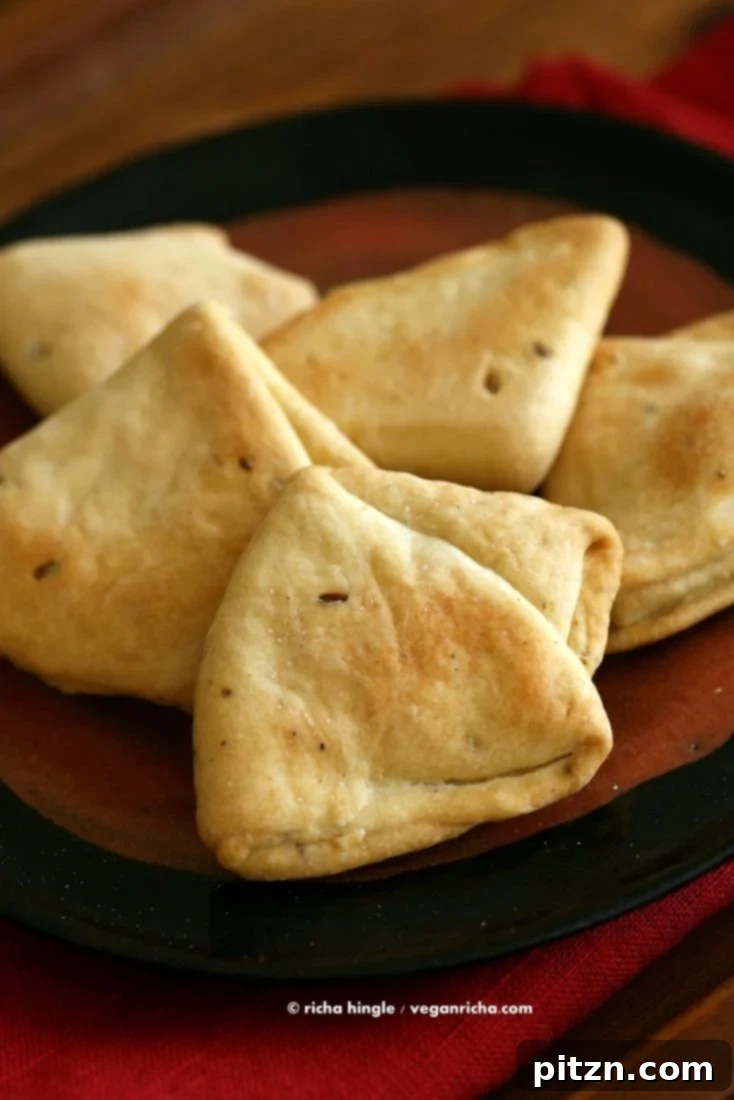
Maida Papdi – Cumin Spiced Crackers

Ingredients
- 1/3 to 1/2 tsp cumin seeds
- 2 cups unbleached white flour
- 1/4 tsp carom seeds, ajwain
- 1/4 tsp freshly ground black pepper
- 1/2 to 3/4 tsp salt
- 1/4 tsp baking soda
- 3 tablespoons of neutral oil , or melted vegan butter
- 1/2 to 3/4 cup water
Instructions
-
To enhance the flavor, toast the cumin seeds in a dry skillet over medium heat for approximately 2 minutes, or until they become fragrant and exhibit a slight change in color. This crucial step helps to release their full aromatic potential, especially beneficial for baked crackers. Transfer the toasted cumin seeds to a large mixing bowl. Add the flour, carom seeds, salt, black pepper, and baking soda, then whisk thoroughly to combine all the dry ingredients evenly. Incorporate the oil (or melted vegan butter) and mix with your hands or a spoon until the mixture resembles coarse breadcrumbs. This process should take about 2 minutes, ensuring the fat is well distributed throughout the flour.
-
Gradually add water, a few tablespoons at a time, and knead the mixture into a smooth, cohesive dough. The ideal consistency is one that is neither too stiff nor overly sticky. Cover the dough with a damp cloth or plastic wrap and let it rest for a minimum of 30 minutes. This resting period allows the gluten to relax, making the dough easier to roll and contributing to a crisper final product.
-
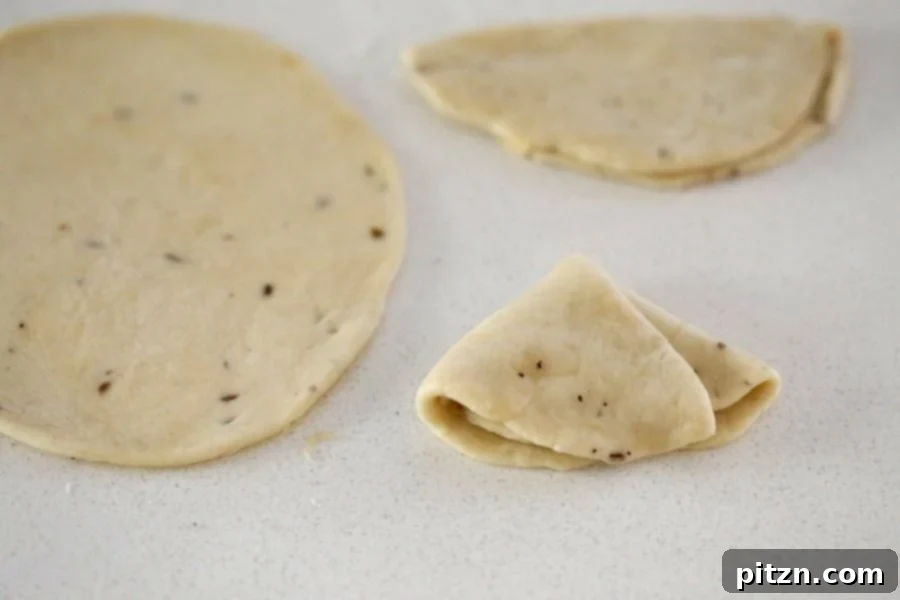
After the dough has rested, knead it once more for about 30 seconds to further smooth it out. Divide the dough into small, golf-ball-sized portions. Take each ball and roll it out into a thin 4-inch circle. For the traditional papdi shape, fold this circle in half to create a semi-circle, then fold it again to form an uneven triangle (refer to the provided image for visual guidance). Gently roll out this folded shape a bit further to flatten it to your desired cracker thickness. Place these shaped crackers on a parchment-lined baking sheet. Repeat this process for all the dough balls.
-
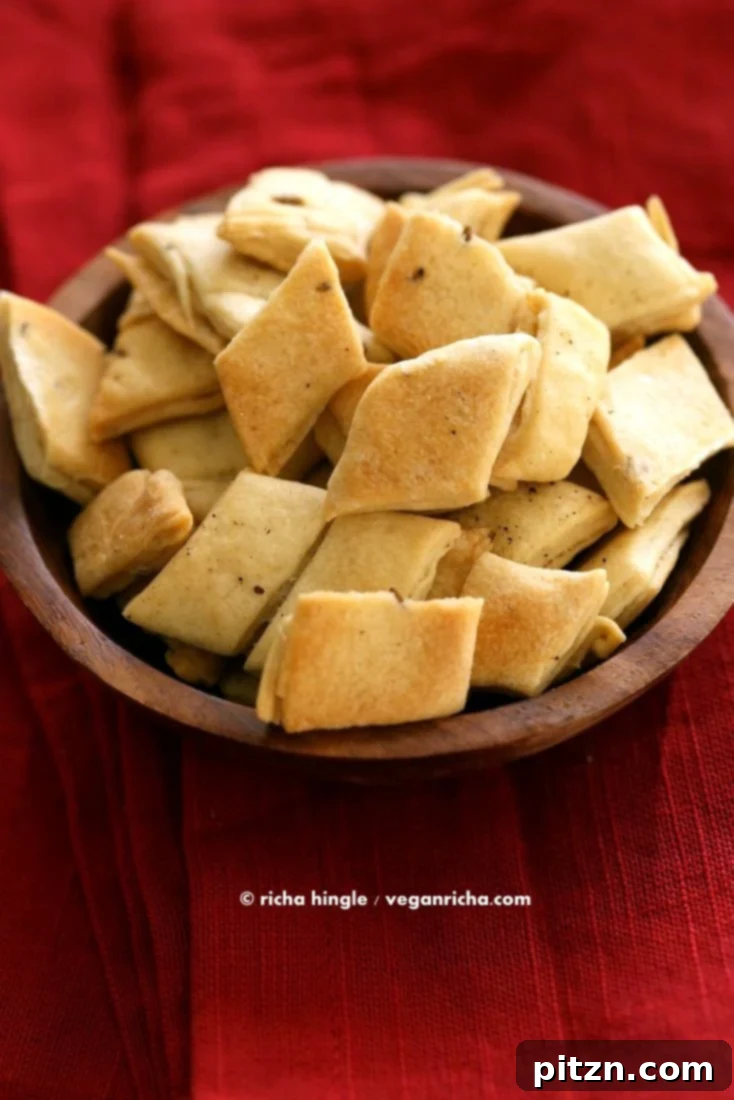
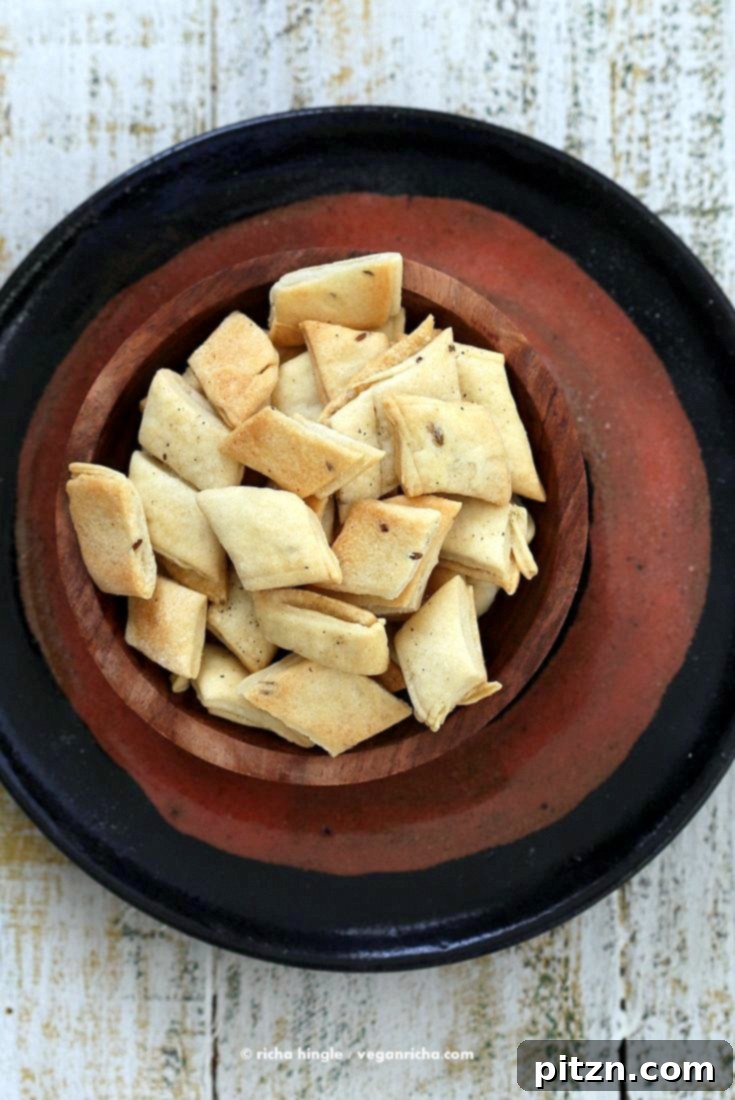
Alternatively, for a more uniform shape or for small circular papri perfect for chaat, roll out a larger portion of dough into a thin 8-inch circle. Lightly spray or brush a thin layer of oil over the surface of the circle. Fold the circle in half and roll it out until it is approximately 2 mm thick. Using a pizza cutter, a knife, or a cookie cutter (an inch or 1.5-inch round cutter is ideal for chaat papri), cut the dough into your desired shapes. If you wish, sprinkle some fine sea salt onto the cut pieces and gently press it in to adhere.
-
Preheat your oven to 350°F (180°C). Arrange the papdi on a baking sheet, ensuring they are not overcrowded. Bake for an initial 12 minutes. After this time, gently move the crackers around on the baking sheet, possibly rotating the sheet itself, and continue baking for another 4 minutes. Then, flip the crackers over, move them again for even cooking, and bake for an additional 2 minutes or until they reach a light golden hue around the edges. Keep in mind that thicker, triangular crackers may require a few extra minutes to achieve maximum crispness, while smaller, thinner crackers will be done sooner. It’s crucial to bake until they are just lightly golden to prevent over-browning. Once baked, remove from the oven and allow them to cool completely on a wire rack. Store the cooled Maida Papdi in an airtight container at room temperature for up to 2 weeks, maintaining their delightful crunch.
Notes
Nutritional values provided are based on one batch of the recipe, offering an approximate guide.
Nutrition
Nutrition information is automatically calculated, so should only be used as an approximation.
Did you make this recipe? Share your experience!
Reflecting on Holi and Societal Shifts
As a child, Holi was a time of unbridled joy. I remember gathering with all the neighborhood kids, gleefully applying dry and wet colors to everyone we met. It was a festival of pure, innocent abandon. However, as the years passed, things began to subtly shift. As girls, we were increasingly advised to celebrate Holi primarily with other girls and close relatives, or to always venture out in groups, ideally accompanied by our brothers. Sometimes, we were simply not permitted to stray too far from home. This was a poignant introduction to the evolving gender differences and societal norms that became more apparent as we grew older.
In recent times, critical conversations have emerged surrounding societal issues, often sparked by powerful media. For instance, the documentary on the 2012 Nirbhaya Rape case ignited widespread debates across the country, with calls for bans, expressions of support, and deep questions about its underlying message. Regardless of the intentions behind its creation, such documentaries serve as a crucial mirror, prompting us to examine what has transpired within our culture and how such tragic events can occur. It’s not merely about shock or apportioning blame to a few individuals; it’s an urgent plea for introspection, urging us all to question the societal fabric and consider what actions we can collectively take to foster meaningful and lasting change.
While we celebrate the joy of festivals like Holi, filled with delicious food and vibrant traditions, it is also important to acknowledge and address the broader societal context in which these celebrations take place. By doing so, we contribute to creating a more inclusive and safer environment for future generations to enjoy the true spirit of these rich cultural festivities.