
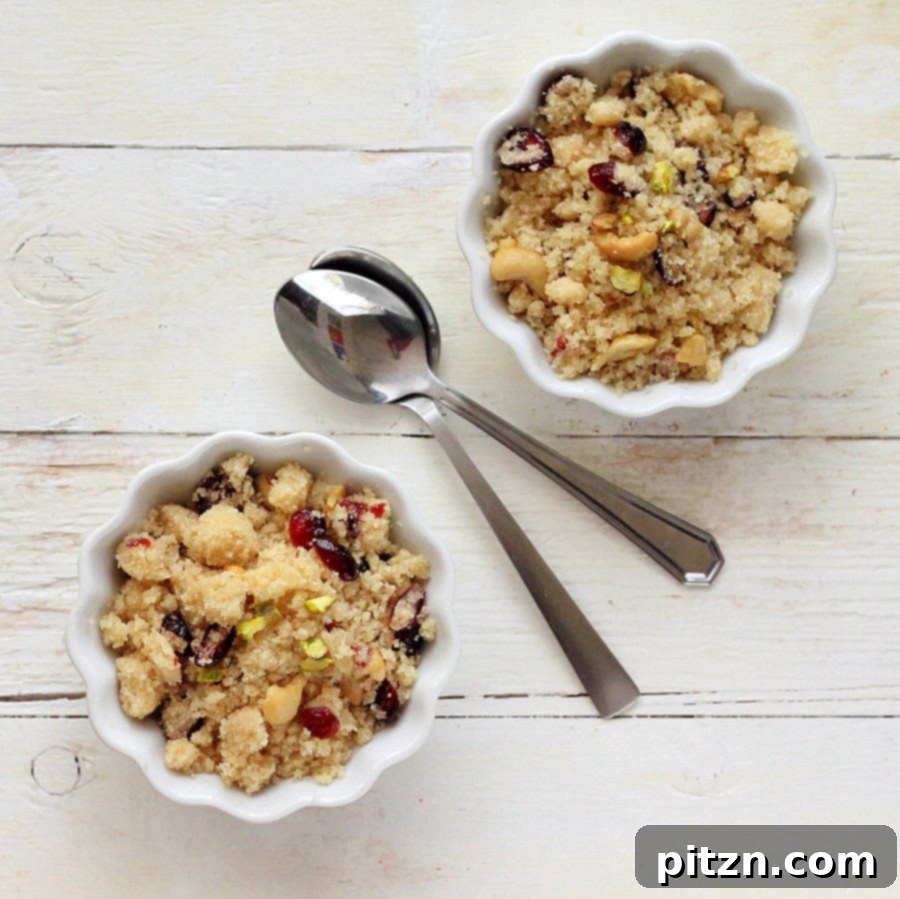
Delicious Vegan Sooji Halwa (Sheera) with Cranberries & Cashews: A Festive Diwali Treat
Returning from a much-needed respite, the vibrant energy of the festival season beckons! After an incredibly busy Mofo month, I craved a break from new creations, camera clicks, and screen time. Instead, we indulged in classic, heartwarming Hindi movies—a perfect tribute to the legendary Yash Chopra, whose iconic films, filled with melodramatic love stories, unforgettable songs, and captivating dance sequences, left an indelible mark on Indian cinema. Many of us remember his movie dialogues and lyrics by heart. If you’re looking to explore some cinematic gems, several Yash Chopra movies are available on Netflix and free to watch on YouTube. It was a beautiful way to unwind and reflect, before diving headfirst into the festive preparations.
With the US elections also a hot topic, a quick reminder to everyone: if you haven’t cast your vote yet, please do! Every single voice and vote truly counts in shaping our collective future.
Embracing Diwali with Compassionate Sweets: Introducing Vegan Sooji Halwa
As the air fills with anticipation for Thanksgiving, an even brighter celebration is just around the corner: Diwali on November 13th! This “Festival of Lights” is a time for joy, reflection, visiting loved ones, and, of course, an abundance of delectable sweets and savories, alongside the traditional lighting of diyas (oil lamps). To mark this auspicious occasion, I’m thrilled to share a recipe for a simple yet profoundly delicious Sheera, also known as Sooji Halwa. This delightful Indian semolina pudding is incredibly versatile and can be prepared with various coarsely ground grains such as coarse wheat flour, rice flour, cream of rice, quinoa, or millet, making it adaptable to different dietary needs.
Traditionally, Sheera is crafted by roasting semolina in ghee (clarified butter), infused with aromatic cardamom or saffron, and generously laden with nuts and raisins. My rendition, however, offers a compassionate and equally flavorful vegan alternative. Here, the semolina is lovingly roasted in a plant-based butter (like Earth Balance) or coconut oil, enriched with crunchy cashews and tart dried cranberries, and spiced with the classic warmth of cardamom. The addition of cranberries is a game-changer, lending a delightful tang that beautifully complements the sweetness, making this halwa uniquely intriguing and utterly irresistible. This crumble-like texture, with its festive cranberries, also makes for an exquisite dessert topping, perfect for any Thanksgiving or holiday spread.
For more delightful Indian Sweets recipes, be sure to explore my collection!
Diwali’s True Message: Compassion and Goodness
Diwali, at its core, celebrates the timeless victory of good over evil. While interpretations of religious texts and historical actions can often be complex, the fundamental message of triumphing over adversity and embracing goodness remains universally potent and essential to celebrate. My hope is that by offering delicious, compassionate vegan options like this Sooji Halwa, we can spread this message of kindness and empathy through “Temptivism” – tempting people with delightful food that aligns with ethical values.
This journey towards compassionate living often presents a challenge, especially during social gatherings. Whether it’s a baby shower laden with dairy-intensive foods, ironically taking from one baby (a calf) to celebrate another (a human baby), or a religious event where the profound message gets overshadowed by practices that contradict its spirit. As a highly sensitive individual, it’s a constant effort to avoid judgment and instead offer patience, kindness, and delicious alternatives, hoping that, someday, these seeds of compassion will blossom. We hope that the inherent goodness of empathy will ultimately prevail over easy, less kind choices. Until then, in our home, every celebration is joyfully marked with a bounty of veganized Indian desserts and savories, proving that traditional flavors can be enjoyed without compromise.
Vegan Sooji Halwa (Sheera) with Cashews and Dried Cranberries
This recipe makes one medium bowl, serving approximately 2 people. It’s naturally dairy, egg, corn, soy, and yeast-free, and can easily be adapted to be nut-free and gluten-free.
Ingredients:
- ½ cup Semolina (cream of wheat). For a gluten-free version, substitute with cream of rice, brown rice flour, or any coarse grain flour.
- 1 – 1.5 Tablespoons Earth Balance butter, or coconut oil, or organic canola oil.
- ⅓ cup warm-hot water (for a crumbly halwa). For a more moist, pudding-like sheera halwa, use 1 to 1¼ cups water.
- 3 Tablespoons ground raw sugar (use 4 tablespoons if you prefer a sweeter halwa).
- ⅛ teaspoon cardamom powder or a few crushed saffron strands (or use both for enhanced flavor).
- Pinch of salt (if using oil instead of Earth Balance, which is typically salted).
- ¼ cup cashew pieces.
- ¼ cup dried cranberries (golden raisins or other dried fruits can be substituted).
Variations:
Feel free to experiment with different nuts, dried fruits, or raisins. For a smoother, less crumbly, yet still delightfully textured halwa, you can substitute ½ cup of non-dairy milk (such as almond or oat milk) for some of the water. If you need a nut-free option, sunflower or melon seeds work wonderfully in place of cashews.
Step-by-Step Method:
Step 1: Prepare the Base
In a sturdy pan, add your chosen fat – Earth Balance butter, coconut oil, or organic canola oil – and heat it gently over low-medium heat. Once shimmering, add the semolina (or your chosen coarse grain like cream of rice) to the pan. Mix thoroughly with the oil, ensuring every grain is coated.
Step 2: Roast to Perfection
Continue to roast the semolina for 8-9 minutes, stirring occasionally to prevent burning and ensure even browning. The semolina will become incredibly fragrant, and you’ll notice a subtle, inviting change in its color, turning a light golden hue. This roasting step is crucial for developing the depth of flavor in your halwa.
Step 3: Add Nuts and Fruit
Once the semolina is beautifully roasted, add the cashew pieces and dried cranberries to the pan. Continue to roast for just another minute. This brief roasting time will lightly toast the cashews, enhancing their crunch and nutty flavor, and slightly plump the cranberries. (Alternatively, you can roast the cashews and cranberries separately in a tiny bit of oil for a minute and add them at this stage).
Step 4: Incorporate Sweetness and Spice
Now, stir in the ground raw sugar, cardamom powder, and/or crushed saffron strands. If you’re using oil instead of Earth Balance, this is the time to add a pinch of salt to balance the flavors. Give everything a quick but thorough mix to ensure the sugar and spices are evenly distributed.
Step 5: Hydrate and Cook
Pour in the hot water. Be cautious as it may sputter. Immediately mix well to combine all the ingredients. The hot water will begin to be absorbed by the semolina, starting the pudding process.
Step 6: Steam and Finish
Cover the pan tightly with a lid and let it cook on very low heat for 2 minutes. This steaming process allows the semolina to fully hydrate and soften. (If you prefer a more pudding-like consistency, add a total of 1 cup of water, mix, and cook for 2 minutes. Adjust consistency by adding a tiny bit more water if needed and cooking for another 2-3 minutes).
Step 7: Rest and Serve
Uncover the pan, give the halwa a final gentle stir, then remove it from the heat. Cover it again and let it sit for another 2 minutes. This resting period allows the flavors to meld and the texture to set perfectly. Before serving, garnish your delicious Vegan Sooji Halwa with additional chopped roasted or raw cashews, or vibrant pistachios for extra flair and crunch.
You’ll notice I tend to take many pictures, but with a dish this beautiful and flavorful, it’s hard to resist! Just like with the pizzas, a limited composition sometimes yields the most stunning results. This halwa is not just pretty; it’s absolutely yummylicious!
Why Choose Vegan Indian Sweets for Your Celebrations?
Every time we consider consuming traditional Indian sweets rich in ghee and paneer, it’s worth reflecting on their origin and impact. To produce just one pound of ghee or paneer, a staggering 20+ pounds of milk are required. This intensive dairy consumption is not without its consequences, having been linked to an increased risk of chronic diseases like diabetes and heart disease.
Beyond the health implications, there’s a significant ethical consideration. In India alone, approximately 8 million surplus calves are tragically slaughtered each year. This translates to one calf every 11 seconds. These are not calves absorbed into the dairy or meat industries; these are the excess, the byproducts of a system designed for maximum milk production. Choosing vegan alternatives for traditional Indian sweets, like this Sooji Halwa, is a powerful statement of compassion, reducing demand for dairy products and contributing to a more ethical and sustainable food system. It allows us to celebrate our rich culinary heritage and festivals with a clear conscience, embracing a message of kindness that truly resonates with the spirit of Diwali.
This Diwali, let your celebrations shine brighter with the warmth of tradition and the glow of compassion. This Vegan Sooji Halwa with its delightful cranberry and cashew twist is more than just a dessert; it’s a testament to how traditional flavors can be lovingly adapted to suit modern ethical values. It’s a simple, quick, and incredibly rewarding recipe that brings joy to every palate. Prepare this exquisite semolina pudding and share the goodness with your loved ones, making your Diwali truly special and inclusive. Enjoy the rich textures, aromatic spices, and the sweet, tangy notes that define this festive treat. Happy cooking, and Happy Diwali!