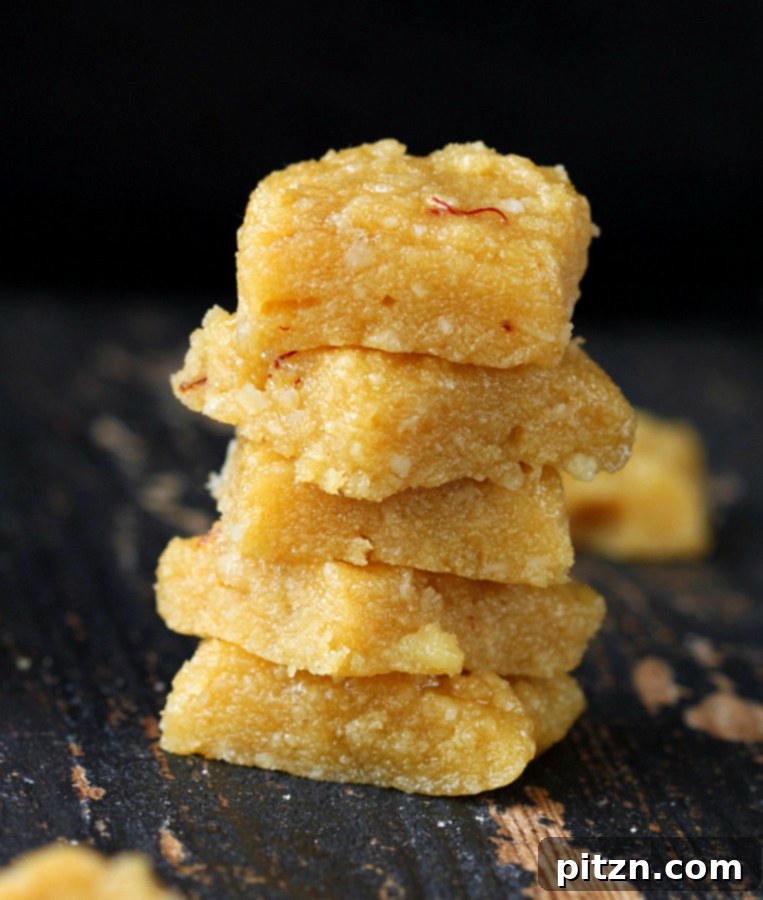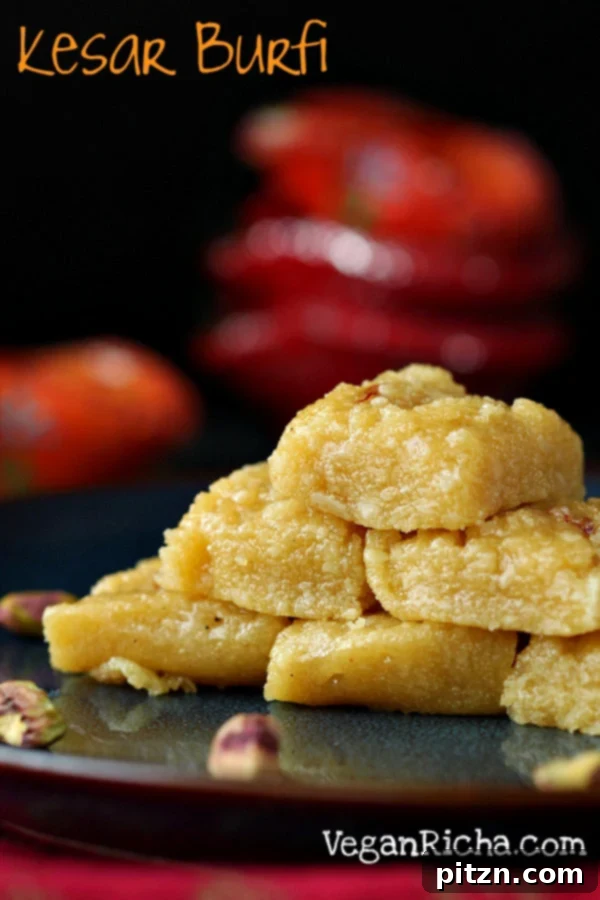
Vegan Kesar Burfi: A Saffron-Infused Almond Semolina Fudge
Embarking on a culinary journey to create an exquisite Indian dessert is always a joy, especially when it involves celebrating the rich tapestry of Indian cuisine. When Dassana, the brilliant mind behind Veg Recipes Of India, extended an invitation for a guest post, I knew immediately that I wanted to craft a traditional Indian sweet, or Mithai, with a compassionate, plant-based twist. After all, what better way to honor a platform known for making authentic Indian food accessible than by presenting a beloved classic in a new, inclusive light?
Celebrating Authentic Indian Flavors with Veg Recipes Of India
Dassana’s blog, Veg Recipes Of India, stands as a beacon in the realm of Indian cooking. It’s not just a collection of recipes; it’s an extensive culinary encyclopedia that demystifies authentic Indian food for home cooks worldwide. Her meticulous approach and commitment to showcasing regional and state-specific cuisines are truly unparalleled. From time-honored techniques passed down through generations to unique preparations rarely found elsewhere on the web or in restaurants, Dassana’s work is a treasure trove for anyone eager to explore the depths of India’s diverse gastronomic heritage.
One of the many reasons I hold Veg Recipes Of India in such high regard is its ever-growing commitment to plant-based options. As the world increasingly shifts towards more conscious eating, Dassana has embraced this movement, offering a wealth of vegan recipes that cater to ethical and dietary preferences without compromising on flavor or authenticity. This dedication aligns perfectly with my own culinary philosophy, making it the ideal platform to share this special vegan rendition of Kesar Burfi.
The Art of Veganizing Indian Sweets: A Culinary Challenge Transformed
Traditional Indian sweets, or Mithai, are often deeply intertwined with dairy products like khoya (reduced milk solids), ghee (clarified butter), and various forms of milk. Veganizing these dairy-intensive delights presents a fascinating culinary challenge. It requires an innovative approach to recreate the rich textures and deep flavors that are characteristic of these beloved treats, all while adhering to plant-based principles. This endeavor is a continuous passion for me, especially around festive seasons when the demand for traditional sweets is at its peak. Each festival inspires new experiments, pushing the boundaries of what’s possible in vegan Indian cooking.
The inspiration for this particular Vegan Kesar Burfi first bloomed around the Lohri festival, a time of celebration and warmth. After numerous trials, I finally perfected a version that delighted my palate and, more importantly, earned my husband’s enthusiastic approval. The result is a truly exquisite Almond Semolina Fudge infused with the delicate aroma and vibrant color of saffron – a cruelty-free indulgence that captures the essence of its traditional counterpart.
The ingenuity of this recipe lies in its plant-based substitutes. Soaked almonds, when ground, lend a creamy richness that beautifully mimics the texture and flavor profile of traditional khoya, providing a wonderful depth to the fudge. Meanwhile, semolina (sooji) acts as the perfect binder, ensuring the burfi holds its shape while contributing a delightful, slightly granular texture. A key aspect of achieving the desired burfi consistency lies in carefully adjusting the sugar syrup. A few teaspoons less syrup will yield a firmer, drier burfi, while a bit more will result in a softer, melt-in-your-mouth version, allowing for personalization based on individual preference. This flexibility makes the recipe accessible for various tastes and textures.
My Culinary Journey: Experimentation and Vegan Innovation
My culinary background in Indian cooking isn’t rooted in a formal apprenticeship but rather in a blend of cherished family traditions and relentless experimentation. I fondly recall picking up essential recipes and techniques while cooking alongside my mother during my undergrad summers, always drawn to exploring new variations and fusion concepts even then. My move to the US for grad school further ignited this passion, compelling me to recreate the tastes and textures I remembered and loved, often through trial and error. This journey of independent discovery and adaptation has been instrumental in fostering an “out-of-the-box” thinking, which I believe is key to successfully veganizing many traditional Indian sweets.
While some of the barfi (burfi) and ladoo recipes I’ve developed for the blog closely mirror their traditional dairy versions, others are delightful, altered results that have become new favorites in our household. This particular Kesar Burfi, while perhaps not an exact replica of a khoya-based sweet, is undeniably delicious and has quickly become a beloved staple. My journey of veganizing Indian desserts continues, and I’m proud to say that challenges like Rasmalai (cheese balls in sweet saffron milk) and Rasgulla, which once eluded me, are now perfected and featured in my cookbook! It’s a testament to the power of perseverance and creativity in the vegan kitchen.
The Ethical Imperative: Why We Choose a Plant-Based Diet
For my husband and me, choosing a plant-based, vegan diet is a fundamental commitment that extends beyond the kitchen. It’s a lifestyle rooted in compassion and an unwavering stand against animal exploitation. This diet strictly excludes all animal and animal-derived products, including dairy (milk, ghee, butter, cheese, milk powder, etc.), eggs, honey, and all forms of meat (chicken, beef, lamb, fish). The decision to embrace veganism is driven by a deep understanding of the immense pain, suffering, torture, and eventual death that living beings endure within the animal agriculture industry.
The statistics surrounding the dairy industry, particularly in India, are sobering. It’s estimated that 8 million unwanted male calves are killed every year in India alone – a staggering rate of one calf every 11 seconds. These figures do not even account for the millions of other calves who are funneled back into the dairy industry, the leather industry, or used for breeding. This pervasive cruelty highlights the urgent need for viable, delicious plant-based alternatives that can satisfy our cravings without contributing to such widespread suffering. For those seeking more detailed information about the plant-based diet and its specific statistics within India, I highly recommend this insightful post by Harini, which offers a comprehensive perspective.
While alternatives for milk, meat, cheese, cakes, and various desserts are increasingly available in places like the US, the availability of authentic vegan Indian sweets or Mithai still lags. This disparity fuels my passion for creating delicious and cruelty-free options that celebrate Indian flavors. This Vegan Kesar Burfi is another heartfelt attempt to bridge that gap, offering a delightful and ethical indulgence that anyone can enjoy. For more vegan-friendly Indian sweets, including Gulab Jamuns, Ladoos, and more, please explore my collection here.
Vegan Kesar Burfi: Step-by-Step Preparation Guide
Creating this Saffron-Infused Almond Semolina Fudge is a rewarding experience, blending traditional techniques with plant-based ingredients to yield a truly delightful dessert. While the full recipe card below provides precise measurements, here’s a narrative overview of the process to guide you in crafting this incredible Kesar Burfi.
The journey begins with the sugar syrup, the foundation of many Indian sweets. In a pan, combine all the sugar syrup ingredients, including the vibrant saffron strands and a pinch of cardamom for aromatic depth. Bring this mixture to a gentle boil over low-medium heat, stirring occasionally. The key here is to achieve a “one-string consistency,” which means that when you take a drop of the syrup between your thumb and forefinger and pull them apart, a single thread forms. This typically occurs around 230°F (110°C) and ensures your burfi sets perfectly – not too soft, not too hard. While the syrup simmers, it’s crucial to prepare the other components.
Next, focus on the semolina. In a separate pan, dry roast the semolina on low-medium heat. This step is vital for developing its nutty flavor and ensuring a smooth texture in the final burfi. Continue roasting for about 6-8 minutes, or until it turns a light golden color and releases a fragrant aroma. If your semolina is coarser, a quick pulse in a blender or food processor before roasting will help achieve a finer texture, ideal for burfi. This careful roasting prevents a raw taste and enhances the overall deliciousness of the fudge.
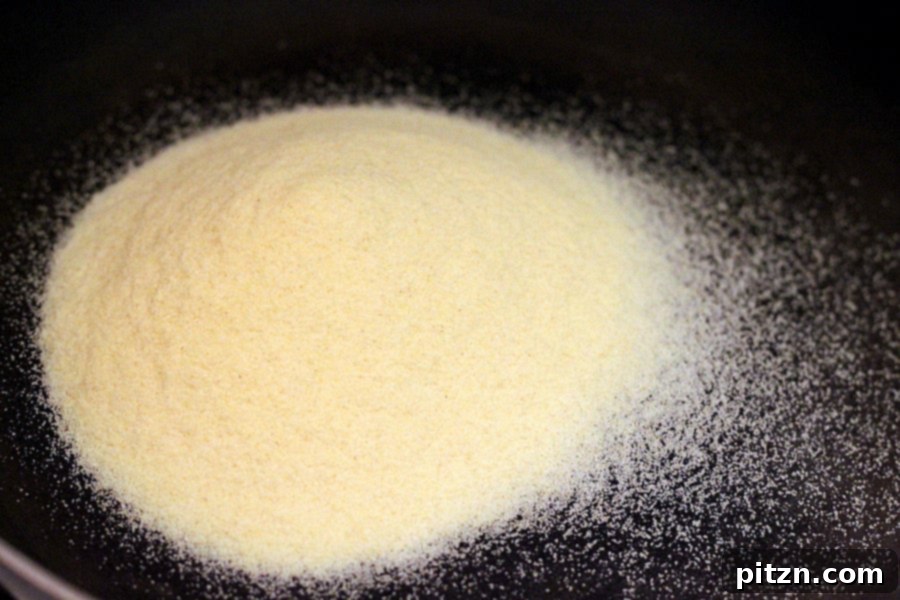
Once the semolina is perfectly roasted, incorporate the ground almonds and oil. The almonds, soaked overnight and peeled, are pulsed into coarse crumbs, acting as our plant-based khoya. A pinch of sea salt added to the almonds enhances their flavor. The oil helps bind the mixture and provides richness. Mix these ingredients thoroughly with the semolina for about half a minute, pressing and breaking any lumps to ensure the oil is evenly distributed and the mixture forms uniform crumbs. This creates the foundational texture for our fudge.
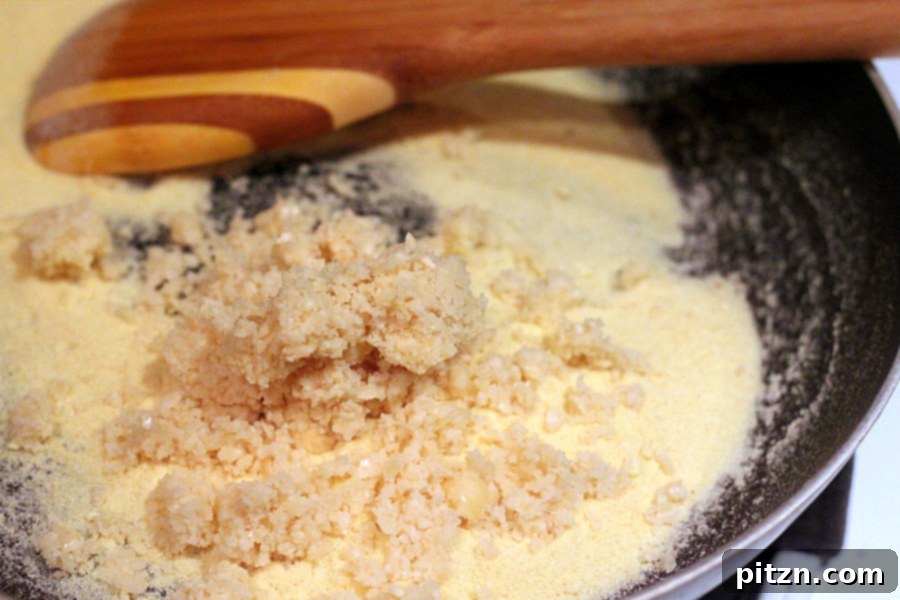
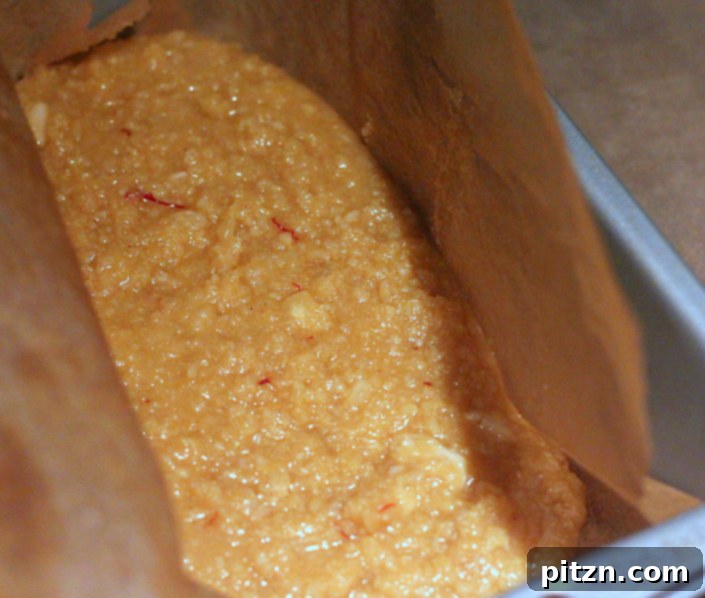
Now comes the magical moment of combining the two main components. Pour the hot, boiling sugar syrup directly into the semolina and almond mixture. Stir vigorously to ensure everything is well combined. The mixture will begin to thicken almost immediately. After just a few seconds, remove the pan from the heat. Promptly transfer the hot mixture onto a greased pan or a pan lined with parchment paper. This quick transfer is crucial as the burfi sets rapidly.
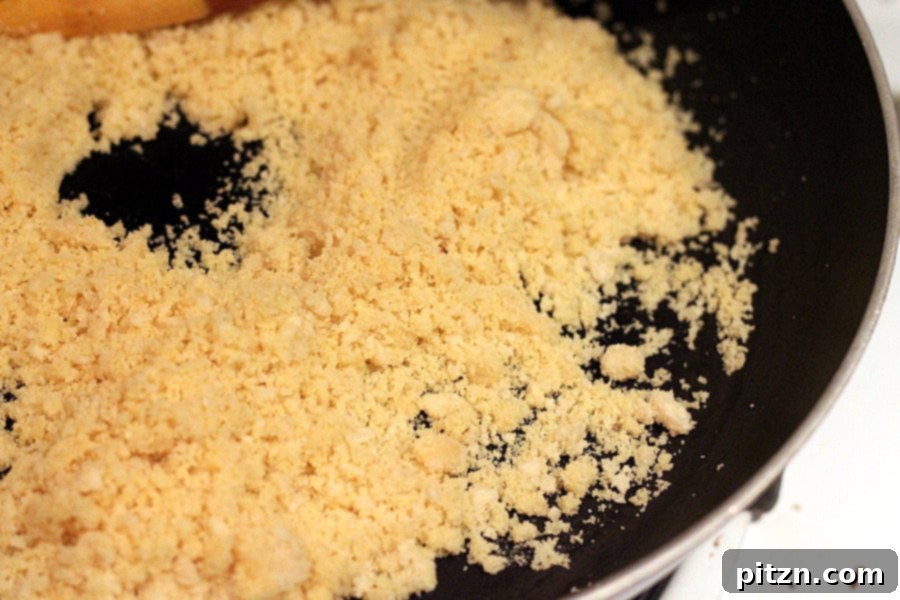
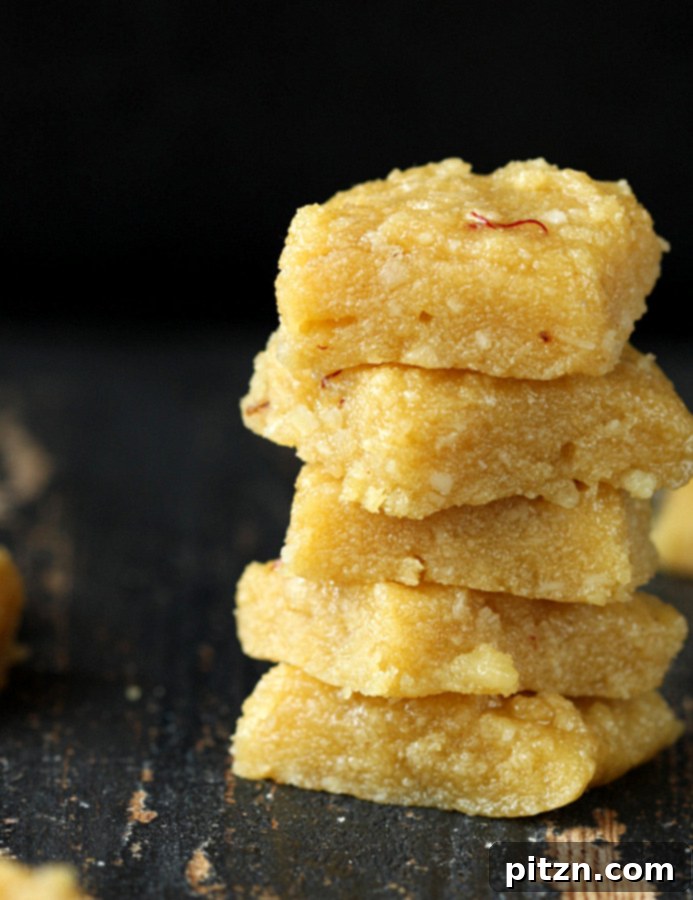
Even out the surface of the burfi mixture quickly with a spatula. While still warm, use a knife or a pizza cutter to score it into desired shapes – traditional squares or elegant diamonds. Allow the burfi to cool completely, ideally for at least 15 minutes, before attempting to break apart the individual pieces. This cooling period ensures the burfi fully sets and achieves its firm yet tender texture. Once cooled, you’ll have beautiful, saffron-infused Vegan Kesar Burfi ready to be savored.
This delightful creation is a testament to the fact that you don’t need dairy to enjoy the rich, aromatic flavors of traditional Indian sweets. Each bite offers the comforting texture of semolina and almonds, brightened by the exotic notes of saffron and cardamom. It’s a perfect treat for celebrations, gifting, or simply indulging in a cruelty-free moment of bliss.
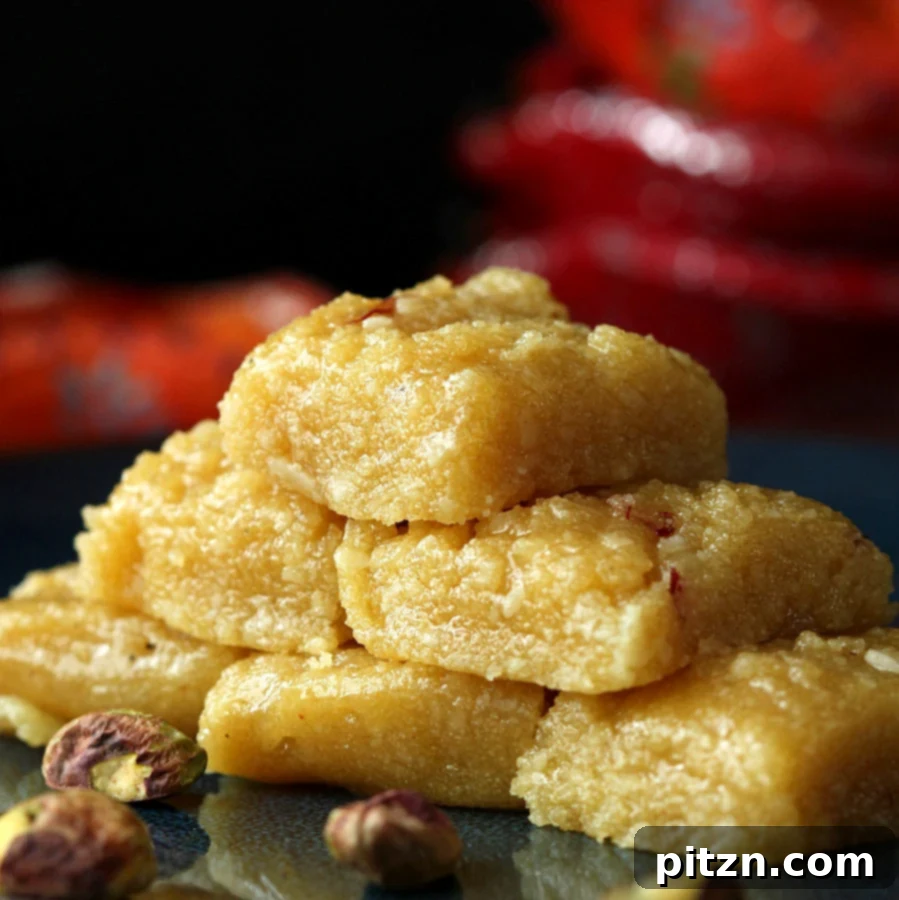
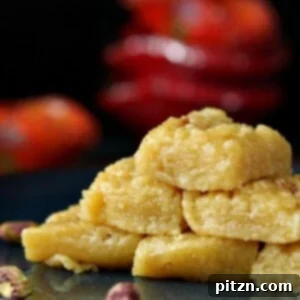
Vegan Kesar Burfi – Almond Semolina Fudge flavored with Saffron
★
★
★
★
Vegan Richa
15 mins
20 mins
35 mins
10
Dessert
Indian
Ingredients
- 3/4 cup raw almonds soaked overnight
- 1/2 cup Semolina flour, or fine Semolina fine Sooji, fine cream of wheat
- a pinch of sea salt or regular salt
- 2 Tablespoons Oil, I usually use 1 Tablespoon refined Coconut oil and 1 Tablespoon Earth balance butter or organic canola oil
Sugar Syrup
- 1/2 cup ground raw sugar, or coconut sugar or other sugar of choice. Use 2 Tablespoons more for sweeter
- 1/4 cup water
- a pinch of cardamom powder
- 1/2-1 teaspoon Saffron strands, to taste
- a pinch of salt
Instructions
-
Soak the almonds overnight. Peel and pulse into coarse crumbs. Add a pinch of sea salt and keep ready. Alternatively, you can use almond meal. If using almond meal, soak it for a few hours, then drain before use.
-
To peel almonds easily: Drain the soaked almonds and immerse them in boiling water for 2 minutes. The skin will loosen, allowing you to easily press the almonds out of their skins.
-
In a pan, combine all the ingredients listed under “Sugar Syrup.” Bring this mixture to a boil over low-medium heat. Continue boiling until a “one-string consistency” is achieved (the syrup will form a single thread when tested between your fingers, typically around 230°F / 110°C). This usually takes a few minutes.
-
Meanwhile, in another pan, dry roast the semolina on low-medium heat for 6-8 minutes, or until it starts to change color slightly and becomes fragrant. If you are using large-grain semolina, pulse it a few times in a blender or food processor before roasting to achieve a finer texture.
-
Add the ground almonds and oil to the roasted semolina. Mix well, continuously pressing and breaking any crumbs, to ensure the oil is evenly distributed. This process should take about half a minute, resulting in a crumbly mixture.
-
Pour the hot, boiling sugar syrup into the semolina and almond mixture. Mix vigorously and thoroughly until all ingredients are well combined. The mixture will begin to thicken.
-
Take the pan off the heat after a few seconds of mixing. Immediately pour the mixture onto a greased or parchment-lined pan.
-
Even out the surface of the burfi. While it’s still warm, use a knife or pizza cutter to cut it into squares or diamond shapes. Allow it to cool completely for at least 15 minutes before separating the individual pieces.
Notes
Nutritional values are provided based on one serving and are an approximation.
Nutrition
, Carbohydrates: 18g
, Protein: 3g
, Fat: 8g
, Sodium: 58mg
, Potassium: 91mg
, Fiber: 1g
, Sugar: 10g
, Calcium: 30mg
, Iron: 0.8mg
Nutrition information is automatically calculated, so should only be used as an approximation.
Did you make this recipe? Rate and comment below!