
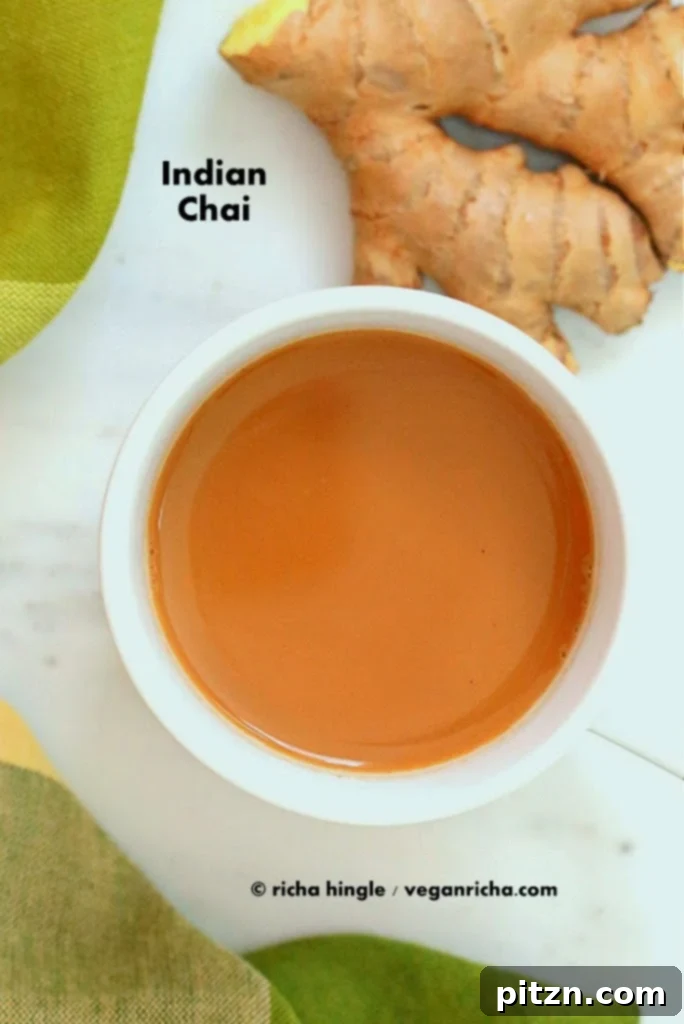
Authentic Vegan Indian Masala Chai: A Comforting Plant-Based Brew
Discover the warmth and rich flavor of a traditional Indian Masala Chai, reimagined for a vegan lifestyle. This fabulous almond milk tea combines the invigorating zest of fresh ginger with a meticulously crafted homemade chai spice blend featuring aromatic cardamom, warm cinnamon, and a hint of fiery black pepper. Experience the vibrant taste of India in a delightful, dairy-free cup. Whether you’re a long-time chai lover or new to this spiced beverage, our recipe promises a flavorful and comforting experience. Get ready to elevate your tea ritual with this creamy, aromatic vegan chai.
The Enduring Charm of Masala Chai: A Cultural Staple
For many, Masala Chai isn’t just a beverage; it’s a way of life, a daily ritual, and a comforting constant. For my husband and me, it was the final non-vegan food item we reluctantly gave up. We grew up immersed in the culture of chai, starting our mornings by guzzling cups with breakfast. In our younger years, it was primarily milk-based, lightly flavored with tea. As we transitioned into our teens, chai became intrinsically linked with social interactions – small cups shared with friends, offered during every family visit, at evening gatherings, and even during late-night study sessions for exams. My father still sips a cup every few hours at work, a testament to its deep-rooted place in daily Indian life. It’s no wonder we were so attached to it, or perhaps, more accurately, to the dairy component that gave it its thick, creamy consistency. The traditional concoction, simmered for minutes with dairy milk, offered not only an addictive blend of tea and spices but also evoked a tapestry of cherished memories.
Embracing the Vegan Chai Journey: Finding the Perfect Plant Milk
Transitioning to veganism meant rethinking our beloved chai. We initially settled on a recipe using a creamer, as detailed in an older post, during our initial year. However, after exploring various plant milk options, we’ve refined our approach to create this current vegan chai recipe. This particular rendition shines with certain almond milks and soy milk. The key lies in understanding that not all plant milks are created equal when it comes to chai. Additives in some packaged plant milks can alter the texture and consistency significantly, turning a potentially great chai into something unpalatable if not handled correctly (e.g., overheated or underheated, leading to curdling). Our preference is strongly influenced by our long-standing taste and texture memories of traditional chai. For those more flexible with taste, this recipe will be delicious with a wider range of plant milks, including certain brands of oat milk and soy milk that we’ve personally enjoyed.
One might ask, “Why go through the trouble of experimenting to find the perfect homemade or packaged plant milk?” The answer is simple: it’s the same motivation that drives us to seek out delicious vegan cheese alternatives or other plant-based versions of foods from our pre-vegan days. It’s about recreating that familiar comfort and flavor, albeit in a compassionate, animal-friendly way. While we’ve increasingly enjoyed water-steeped teas in our home, having a robust vegan chai recipe is invaluable, especially when hosting guests. My parents, for instance, drink chai multiple times a day, and my mom particularly appreciates the convenience of readily available almond milk when she visits, making her daily chai ritual effortlessly vegan.
Cashew milk presents another viable option, whether homemade or store-bought. However, it’s important to note that cashew milk tends to thicken very quickly when heated, potentially resulting in a texture that feels too dense or unfamiliar to some. Regardless of the plant milk you choose, patience is paramount. Don’t judge a new milk based on a single try; give it a few chances. Acclimating to a new taste and texture takes time. Continue experimenting with different plant milks until you discover the one that best suits your palate for a truly satisfying vegan chai.
Understanding “Chai Tea”: A Linguistic Clarification
A common misconception in English-speaking countries is the term “Chai tea.” In Hindi, “Chai” directly translates to “tea.” Therefore, saying “Chai tea” is akin to saying “tea tea,” a linguistic redundancy. This often occurs when non-English terms are directly translated and adopted into other languages. However, for SEO purposes and broader understanding, “Chai tea” has become a widely searched term, making it a helpful descriptor for those unfamiliar with the traditional Indian beverage.
Explore More Indian Vegan Beverages
If you’re interested in expanding your repertoire of traditional Indian drinks, consider these refreshing and flavorful vegan options:
- Thandai – A creamy, spiced poppy seed almond milk drink, perfect for spring.
- Aam Panna – A spiced raw mango cooler, incredibly refreshing in warmer weather.
- Mango Lassi – A sweet and vibrant mango yogurt smoothie, now easily made vegan.
Crafting Your Perfect Vegan Masala Chai: A Step-by-Step Guide
Making a delicious vegan masala chai is a straightforward process, but a few key steps ensure a rich and authentic flavor. Let’s gather our ingredients and begin this aromatic journey.
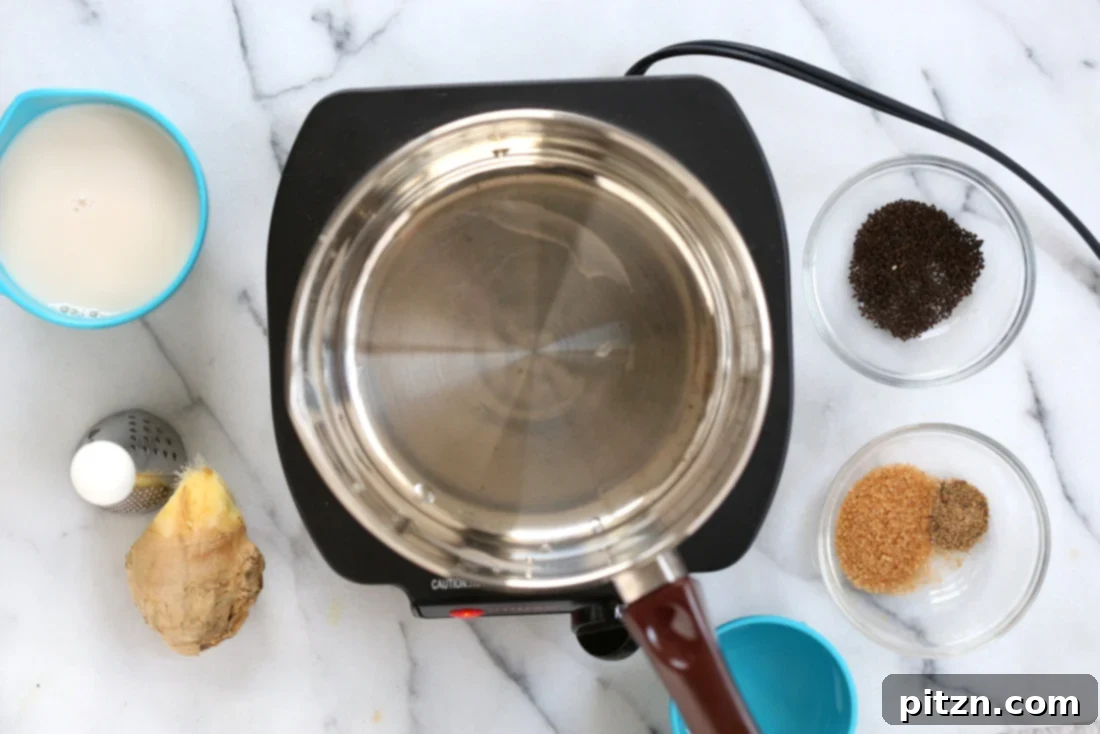
First, ensure all your chai ingredients are ready. Pictured here, clockwise from the top, you’ll find raw sugar, freshly grated ginger, chai patti (loose leaf tea), and our homemade chai masala blend.
Step 1: Infusing the Spices and Tea
In a small, deep saucepan, combine water, sugar, chai patti (loose tea), your chai masala blend, and grated ginger. Bring this mixture to a rapid, bubbling boil over medium heat. This initial boiling stage, typically lasting 7 to 9 minutes, allows the spices and tea to properly infuse into the water, releasing their full spectrum of flavors and creating a potent base for your chai.
Step 2: Adding Plant Milk
Once your tea base is boiling vigorously, slowly pour in your chosen plant milk. The gradual addition helps prevent curdling, especially with temperature-sensitive plant milks. Continue heating the mixture, bringing it just to the point of boiling again. This process usually takes 6 to 8 minutes, ensuring the milk is thoroughly warmed and integrated without scorching.
Step 3: Strain and Serve
As soon as the chai reaches a gentle boil, remove it from the heat. Carefully strain the creamy chai into a cup, discarding the spent tea leaves and spices. Serve immediately and enjoy this wonderfully aromatic and comforting beverage. This creamy chai latte is best savored hot.
Alternative Method: Using an Infuser
For a simpler preparation, you can also use a tea infuser. Place the tea and spices directly into the infuser, then immerse it in the boiling water. Once steeped, add the plant milk and bring it just to a boil. You can then pour the tea into a cup, removing the infuser, or leave it in the cup for a stronger infusion, depending on your preference.
Expert Tips for the Best Vegan Chai Tea
- **Experiment with Plant Milks:** As highlighted earlier, trying various plant milks is crucial. Give each type at least three attempts to properly assess its compatibility with your chai, as tastes and textures can take time to adjust.
- **Prevent Curdling:** Plant milks, especially those without stabilizers, can sometimes separate or “curdle” when added to very hot water. To mitigate this, pour the plant milk slowly into the boiling tea mixture, allowing the initial few seconds to slightly cool the overall temperature. Alternatively, add a tablespoon of cold or room temperature water to the boiling mixture just before introducing the plant milk.
- **Adjust Tea and Milk Ratios:** The ideal amount of loose tea and non-dairy milk can vary based on the brand of tea and your personal preference for strength and creaminess. Don’t hesitate to adjust the quantities to achieve your perfect cup.
- **Authentic Indian Chai vs. Commercial Lattes:** This recipe aims for the stronger, thinner, everyday Indian chai, distinct from the often sweeter, more heavily spiced (and typically cinnamon-forward) Starbucks-style chai latte. Our recipe leans towards more cardamom and less cinnamon, using traditional loose-leaf tea for an authentic profile.

Vegan Indian Chai Tea. Masala Chai. Gluten-free Recipe
4.94 from 15 votes
Vegan Richa
5 minutes
10 minutes
15 minutes
2
Beverage
Indian

Ingredients
- 3/4 cup water
- 1.5 Tbsp raw sugar or other sweetener to taste
- 2 tsp chai patti/loose tea
- 1/4 to 1/2 tsp chai spice/chai masala blend, (see notes for large batch), or use 1/4 tsp ground cardamom, 1/8 tsp cinnamon, a good pinch of ground clove, black pepper, ground ginger
- 1/2 to 1 tsp minced/grated fresh ginger, (some fresh gingers are too strong, so use to taste)
- 1.25 cup Almond breeze plain almond milk or oatmilk or soymilk other non dairy milk.
Instructions
-
In a small deep pan at medium heat, add water, sugar, tea leaves, chai masala blend and ginger. Bring to a bubbling boil. This should take 7 to 9 minutes, allowing the flavors to meld.
-
Slowly pour in the almond milk (or other non-dairy milk). Bring the mixture to just about a boil again, approximately 6 to 8 minutes, ensuring it does not boil over or scorch.
-
Strain the chai into a cup and serve hot. Compost the used tea leaves and spices.
-
**Note on Plant Milks:** Some plant milks tend to separate when added to very hot water. To prevent this, add a tablespoon of cold or room temperature water to the boiling mixture before pouring in the plant milk. This subtle temperature drop can help maintain the milk’s consistency.
Video
Notes
To prepare a larger batch of your own homemade chai masala, grind together 3/4 cup green cardamom pods, 1/4 cup cinnamon sticks (or 2 tablespoons cinnamon powder), 1/4 cup cloves, 2 tablespoons whole black pepper, and 2 to 3 tablespoons ground ginger. For an additional layer of flavor, you may include 1/2 teaspoon of fennel seeds (optional). Store this blend in an airtight container to maintain its freshness and potency.
Feel free to adjust the quantities of each spice to suit your personal preference. For a warming winter chai, consider adding more ginger. A teaspoon of nutmeg and a pinch of allspice can also be incorporated for interesting variations.
This versatile spice blend isn’t just for chai! Use it to infuse flavor into a variety of dishes such as ice creams, doughnuts, caramel, bread, granola, and more, adding an exotic Indian touch to your culinary creations.
Nutritional values provided are based on one serving.
Nutrition
Carbohydrates: 9g,
Protein: 1g,
Fat: 1g,
Sodium: 60mg,
Sugar: 9g,
Calcium: 150mg
Nutrition information is automatically calculated, so should only be used as an approximation.
Did you make this recipe? Share your experience!