
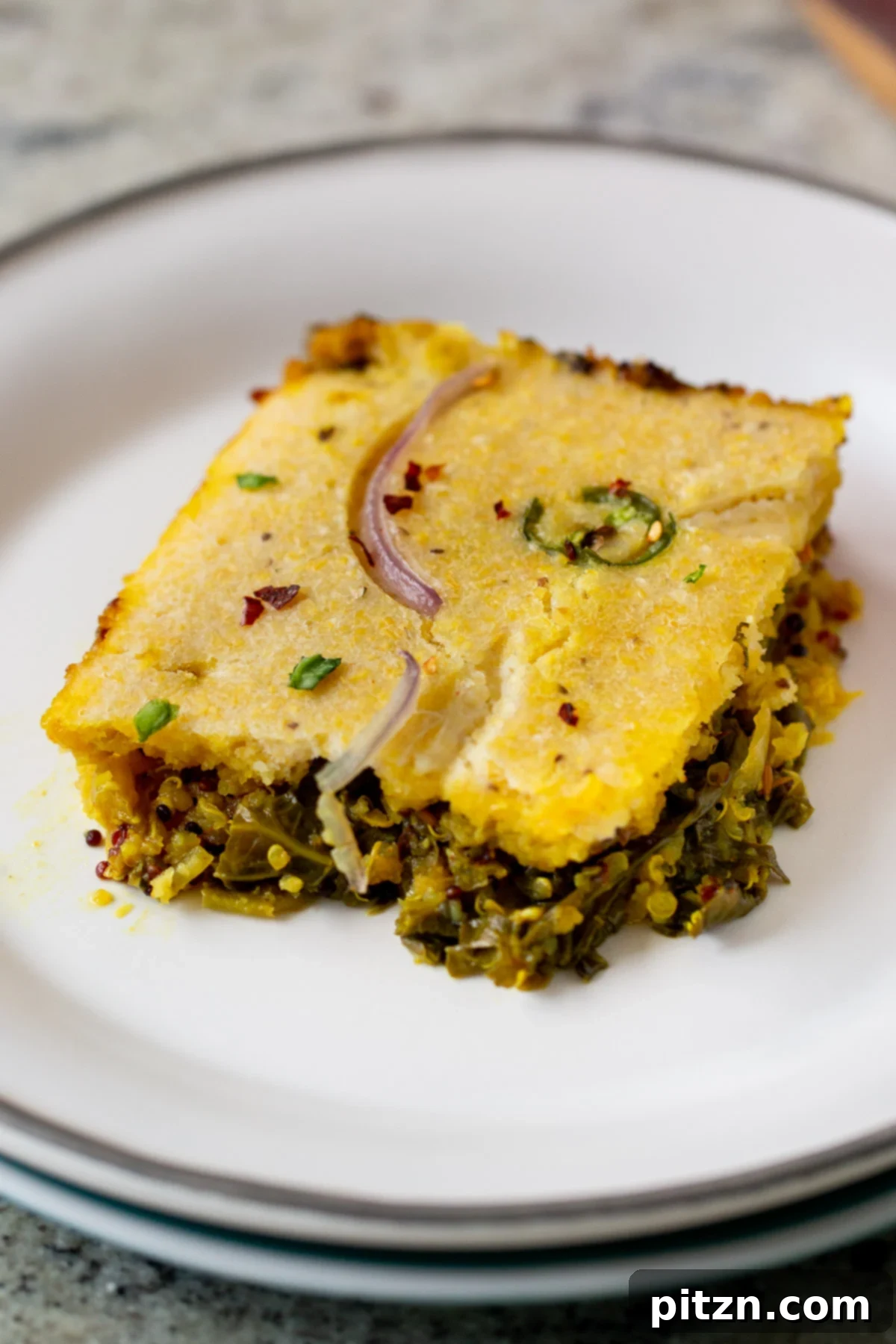
Indulge in the comforting embrace of a truly unique fusion dish: the Saag Cornbread Casserole. This innovative recipe beautifully marries the vibrant, deeply spiced flavors of traditional Indian mustard greens stew (Sarson da Saag) with the hearty, slightly sweet crunch of a classic cornbread topping. It’s a nourishing, satisfying, and incredibly flavorful meal that brings the essence of Indian comfort food to your table in a convenient, oven-baked format. Perfect for a cozy weeknight dinner or a special gathering, this casserole offers an exciting culinary adventure, proving that delicious plant-based meals can be both exotic and approachable. We’ve ensured nut-free and soy-free options, with included modifications for oil-free and gluten-free versions, making this a versatile delight for many dietary needs.
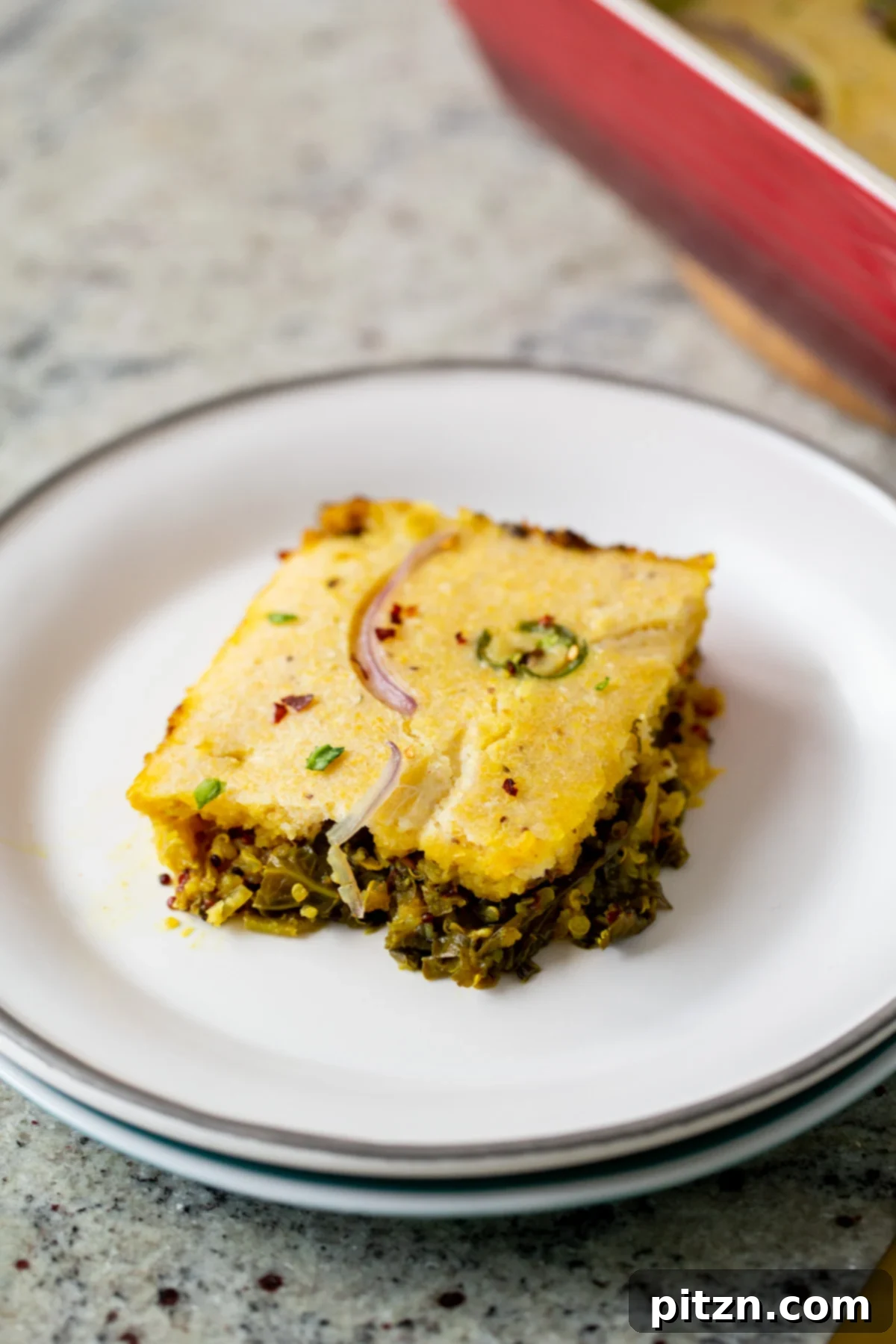
Get ready to discover your new favorite Indian-inspired casserole! Our Saag Cornbread Casserole is designed to help you explore the rich tapestry of Indian flavors and foods in an effortlessly simple yet profoundly satisfying way. This dish isn’t just a meal; it’s an experience – flavorful, incredibly nourishing, and deeply comforting, promising to become a staple in your culinary repertoire.
Understanding Saag: A Culinary Journey into Indian Greens
Saag, a beloved dish originating from the northern regions of India, is a celebration of fresh, leafy greens. The beauty of Saag lies in its adaptability, as it can incorporate a variety of locally available greens. While many variations exist, the most iconic and cherished version, particularly from Punjab, is “Sarson da Saag,” which traditionally features mustard greens, either on their own or mixed with other greens like spinach or bathua (lamb’s quarters, a type of amaranth). This robust stew is renowned for its earthy flavors and the labor of love that goes into its preparation.
Traditionally, Sarson da Saag involves a slow-cooking process that can span several hours, allowing the greens to break down and their flavors to intensify. After initial cooking, the greens are often mashed to create a thick, creamy consistency, then simmered again with an aromatic blend of spices. The finished Saag is typically crowned with a generous dollop of vegan butter (or ghee in traditional recipes) and often served alongside Indian pickle, adding a tangy counterpoint to the rich greens. It’s a dish that speaks volumes of the region’s culinary heritage and its connection to fresh, seasonal produce.
The Perfect Pairing: Makki ki Roti and Our Cornbread Casserole Twist
The classic accompaniment to Sarson da Saag is “Makki ki Roti” (or Makai ki Roti), a rustic flatbread made from maize flour or fine cornmeal. This unleavened bread, while sharing some similarities with Mexican corn tortillas in its corn base, distinguishes itself through its unique flavor and texture. Unlike nixtamalized corn tortillas, Makki ki Roti uses un-nixtamalized maize flour, resulting in a distinctively earthy and robust taste, and a slightly denser, crumbly texture that perfectly complements the rich, spiced greens.
The traditional preparation of both Sarson da Saag and Makki ki Roti can be quite time-consuming, making them an elaborate meal. Recognising the desire for accessible Indian cuisine, we’ve ingeniously transformed this beloved Punjabi comfort food staple into a simple, one-pan casserole dish. Our Saag Cornbread Casserole captures all the authentic flavors and heartwarming essence of the original, but streamlines the cooking process, allowing you to enjoy this delicious combination without the extensive effort. This casserole is designed for modern living, bringing a taste of India into your busy week without compromising on authenticity or flavor.
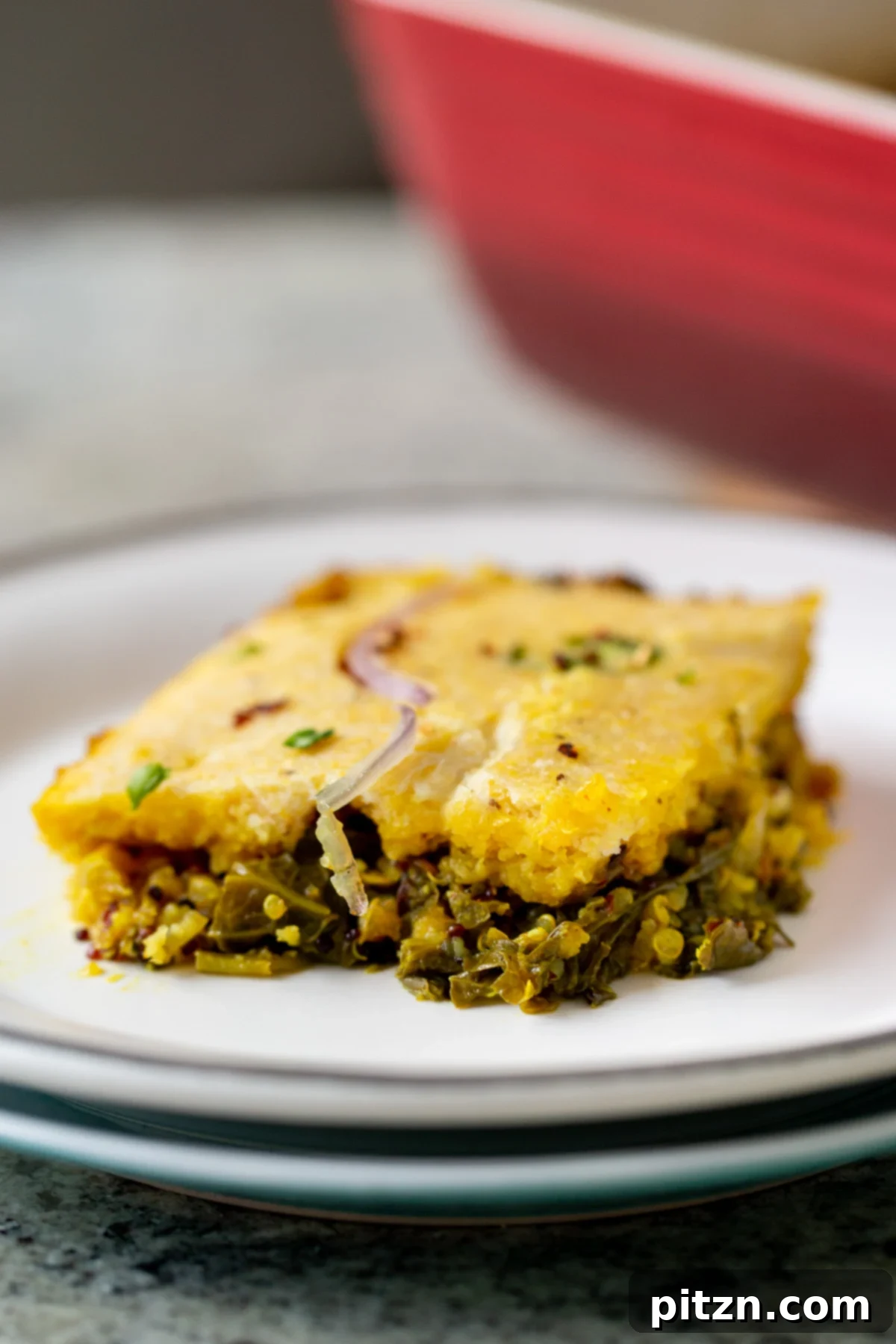
In this casserole rendition, the finely chopped greens form the flavorful base, simmering gently at the bottom of the baking dish alongside a fragrant medley of tempered spices and aromatic ingredients characteristic of Saag. To enhance the nutritional profile and boost the protein content of this wholesome vegan casserole, we incorporate quinoa. This addition not only adds a delightful texture but also makes the dish more filling and balanced. For those who prefer alternatives, split red lentils (masoor dal) or diced potatoes can be used instead of quinoa, offering flexibility while maintaining the hearty nature of the casserole.
While the Saag stew bakes to perfection, infusing your kitchen with its alluring aroma, we turn our attention to crafting the distinctive cornbread-style topping. Instead of the labor-intensive process of making individual corn flatbreads, we create a simple, flavorful cornbread mixture, seasoned with authentic Indian spices and prepared with cornmeal. This ingenious topping is then carefully layered over the pre-cooked greens, covered with parchment paper, and baked again until the cornbread is beautifully set and golden. The result is a harmonious blend of creamy, spiced greens and a tender, savory cornbread crust, offering the ultimate easy one-pan meal.
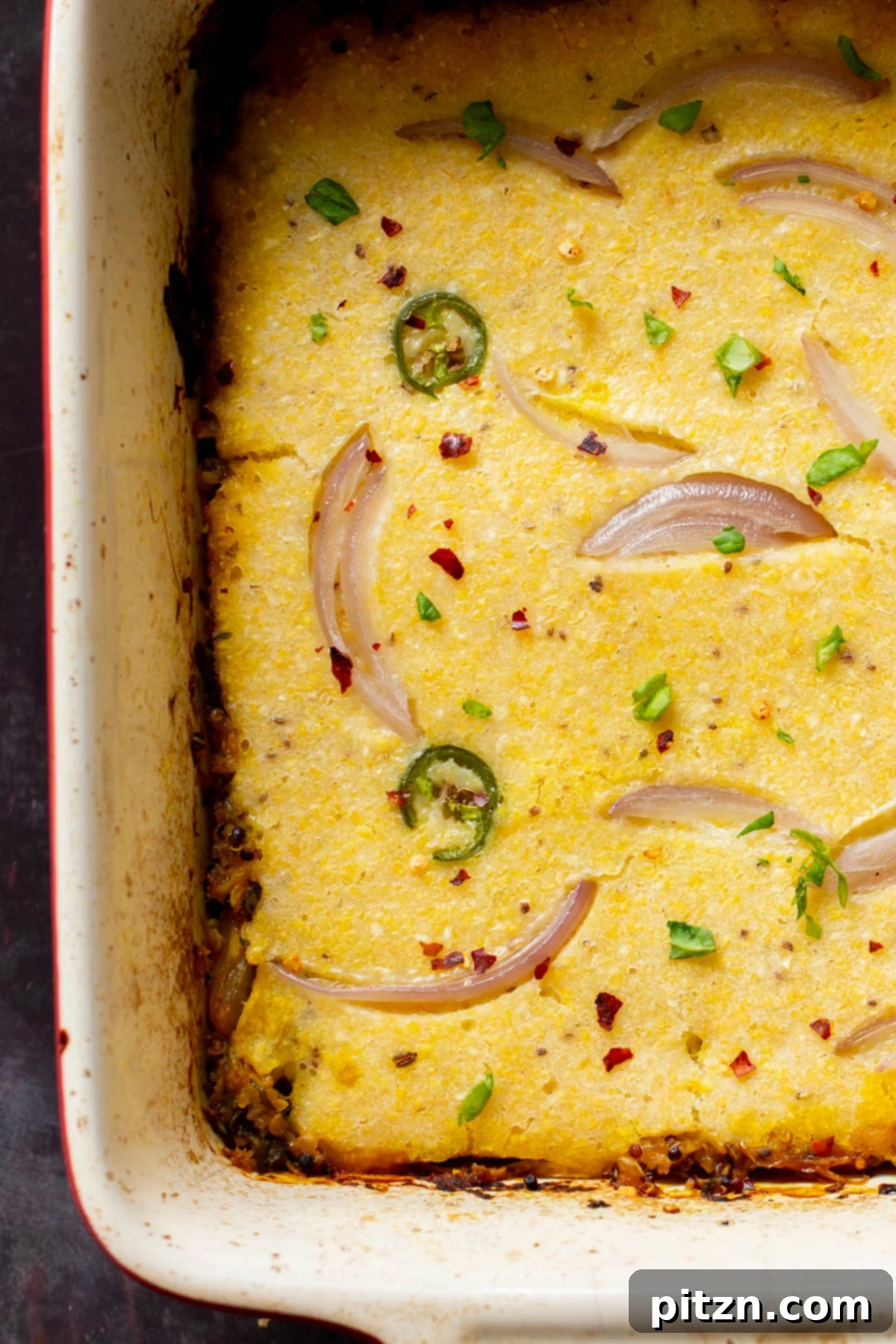
This Saag Cornbread Casserole is a complete meal in itself, hearty, utterly delicious, and incredibly satisfying. We love to serve it fresh from the oven, perhaps with an extra dollop of vegan butter melting on top, enhancing its richness and authentic appeal. It effortlessly delivers all the beloved flavors of Makki ki Roti and Sarson da Saag, but with the unparalleled convenience and ease that only a casserole can offer. Prepare to be delighted by this modern take on a classic Indian favorite!
More Vegan Casserole Dishes to Explore:
Shahi Tofu Kofta Casserole
Jalapeno Chili Cornbread Casserole
Lentil Curry Casserole
Baked Kitchari Casserole (Spiced Lentil Rice Casserole)
South Indian Eggplant Curry Recipe (Baked Casserole)
Madras Curry Tofu Casserole
Baked Tofu Curry – Makhani
Saag Cornbread Casserole: A Detailed Recipe Guide
This recipe provides a simplified yet incredibly flavorful way to enjoy the essence of Sarson da Saag and Makki ki Roti in a convenient casserole format. Prepare to impress with this fragrant Indian mustard greens stew baked with a tender cornbread topping. It’s comforting, nourishing, and easily adaptable to various dietary needs.
Ingredients for Saag Cornbread Casserole (Serves 4)
For the Saag Stew:
- 2 teaspoons oil (for oil-free, see notes below)
- 1/4 teaspoon cayenne pepper (or 1/2 teaspoon paprika for milder heat)
- 1/4 teaspoon turmeric powder
- 1 teaspoon dried fenugreek leaves (Kasoori methi)
- 1/2 – 1 teaspoon garam masala
- 1/2 teaspoon ground cumin
- 1/2 teaspoon salt
- 1 tablespoon ginger garlic paste (or minced 1-inch fresh ginger and 3-4 cloves garlic)
- 1/2 cup chopped onion
- 1 green chili (such as Serrano, Indian, or Thai), finely chopped
- 1 large bunch of mustard greens, chopped (discard hardest bottom stems; softer stems are edible). Alternatively, use a mix of chard, spinach, collard, or amaranth greens.
- 1/4 cup quinoa (or split red lentils/masoor dal for an alternative protein boost)
- 1.5 cups water or vegetable stock
For the Cornbread Topping:
- 3/4 cup all-purpose flour (see notes for gluten-free options)
- 1/2 cup fine or medium-sized cornmeal
- 1/3 teaspoon salt
- 1 teaspoon baking powder
- 1/4 teaspoon Ajwain (carom seeds) or cumin seeds
- 1 cup water (or unsweetened non-dairy milk for a richer topping)
- 1 tablespoon oil (omit for oil-free)
For the Tempering (Tadka):
- 2 teaspoons oil (for oil-free, see notes below)
- 1/4 teaspoon cumin seeds
- 2 dried red chilies (cayenne or Indian for hot, California red for mild; or 1/4 tsp red pepper flakes)
- 2 garlic cloves, finely minced
For Garnish/Topping:
- Sliced green chilies
- Sliced onion
- Fresh cilantro, chopped
- Lime juice
- Vegan butter (for serving)
Helpful Tips for a Perfect Casserole:
- Green Alternatives: While mustard greens are traditional, feel free to use a blend. Half mustard greens and half chard or amaranth leaves work wonderfully. I generally avoid using spinach with mustard greens as its strong flavor can often overshadow the distinct taste of the mustard greens, though spinach works exceptionally well in its own saag preparations.
- Quinoa Substitution: If quinoa isn’t your preference, substitute with 1/4 cup of split red lentils (masoor dal) to maintain the protein content and hearty texture.
- Moisture Check: If, after the initial baking, the saag greens appear too dry, gently stir in about 1/4 cup of water or unsweetened non-dairy milk before spreading the cornbread batter. This ensures a moist and delicious base.
- For a Moister Cornbread: For an even richer and moister cornbread topping, consider using unsweetened non-dairy milk or a light coconut milk instead of water in the cornbread batter.
- Oil-Free Adaptation: To make this recipe completely oil-free, simply omit the oil from the saag stew ingredients and the cornbread topping. For the tempering, dry roast the cumin seeds in a small skillet until fragrant, then add 2-3 tablespoons of vegetable broth. Incorporate the minced garlic and dried red chilies, sautéing briefly until aromatic. Be aware that the cornbread layer might be slightly drier without oil; to remedy this, lightly brush it with aquafaba (liquid from canned chickpeas) or non-dairy milk after baking to re-moisten.
- Gluten-Free Option: To make this casserole gluten-free, substitute the all-purpose flour with a high-quality gluten-free flour blend. A good blend to try is 1/2 cup almond flour, 1/4 cup oat flour, and 1/4 cup potato starch. Use 3/4 cup of this mixture in the cornbread topping, adding a little more if necessary to achieve the right consistency.
- Stovetop Saag Preparation: If you prefer to cook the saag on the stovetop initially, follow the saag steps in a large saucepan. Sauté the onion, ginger, garlic, and spices over medium heat, then add the greens, quinoa, and water. Mix well, partially cover, and simmer for 20-25 minutes, stirring occasionally until the greens are tender and quinoa is cooked. Mash the greens slightly, then transfer the mixture to your baking dish before proceeding with the tempering and cornbread topping.
- Make it Heartier: For an even more substantial meal, stir in 1 cup of cooked chickpeas into the saag mixture just before adding the cornbread layer. Remember to adjust the spice levels slightly to account for the increased volume.
Step-by-Step Instructions: Crafting Your Saag Cornbread Casserole
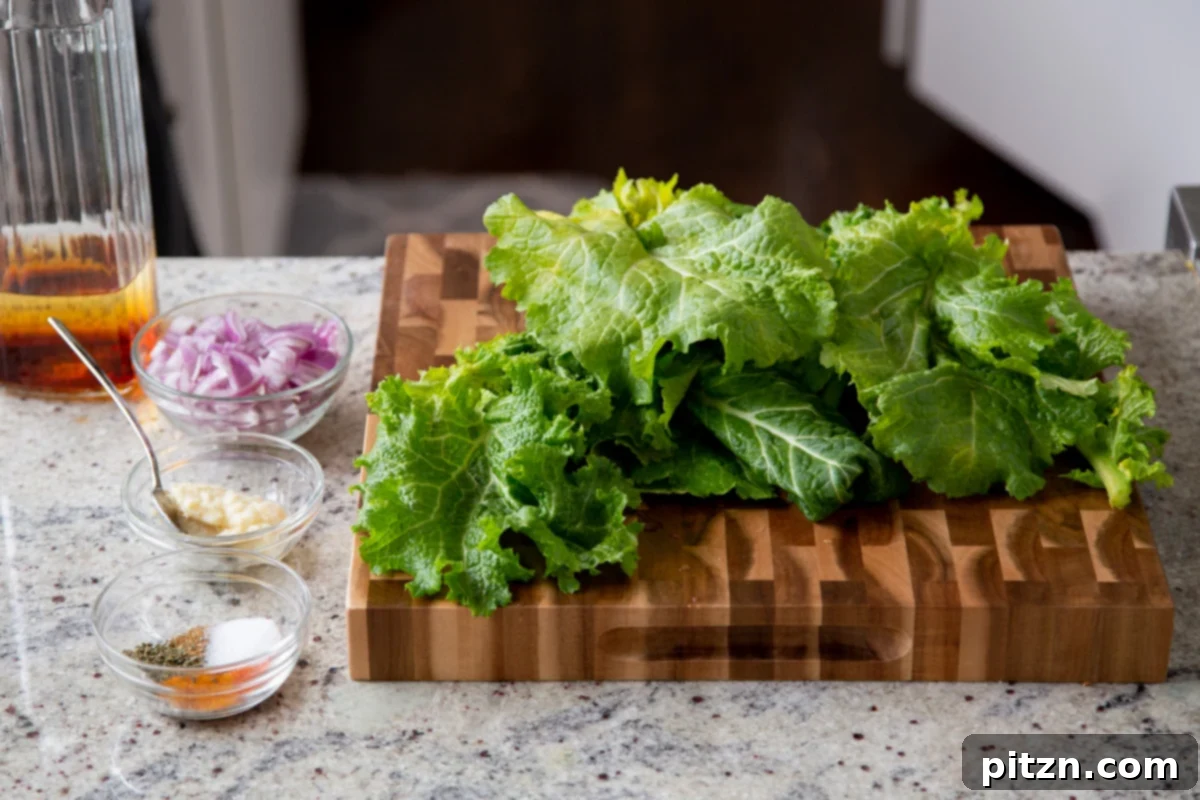
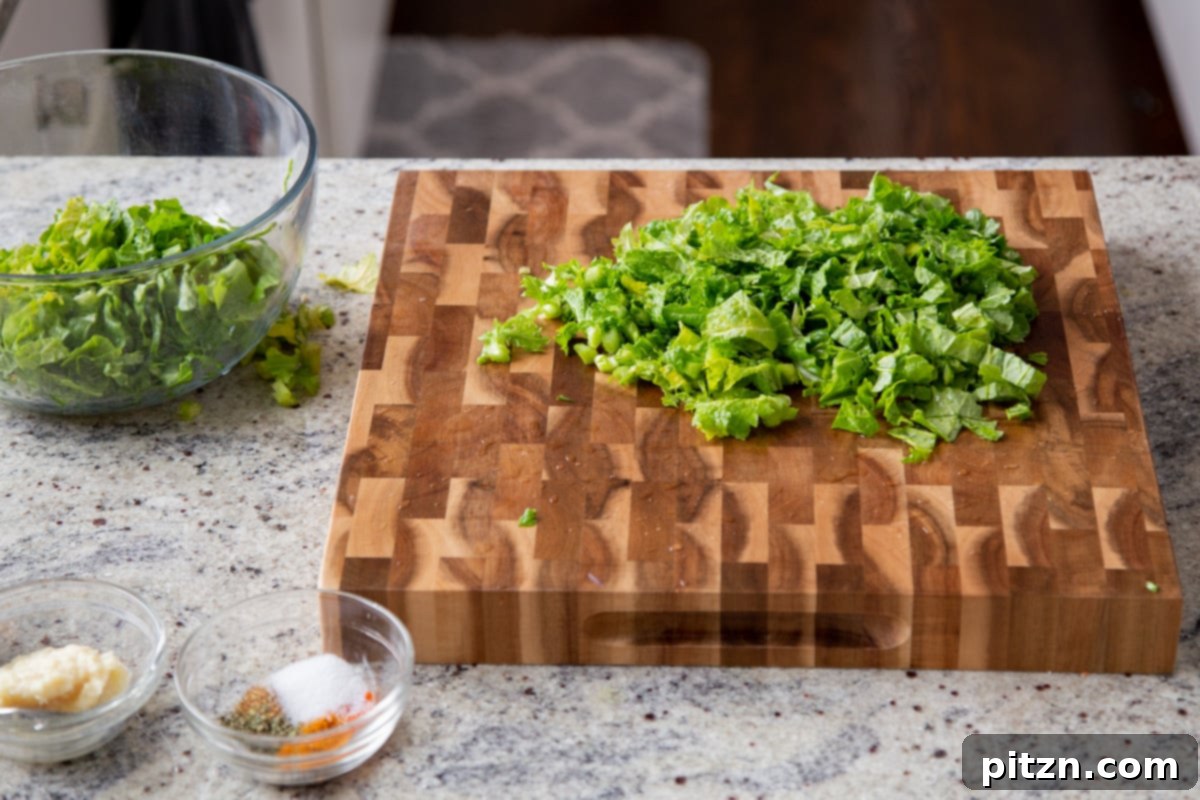
- Prepare the Mustard Greens: Begin by thoroughly washing your mustard greens. Finely chop the entire leaf and stem. The stems of mustard greens are quite tender and flavorful, so there’s no need to discard them, except for any very hard or dirty bits at the very bottom. A fine chop ensures they cook down beautifully and meld seamlessly into the stew.
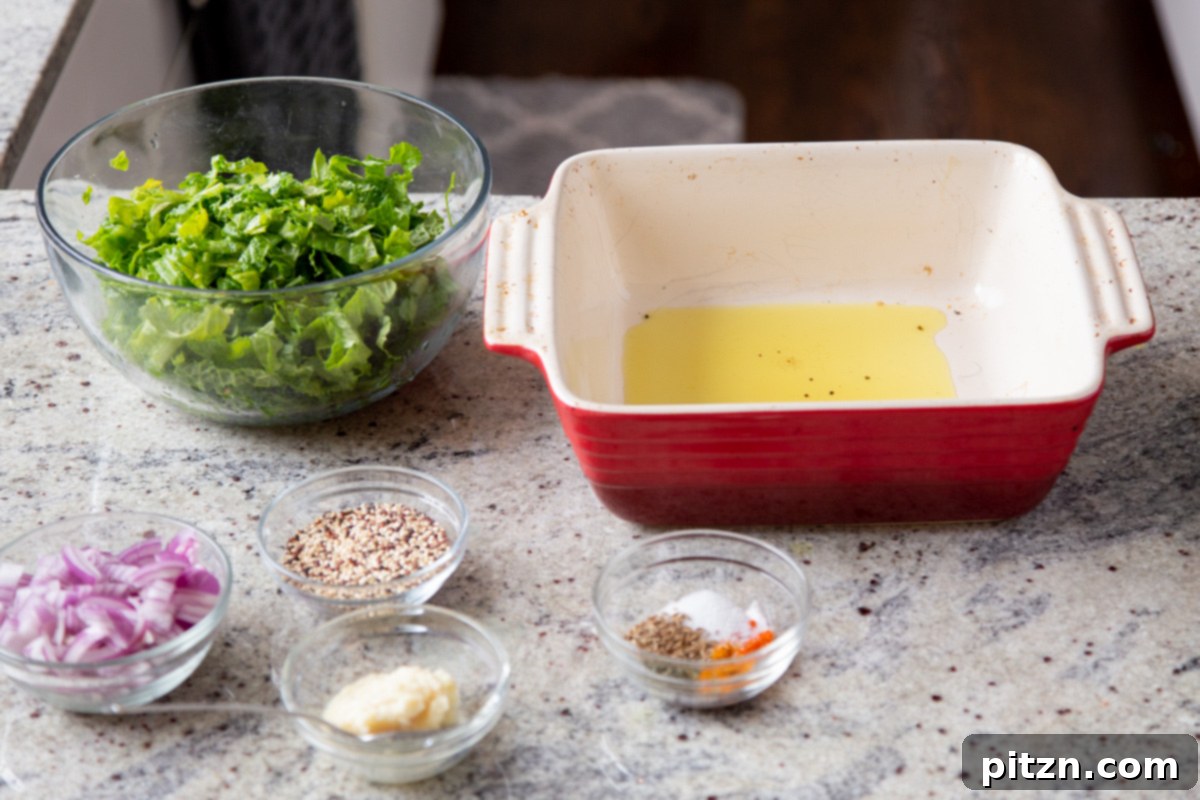
- Assemble the Saag Base: In a 9×9-inch baking dish, combine 2 teaspoons of oil with the cayenne (or paprika), turmeric, dried fenugreek leaves, garam masala, ground cumin, and salt. Mix these spices thoroughly with the oil to create an aromatic paste. Next, add the ginger garlic paste, chopped green chili, and chopped onion, mixing everything well to evenly distribute the flavors.
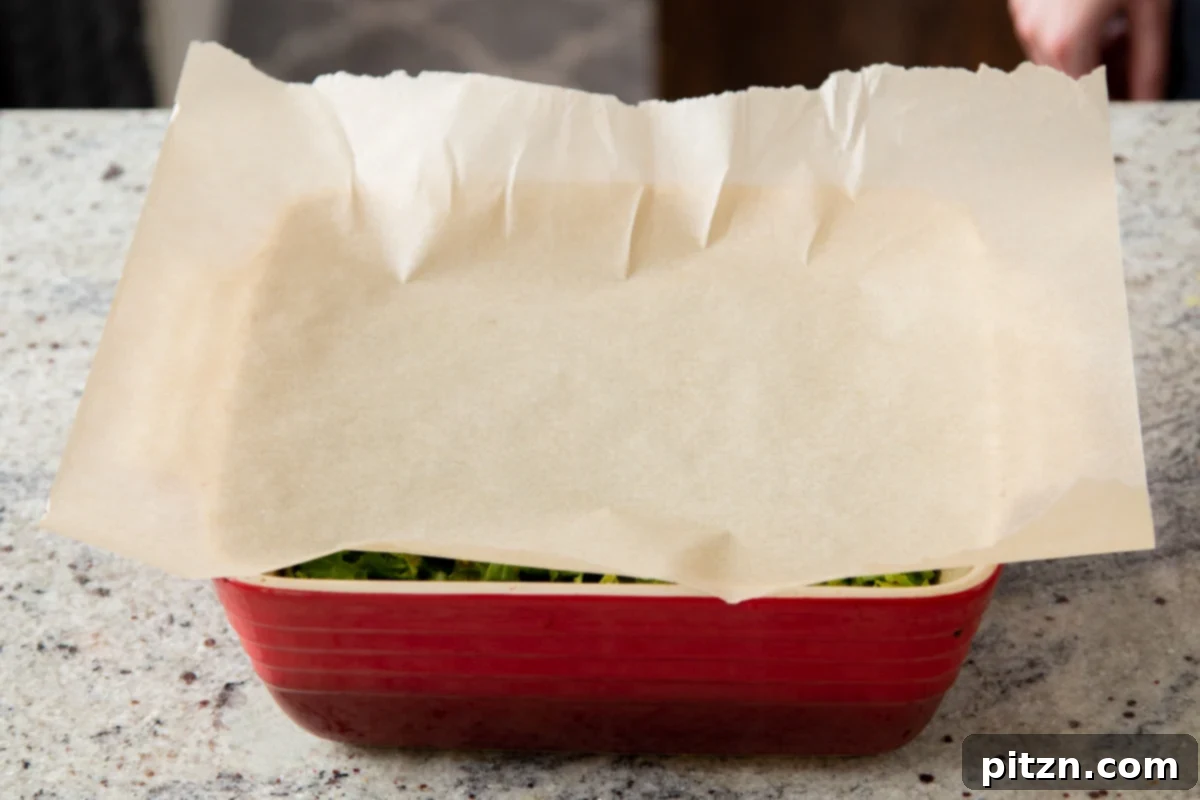
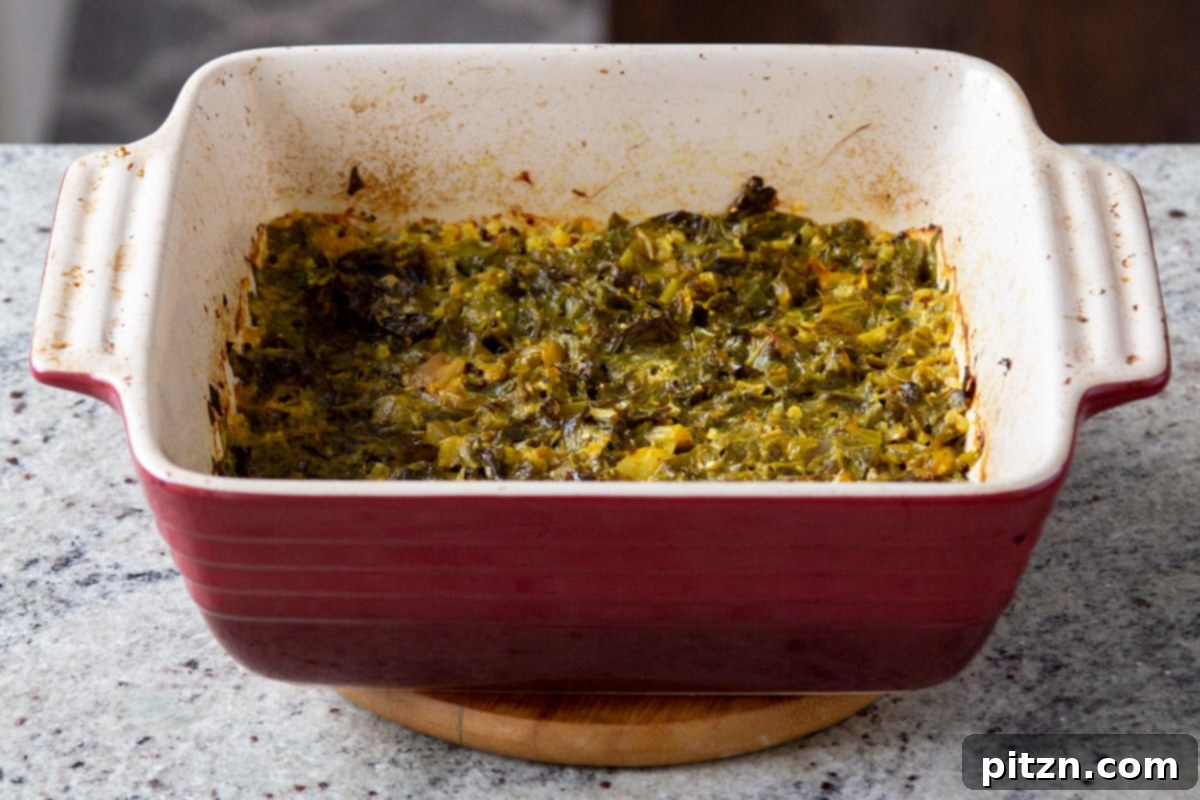
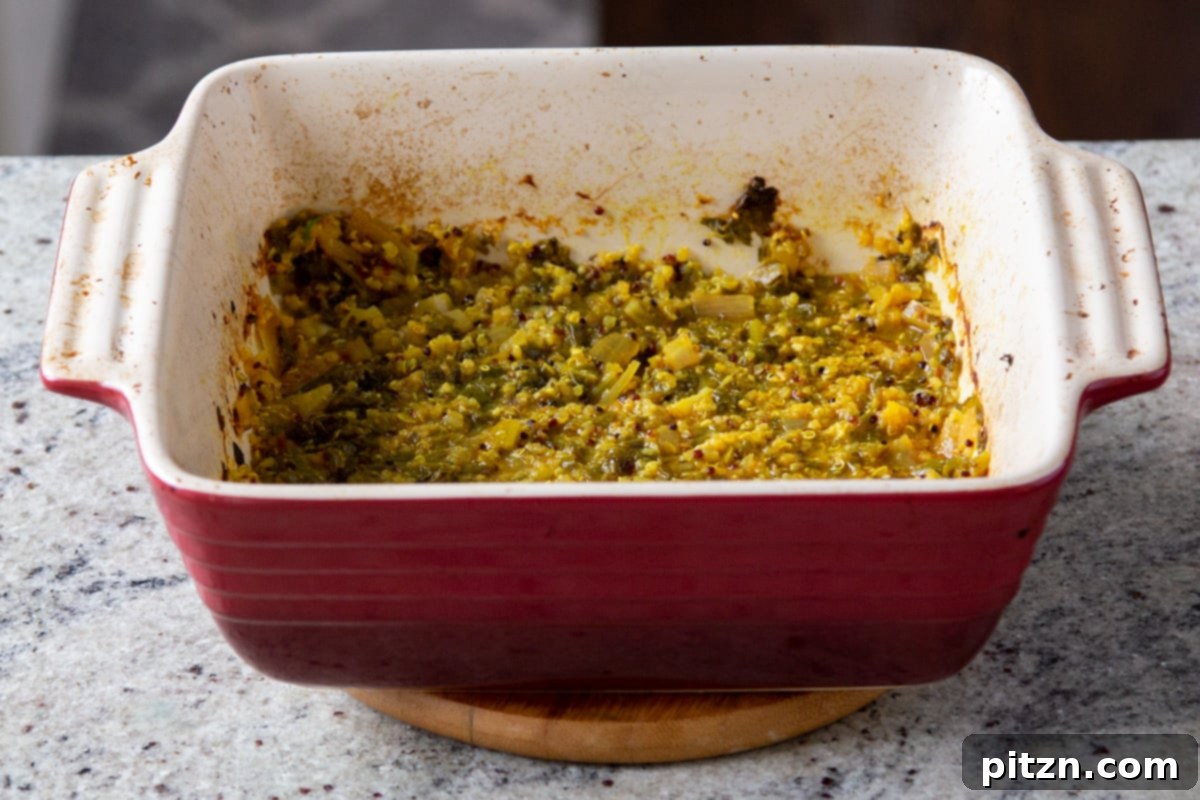
- Layer the Greens and Bake (First Round): Now, add the finely chopped mustard greens and quinoa (or lentils) to the baking dish. Pour in the 1.5 cups of water or stock. Mix everything vigorously, ensuring all the mustard greens are coated with the spices and submerged in the liquid. Press the greens down to maximize contact with the water for even cooking. Preheat your oven to 400ºF (205ºC). Once preheated, cover the baking dish securely with parchment paper (or foil) and bake for 35-45 minutes. This initial bake will soften the greens and cook the quinoa.
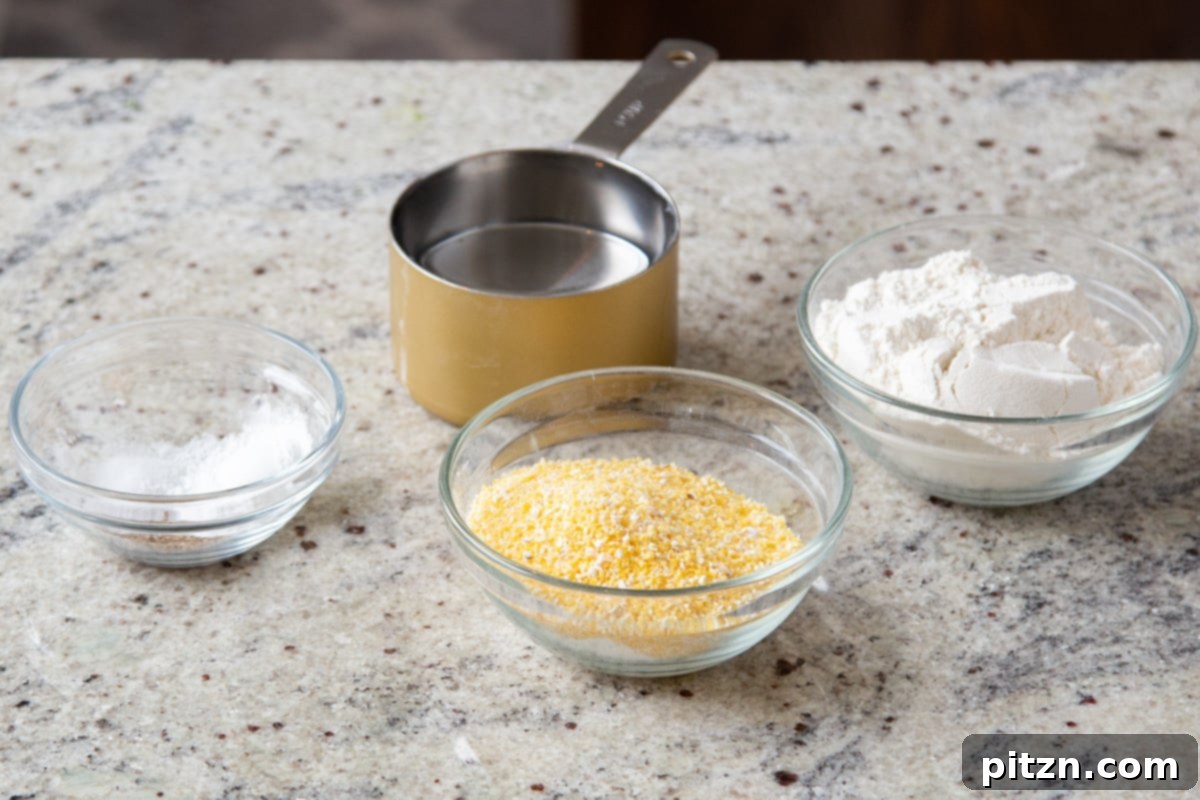
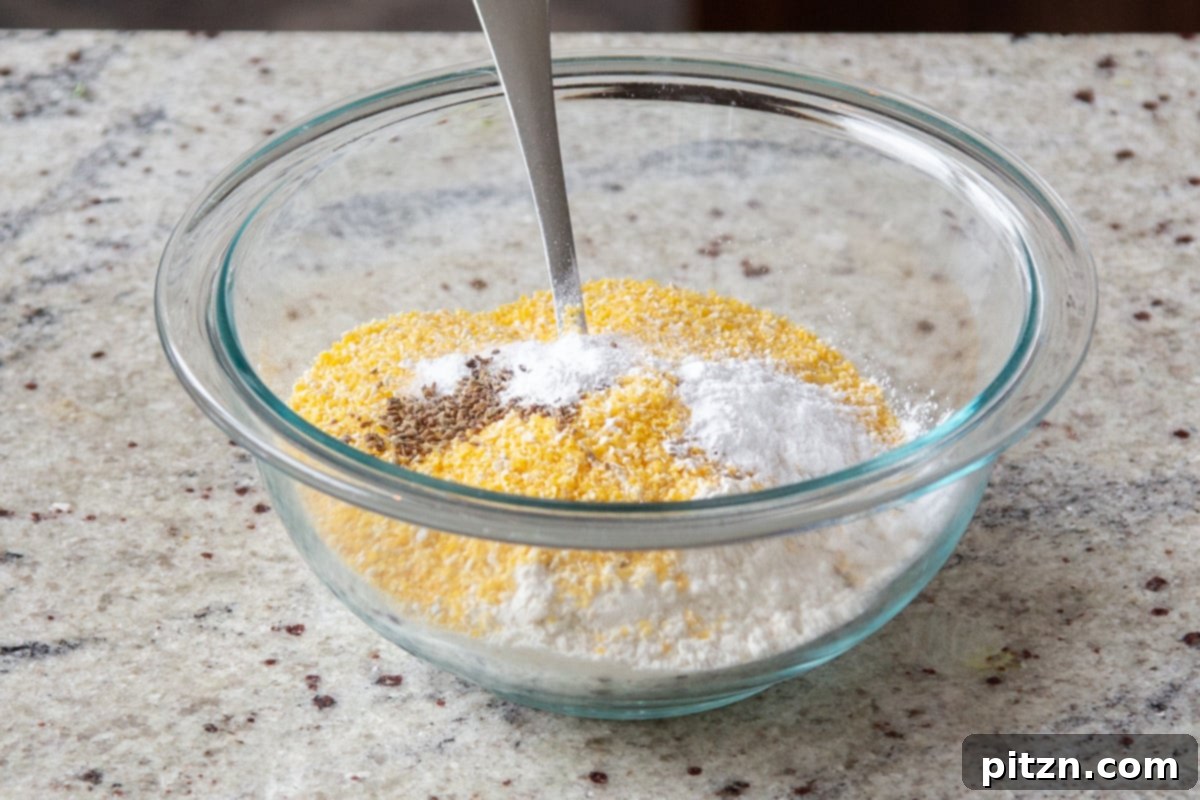
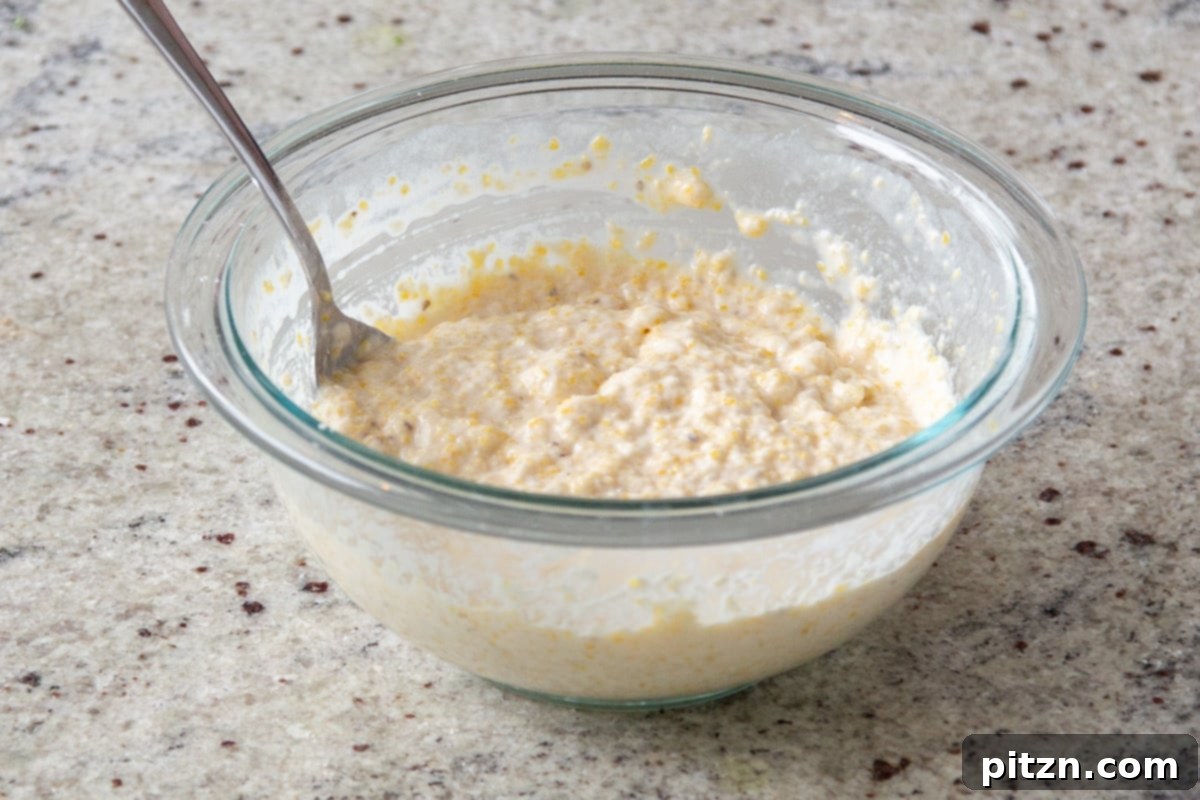
- Prepare the Cornbread Topping: While the saag is baking, prepare the cornbread mixture. In a large mixing bowl, combine the all-purpose flour, cornmeal, salt, baking powder, and Ajwain (or cumin seeds). Whisk these dry ingredients together until thoroughly combined. Add one tablespoon of oil and 3/4 cup of water (or non-dairy milk) to the dry mixture and mix until you have a smooth, pourable batter. Set this aside.
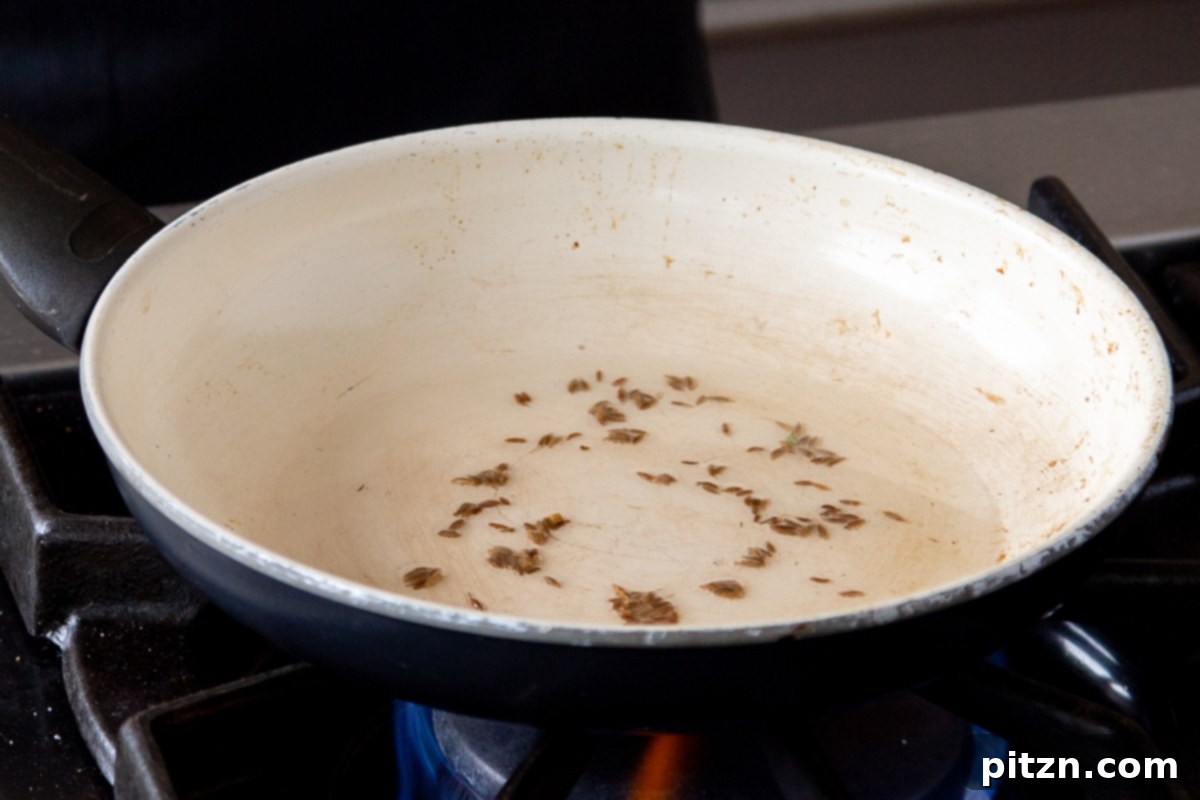
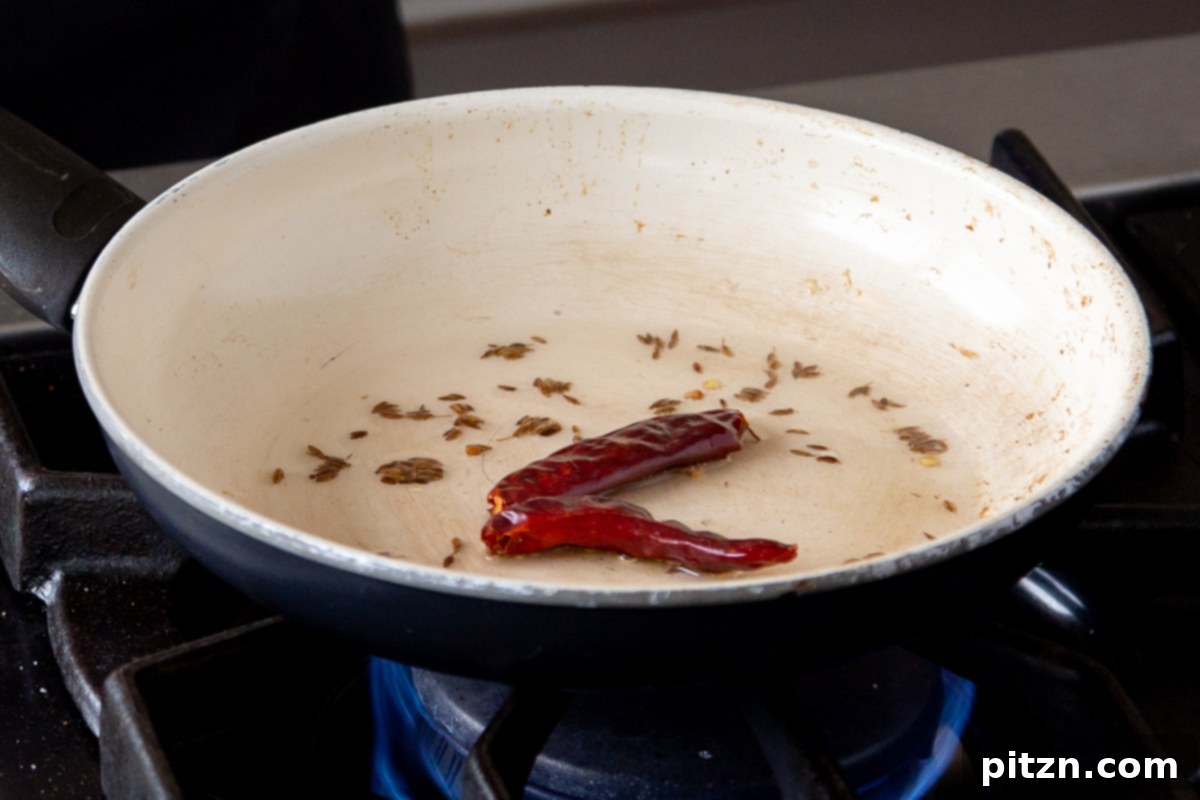
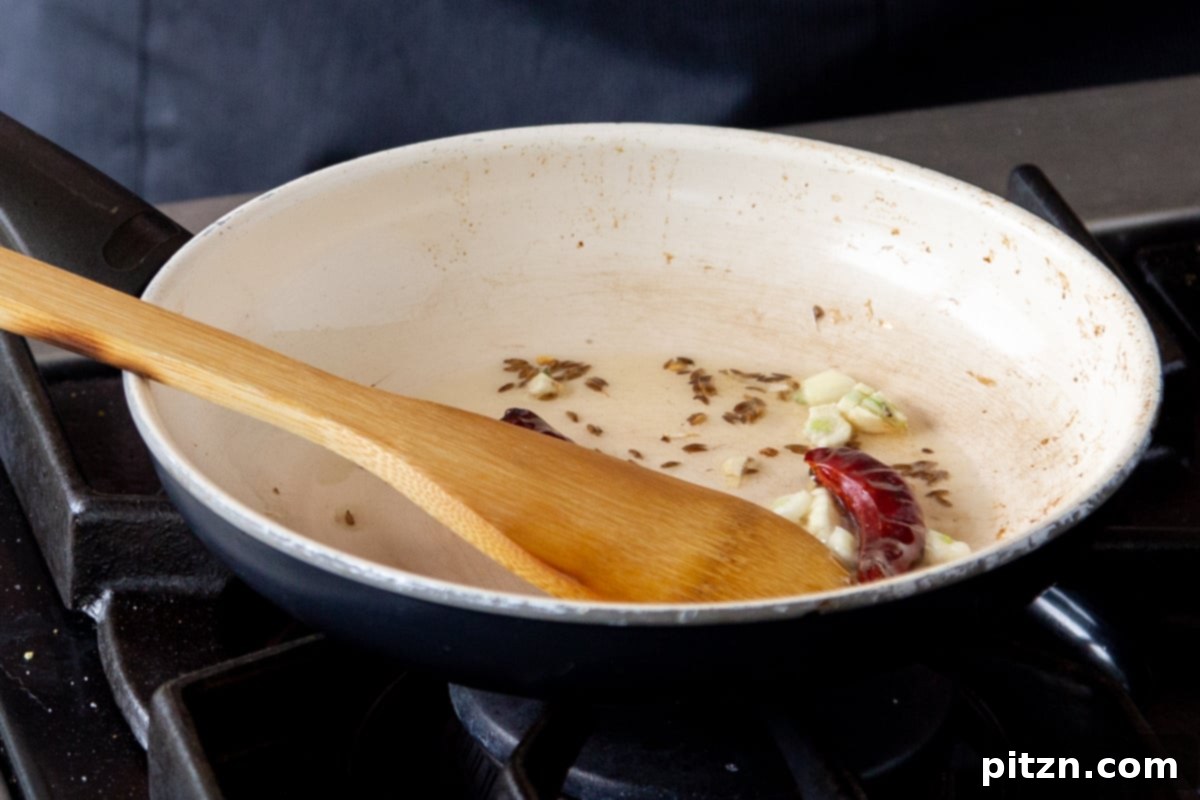
- Make the Tempering (Tadka): This step is crucial for authentic Saag flavor. In a small skillet, heat 2 teaspoons of oil over medium-high heat. Once the oil is hot, add the cumin seeds. Cook them for about 2 minutes, or until they change color significantly and become fragrant. Reduce the heat to medium-low. Add the dried red chilies and finely minced garlic, stirring for a few seconds. Immediately switch off the heat and continue stirring for another few seconds to ensure the garlic cooks slightly without burning. This tempering adds a layer of depth and aroma. (You can skip this if desired and add a bit more garam masala to the saag instead, but it’s highly recommended for authentic taste.)
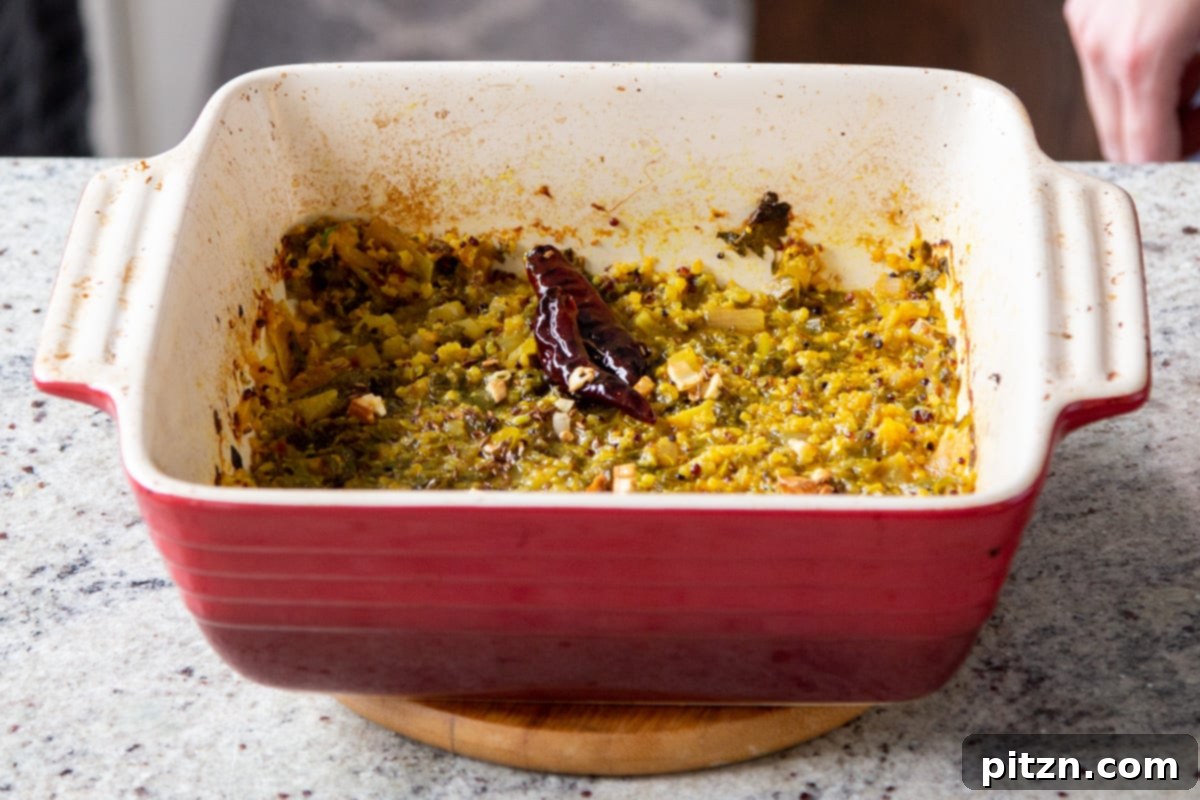
- Combine and Mash the Saag: After 35-45 minutes, carefully remove the baking dish from the oven. The greens should be wilted, and the quinoa cooked. If the saag appears too dry, stir in 1/4 cup of water or non-dairy milk at this stage. Lightly mash the cooked greens directly in the baking dish using a fork or potato masher to achieve a slightly creamy texture. Pour the freshly prepared tempering over the greens and gently mix it in, but don’t incorporate it completely; you want streaks of that aromatic oil throughout.
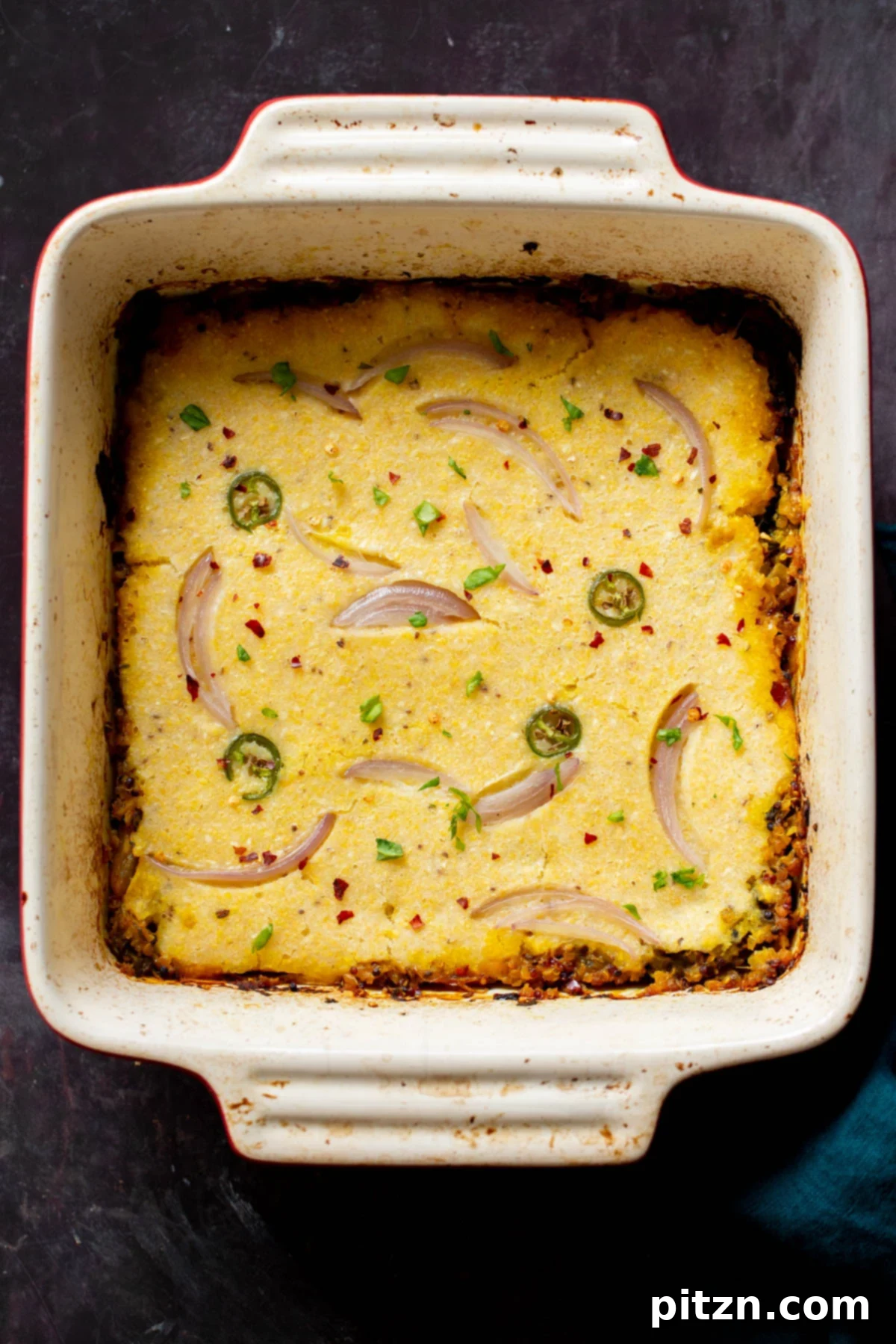
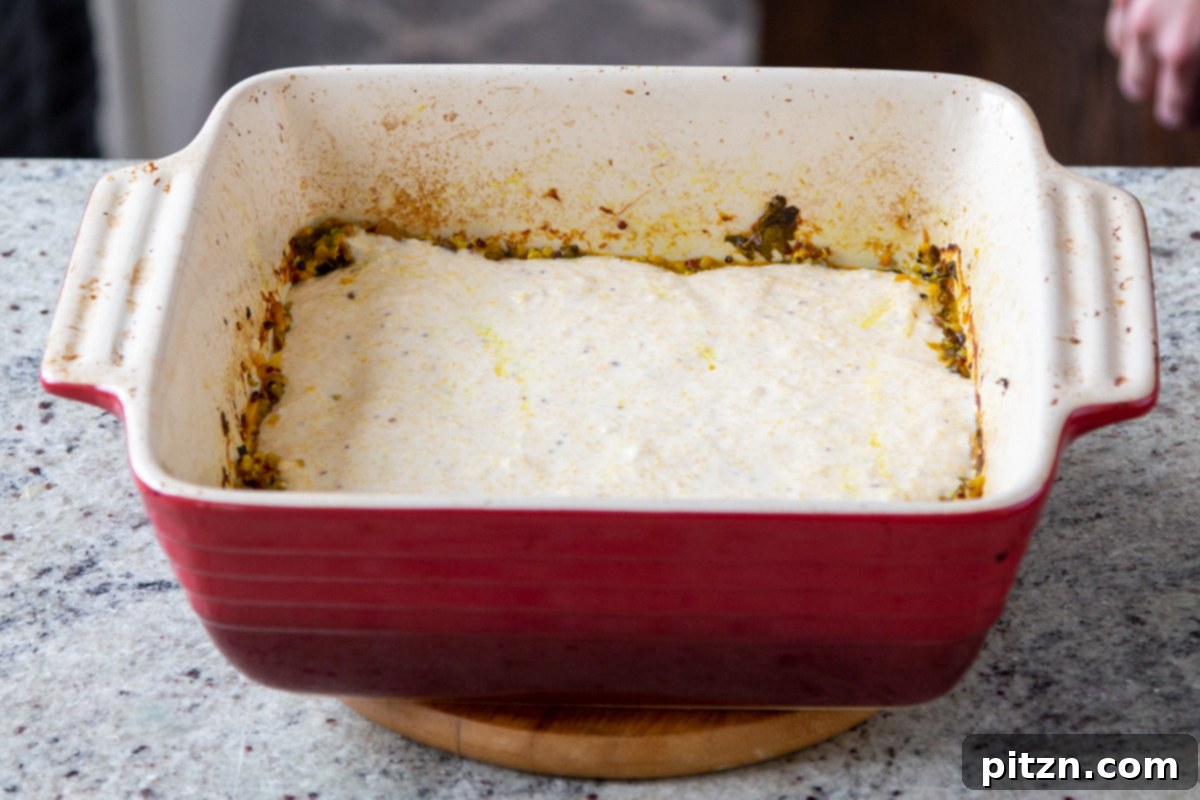
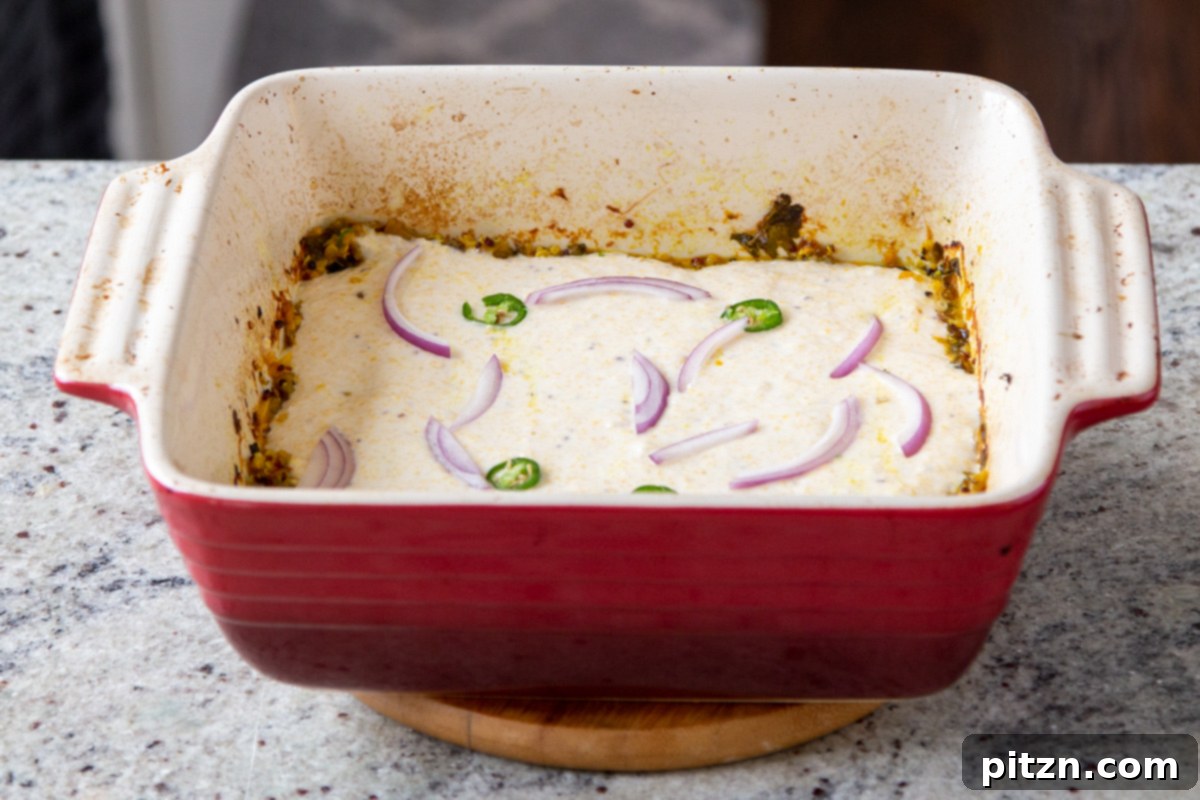
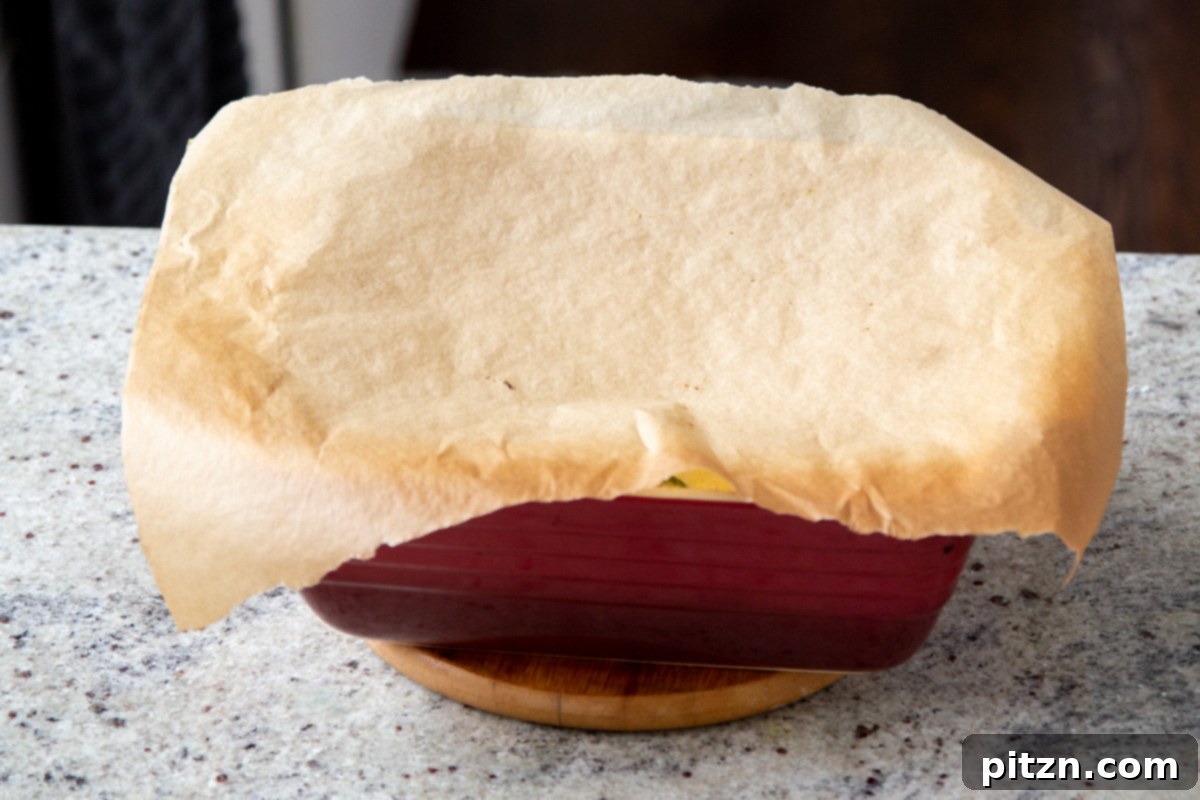
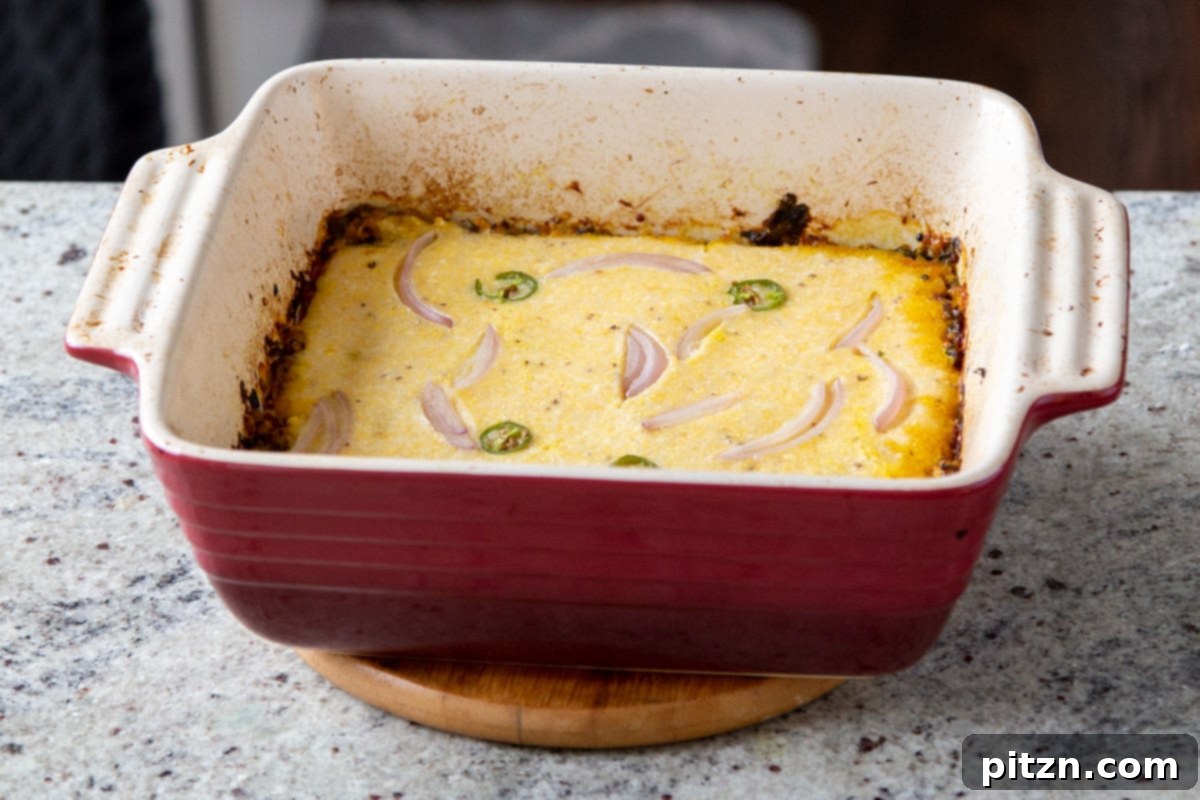
- Add Cornbread Layer and Final Bake: If your cornbread mixture seems too thick, add a tablespoon of water at a time until it reaches a consistency that’s easy to spread. Carefully spoon and spread the cornbread mixture evenly over the mashed saag greens in the baking dish. For an extra touch of flavor and visual appeal, you can optionally top the cornbread layer with sliced jalapenos/green chilies and sliced onion. Cover the baking dish once more with parchment paper and return it to the preheated oven. Bake for another 15-17 minutes, or until the cornbread topping is fully cooked through and golden brown.
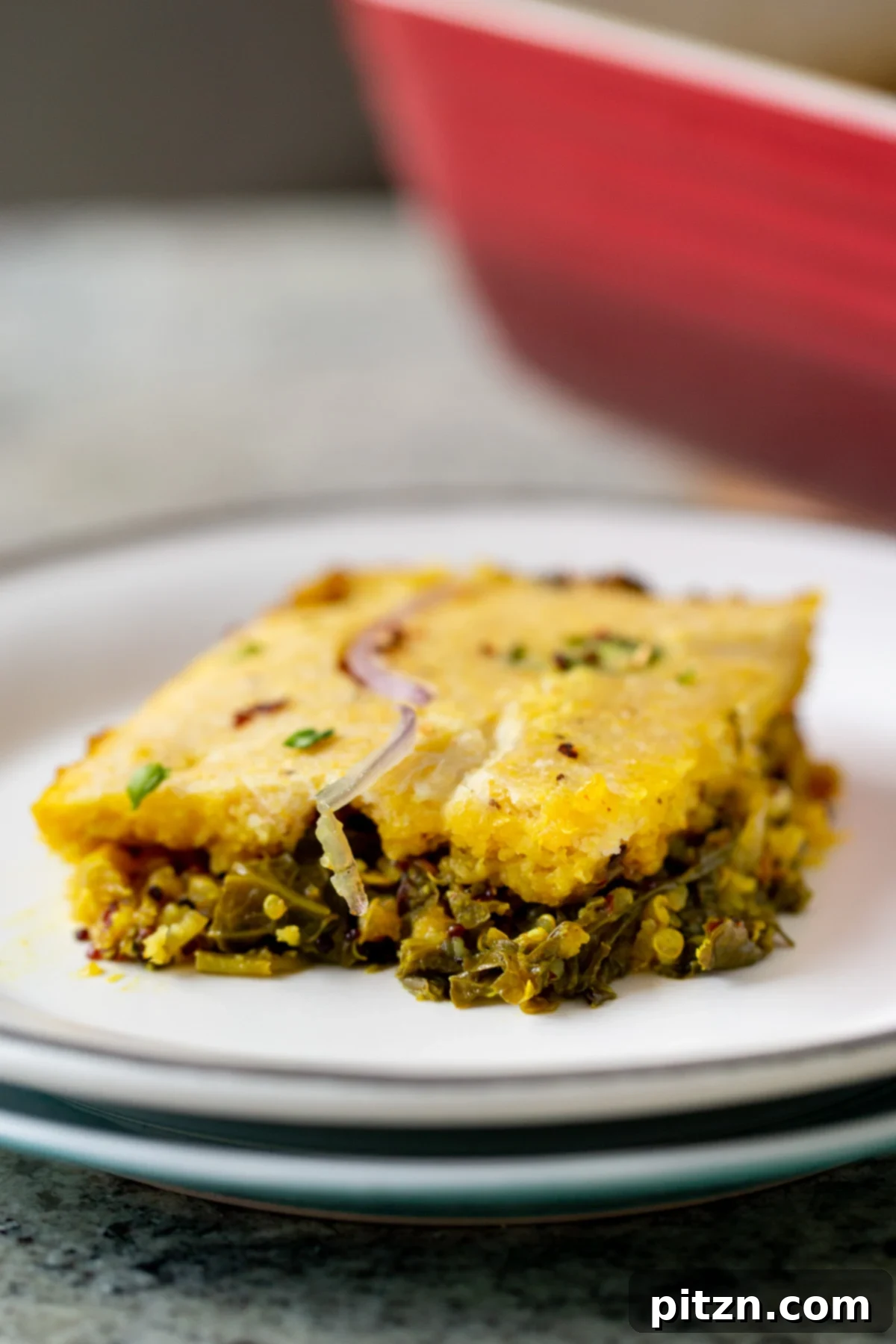
- Serve and Garnish: Once baked, remove the casserole from the oven and let it cool for a few minutes. This allows the casserole to set slightly. Squeeze fresh lemon juice over the top. Garnish generously with fresh cilantro and a sprinkle of red pepper flakes, if desired. Slice the casserole into individual portions and serve warm, each slice traditionally topped with a small pat of vegan butter for an added touch of richness.
Storage Guidelines
To keep your Saag Cornbread Casserole fresh and delicious, store the entire casserole dish, tightly covered, in the refrigerator for up to 3 days. For convenient meal prepping, you can also portion out individual servings into airtight containers and refrigerate them for up to 3 days. If you wish to enjoy this delightful meal at a later date, individual portions can be frozen in closed containers for up to a month. When ready to enjoy, simply reheat in the oven or microwave until thoroughly warmed through.
Nutrition information is automatically calculated, so should only be used as an approximation. Per serving (1/4 of casserole): Calories: 310kcal, Carbohydrates: 47g, Protein: 9g, Fat: 10g, Saturated Fat: 1g, Sodium: 605mg, Potassium: 534mg, Fiber: 6g, Sugar: 3g, Vitamin A: 1545IU, Vitamin C: 65mg, Calcium: 122mg, Iron: 4mg.