
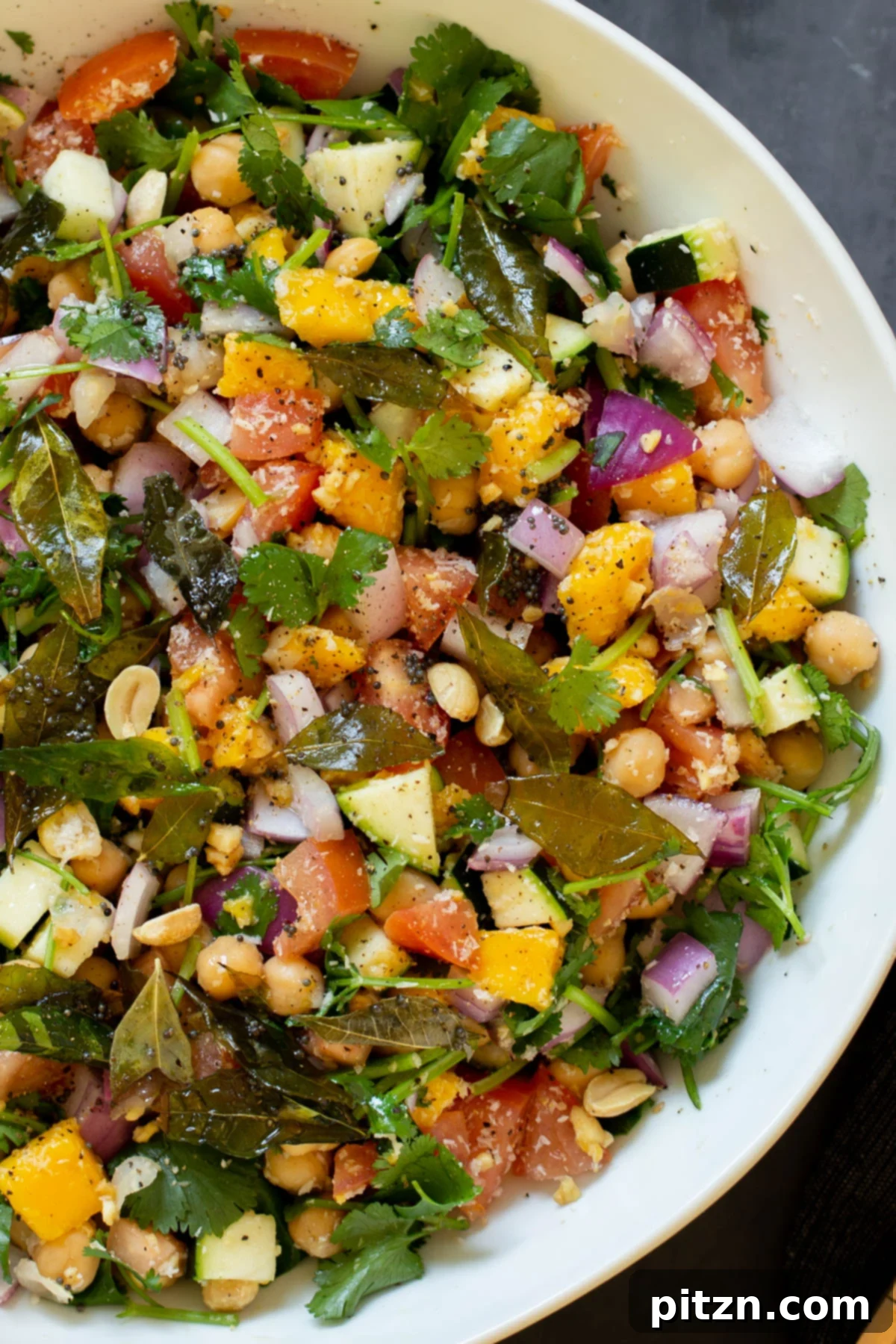
Embark on a culinary journey with this incredibly fresh and flavorful Indian Koshimbir-inspired salad. This vibrant dish artfully combines the crispness of zucchini, the tropical sweetness of mango, the satisfying crunch of peanuts, and the hearty protein of chickpeas. What truly sets it apart is the aromatic tempering, or tadka, infused with fragrant curry leaves. Versatile and delicious, it serves beautifully as a refreshing side dish or a fulfilling meal on its own, perfect with warm pita bread or crunchy chips for dipping. Naturally vegan, gluten-free, and soy-free, this satisfying summer salad is a testament to healthy and delicious eating.

Table of Contents
- Unveiling the Zucchini Mango Chickpea Koshimbir Salad
- Why This Koshimbir Salad Will Become Your New Favorite
- Exploring More Indian-Inspired Salads
- Chickpea Mango Zucchini Koshimbir Salad with Curry Leaves Recipe
- Key Ingredients and Clever Substitutions
- Expert Tips for a Perfect Koshimbir
- Step-by-Step Guide: How to Make Koshimbir Salad
- Frequently Asked Questions About Koshimbir Salad
Unveiling the Zucchini Mango Chickpea Koshimbir Salad
Koshimbir is a traditional Indian salad, deeply rooted in the vibrant Maharashtrian cuisine of Western India. It’s more than just a salad; it’s a celebration of seasonal vegetables, carefully seasoned with salt, black pepper, and brightened with fresh lime juice. A signature element often found in Koshimbir, and central to this recipe, is the addition of coconut and crunchy peanuts, adding layers of texture and richness. However, the true soul of Koshimbir lies in its tempering, or tadka. This is a technique where spices are briefly fried in hot oil to release their essential oils and intense aromas, then poured over the finished dish, much like a fragrant chili oil but with a unique Indian spice blend.
While many Koshimbir variations exist, sometimes incorporating non-dairy yogurt depending on the chosen vegetables, this particular recipe draws its inspiration from the classic Maharashtrian style. Traditionally served as a refreshing accompaniment to a main meal, this “loaded” Koshimbir, generously packed with protein-rich chickpeas, transcends the role of a mere side. It stands proudly as a hearty and complete meal, especially when paired with warm pita bread, crispy tortilla chips, or even a slice of toasted sourdough. Each spoonful promises a delightful burst of flavors and a symphony of textures from the fresh zucchini, sweet mango, pungent onion, finely chopped peanuts, shredded coconut, and the distinctive aroma of curry leaves. Prepare to be captivated by this tadka-infused salad; every bite is a truly exhilarating experience for your palate.
If the fresh and exciting flavors of this Zucchini Koshimbir salad resonate with you, we highly recommend exploring our Beet and Carrot Koshimbir Salad for another delightful Indian-inspired culinary adventure!
Why This Koshimbir Salad Will Become Your New Favorite
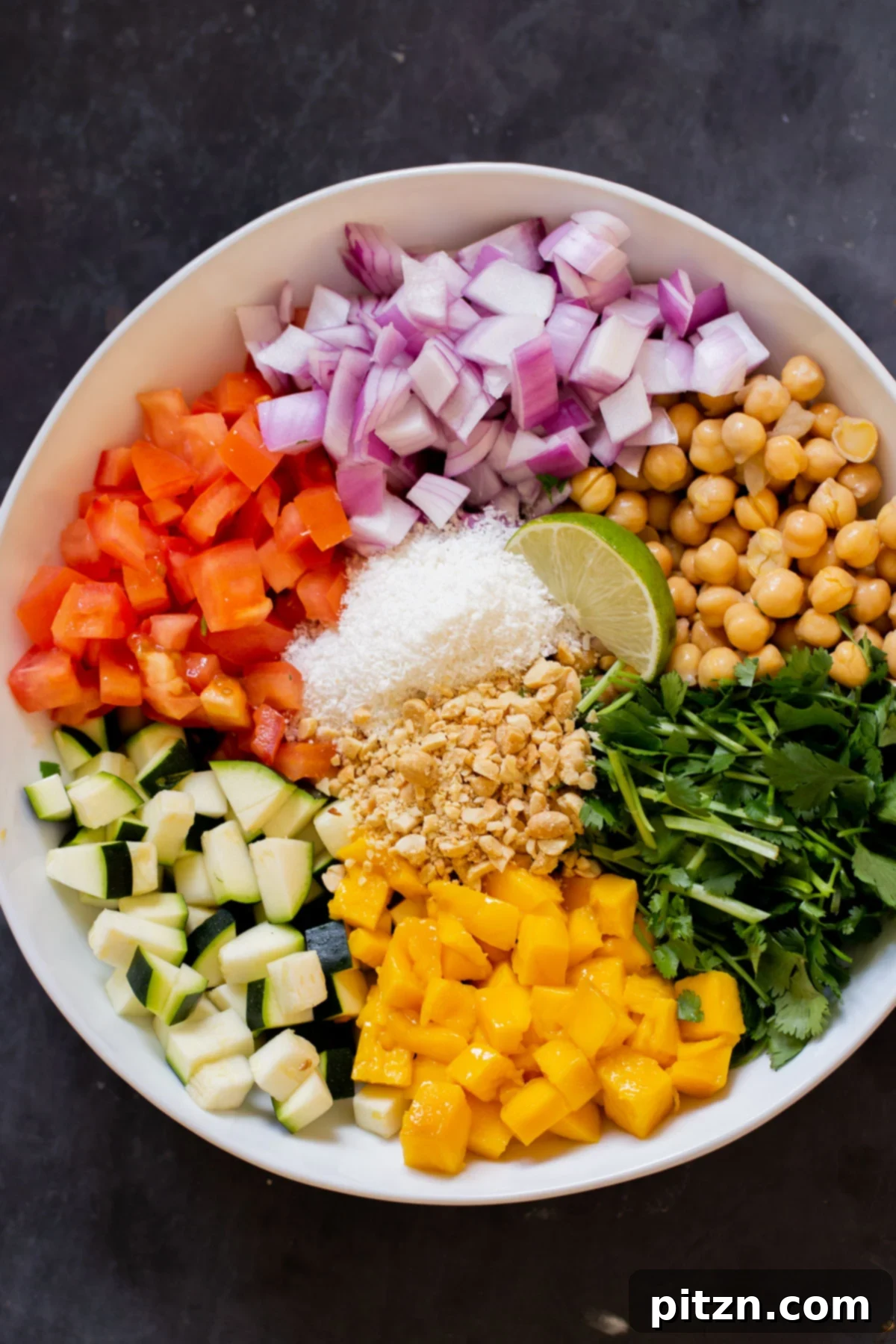
This Zucchini Mango Chickpea Koshimbir Salad is more than just a recipe; it’s an invitation to experience culinary joy, especially during warmer months. Here’s why this vibrant dish is destined to become a staple in your kitchen:
- **A Burst of Freshness:** Say goodbye to bland salads! This Koshimbir is overflowing with crisp, refreshing vegetables and juicy fruit, making every bite a delightful sensory experience. The combination of textures from crunchy zucchini, tender mango, and hearty chickpeas is simply irresistible.
- **Exquisitely Flavorful Dressing & Tempering:** What truly elevates this salad is its unique flavor profile. The simple yet potent lime-based dressing perfectly complements the fresh ingredients, while the traditional Indian tempering (tadka) with mustard seeds and curry leaves adds an unparalleled depth and aromatic complexity. It’s a symphony of savory, sweet, and tangy notes that will tantalize your taste buds.
- **Effortless & Quick Preparation:** In today’s fast-paced world, finding a delicious yet quick meal is a treasure. This Koshimbir salad can be prepared in under 30 minutes, making it an ideal choice for busy weeknights, last-minute gatherings, or a wholesome lunch. Minimal cooking, maximum flavor!
- **Health-Conscious & Allergy-Friendly:** Catering to diverse dietary needs, this salad is naturally gluten-free and soy-free. It’s also entirely plant-based, making it a fantastic vegan option packed with fiber and nutrients. For those with nut allergies, simple substitutions can make it nut-free without compromising on taste.
- **Nutritionally Rich:** Beyond its incredible taste, this salad is a powerhouse of nutrition. Chickpeas provide essential plant-based protein and fiber, while zucchini offers vitamins and hydration. Mangoes are rich in vitamins A and C, and the spices in the tadka contribute antioxidants and unique health benefits. It’s a meal that nourishes both body and soul.
- **Versatile Serving Options:** Whether you need a light lunch, a satisfying dinner, or an impressive side dish for a potluck or barbecue, this Koshimbir fits the bill. Its robust flavors and textures hold up well, making it a reliable choice for various occasions. Pair it with your favorite Indian curries, grilled dishes, or simply enjoy it on its own.
Exploring More Indian-Inspired Salads
Indian cuisine is renowned for its rich curries and aromatic gravies, but it also boasts an incredible array of refreshing and flavorful salads that are often overlooked. These salads, much like Koshimbir, utilize fresh, seasonal produce, vibrant spices, and unique tempering techniques to create dishes that are both light and profoundly satisfying. If you’ve fallen in love with the vibrant taste of our Zucchini Mango Chickpea Koshimbir, you’re in for a treat! Here are a few more Indian-inspired salad recipes that promise to tantalize your taste buds and add an exciting twist to your meal rotation:
- Kachumber Salad: The quintessential Indian chopped salad, featuring finely diced cucumber, tomatoes, and onions, dressed simply with lime juice, cilantro, and a hint of spice. It’s a classic accompaniment to almost any Indian meal.
- Sweet Potato Bhel: A delightful twist on the popular Indian street food, Bhel Puri. This version incorporates roasted sweet potatoes into a medley of crunchy puffed rice, savory chutneys, and fresh vegetables, offering a delightful blend of sweet, spicy, and tangy flavors.
- Tikka Masala Pasta Salad: A fusion masterpiece! This creative salad combines the beloved creamy and spiced flavors of Tikka Masala with a comforting pasta salad base, making it a fantastic option for picnics, potlucks, or a hearty lunch.
- Mustard Seed Chili Oil Tadka Noodle Salad: If you appreciate the aromatic punch of a good tadka, this noodle salad is a must-try. It features tender noodles tossed with vegetables and a robust chili oil infused with popping mustard seeds, creating a wonderfully savory and spicy dish.
These salads demonstrate the incredible diversity within Indian cuisine, proving that healthy eating can be incredibly flavorful and exciting. Each recipe offers a unique combination of textures, aromas, and tastes, providing endless possibilities for fresh and innovative meals. Dive in and explore these fantastic plant-based options!
Chickpea Mango Zucchini Koshimbir Salad with Curry Leaves

This fresh, flavorful Indian Koshimbir-inspired salad is a delightful blend of crunchy zucchini, sweet mango, crisp peanuts, and hearty chickpeas, all brought to life with a fragrant curry leaf-scented spiced oil (tadka). It’s a satisfying vegan summer salad that’s naturally gluten-free and soy-free, perfect as a vibrant side or a light, complete meal with pita or chips for dipping.
Ingredients
For the Salad
- 1/2 cup chopped onion
- 2 tomatoes, chopped small (similar size to the onion)
- 1 cup chopped zucchini, or cucumber
- 1 medium-sized mango, chopped (about 3/4 cup chopped mango)
- 1/2 cup chopped cilantro
- 15 ounce can of chickpeas, drained, or use other cooked beans or lentils of choice
- 2 tablespoons crushed roasted peanuts
- 2 tablespoons shredded coconut, fresh, frozen, or dried
- 1 tablespoon lime juice
- 1/2 teaspoon salt
- 1/4 teaspoon black pepper
- 1/4 teaspoon cayenne, optional (for a hint of heat)
For the Curry Leaf Spiced Oil Tempering (Tadka)
- 2 teaspoons oil
- 1 teaspoon mustard seeds, preferably black mustard seeds
- 14 curry leaves
Instructions
Prepare the Salad Base
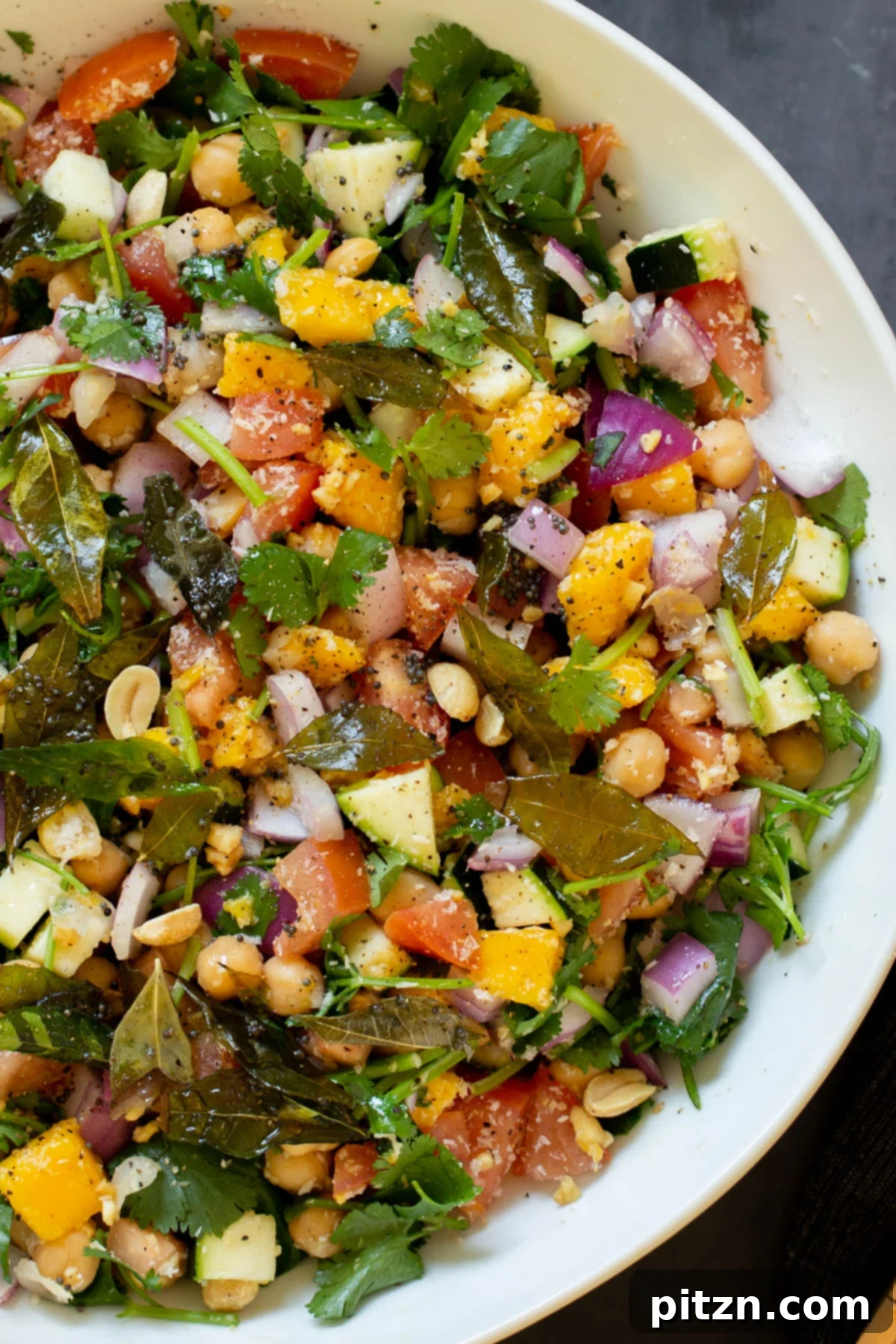
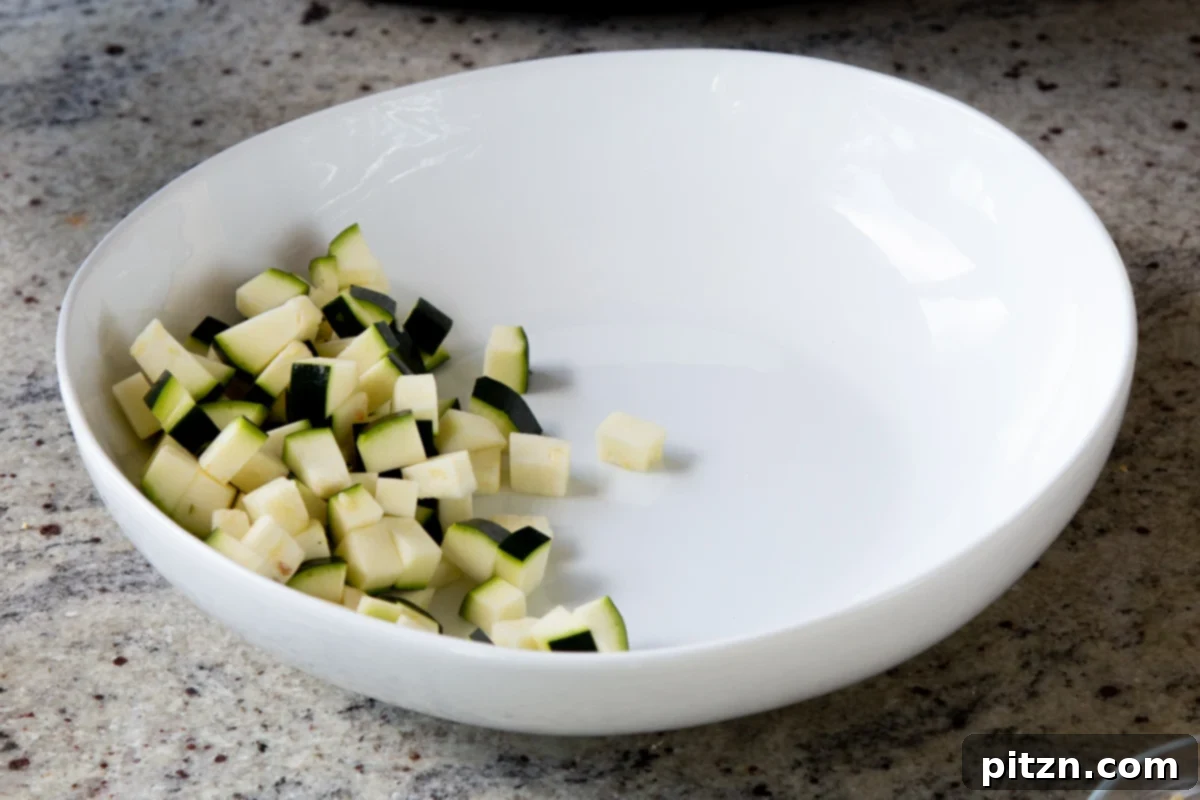
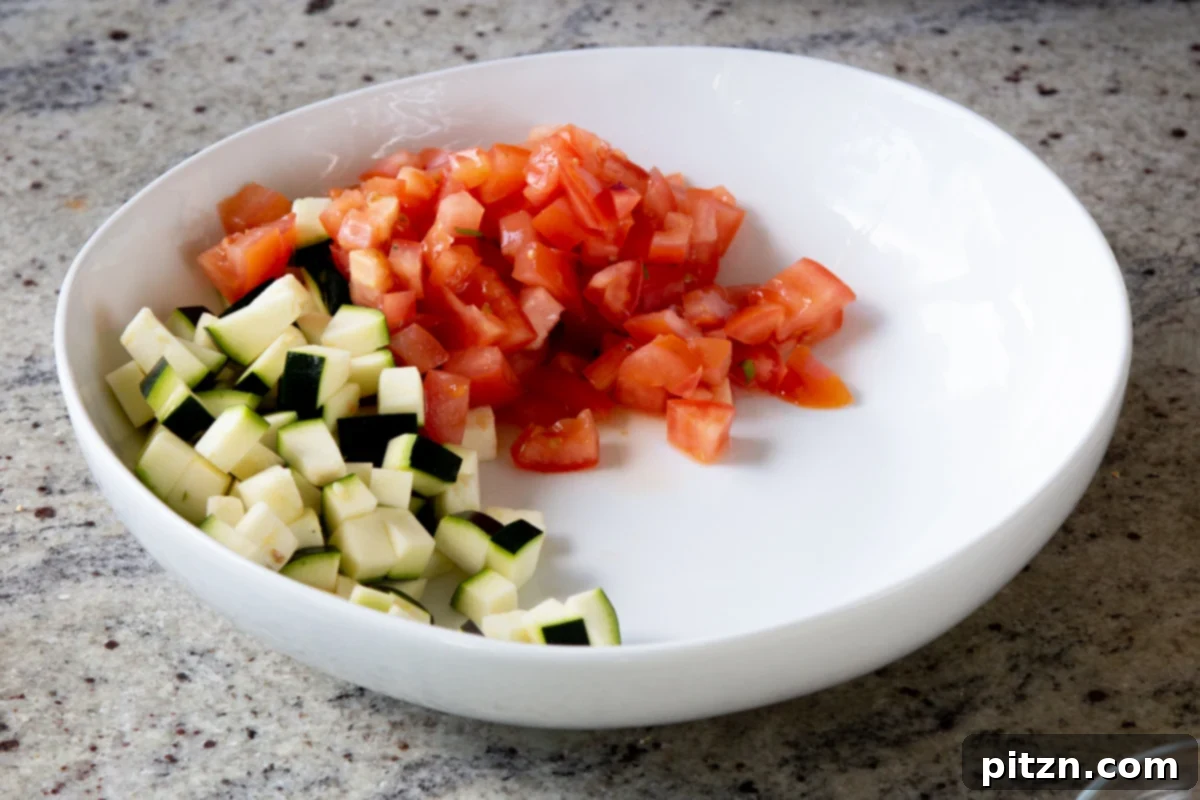
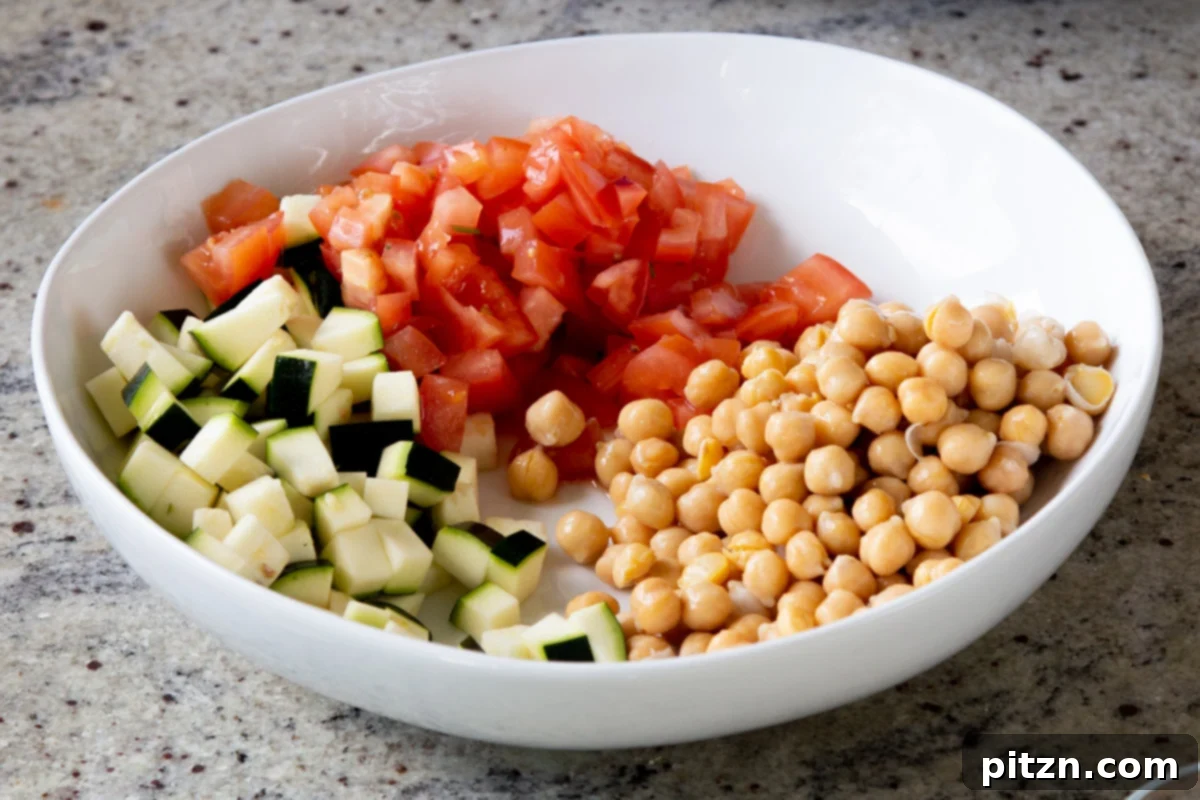
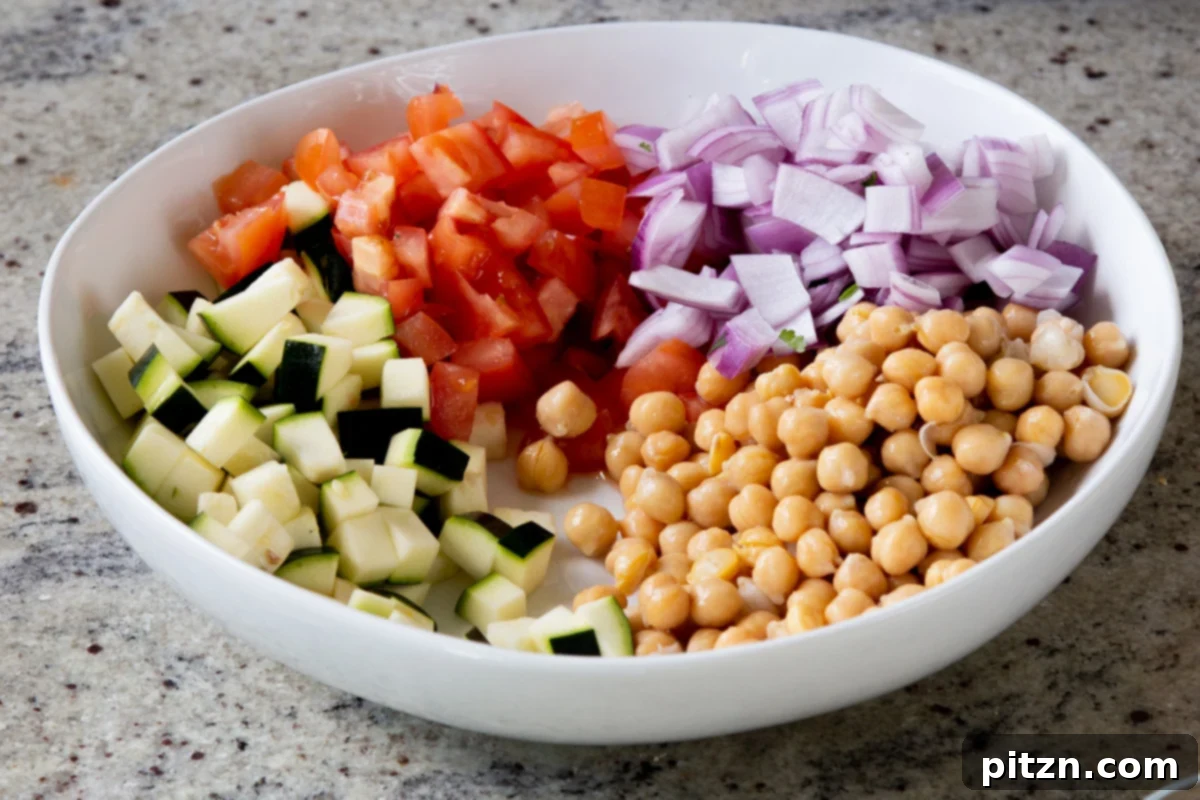
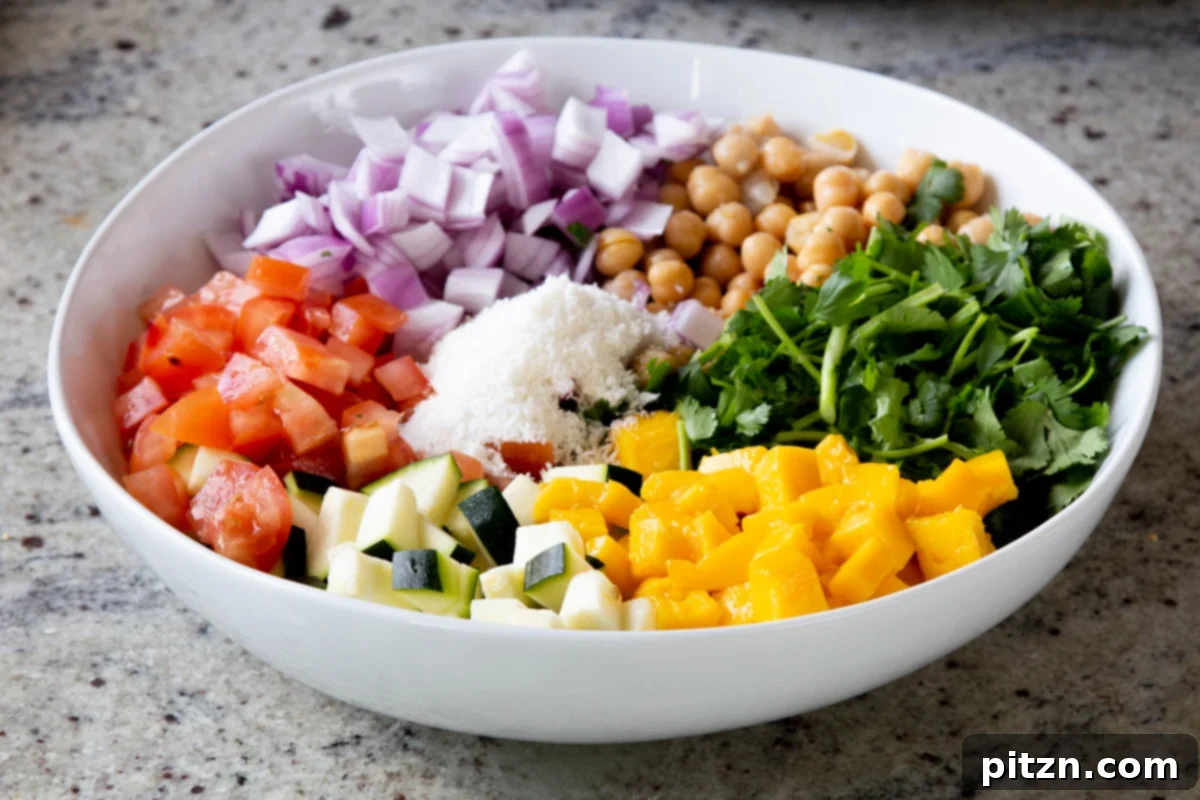
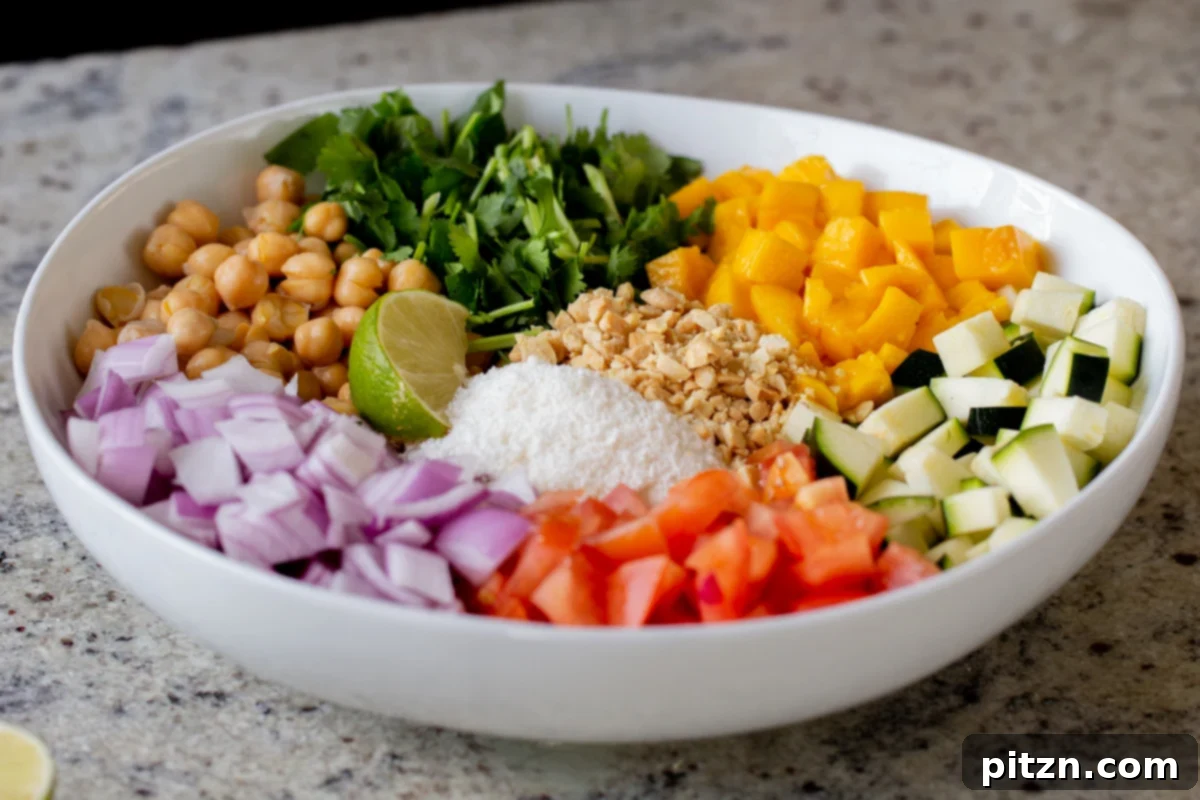
- Begin by uniformly chopping all your vegetables and fruit. Aim for pieces that are approximately 1/4- to 1/2-inch in size – ensuring the onion, tomatoes, zucchini (or cucumber), and mango are all roughly the same dimension for a harmonious texture in every bite. Once chopped, transfer them into a large mixing bowl. Add the drained chickpeas to the bowl as well.
- Next, prepare the peanuts. You can crush them using a mortar and pestle for a rustic texture, or simply chop them finely with a knife until they are in smaller pieces. Add the crushed peanuts to the bowl with the other salad ingredients.
- Incorporate the shredded coconut, salt, black pepper, and optional cayenne (if using) into the bowl. Toss all the ingredients thoroughly to ensure everything is evenly coated. Finally, drizzle in the fresh lime juice and mix everything really well once more. Set the salad aside while you prepare the tempering.
Craft the Aromatic Tempering (Tadka)
- To make the tempering, heat the oil in a small skillet or a tempering pan over medium-high heat. To check if the oil is hot enough, carefully drop one or two mustard seeds into the pan. If they begin to sizzle and pop rapidly, the oil is ready. If not, allow the oil to heat a little longer.
- Once the oil reaches the correct temperature, add the remaining mustard seeds. They should immediately begin to sizzle and pop vigorously. As soon as they start popping, switch off the heat. Immediately and very carefully, add the curry leaves to the hot oil. Be cautious as they will splutter quite a bit as they crisp up.
- Allow the curry leaves to finish popping and become fragrant. Once the spluttering subsides, carefully pour this aromatic, spiced oil (the tadka) directly over the prepared salad in the large bowl. Give the salad a final gentle toss to distribute the flavorful oil evenly.
Serve and Enjoy
- Serve your Zucchini Mango Chickpea Koshimbir Salad immediately to enjoy its freshest flavors and textures. It’s delicious on its own as a light and refreshing meal, or pair it with warm pita bread, toasted sourdough slices, or crunchy tortilla chips for dipping. This versatile salad is also an excellent accompaniment to a larger Indian feast.
Video
Notes
This dish is naturally gluten-free and soy-free, making it suitable for a wide range of dietary needs.
Nut-Free Option: If you have a nut allergy or prefer a nut-free version, simply omit the peanuts and instead add an equal amount of toasted sunflower seeds for a similar crunch and healthy fats.
Oil-Free Option: For an oil-free variation, dry toast the mustard seeds in a small skillet over medium heat until they change color and become fragrant. Then, add 2 tablespoons of vegetable broth (or water) and the curry leaves, bringing the mixture to a quick boil. Drizzle this fragrant, oil-free tempering over your salad.
Storage: Koshimbir is best enjoyed fresh, as the vegetables retain their crispness and the flavors are most vibrant. However, leftovers can be stored in an airtight container in the refrigerator for up to 1-2 days. The salad may become slightly softer over time, but the flavors will still be delicious.
Nutrition
Carbohydrates: 40g,
Protein: 12g,
Fat: 13g,
Saturated Fat: 4g,
Polyunsaturated Fat: 3g,
Monounsaturated Fat: 4g,
Sodium: 568mg,
Potassium: 773mg,
Fiber: 11g,
Sugar: 14g,
Vitamin A: 1964IU,
Vitamin C: 142mg,
Calcium: 112mg,
Iron: 3mg
Nutrition information is automatically calculated and should only be used as an approximation.
Did you make this recipe? We’d love to hear from you! Rate and comment below to share your experience!
Key Ingredients and Clever Substitutions
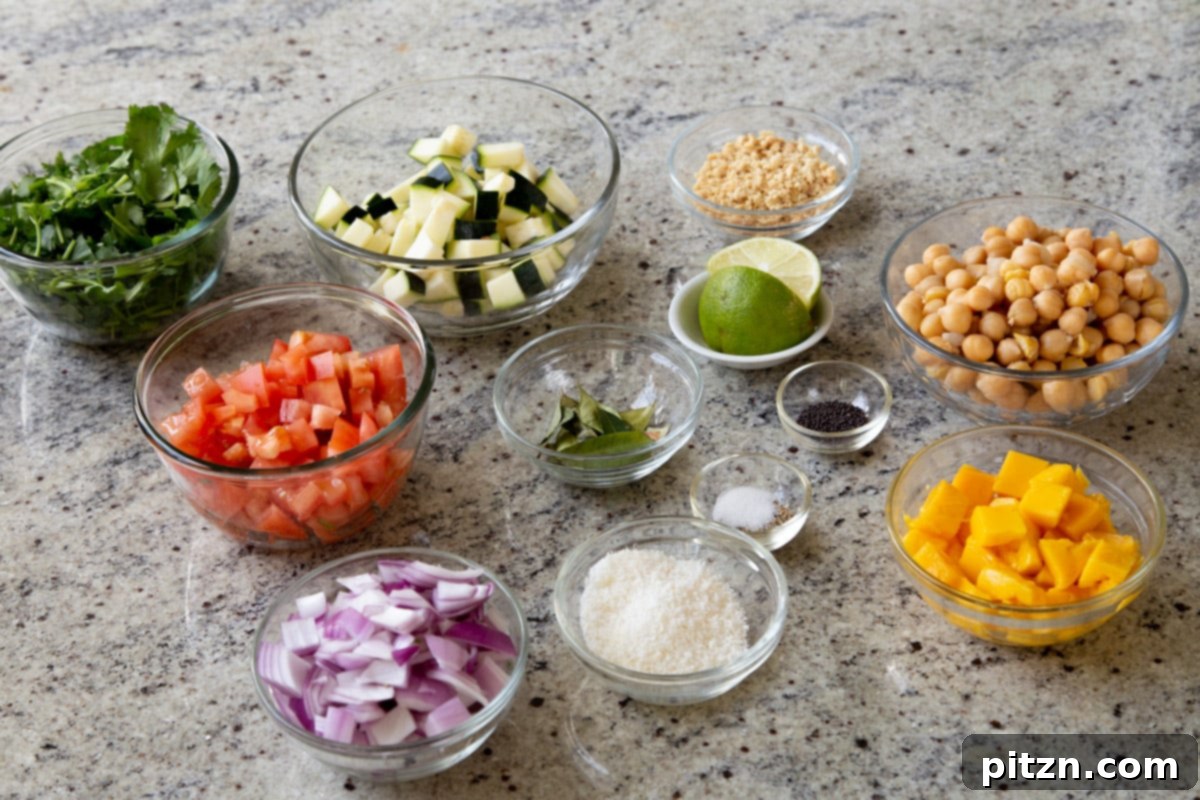
This Zucchini Mango Chickpea Koshimbir Salad thrives on the freshness and quality of its ingredients. Each component plays a vital role in creating its unique balance of flavors and textures. Here’s a closer look at the stars of the show and how you can adapt them to your pantry or preferences:
- Vibrant Vegetables (Onion, Tomato, Zucchini): These form the crunchy, refreshing backbone of the salad.
- Onion: Adds a pungent, crisp bite. Red onion is often preferred for its color and slightly milder flavor when raw.
- Tomato: Provides juiciness and a slight tang. Cherry tomatoes, halved, or firm, ripe diced tomatoes work best.
- Zucchini: Contributes a delicate crunch and absorbs flavors beautifully. If zucchini isn’t available or preferred, fresh cucumber is an excellent, classic Koshimbir substitute, offering a similar refreshing quality.
- Sweet & Tropical Fruits (Mango, Coconut): These introduce a delightful sweetness that perfectly balances the savory and tangy elements.
- Mango: The star fruit, offering a juicy, sweet, and sometimes slightly tart counterpoint. Use a ripe, firm mango for best results. If mango is out of season, you can try finely diced peaches or even a handful of dried cranberries for a different kind of sweetness, though mango is highly recommended for authenticity.
- Shredded Coconut: Adds a subtle sweetness, unique texture, and richness. Freshly shredded coconut is ideal, but frozen (thawed) or unsweetened dried shredded coconut (rehydrated if very dry) also works well.
- Fresh Cilantro: This aromatic herb is indispensable in Indian cuisine. It brightens the salad with its fresh, citrusy notes. Don’t skip it if you enjoy cilantro! If you have an aversion to cilantro, you could try a tiny amount of finely chopped mint for a different kind of fresh lift, but it will alter the authentic flavor profile.
- Hearty Chickpeas: These legumes are crucial for making this salad a substantial, protein-packed meal. They add a creamy texture and significant fiber.
- Substitutions: Other cooked beans like cannellini beans, black-eyed peas, or even lentils could be used for variety, maintaining the filling nature of the dish.
- Crunchy Peanuts: Roasted peanuts provide a wonderful crunch and a nutty depth of flavor that complements the other ingredients.
- Substitutions (Nut-Free): If you need a nut-free option, toasted sunflower seeds or pumpkin seeds are excellent alternatives that still provide a satisfying textural contrast.
- Simple Yet Potent Dressing (Lime Juice, Salt, Black Pepper, Cayenne): The dressing is minimal, allowing the fresh ingredients to shine.
- Lime Juice: Essential for its bright, tangy acidity. Freshly squeezed is always best. Lemon juice can be used in a pinch, but lime offers a distinct flavor.
- Salt & Black Pepper: Basic seasonings that enhance all other flavors. Adjust to your taste.
- Cayenne: An optional addition for those who appreciate a gentle warmth and subtle kick of spice. Red chili powder or a finely minced green chili can also be used for heat.
- Aromatic Tempering (Tadka) – Mustard Seeds & Curry Leaves in Hot Oil: This is the soul of many Indian dishes, transforming simple ingredients into something extraordinary.
- Oil: Any neutral cooking oil like sunflower, canola, or grapeseed oil works well. Coconut oil can also be used for an added tropical hint.
- Mustard Seeds: Preferably black mustard seeds, which burst with a pungent, earthy flavor when tempered. They add a wonderful pop and aroma.
- Curry Leaves: These fragrant leaves impart a distinctive, slightly nutty, and citrusy aroma. They are crucial for authentic Koshimbir flavor. Fresh curry leaves are best; if using dried, you might need a few more, and the flavor will be milder.
By understanding these components and their roles, you can confidently prepare this delicious Koshimbir salad, making mindful adjustments while preserving its authentic charm.
Expert Tips for a Perfect Koshimbir
Achieving a truly exceptional Zucchini Mango Chickpea Koshimbir Salad is all about attention to detail. These simple tips will help you elevate your salad from good to extraordinary, ensuring a perfect balance of flavors and textures every time:
- Uniform Chopping is Key: For the best eating experience, aim to chop all your vegetables and mango to similar, small sizes – ideally between 1/4-inch to 1/2-inch pieces. Uniformly sized ingredients ensure that every spoonful offers a balanced medley of flavors and textures, and it makes the salad easier and more enjoyable to eat. It also helps the flavors meld more effectively.
- Mastering the Tadka Temperature: The tempering (tadka) is the heart of this Koshimbir, and getting the oil temperature right is crucial.
- Pre-test the Oil: Before adding all the mustard seeds, drop just one or two into the hot oil. If they immediately begin to sizzle rapidly and start to pop, your oil is at the perfect temperature. If they just sit there or sizzle slowly, the oil isn’t hot enough yet, so give it more time.
- Quick Action: Once the mustard seeds are popping, turn off the heat immediately before adding the curry leaves. This prevents the spices from burning and becoming bitter. Curry leaves splutter significantly when they hit hot oil, so add them with caution and consider covering the pan for a moment to contain the splattering. The residual heat in the oil will be enough to crisp the curry leaves and infuse their aroma without burning.
- Fresh Curry Leaves: Whenever possible, use fresh curry leaves for the tadka. Their vibrant aroma is unparalleled and makes a significant difference in the final taste of the salad.
- Don’t Overlook the Peanuts: Crushing the roasted peanuts, rather than just chopping them, releases more of their natural oils and flavor, integrating them better into the salad while still providing a lovely crunch.
- Fresh Lime Juice is Non-Negotiable: The acidity from fresh lime juice brightens all the other flavors in the salad. Bottled lime juice simply doesn’t compare in terms of freshness and vibrancy.
- Taste and Adjust: Always taste your salad before serving and adjust the salt, pepper, and lime juice as needed. The sweetness of mangoes can vary, so you might want a little more lime to balance.
- Serve Fresh: While the salad can be stored, Koshimbir is truly at its best when served fresh, allowing the vegetables to maintain their crisp texture and the tadka’s aroma to be most prominent.

Step-by-Step Guide: How to Make Koshimbir Salad
Creating this refreshing Zucchini Mango Chickpea Koshimbir Salad is a straightforward process, but a little care in each step ensures a perfect outcome. Follow this detailed guide to bring this vibrant Indian-inspired dish to life in your kitchen:
Phase 1: Preparing the Salad Base
The foundation of any great salad lies in its fresh ingredients. Precision in preparation here will ensure a harmonious blend of flavors and textures.
- Chop All Veggies and Fruit: Begin by gathering your onion, tomatoes, zucchini (or cucumber), and mango. Using a sharp knife, carefully chop each of these ingredients into uniform, small pieces. Aim for dimensions roughly between 1/4-inch to 1/2-inch. This consistent sizing is important as it allows all the components to integrate beautifully and ensures you get a balanced bite every time.
- Combine in a Large Bowl: Once everything is finely chopped, transfer all the prepared vegetables and mango into a spacious mixing bowl. Add the drained chickpeas to this bowl.
- Crush the Peanuts: Take your roasted peanuts and either crush them in a mortar and pestle or chop them with a knife until they are broken into smaller, crunchy fragments. This action helps to release their natural oils and enhances their nutty flavor and texture within the salad. Add the crushed peanuts to the main mixing bowl.
- Season and Mix: Now, add the shredded coconut, salt, black pepper, and cayenne pepper (if you desire a touch of heat) to the bowl. Toss all the ingredients thoroughly. Use a large spoon or your clean hands to gently but firmly mix everything, ensuring the seasonings are evenly distributed amongst the vegetables, fruit, and chickpeas.
- Add Lime Juice: Finally, drizzle the fresh lime juice over the salad. Give it another good mix. The lime juice will brighten all the flavors and act as a natural dressing, bringing all the elements together. Set the salad aside; it’s now ready for the aromatic tempering.
Phase 2: Crafting the Aromatic Tempering (Tadka)
The tadka is the magical element that infuses this Koshimbir with its signature Indian aroma and flavor. This quick step is where the spices truly come alive.
- Heat the Oil: In a small skillet or a dedicated tempering pan, heat the oil over medium-high heat. It’s important for the oil to be adequately hot to properly temper the spices.
- Test the Oil Temperature: To confirm the oil is ready, drop one or two mustard seeds into the pan. If they start sizzling and rapidly popping, your oil is at the perfect temperature. If not, allow it to heat for another moment or two.
- Add Mustard Seeds & Turn Off Heat: Once the oil is hot enough, add the remaining mustard seeds to the pan. They should immediately begin to sizzle vigorously and pop open. As soon as this happens, switch off the heat to prevent them from burning.
- Add Curry Leaves: Immediately and with extreme caution, add the curry leaves to the hot oil. They will crackle and splutter significantly as they hit the hot oil. The residual heat will be sufficient to crisp them up and release their wonderful fragrance.

Phase 3: Assembling and Serving
The final steps involve bringing the tempered oil and the fresh salad together for a complete culinary experience.
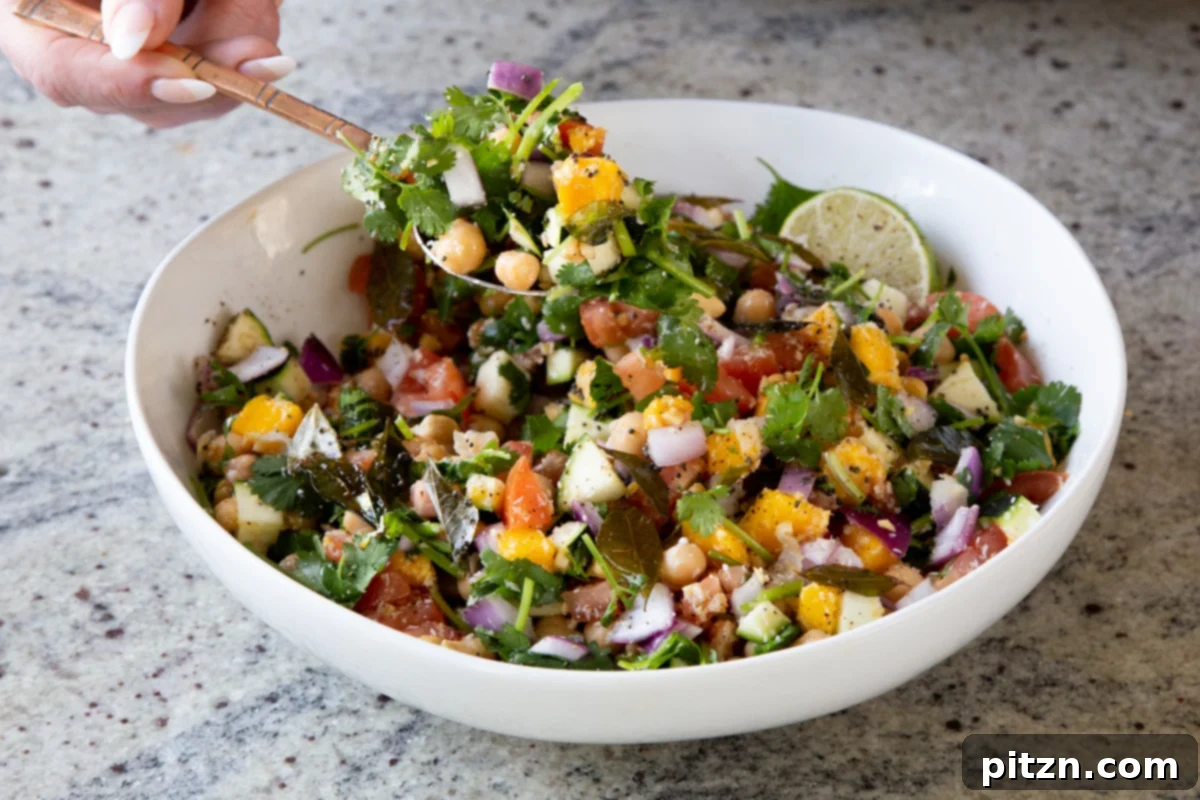
- Pour Tadka Over Salad: Once the curry leaves have stopped popping and are fragrant, carefully take the skillet containing the scented oil and pour its entire contents over the prepared salad. You’ll immediately notice the wonderful aroma permeating the bowl.
- Final Toss and Serve: Give the salad another gentle toss to ensure the aromatic tempering is evenly distributed throughout all the ingredients. Serve your Zucchini Mango Chickpea Koshimbir Salad immediately to best appreciate its vibrant flavors and textures. It makes a fantastic light meal on its own or can be served as a refreshing side with warm pita bread, slices of toasted sourdough, or crispy tortilla chips for dipping. Enjoy the burst of fresh, Indian-inspired flavors!


Frequently Asked Questions About Koshimbir Salad
Koshimbir is a traditional Indian salad, particularly popular in the Maharashtrian region. It’s renowned for its fresh, vibrant ingredients, typically combining seasonal vegetables with a light dressing of salt, pepper, and lime juice, often enriched with coconut and peanuts. The unique element that truly defines Koshimbir is the finishing touch of a “tadka” – a sizzling tempering of spices like mustard seeds and curry leaves in hot oil, poured directly over the salad for an aromatic burst of flavor.
Absolutely! This Zucchini Mango Chickpea Koshimbir Salad is thoughtfully crafted to be very allergy-friendly. It is naturally **gluten-free** and **soy-free**, making it a great option for many. For those with nut allergies or preferences, it can easily be made **nut-free** by simply omitting the peanuts and substituting them with toasted sunflower seeds or pumpkin seeds to maintain that delightful crunch and texture.
While Koshimbir is at its peak freshness and crispness when assembled and served immediately, you can prepare some components in advance. Chop all the vegetables and fruit, and store them separately in airtight containers in the refrigerator. You can also crush the peanuts ahead of time. It’s best to mix all the salad ingredients (except the tadka) about an hour before serving to allow flavors to meld, and then prepare and pour the tadka just before serving to maintain its aromatic intensity and the vegetables’ crunch.
For this Koshimbir salad, a ripe but firm mango is ideal. You want a mango that is sweet and flavorful but still holds its shape when chopped, rather than becoming mushy. Varieties like Ataulfo (honey mango) or Alphonso (if available) are excellent choices due to their sweetness and low fiber. If using a slightly less sweet mango, you might want to add a tiny pinch of sugar to the salad to balance the flavors.
Koshimbir is incredibly versatile, with many regional and seasonal variations. Common types include cucumber koshimbir (kakadi koshimbir), which is perhaps the most classic, often with yogurt. Other popular versions feature grated carrots, beets, radish, or even sprouted legumes. The beauty of Koshimbir lies in its adaptability – you can experiment with various seasonal vegetables and fruits, always finishing with the characteristic tempering for that authentic touch.