
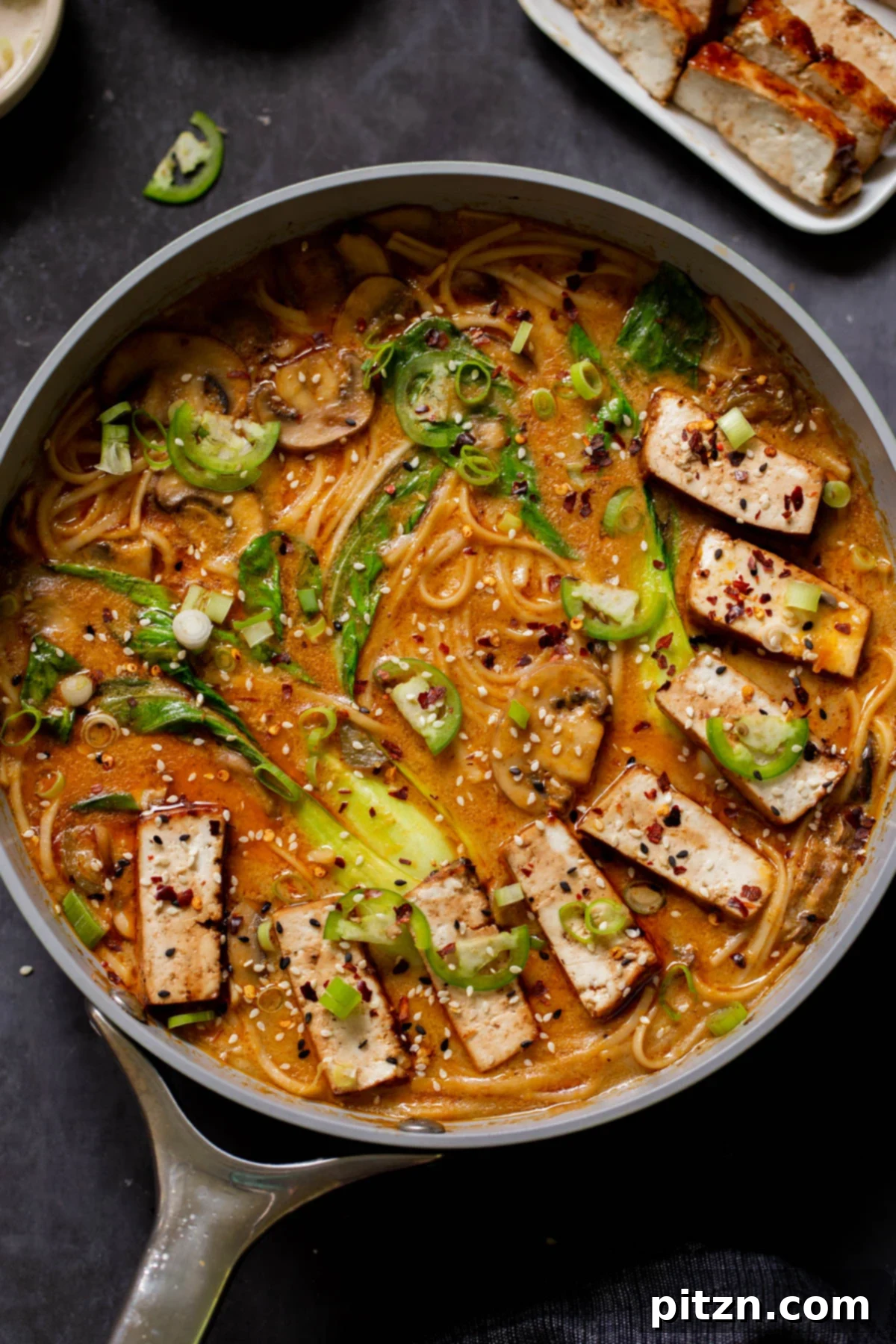
Get ready to revolutionize your weeknight dinners with this incredible **one-pot vegan Tonkotsu ramen**! Forget complicated, multi-step recipes; this dish delivers a rich, spicy, and exquisitely creamy plant-based broth, perfectly complemented by a savory, seared ‘char siu’ tofu topping, all in under 40 minutes. Customize it with your favorite fresh vegetables and additional garnishes for a truly personalized and satisfying meal. Whether you’re a seasoned vegan chef or new to plant-based cooking, this recipe is designed for ease and maximum flavor, proving that gourmet ramen can be both accessible and utterly delicious.
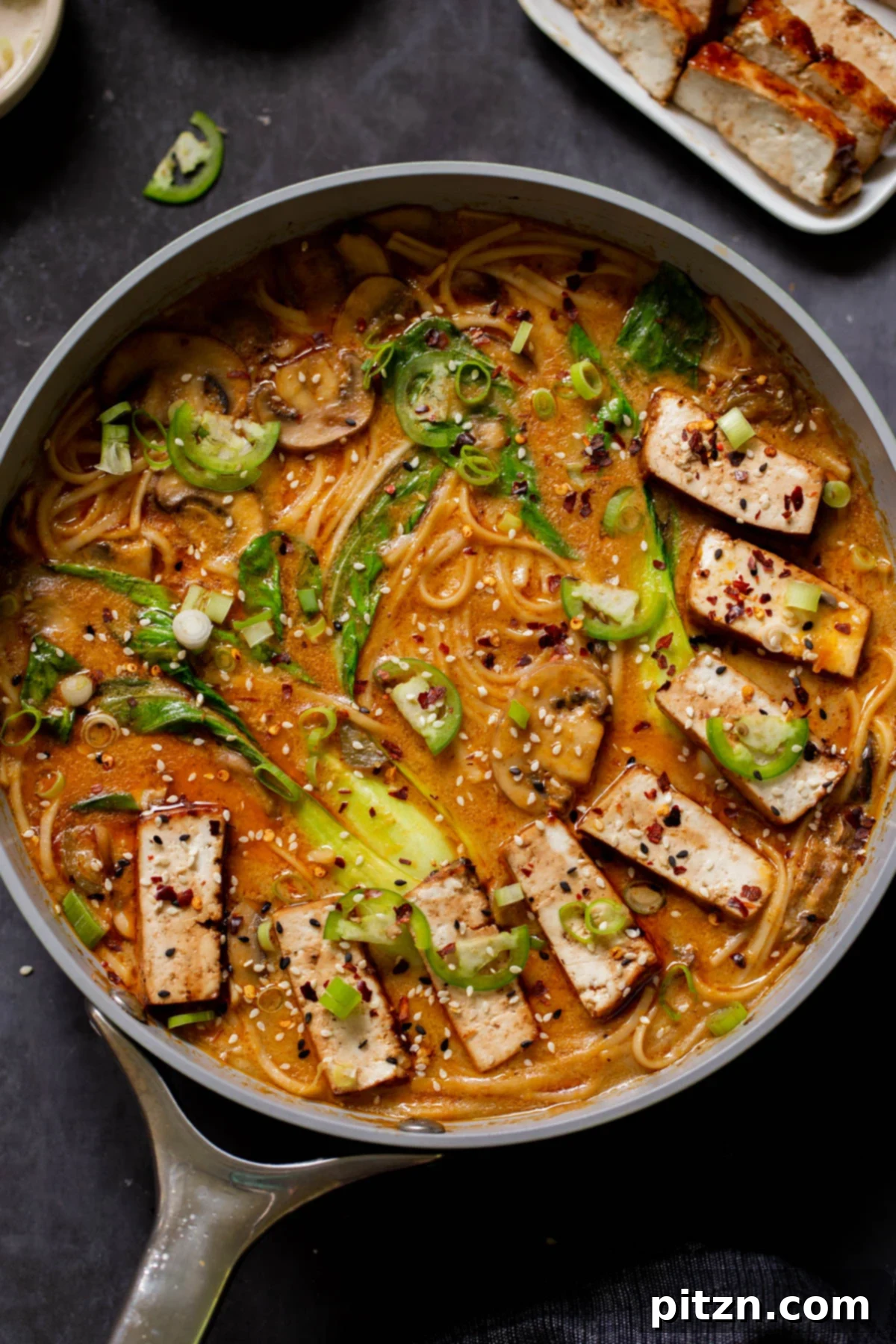
Table of Contents
- Why You’ll Love This Vegan Tonkotsu Ramen
- The Essence of Tonkotsu Ramen, Veganized
- Essential Ingredients for Vegan Tonkotsu
- Step-by-Step Guide to Making Vegan Tonkotsu Ramen
- Expert Tips for Perfect Vegan Ramen
- Frequently Asked Questions
- More Vegan Ramen Inspirations
- Vegan Tonkotsu Ramen Recipe Card
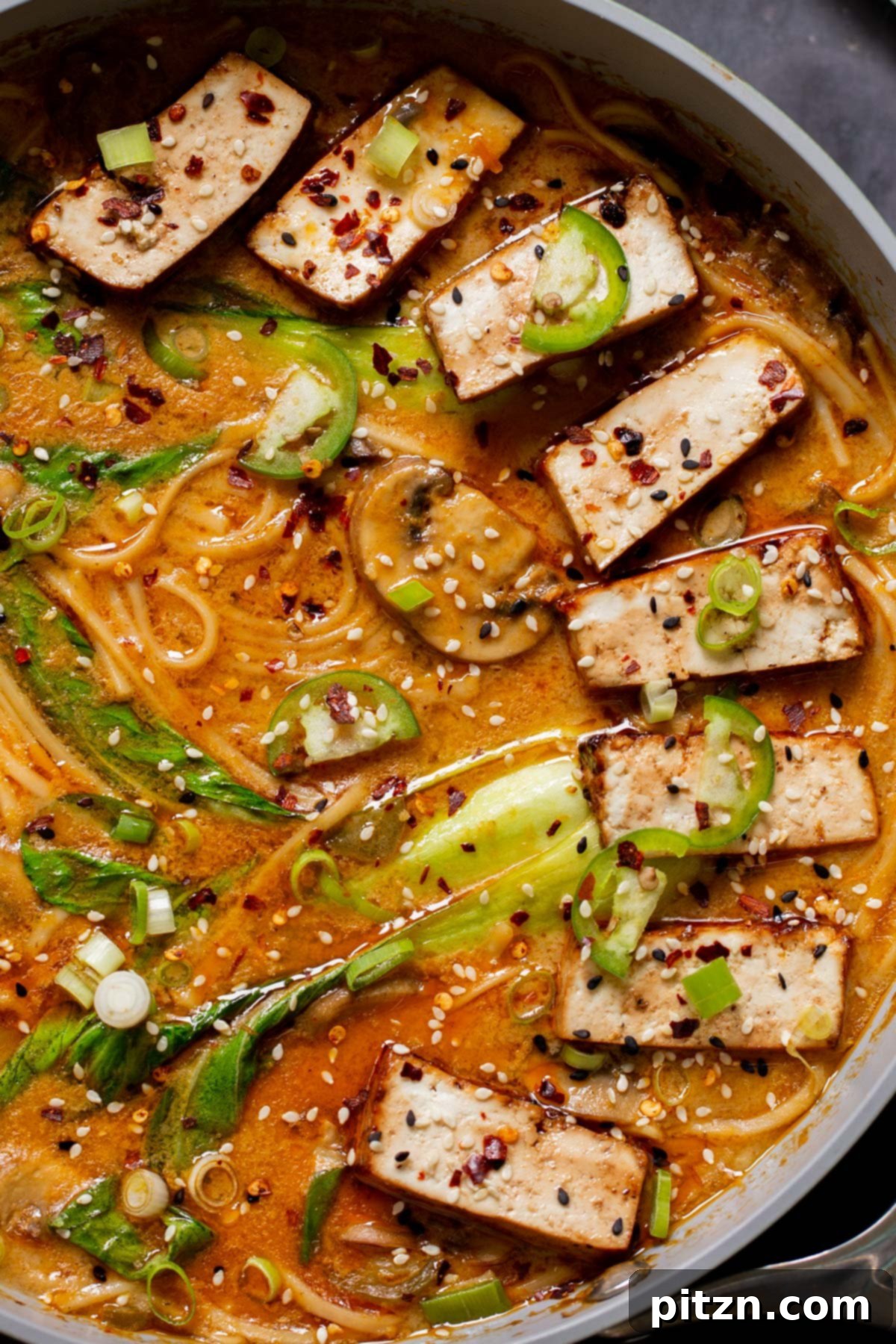
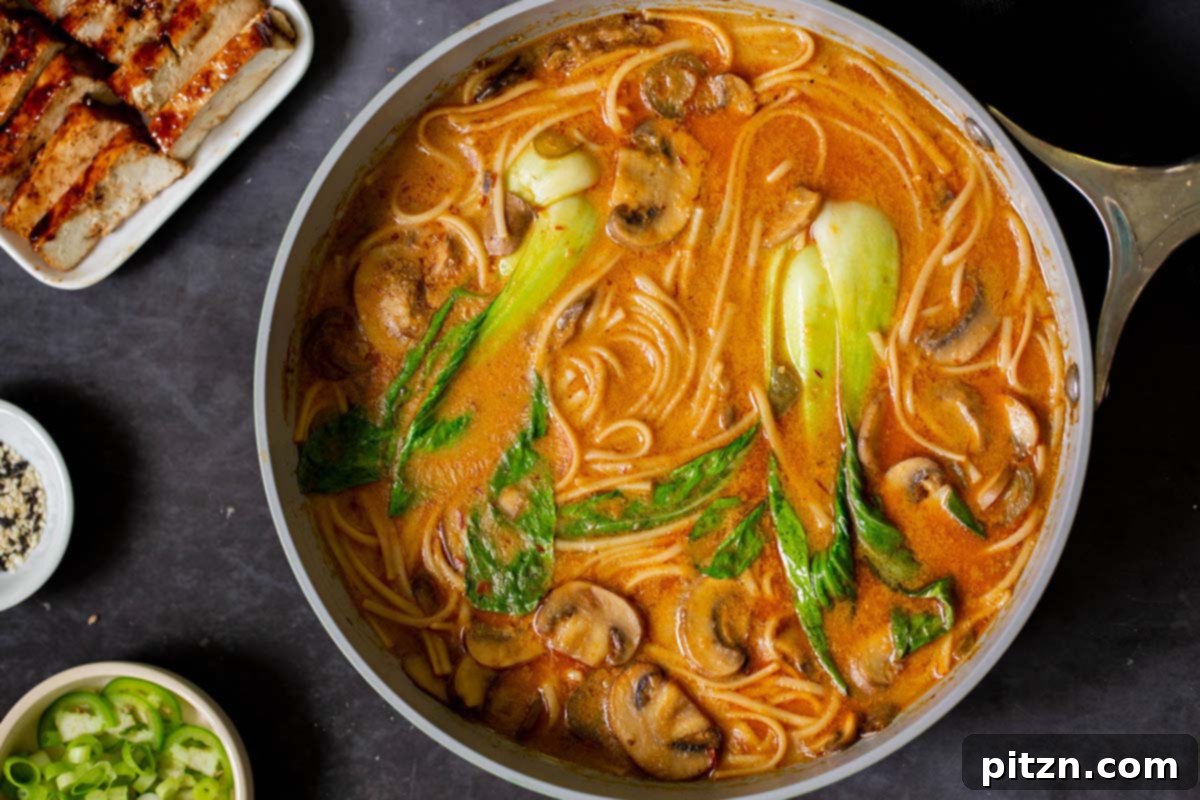
Traditional Tonkotsu ramen is renowned for its rich, milky white pork bone broth, a culinary masterpiece achieved through hours of simmering. Our innovative vegan Tonkotsu-inspired ramen captures that same depth and creamy texture without any animal products. The secret lies in a carefully crafted spicy base, infused with the vibrant heat of jalapeño and the robust kick of sambal oelek, balanced with umami-rich miso and velvety coconut milk. To crown this delightful broth, we feature simple yet incredibly flavorful tofu, marinated and seared to a perfect golden-brown crisp on all sides, then thinly sliced to resemble traditional char siu pork. This plant-based “char siu” adds a chewy, satisfying element and a layer of complex savory-sweetness to every bite.
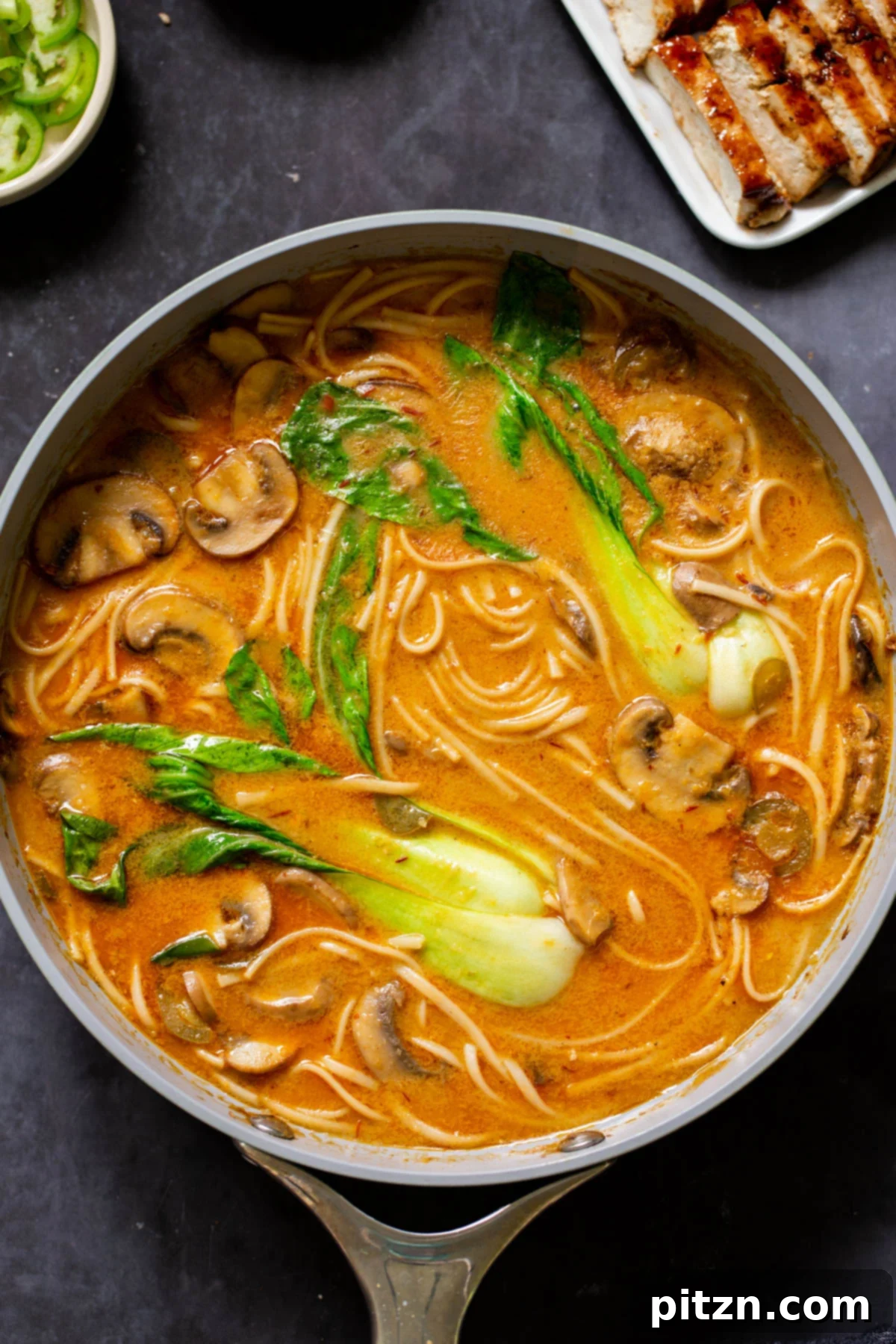
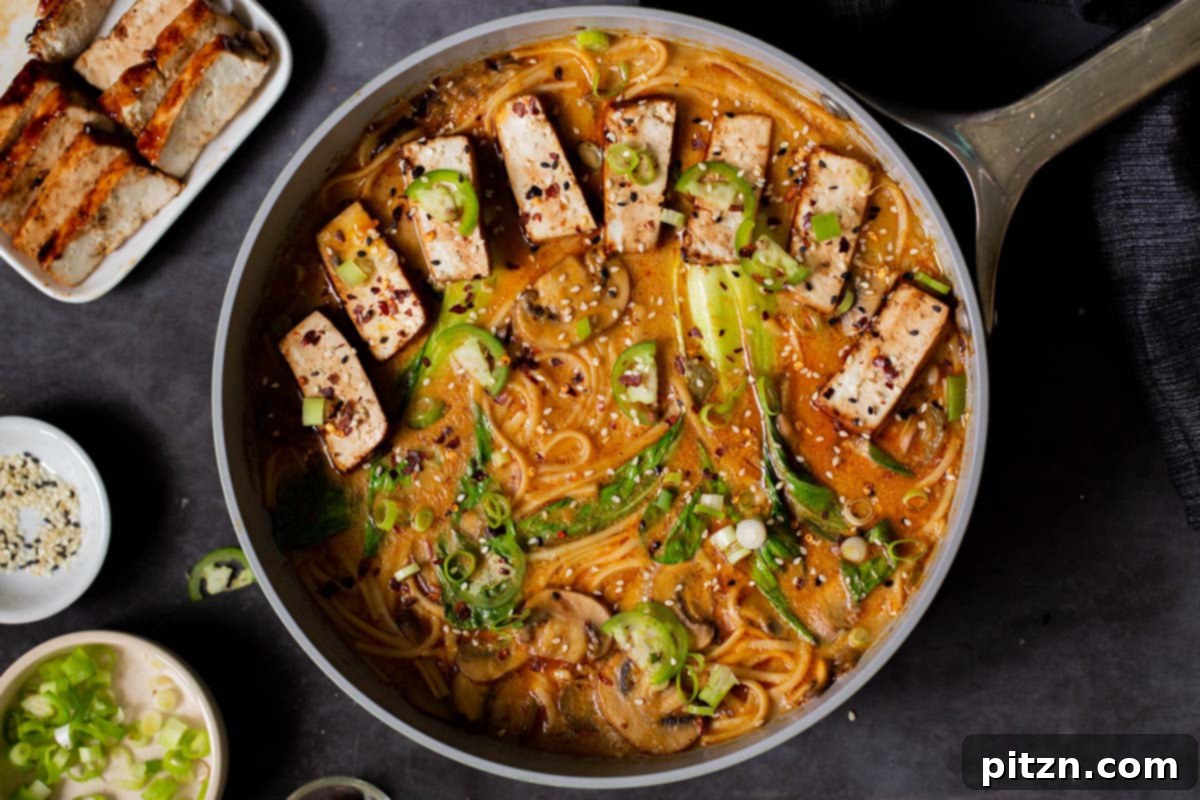
One of the greatest advantages of this recipe is its sheer simplicity. Everything, from the hearty broth to the tender noodles, cooks in a single pot, minimizing cleanup and maximizing your enjoyment. Once the ramen is ready, it’s served steaming hot, adorned with the exquisite seared tofu, crunchy fresh baby bok choy, and a medley of customizable toppings like additional jalapeño slices, a sprinkle of red pepper flakes, or a drizzle of fragrant chili oil. The harmonious blend of flavors in the broth, combined with the satisfying texture of the noodles and the delicious tofu, creates an unforgettable dining experience that’s both comforting and invigorating. It’s the perfect vegan comfort food to warm you from the inside out, anytime you crave a truly special meal, perfect for chilly evenings or a quick, satisfying lunch.
Why You’ll Love This Ultimate One-Pot Vegan Tonkotsu Ramen
This recipe isn’t just another ramen dish; it’s a culinary triumph designed for both ease and exceptional flavor. Here’s why this vegan Tonkotsu will quickly become a cherished staple in your kitchen:
- Rich, Spicy, and Creamy Broth: Experience the profound depth of flavor in our plant-based broth. Infused with ginger, garlic, jalapeño, umami-rich miso, and velvety full-fat coconut milk, it delivers a complex taste profile that is both invigorating and deeply comforting. The hint of spice awakens the palate, while the coconut milk provides that signature Tonkotsu richness, making every spoonful a delight.
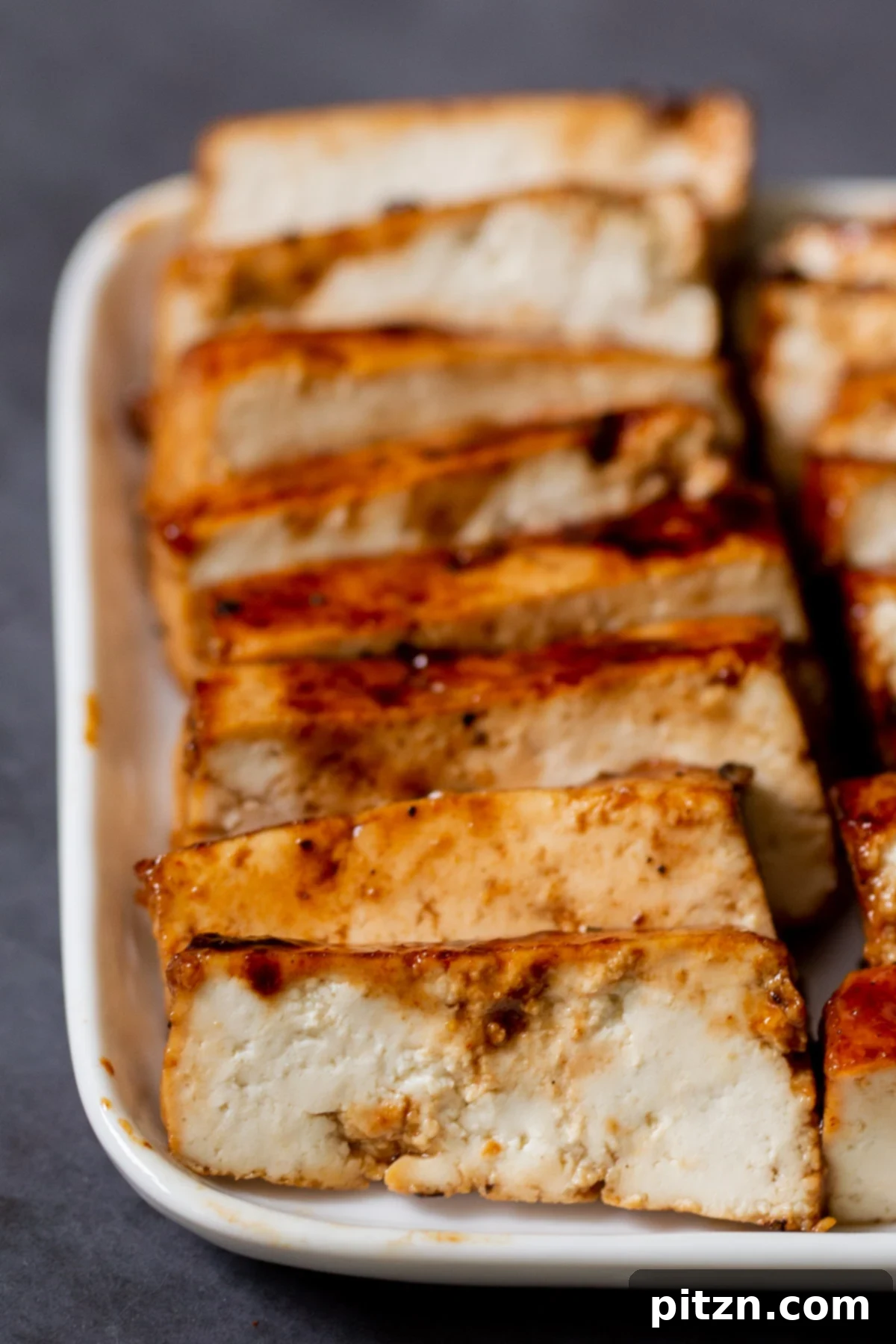
- Flavorful Seared “Char Siu” Tofu: Elevating the dish, our marinated and seared tofu offers a delightful texture and a savory-sweet, umami-packed flavor that beautifully mimics traditional char siu pork. It’s crispy on the outside, tender on the inside, and adds a substantial, satisfying protein element, ensuring a well-rounded and fulfilling meal.
- Convenient One-Pot Meal: Say goodbye to stacks of dirty dishes! This entire ramen, excluding the initial tofu sear, comes together in a single pot, making cleanup an absolute breeze. It’s perfect for busy weeknights when you want maximum flavor with minimal fuss, allowing you more time to enjoy your delicious creation.
- Lightning Fast – Ready in 40 Minutes: From start to finish, you can have a gourmet, satisfying meal on the table in less than an hour. This makes it an ideal choice for those spontaneous ramen cravings, quick weeknight dinners, or when time is of the essence but you still desire a home-cooked, flavorful meal.
- Naturally Nut-Free & Easy Gluten-Free Adaptation: Catering to various dietary needs, this recipe is inherently nut-free, making it safe for many with allergies. For a gluten-free version, simply opt for gluten-free noodles, use tamari (a gluten-free alternative to soy sauce), and ensure your hoisin sauce is certified gluten-free, providing a versatile option for everyone.
- Highly Customizable: While delicious as is, this ramen is a fantastic canvas for your creativity. Add extra vegetables like spinach, corn, or bamboo shoots, or experiment with different toppings such as pickled ginger, nori sheets, or a dash of black garlic oil. Feel free to adjust the spice level to your preference, making it milder or hotter.
The Essence of Tonkotsu Ramen, Veganized
Tonkotsu ramen, hailing from Fukuoka, Japan, is famous for its milky white, incredibly rich and savory broth. Traditionally, this broth is created by boiling pork bones for many hours, sometimes even days, until the collagen breaks down and emulsifies, giving the broth its signature creamy consistency and profound umami. While the idea of a vegan version might seem challenging, this recipe successfully captures the spirit of Tonkotsu through clever plant-based substitutions and thoughtful flavor layering, delivering an equally satisfying experience.
Our vegan Tonkotsu achieves its characteristic creaminess using **full-fat coconut milk**. This ingredient not only provides a luscious, velvety mouthfeel but also a subtle sweetness that beautifully balances the savory and spicy elements of the broth, mimicking the richness of a traditional Tonkotsu. The deep umami and complexity of flavor come from a powerful aromatic base of sautéed **ginger and garlic**, fortified with **yellow miso** for its fermented, savory depth, and a high-quality **vegetable broth** as a robust liquid foundation. The spicy kick, a hallmark of many regional ramen variations and a wonderful contrast to the creamy broth, is introduced through **fresh jalapeño** slices and the potent **sambal oelek**, allowing for an adjustable heat level to perfectly suit your preference.
Instead of chashu (braised pork belly), this recipe features **seared tofu**, ingeniously transformed into a plant-based “char siu” with a sticky, savory-sweet glaze. This firm tofu is pressed to remove excess water, allowing it to better absorb a vibrant marinade blend of soy sauce, hoisin, maple syrup, sesame oil, and aromatic spices. It’s then pan-seared until beautifully golden-brown and caramelized, creating a fantastic source of protein and adding a wonderful textural contrast to the soft noodles and creamy broth. The combination of these thoughtfully selected vegan ingredients creates a ramen that is both wonderfully reminiscent of its traditional counterpart and uniquely delicious in its own right, proving that plant-based can be just as satisfying.
Essential Ingredients for Your Ultimate Vegan Tonkotsu Ramen
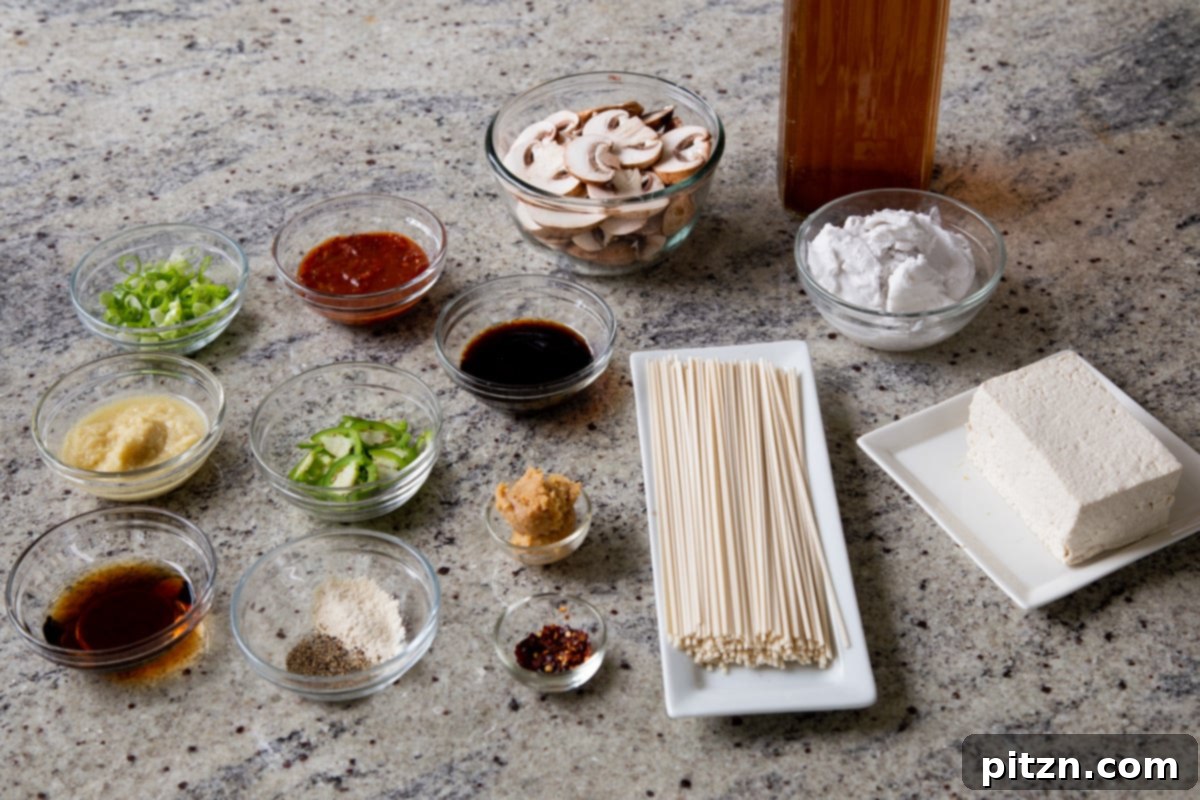
Crafting the perfect vegan Tonkotsu ramen begins with a selection of fresh, high-quality ingredients. Each component plays a crucial role in building the layers of flavor and texture that make this dish so incredibly satisfying and authentically delicious:
For the Seared Tofu (“Vegan Char Siu”):
- Soy Sauce (or Tamari for Gluten-Free): This fundamental Asian condiment provides the essential salty, umami base for our tofu marinade. Use tamari for a gluten-free option without compromising on flavor.
- Hoisin Sauce (Gluten-Free Option Available): A thick, sweet, and tangy sauce, hoisin is key to giving the tofu its distinctive “char siu” flavor and a beautiful, glossy glaze that caramelizes when seared.
- Maple Syrup: Adds a touch of natural sweetness to perfectly balance the savory elements of the marinade and aids in achieving that desirable caramelization during the searing process.
- White Pepper: Delivers a subtle, earthy heat that complements the other flavors without overpowering them, adding a classic Asian spice profile.
- Sesame Oil: Contributes a wonderfully nutty aroma and rich flavor to the marinade, also assisting in achieving a crispy, golden-brown exterior on the tofu.
- Garlic Powder: An easy and effective way to infuse a pungent, savory garlic flavor uniformly throughout the tofu marinade, enhancing its umami depth.
- Firm or Extra-Firm Tofu: The essential protein for our topping. It must be pressed thoroughly to remove excess water, ensuring it absorbs the marinade beautifully and achieves a firm, “meaty” texture when seared. Slice it into two even slabs for optimal browning and a substantial bite.
For the Ramen Broth & Noodles:
- Oil (for sautéing): A neutral cooking oil like vegetable, canola, or grapeseed oil is perfect for sautéing the aromatics and mushrooms without imparting unwanted flavors.
- Mushrooms (or Soy Curls): Thinly sliced mushrooms (such as cremini or shiitake) add an earthy, umami depth and a pleasant chewy texture to the broth. For a chewier, more “meat-like” texture, rehydrated and chopped soy curls are an excellent and equally flavorful alternative.
- Ginger-Garlic Paste: This aromatic powerhouse forms the savory foundation of the broth. If unavailable, fresh minced ginger (about a 1/2-inch piece) and garlic (approximately 3 cloves) work wonderfully, providing vibrant, pungent notes.
- Jalapeño: Thinly sliced, it introduces a fresh, vibrant heat that brightens the broth. You can adjust the amount based on your spice preference, or remove the seeds for a milder kick.
- Yellow Miso Paste: A fermented soybean paste that provides a profound umami flavor, essential saltiness, and helps create a rich body for the broth. Ensure it’s dissolved properly to avoid clumps for a smooth broth.
- Sesame Oil (for broth): A second addition of sesame oil to the broth (beyond the tofu marinade) enhances its nutty fragrance and complements the overall savory-spicy flavor profile, adding complexity.
- Sambal Oelek (or Asian Chili Garlic Sauce): This vibrant chili paste is key to the ramen’s spicy kick and adds another layer of complex chili flavor. Adjust the amount to your desired heat level – a little goes a long way!
- Vegetable Broth: The main liquid base for your ramen. Use a good quality, flavorful vegetable broth or stock for the best results, as it forms the backbone of the entire dish. The quantity can be adjusted based on your preferred broth consistency and noodle absorption.
- Full-Fat Coconut Milk: Crucial for achieving the signature creamy, luxurious texture of Tonkotsu broth in this vegan rendition. Do not substitute with light coconut milk, as it will not provide the same richness and mouthfeel that defines this dish.
- Noodles of Choice: Thin udon or classic ramen noodles are ideal for soaking up the flavorful broth. Follow package instructions precisely for cooking times, noting that fresh ramen noodles typically cook much faster than dried varieties.
- Baby Bok Choy: These tender greens add a fresh, slightly bitter counterpoint to the rich broth and cook quickly. Ensure they are thoroughly washed to remove any grit before slicing them in half.
Suggested Toppings (Optional, but Highly Recommended!):
- Chopped Green Onion: Adds a fresh, pungent garnish, a delightful crunch, and vibrant color contrast.
- Sliced Jalapeño: For an extra burst of fresh heat and an appealing visual element.
- Sesame Seeds: A sprinkle adds a delicate crunch and nutty flavor, enhancing the ramen’s aromatic profile.
- Chili Oil or Crushed Pepper Flakes: For those who love extra heat, a beautiful reddish sheen, and an additional layer of spicy flavor.
- Lime Wedges: A squeeze of fresh lime juice at the end can miraculously brighten all the flavors, adding a zesty finish.
Expert Tips for Perfect Vegan Tonkotsu Ramen
Achieving a restaurant-quality bowl of vegan Tonkotsu ramen at home is entirely possible with a few insider tricks and careful attention to detail. Keep these expert tips in mind to elevate your culinary creation from good to absolutely unforgettable:
- Master the Seared Tofu Technique: The “char siu” tofu is a highlight of this dish, offering a fantastic textural and flavor contrast. Don’t rush the searing process. Ensure your pan is adequately hot and the oil is shimmering before adding the tofu slabs. Cook each side until it achieves a deep golden-brown hue and a beautifully caramelized, slightly crisp crust. Brushing the tofu with extra marinade during cooking intensifies the flavor and helps build that sticky, delicious glaze. This repeated searing and glazing creates a satisfying texture that truly rivals its traditional counterpart.
- Dissolve Miso Effectively: Miso paste can be tricky to incorporate directly into a large pot of hot liquid, often clumping and distributing unevenly if not handled correctly. To avoid this, always dissolve the miso in a small amount of warm broth (approximately 1/2 cup) first, creating a smooth, lump-free slurry, before adding it to the main broth. This ensures even distribution of its rich umami flavor throughout your ramen.
- Adjust Broth Consistency and Flavor to Your Liking: The amount of vegetable broth can be flexible based on your preference. If you prefer a thicker, more concentrated broth, use slightly less liquid. For a lighter consistency, add a bit more broth or water. Always taste your broth before serving and adjust seasonings. A pinch of salt, a dash more sambal oelek for extra heat, or even a teaspoon of maple syrup or brown sugar can balance the flavors beautifully, bringing out the best in the broth and rounding out its profile.
- Noodle Timing is Key: Different types of noodles cook at different rates. Thin ramen noodles typically cook very quickly (around 3-4 minutes), while udon may take longer (7-8 minutes). To ensure your noodles are perfectly al dente and not mushy, add them to the broth towards the very end of the cooking process, just before you’re ready to serve. This prevents them from absorbing too much liquid and becoming overcooked.
- Proper Bok Choy Integration: Baby bok choy is a delicate green that cooks very rapidly. To maintain its vibrant color and crisp-tender texture, add it to the simmering broth just a minute or two before you’re ready to switch off the heat and serve. Overcooking will result in limp, dull greens.
- Don’t Skimp on Toppings: Toppings are not just for aesthetics; they add crucial layers of flavor, texture, and freshness that complete the ramen experience. Have a variety ready – fresh green onions for a pungent crunch, extra jalapeños for a fresh bite, sesame seeds for nuttiness, and chili oil for an extra layer of heat and a beautiful sheen. A final squeeze of fresh lime juice can brighten the entire dish, cutting through the richness and making all the flavors pop.
How to Make Ultimate One-Pot Vegan Tonkotsu Ramen
Follow these detailed steps to create a show-stopping bowl of vegan Tonkotsu ramen in your own kitchen, effortlessly combining rich flavors and satisfying textures in a single pot:
1. Prepare the Seared Tofu
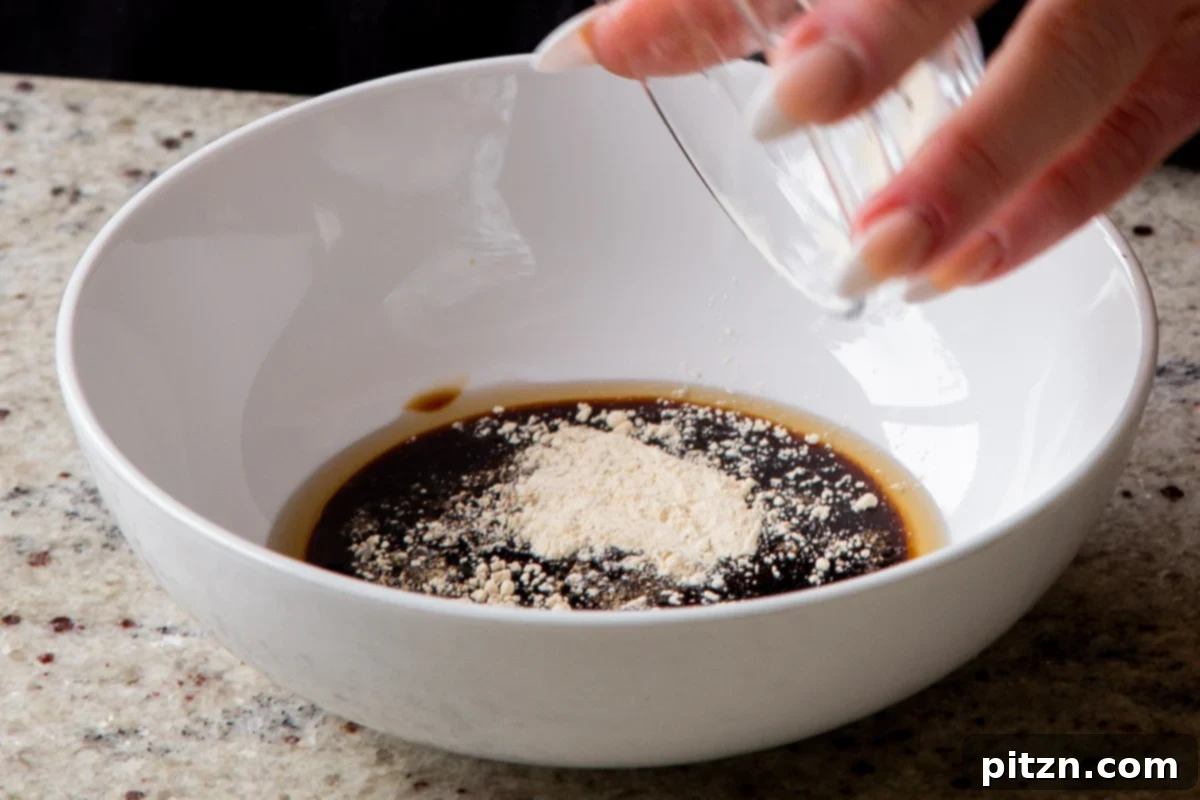
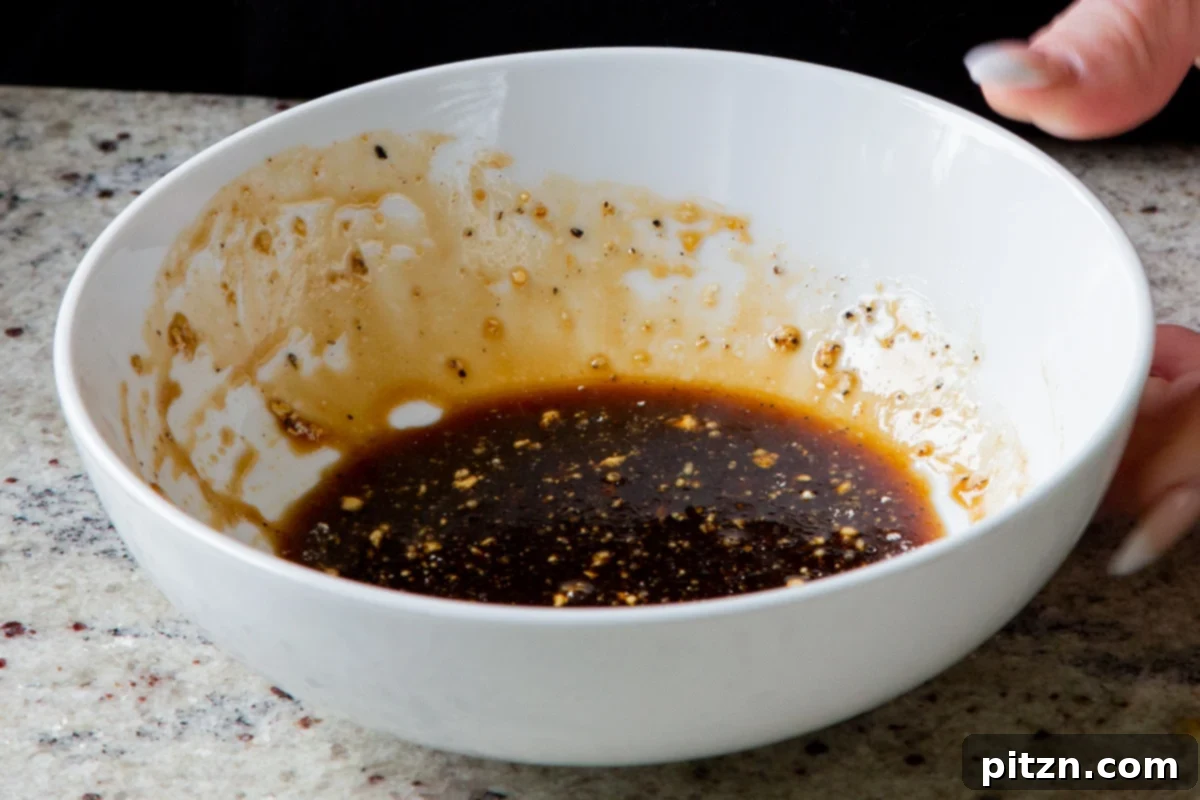
Begin by preparing your delicious “char siu” tofu. In a shallow bowl, combine all the marinade ingredients: 1 tablespoon soy sauce (or tamari), 1 tablespoon hoisin sauce, 2 teaspoons maple syrup, 1/4 teaspoon white pepper, 1 teaspoon sesame oil, and 1/2 teaspoon garlic powder. Mix them thoroughly until well combined and smooth. Take your pressed firm or extra-firm tofu slabs and gently place them in the marinade, ensuring both sides are completely coated. Let them sit aside to soak up the flavors for at least 5 minutes; longer marination (up to 30 minutes) will yield even deeper taste and more intense flavor. While the tofu marinates, gather and prepare all your other ramen ingredients so they are ready to go for the next steps.
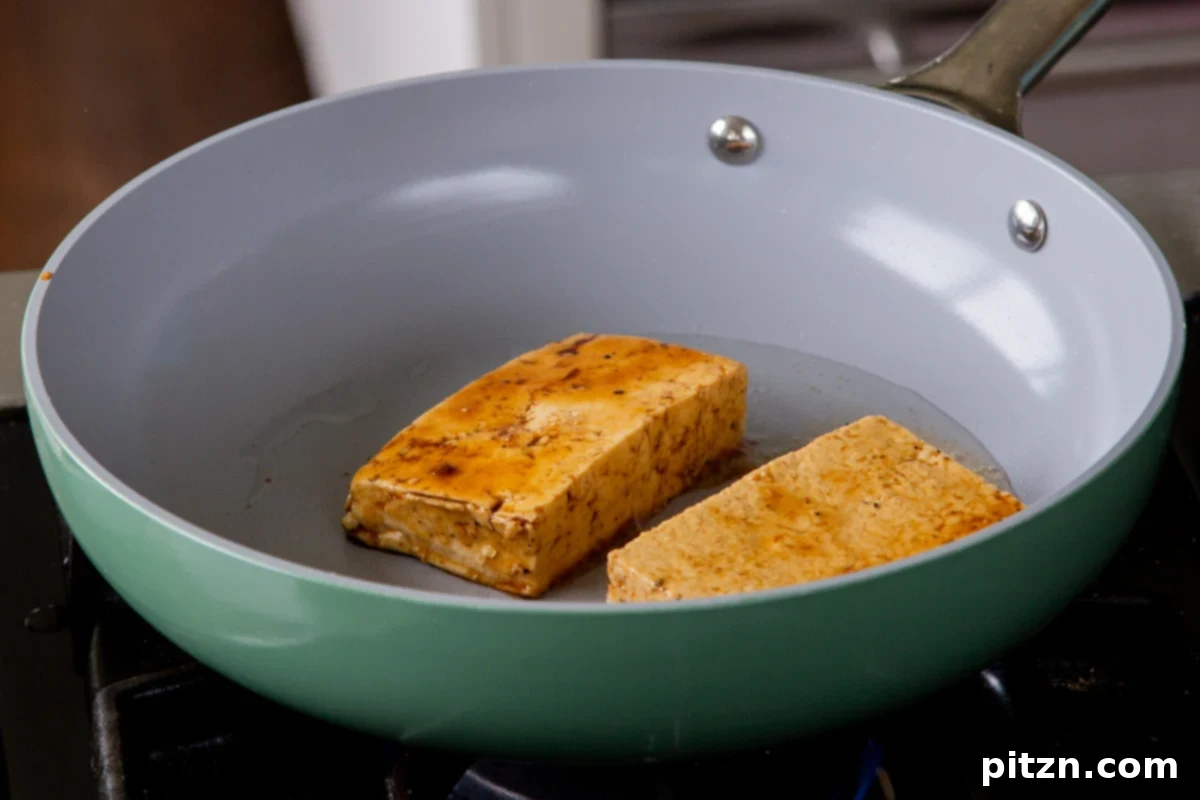
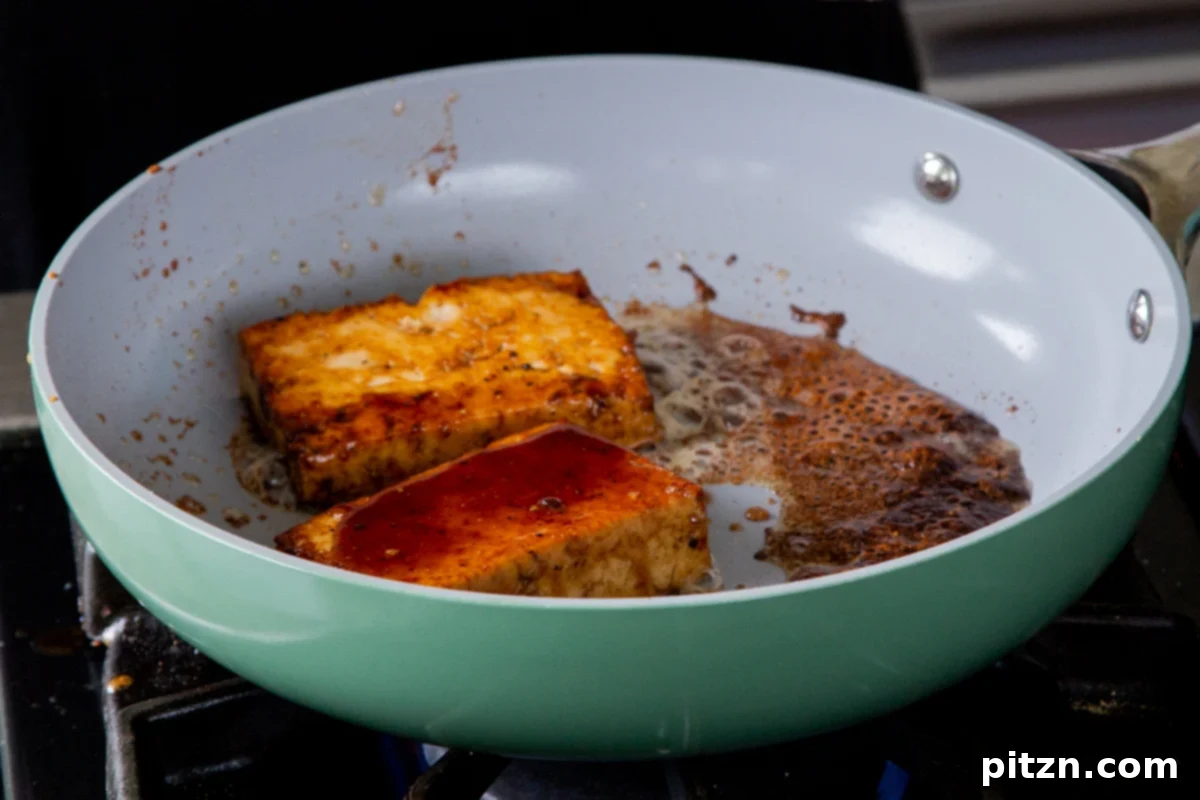
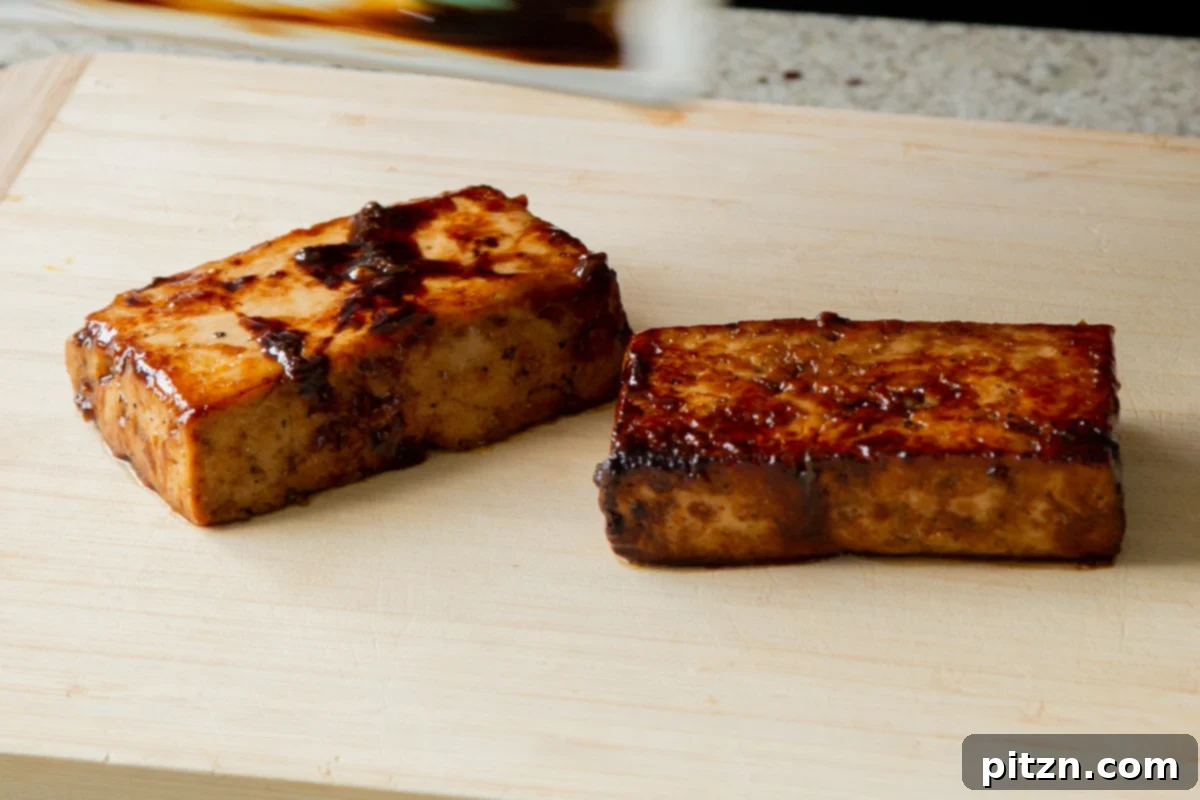
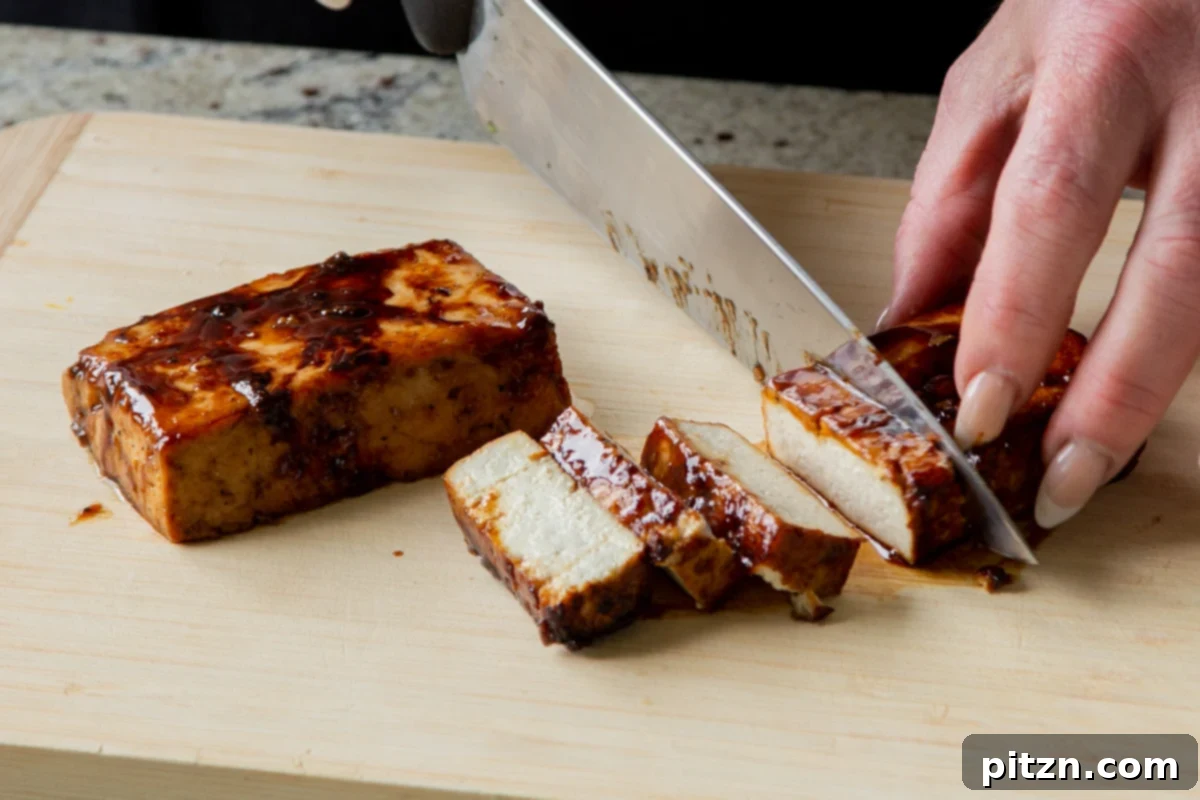
Next, heat a wok or a large nonstick skillet over medium heat. Add a teaspoon of cooking oil. Once the oil is hot and shimmering, carefully place the marinated tofu slabs into the skillet. Cook them undisturbed for several minutes until they develop a beautiful golden-brown crust on one side. Then, using tongs or a spatula, carefully flip the tofu slabs, and using a brush or spoon, generously coat the newly seared, golden side with more of the remaining marinade. Continue to cook, flipping and re-glazing at least twice, rotating the tofu to ensure all sides are gorgeously golden, slightly crispy, and coated in a thickened, caramelized sauce. This repeated searing and glazing builds incredible flavor and texture, creating that perfect “char siu” effect. Once done, remove the tofu from the wok and set it aside on a cutting board to cool slightly. When cool enough to handle, slice it into desired pieces, ready to be added as a delicious topping to your ramen.
2. Build the Flavorful Ramen Broth
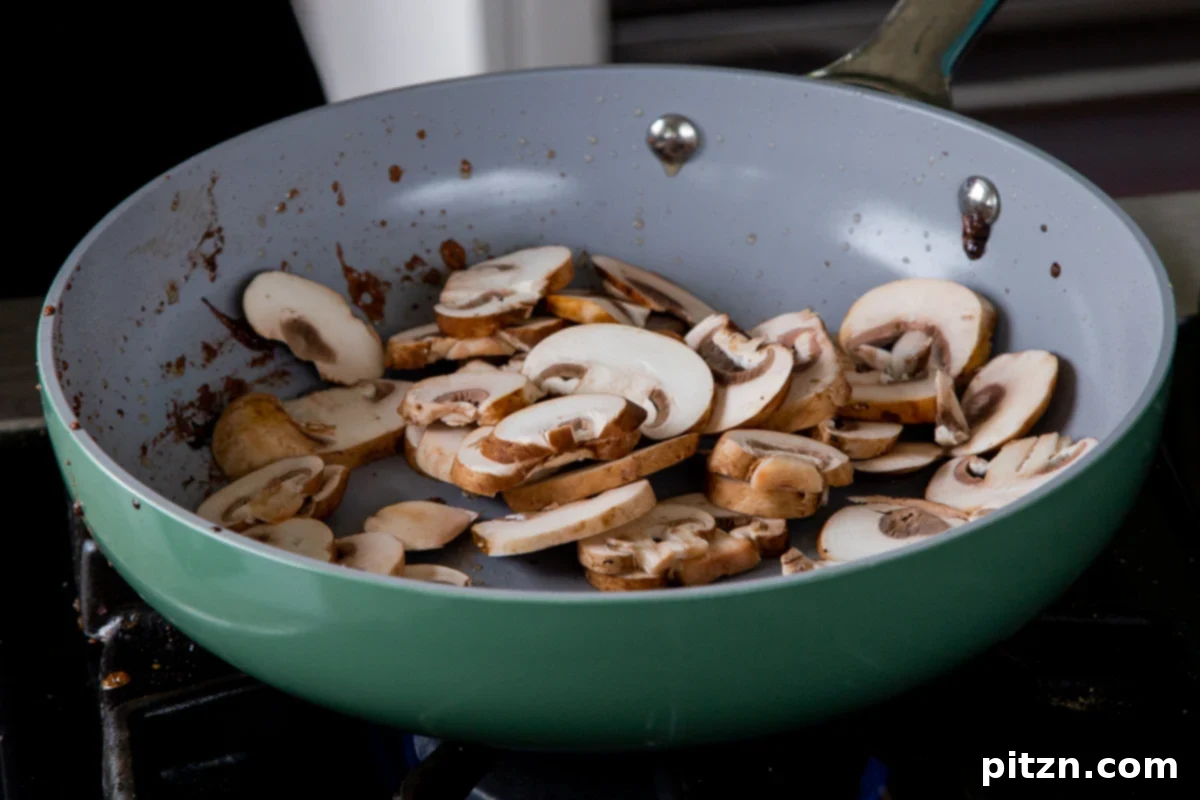
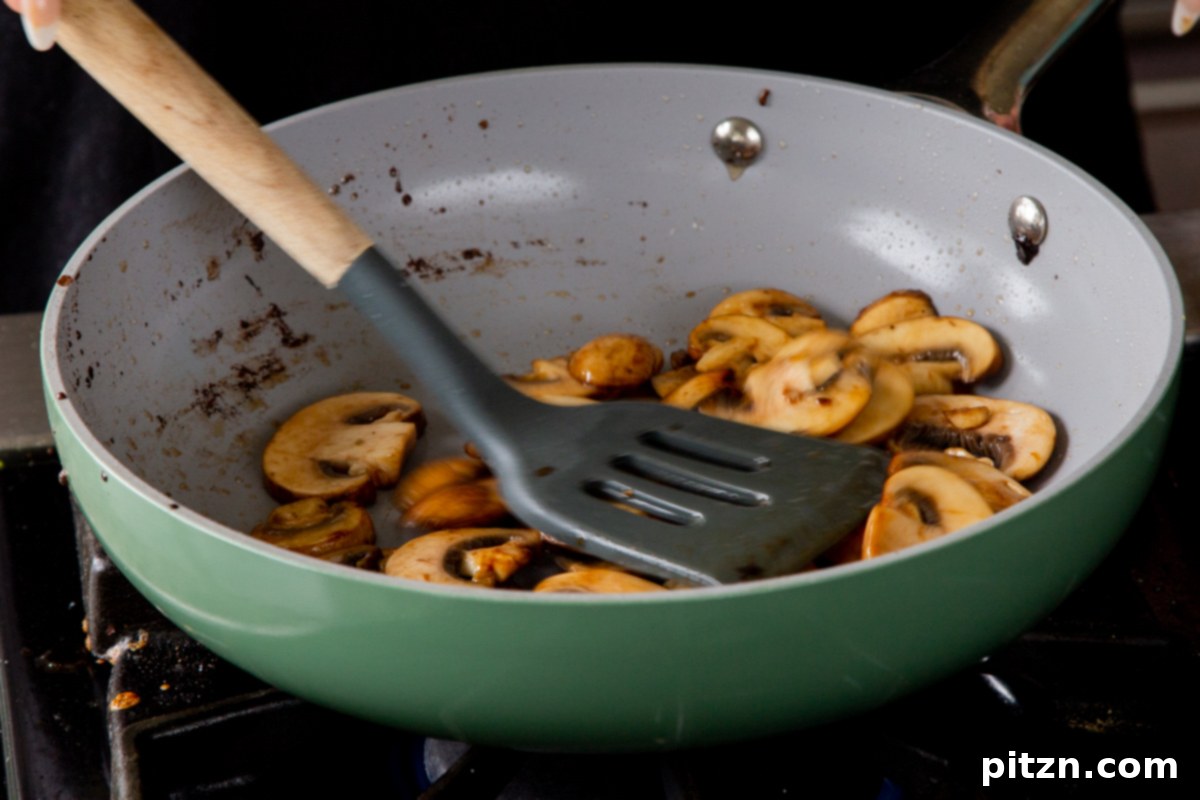
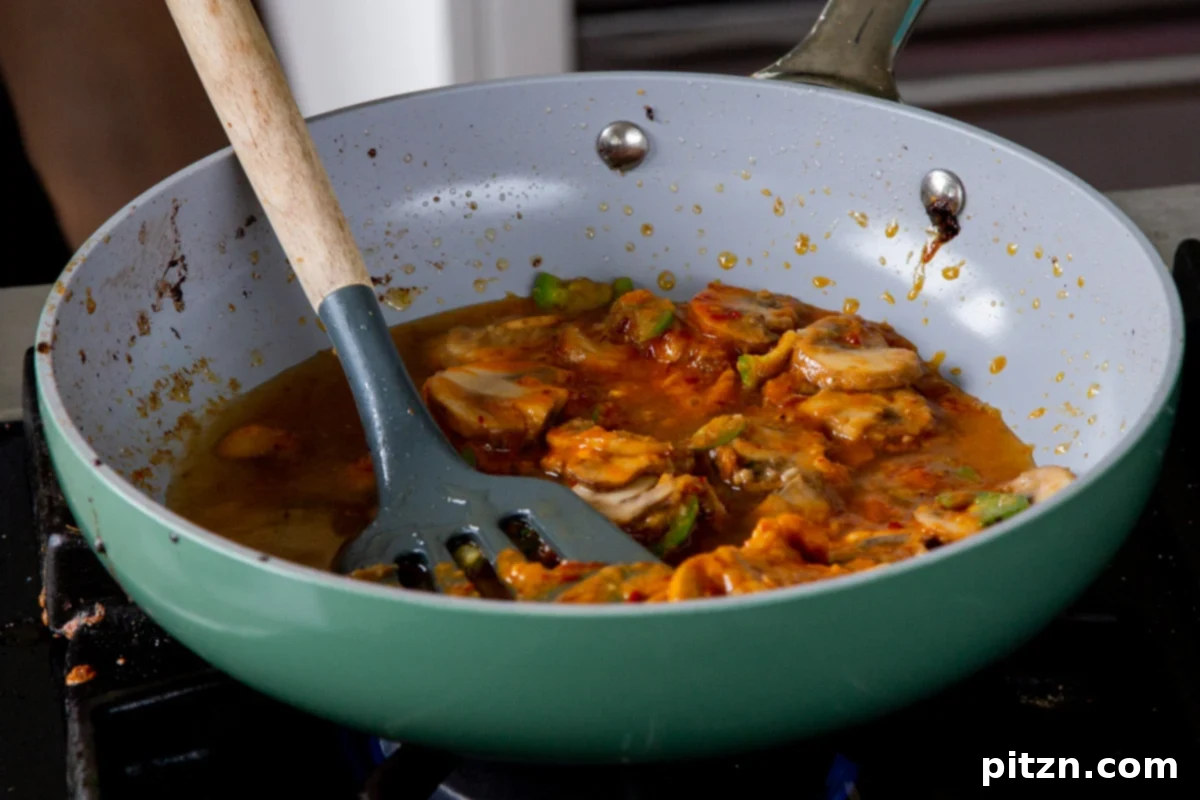
Using the same skillet or wok (no need to clean it – those delicious browned bits add extra flavor to your broth!), add another teaspoon of oil over medium heat. Add the thinly sliced mushrooms (or rehydrated and chopped soy curls) and a generous pinch of salt. Sauté for about 3 minutes, stirring frequently and occasionally pressing the mushrooms down to encourage browning and release their savory moisture. Continue cooking until the mushrooms start to turn golden and tender, developing a crucial umami base for the broth.
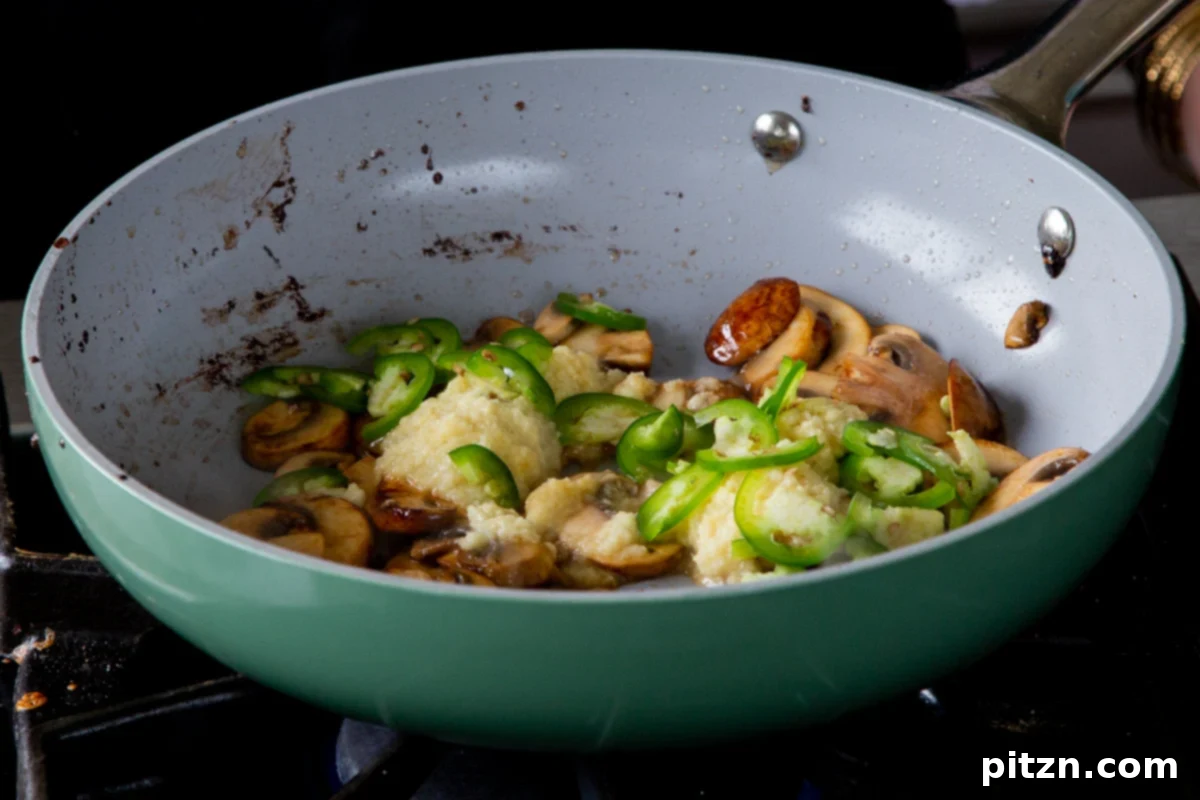
Now, add the ginger-garlic paste (or your minced fresh ginger and garlic) and the thinly sliced jalapeño to the pan. Stir everything well and cook for another minute or two until the aromatic garlic and ginger fragrance fills your kitchen and the raw garlic smell completely dissipates. This step creates a vibrant, pungent, and slightly spicy foundation for the rich broth to come.
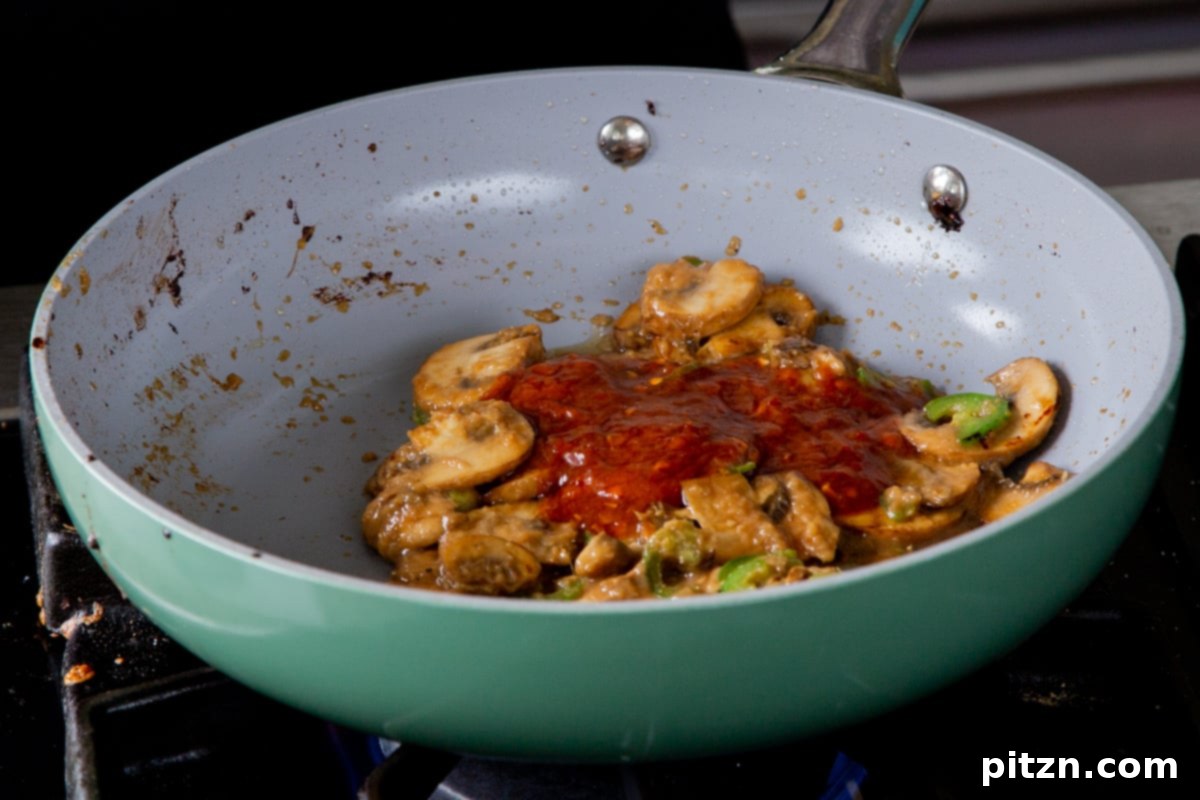
Reduce the heat slightly and stir in the yellow miso paste, 2 teaspoons of sesame oil, and the vibrant sambal oelek. Pour in just 1/2 cup of the vegetable broth and mix vigorously with a spoon or whisk. This crucial step ensures the miso paste fully dissolves into the mushroom and aromatic mixture, preventing it from forming undissolved blobs when the rest of the liquid is added, guaranteeing a smooth and flavorful broth. Once the miso is completely smooth and thoroughly incorporated, add the remaining vegetable broth and the full-fat coconut milk to the pan. Season with about 1/4 to 1/2 teaspoon of salt, depending on the saltiness of your chosen broth and your personal taste preference. Stir everything together until well combined and the broth is a uniform, creamy consistency.


3. Cook Noodles and Vegetables
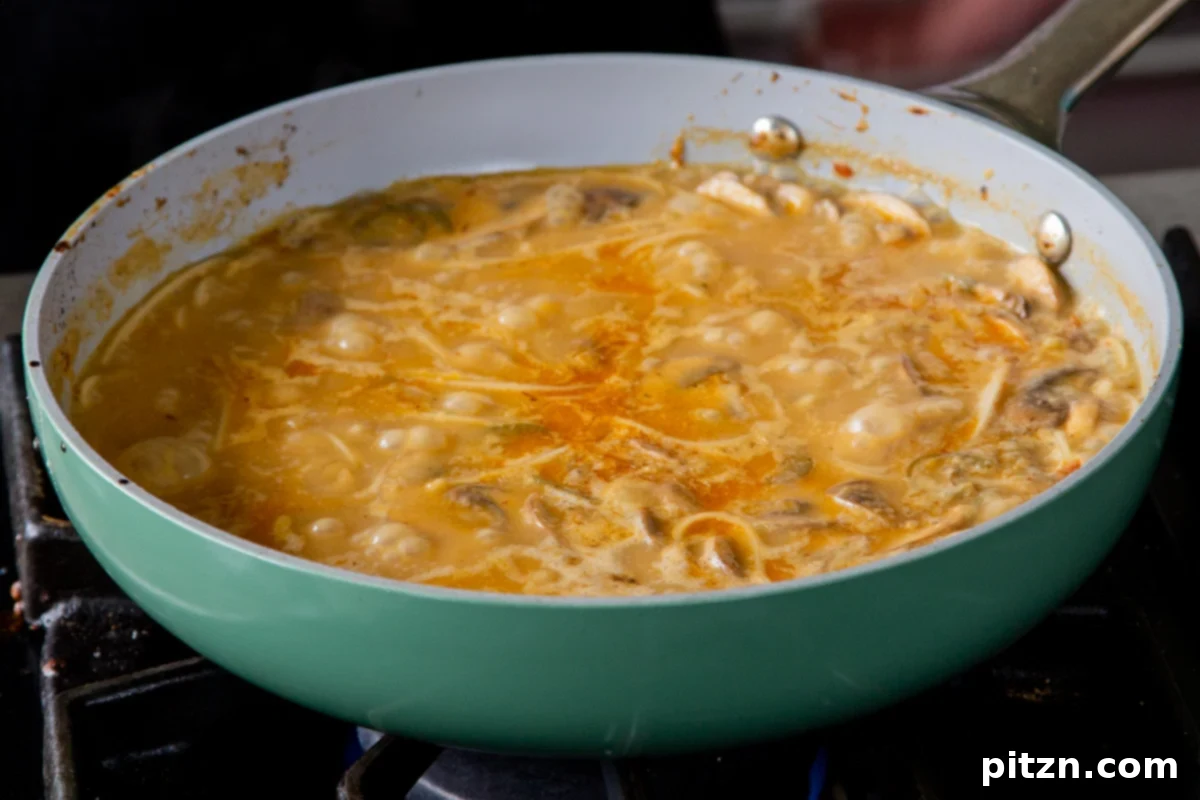
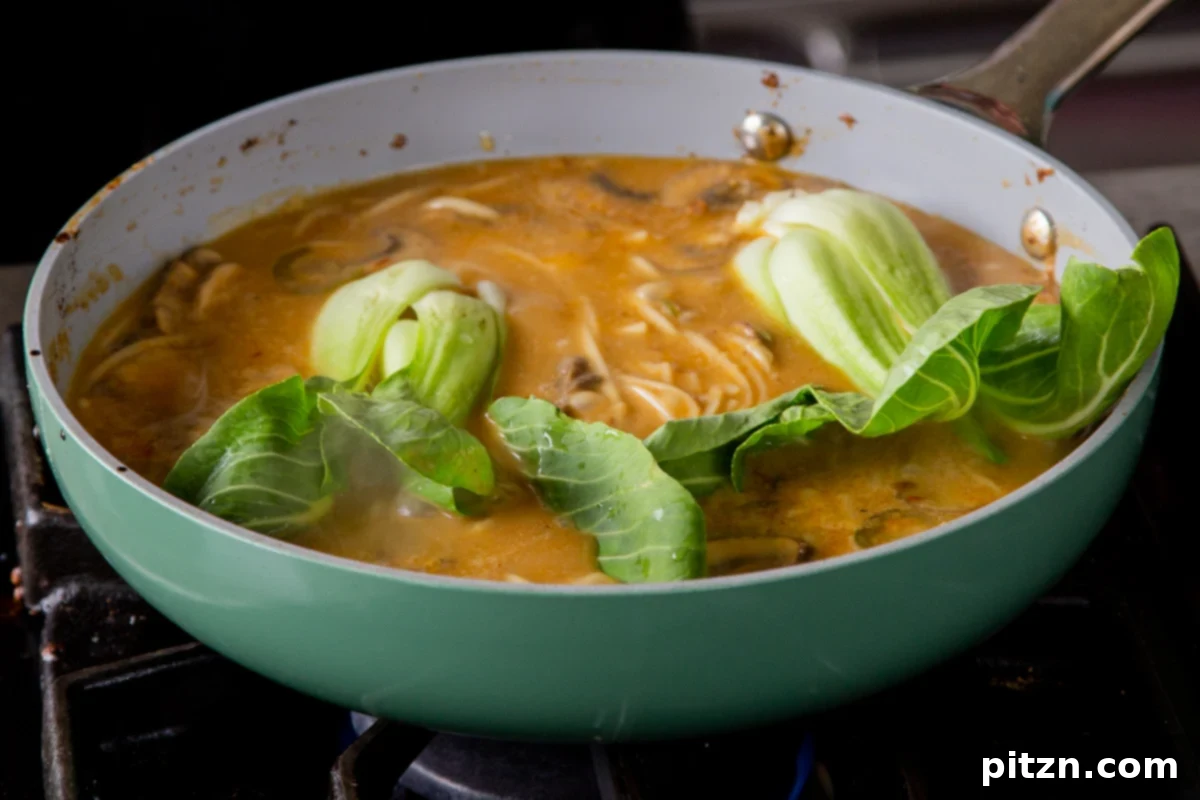
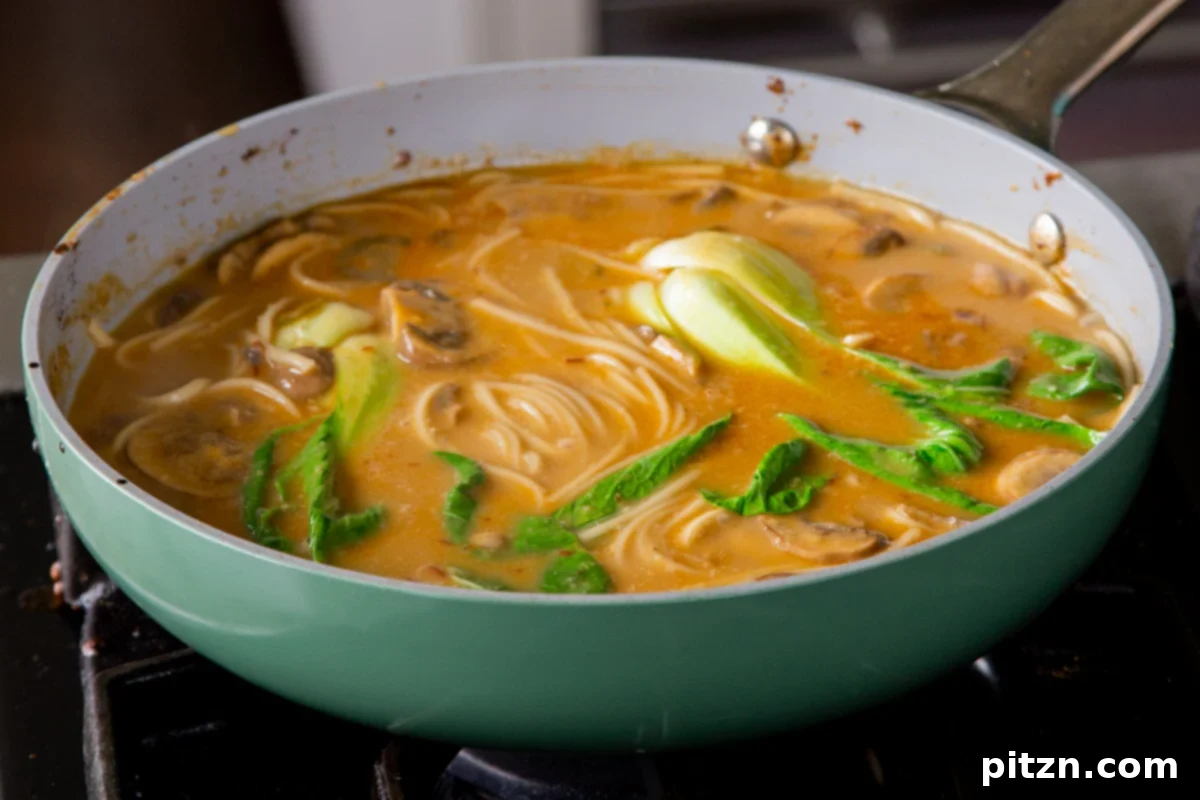
Increase the heat to medium-high and bring the broth mixture to a rapid boil. Once boiling vigorously, carefully add your chosen noodles (whether thin udon or classic ramen noodles) directly into the pot. Cook according to their package directions until they are just al dente – typically 3 to 4 minutes for ramen and 7 to 8 minutes for thin udon. Stir the noodles occasionally to prevent sticking and ensure even cooking, making sure they absorb the flavorful broth. Just when the noodles are almost done and have a slight bite, add the thoroughly washed and halved baby bok choy to the pan, submerging the pieces gently in the hot broth. Continue to cook for just another minute or so until the bok choy is tender-crisp and retains its vibrant green color. Immediately remove the pan from the heat to prevent overcooking the noodles and vegetables, ensuring they remain at their optimal texture.
4. Final Adjustments and Serving
Before serving, take a moment to taste the broth and adjust the seasonings as needed. This is your chance to perfect the flavor balance: add a little more salt if it tastes bland, a dash more sambal oelek for an extra kick of heat, or a teaspoon or so of maple syrup (or brown sugar) to round out the flavors and add a subtle sweetness, enhancing the overall complexity and depth of the broth. Once satisfied with the taste, ladle the hot, rich, and creamy broth generously into individual serving bowls. Scoop in the tender noodles and perfectly cooked vegetables. Artfully arrange the sliced “char siu” tofu on top of each bowl. Garnish generously with freshly chopped green onion for pungency, extra sliced jalapeño (if desired) for a fresh bite, a sprinkle of sesame seeds for a nutty crunch, fresh lime wedges for a zesty finish, and a final drizzle of aromatic chili oil or a pinch of crushed red pepper flakes for an extra flourish. Serve immediately and savor every spoonful of your homemade, gourmet vegan Tonkotsu ramen!
Frequently Asked Questions About Vegan Tonkotsu Ramen
No, traditional Tonkotsu ramen is definitively not vegan. It is famous for its rich, milky white broth made by simmering pork bones for extended periods, a process that extracts collagen and fat to create its signature creamy texture. However, this recipe offers a delicious and satisfying plant-based alternative that expertly captures the essence and richness of Tonkotsu using entirely vegan ingredients, so you don’t have to miss out on this classic comfort food.
Traditional Tonkotsu ramen typically does not contain dairy. Its creamy texture comes from the breakdown and emulsification of pork collagen and fat in the broth, not from milk products. Our vegan version skillfully achieves its creamy consistency by using full-fat coconut milk, making it entirely dairy-free while still delivering that luscious, rich mouthfeel that defines a great Tonkotsu broth.
Yes, this recipe is naturally nut-free, making it a safe and delicious option for individuals with nut allergies. For a completely gluten-free meal, you’ll need to make a few simple substitutions: ensure you use gluten-free ramen or udon noodles, substitute regular soy sauce with tamari, and always verify that your hoisin sauce is certified gluten-free, as some brands may contain wheat. With these adjustments, this recipe is highly adaptable to various dietary needs.
You can certainly prepare components of this ramen ahead of time for easier meal prepping. The rich broth can be made a day or two in advance and stored separately in the refrigerator. The delicious seared tofu can also be prepared ahead and kept refrigerated, ready to be sliced just before serving. However, for the best texture and to prevent them from becoming mushy, it’s highly recommended to cook the noodles fresh just before serving. If making the broth ahead, store it and cook the noodles separately according to package instructions, then combine them with the reheated broth and fresh toppings for an optimal dining experience.
This vegan Tonkotsu ramen is wonderfully versatile and an excellent canvas for culinary creativity! Feel free to experiment with additional toppings like sweet corn kernels for a pop of sweetness, thinly sliced bamboo shoots for an authentic touch, shredded nori (seaweed) sheets for marine umami, pickled ginger for a zesty contrast, a drizzle of black garlic oil for profound depth, or even a dollop of vegan sriracha mayo for extra creaminess and heat. You can also vary the vegetables by adding fresh spinach, kale, or crisp snow peas for more greens, or consider adding edamame or pan-fried tempeh for an alternative protein source.
More Delicious Vegan Ramen Recipes to Explore
If you’ve enjoyed this incredible one-pot vegan Tonkotsu ramen, you’re in for a treat! The world of plant-based ramen is vast, vibrant, and full of exciting flavors waiting to be discovered. Here are some other fantastic vegan ramen recipes to inspire your next culinary adventure, each offering a unique twist on this beloved comfort food:
- Hot and Sour Ramen: A vibrant and tangy bowl with a delightful spicy kick, perfect for clearing the senses and invigorating your palate.
- Butter Chicken Ramen: A creative fusion bringing the rich, creamy, and mildly spicy flavors of Indian butter chicken to a warming bowl of ramen – an unexpected yet harmonious blend.
- Spicy Peanut Butter Ramen: Indulge in a nutty, savory, and spicy broth that’s incredibly comforting and deeply satisfying, offering a unique texture and flavor profile.
- Curry Ramen with Miso Lentils: A hearty and aromatic ramen featuring the warmth of exotic curry spices and the protein-packed goodness of umami-rich miso-infused lentils.
- Birria Ramen: Experience a truly unique Mexican-Japanese fusion with a rich, savory birria-inspired broth, tender noodles, and a depth of flavor that’s both bold and comforting.
Vegan Tonkotsu Ramen Recipe
Vegan Tonkotsu Ramen
A quick and easy one-pot recipe for a spicy, creamy vegan Tonkotsu ramen with flavorful seared char siu tofu. This delicious plant-based meal is ready in under 40 minutes!
By: Vegan Richa
Prep Time: 10 mins
Cook Time: 30 mins
Total Time: 40 mins
Servings: 4
Course: Main Course
Cuisine: Japanese
Ingredients
For the Seared Tofu (“Vegan Char Siu”):
- 1 tablespoon soy sauce (or tamari for a gluten-free option)
- 1 tablespoon hoisin sauce
- 2 teaspoons maple syrup
- 1/4 teaspoon white pepper
- 1 teaspoon sesame oil
- 1/2 teaspoon garlic powder
- 7 ounces (approx. 200g) firm or extra firm tofu, pressed for at least 15 minutes, then sliced into two even slabs
For the Ramen Broth & Noodles:
- 1 teaspoon oil (for sautéing)
- 3 ounces (approx. 85g) mushrooms, thinly sliced (e.g., cremini or shiitake), or 1 ounce (approx. 28g) soy curls, soaked in hot water or broth for 15 minutes, then drained and chopped into small pieces
- 2 tablespoons ginger-garlic paste (alternatively, use 3 cloves of garlic, minced, and 1/2” of fresh ginger, minced)
- 1/2 jalapeño, thinly sliced (adjust to your spice preference)
- 1 tablespoon yellow miso paste
- 2 teaspoons sesame oil (for broth)
- 2 tablespoons sambal oelek (or any preferred Asian chili garlic sauce, adjust for heat)
- 2.5 to 3.5 cups vegetable broth (use more for a thinner broth, less for a richer consistency; depends on noodles and preference)
- 1 cup full-fat coconut milk (essential for creaminess, do not substitute with light coconut milk)
- 4 ounces (approx. 113g) noodles of choice (such as thin udon or ramen noodles)
- 1 or 2 baby bok choy, thoroughly washed and then sliced in half lengthwise
For Topping (Optional, but Highly Recommended!):
- Freshly chopped green onion
- Additional sliced jalapeño
- Sesame seeds (white or black)
- Chili oil or crushed red pepper flakes
- Fresh lime wedges
Instructions
Make the Seared Tofu:
- In a shallow bowl, mix together the soy sauce, hoisin sauce, maple syrup, white pepper, sesame oil, and garlic powder to create a smooth marinade. Add the pressed tofu slabs and gently coat them thoroughly on all sides. Set aside to marinate for at least 5 minutes.
- Heat a wok or a large nonstick skillet over medium heat and add 1 teaspoon of oil. Once the oil is hot and shimmering, carefully place the marinated tofu slabs into the skillet. Cook them undisturbed for several minutes until they develop a beautiful golden-brown crust on one side.
- Flip the tofu slabs, then use a brush or spoon to generously coat the newly seared, golden side with more of the remaining marinade. Continue cooking, flipping and re-glazing at least twice, rotating the tofu until all sides are gorgeously golden, slightly crispy, and coated in a thickened, caramelized sauce.
- Remove the seared tofu slabs from the wok and set them aside on a cutting board to cool slightly. Once cool enough to handle, slice them into desired pieces, ready to be added as a topping to your ramen.
Make the Ramen Broth & Noodles (One-Pot Method):
- In the same skillet (no need to clean it) over medium heat, add another teaspoon of oil. Add the sliced mushrooms (or rehydrated soy curls) and a generous pinch of salt. Cook for about 3 minutes, stirring frequently and occasionally pressing the mushrooms down, until they begin to turn golden and release their moisture.
- Stir in the ginger-garlic paste and the thinly sliced jalapeño. Cook for an additional minute or two until the aromatic garlic and ginger fragrance fills your kitchen and the raw garlic smell dissipates.
- Reduce the heat slightly. Stir in the yellow miso paste, 2 teaspoons of sesame oil, and the sambal oelek. Pour in just 1/2 cup of the vegetable broth, stirring vigorously with a spoon or whisk to ensure the miso completely dissolves into the mixture, preventing clumps.
- Once the miso is fully incorporated, add the remaining vegetable broth and the full-fat coconut milk to the pan. Add 1/4 to 1/2 teaspoon of salt, adjusting based on the saltiness of your broth and personal preference. Stir everything together until well combined.
- Increase the heat to medium-high and bring the broth mixture to a rapid boil. Once boiling, carefully add your chosen noodles (thin udon or ramen). Cook according to their package directions until they are just al dente (typically 3-4 minutes for ramen, 7-8 minutes for thin udon). Stir the noodles occasionally.
- Just as the noodles approach al dente, add the halved baby bok choy to the pan, submerging the pieces gently in the hot broth. Continue to cook for an additional minute or so until the bok choy is tender-crisp and bright green. Immediately remove the pan from the heat to prevent overcooking the noodles and vegetables.
- Taste the broth and adjust the seasonings as needed. You can add a teaspoon or so of maple syrup (or brown sugar), if desired, to balance out the flavors and add a subtle sweetness.
To Serve:
- Ladle the hot, creamy broth into individual serving bowls. Scoop in the tender noodles and cooked vegetables.
- Top each bowl generously with the sliced seared tofu, chopped green onion, additional sliced jalapeño (if desired), a sprinkle of sesame seeds, fresh lime wedges, and a final drizzle of aromatic chili oil or a sprinkle of crushed red pepper flakes. Serve immediately and enjoy your gourmet vegan Tonkotsu ramen!
Notes
- Nutritional information provided is an approximation and does not include toppings, as the amount you use will vary by taste and preference.
- Storage: To maintain optimal texture, store the cooked ramen broth and noodles separately from the seared tofu and other toppings. Refrigerate components for up to 3 days. When ready to eat, reheat the ramen broth and noodles, then add fresh toppings before serving for the best experience.
- This recipe is naturally nut-free. For a completely gluten-free version, ensure you use gluten-free noodles, substitute soy sauce with tamari, and verify that your hoisin sauce is certified gluten-free.
- Make Ahead/Cook Noodles Separately: If you plan to make this ramen ahead of time or are preparing it for meal prep, it is highly recommended to cook the noodles separately according to their package instructions. Noodles can absorb a significant amount of liquid when stored in broth, leading to a mushy texture. For the broth, you can prepare the base with coconut milk and 1 to 1.5 cups of water/stock (depending on how brothy you prefer the ramen), bring it to a boil, simmer for 3-4 minutes, and then store it. Combine with freshly cooked noodles and toppings when ready to serve.
Nutrition Information (Approximate, per serving)
Carbohydrates: 31 g
Protein: 11 g
Fat: 22 g
Saturated Fat: 15 g
Sodium: 674 mg
Potassium: 328 mg
Fiber: 4 g
Sugar: 7 g
Vitamin A: 3796 IU
Vitamin C: 46 mg
Calcium: 188 mg
Iron: 4 mg
Nutrition information is automatically calculated and should only be used as an approximation. Actual values may vary based on specific ingredients and preparation methods.