
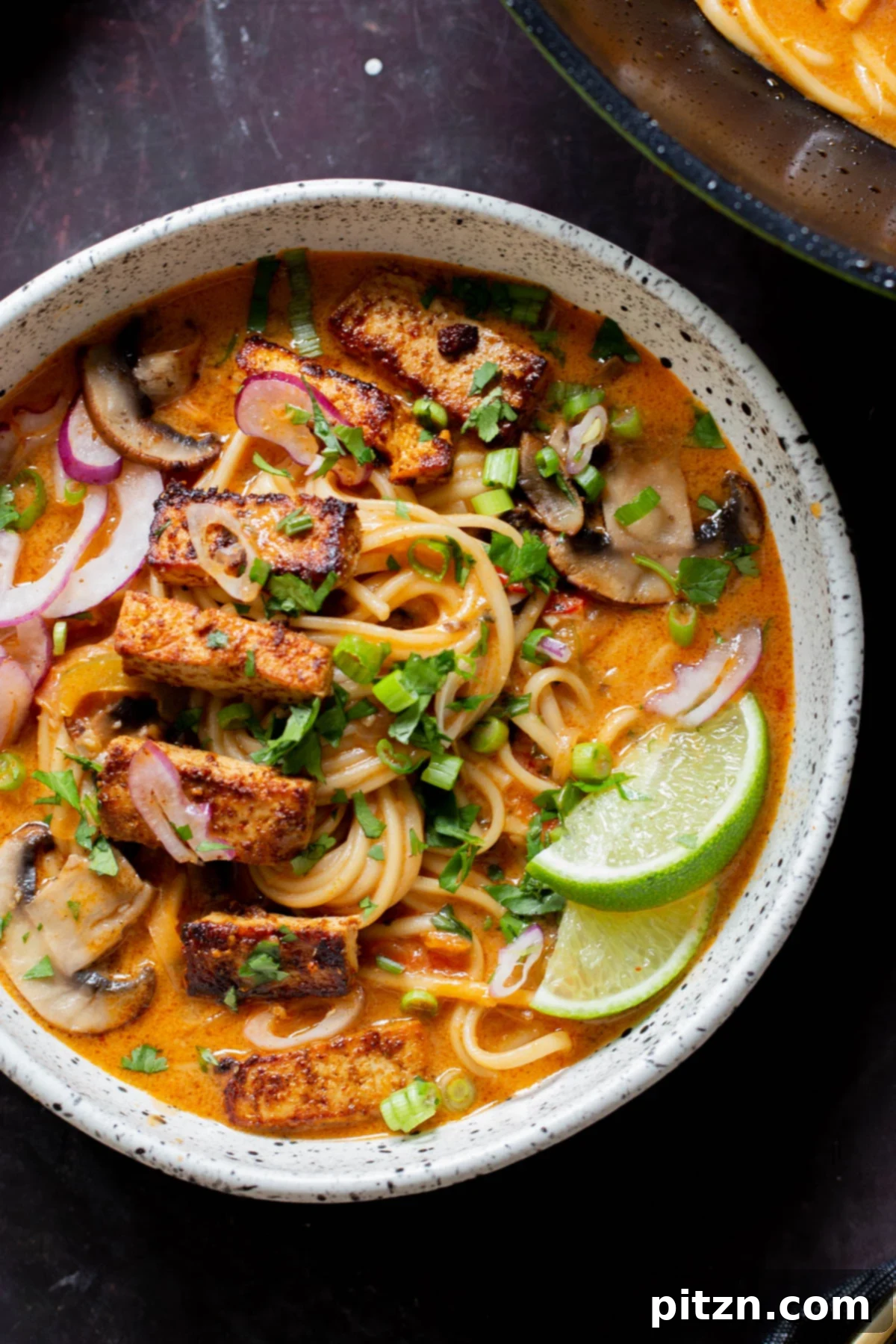
Creamy Vegan Butter Chicken Ramen: A One-Pot Indian Fusion Delight
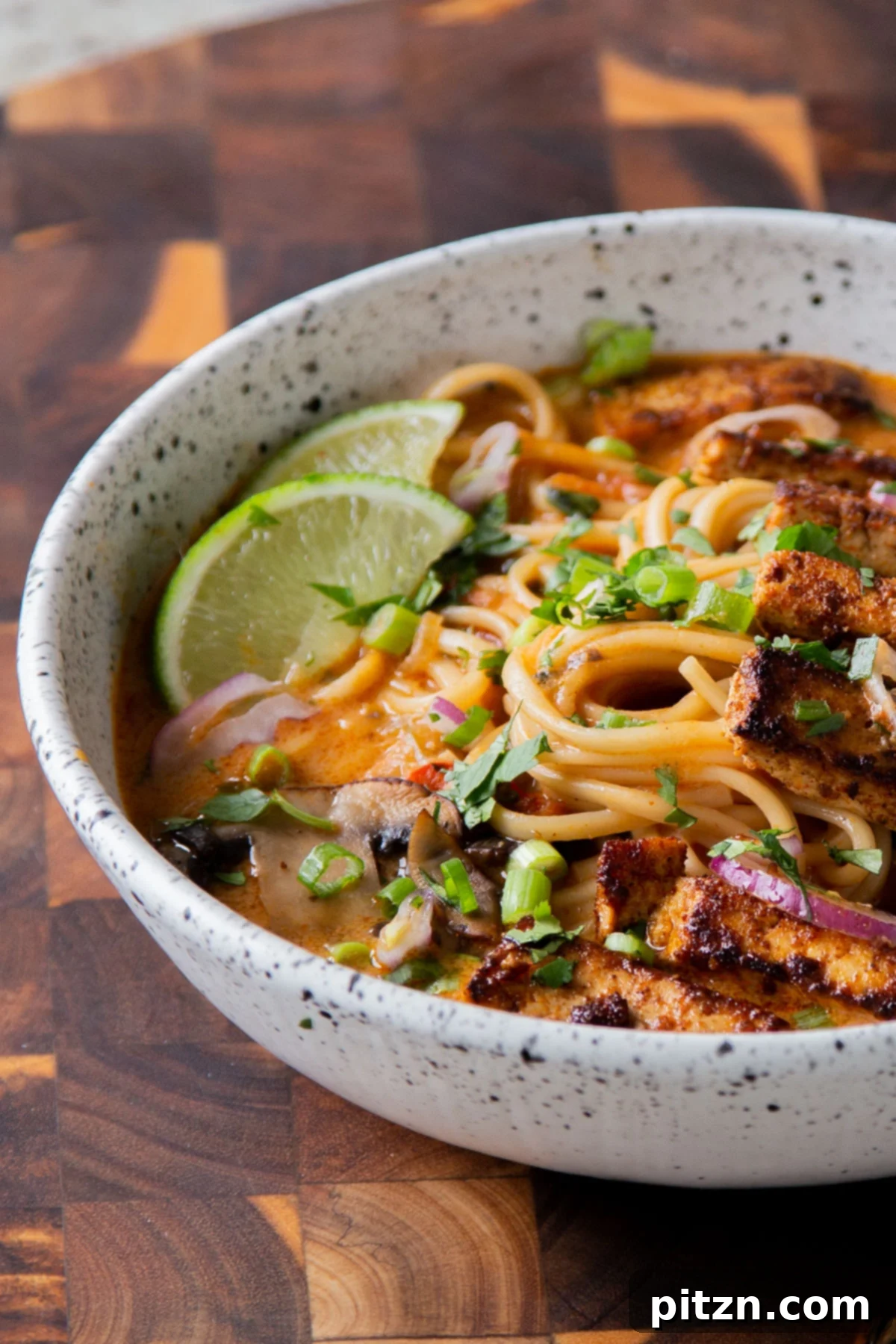
Prepare to tantalize your taste buds with a culinary masterpiece that marries the rich, aromatic flavors of Indian butter sauce with the comforting warmth of Japanese ramen. Our **Vegan Butter Chicken Ramen** offers an innovative twist on two beloved dishes, creating an unforgettable fusion experience. Forget traditional ramen broth; here, the noodles are cooked directly in a luscious, spiced butter-style sauce, transforming this into a remarkably convenient and incredibly flavorful one-pot meal.
This recipe is designed for versatility and ease. You can personalize it with your favorite vegetables, adding freshness and texture to every bite. For protein, we’ve opted for perfectly seasoned, crispy tofu, but feel free to explore other plant-based options like vegan chicken substitutes or hearty soy curls. Get ready to elevate your weeknight dinner with a dish that’s both exotic and familiar, ready in just about 30 minutes!
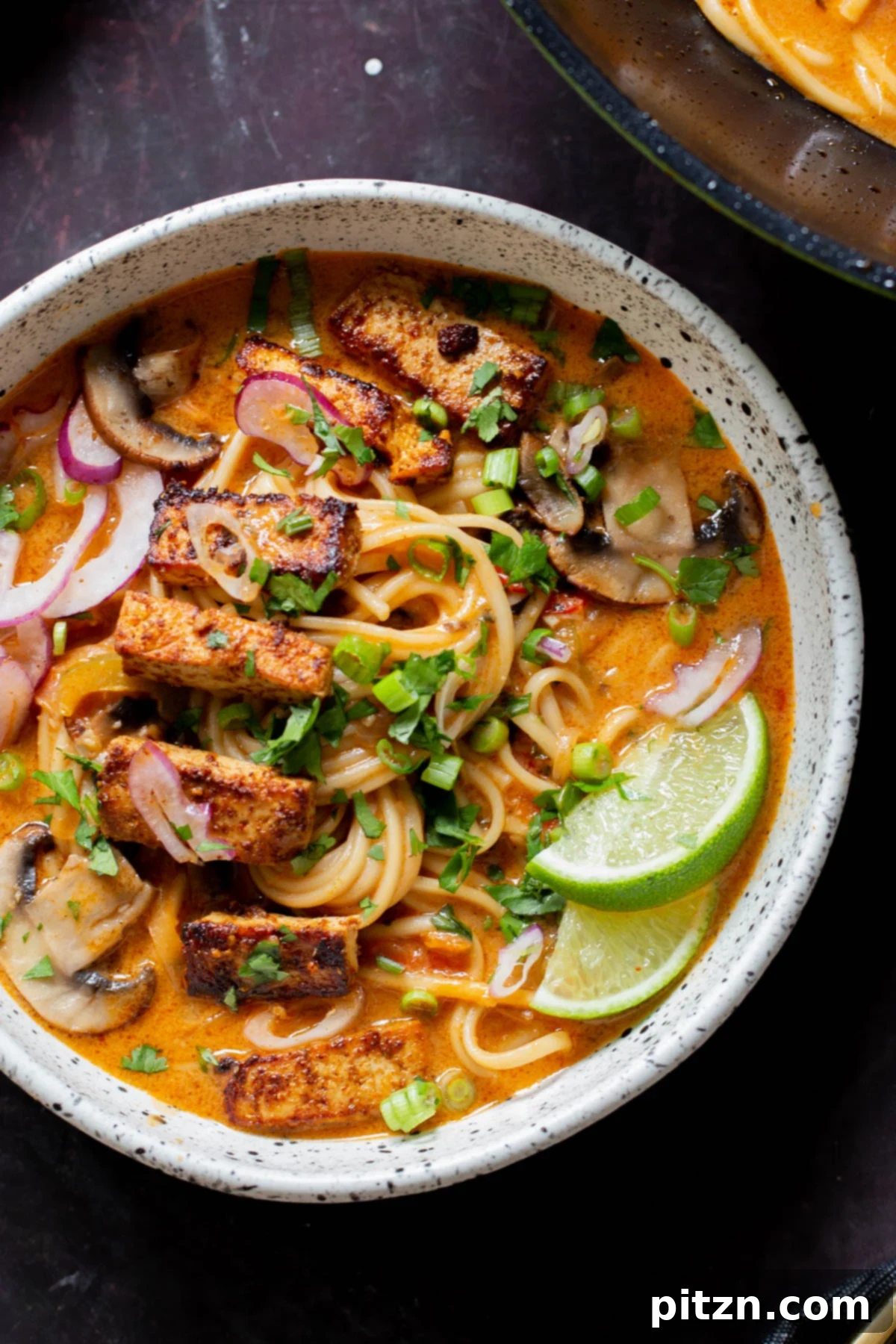
Table of Contents
- Why You’ll Love This Vegan Butter Ramen
- More Irresistible Vegan Ramen Recipes
- Vegan Butter Chicken Ramen Recipe Card
- Key Ingredients and Smart Substitutions
- Pro Tips for Perfect Butter Ramen
- Step-by-Step: How to Make Fusion Indian Butter Chicken Ramen
- Frequently Asked Questions
My culinary journey often leads me to discover innovative applications for beloved flavors, and vegan butter chicken sauce is truly a star ingredient that sparks endless creativity! This Butter Ramen is my latest delicious exploration, blending the creamy, savory notes of Indian butter sauce into a dynamic fusion dish. If you share my obsession with this incredible sauce, you absolutely must try my vegan butter chicken lasagna bake for another delightful fusion experience!
This unique ramen dish, infused with authentic Indian spices, delivers an unparalleled comfort experience. It perfectly balances the deep, warming flavors of a traditional curry with the satisfying, slurpable texture of brothy ramen noodles. Each spoonful offers a harmonious blend of creamy richness and a subtle kick of spice, making it an ideal meal for those seeking both warmth and adventure in their dinner.
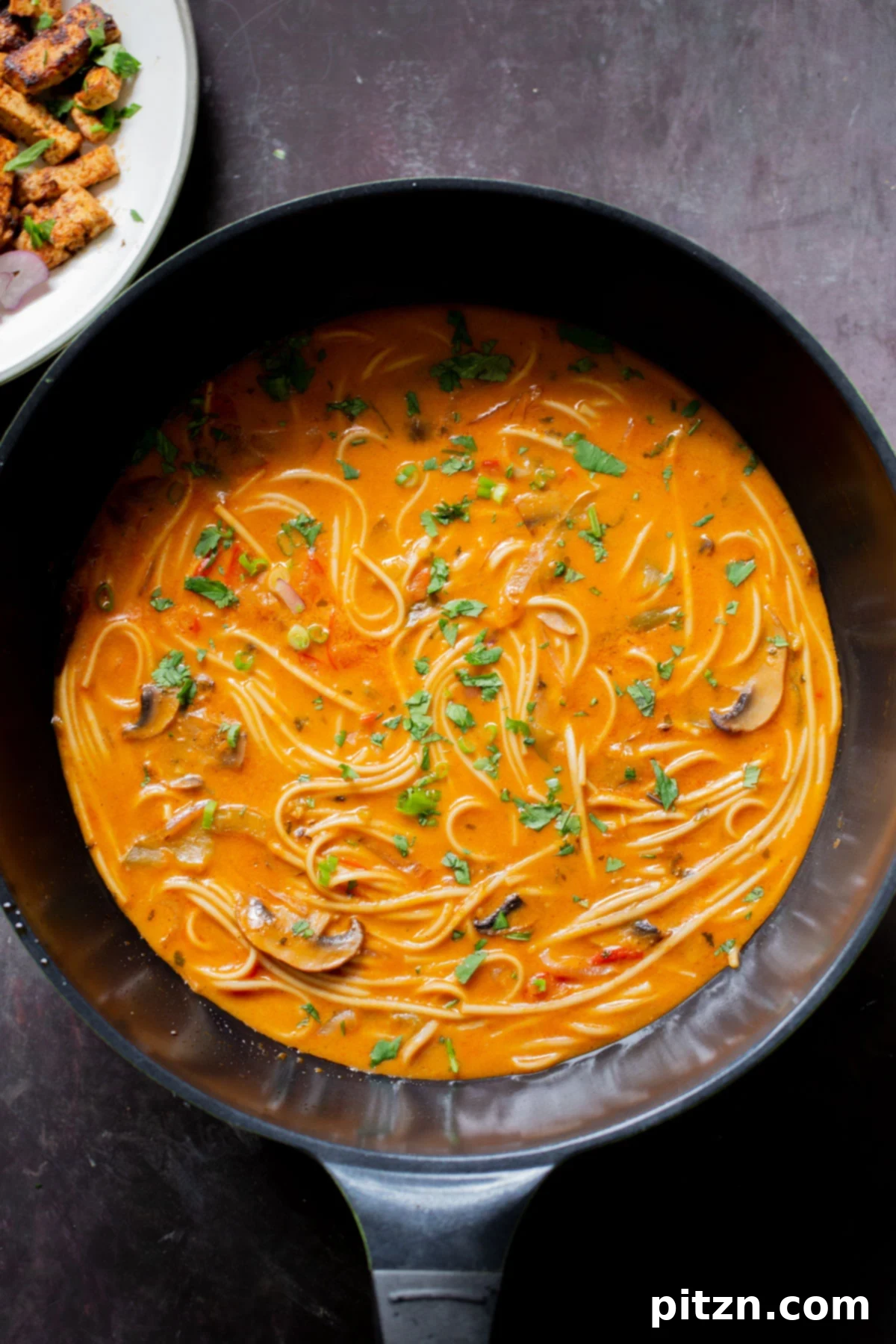
One of the most appealing aspects of this recipe is its incredible simplicity and efficiency. It all comes together in a single pan, minimizing cleanup and maximizing flavor development. You’ll start by crisping up the seasoned tofu, creating a wonderful texture contrast, right in the same pan where you’ll later simmer your rich butter ramen sauce and noodles. The entire process, from start to finish, takes approximately thirty minutes, making it an ideal choice for a cozy, flavorful, and quick weeknight dinner. It’s truly a game-changer for busy evenings when you crave something nourishing and exotic without the fuss.
Why You’ll Love This Vegan Butter Ramen
- **Effortless One-Pot Meal:** Say goodbye to stacks of dirty dishes! This entire dish, from crisping the tofu to cooking the noodles, comes together in a single pot or wok, making cleanup a breeze. It’s the ultimate solution for a hassle-free, yet gourmet-tasting, meal.
- **Quick & Convenient:** In just around 30 minutes, you can have a steaming bowl of this delectable ramen ready on your table. It’s perfect for busy weeknights when you need a satisfying and flavorful dinner without spending hours in the kitchen.
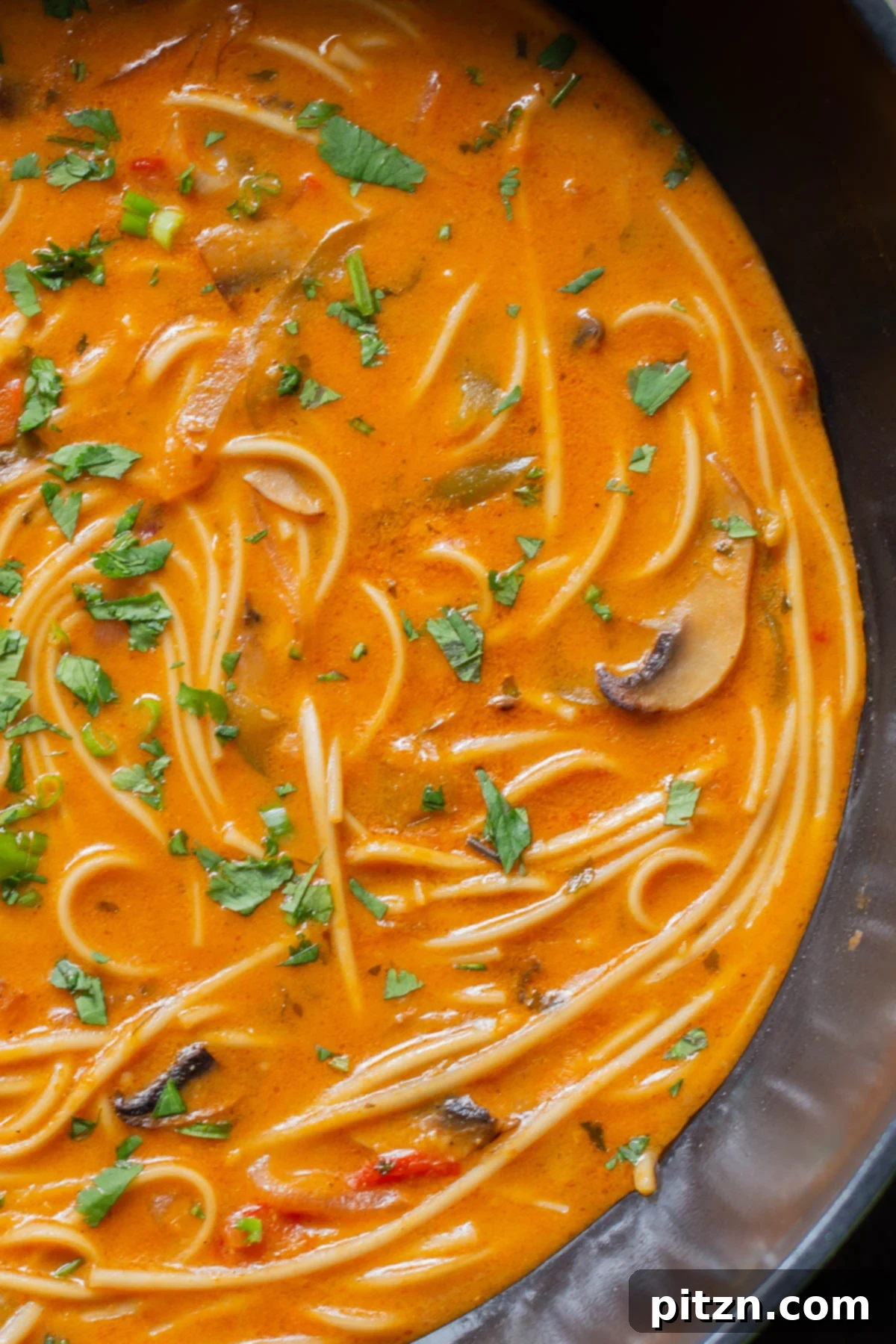
- **Rich, Butter Chicken-Inspired Broth:** Experience the luxurious creaminess and deep, complex spice profile reminiscent of authentic Indian butter chicken. This plant-based broth is bursting with savory, slightly sweet, and tangy notes that are incredibly comforting and addictive.
- **Naturally Versatile:** This recipe is a fantastic canvas for your creativity. Feel free to customize it with your favorite seasonal vegetables, adjusting quantities to your preference. Whether you love extra greens, more mushrooms, or different bell peppers, this ramen welcomes your personal touch.
- **Bursting with Flavor:** Every component of this dish, from the spiced tofu to the aromatic sauce and tender noodles, is designed to deliver a powerful flavor punch. It’s a symphony of spices that will awaken your palate and leave you craving more.
- **Nut-Free & Soy-Free Options Available:** We understand dietary needs! This recipe can be easily adapted to be completely nut-free, and we also provide simple substitutions for a soy-free version, ensuring everyone can enjoy this delicious meal.
More Irresistible Vegan Ramen Recipes
If you’re as much of a ramen enthusiast as we are, or simply enjoy exploring diverse and delicious vegan noodle dishes, you’re in for a treat! Here are some other fantastic plant-based ramen and noodle recipes to expand your culinary repertoire:
- Spicy Hot and Sour Soup Ramen
- Creamy Peanut Gochujang Ramen
- Hearty Curry Ramen with Miso Lentils
- Authentic Thai Skillet Noodles (Drunken Noodles)
Vegan Butter Chicken Ramen

Print Recipe
Ingredients
For the Spiced Tofu:
- 8 ounces firm or extra firm tofu, pressed and then cubed or sliced as you like
- 1 teaspoon soy sauce (use tamari for gluten-free)
- 2 teaspoons lime juice
- 1/2 teaspoon garam masala
- 1/2 teaspoon garlic powder
- 1/4 teaspoon salt
- 1/2 teaspoon paprika (or cayenne for extra heat)
For the Butter Ramen:
- 1 teaspoon oil
- 1/4 cup chopped or sliced onion
- 6 ounces thinly sliced mushroom
- 1/2 of a bell pepper, thinly sliced (any color or a mix)
- 2 tablespoons ginger-garlic paste (or 1″ fresh ginger, minced, and 4 cloves garlic, minced)
- 2 tablespoons tomato paste
- 1 teaspoon garam masala
- 1 teaspoon dried fenugreek leaves (kasuri methi)
- 15 ounce can full-fat coconut milk
- 4 cups water or vegetable broth (use 2.5 cups for thicker sauce, 4.5 cups for brothier ramen)
- 1/2 teaspoon salt
- 1 tablespoon maple syrup
- 6 ounces ramen or thin udon noodles (ensure vegan and gluten-free if needed)
- 1/4 teaspoon black pepper
- 1/4 teaspoon cayenne, optional, for extra heat
For Garnish:
- Chopped cilantro
- Thinly sliced red onion or green onion
- Thinly sliced green chili or pepper flakes
- Lime wedges
Instructions
Crisp Up the Tofu:
- Begin by pressing your firm or extra-firm tofu for at least 10-15 minutes to remove excess water, ensuring a crispier texture. While the tofu presses, gather and prepare your other ingredients. Once pressed, cube or slice the tofu as desired and place it in a medium bowl. Drizzle with lime juice and soy sauce (or tamari for gluten-free), tossing gently to coat evenly.
- In a separate small bowl, combine the garam masala, garlic powder, salt, and paprika (or cayenne if you prefer more heat). Sprinkle this spice mixture generously over the seasoned tofu, tossing again to ensure every piece is thoroughly coated. For an even crispier tofu, consider adding 1 teaspoon of cornstarch to the spice mix before sprinkling. Set the tofu aside.
- Heat a wok or large skillet over medium-high heat. Add 2 teaspoons of oil, allowing it to shimmer. Carefully add the spiced tofu in a single layer, ensuring not to overcrowd the pan. Cook for 5-7 minutes, turning occasionally, until the edges are beautifully golden brown and somewhat crisp. Once achieved, transfer the crispy tofu to a separate dish and set it aside.
Prepare the Butter Ramen Broth and Noodles:
- Using the same wok, add a tiny bit more oil if needed. Add the chopped or sliced onion and thinly sliced mushrooms along with a generous pinch of salt. Sauté for 2 to 3 minutes, or until the onions soften and the mushrooms begin to release their moisture and cook down. If you wish to use some mushrooms as a fresh garnish, remove a small portion at this stage and set aside.
- Stir in the thinly sliced bell pepper, ginger-garlic paste (or minced fresh ginger and garlic), and black pepper. Cook for a few more seconds until fragrant, then incorporate the tomato paste and the remaining garam masala and dried fenugreek leaves (kasuri methi). Stir well to combine all the aromatic spices.
- Pour in the full-fat coconut milk, stirring continuously to ensure the tomato paste is fully dissolved and there are no lumps, creating a smooth, rich base. Then, add the specified amount of water or vegetable broth, the remaining salt, and maple syrup. Stir everything together to combine, then bring the entire mixture to a vigorous, rolling boil.
- Once boiling, carefully add the ramen noodles or thin udon noodles to the wok. Reduce the heat to medium-low and allow the noodles to simmer and cook directly in the creamy butter sauce. Continue cooking according to the package instructions for your specific noodles – typically 3-4 minutes for ramen or 6-8 minutes for udon. It’s advisable to check the noodles about a minute before the suggested cooking time to prevent overcooking.
- Turn off the heat when the noodles are just slightly more cooked than al dente. Remember, they will continue to absorb liquid and cook further in the residual heat of the hot broth, so stopping a little early prevents them from becoming mushy. Taste the broth and adjust the seasoning as needed. You might want to add a splash more lime juice for brightness, an extra pinch of salt, a touch more maple syrup for sweetness, or a dash of cayenne or sliced green chili for additional heat.
Garnish and Serve:
- To serve, carefully transfer a generous portion of the cooked noodles into individual serving bowls. Ladle a good amount of the rich, creamy butter sauce and cooked vegetables over the noodles, ensuring a balanced mix in each bowl.
- Crown each serving with a generous helping of the crisped-up, spiced tofu you prepared earlier. Finally, add your preferred garnishes: a sprinkle of fresh chopped cilantro, a scattering of thinly sliced green chilies (if using) or red/green onion, and a fresh lime wedge on the side for a burst of citrusy brightness. Serve immediately and enjoy this incredible fusion creation!
Video Tutorial
Recipe Notes and Variations
This recipe is designed to be naturally **nut-free**, making it suitable for those with nut allergies.
For a **soy-free** version: Instead of tofu, consider using a soy-free plant-based chicken substitute, or make your own chickpea tofu. Ensure you swap out soy sauce for coconut aminos to keep it entirely soy-free.
To make this dish **gluten-free**: Opt for certified gluten-free ramen or udon noodles. For the protein, ensure any chicken substitutes are gluten-free, or stick with tofu and use tamari instead of soy sauce.
If you need a **coconut-free** option: Cashew milk makes an excellent creamy alternative. Simply blend 1/3 cup of raw cashews with 1 cup of water until perfectly smooth and creamy, then use this in place of coconut milk.
**Alternative Proteins**: Beyond tofu, you can experiment with 8 oz of seitan, or 3 oz of soy curls (rehydrated in hot broth and then drained) for varied textures and flavors.
**Meal Prep / Cooking Noodles Separately**: Ramen noodles tend to absorb a lot of liquid when stored, which can make your broth less saucy over time. If you’re planning to make this ahead or store leftovers, it’s best to cook the noodles separately. Prepare the butter sauce with coconut milk and 1/2 to 1 cup of water (depending on your desired brothiness), bring it to a boil, and simmer for 3-4 minutes. Store the sauce and cooked noodles separately, combining them just before serving.
Nutrition Facts
Calories: 280kcal, Carbohydrates: 42g, Protein: 14g, Fat: 7g, Saturated Fat: 2g, Sodium: 596mg, Potassium: 264mg, Fiber: 5g, Sugar: 12g, Vitamin A: 303IU, Vitamin C: 4mg, Calcium: 137mg, Iron: 1mg
Nutrition information is automatically calculated and should be considered an approximation.
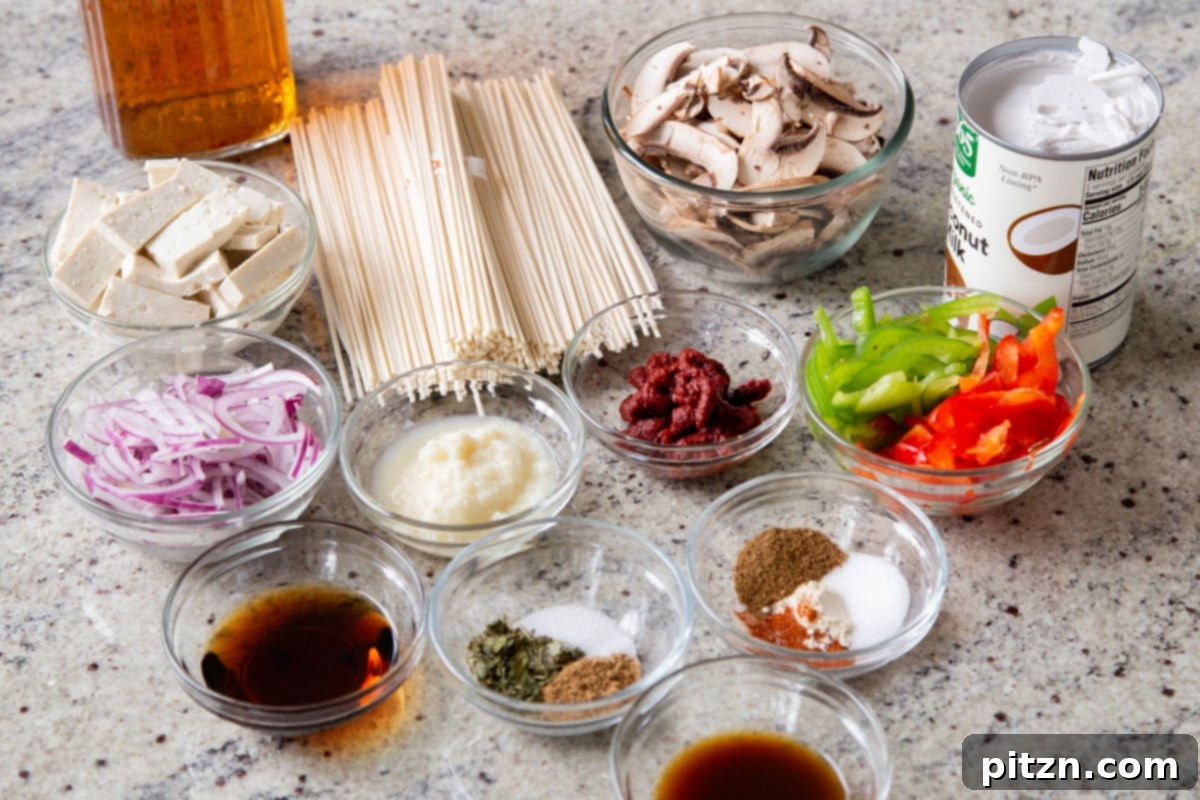
Key Ingredients and Smart Substitutions
Crafting the perfect Vegan Butter Chicken Ramen begins with understanding each ingredient and the role it plays in achieving that rich, authentic flavor. Here’s a closer look at what you’ll need and how you can tailor it to your pantry and preferences:
- **Tofu:** This is our star plant-based protein, providing a satisfying, hearty bite. For the best results, use firm or extra-firm tofu, as it holds its shape well and crisps beautifully. Be sure to press it adequately to remove excess water, which allows it to absorb the delicious spices more effectively. For alternatives, consider making your own chickpea tofu for a soy-free option, or use pre-made vegan chicken substitutes like seitan or rehydrated soy curls for different textures.
- **Soy Sauce & Lime Juice:** These two ingredients work in tandem to create a flavorful marinade for the tofu. Soy sauce adds a crucial umami depth and a salty kick, while fresh lime juice introduces a bright acidity that helps balance the richness of the spices and tenderize the tofu. If you’re following a gluten-free diet, simply swap the regular soy sauce for tamari. For a soy-free alternative, coconut aminos are an excellent choice.
- **Salt & Spices (Garam Masala, Garlic Powder, Paprika/Cayenne):** This blend is key to transforming plain tofu into a “tikka”-like sensation. Garam masala provides a complex, warm Indian spice profile, while garlic powder adds a foundational savory note. Paprika contributes color and a mild, sweet pepper flavor, but if you enjoy a bolder heat, cayenne pepper can be used to add a spicy kick. Adjust the amount of cayenne to your preferred spice level.
- **Fresh Vegetables (Onion, Mushroom, Bell Pepper):** These vegetables form the aromatic base of our ramen broth. Onions provide sweetness and depth as they caramelize, while mushrooms add an earthy umami and a satisfying texture. Bell peppers (feel free to use green, red, or a mix for color) introduce a fresh crunch and a hint of sweetness. Don’t hesitate to incorporate other vegetables like spinach, carrots, or broccoli florets to boost nutritional value and variety.
- **Ginger-Garlic Paste:** An indispensable cornerstone of Indian cuisine, this paste is crucial for the authentic butter sauce flavor. It provides a pungent, aromatic foundation that truly sets the dish apart. If you don’t have pre-made paste, simply mince fresh ginger and garlic cloves (approximately 1-inch piece of ginger and 4 cloves of garlic) to achieve the same vibrant flavor.
- **Tomato Paste:** This concentrated paste is responsible for the signature reddish-orange hue of butter sauce and contributes a deep, sweet, and umami-rich flavor. It acts as a thickener and enriches the entire broth, making it wonderfully complex.
- **Full-Fat Coconut Milk:** Essential for achieving the luxurious, creamy texture that defines butter sauce. Full-fat coconut milk provides richness without dairy. For those who prefer a **coconut-free** option, homemade cashew milk is a fantastic substitute; blend 1/3 cup of raw cashews with 1 cup of water until perfectly smooth and creamy.
- **Water or Vegetable Broth:** This liquid forms the bulk of your ramen broth and is essential for cooking the noodles. The quantity can be adjusted to achieve your desired consistency – use less for a thicker, saucier ramen or more for a more brothy, soup-like experience.
- **Maple Syrup:** A touch of maple syrup helps to balance the savory and spicy notes, adding a subtle sweetness that rounds out the flavor profile of the butter sauce, much like sugar or honey would in traditional recipes. Agave nectar can be used as an alternative.
- **Ramen or Thin Udon Noodles:** The core of any ramen dish! Choose your favorite vegan-friendly ramen noodles or thin udon noodles. Always check the ingredient list to ensure they are egg-free for a truly vegan meal. For a **gluten-free** version, make sure to select noodles explicitly labeled as such.
- **Black Pepper & Cayenne:** These spices contribute to the warm and gently spicy character of the broth. Black pepper adds a sharp, earthy warmth, while cayenne provides an optional, but delightful, kick of heat. Feel free to omit the cayenne if you prefer a milder flavor, or increase it for extra spice.
- **Fresh Garnishes (Cilantro, Red/Green Onion, Green Chili, Lime Wedges):** These fresh additions are not just for looks; they enhance the flavor and aroma significantly. Chopped cilantro adds a fresh, herbaceous note. Thinly sliced red or green onion provides a mild sharpness and crisp texture. Fresh green chilies or a sprinkle of red pepper flakes offer an optional burst of heat, and a squeeze of fresh lime juice at the end brightens the entire dish, cutting through the richness.
Pro Tips for Perfect Butter Ramen
To ensure your Vegan Butter Chicken Ramen turns out absolutely perfect every time, keep these expert tips in mind:
- **Press Your Tofu Thoroughly:** This is arguably the most crucial step for achieving crispy, flavorful tofu. Pressing removes excess water, allowing the tofu to better absorb the marinade and spices, and helps it crisp up beautifully in the pan. Aim for at least 10-15 minutes of pressing while you prepare your other ingredients. A tofu press works wonders, but you can also use paper towels and heavy objects.
- **Don’t Overcrowd the Pan:** When cooking the tofu, ensure there’s enough space between each piece in the wok. Overcrowding lowers the pan’s temperature and steams the tofu instead of searing it, preventing it from getting that desired crispiness. Cook in batches if necessary.
- **Master the Noodle Timing:** Pay close attention to the cooking instructions on your noodle package. However, a key trick is to remove the noodles from the heat just when they are slightly firmer than al dente. The noodles will continue to cook and absorb liquid in the hot butter broth even after the heat is turned off. This prevents them from becoming mushy and ensures a perfectly satisfying texture.
- **Taste and Adjust Seasoning:** Don’t be afraid to taste your broth before serving and adjust the seasonings. Indian cuisine often benefits from a balance of sweet, salty, sour, and spicy. You might find it needs a bit more salt, a squeeze of extra lime for brightness, another dash of maple syrup for sweetness, or a pinch of cayenne to enhance the heat.
- **Prep Ahead for Speed:** Chop all your vegetables and press your tofu in advance. Having all your ingredients ready (mise en place) before you start cooking will make the 30-minute preparation time feel even quicker and more enjoyable.
- **Experiment with Garnishes:** While cilantro, lime, and onions are classic, consider adding a drizzle of vegan cream, a sprinkle of toasted sesame seeds, or a few slices of avocado for extra creaminess and visual appeal.
Step-by-Step: How to Make Fusion Indian Butter Chicken Ramen
Creating this delicious Vegan Butter Chicken Ramen is a straightforward process, making it an ideal recipe for both seasoned cooks and beginners. Follow these detailed steps to bring this vibrant, flavorful dish to life in your kitchen.
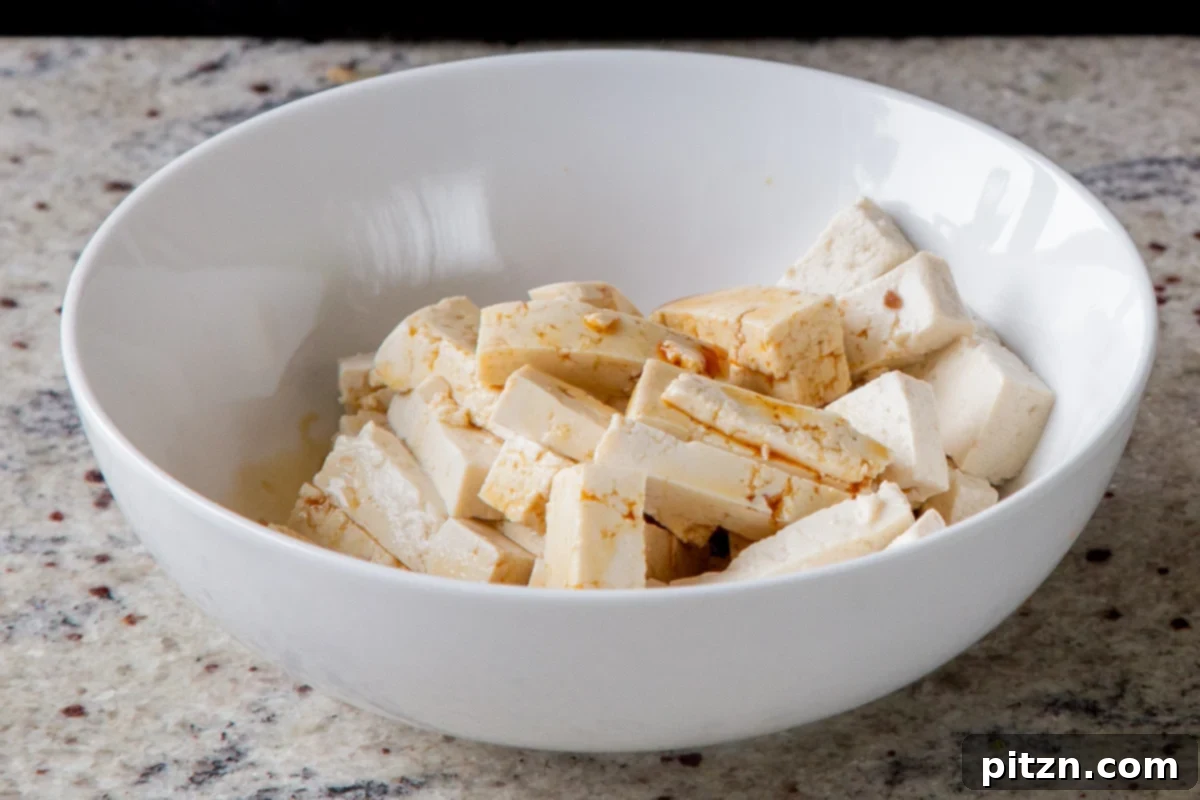
**Step 1: Prepare the Tofu.** Start by pressing your tofu for a minimum of 10 minutes to extract excess water. This crucial step will contribute significantly to its crispiness. While the tofu is pressing, take this time to chop all your vegetables and gather the remaining ingredients. Once pressed, cube or slice the tofu into your desired shapes and transfer them to a medium-sized bowl. Add the lime juice and soy sauce, then toss gently to ensure each piece is well coated.
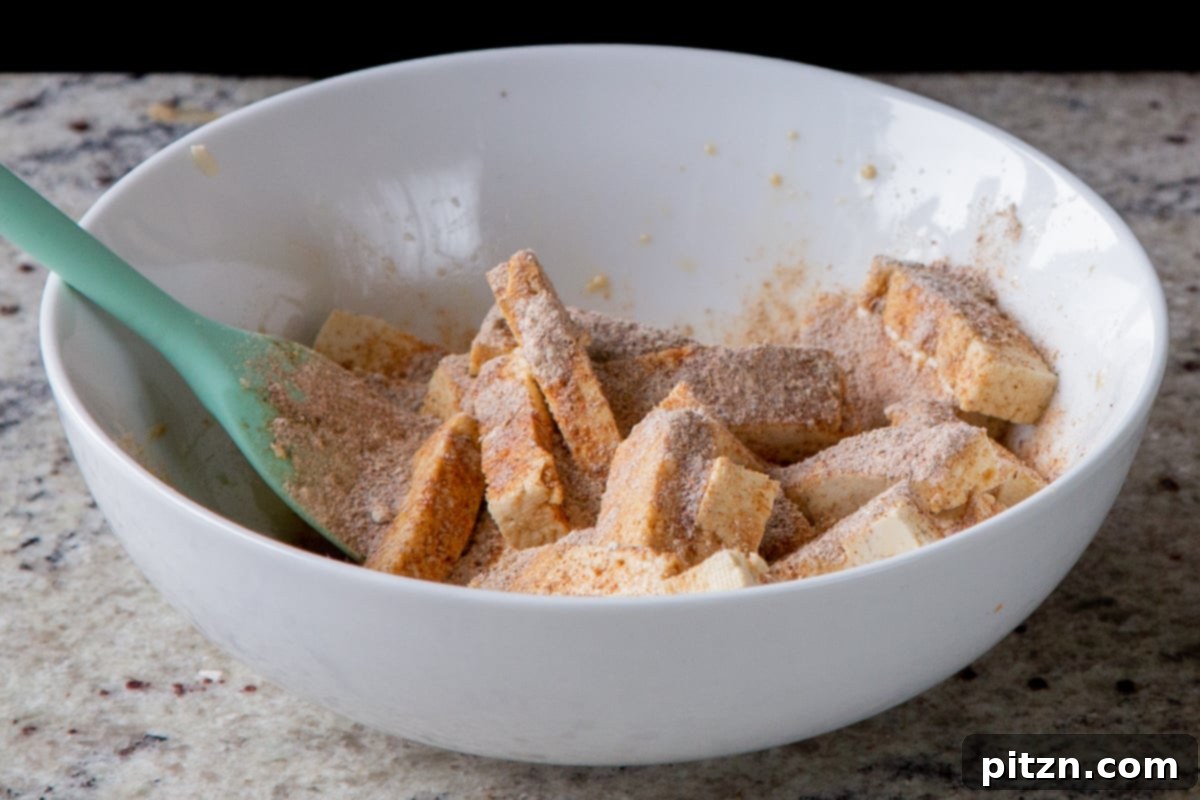
**Step 2: Season the Tofu.** In a small separate bowl, combine your dry spices: garam masala, garlic powder, salt, and paprika (or cayenne for a spicier kick). Once mixed, sprinkle this aromatic spice blend evenly over the tofu. Toss thoroughly until all the tofu pieces are beautifully coated. For an extra crisp texture, you can also add about 1 teaspoon of cornstarch to this spice mix before sprinkling.
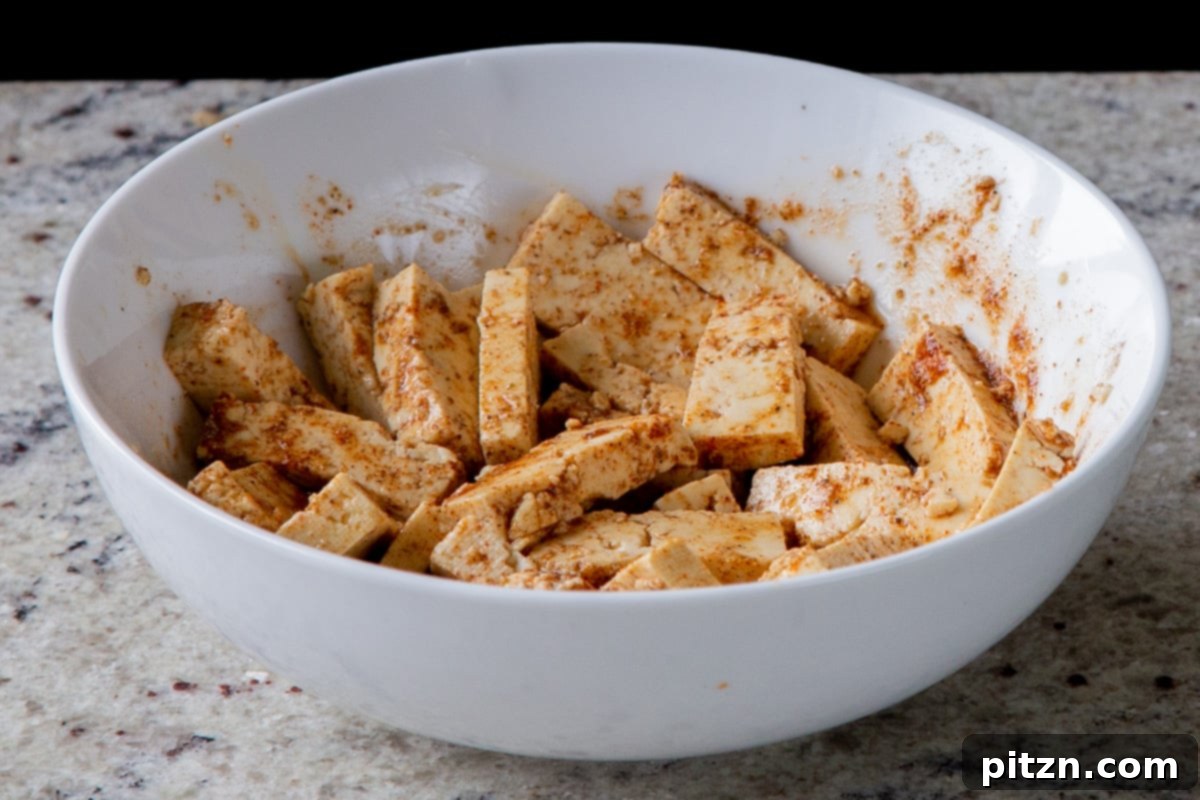
Now your tofu is perfectly seasoned and ready for cooking!
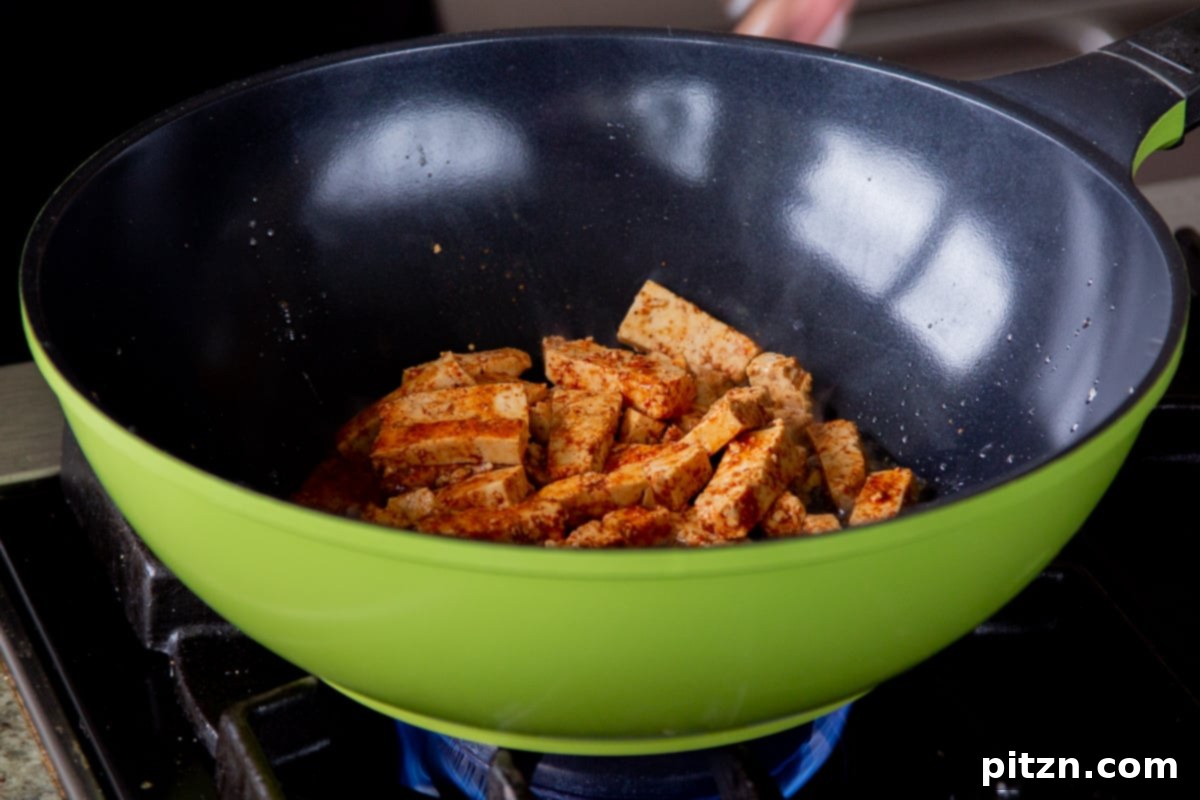
**Step 3: Crisp the Tofu.** Place a large wok or skillet over medium-high heat. Once hot, add two teaspoons of oil. Carefully arrange the seasoned tofu pieces in the hot oil in a single layer. Cook, turning occasionally, until the tofu develops a lovely golden-brown crust and becomes somewhat crisp on the edges. This usually takes about 5-7 minutes. Once cooked, transfer the crispy tofu to a separate plate and set aside, reserving the wok for the next steps.
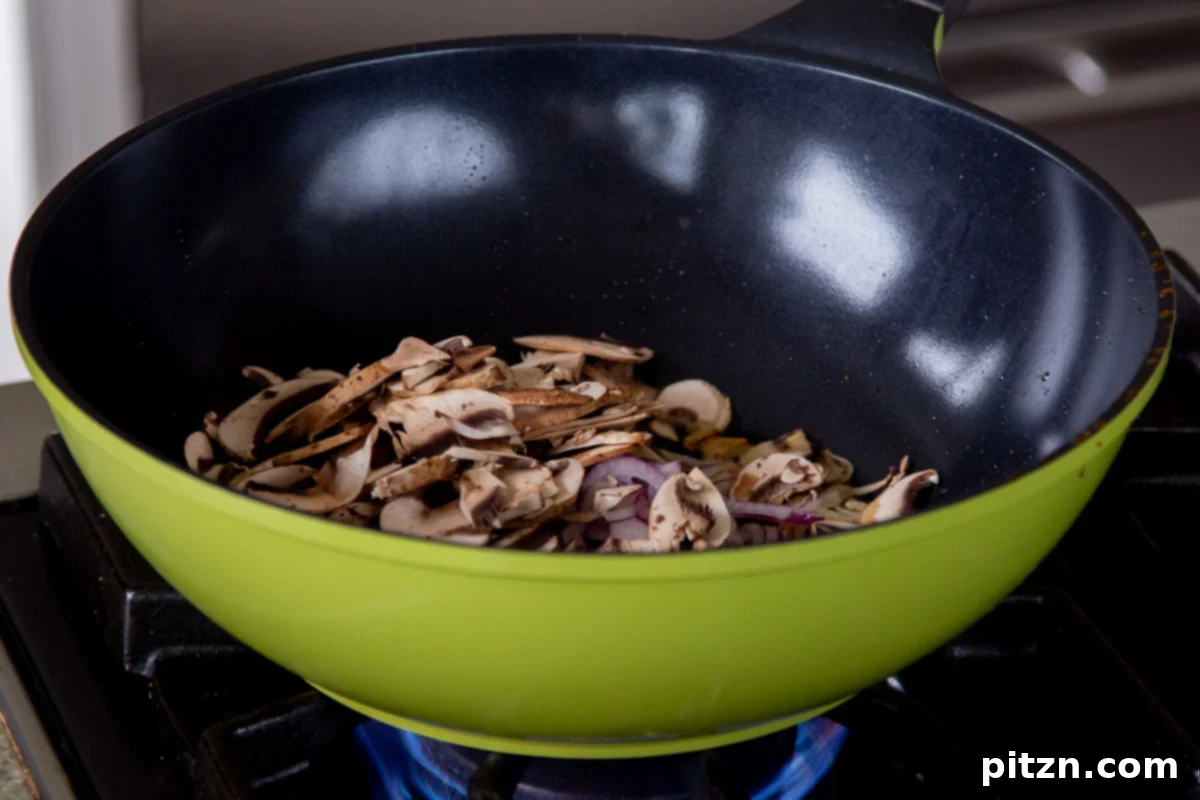
**Step 4: Sauté Aromatics and Vegetables.** In the same wok (add a tiny bit more oil if needed), add the chopped onion and thinly sliced mushrooms along with a good pinch of salt. Sauté over medium-high heat for about 2 to 3 minutes, or until the onions begin to soften and the mushrooms have released their moisture and started to brown slightly. If you wish to keep some mushrooms aside for a fresh garnish at the end, now is the time to remove a small portion.
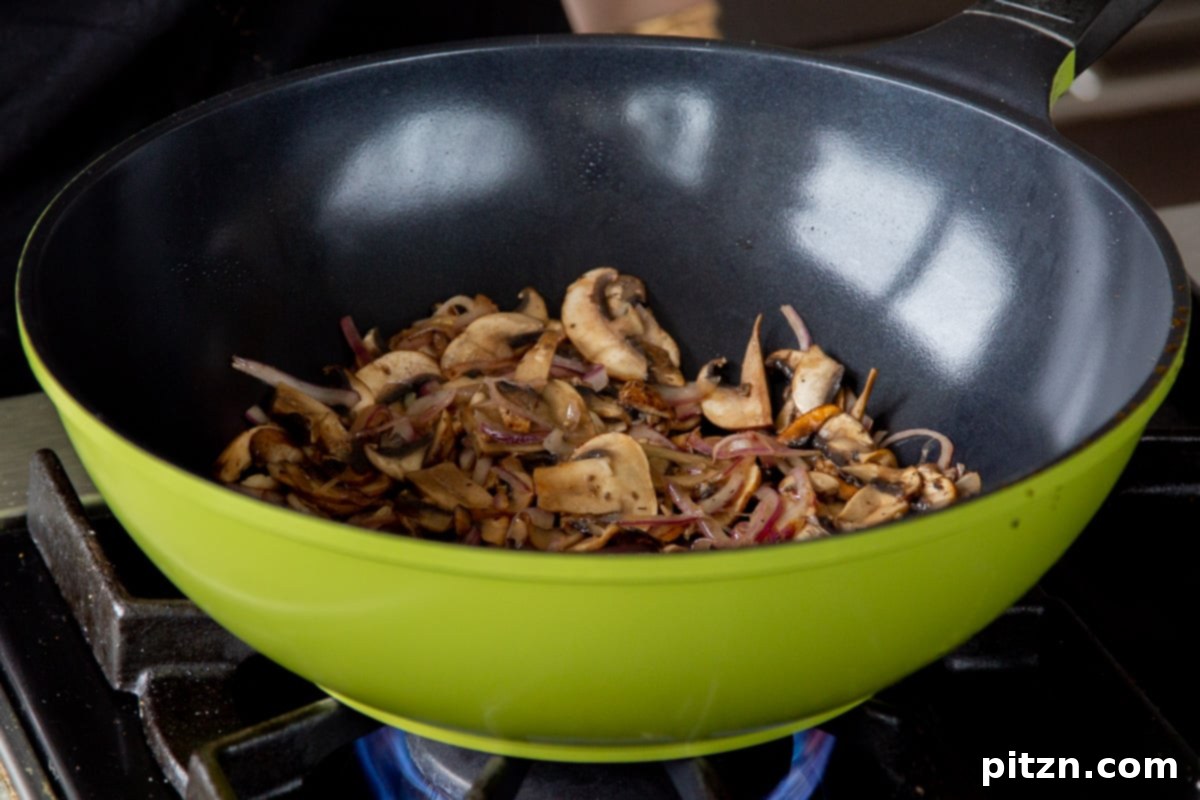
The base for your flavorful butter ramen is now developing beautifully!
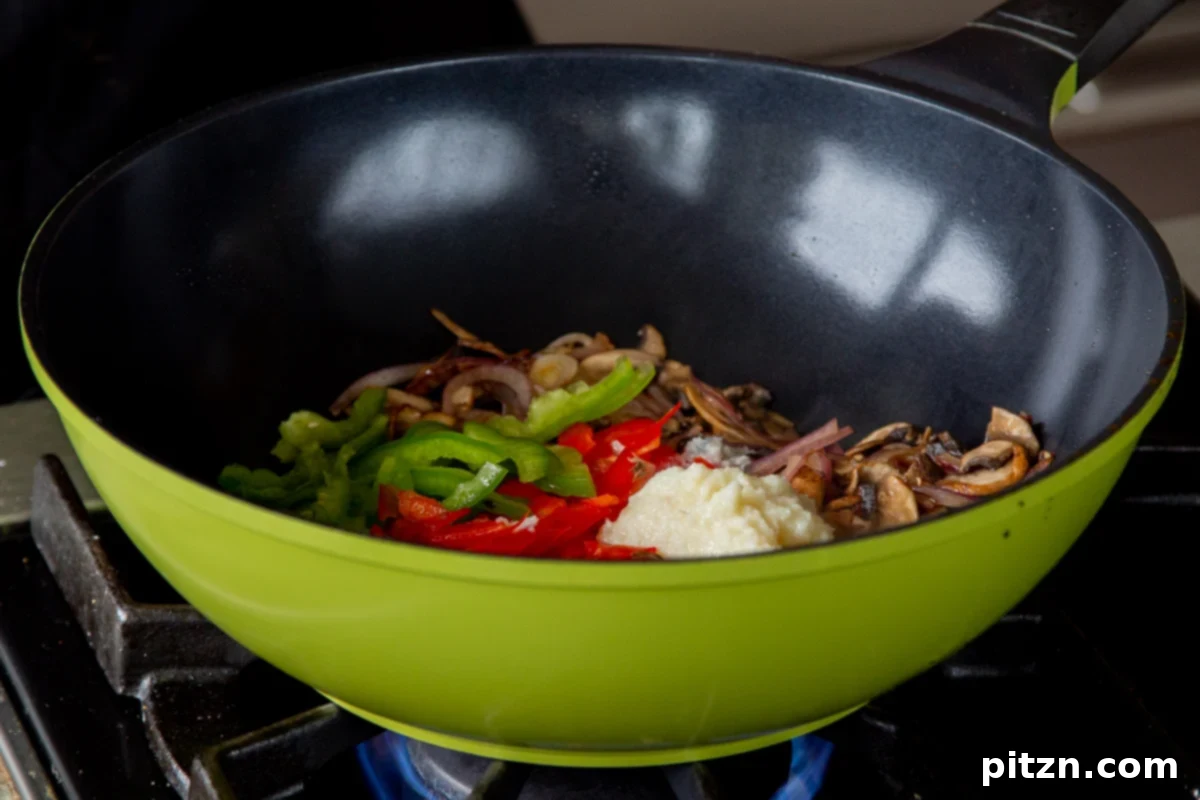
**Step 5: Build the Butter Sauce Base.** Add the thinly sliced bell peppers, ginger-garlic paste, and black pepper to the wok. Stir well and cook for a few more seconds until the aromatics are fragrant. Next, stir in the tomato paste, the remaining garam masala, and the dried fenugreek leaves (kasuri methi). Mix everything thoroughly, ensuring the spices are well distributed and fragrant. This step deepens the flavor profile of the butter sauce.
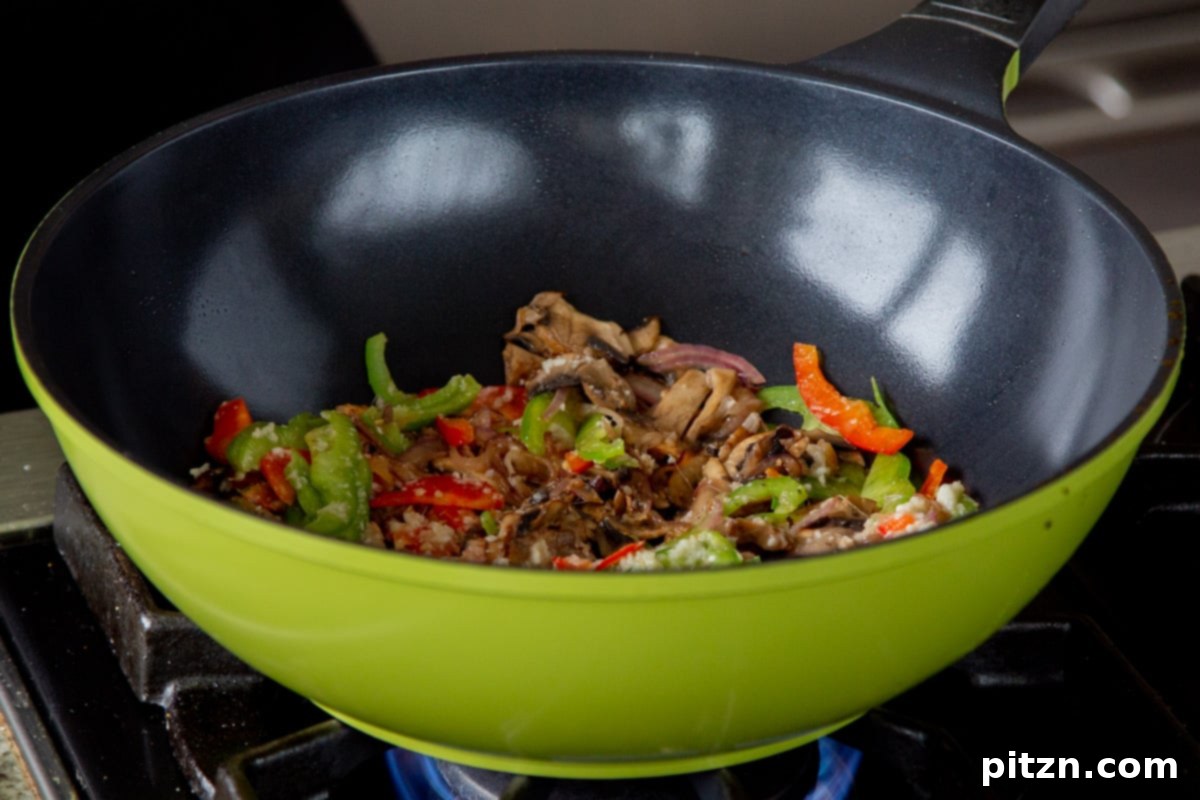
The vegetables are now beautifully cooked and infused with rich Indian flavors.
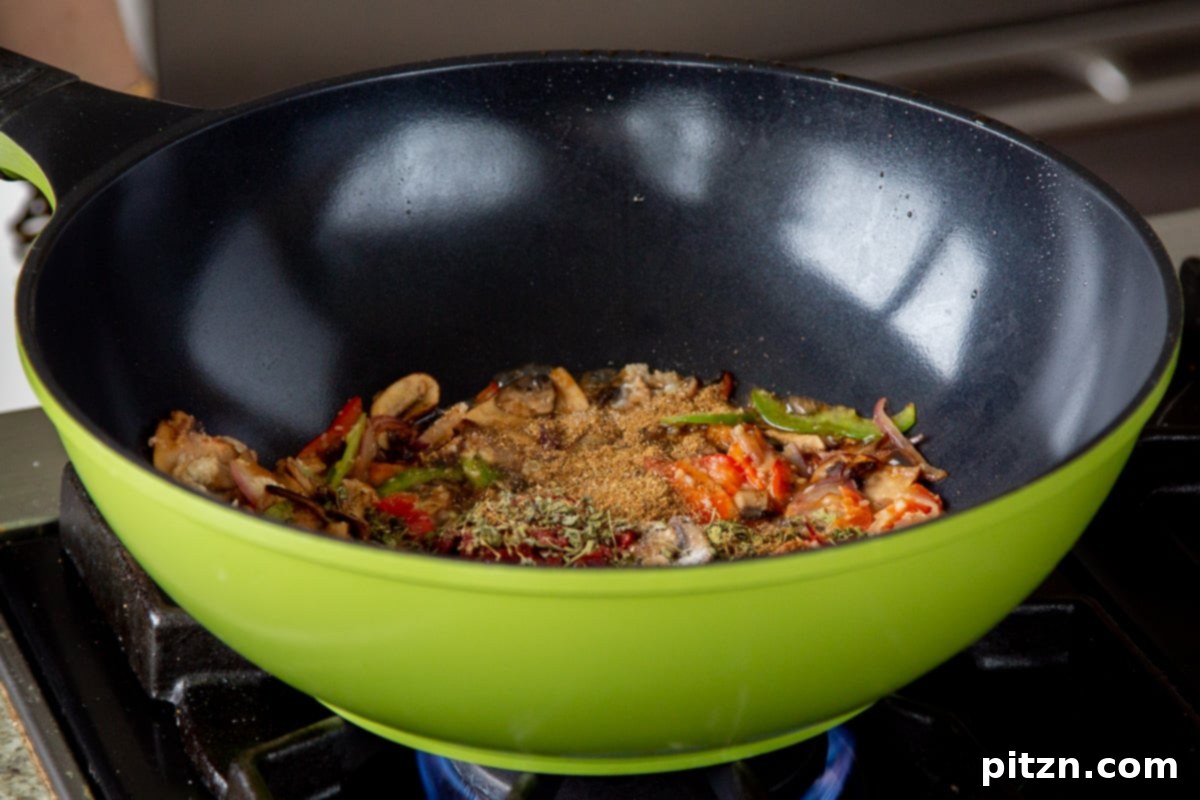
These spices are crucial for the authentic “butter chicken” taste!
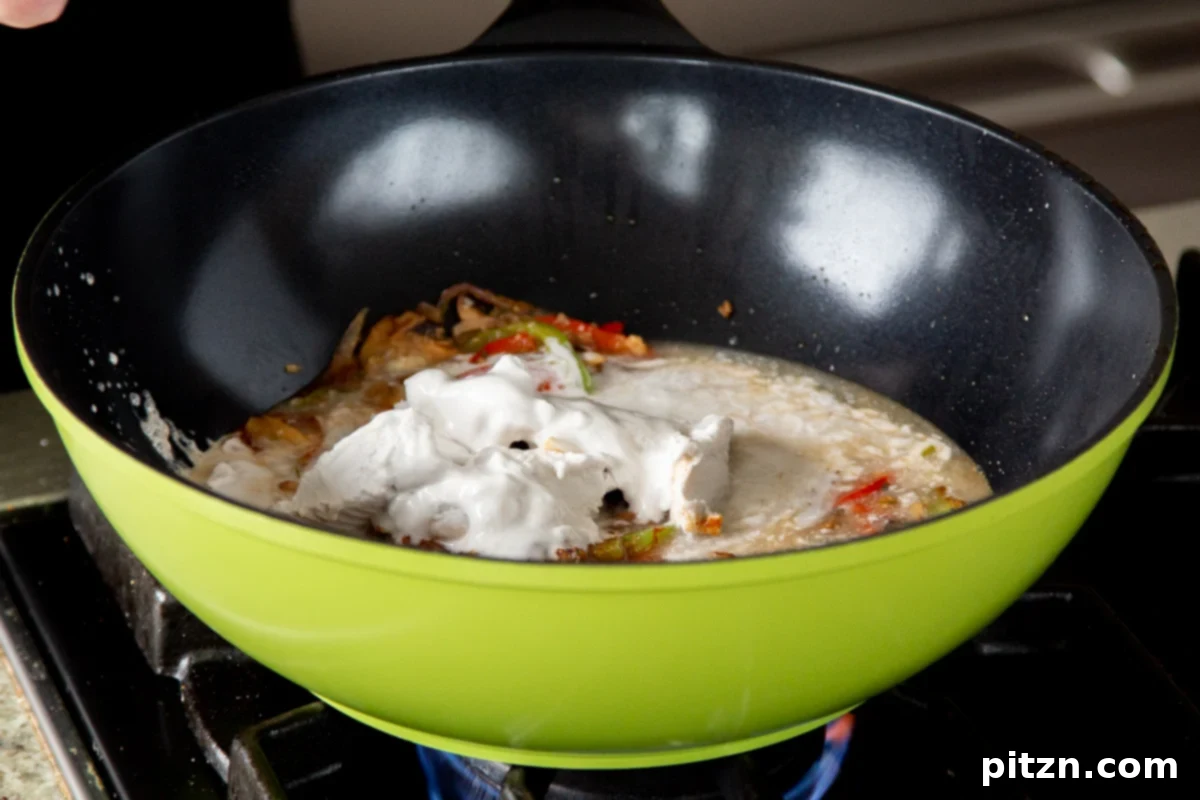
**Step 6: Create the Creamy Broth.** Pour in the full-fat coconut milk. Stir diligently, ensuring the tomato paste and spices are fully incorporated into the milk, leaving no lumps. This creates a smooth, rich, and creamy base for your ramen. Next, add the water or vegetable broth, the remaining salt, and the maple syrup. Stir everything together to combine, then bring the entire mixture to a vigorous, rolling boil over medium-high heat.
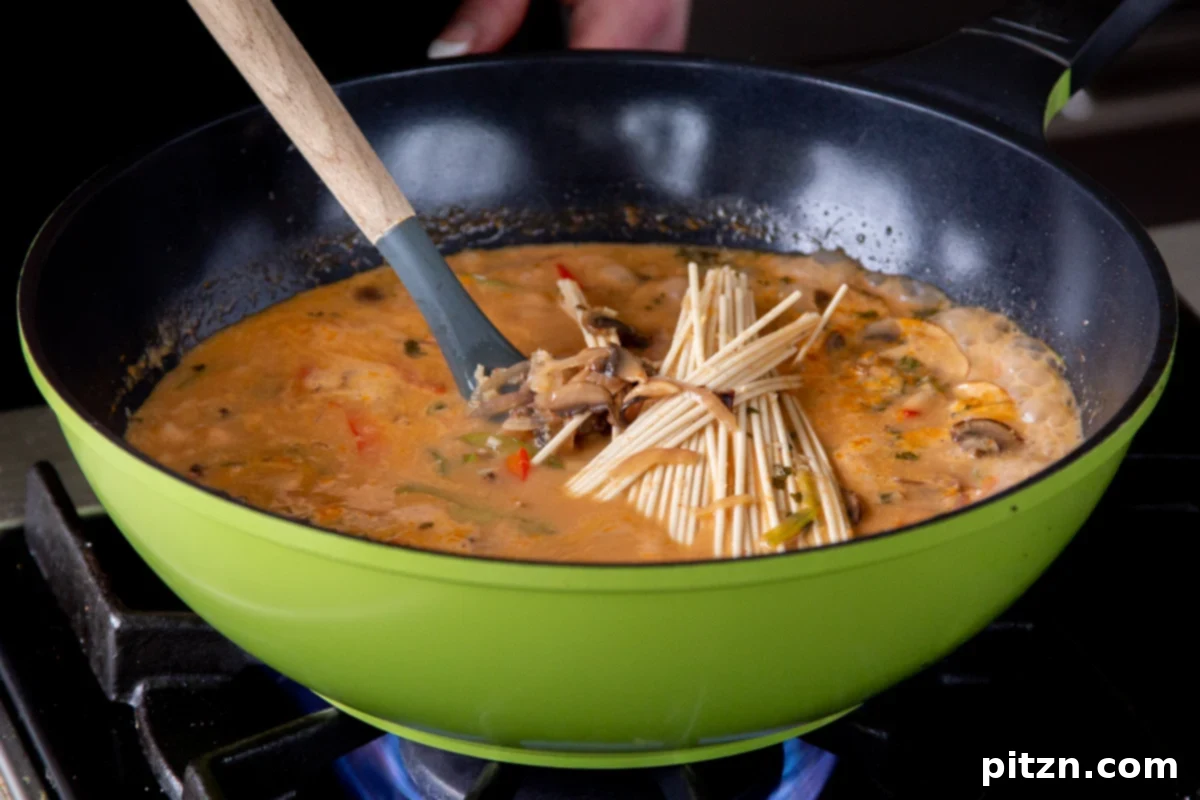
**Step 7: Cook the Noodles.** Once the broth is boiling, carefully add your ramen or thin udon noodles to the wok. Reduce the heat to medium and allow the noodles to simmer and cook directly in the flavorful butter sauce. Continue cooking according to the time recommended on your noodle package (typically 3-4 minutes for ramen, 6-8 minutes for udon). Keep a close eye on them and check for doneness about a minute before the suggested time.
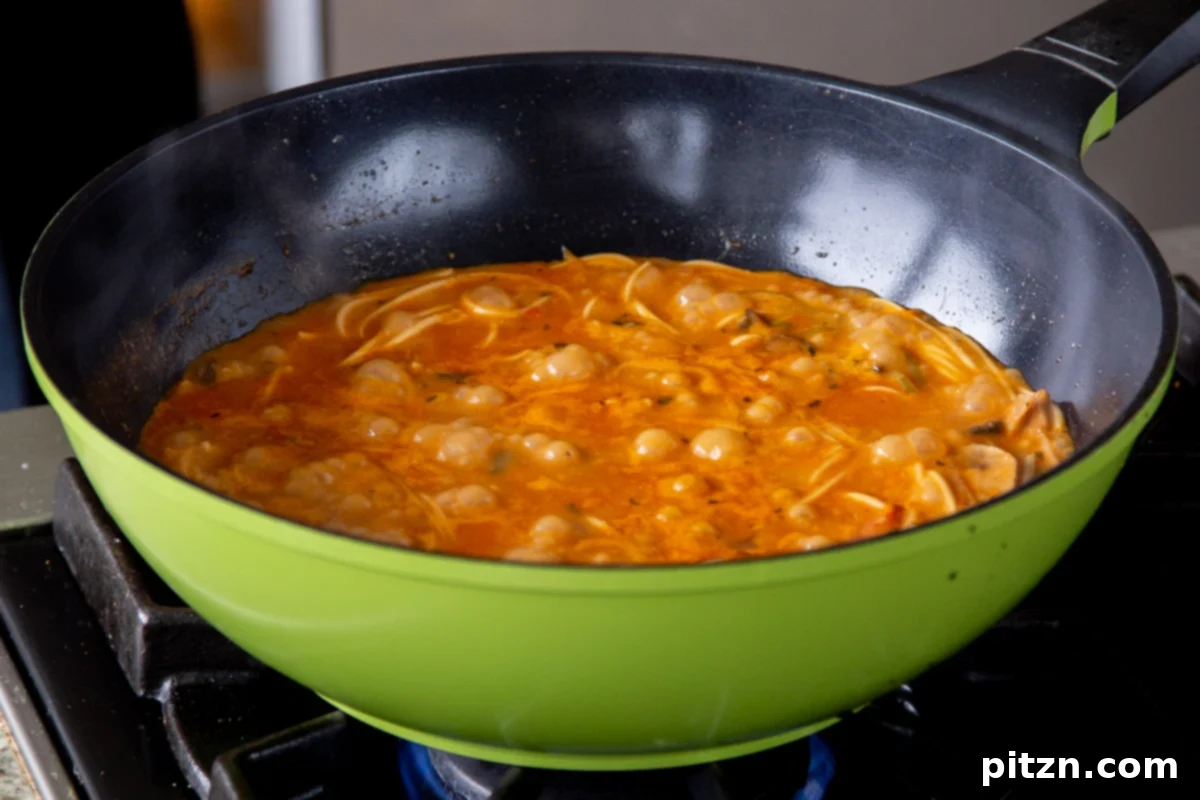
Watch as the noodles absorb the delicious flavors, transforming into a comforting meal.
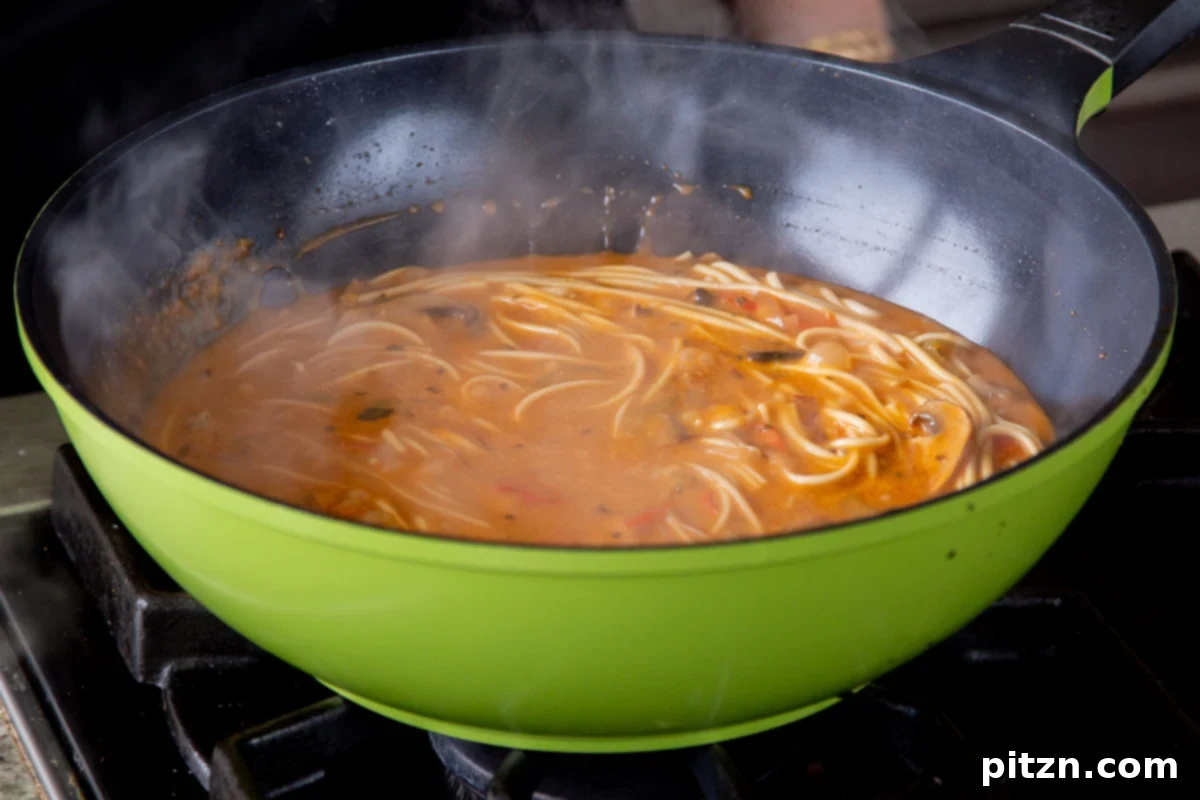
**Step 8: Final Adjustments and Serving.** Once the noodles are cooked to just slightly past al dente (remember, they’ll continue to cook in the hot broth), switch off the heat. Taste the ramen and adjust the seasoning as needed. You might want to add a bit more lime juice for a zing, additional salt, a touch more maple syrup for sweetness, or some sliced green chili for an extra pop of heat. I often find a little extra green chili adds a wonderful freshness and kick.
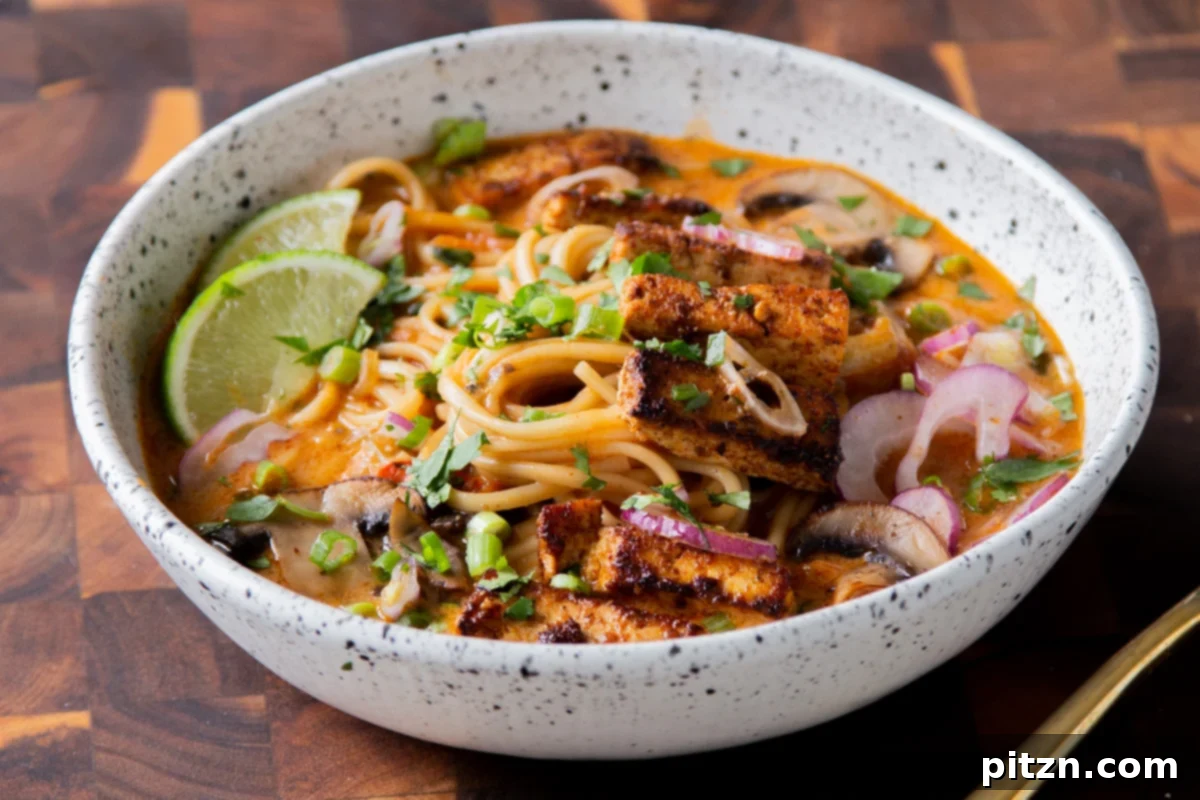
To serve, carefully transfer a generous portion of the noodles into individual serving bowls. Ladle a good amount of the rich, creamy broth and cooked vegetables over the noodles. Top each bowl with a generous portion of your crisped-up, spiced tofu. Finish with fresh garnishes: a sprinkle of chopped cilantro, thinly sliced green chilies (if desired), thinly sliced red or green onion, and a fresh lime wedge. Serve immediately and savor this incredible fusion delight!
Frequently Asked Questions About Vegan Butter Chicken Ramen
Yes, this Vegan Butter Chicken Ramen recipe is naturally nut-free, making it a great option for those with nut allergies. We use coconut milk for creaminess, but there are also cashew-free alternatives if needed (see below).
Absolutely! To prepare a soy-free version, simply replace the tofu with a soy-free plant-based chicken substitute, or try making your own chickpea tofu, which is a fantastic soy-free alternative. Additionally, ensure you use coconut aminos instead of soy sauce to keep the entire dish free of soy.
Yes, it’s easy to make this recipe gluten-free. The key is to select certified gluten-free ramen or udon noodles. When it comes to the protein, if you’re using a vegan chicken substitute, ensure it is gluten-free. For the soy sauce, simply substitute it with tamari, which is a gluten-free alternative.
Certainly! If you prefer to avoid coconut milk, you can use cashew milk to achieve a similar creamy texture. To make homemade cashew milk, blend 1/3 cup of raw cashews with 1 cup of water until the mixture is completely smooth and creamy. Use this cashew milk in place of the coconut milk in the recipe.
We hope you love this unique fusion dish as much as we do! Don’t forget to rate this recipe and share your comments below if you’ve given it a try. Your feedback helps us and other home cooks discover new favorites!