
Deliciously Vegan & Gluten-Free: Crunchy Tomato Rings & Pea Kale Pesto Pizza
Welcome to a culinary adventure where flavor meets health! In this special post, we’re diving deep into the world of homemade vegan pizza, focusing on creating an exceptionally soft, airy, and utterly delightful gluten-free crust. We’ll pair it with vibrant, nutritious toppings: crunchy seasoned tomato rings and a fresh, bright pea and kale pesto. Whether you’re a seasoned vegan, exploring gluten-free options, or simply seeking a delicious and wholesome meal, this recipe is designed to impress and satisfy.
The journey to crafting the perfect gluten-free pizza crust can sometimes be a challenging one. Many gluten-free crusts tend to be dense, dry, or prone to cracking. However, through experimentation, we’ve perfected a few variations that promise a soft, chewy, and airy texture – so good you won’t even miss the gluten! We’ll explore two distinct crust options: one made with finely powdered tapioca pearls, offering a unique soft base, and another, an even airier version, combining white rice, brown rice, and tapioca starch for that classic chewy, pillowy feel.
The Quest for the Perfect Gluten-Free Crust
Our quest began with a desire for a simple, white, and airy gluten-free pizza base. Initially, a slight hiccup in ingredient availability led to an exciting discovery. Running out of tapioca starch, we improvised by grinding tapioca pearls into a fine powder. The result was a surprisingly soft crust, free from the common cracks and dryness often associated with gluten-free baking. This mini pizza, while a happy accident, showcased the potential of alternative flours.
Driven by the success of our initial experiment, we refined another crust version, specifically engineered for maximum airiness. This second, more developed recipe features a blend of white rice flour, brown rice flour, and tapioca starch. The combination yields a remarkably chewy and pillowy crust, closely mimicking the texture of traditional wheat-based pizza dough. This crust beautifully complements a variety of toppings, from classic marinara to our vibrant pesto.
Choosing Your Gluten-Free Pizza Crust Base
We’re offering two fantastic gluten-free crust recipes here, each with its unique charm:
- Tapioca Pearl Flour Crust: This crust emerged from a creative improvisation, delivering a wonderfully soft texture with no dryness or cracking. It’s perfect for those who prefer a slightly denser, yet still tender, foundation for their pizza.
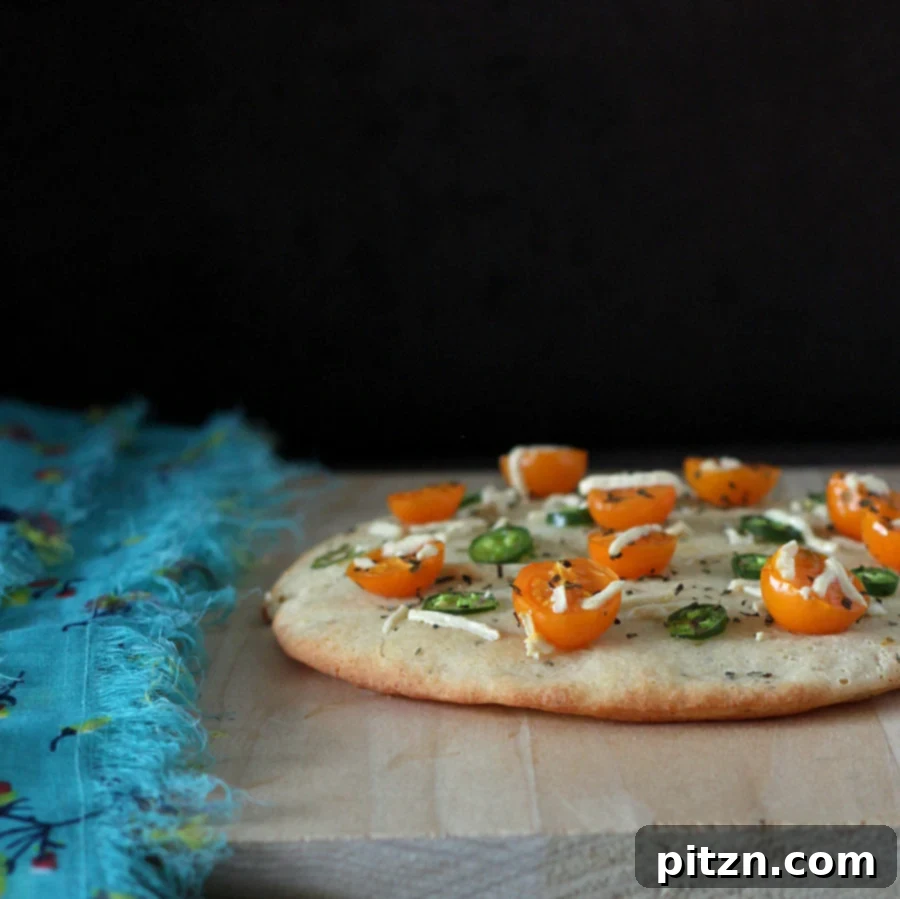
- Airy White Crust (Rice & Tapioca Blend): Our refined recipe, this crust is a revelation in gluten-free baking. Using a strategic mix of white rice, brown rice, and tapioca starch, it achieves a delightful chewiness and an irresistible pillowy softness, remarkably similar to traditional gluten-rich crusts. You truly won’t believe it’s gluten-free! This version is pictured here with simple yet flavorful toppings: fresh cherry tomatoes, a hint of spicy green chili slices, and creamy Daiya mozzarella.
Look at those beautiful holes – a true sign of an airy, well-risen crust!
Crafting the Perfect Plant-Based Toppings
Beyond the crust, the toppings are what truly bring a pizza to life. Our recipe features a unique combination of crunchy tomato rings and a vibrant pea and kale pesto, designed to offer a burst of flavor and a delightful textural contrast with every bite. These toppings are not only delicious but also packed with nutrients, making this pizza a wholesome choice for any meal.
Crunchy Tomato Rings: A Flavorful Twist
Forget plain tomato slices; our crunchy tomato rings elevate the humble tomato to a star topping. These aren’t just any tomatoes – each slice is carefully dipped in a flax egg mixture, then coated in a seasoned blend of herbed breadcrumbs or rice flour before being baked. The result is a ring that’s wonderfully crunchy on the outside, yielding to a hot, soft, and juicy interior. While not as robustly crunchy as onion rings, they offer a satisfying crispness that beautifully complements the soft pizza crust and creamy pesto. The flax egg acts as a perfect binder, creating that desirable texture without any animal products.
Vibrant Pea and Kale Pesto: Green Goodness
To spread a layer of fresh, herbaceous goodness, we’ve created a pea and kale pesto that stands out with its bright green hue and refreshing flavor. The natural sweetness of green peas perfectly balances the slight earthiness of kale, creating a pesto that is both deeply flavorful and incredibly vibrant. This pesto pairs exceptionally well with the crunchy tomato rings, offering a harmonious blend of textures and tastes. It’s also a fantastic way to incorporate more greens and legumes into your diet.
While we highly recommend our featured gluten-free crusts, feel free to experiment with other vegan and gluten-free bases you love. Some fantastic alternatives include this Oat Focaccia crust or the Teff crust. For those who aren’t gluten-free, any regular wheat crust works beautifully too!
My Vegan Journey: A Reflection on Whole Foods vs. Substitutes
As my dietary transition towards a plant-based lifestyle has evolved, my preferences have shifted significantly. I find myself gravitating more towards healthier, whole-food options rather than highly processed soy protein “fake meats” or excessively fried dishes. While I certainly enjoy an occasional serving of sweet potato fries, I’ve noticed that my palate now prefers fresher, lighter alternatives. For instance, a few fries are a delightful treat, but too many can leave me feeling overly oily and heavy. This preference extends to meat substitutes; while some are remarkably realistic, I’ve found that those which mimic meat too closely can sometimes be a bit off-putting to me. I’d much rather savor a hearty bean patty or a flavorful tempeh patty. It’s an interesting development in my culinary journey!
However, this doesn’t extend to all substitutes. Vegan cheese, for example, is a wonderful innovation that I embrace wholeheartedly, as it doesn’t evoke the same sense of mimicry that some meat alternatives do. The vegan culinary landscape is vast and diverse, offering incredible options for every palate and preference. It’s all about discovering what resonates with you and your body.
Step-by-Step Guide: Crafting Your Vegan & Gluten-Free Pizza
Part 1: Preparing the Gluten-Free Crust
- Activate Yeast: In a medium bowl, combine warm water, active yeast, and sugar. Stir gently and let it sit for about 10 minutes, or until the mixture becomes frothy. This indicates your yeast is active and ready to work its magic.
- Combine Dry Ingredients: In a separate large bowl, thoroughly mix all the dry ingredients for your chosen crust (refer to the ingredients list below for both the Tapioca Pearl Crust and Airy White Crust).
- Form the Batter: Add the yeast mixture and extra virgin olive oil (Evoo) to the dry ingredients. Mix well until you achieve a smooth, thick batter. The consistency should be somewhat like a thick pancake batter – wet but not runny, and certainly not stiff. (This recipe can easily be doubled for a larger pizza!)
- First Rise: Cover the bowl with a clean kitchen towel and let the batter rise in a warm place for about one hour. This allows the yeast to develop, contributing to the crust’s airy texture.
- Shape the Crust: Gently gather the risen batter and spoon it onto a baking sheet lined with parchment paper. Pour about a teaspoon of Evvo on top. Using your hands, gently pat the batter into your desired pizza shape and thickness. A round crust of approximately 7.5 inches is ideal for this recipe.
- Second Rise & Hydration: Liberally spray water over the top of the crust, paying special attention to the edges. This helps create a crisp exterior. Let the shaped batter rise again in a warm spot for another 10-15 minutes.
- Partial Bake (Pre-baking): Lightly cover the baking sheet with aluminum foil, ensuring the foil doesn’t touch the batter. This traps moisture and steam, helping the crust cook evenly and prevent dryness. Bake in a pre-heated oven at 375°F (190°C) for 10 minutes. This pre-baking step is crucial for achieving a sturdy yet soft crust.
Part 2: Assembling and Finishing Your Pizza
- Add Pesto Base: Remove the partially baked crust from the oven. Spread a generous layer of the vibrant Pea and Kale Pesto evenly over the crust.
- Prepare Tomato Rings: To make the crunchy tomato rings, dip each tomato slice into the flax egg mixture, then coat it thoroughly with your seasoned rice flour or bread crumb mixture. Arrange these prepared tomato rings artfully over the pesto. (Alternatively, you can use plain, thick-cut tomato slices for a simpler approach.)
- Add Vegan Cheese: Sprinkle your choice of vegan cheese shreds, such as Daiya mozzarella, generously over the toppings.
- Final Bake: Return the pizza to the pre-heated 375°F (190°C) oven and bake for an additional 6-7 minutes, or until the cheese is melted and bubbly, and the crust edges are golden brown.
- Serve: Carefully remove the pizza from the oven. Let it cool for just about half a minute before slicing and serving immediately. Enjoy your homemade, healthful, and incredibly delicious vegan gluten-free pizza!
Above: Airy crust variation topped with fresh cherry tomatoes and chili slices.
Above: Tapioca pearl crust variation featuring pea and kale pesto with crunchy tomato rings.
Recipe: Crunchy Tomato Rings, Pea and Kale Pesto on Soft White Gluten-Free Pizza Crust
Gluten-free, Dairy-free, Egg-free, Corn-free, Soy-free (verify soy content of vegan cheese)
Ingredients:
For the Yeast Mixture (for both crusts):
- 1/4 cup warm water
- 1 teaspoon active dry yeast
- 2 teaspoons sugar (feeds the yeast)
Crust Option 1: Tapioca Pearl Flour Crust
- 1/4 cup brown rice flour
- 1/4 cup tapioca flour (made from finely powdered tapioca pearls)
- 1/4 teaspoon baking powder
- 1 Tablespoon flaxmeal
- 2 Tablespoons water (may need a little more for desired consistency)
- 1/4 teaspoon salt
- 1/2 teaspoon dried basil or other preferred dried herbs (e.g., oregano, Italian seasoning)
- 2 teaspoons extra virgin olive oil (Evoo)
Crust Option 2: Airy White Crust (Approx. 7.5-inch pizza)
- 1/4 cup white rice flour
- 1/4 cup tapioca starch
- 2 Tablespoons brown rice flour
- 1/4 teaspoon baking powder
- 1/2 teaspoon dried or fresh basil or mixed herbs
- 1/4 teaspoon salt
- 2 teaspoons extra virgin olive oil (Evoo)
For the Pea and Kale Pesto:
Blend the following ingredients until smooth:
- 1/4 cup green peas (frozen, thawed)
- 1 large kale leaf, stem removed, chopped
- 1 teaspoon extra virgin olive oil (Evoo)
- A few teaspoons water (to achieve desired consistency)
- 1/4 teaspoon garlic powder
- A generous pinch of salt
For the Crunchy Tomato Rings:
- Tomato slices (from medium-sized tomatoes)
- 2 flax eggs (2 Tablespoons flaxmeal mixed with 5 Tablespoons water, let sit for 5 minutes to thicken)
- Coating mixture: Mix rice flour, a pinch of salt, a pinch of dried herbs, and a dash of black pepper. (Alternatively, use oat flour or gluten-free breadcrumbs.)
Optional Toppings:
- Daiya mozzarella or other vegan cheese shreds of your choice
- Cherry tomatoes, halved
- Thin slices of green chili (for a spicy kick)
- Fresh basil leaves (for garnish)
Veganism in the Spotlight: Celebrity Influence and the Plant-Based Movement
The rise of plant-based diets has garnered significant attention, not least from celebrity endorsements. Did you know that Hollywood icon Brad Pitt reportedly follows a vegan diet? It’s fascinating to imagine the impact if more public figures like him actively promoted the benefits and ease of transitioning to a plant-based lifestyle. Perhaps a campaign where he eloquently discusses the health, environmental, and ethical advantages of veganism would resonate even more profoundly than, say, a luxury perfume ad!
While I generally prefer to focus on the diet itself rather than associating it with specific individuals, there’s no denying that a well-known, respected spokesperson can significantly boost the movement. Imagine the influence of figures like India’s Aamir Khan lending their voice to this cause. These endorsements can introduce the concept to a broader audience, dispelling myths and showcasing the vibrant, healthy possibilities of vegan living. It helps to normalize and even glamorize a lifestyle that is incredibly beneficial for personal health, animal welfare, and the planet.

Conclusion: Embrace the Flavors of Plant-Based Pizza
Crafting your own vegan and gluten-free pizza at home is a rewarding experience, offering endless possibilities for customization and a chance to enjoy truly wholesome food. This recipe for Crunchy Tomato Rings and Pea Kale Pesto on a Soft White Gluten-Free Crust is a testament to how delicious and satisfying plant-based meals can be. We’ve explored the nuances of creating perfect gluten-free crusts and paired them with fresh, flavorful toppings that sing with every bite.
Whether you’re making it for a weeknight dinner, a weekend gathering, or just as a treat, this pizza is sure to become a favorite. We encourage you to try these recipes, experiment with your favorite vegan cheeses and fresh herbs, and discover the joy of homemade plant-based pizza. Share your creations and let us know how your vegan pizza journey unfolds!