
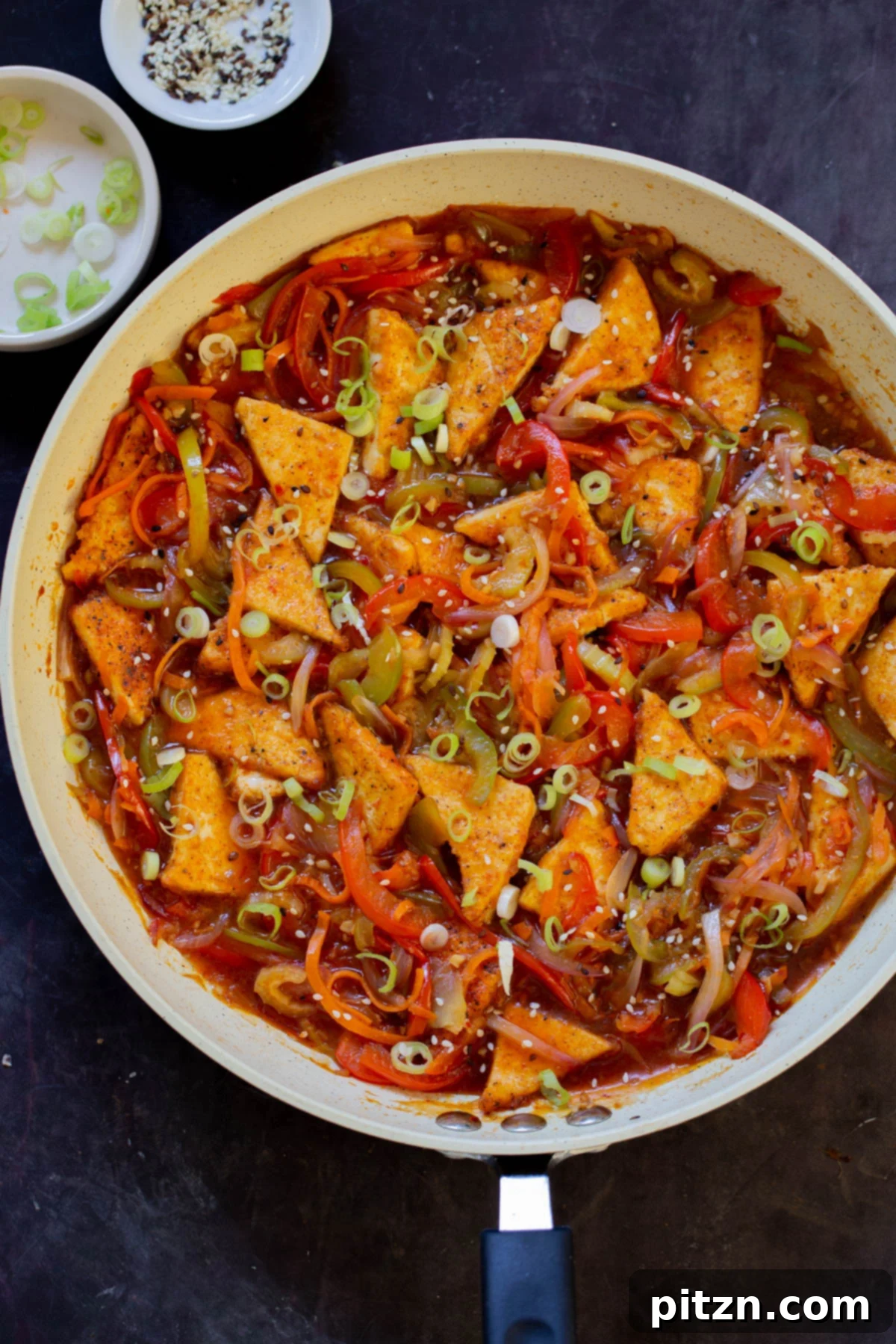
Embark on a culinary journey with this incredibly quick and flavorful Indo-Chinese Schezwan Tofu! This recipe transforms humble tofu into a restaurant-quality “paneer” alternative, all within a single pan and just 30 minutes. Bursting with vibrant vegetables and an irresistible, spicy-sweet Schezwan sauce, it’s a perfect weeknight stir-fry that promises big flavors with minimal effort. Whether you’re a seasoned chef or a beginner, this dish is designed for ease and guaranteed satisfaction. We’ll even guide you through a quick homemade Schezwan sauce recipe!
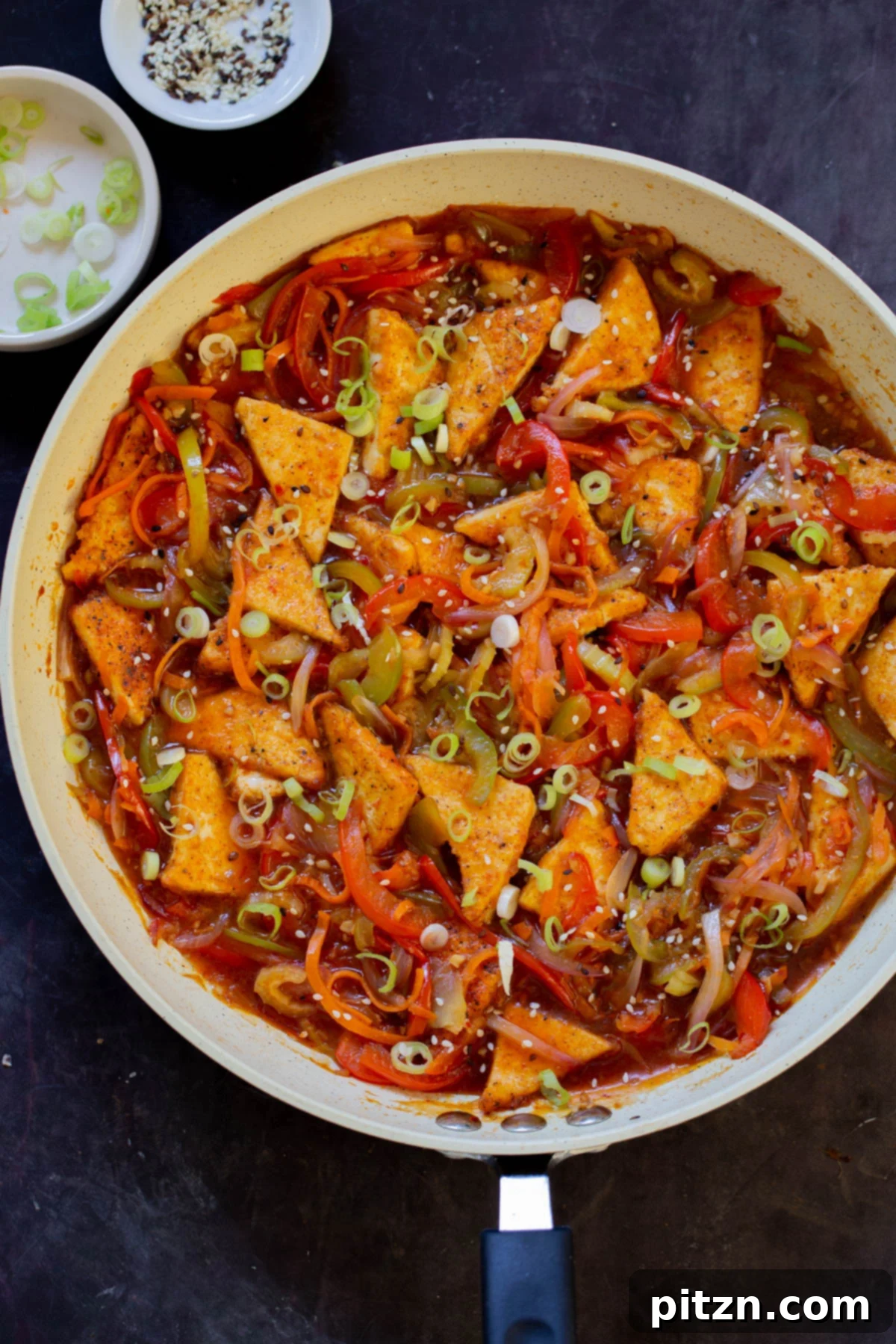
Table of Contents
- Why You’ll Love This Schezwan Tofu
- Understanding Indo-Chinese Cuisine
- Choosing and Preparing Your Tofu
- The Secret to Incredible Schezwan Sauce
- More Indo-Chinese Recipes to Explore
- Indo-Chinese Schezwan Tofu “Paneer” Recipe
- Ingredients and Smart Substitutions
- Pro Tips for Perfect Schezwan Tofu
- How to Make Schezwan Tofu: A Visual Guide
- Meal Prep and Storage Tips
- Customization and Variations
- Frequently Asked Questions
This easy and incredibly flavorful Indo-Chinese Schezwan Tofu recipe is a staple in my kitchen, and soon to be in yours! Indo-Chinese cuisine is a fascinating culinary sub-genre, born from the fusion of Chinese cooking techniques and Indian spices and flavors. It’s a vibrant blend that has created unique dishes and sauces distinct from their original counterparts. While traditional Chinese Szechuan dishes have their own charm, the Indo-Chinese version, like this Schezwan Tofu, often features bolder garlic notes and a more pronounced spice profile, perfectly tailored to the Indian palate. Traditionally, this dish might feature Indian paneer cheese, but here, we’re using protein-packed tofu, making it a wonderful vegan alternative without compromising on texture or taste. You can easily adapt this recipe with other plant-based proteins too!
The beauty of this simple dish lies in its straightforward preparation. You’ll crisp up seasoned tofu to golden perfection, then stir-fry it with a medley of fresh vegetables and a rich Schezwan sauce. A touch of cornstarch slurry brings everything together, creating a glossy, thick sauce that clings beautifully to every piece of tofu and vegetable. It’s quick, efficient, and incredibly satisfying.
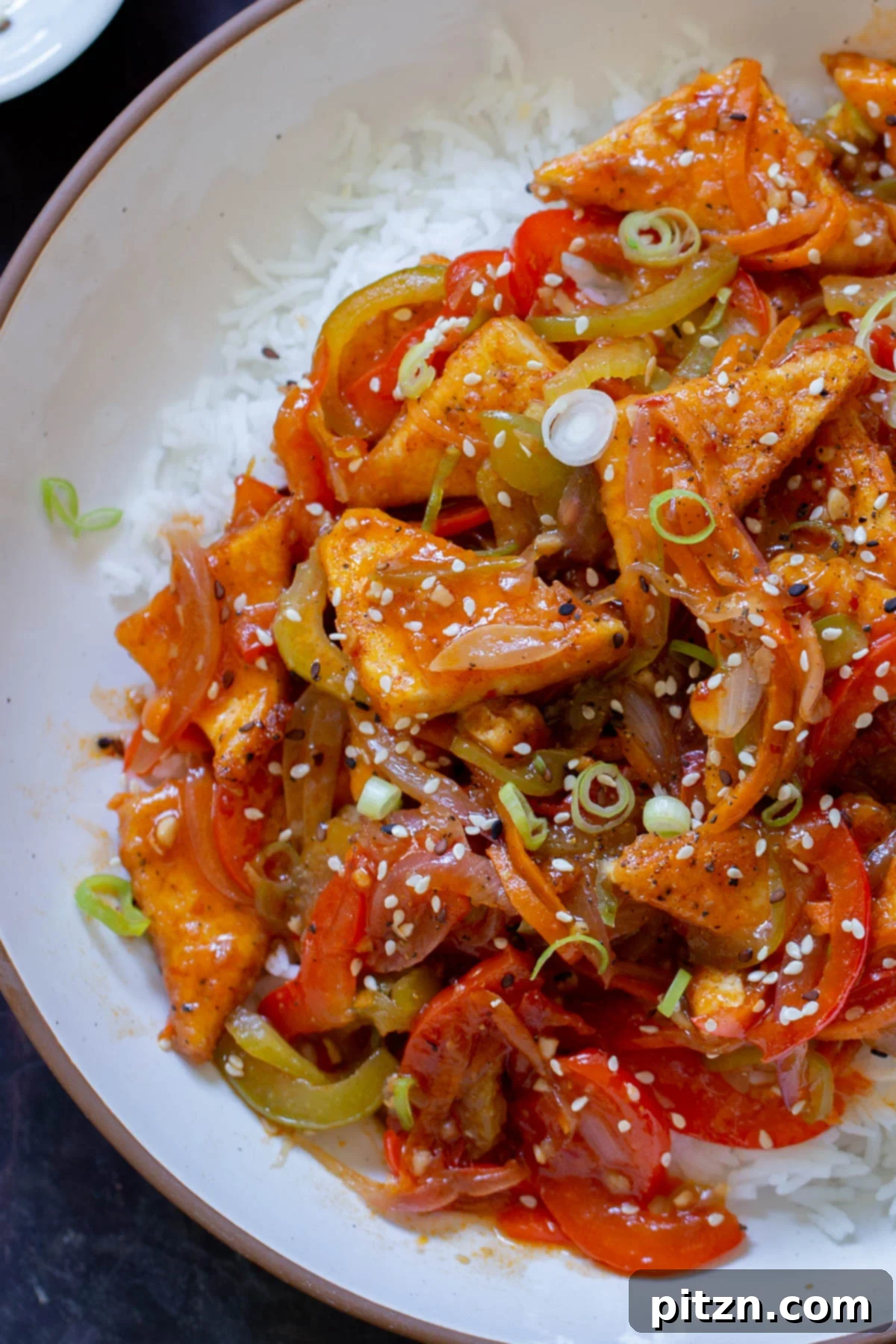
For the Schezwan sauce, you have options! You can opt for a high-quality store-bought Schezwan sauce or seek out the flavorful Schezwan chutney often found in Indian grocery stores or online. The Indo-Chinese varieties tend to be richer in garlic and spice, offering a more authentic flavor profile for this particular dish compared to conventional store-bought Chinese Szechuan sauces. Alternatively, for the freshest taste, you can easily whip up your own Schezwan sauce from scratch at home using fresh garlic and dried chilies, such as Kashmiri chilies for their vibrant color and mild heat. Refer to our recipe notes for a quick and simple homemade Schezwan sauce recipe. Serve this versatile stir-fry over fluffy plain rice, aromatic Schezwan fried rice, nutritious quinoa, or classic Hakka noodles for a complete and delicious meal.
Understanding Indo-Chinese Cuisine: A Flavorful Fusion
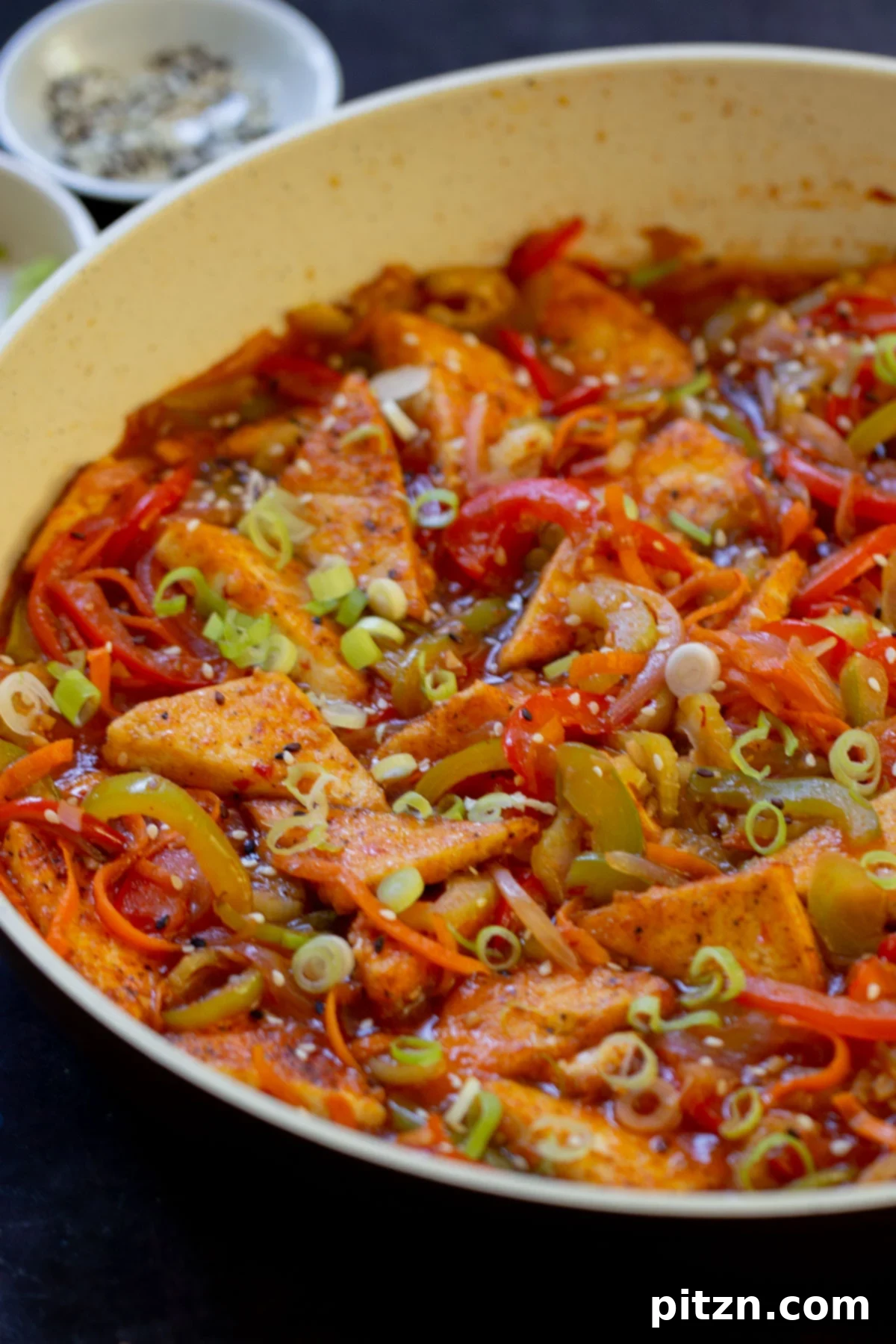
Indo-Chinese cuisine is a unique culinary phenomenon that originated in India, particularly in its Chinese immigrant communities. It’s a beautiful marriage of traditional Chinese cooking methods and ingredients with the bold, aromatic spices and flavors characteristic of Indian cuisine. Unlike authentic Chinese food, Indo-Chinese dishes often feature more garlic, ginger, chilies, and a distinct blend of Indian spices that create a truly unforgettable taste. Dishes like Manchurian, Hakka Noodles, and Schezwan creations are prime examples of this delicious fusion. This Schezwan Tofu is a fantastic introduction to this exciting flavor profile, offering a rich, spicy, and tangy experience that’s both comforting and exotic.
Why You’ll Love This Schezwan Tofu
- Effortless & Fast: A complete, satisfying meal ready in just 30 minutes, all in one pan, making cleanup a breeze!
- Authentic Restaurant Flavor at Home: Recreate the beloved taste of your favorite Indo-Chinese takeout with simple, accessible ingredients.
- Crispy Tofu & Crunchy Veggies: Enjoy perfectly crisped tofu cubes enveloped in a sticky, sweet, and mildly spicy Schezwan sauce, complemented by fresh, crunchy vegetables.
- Diet-Friendly Options: Naturally gluten-free (when using tamari) and nut-free, with easy modifications available for a completely soy-free version.
- Packed with Flavor: Each bite delivers a punch of umami, heat, and tang, making it incredibly addictive.
Choosing and Preparing Your Tofu for Maximum Flavor
The success of this Schezwan Tofu dish largely depends on properly preparing your tofu. For the best crispy texture, always opt for firm or extra-firm tofu. Silken or soft tofu won’t hold its shape or crisp up effectively. Pressing your tofu is a crucial step to remove excess water, which prevents sogginess and allows the tofu to absorb marinades and crisp up beautifully. You can use a dedicated tofu press or simply wrap the tofu in a clean kitchen towel, place it on a plate, and weigh it down with heavy objects (like cookbooks or cans) for at least 15-30 minutes, or even longer if time permits.
Once pressed, slice your tofu into uniform cubes or triangles. This ensures even cooking and crisping. Coating the tofu with a light layer of cornstarch before frying creates that desirable crispy exterior, locking in moisture and flavor. Pan-frying, as detailed in this recipe, is a quick and effective method, but for an even crispier result, you could also air-fry or bake the tofu until golden brown before adding it to the stir-fry. This preparation ensures that your vegan “paneer” stands up to the bold Schezwan sauce.
The Secret to Incredible Schezwan Sauce
The Schezwan sauce is the heart and soul of this dish, providing its signature spicy, sweet, and tangy profile. While store-bought options are convenient, making your own quick version allows you to control the freshness and customize the heat level. The Indo-Chinese style Schezwan sauce is distinct from traditional Szechuan sauce, often featuring a more pronounced garlic flavor and a different balance of spices, typically with a hint of sweetness and tang from vinegar and ketchup.
Our quick homemade Schezwan sauce, detailed in the recipe notes, combines ginger-garlic paste, Kashmiri chili powder (for color and mild heat), sesame oil, tomato paste, white vinegar, and a touch of Sambal oelek or chili sauce for an extra kick. This blend creates a rich, aromatic base that elevates the entire dish. Feel free to adjust the amount of chili powder or chili sauce to match your preferred spice level. For a deeper, more complex flavor, you can even prepare a larger batch of this sauce and store it in the refrigerator for future stir-fries, noodle dishes, or as a vibrant dipping sauce.
More Indo-Chinese Recipes to Explore
If you’ve fallen in love with the flavors of this Schezwan Tofu, you’re in for a treat! Indo-Chinese cuisine offers a wealth of incredible dishes that combine the best of both worlds. Here are some more favorites to add to your cooking repertoire:
- Schezwan Fried Rice
- Veggies in Hot Garlic Sauce
- Dragon Chicken Soycurls
- Manchurian Noodles
- Black Pepper Cauliflower
Schezwan Tofu “Paneer” Indo-Chinese
Prep: 10 mins
Cook: 20 mins
Total: 30 mins
Servings: 4
Course: Main
Cuisine: Chinese, Indian-Chinese
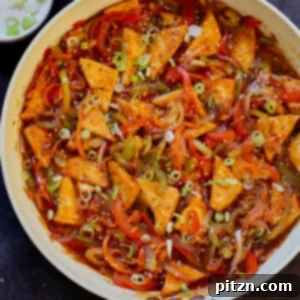
Indo-Chinese Schezwan tofu “paneer” is a super quick weeknight stir fry that needs just one pan and 30 minutes. This dish uses simple ingredients and is packed with vibrant veggies and incredible FLAVOR!
Equipment
- Skillet: A large skillet or wok is ideal for stir-frying.
- Chef’s knife: For efficient vegetable prep.
Ingredients
For the Tofu
- 14 ounces firm or extra firm tofu, pressed for at least 15 minutes and then sliced into desired shapes
- 1/4 teaspoon black pepper
- 1/2 teaspoon Kashmiri chili powder, or use paprika for a milder version
- 1/4 teaspoon salt
- 2 tablespoons cornstarch, or other starch such as tapioca or arrowroot
- 1 teaspoon oil, for cooking tofu
For the Stir Fry
- 1 teaspoon oil, for stir-frying vegetables
- 2 cloves garlic, minced
- 1/4 cup chopped onion, chopped into 3/4” squares, petals, or thick slices
- 1/4 cup chopped celery, optional but adds a nice crunch and flavor
- 1/2 or 1 bell pepper (any color), chopped into 3/4” squares or thick slices
For the Schezwan Sauce
- 1 tablespoon soy sauce, or use tamari for a gluten-free option
- 1 tablespoon ketchup
- 4 to 5 tablespoons Schezwan sauce, or Schezwan chutney (see recipe notes for a quick homemade version)
- 1 tablespoon maple syrup, adjust to taste for sweetness
- 1 tablespoon rice vinegar, for tanginess
- 1 teaspoon cornstarch, mixed with 1/2 cup of water (this is your cornstarch slurry for thickening)
For Garnish
- Green onion, finely chopped
- Sesame seeds
- Pepper flakes (optional, for extra heat)
Instructions
Prepare the Tofu
- Press and Slice Tofu: If not already done, press your firm or extra-firm tofu for at least 15 minutes to remove excess water. Then, slice it into your preferred shapes (cubes or triangles work well). Place the sliced tofu in a medium bowl.
- Season Tofu: In a small separate bowl, thoroughly mix together the black pepper, Kashmiri chili powder (or paprika), cornstarch, and salt. Sprinkle this dry seasoning mixture evenly over the tofu in the bowl. Gently toss the tofu until each piece is well coated.
- Crisp Tofu: Heat 1 teaspoon of oil in a large skillet or wok over medium-high heat. Once the oil is hot and shimmering, carefully add the coated tofu in a single layer (do not overcrowd the pan; cook in batches if necessary). Cook for 5 to 7 minutes, flipping every few minutes, until most edges of the tofu are golden brown and crispy.
- Remove Tofu: Once crispy, remove the tofu from the skillet and transfer it to a clean bowl. Set aside.
Make the Stir Fry and Schezwan Sauce
- Sauté Aromatics: Add another teaspoon of oil to the same skillet and heat over medium heat. Add the minced garlic and cook for about 30 seconds until it becomes fragrant and slightly translucent, taking care not to burn it.
- Stir-fry Vegetables: Increase the heat to medium-high. Add the chopped onion, celery (if using), and bell pepper to the skillet, along with a good pinch of salt. Stir-fry for 2 minutes until the vegetables are tender-crisp.
- Add Sauces: Pour in the soy sauce (or tamari), ketchup, Schezwan sauce (or chutney), maple syrup, and rice vinegar into the skillet with the vegetables. Stir everything well to combine and bring the mixture to a gentle boil, cooking for about half a minute.
- Thicken Sauce: Re-stir the cornstarch slurry (1 teaspoon cornstarch mixed with 1/2 cup water) and add it to the simmering sauce in the skillet. Mix continuously until the sauce thickens and becomes glossy. Bring it back to a boil.
- Combine & Serve: Add the crisped tofu back into the skillet. Toss everything gently to ensure the tofu and vegetables are thoroughly coated in the rich Schezwan sauce. Immediately switch off the heat and let the mixture sit for a few minutes to allow the flavors to meld and the sauce to further thicken slightly.
- Garnish: Garnish generously with fresh green onions, a sprinkle of sesame seeds, and optional pepper flakes for an extra kick. Serve hot over steamed rice, noodles, or quinoa.
Notes
Quick Homemade Schezwan Sauce: For a fresh, vibrant sauce, combine 2 tablespoons ginger-garlic paste, 2 teaspoons Kashmiri chili powder (adjust to your spice preference), 1 teaspoon sesame oil, 1 teaspoon tomato paste, 1 teaspoon white vinegar, 2 teaspoons Sambal oelek (or any preferred chili sauce), a generous dash of salt and black pepper, and 1 tablespoon water. Mix well until smooth. This makes roughly 4-5 tablespoons.
This recipe is naturally nut-free. For a gluten-free version, ensure you use tamari instead of regular soy sauce and verify that your store-bought Schezwan sauce is gluten-free.
For a soy-free option, replace the tofu with chickpea tofu, seitan, or chickpeas. When using chickpeas, make sure they are well-drained and roasted or pan-fried for a firmer texture. Additionally, omit the soy sauce and ensure your chosen Schezwan sauce is soy-free, using a bit more of it to compensate for the flavor of the omitted soy sauce.
Nutrition (Approximate per serving)
Carbohydrates: 18g,
Protein: 12g,
Fat: 7g,
Saturated Fat: 1g,
Sodium: 689mg,
Potassium: 214mg,
Fiber: 2g,
Sugar: 9g,
Vitamin A: 1520 IU,
Vitamin C: 59mg,
Calcium: 148mg,
Iron: 2mg
Nutrition information is automatically calculated and should only be used as an approximation. Actual values may vary based on ingredients and preparation methods.
Did you make this delicious recipe? We’d love to hear from you! Rate and leave a comment below to share your experience and tips!
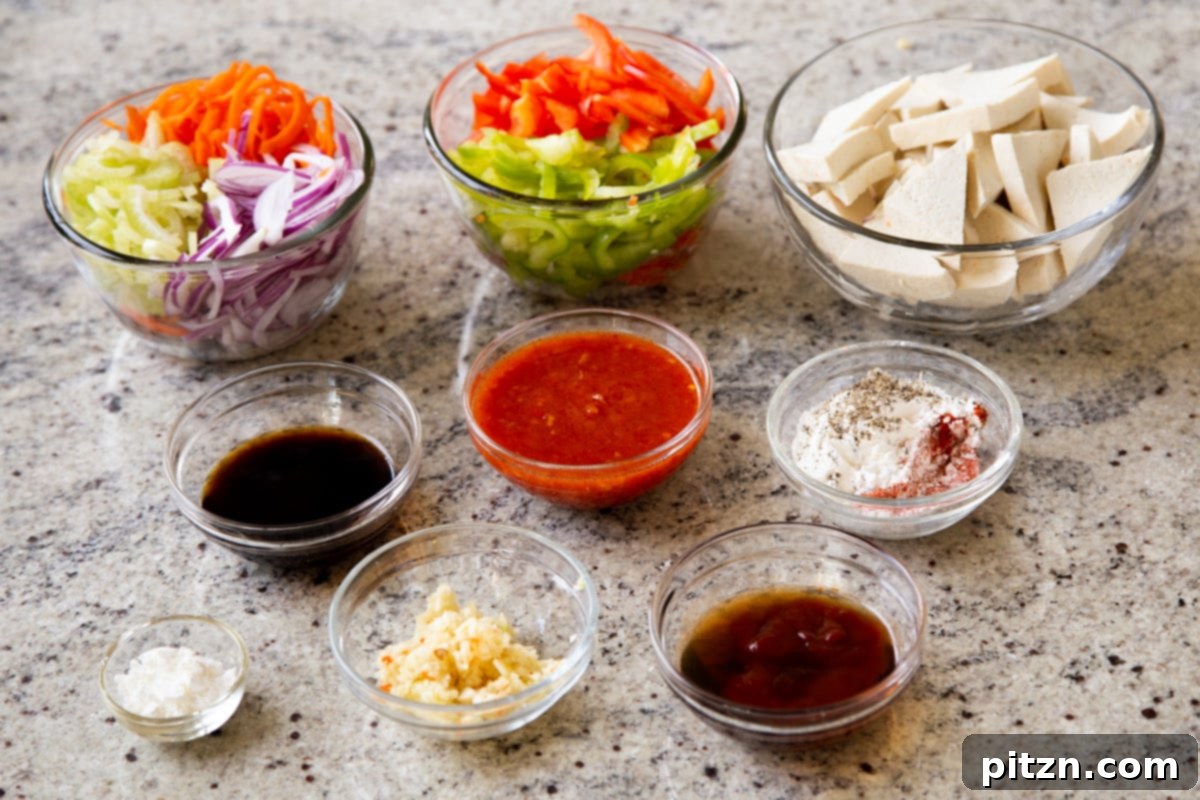
Ingredients and Smart Substitutions for Your Schezwan Tofu
Each ingredient in this Indo-Chinese Schezwan Tofu recipe plays a vital role in creating its balanced and bold flavor profile. Understanding their function and potential substitutions allows for greater flexibility and dietary adaptations:
- Tofu: This is our star protein, offering a delightful texture akin to paneer when crisped.
- Substitution: For a soy-free alternative, consider using homemade chickpea tofu, hearty seitan, or even pan-fried chickpeas. Ensure chickpeas are well-drained and dried before cooking to achieve a good texture.
- Ground Spices (Black Pepper & Kashmiri Chili Powder): These spices season the tofu, building a foundational layer of flavor and a gentle heat. Kashmiri chili powder offers a beautiful reddish hue without overwhelming spice.
- Substitution: If Kashmiri chili powder isn’t available, paprika can be used for color, though it will be milder. For more heat, a pinch of cayenne pepper can be added carefully.
- Cornstarch: Used twice in the recipe – first to coat the tofu for crispiness, and then mixed with water to thicken the Schezwan sauce, giving it that characteristic glossy, clingy consistency.
- Substitution: Tapioca starch or arrowroot powder can be used interchangeably for similar thickening and crisping effects.
- Oil: Essential for stir-frying the tofu to a golden crisp and sautéing the vegetables.
- Suggestion: A neutral oil like avocado oil, grapeseed oil, or canola oil is best for high-heat stir-frying. Sesame oil can be used in small amounts for flavor, but it has a lower smoke point.
- Aromatics (Garlic, Onion, Celery): These form the aromatic base of the stir-fry, providing depth of flavor and satisfying crunch. Garlic is particularly prominent in Indo-Chinese cuisine.
- Substitution: Green onions (scallions) can be used instead of white onions for a milder flavor. If you don’t have celery, simply omit it or add more bell pepper.
- Bell Pepper: Adds a pop of color, sweetness, and a pleasant crisp texture to the stir-fry. Any color works!
- Addition: Feel free to add other quick-cooking vegetables like carrots, snap peas, broccoli florets, or mushrooms for added nutrition and variety.
- Soy Sauce: Contributes a crucial umami depth and savory flavor to the sauce.
- Substitution: For a gluten-free dish, use tamari. For a soy-free option, use a coconut aminos alternative, or simply increase the amount of Schezwan sauce if it’s soy-free.
- Ketchup: Adds a touch of sweetness, tang, and umami, balancing the other strong flavors in the Schezwan sauce.
- Substitution: Tomato paste with a pinch of sugar and vinegar can be a substitute, though the flavor profile will be slightly different.
- Schezwan Sauce / Chutney: The star flavor component! Choose a good quality store-bought version or whip up our quick homemade recipe (check notes). Indo-Chinese Schezwan chutney often has a more pronounced garlic and chili flavor.
- Tip: Always taste your Schezwan sauce beforehand to adjust heat and sweetness in the overall dish.
- Maple Syrup: Provides a subtle sweetness that perfectly counterbalances the heat and tang of the Schezwan sauce.
- Substitution: Agave nectar or brown sugar can be used as alternatives. Adjust to your sweetness preference.
- Rice Vinegar: Adds a bright, acidic tang that cuts through the richness and enhances all the other flavors.
- Substitution: Apple cider vinegar or white vinegar can be used, but rice vinegar’s milder acidity is preferred.
- Garnishes (Green Onion, Sesame Seeds, Pepper Flakes): Not just for looks, these add freshness, nutty notes, and an extra visual appeal.
- Suggestion: Toasted sesame oil can be drizzled at the very end for an extra layer of aroma.
💡 Pro Tips for Perfect Schezwan Tofu Every Time
- Press Your Tofu Thoroughly: This is arguably the most crucial step for crispy tofu. The more water you press out, the firmer and crispier your tofu will become, absorbing flavors much better.
- Don’t Overcrowd the Pan: When cooking the tofu, ensure it’s in a single layer with enough space between pieces. Overcrowding will steam the tofu instead of crisping it, leading to a soft, undesirable texture. Cook in batches if necessary.
- Adjust Heat Levels: The “medium-high” heat setting is key for stir-frying. It allows vegetables to cook quickly while retaining their crunch and helps the sauce reduce and thicken without burning.
- Taste and Adjust Sauce: Before adding the cornstarch slurry, taste the Schezwan sauce mixture. This is your chance to adjust the balance of sweet, spicy, and tangy to your personal preference. Add more maple syrup for sweetness, vinegar for tang, or chili sauce for heat.
- Mind the Cornstarch Slurry: The sauce will continue to thicken slightly even after you turn off the heat, especially as it cools. Remove the skillet from the heat promptly after the sauce reaches your desired consistency to prevent it from becoming too thick or gummy.
- Serve Immediately: For the best texture and flavor, Schezwan Tofu is best enjoyed fresh off the stove. The tofu will remain crispiest and the vegetables most tender-crisp.
- Pre-prep Your Ingredients: “Mise en place” (everything in its place) is vital for stir-fries. Chop all your vegetables and prepare your sauce mixture before you start cooking, as the actual stir-frying process is very fast.
How to Make Schezwan Tofu: A Visual & Detailed Guide
Follow these detailed steps, complete with visual cues, to create your perfect Indo-Chinese Schezwan Tofu.
Part 1: Preparing and Crisping the Tofu
Begin by preparing your tofu, as a good base is key to a delicious stir-fry.
Step 1: Press and Slice the Tofu. First, ensure your tofu is thoroughly pressed to remove excess moisture. This critical step guarantees a firm, crispy texture. Once pressed, slice the block into uniform cubes or shapes of your liking. Transfer these pieces into a medium-sized bowl.
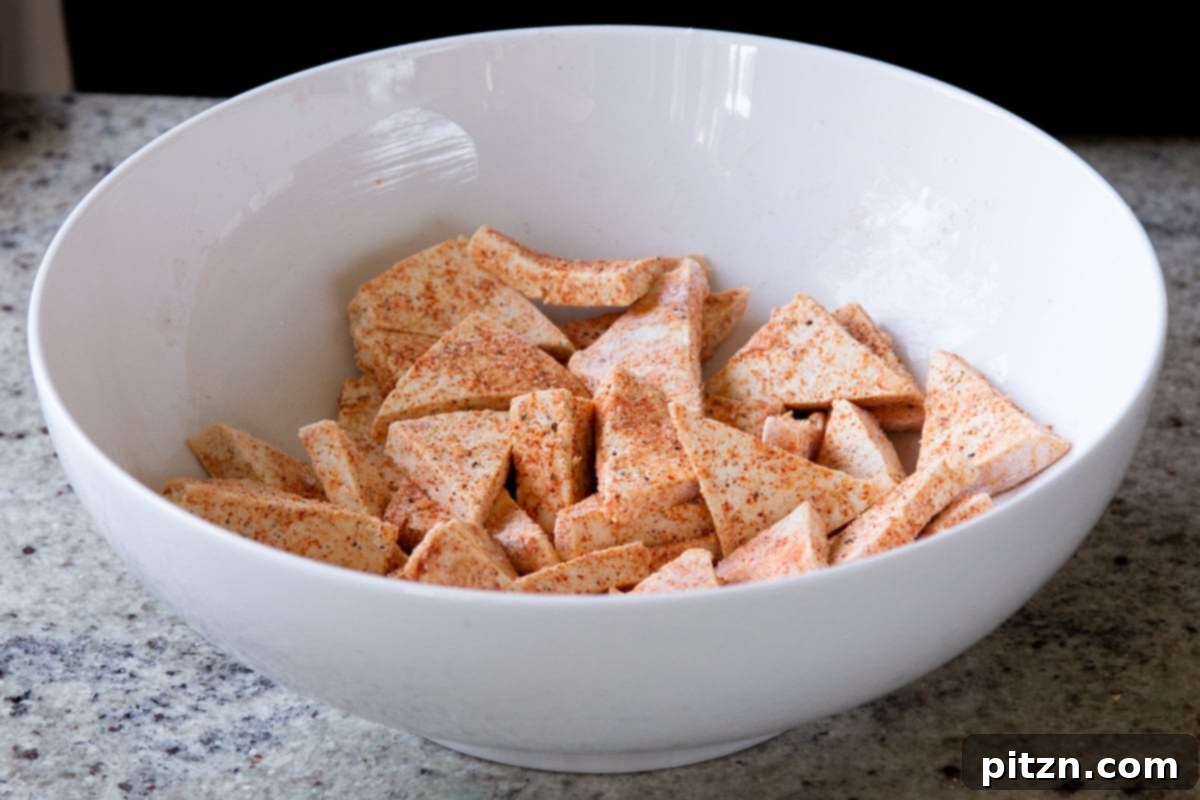
Step 2: Season the Tofu. In a small, separate bowl, combine the black pepper, Kashmiri chili powder (or paprika), cornstarch, and salt. Mix these dry ingredients very well to ensure an even distribution. Sprinkle this seasoning mixture over the tofu in the main bowl. Gently toss the tofu using a spatula or by hand until every piece is uniformly coated. This coating will help create that desirable crispy exterior.
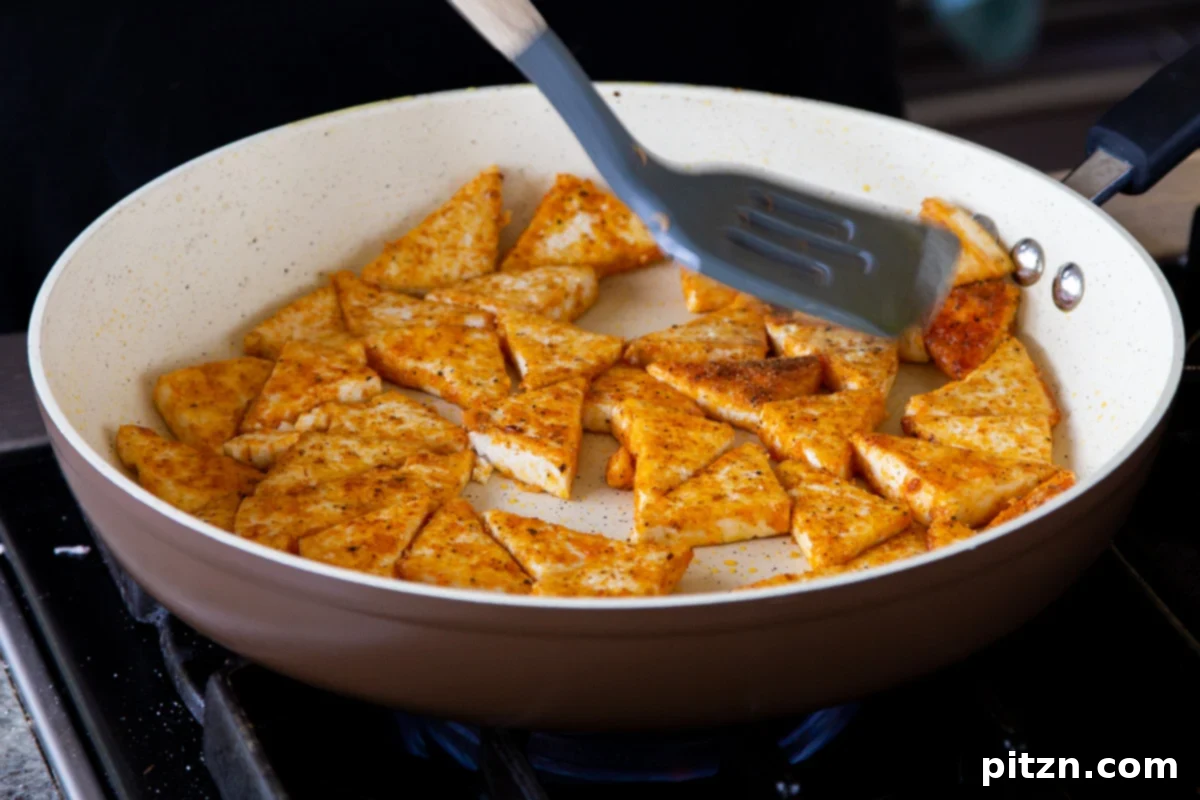
Step 3: Crisp the Tofu. Heat a teaspoon of oil in a large skillet or wok over medium-high heat. Once the oil is hot and shimmering, carefully add the seasoned tofu in a single layer. Avoid overcrowding; if necessary, cook the tofu in two batches to ensure proper crisping. Cook for about 5 to 7 minutes, flipping the tofu periodically every few minutes, until most of its edges are beautifully golden brown and crispy.
Step 4: Remove Crisped Tofu. Once the tofu is adequately crisped, remove it from the skillet and place it back into the clean bowl. Set it aside while you prepare the stir-fry and sauce.
Part 2: Creating the Stir Fry and Schezwan Sauce
Now, let’s bring the vibrant flavors of the stir-fry and sauce together.
Step 5: Sauté the Aromatics. Add another teaspoon of oil to the same skillet and heat it over medium heat. Once the oil is warm, add the minced garlic. Sauté for just a few seconds, stirring constantly, until the garlic becomes fragrant and begins to turn translucent. Be careful not to burn it, as burnt garlic can taste bitter.
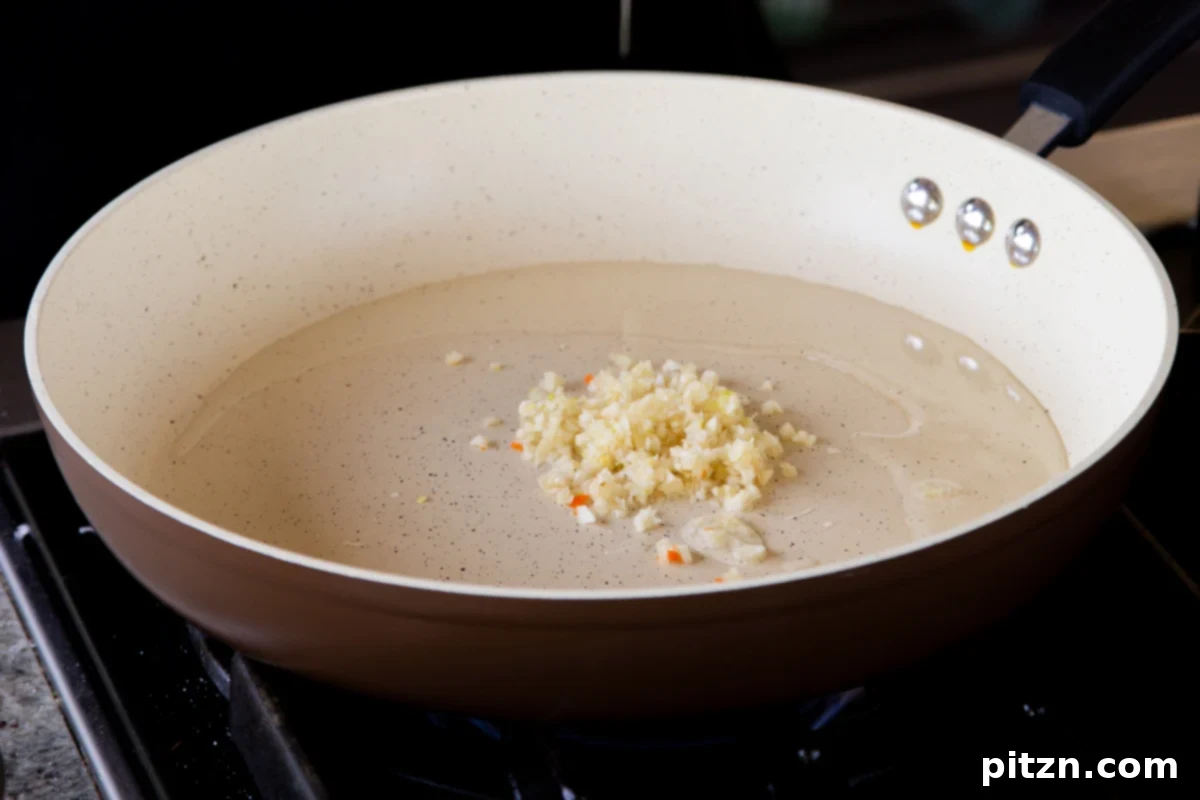
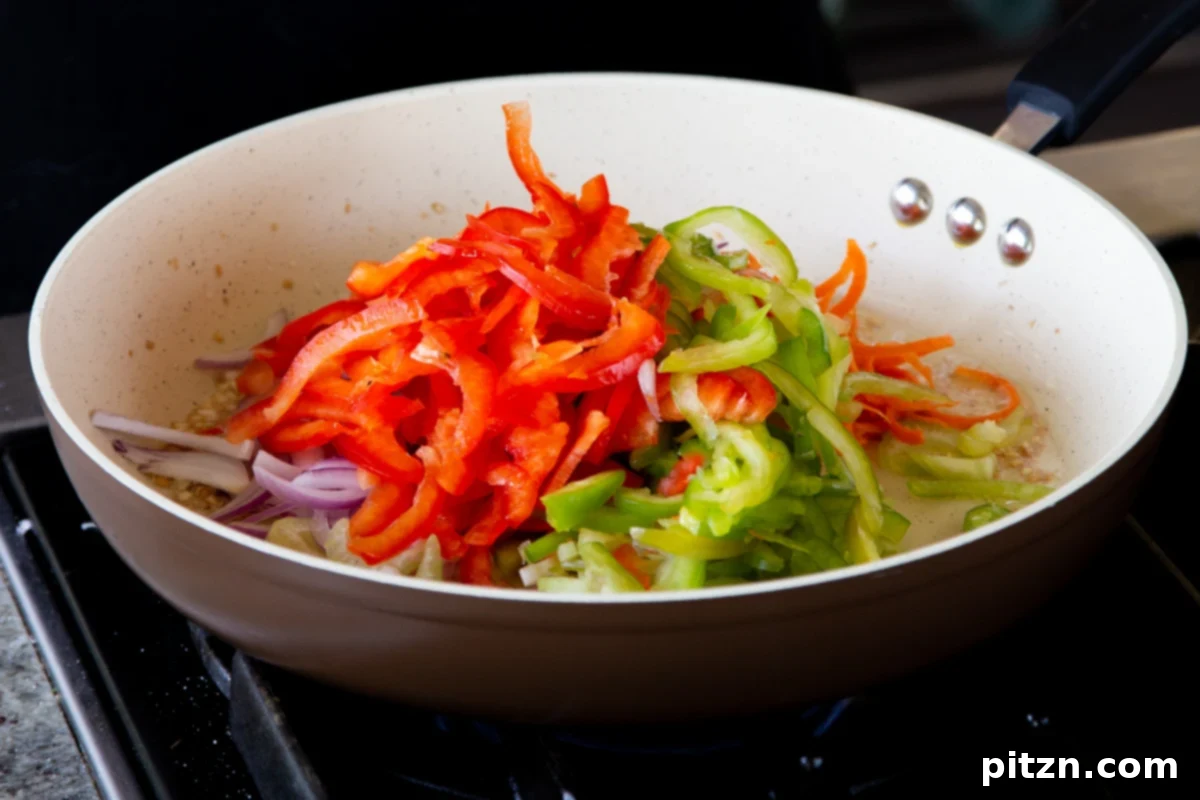
Step 6: Stir-fry the Vegetables. Increase the heat to medium-high. Add the chopped onion, celery (if using), and bell pepper to the skillet, along with a good pinch of salt. Stir-fry these vegetables vigorously for approximately 2 minutes. The goal is for them to become tender-crisp – cooked through but still retaining a pleasant crunch.
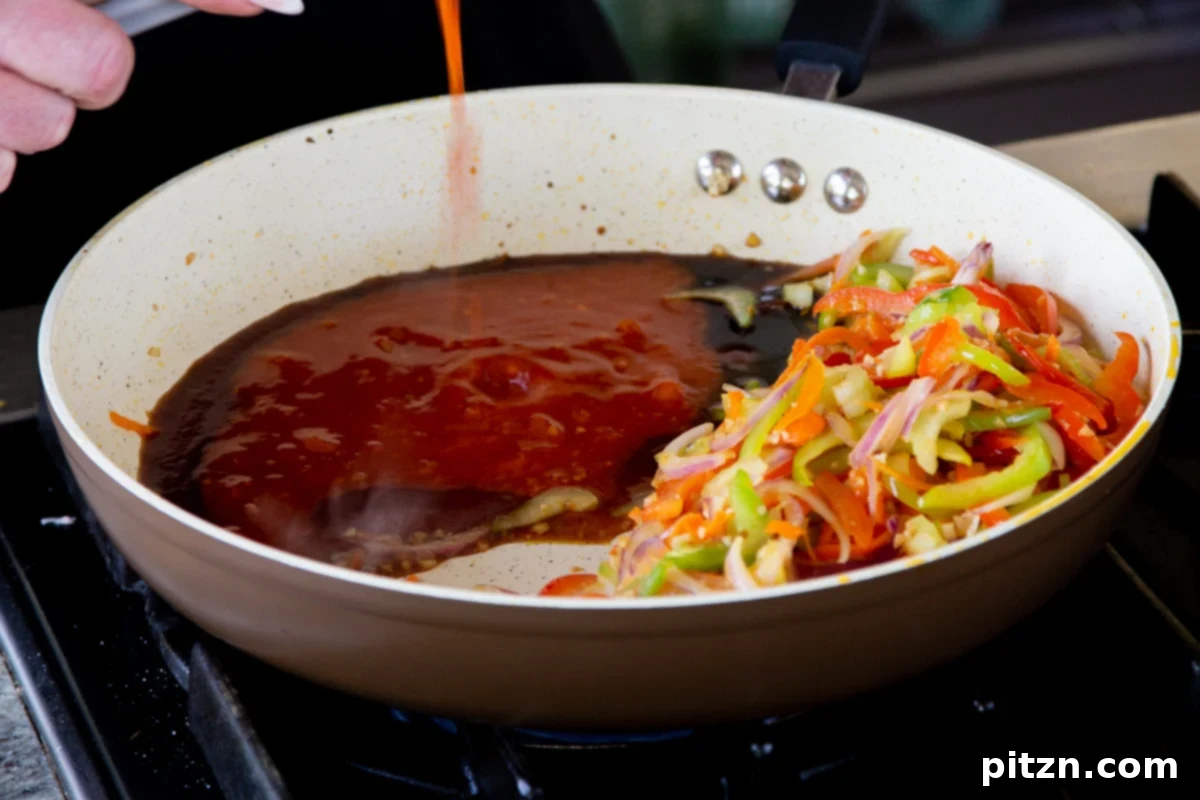
Step 7: Add the Sauces. Pour in all the sauce ingredients – soy sauce, ketchup, Schezwan sauce (or chutney), maple syrup, and rice vinegar – directly into the skillet with the vegetables. Stir everything thoroughly to combine. Bring the mixture to a gentle boil, letting it simmer for about half a minute to allow the flavors to meld.
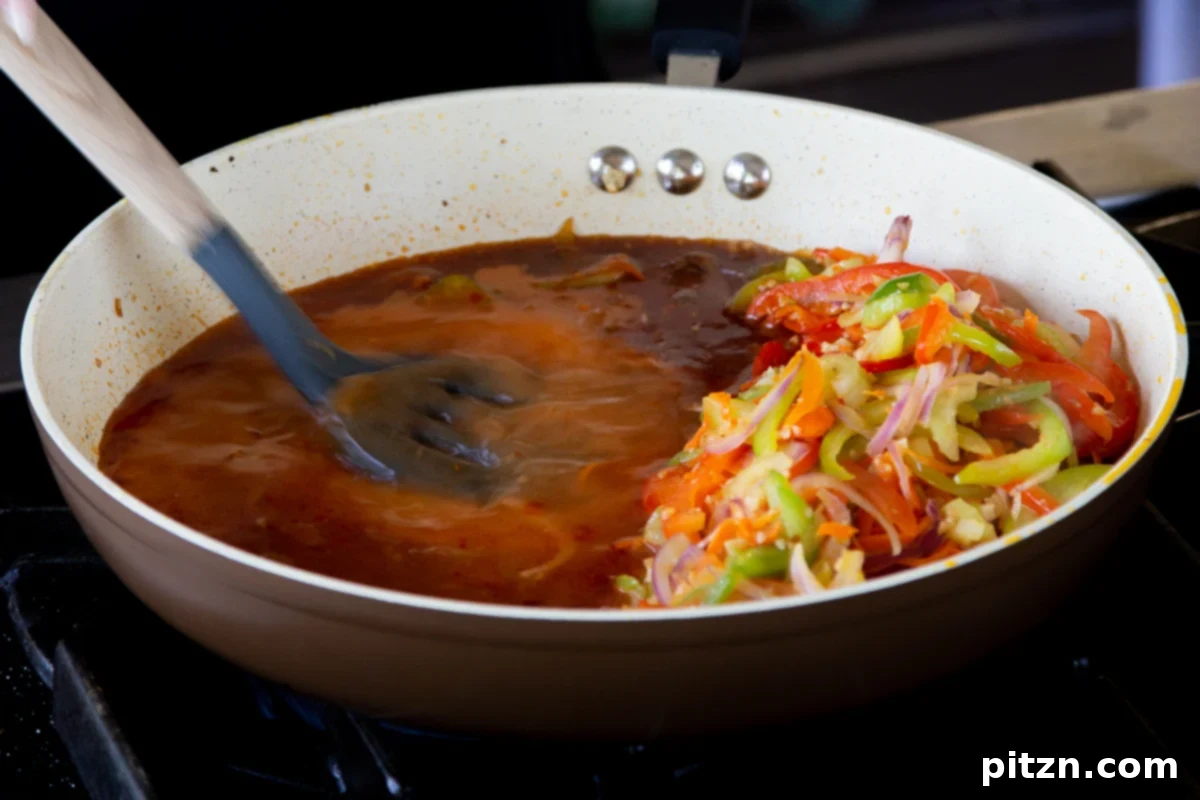
Step 8: Thicken the Sauce. Re-mix the cornstarch slurry (1 teaspoon cornstarch dissolved in 1/2 cup of water) thoroughly to ensure no lumps. Pour this mixture into the skillet with the simmering sauce. Stir continuously until the sauce visibly thickens and achieves a glossy consistency. Bring it back to a boil briefly.
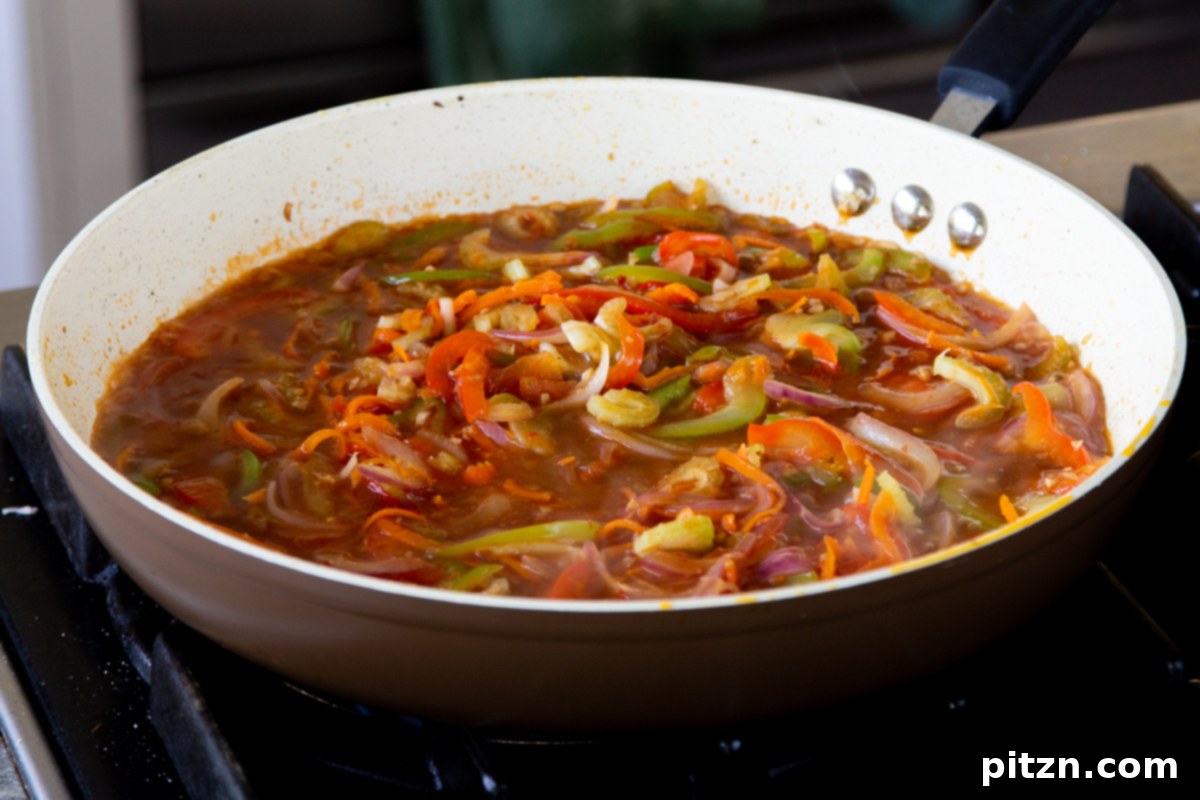
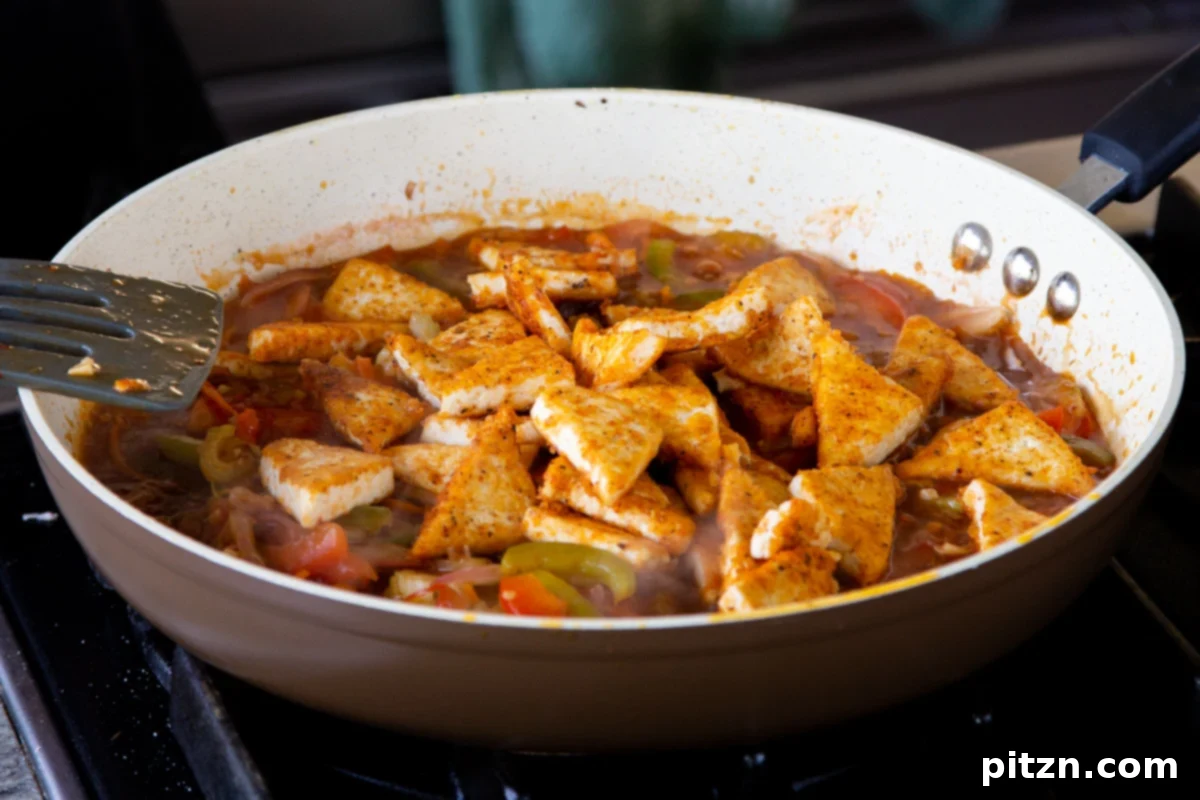
Step 9: Combine Tofu and Serve. Once the sauce is thick and glossy, add the crisped tofu back into the skillet. Gently toss everything together, ensuring all the tofu and vegetables are thoroughly coated in the delectable Schezwan sauce. Immediately switch off the heat; the sauce will continue to thicken slightly as it rests. Allow the mixture to sit for a few minutes for the flavors to fully meld.
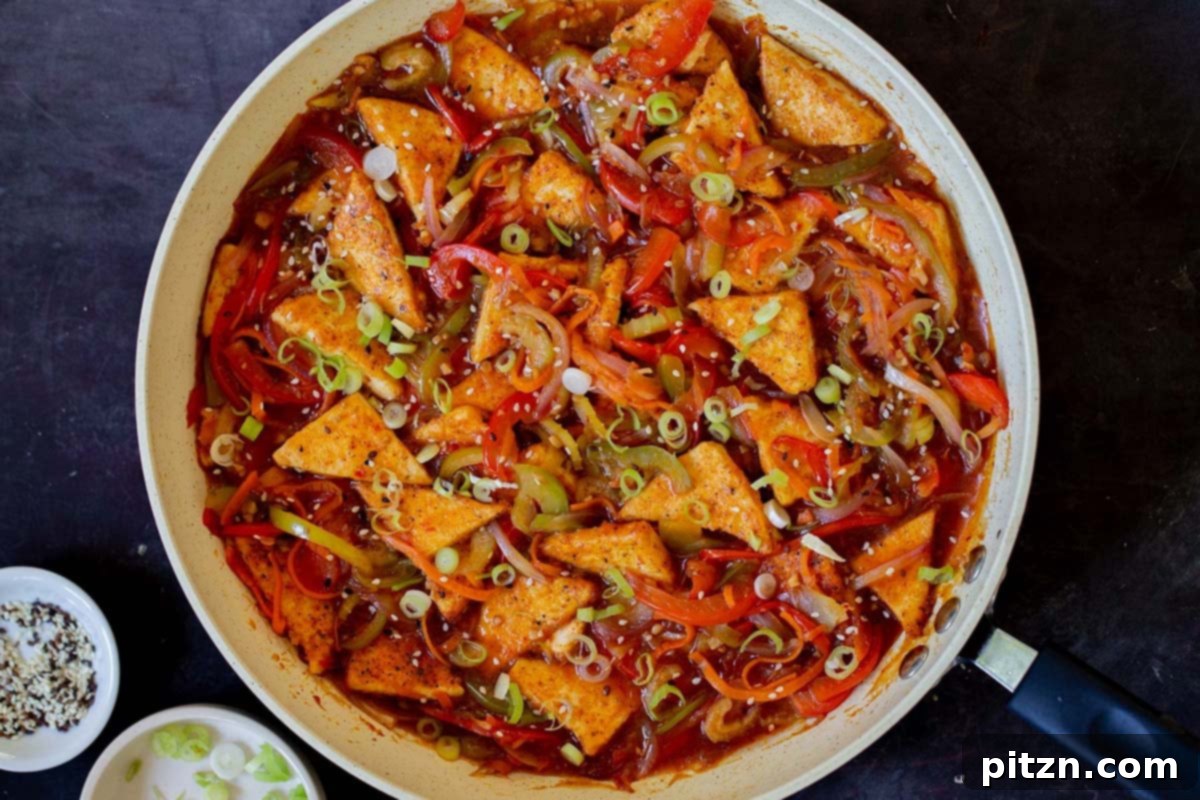
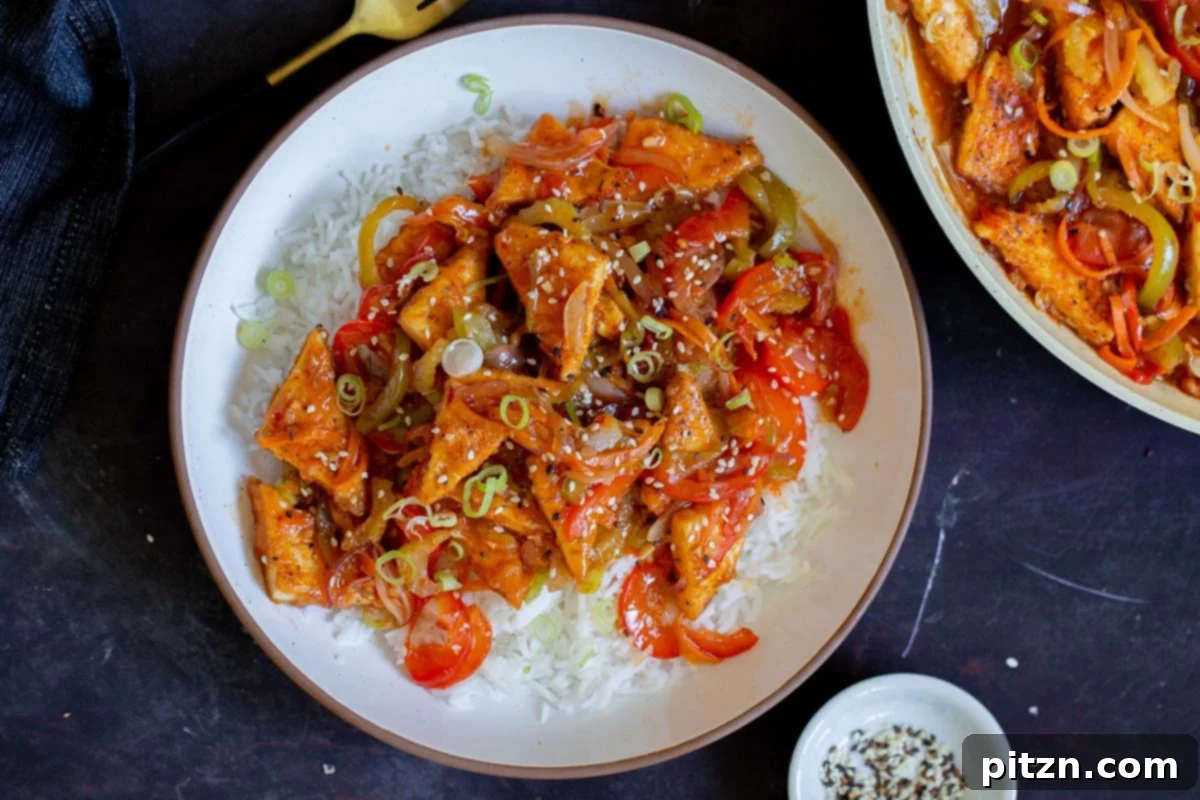
Step 10: Garnish and Enjoy! Garnish your delicious Schezwan Tofu generously with freshly chopped green onions, a sprinkle of sesame seeds, and, if you desire extra heat, a few pepper flakes. Serve immediately over a bed of warm rice, your favorite noodles, or healthy quinoa for a complete and satisfying meal.
Meal Prep and Storage Tips
This Schezwan Tofu recipe is not only quick to make but also great for meal prepping. Here’s how you can prepare it in advance and store leftovers:
- Advance Prep:
- Tofu: Press and slice your tofu up to 2-3 days in advance. Store it in an airtight container in the refrigerator. You can even coat it with spices and cornstarch ahead of time, then store it, covered, in the fridge.
- Vegetables: Chop all your onions, celery, and bell peppers a day or two before. Store them in separate airtight containers in the refrigerator.
- Sauce: Mix all the Schezwan sauce ingredients (except the cornstarch slurry) a few days in advance. Store it in a sealed jar in the fridge. This allows the flavors to meld beautifully.
- Storage:
- Refrigeration: Leftover Schezwan Tofu can be stored in an airtight container in the refrigerator for up to 3-4 days.
- Freezing: While technically possible, freezing cooked tofu can change its texture, making it chewier. The vegetables might also lose some of their crispness. If you choose to freeze, store it in a freezer-safe container for up to 1-2 months.
- Reheating:
- Stovetop: For best results, reheat the stir-fry in a skillet over medium heat, adding a tablespoon of water or vegetable broth if the sauce seems too thick. Stir occasionally until heated through.
- Microwave: You can also reheat individual portions in the microwave, though the tofu won’t be as crispy. Heat in 30-second intervals, stirring in between, until warm.
Customization and Variations to Make it Your Own
One of the best things about stir-fries is how easily they can be customized! Here are some ideas to adapt this Schezwan Tofu recipe to your taste and what you have on hand:
- Add More Vegetables: This recipe is a fantastic canvas for various vegetables. Consider adding:
- Broccoli florets or baby corn for extra crunch.
- Sliced carrots or bamboo shoots for a different texture.
- Mushrooms (shiitake or cremini) for an earthy flavor.
- Snap peas or green beans for freshness.
Add these along with the bell peppers and onions, adjusting cooking times as needed.
- Spice Level Adjustment:
- Milder: Reduce the amount of Kashmiri chili powder on the tofu or use paprika. Use a milder Schezwan sauce or add less.
- Spicier: Add more Sambal oelek or your favorite chili garlic paste to the sauce. Include finely chopped fresh green chilies (like serrano or Thai chilies) with the garlic. A pinch of red pepper flakes as a garnish adds a burst of heat.
- Protein Swaps:
- Chickpeas: For a soy-free option, use drained and thoroughly dried chickpeas. Roast or pan-fry them until crispy before adding to the sauce.
- Seitan: Cut seitan into cubes and pan-fry until golden before incorporating.
- Other Vegan “Meats”: Many vegan chicken or beef alternatives would work well in this dish.
- Nutty Flavor: For those who aren’t nut-free, a tablespoon of peanut butter or cashew butter can be stirred into the sauce for a creamy, nutty depth.
- Different Vinegars: While rice vinegar is recommended, you can experiment with apple cider vinegar for a slightly different tang, or even a splash of Chinese black vinegar for a more complex, aged flavor.
- Smoky Flavor: A dash of liquid smoke or smoked paprika can add a subtle smoky dimension to the dish.
Frequently Asked Questions About Schezwan Tofu
Is this recipe allergy-friendly?
Yes, this recipe can be easily adapted to be allergy-friendly. It is naturally nut-free. For a gluten-free meal, ensure you use tamari instead of regular soy sauce, and always check that your chosen store-bought Schezwan sauce is certified gluten-free.
To make this dish completely soy-free, you’ll need to substitute the tofu with alternatives such as homemade chickpea tofu, seitan, or pan-fried chickpeas. Additionally, omit the soy sauce and make sure to use a Schezwan sauce that is explicitly labeled soy-free. You may need to use a bit more of the soy-free Schezwan sauce to maintain the robust flavor profile.
What can I serve with Schezwan tofu?
Schezwan Tofu is incredibly versatile and pairs wonderfully with a variety of sides. Classically, it’s served over steamed white or brown rice to soak up all that delicious sauce. Other excellent pairings include traditional Indian naan or flatbread. For an authentic Indo-Chinese experience, try it with Vegetable Hakka Noodles or a vibrant Schezwan Fried Rice. For a lighter meal, quinoa or cauliflower rice also make great companions.
Can I use frozen tofu?
Yes, you can use frozen tofu! Freezing and then thawing tofu gives it a chewier, more porous texture that can absorb flavors even better. Simply freeze your block of firm or extra-firm tofu overnight. Thaw it completely, then press out any excess water before proceeding with the recipe steps for seasoning and crisping. This can be a great way to enhance the “meatiness” of the tofu.
Is Schezwan sauce very spicy?
The spice level of Schezwan sauce can vary significantly depending on the brand or homemade recipe. Indo-Chinese Schezwan tends to have a noticeable kick, often a medium to hot spice level, with a distinctive garlic and chili flavor. This recipe is designed for a pleasant medium spice, but you can easily adjust it to your preference. If you prefer it milder, use less chili powder on the tofu and opt for a milder Schezwan sauce, or simply use less of it. For more heat, add extra chili sauce like Sambal oelek or fresh chopped chilies.