
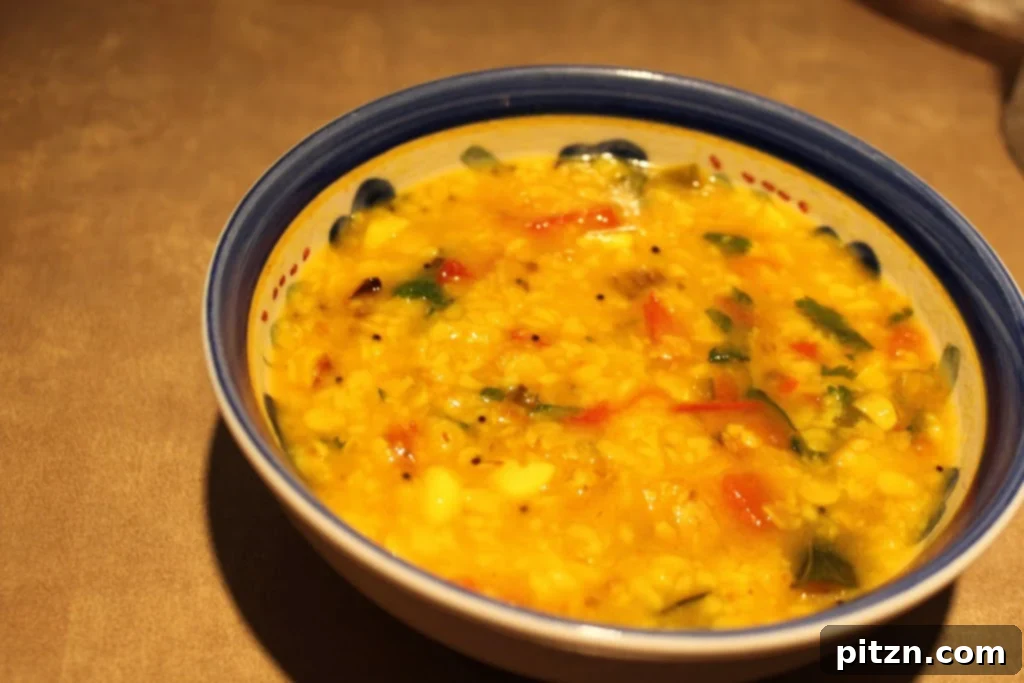
Dive into the comforting and rich flavors of this easy Yellow Mung and Toor Daal with Tomato, a staple in Indian cuisine. This recipe is designed for convenience, utilizing a pressure cooker to bring a delicious, wholesome meal to your table swiftly. Perfectly vegan and gluten-free, it’s an ideal choice for anyone seeking a healthy and satisfying dish. Jump to Recipe
Yellow Mung and Toor Daal with Tomato: An Authentic Indian Lentil Delight
Daals, the quintessential lentil soups or curries, hold an indispensable place in Indian meals. They are the heart of many households, prepared in countless variations daily. From simple, single-lentil preparations to complex blends of various legumes, daals offer a spectrum of flavors and textures. This particular recipe combines the mild, creamy texture of yellow mung daal with the slightly firmer, nutty flavor of toor daal, elevated by the bright tang of tomatoes and a fragrant tempering of spices.
Our featured Yellow Mung and Toor Daal recipe is a family favorite, renowned for its ease of preparation and deeply satisfying taste. While daals can be cooked on the stovetop, the pressure cooker method, as detailed here, significantly reduces cooking time while achieving perfectly tender lentils. This makes it an excellent choice for busy weeknights without compromising on authentic flavor.
Yellow Mung and Toor with Tomato
Print Recipe
Yellow Mung and Toor Daal with Tomato is a wonderfully flavor-packed and incredibly easy daal recipe, traditionally made in a pressure cooker. This delightful dish is not only delicious but also naturally vegan and gluten-free, making it suitable for a wide range of dietary preferences. It’s a perfect hearty meal or a comforting side dish for any occasion.
Ingredients
- 1/2 cup split yellow mung Daal, (skinned and split green Mung)
- 1/2 cup split Toor Daal, (dark shiny split pigeon pea)
- 2 teaspoons canola oil
- 1/2 teaspoon mustard seeds
- 1/4 teaspoon cumin seeds
- 1/4 teaspoon coriander seeds
- 5 curry leaves
- pinch of asofetida
- 1/4 teaspoon turmeric
- 1/2 inch ginger finely chopped
- 3 cloves of garlic finely chopped
- 1 green chili finely chopped
- 1 tomato chopped
- salt to taste
- cilantro leaves for garnish
Instructions
- Soak both daals together for approximately 2 hours. This step helps in quicker and more even cooking. After soaking, drain the water thoroughly, wash the lentils under running water, and set them aside.
- In a pressure cooker, combine the soaked daals with 2 cups of fresh water. Add a few drops of oil and the turmeric powder. Cook on medium heat until the pressure cooker releases one whistle. Once the whistle sounds, remove the cooker from the heat and allow the pressure to release naturally, which typically takes about 10 minutes. This ensures the lentils are perfectly tender.
- While the daals are cooking, prepare the tempering (tadka). Heat the remaining canola oil in a large pan or a small skillet (for a traditional tadka pan) over medium heat.
- Add the mustard seeds to the hot oil. Wait patiently until they begin to splutter and pop, indicating they are cooked through and releasing their flavor.
- Next, add the cumin seeds and coriander seeds to the pan. Stir continuously for a few seconds until they become fragrant, being careful not to burn them.
- Introduce the asafoetida (hing) and curry leaves. Be cautious as the curry leaves may cause the oil to splutter. Fry them for a few seconds until aromatic.
- After a few seconds, add the finely chopped ginger, garlic, and green chili to the pan. Mix well and sauté the mixture.
- Continue cooking the ginger-garlic-chili mixture until the garlic turns a light golden brown, usually about 3-4 minutes. This step is crucial for developing a rich base flavor.
- Add the chopped tomatoes to the tempering. Cook the mixture, stirring occasionally, until the tomatoes soften completely and lose their shape, blending into the spices. This typically takes 4-5 minutes.
- Carefully add the cooked daals from the pressure cooker to the prepared tempering mixture in the pan. Mix everything thoroughly, ensuring the spices are well incorporated with the lentils.
- Season with salt to taste. Stir well and bring the daal to a gentle boil, allowing it to simmer for another 6-7 minutes. This allows the flavors to meld beautifully and the daal to achieve a perfect consistency.
- Garnish generously with fresh, chopped cilantro leaves just before serving. Serve hot with traditional Indian breads like Chapatis, Roti, Naan, or a fragrant Basmati Rice for a complete and satisfying meal!
Notes
- The total time mentioned above does not include the essential 2 hours of soaking time for the lentils.
- Nutritional values provided are based on a single serving and are approximate.
Nutrition Information (Approximate per serving)
Carbohydrates: 2g
Fat: 2g
Sodium: 38mg
Potassium: 9mg
Vitamin A: 45 IU
Vitamin C: 27.1mg
Calcium: 9mg
Iron: 0.1mg
Nutrition information is automatically calculated, so should only be used as an approximation. It can vary based on specific ingredients and preparation methods.
Understanding Daals: A Staple of Indian Cuisine
Daal is not just a dish; it’s a cornerstone of Indian cooking, deeply ingrained in the culinary fabric of the subcontinent. Every region, and indeed almost every household, has its unique daal recipes, reflecting diverse local ingredients and cooking traditions. The beauty of daal lies in its versatility, nutritional profile, and comforting nature. Lentils, the primary component, are an excellent source of plant-based protein, dietary fiber, and essential minerals like iron, folate, and magnesium, making them incredibly beneficial for overall health. They are particularly vital in vegetarian and vegan diets, offering a complete and affordable protein source.
This Yellow Mung and Toor Daal with Tomato recipe brings together two popular types of lentils. Yellow Mung Daal, also known as Moong Daal, is made from skinned and split green gram. It cooks relatively quickly and has a creamy, mild flavor. Toor Daal, or Arhar Daal (split pigeon peas), has a slightly firmer texture and a distinct, nutty taste. The combination of these two lentils creates a delightful balance of textures and flavors, resulting in a rich and satisfying daal that is both nourishing and delicious.
The Powerhouse Lentils: Mung and Toor
Choosing the right lentils is crucial for a great daal. Yellow Mung daal is quick-cooking and easily digestible, often recommended for light meals or for those with sensitive stomachs. Its creamy consistency adds a luxurious feel to the final dish. Toor daal, on the other hand, contributes a pleasant chewiness and a subtle, earthy flavor. When cooked together, they create a harmonious blend that is greater than the sum of its parts. Soaking the daals, as instructed in this recipe, is a simple but effective step that significantly reduces cooking time and can aid in digestibility.
Beyond their culinary merits, mung and toor lentils boast impressive health benefits. They are naturally low in fat and high in protein, making them excellent for muscle repair and satiety. Their high fiber content promotes digestive health, helps regulate blood sugar levels, and can contribute to a feeling of fullness, aiding in weight management. Furthermore, these lentils are rich in micronutrients, providing a natural boost of vitamins and minerals to your diet.
Mastering the Tempering (Tadka): The Soul of Indian Daal
The tempering, or “tadka,” is what truly elevates an Indian daal from a simple lentil soup to a complex symphony of flavors. It involves heating oil or ghee (clarified butter) and frying whole or ground spices until they release their aromatic oils. In this recipe, we use canola oil, keeping it vegan, but ghee can be substituted for an even richer flavor. The combination of mustard seeds, cumin seeds, coriander seeds, asafoetida (hing), and curry leaves creates a fragrant base that infuses the daal with its signature Indian taste.
Each spice plays a vital role: mustard seeds offer a pungent warmth, cumin seeds lend an earthy depth, and coriander seeds contribute a citrusy, floral note. Asafoetida, though used in a tiny pinch, adds a unique savory, umami-like flavor and helps with digestion, particularly with legumes. Curry leaves provide a distinctive, slightly nutty and peppery aroma that is unmistakable in South Indian and many North Indian dishes. The careful frying of these spices until they splutter and become fragrant is an art form, ensuring maximum flavor extraction and integration into the daal.
Tips for the Perfect Pressure Cooker Daal
Using a pressure cooker is a fantastic way to prepare daal efficiently. Here are a few tips to ensure your Yellow Mung and Toor Daal turns out perfectly every time:
- Soaking is Key: Don’t skip the 2-hour soak. It helps the lentils cook faster and more uniformly, resulting in a creamier texture.
- Oil & Turmeric in Cooker: Adding a few drops of oil and turmeric to the lentils in the pressure cooker helps prevent frothing and ensures the lentils don’t stick to the bottom. Turmeric also gives the daal its beautiful golden color and adds a mild, earthy flavor, along with its anti-inflammatory properties.
- One Whistle Rule: For this combination of mung and toor daal, one whistle on medium heat is usually sufficient to cook them until tender but not mushy. However, cooking times can vary depending on your pressure cooker and altitude, so you might need to adjust slightly based on experience.
- Natural Pressure Release: Always allow the pressure to release naturally. This additional time allows the lentils to continue cooking gently and absorb flavors, resulting in a better texture.
- Adjusting Consistency: If your daal is too thick after cooking, you can add a little hot water to achieve your desired consistency while it simmers with the tempering. If it’s too thin, let it simmer uncovered for a bit longer to reduce.
Stovetop Method: A Gentle Approach
While the pressure cooker offers speed, this Yellow Mung and Toor Daal can also be made on the stovetop, albeit with a longer cooking time. If you prefer this method, follow these adaptations:
- After soaking and washing the daals, combine them in a large pot with 3-4 cups of water (more than the pressure cooker method, as water evaporates during stovetop cooking). Add a few drops of oil and turmeric.
- Bring the mixture to a boil, then reduce the heat to low, cover the pot, and simmer for 40-60 minutes, or until the lentils are completely tender. Stir occasionally to prevent sticking and add more hot water if the daal becomes too thick.
- Once the daals are cooked, follow steps 3-11 for preparing the tempering and combining it with the cooked lentils.
The stovetop method allows for more control over the texture and can be a meditative cooking experience, gently coaxing the flavors out of the lentils.
Serving Suggestions & Variations
This Yellow Mung and Toor Daal with Tomato is incredibly versatile and pairs wonderfully with a variety of accompaniments. It’s fantastic served with:
- Freshly made Chapatis or Roti: The traditional way to enjoy daal, perfect for scooping up every last drop.
- Fluffy Basmati Rice: A classic combination that is comforting and satisfying. Consider a side of plain rice or jeera (cumin) rice.
- Naan or Paratha: For a richer meal, a warm, buttery naan or layered paratha complements the daal beautifully.
- Pickle and Yogurt: A side of spicy Indian pickle (achar) and cooling plain yogurt (dahi) cuts through the richness and adds delightful contrast.
- Simple Salad: A fresh cucumber and onion salad provides a refreshing crunch.
Want to customize your daal? Here are some variations:
- Add Vegetables: Incorporate finely chopped spinach, bottle gourd (lauki), or zucchini along with the tomatoes for added nutrients and texture.
- Spice It Up: For extra heat, add an additional green chili or a pinch of red chili powder along with the turmeric.
- Smoky Flavor: For a traditional smoky taste, perform “dhoongar” by placing a small, hot charcoal in a small bowl within the daal, drizzling a few drops of oil over it, and covering the pot for a few minutes.
- Garnish Galore: Experiment with garnishes beyond cilantro. A squeeze of fresh lemon juice just before serving brightens the flavors. A drizzle of vegan butter or a sprinkle of garam masala can also add a nice touch.
Health Benefits of This Flavorful Daal
This Yellow Mung and Toor Daal with Tomato is not only a feast for the taste buds but also a powerhouse of nutrition. As a vegan and gluten-free dish, it caters to specific dietary needs while offering significant health advantages. Lentils are renowned for their high protein content, making them an excellent plant-based alternative to meat. This is crucial for muscle repair, growth, and overall body function. They are also packed with dietary fiber, which is vital for digestive health, promoting regularity, and preventing constipation.
The fiber in lentils also plays a role in managing blood sugar levels, making this daal a good choice for individuals looking to maintain stable energy throughout the day. Furthermore, lentils are rich in essential micronutrients, including iron, which is important for oxygen transport in the blood, and folate, crucial for cell growth and function. The addition of turmeric brings anti-inflammatory and antioxidant benefits, while tomatoes contribute Vitamin C and antioxidants. This makes the daal a holistic meal that supports overall well-being and provides sustained energy.
Embrace the warmth and nutrition of this easy-to-make Yellow Mung and Toor Daal with Tomato. It’s a comforting, flavorful, and incredibly healthy dish that embodies the rich culinary heritage of India. Whether you’re a seasoned chef or a beginner in Indian cooking, this recipe promises a delightful experience and a truly satisfying meal.
Did you make this recipe? Rate and comment below!