
Mastering Vegan Indian Cuisine: Essential Tips from Vegan Richa’s Indian Kitchen
Embark on a culinary journey into the vibrant world of vegan Indian cooking with Vegan Richa’s Indian Kitchen cookbook. It’s been an incredible journey since the book’s release, and the outpouring of love and enthusiasm from home cooks like you has been truly heartwarming. We are incredibly grateful for every delicious creation you’ve shared. Your stunning food pictures fuel our passion and inspire countless others to explore the rich, diverse flavors of plant-based Indian food. This article delves into invaluable insider tips directly from the cookbook, designed to elevate your Indian cooking skills and ensure every dish you prepare is a resounding success.
Book Availability and Updates
For our readers in the UK and Europe, there was an initial delay in the listed release date on some websites due to the need for a metric conversion chart. While this chart will be incorporated into the second printing, we’re pleased to confirm that books have been shipping and are readily available for order since the original release date of May 19th. You can find copies on Amazon.co.uk and Bookdepository.com. For other international purchase links, please refer to our dedicated book page. If you discover the book elsewhere, we’d love to hear about it – please share the link in the comments! Don’t forget that international and Kindle orders are also eligible for our exclusive Free Bonus Recipe Bundle, a special offer available until the end of June. To claim yours, simply email us at [email protected].
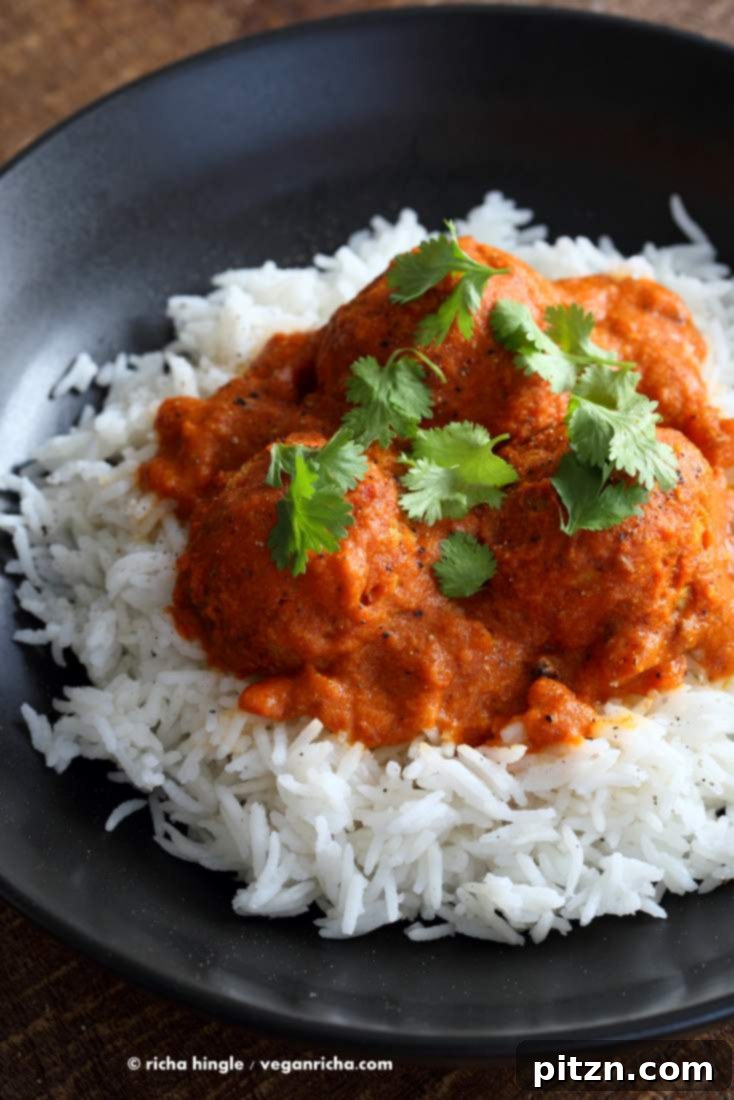
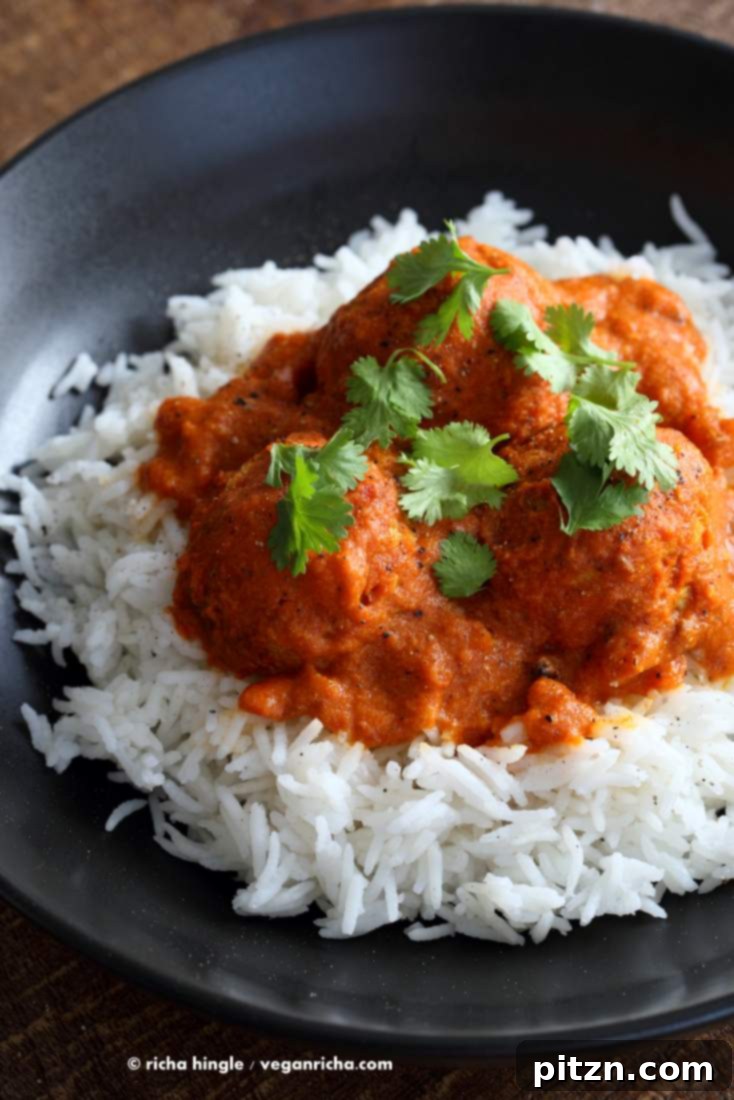
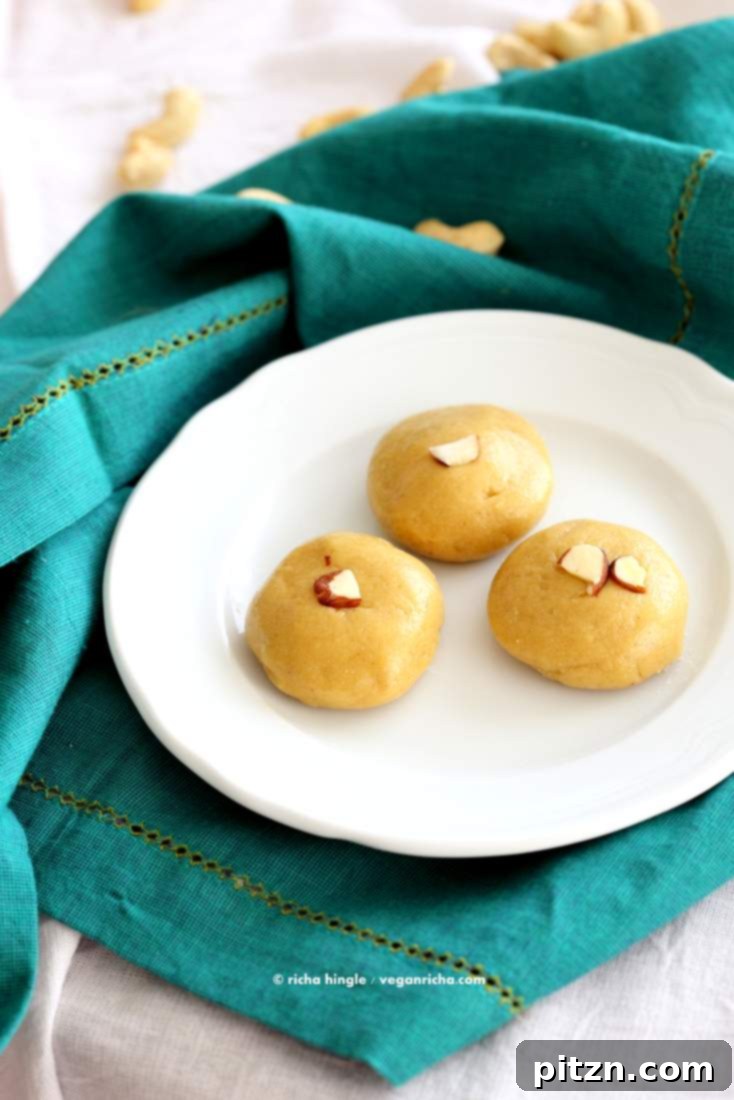
Above, feast your eyes on the delectable Cabbage Kofta in creamy tomato sauce (Patta Gobi ke Kofte), a dish that perfectly embodies comfort and flavor. Below, admire the exquisite Saffron Cream Fudge (Malai Peda), a dairy-free sweet treat that melts in your mouth.
These dishes are just a glimpse of the culinary wonders awaiting you in Vegan Richa’s Indian Kitchen. Now, let’s explore some essential tips for cooking Indian food that will transform your kitchen experience.
Essential Tips for Mastering Vegan Indian Cooking
1. Sourcing Spices, Herbs, and Pantry Staples
Building an authentic Indian pantry is the first step towards creating truly remarkable dishes. Many essential Indian spices and herbs, such as turmeric, cumin, coriander, and garam masala, are increasingly available in conventional grocery stores. However, for a wider selection and specialty ingredients, venturing into a local Indian grocery store or exploring online retailers is highly recommended. These stores often carry a broader range of whole spices, unique lentil varieties (dals), and specific flours that are integral to Indian cuisine. Our Indian Pantry page offers a comprehensive guide to sourcing ingredients, including a list of common items and where to find them.
Similarly, while many common dals, lentils, pulses, and beans can be found in regular supermarkets, Indian stores offer an unparalleled variety. In the cookbook, we consistently provide alternate dal or bean options whenever possible, making recipes accessible regardless of your local store’s inventory. When shopping, you might encounter ingredients labeled with English names, both English and Hindi names, or solely Hindi/Indian names. To navigate this with ease, we highly recommend taking a picture of the comprehensive **Grocery List on Page 12** of the book. This invaluable resource features both English and Hindi names, along with variations, ensuring you can confidently identify and purchase the correct spice, herb, or dal for your recipes.
2. Adjusting Flavors: From Spicy to Bland
Achieving the perfect balance of flavors is key to delicious Indian cooking. Whether you’re following our recipes or any other Indian culinary guide, understanding how to adjust heat and richness is crucial.
Customizing the Heat Level
To **adjust the heat**, simply reduce or increase hot spices like cayenne, pure chili powder, black pepper, pepper flakes, or hot paprika according to your personal preference. Keep in mind that the age and brand of your spices can significantly impact their potency. Freshly ground spices are generally more potent than older ones. Hot green chilies, a staple in many Indian dishes, can also vary widely in heat; some might be intensely spicy, while others are surprisingly mild. If green chilies are the primary source of heat in a recipe and you’re unsure of their potency, it’s always safer to start with less and adjust later by adding a pinch of cayenne or chili powder. Remember, you can always add more heat, but it’s much harder to reduce it!
Addressing Blandness in Indian Dishes
Authentic Indian food is rarely bland, unless specifically designed to be so (like everyday veggie sides or khichdi). If your flavorful Indian recipes are tasting **bland**, one of these issues might be at play:
- Insufficient Salt: Salt is a flavor enhancer that works wonders in bringing out the complex layers of spices and ingredients in a dish. When a dish is correctly salted to personal taste, the flavors truly sing. Don’t be afraid to taste and adjust the salt content throughout the cooking process. Traditional Indian food tends to be saltier than many Western palates are accustomed to, and this saltiness is essential for harmonizing the other spices.
- Old Spices: Spices, like any natural product, lose their potency over time. Old, stale spices will have a significantly diminished flavor payoff, requiring you to use much larger quantities to achieve any impact. For truly vibrant dishes, invest in fresh, high-quality spices. Consider buying whole spices and grinding them yourself for maximum aroma and flavor.
- Improper Roasting: Many Indian recipes call for whole spices to be roasted in oil or dry-roasted. This process is crucial for releasing their essential oils and infusing the dish with deep, aromatic flavors. For example, oil-roasted cumin seeds offer a profoundly different flavor profile compared to unroasted ones. If spices aren’t given enough heat or time during the roasting stage, they won’t fully release their flavor. While they might infuse the dish better after sitting for a day, the initial flavor will be underwhelming.
- Expectation Mismatch: It’s important to remember that not all Indian food is characterized by layers upon layers of complex spices. Many everyday Indian dishes are simply spiced with one or two key ingredients, designed to highlight the natural flavors and textures of local produce and beans. For instance, a simple Mung Dal tadka, with just mustard seeds, garlic, and chili, is blissfully flavorful in its simplicity.
3. Understanding “Curry”: Powder, Leaves, and Dish Definition
The term “curry” in Indian cuisine can often be a source of confusion for newcomers, as it means different things in different contexts.
Curry Powder vs. Garam Masala
Let’s clarify a common misconception: **curry powder is not garam masala** and is almost never used in traditional Indian cooking. Curry powder is typically a Western or British spice blend, created to approximate the complex masala spice blends found in India. It often contains turmeric and other additions not typically present in garam masala, and generally offers a less vibrant flavor profile. For authentic Indian flavors, always use **garam masala** or the specific individual spices mentioned in a recipe. We prefer to buy or make whole spice garam masala, as whole spices retain their freshness and potency for up to a year. Grind a small amount, perhaps a 1/4 to 1/2 cup, and store it for use over a month or so to ensure maximum freshness.
Crucially, curry powder has absolutely no relation to **curry leaves**.
The Irreplaceable Flavor of Curry Leaves (Kadi Patta)
Curry leaves, known as Kadi patta, kadipatta, karivepallai, or sweet neem leaves, are aromatic leaves from a subtropical tree native to India. Highly prized as a seasoning, particularly in Southern and West-coast Indian and Sri Lankan cooking, they are typically fried alongside chopped onions in the initial stages of preparation, releasing their distinctive, slightly nutty, citrusy, and pungent aroma. In their fresh form, curry leaves have a short shelf life and don’t keep well in the refrigerator. However, you can freeze fresh leaves loosely packed in an airtight container for several months, preserving much of their flavor. Dried curry leaves are also available, though their aroma is largely inferior to fresh or frozen ones. You can add them to food whole or chopped, and they are generally eaten along with the dish, though some prefer to remove them. There is truly no good substitute for the unique flavor of curry leaves; their absence is deeply felt in dishes where they are traditionally used.
“Curry” as a Culinary Term
When the term “**curry**” is used for Indian dishes, it simply refers to a sauce or gravy. Therefore, dals can be accurately thought of as legume curries. “Curry” describes the consistency and character of a sauce, not a specific spice blend, flavor, or a single type of dish. Curries in India are incredibly diverse: they can be dry, thin, or thick; and boast a spectrum of colors including orange, yellow, red, brown, green, and cream. Often, the word “curry” is added to a dish’s name to help diners understand its saucy nature. For example, while “Balti Veggies,” “Chettinad Veggies,” “Chana Palak,” or “Madras Veggies” might sound intriguing, adding “curry” or “sauce” – as in “Veggies in Chettinad Sauce” – provides clearer expectations. If you don’t particularly enjoy one type of sauce or curry, fear not! The cookbook offers over a hundred different sauce variations, ensuring there’s a flavor profile to delight every palate.
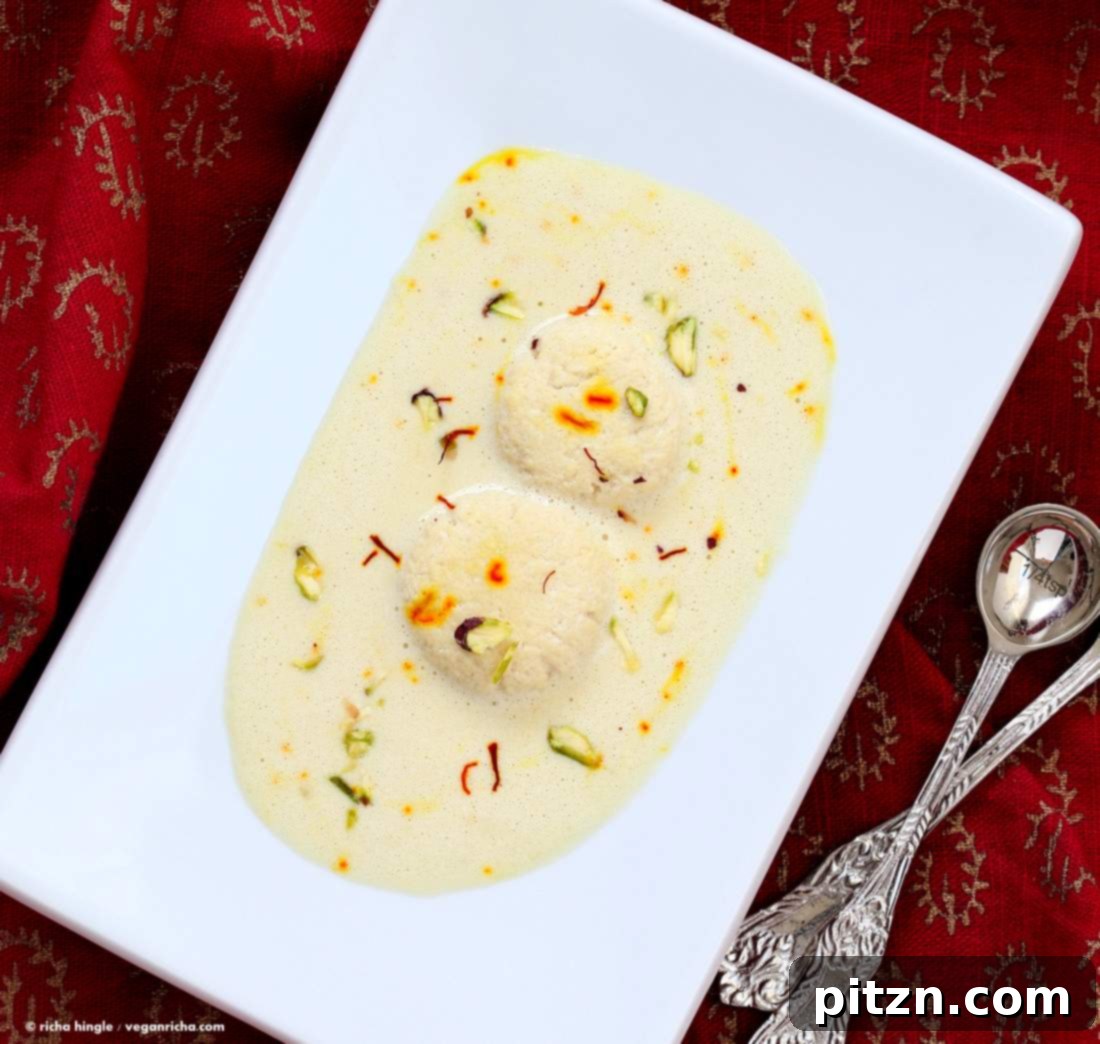
Below: Indulge in the delightful Rasmalai – spongy balls in saffron cream, a truly exquisite sweet found in the book!
4. Besan vs. Chickpea Flour: Understanding the Differences
The distinction between **besan and chickpea flour** can often be confusing, but understanding their nuances is beneficial for optimal results in Indian cooking.
Chickpea flour (garbanzo bean flour) is typically made by grinding up whole garbanzo beans, which are usually white garbanzo beans in the United States. Besan, also known as gram flour, is produced by grinding skinned brown chickpeas, often specifically chana dal (which are skinned and split brown chickpeas). Besan is generally more finely ground than chickpea flour, resulting in a slightly different texture and absorption rate.
In many recipes, chickpea flour and besan can be used interchangeably due to their similar flavors. However, they are not identical. The recipes in Vegan Richa’s Indian Kitchen specify which type of flour works best for each particular dish. Chickpea flour is often more readily available in regular grocery stores and online in the US compared to besan.
When substituting, keep in mind their differing water absorption properties: chickpea flour typically requires more water than besan to achieve a similar batter consistency. Therefore, if you are substituting besan with chickpea flour in a recipe, you will likely need to add more water than mentioned. Conversely, if you are substituting chickpea flour with besan, you will need to use less water (or more besan) to achieve the desired consistency and final result.
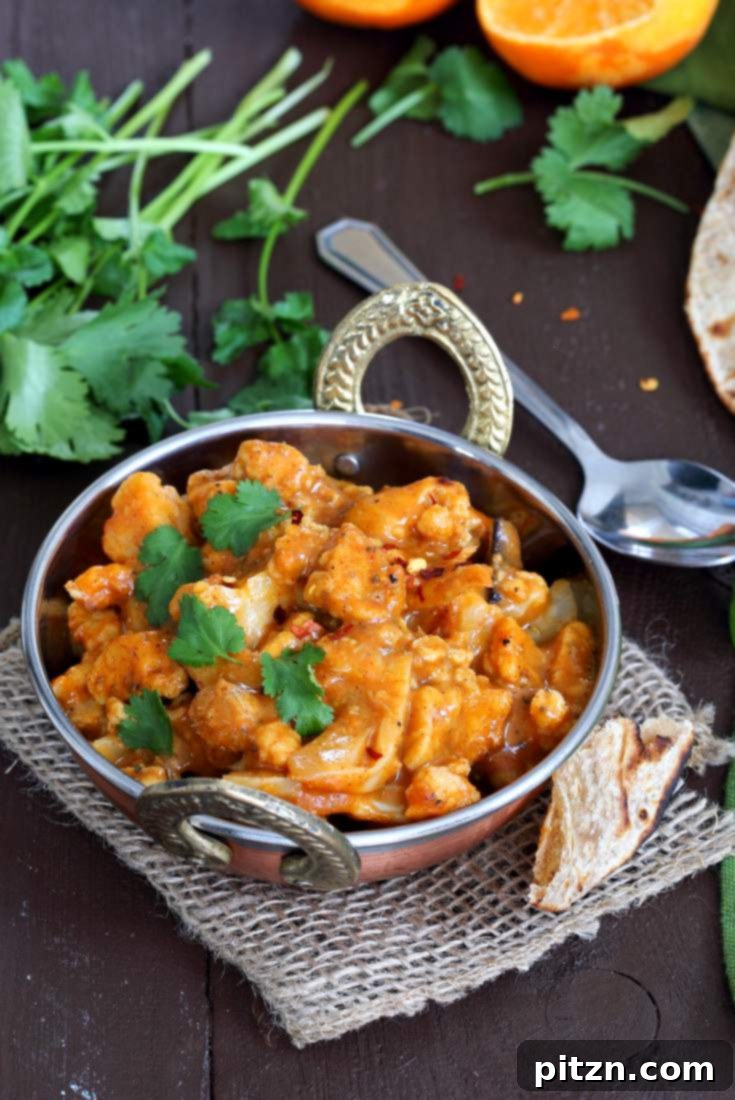
Pictured below is a vibrant Spicy Kashmiri Rogan Josh – a rich paprika yogurt sauce paired with tempeh and cauliflower, a testament to the versatility of vegan Indian cooking.
Asafetida (Hing): The Pungent Digestive Aid
Asafetida, or **hing**, is a fascinating spice crucial to many Indian dishes, particularly those involving beans and dals. While it has a famously pungent, almost fetid aroma in its raw form, this transforms into a mellow, savory flavor reminiscent of leeks and garlic once cooked. It’s often added to tempering (tadka) for dals and bean dishes, not only for its unique taste but also for its traditional role as a digestive aid, helping to reduce flatulence commonly associated with legumes. Always store asafetida in an airtight container to prevent its strong odor from permeating other ingredients in your pantry.
A crucial point for those with dietary restrictions: while pure asafetida itself is naturally gluten-free, it is almost always sold in powdered form blended with a starch to prevent clumping and ease use. This starch is typically wheat flour. Therefore, most commercially available ground asafetida is generally not gluten-free. Always meticulously check the label for ingredients. Some brands offer it ground with rice flour, corn starch, or other gluten-free alternatives. For absolute certainty regarding gluten contamination, consider purchasing whole asafetida crystals and having them ground at a specialized spice shop with your choice of gluten-free starch.
Perfecting Indian Dals: Texture and Consistency
The preferred consistency for **Indian dals** often differs from Western cooking traditions. Generally, dals are cooked until they are quite soft, approaching a porridge-like texture, or until the whole beans can be easily mushed into the sauce. This “overcooked” consistency, by some standards, is intentional, as it contributes to the creamy, comforting mouthfeel that is characteristic of many traditional dal preparations. The recipes in Vegan Richa’s Indian Kitchen provide guidelines, but also encourage you to adjust cooking times to achieve your preferred consistency for lentils, split peas, chickpeas, and other beans. It’s a good practice to check them earlier towards the end of the cooking time and remove them from the heat once they reach your desired tenderness. For a visual guide to the most common dals and beans, complete with their English and Hindi names, please refer to our detailed page here.
Tomato Selection for Authentic Flavors
The choice of tomatoes can significantly impact the flavor profile of your Indian dishes. We generally prefer using fresh, just-ripe Roma or similar varieties. These tomatoes are firm, offer a balanced sweetness, and possess just the right amount of tartness, making them ideal for traditional Indian recipes. We rarely use canned or crushed tomatoes because they tend to be sweeter and can introduce an overwhelming tomato flavor that masks the delicate, complex interplay of spices and herbs. If you’re short on time and must use canned tomatoes, a good compromise is to use a mix of half fresh and half canned, and then adjust the spice levels to taste later if needed, ensuring the spices still shine through.
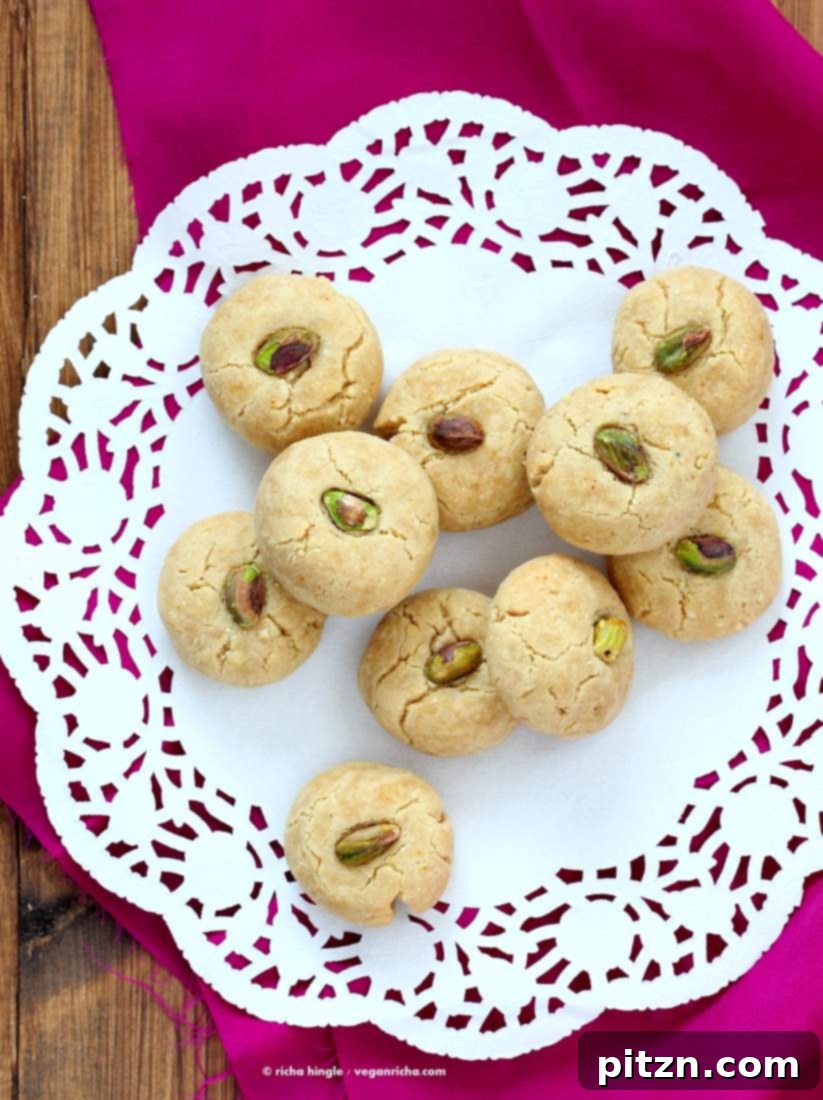
Below: A delightful image of Pistachio Cardamom Cookies – Nan Khatai, a classic Indian shortbread cookie.
Fenugreek: A Bitter-Sweet Essential
Fenugreek, whether in seed form or as dried or fresh leaves (kasuri methi), imparts a unique bitter flavor that is absolutely essential in certain Indian dishes. This bitterness is not harsh but rather a complex, underlying note that balances and deepens the overall flavor profile. Ground fenugreek seeds can serve as a substitute for dried leaves, with a recommended ratio of 1/4 teaspoon of ground fenugreek seeds for every 1 teaspoon of dried leaves. However, the flavors are not identical, and dried leaves offer a more nuanced aroma. It’s worth trying to find kasuri methi for recipes that specifically call for it, as it adds a distinctive depth.
The Importance of Dedicated Skillets
Skillets play a surprisingly critical role in Indian cooking, especially for flatbreads and crepes. It’s highly recommended to have a **separate nonstick or cast iron skillet dedicated** solely to making dishes like crepes (dosas), flatbreads (rotis, naans), and pancakes. Using these specialized skillets for other cooking tasks that involve stirring ingredients or cooking with juices can alter the skillet’s surface properties. This often leads to delicate crepes, such as dosa or chickpea flour chilla, sticking to the pan, creating a frustrating mess. To prevent this, maintaining distinct skillets – perhaps one for pancakes, omelets, and crepes, and another for rotis, naans, and other flatbreads – is a game-changer. In fact, many experienced Indian cooks even have a dedicated skillet exclusively for dosa crepes to ensure perfect, non-stick results every time.
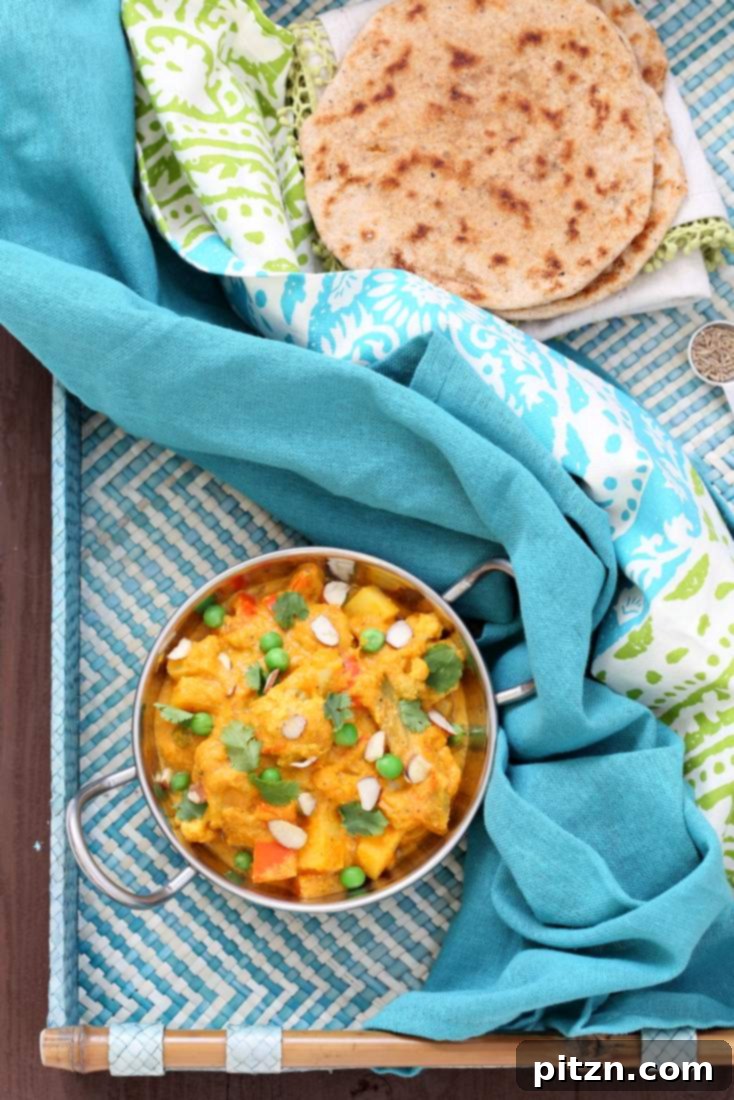
Below: Vegetables in a luxurious Royal Sauce – Navratan Korma. This creamy, rich sauce has a magical way of encouraging even the pickiest eaters to finish their veggies and ask for more! Yes, the bay leaf gets blended right into the sauce, adding to its complex flavor; bay leaves are also often a component of ground garam masala.
Mastering Taste Adjustment: A Personal Journey
Taste is inherently personal, and what one person finds perfectly spiced, another might find too mild or too intense. Throughout the rigorous testing of Vegan Richa’s Indian Kitchen, our recipes have been fine-tuned to achieve a balanced flavor profile (for spices), appropriate heat (from cayenne, peppers), and correct saltiness for a wide range of palates. However, all these elements are ultimately adjustable to your individual preference. If you are ever unsure about the quantity of spices, heat, or salt, it’s always best to start with a lower amount than specified. You can then taste the dish towards the end of the cooking process and confidently add more until it perfectly suits your palate. Conversely, if you find a dish tastes a bit bland, don’t hesitate to incorporate more salt, additional spices, or a touch more heat. More often than not, a little extra salt and perhaps some additional cayenne or red chili powder will work wonders. As mentioned, traditional Indian food is generally characterized by a noticeable saltiness, which is crucial because salt acts as the foundational ingredient, bringing all the other spices and flavors into harmonious balance.
Your Feedback Matters!
If you’ve cooked from Vegan Richa’s Indian Kitchen and fallen in love with its recipes, we would be incredibly grateful if you could take a moment to leave a review on Amazon.com. Your kind words and positive feedback are invaluable and help us reach more aspiring vegan Indian cooks. A huge thank you to everyone who has already shared their wonderful reviews – your support means the world to us! <3
Errata and Troubleshooting Guide
We strive for perfection, but sometimes small errors can slip through. Please refer to the following errata and troubleshooting tips for your copy of the book:
- Always use a very ripe avocado. Mash and whisk the avocado thoroughly until it becomes a very smooth, creamy mixture, free of lumps.
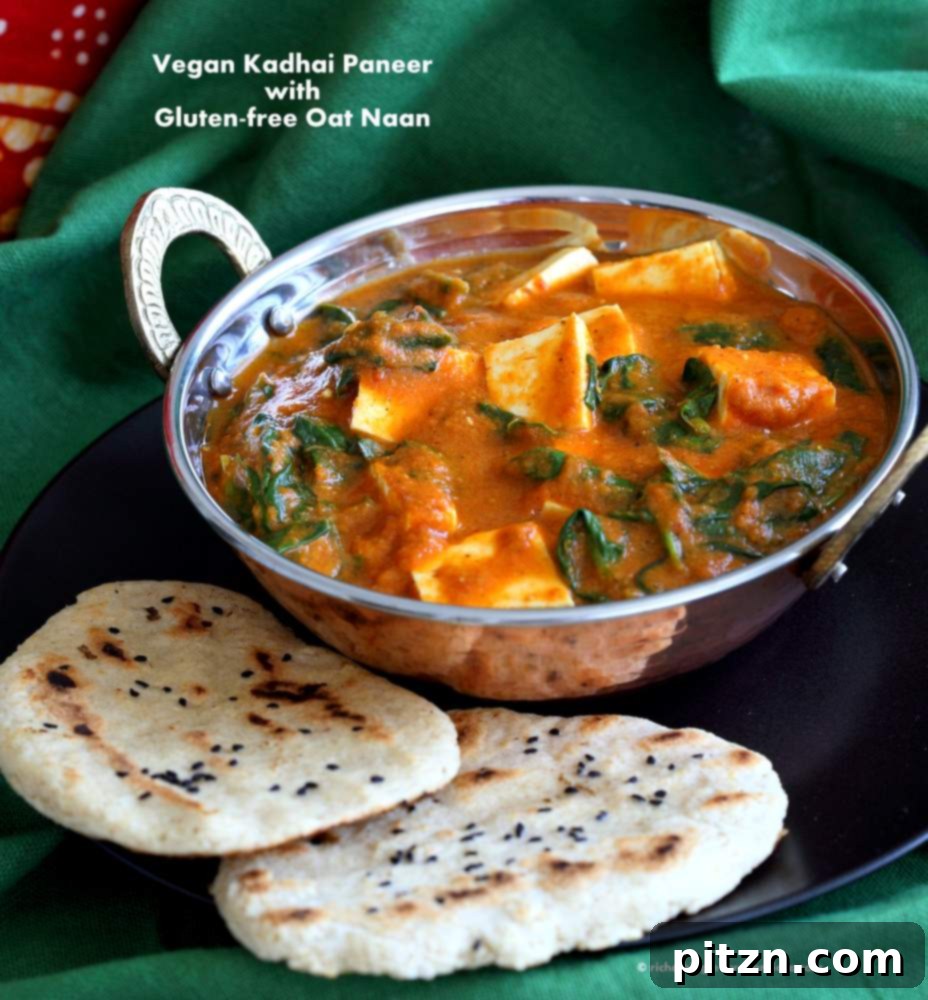
- At Step 3, start with 3 cups of flour instead of 3.5 cups. It’s much easier to add more flour later if needed than to try and adjust the moisture in an overly stiff dough.
- Aim for a very soft, slightly sticky dough consistency. If at any point the dough seems too dry, you can add extra water by lightly spraying some onto the dough, shaped dough balls, or even shaped Naans.
- Allow the shaped Naan to rise for at least 5 minutes before baking or cooking. This brief resting period helps achieve a softer, more pliable texture.
Before you go, be sure to check out all the delicious creations tagged with #VeganRichasIndianKitchen on Instagram! Join our vibrant community and share your own vegan Indian culinary adventures.