
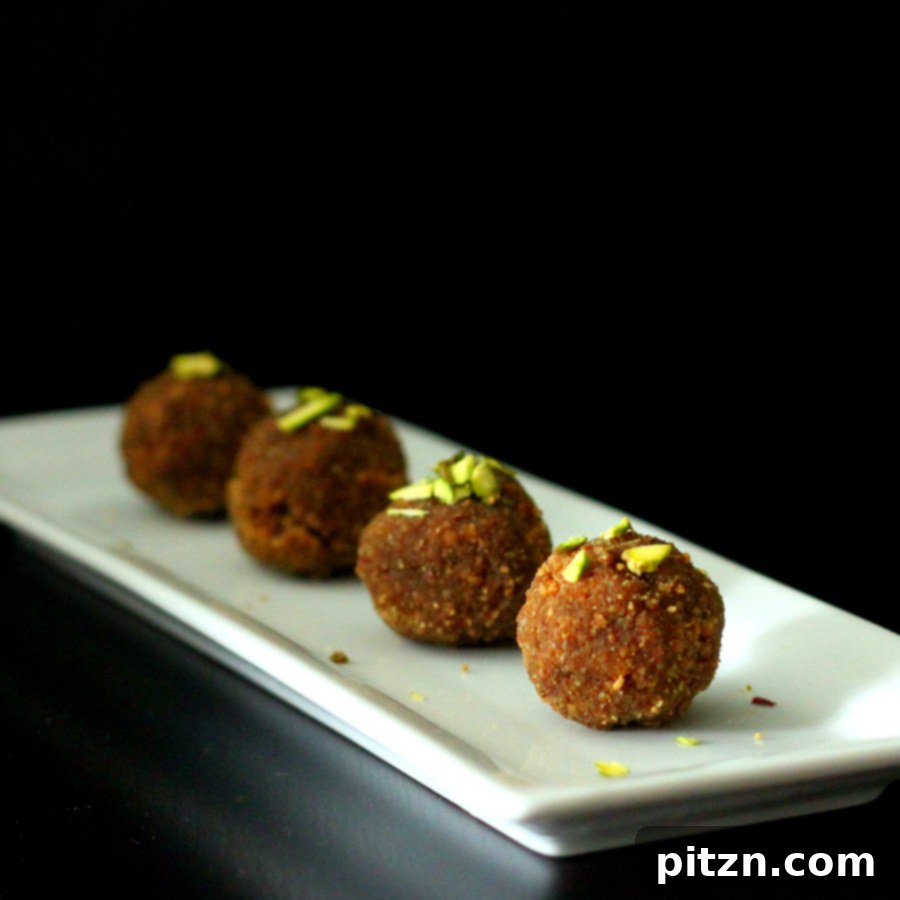
Welcome to a delightful journey into the world of Indian sweets, where tradition meets modern, health-conscious innovation. Today, we’re celebrating a classic — the Laddoo and its delightful cousin, Choorma – but with a unique, oil-free twist. These **Oil-free Wheat Laddoos** are incredibly soft, moist, and bursting with flavor, proving that you don’t need excessive fats to create a truly delicious treat. Crafted from wholesome ingredients, these Laddoos are not only a vegan Indian sweet but also dairy-free and soy-free, making them accessible to many. For those with gluten sensitivities, a simple swap to a gluten-free flour makes these treats universally enjoyable. Whether you prefer them as delicate, hand-rolled balls or as a crumbly, comforting “Atte ka Choorma,” this recipe offers versatility without compromise.
Jump to Recipe
Crafting Your Oil-Free Wheat Laddoos: A Step-by-Step Guide
Creating these wholesome laddoos is a rewarding process. Follow these visual steps to achieve perfect results every time.
Step 1: Roasting the Wheat Flour to Perfection
The first crucial step involves dry roasting the whole wheat flour. This slow process is key to developing a rich, nutty flavor that forms the base of our laddoos. Use a heavy-bottomed pan and maintain a low heat, stirring continuously to prevent burning and ensure even roasting.
Step 2: Continuous Roasting for Enhanced Flavor
Continue to roast the flour, maintaining vigilance with consistent stirring. You’ll notice the flour gradually changing color, transitioning from pale to a beautiful golden brown. More importantly, a wonderful roasted aroma will begin to fill your kitchen, signaling that it’s reaching the perfect stage. This slow roasting technique, though time-consuming, yields a superior depth of flavor compared to faster methods.
Step 3: Incorporating Sweetness and Spice
Once the flour is perfectly roasted, it’s time to introduce the foundational flavors. Add the ground raw sugar, finely ground almond flour, and aromatic cardamom powder to the pan. Stir these ingredients thoroughly with the hot flour for about a minute, allowing their essences to meld beautifully with the warm flour. The heat will help to slightly toast the almonds and awaken the cardamom’s spice.
Step 4: Binding with Maple Syrup
Next, pour in the maple syrup. This natural sweetener acts as a binder, bringing all the dry ingredients together while imparting its unique, rich sweetness. Mix vigorously until the maple syrup is fully incorporated and the mixture starts to come together. Immediately remove the pan from the heat to prevent overcooking the syrup and to maintain the desired texture. To help the mixture achieve the right consistency for shaping, gently spray 2-3 light mists of water over it and continue mixing well with a spatula, pressing slightly to encourage the formation of small lumps. This adds just enough moisture without making it soggy.
Step 5: Cooling and Preparing for Shaping
Allow the mixture to cool slightly. As it cools, the texture will become more manageable. You can choose to serve this delicious, crumbly mix as “Choorma” at this stage, or continue to form it into traditional laddoos. As the choorma cools and dries, you might notice its color becoming slightly lighter. When ready to form the laddoos, ensure the mixture is still warm enough to be pliable but cool enough to handle comfortably. If needed, a quick, light spray of water can provide extra moisture to help the mixture hold its shape as you roll the balls.
Step 6: Enjoying Crumbly Choorma or Forming Laddoos
Once cooled, you have a delightfully crumbly and fragrant choorma, perfect for an immediate treat. To enhance its flavor and texture, consider adding roasted or raw chopped nuts like almonds or cashews, along with some sweet raisins. These additions provide a wonderful crunch and a burst of natural sweetness. If you’re making laddoos, shape the mixture into small, dense balls. Garnish each laddoo with a sprinkle of chopped pistachios for a pop of color and a delicate nutty finish. These oil-free wheat laddoos or choorma are best enjoyed fresh, but can also be stored in an airtight container in the refrigerator for a few days.
Oil-free Wheat Laddoo/Laddu and Choorma – Sweet Wheat Cardamom Balls. Vegan Recipe
Vegan Richa
15 minutes
40 minutes
55 minutes
10
Dessert
Indian
Ingredients
Ingredients: 8-10 balls – easily doubled
- ▢ 1/4 cup whole wheat flour
- ▢ 2 Tablespoons ground raw sugar, reduce to 1 if you don’t like very sweet laddus, or powdered jaggery or sweetener of choice
- ▢ 2 Tablespoons ground raw almond
- ▢ 1/8 teaspoon cardamom powder
- ▢ 2 Tablespoons Maple syrup, you can try agave or date syrup or any sticky sweet syrup or single thread sugar/jaggery syrup
- ▢ few sprays of water
Instructions
-
In a pan, dry roast the wheat flour on low heat for 25-30 minutes, stirring every 3 to 4 minutes. You can also roast over medium heat for 6 to 8 minutes, stirring frequently (2-3 times per minute) to avoid burning. Slow roasting, however, imparts a better flavor.
-
Once the wheat flour gets lightly browned and you can smell the roasted aroma, add in the ground sugar, cardamom, and almond flour and mix well.
-
Roast for another minute to allow the flavors to meld.
-
Add in the maple syrup, mix well, and take off heat.
-
Spray water on the mix 3-4 times, mixing continuously with a spatula and pressing a little to see if a few lumps are formed. This helps in binding.
-
Let it cool slightly until easy to handle, then knead it using your hands for a minute so the natural nut oil from the almonds and the maple syrup incorporate well and assist with the sticking and shaping.
-
You can serve this lumpy mix, similar to the wheat choorma, as is, or make balls/laddoos out of it.
-
You can add roasted or raw chopped nuts and raisins to the mix (if making balls, don’t add too many to maintain shape).
-
Use a spray of water or 2 more to make balls if needed, to help them hold shape.
-
Garnish with chopped raw pistachios for an elegant finish.
-
Consume the same day or store in an airtight container in the refrigerator for a few days.
Notes
Nutrition
Calories:
38
kcal
,
Carbohydrates:
7
g
,
Potassium:
19
mg
,
Sugar:
4
g
,
Calcium:
8
mg
,
Iron:
0.2
mg
Nutrition information is automatically calculated, so should only be used as an approximation.
Did you make this delicious recipe? We’d love to hear your thoughts and see your creations in the comments below!
Embracing a Plant-Based Lifestyle: Why It Matters
Beyond the delectable taste and dietary benefits of our oil-free laddoos, there are profound reasons to consider adopting a whole or part plant-based diet. This culinary choice extends far beyond personal health; it embodies a holistic approach to well-being that impacts other living beings, our planet, and our future.
Firstly, the ethical considerations are compelling. A plant-based diet significantly reduces animal suffering in industrial farming, promoting compassion towards all sentient beings. By choosing plant-based options, we actively withdraw support from systems that often inflict cruelty on animals, instead opting for a more humane way of eating.
Secondly, the health benefits are undeniable. Diets rich in whole plant foods are often lower in saturated fat and cholesterol, and higher in fiber, vitamins, and minerals. This can lead to improved heart health, better weight management, reduced risk of chronic diseases like type 2 diabetes and certain cancers, and increased energy levels. Embracing plant-based eating is an act of compassion towards your own body, nurturing it with wholesome nutrition.
Finally, the environmental impact of our food choices is critical. Animal agriculture is a major contributor to greenhouse gas emissions, deforestation, water pollution, and land degradation. Shifting towards a plant-based diet is one of the most effective ways individuals can reduce their carbon footprint and contribute to environmental sustainability. Every meal chosen mindfully can make a difference, helping to conserve precious natural resources and protect biodiversity. By exploring delicious and sustainable recipes like these oil-free wheat laddoos, we empower ourselves to make choices that are kind to animals, beneficial for our health, and responsible for our planet.
Infographic by CulinarySchools.org