
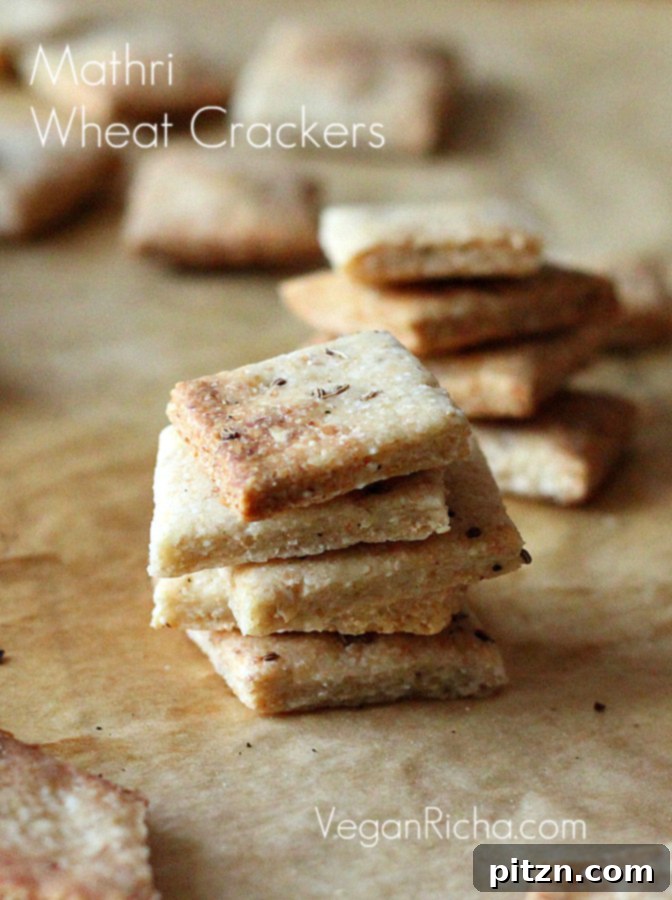
Baked Mathri: The Ultimate Healthy Wheat Semolina Crackers for Snacking
Mathri, a beloved savory cracker, holds a special place in Indian culinary traditions, particularly during festive seasons. Traditionally deep-fried, these crisp delights are a staple in many Indian homes. However, we’re excited to introduce you to a healthier, baked version of these classic **wheat semolina crackers**. This recipe brings all the flavor and crunch of traditional Mathri, but with significantly less oil, making it a perfect guilt-free snack for any occasion. Whether you’re hosting a gathering, looking for a delicious tea-time accompaniment, or simply craving a savory bite, our **baked Mathri** offers a delightful solution.
Discover the Versatility of Homemade Crackers
One of the most appealing aspects of these homemade **savory crackers** is their incredible adaptability. While Indian spices like carom seeds (Ajwain) are traditionally used, this recipe serves as an excellent base for a myriad of flavor profiles. You can easily customize your Mathri by substituting Indian spices with an array of dried herbs such as basil, oregano, or parsley, perhaps even adding a touch of nutritional yeast for a cheesy, umami depth. Imagine a batch infused with Italian herbs, or a Mediterranean blend with a hint of garlic powder. The possibilities are endless, allowing you to tailor these crackers to your personal preference or the theme of your meal.
Beyond their customizable flavors, these **healthy crackers** are wonderfully versatile in how they can be enjoyed. Munch on them plain for a satisfying crunch, or elevate your snacking experience by pairing them with a variety of accompaniments. They are fantastic with creamy hummus, tangy chutneys, rich dips, or even crumbled into a warm bowl of soup for added texture. For a sophisticated appetizer, transform them into elegant canapés topped with your favorite spreads, fresh vegetables, or gourmet cheese. Their robust structure makes them ideal for holding various toppings without becoming soggy, truly making them a canvas for your culinary creativity.
The Magic of Ajwain: Carom Seeds in Your Crackers
For my **baked Mathri**, I’ve chosen to include carom seeds, known in Hindi as Ajwain. These tiny seeds are a personal favorite and a secret weapon for infusing crackers, parathas, and naans with an intensely aromatic and slightly pungent flavor profile. Belonging to the same family as caraway and cumin, Ajwain is also recognized by various names such as Ajave, Ethiopian Cumin, or Omam. Its distinct taste, often described as a blend of oregano and thyme with a hint of bitterness, adds an unmistakable depth to these **Indian crackers** that sets them apart.
Beyond their culinary appeal, Ajwain seeds are highly valued in traditional medicine for their impressive health benefits. They are particularly renowned for their digestive properties, often consumed after meals to aid digestion and, quite famously, to help reduce flatulence. My own experience with Ajwain extends beyond cooking; I once used roasted Ajwain added to steaming water during a severe sinusitis episode, finding significant relief from its potent vapors. The seeds contain thymol, an essential oil that contributes to their strong aroma and numerous therapeutic effects, including antiseptic and anti-inflammatory properties. Incorporating Ajwain into your Mathri not only enhances the flavor but also subtly introduces these beneficial elements into your diet, making these **savory snacks** even more nourishing.
For those interested in exploring the full spectrum of benefits offered by this remarkable spice, a simple search will reveal a wealth of information on its traditional uses and modern applications. Its versatility in both flavor and wellness makes it an indispensable ingredient in any spice pantry, especially for those venturing into **Indian cuisine** or seeking natural remedies. Learn more about the health benefits of Ajwain seeds here.
The Secret to Crispiness: The Role of Semolina
Achieving the perfect texture is crucial for any cracker, and our **baked Mathri** excels in this department, largely thanks to the inclusion of semolina. Semolina, or cream of wheat, is a coarse, purified wheat middlings of durum wheat. When incorporated into the dough, it acts as a textural enhancer, contributing significantly to the desired crunchiness and flaky quality of the crackers. Its granular structure helps to create tiny air pockets within the dough, which expand during baking, resulting in a lighter, more brittle texture that is characteristic of good Mathri.
This judicious use of semolina also allows us to reduce the amount of oil needed in the recipe. While traditionally deep-fried Mathri relies on a generous amount of fat to achieve its characteristic crispness, semolina helps replicate this desired texture in a baked format. In contrast, crackers made solely with whole wheat flour often tend to become hard and dense without a substantial amount of added fat. The semolina prevents this, ensuring that our **whole wheat semolina crackers** remain delightfully crunchy and flaky, mimicking the mouthfeel of their deep-fried counterparts. For those who enjoy a heartier bite, making these crackers a bit thicker can further enhance their resemblance to the traditional deep-fried versions, offering a satisfying snap with every bite.
Baking vs. Frying: A Healthier Approach to Traditional Snacks
The decision to bake our Mathri rather than deep-fry it is a conscious step towards creating a healthier snack without compromising on flavor or texture. Traditional deep-frying, while delicious, introduces a significant amount of oil and calories, which can be a concern for health-conscious individuals. By opting for baking, we drastically reduce the fat content, making these **homemade crackers** a much lighter alternative that you can enjoy more frequently and in larger quantities, guilt-free.
Baking also offers a more consistent and controlled cooking environment. It eliminates the need for managing hot oil, making the preparation process safer and less messy. The dry heat of the oven evenly crisps the Mathri, and with careful monitoring, you can achieve a beautifully golden-brown finish that is both appealing to the eye and satisfying to the palate. The two-stage baking process outlined in our recipe ensures that every cracker is uniformly crisp throughout, preventing any soft spots. This method not only aligns with a healthier lifestyle but also demonstrates that traditional flavors can be beautifully adapted to modern dietary preferences, proving that **healthy Indian snacks** can be just as delicious as their traditional counterparts.
Beyond Mathri: Explore More Healthy Cracker Recipes
If you’ve enjoyed making and tasting these **baked Mathri**, you might be eager to explore other wholesome cracker recipes. Expanding your repertoire of homemade snacks is a rewarding journey, and there’s a world of delicious possibilities to discover. From vegetable-infused delights to gluten-free options, here are a few other cracker recipes that are equally satisfying and perfect for any snack craving:
For a seasonal flavor burst, try these Butternut Squash Rosemary Onion Crackers. They combine the sweetness of butternut squash with aromatic rosemary and savory onion, creating a uniquely flavorful cracker that’s perfect for autumn or any time of year. Their vibrant color and distinct taste make them a fantastic addition to any snack platter.
If you’re looking for **gluten-free crackers**, these Gluten-free Potato Rice Crackers are an excellent choice. Made with a blend of potato and rice, they offer a crisp texture and a satisfying taste, catering to those with dietary restrictions without compromising on enjoyment. They’re a fantastic alternative for anyone avoiding wheat.
For another fantastic gluten-free option, delve into these Chickpea Oat Rice Krispies Crackers. What makes these unique is that they are crafted using cooked chickpeas, not flour, giving them a distinct texture and a boost of plant-based protein. The combination of chickpeas, oats, and rice Krispies creates an incredibly crunchy and delightful snack that’s both healthy and innovative.
These alternative recipes showcase the vast potential of homemade crackers, offering diverse flavors and accommodating various dietary needs. Exploring them will not only broaden your culinary skills but also provide you with a constant supply of wholesome, delicious snacks.
As you experiment with different flours, you’ll notice variations in color and texture, adding to the charm of homemade baking. These subtle differences ensure that each batch of your **baked Mathri** will have its own unique character.
Baked Mathri – Wheat Semolina Crackers Recipe
Crafting these **baked Mathri crackers** is a simple yet rewarding process. This recipe is designed to be accessible to home bakers of all skill levels, yielding a generous bowl-full of crispy, flavorful snacks that are perfect for sharing or savoring on your own. Enjoy the satisfaction of making your own healthy, **vegan crackers** right in your kitchen.
Allergen Information: Free of Dairy, egg, corn, soy, nut.
Makes about a large bowl-full
Ingredients:
- 1 cup whole wheat flour
- 1/2 cup fine Semolina (cream of wheat)
- 3/4 teaspoon salt or to taste
- A generous pinch of baking soda
- 1/8 teaspoon black pepper or cayenne (for a subtle kick)
- 2 teaspoon carom seeds (Ajwain), or Nigella seeds (Kalonji), or cumin seeds (Jeera) for alternative flavor
- 3-4 Tablespoons melted coconut Oil (or any neutral oil)
- 1/2 cup + 2 Tablespoons water (approximately, adjust as needed)
- Sea salt for sprinkling
Variations:
- Add dried herbs of choice (e.g., Italian seasoning, dried dill, rosemary) and a Tablespoon nutritional yeast for a savory, cheesy note.
- Incorporate sesame seeds, poppy seeds, or other seeds into the dough or sprinkle on top for added texture and nutrition.
Method:
- In a large mixing bowl, combine all the dry ingredients thoroughly: whole wheat flour, semolina, salt, baking soda, black pepper (or cayenne), and your chosen seeds (Ajwain, Kalonji, or Jeera). Ensure they are well distributed.
- Pour in the melted coconut oil. Using your fingertips, rub the oil into the dry ingredients until the mixture resembles coarse bread crumbs. This step, known as “moyen” in Indian cooking, ensures that the fat is evenly distributed, leading to flaky crackers. While we’re not using excessive oil, you’ll still achieve a lovely texture.
- Gradually add water, one tablespoon at a time, mixing it into the flour mixture until a medium-soft, non-sticky dough forms. The exact amount of water may vary depending on the type and absorbency of your flours, so add cautiously. The key is to achieve a dough that comes together easily without being overly sticky or too dry.
- Crucially, do not knead the dough extensively. Over-kneading can develop the gluten too much, resulting in hard crackers. Instead, gently mix and press the water in just until the dough coalesces.
- Once the dough is formed, place it on a sheet of parchment paper. Roll the dough out to your desired thickness; for a more traditional Mathri appearance, aim for a slightly thicker cracker. Using a knife, cookie cutter, or even a pizza cutter, cut the dough into your preferred shapes – squares, diamonds, or rounds are popular choices.
- Lightly sprinkle a little sea salt on top of the shaped crackers and gently press it in with your fingers to ensure it adheres. If desired, you can also press in additional sesame seeds or dried herbs at this stage for extra flavor and visual appeal.
- Use a fork to prick a few holes in each cracker. This step is important as it prevents the crackers from puffing up excessively during baking, ensuring an even crispness.
- Carefully transfer the parchment paper with the arranged crackers onto a baking sheet. Preheat your oven to 375 degrees F (190 degrees C).
- Bake for 20 minutes. At this point, the crackers will be partially cooked but not fully crisp.
- Remove the baking sheet from the oven. Gently break apart any crackers that may have stuck together. Return them to the oven and continue baking for another 8-10 minutes, or until they are golden brown and crisp to the touch. Keep a close eye on them during this second bake to prevent burning.
- Once fully cooled, store your **homemade Mathri** in an airtight container at room temperature. They will remain fresh and delightfully crisp for a few weeks, making them an ideal make-ahead snack.
We hope you enjoy this healthier, delicious **baked Mathri recipe**. It’s a wonderful way to enjoy a traditional Indian snack with a modern, health-conscious twist. Share your creations and enjoy these versatile crackers!
These Crackers are being shared at Ricki’s wellness weekends and Slightly Indulgent Tuesdays.