

Welcome to the delightful world of Jalebi, an iconic Indian sweet that captivates taste buds with its unique texture and syrupy sweetness. Often described as a deep-fried pretzel-shaped batter soaked in fragrant sugar syrup, Jalebi is a beloved treat across India and beyond. Its vibrant orange hue and intricate spiral pattern make it as visually appealing as it is delicious. This article delves into the origins of Jalebi, explores the art of crafting this irresistible dessert, and, most excitingly, presents a fantastic vegan recipe that ensures everyone can enjoy this classic confection.
Originating from the Indian subcontinent, Jalebi is not just a dessert; it’s a cultural staple, often enjoyed during festivals, celebrations, or simply as an everyday indulgence. While traditional Jalebi typically uses yogurt and sometimes ghee, our vegan rendition ensures the same authentic flavor and crispy-juicy perfection without any dairy products. Prepare to embark on a culinary journey that brings the magic of Jalebi right into your kitchen.

The Heritage of Jalebi: A Sweet Story
The history of Jalebi is as rich and intricate as its shape. While widely associated with India, variations of this sweet treat can be found across the Middle East, North Africa, and other parts of Asia. It’s believed that Jalebi, or its ancestor, was introduced to India by Persian-speaking invaders, where it quickly became a local favorite. The name “Jalebi” itself is thought to be derived from the Arabic word “Zalabiyah.”
Over centuries, Jalebi has woven itself into the fabric of Indian cuisine, evolving with local ingredients and culinary traditions. It’s a popular street food, often sold hot and fresh by vendors, and a customary item in many festive meals. From the bustling streets of Mumbai to the quiet alleys of ancient cities, the aroma of freshly fried Jalebi is an unmistakable sign of joy and celebration. Understanding its heritage adds another layer of appreciation to this already delightful dessert.
Crafting the Perfect Jalebi: Tips and Techniques
Making Jalebi might seem intimidating at first glance, but with the right technique and a bit of practice, you’ll be swirling those spirals like a pro. The key lies in a few critical steps: achieving the right batter consistency, maintaining optimal oil temperature, and mastering the art of the sugar syrup. Many home cooks explore different methods; some prefer yeast for a slightly fermented tang and airy texture, while others opt for baking powder for a quicker rise. We’ll be using yeast in this recipe to achieve that classic, slightly sour note that gives Jalebi its authentic depth of flavor.
For those new to Jalebi making, watching a video can be incredibly helpful for understanding the shaping process. Renowned chefs like Sanjeev Kapoor and Manjula’s Kitchen offer excellent resources. Manjula’s videos, in particular, provide clear demonstrations on how to create the distinctive pretzel-like spirals.
Vegan Jalebi: A Guilt-Free Indulgence
This recipe specifically focuses on creating a delectable vegan Jalebi, ensuring that dietary preferences don’t stand in the way of enjoying this incredible sweet. By swapping traditional yogurt for a non-dairy alternative and frying in oil instead of ghee, we achieve a dessert that is just as crispy, juicy, and satisfying as its conventional counterpart. The absence of dairy makes this recipe accessible to a broader audience, allowing more people to experience the unique pleasure of biting into a warm, syrup-soaked Jalebi.
The process might require a little patience, especially during the batter resting phase, but the result is undeniably worth the wait. Imagine golden-brown spirals, glistening with sweet syrup, ready to be devoured. This vegan version maintains all the magic of the original, proving that plant-based ingredients can perfectly replicate the flavors and textures of beloved traditional dishes.
Vegan Jalebi

Print Recipe
Ingredients
Sugar Syrup:
- 1 cup sugar
- 3/4 cup water
- pinch of cardamom powder
- pinch of saffron strands crushed
Jalebi:
- 1 cup all purpose flour
- 1/2 cup lukewarm water (adjust as needed)
- 1 Tablespoon non-dairy yogurt
- 1/2 teaspoon quick rise yeast
- 2 teaspoons sugar
- pinch of saffron crushed
- orange food color, optional (I did not use color for an authentic look)
- Oil for frying
Instructions
-
Prepare the Sugar Syrup: In a saucepan, combine all the sugar syrup ingredients. Bring the mixture to a boil over medium heat, stirring until the sugar dissolves completely. Once boiling, reduce the heat and simmer for 2-3 minutes until the syrup thickens slightly. It should reach a single-thread consistency – when you touch a drop between your thumb and forefinger and pull them apart, a single thread should form and break. Keep the syrup warm while you prepare the Jalebis. For alternative flavors, consider adding kewra essence or rose water/essence instead of cardamom.
-
Activate the Yeast: In a mixing bowl, combine the lukewarm water, 2 teaspoons of sugar, and crushed saffron strands. Sprinkle the quick-rise yeast over this mixture. Stir gently and let it sit for about 10 minutes. The yeast should become frothy and active, indicating it’s ready for the next step.
-
Prepare the Jalebi Batter: To the frothy yeast mixture, add the all-purpose flour and non-dairy yogurt. Mix everything thoroughly to create a smooth batter of pouring consistency, ensuring there are no lumps. The batter should be thick enough to hold its shape when piped but still flow easily. If it’s too thick, add a tiny bit more water; if too thin, a pinch more flour. This is also the time to add a few drops of orange food coloring if you desire the classic vibrant hue.
-
Ferment the Batter: Cover the bowl tightly with plastic wrap or a clean kitchen towel. Place it in a warm spot for at least 1 hour (or longer, up to 4-6 hours for a more pronounced fermented flavor) to allow the batter to ferment. This fermentation is crucial for developing the characteristic tang and fluffy texture of Jalebi.
-
Prepare for Frying: Once the batter has fermented, give it a gentle stir. Carefully transfer the batter into a squeezy bottle with a fine nozzle or a strong zip-lock bag. If using a zip-lock bag, cut a small hole (about 1/8 inch or 3-4 mm) at one corner. The size of the hole will determine the thickness of your Jalebis.
-
Heat the Oil: Heat oil in a flat-bottomed kadhai (wok) or a deep, wide pan over medium heat. The oil should be hot enough for the Jalebis to sizzle immediately upon contact, but not so hot that they burn quickly. A good test is to drop a tiny bit of batter; it should rise to the surface steadily, not too fast or too slow.
-
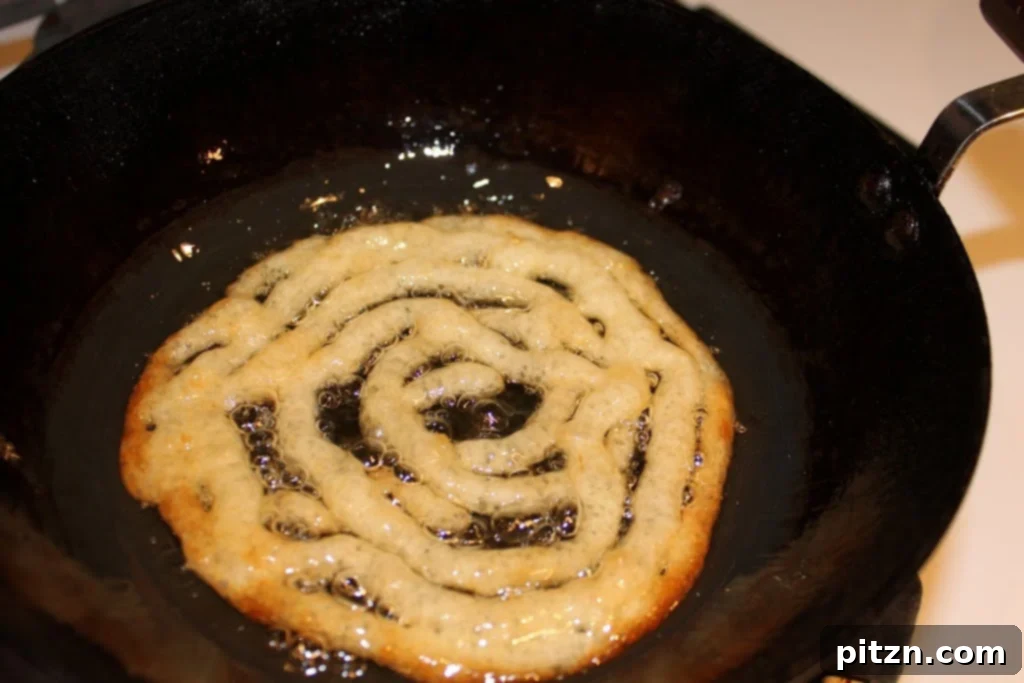
Shape and Fry: Holding the squeezy bottle or zip-lock bag directly over the hot oil, start from the center and squeeze the batter out in concentric circles, creating a pretzel-like or spiral shape. Fry 3-4 Jalebis at a time, depending on the size of your pan, being careful not to overcrowd. Fry on medium-high heat until they turn golden brown and become crisp on both sides. Flip them gently using tongs to ensure even cooking. (*Traditional Jalebis are often fried in ghee, clarified butter. Our vegan version uses oil, achieving excellent crispiness without dairy. If frying in ghee, keep in mind the significant amount required for deep frying.)
-
Soak in Syrup: As soon as the Jalebis are fried to a golden crisp, immediately transfer them to the warm sugar syrup. Let them soak for about 30 seconds to 1 minute, allowing them to absorb the sweet, fragrant syrup. Be careful not to over-soak, as they can become soggy.
-
Serve: Remove the Jalebis from the syrup and place them on a serving plate. Serve warm or at room temperature. They are delicious on their own or can be topped with vegan rabdi (thickened sweetened non-dairy milk) for an extra special treat.
Nutrition
Nutrition information is automatically calculated and should be used as an approximation.
Essential Tips for Jalebi Success
Achieving that perfect Jalebi balance of crispy exterior and juicy, syrup-filled interior requires attention to detail. Here are some key tips to help you master this delightful sweet:
- Batter Consistency is King: The batter should be neither too thick nor too thin. A thick batter will make it hard to pipe and result in dense Jalebis, while a thin batter will spread too much in the oil and lose its shape. Aim for a smooth, pourable consistency, similar to pancake batter but slightly thicker, that can hold its shape when piped.
- Optimal Fermentation: Don’t rush the fermentation process. The yeast needs time to work its magic, developing the distinctive slightly tangy flavor and airy texture. In colder climates, you might need a longer resting time or a warmer spot for the bowl.
- Oil Temperature Control: This is crucial. If the oil isn’t hot enough, the Jalebis will absorb too much oil and become greasy. If it’s too hot, they will brown too quickly on the outside, remaining uncooked inside, or they might burn. Medium-high heat is generally ideal. Test with a small drop of batter: it should sizzle and rise gently.
- The Art of Shaping: Practice makes perfect! Don’t worry if your first few Jalebis aren’t perfectly shaped. The key is a steady hand and continuous motion while squeezing the batter. A squeeze bottle with a narrow nozzle often provides more control than a zip-lock bag.
- Warm Syrup for Best Soaking: Ensure your sugar syrup is warm, not boiling hot or cold. A warm syrup allows the Jalebis to absorb the sweetness without becoming mushy or developing a hard, crystalized coating.
- Don’t Overcrowd the Pan: Fry only a few Jalebis at a time. Overcrowding will lower the oil temperature and prevent them from frying evenly and crisping up properly.
- Quick Soaking: Jalebis only need to soak for about 30 seconds to 1 minute in the syrup. Any longer, and they might become overly sweet and lose their desirable crispy texture.
The Visuals of Perfection: Shape and Texture
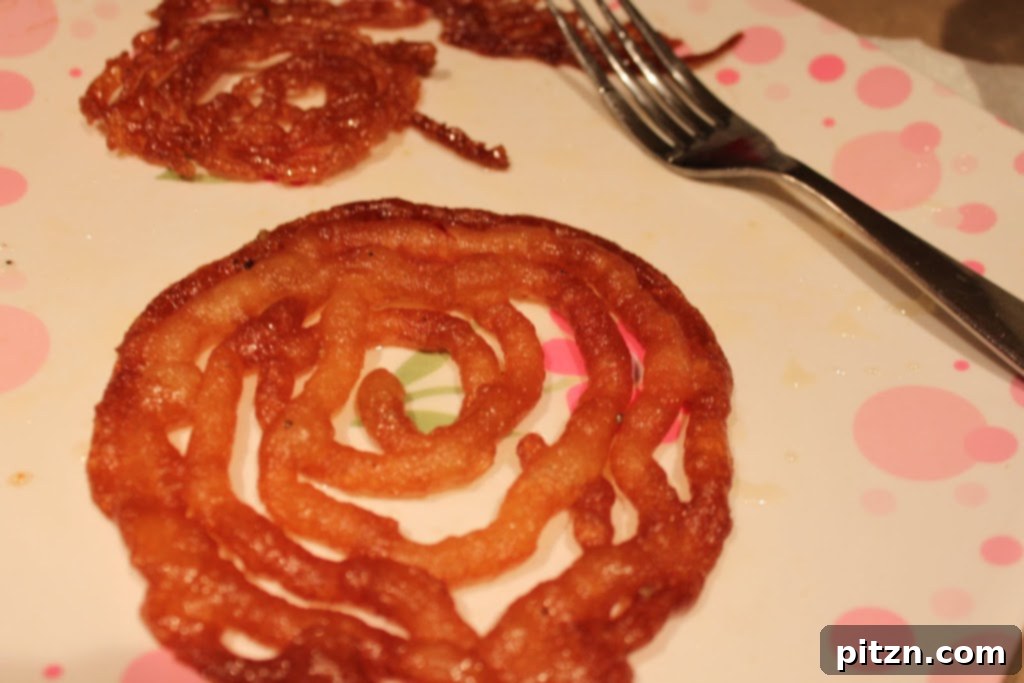
The hole size of your piping tool significantly impacts the Jalebi’s texture. As shown in the images below, a slightly larger hole creates a Jalebi with a balanced crispness and a softer, syrupy interior. Conversely, a smaller hole can lead to Jalebis that are too thin and become excessively crisp, almost brittle. Experiment to find your preferred thickness and texture.
Serving Suggestions for Your Vegan Jalebi
While Jalebi is utterly delightful on its own, there are several ways to elevate your serving experience:
- Warm is Best: Jalebis are traditionally enjoyed warm, fresh out of the syrup, when their crisp exterior and juicy interior are at their peak.
- With Vegan Rabdi: Pair your warm Jalebis with a dollop of chilled vegan rabdi for a classic Indian dessert combination. The creamy rabdi perfectly complements the sweet, crisp Jalebi.
- Ice Cream: For a fusion twist, serve warm Jalebis with a scoop of vegan vanilla or pistachio ice cream. The contrast of hot and cold, crisp and creamy, is simply divine.
- Morning Delight: In some regions, Jalebi is enjoyed as a breakfast item, often with a glass of milk or a cup of chai.
- Garnish: A sprinkle of chopped pistachios or almonds can add a lovely crunch and visual appeal.
Making Vegan Jalebi at home is a rewarding experience that connects you with a rich culinary tradition while catering to modern dietary choices. The aroma of saffron and cardamom filling your kitchen, the satisfying sizzle of batter hitting hot oil, and finally, the first bite into a warm, syrupy spiral – these moments are what make homemade desserts truly special. We encourage you to try this recipe, experiment with the techniques, and share the joy of this magnificent Indian sweet with your loved ones. Did you make this recipe? Share your experience and rating below!
Did you make this recipe? Rate and comment below!