
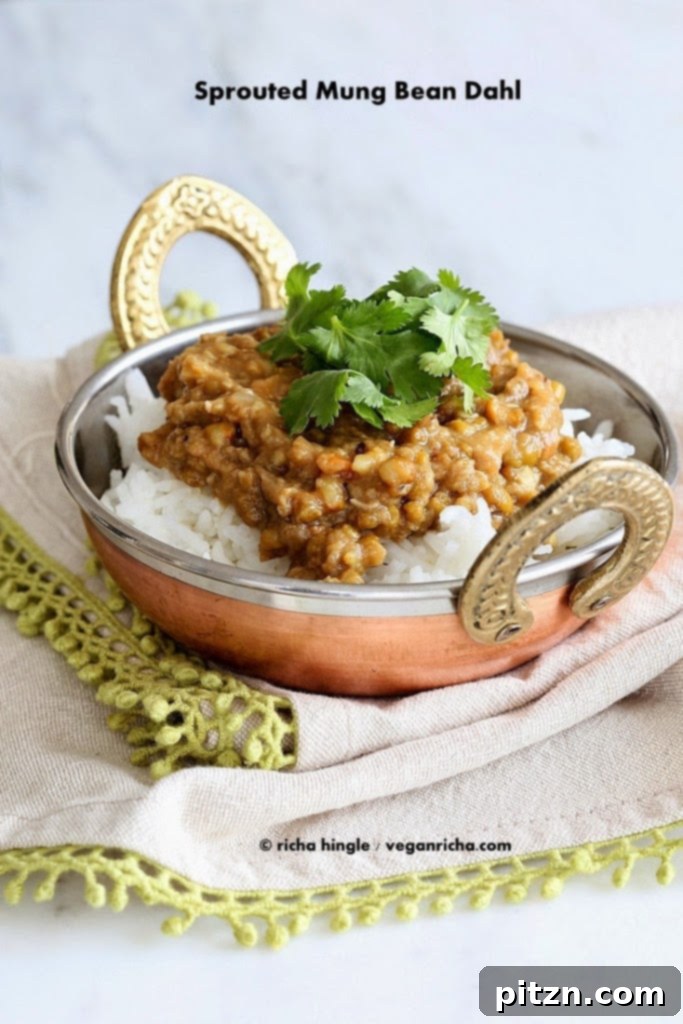
Embrace the warmth and nourishment of a truly wholesome dish with our Sprouted Mung Bean Dal, also known as Sabut Moong Dal. This incredibly flavorful and nutrient-dense recipe brings together the earthy goodness of whole green mung beans, vibrant spices, and aromatic vegetables to create a comforting meal that can be enjoyed any day of the week. Perfect for those seeking a vegan, gluten-free, and allergen-friendly option, this dal is not just a dish; it’s an experience in wholesome eating.
Mung beans, or Moong beans, are a staple in Indian cuisine, cherished for their versatility and health benefits. While they are delicious in any form, sprouting them elevates their nutritional profile and makes them even easier to digest. This dal recipe showcases sprouted mung beans at their best, transforming them into a thick, satisfying stew or a lighter, soul-warming soup, depending on your preference. Whether you’re a seasoned chef or new to plant-based cooking, this Sprouted Mung Bean Dal will quickly become a favorite in your repertoire.
Why Sprout Mung Beans? Unlocking Enhanced Nutrition and Digestibility
Sprouting is a simple yet powerful process that significantly boosts the nutritional value and digestibility of legumes like mung beans. When mung beans sprout, complex starches are broken down into simpler sugars, making them easier for your body to process. This process also activates enzymes, which aid digestion, and increases the bioavailability of essential nutrients such as vitamins B and C, iron, magnesium, and zinc.
Furthermore, sprouting reduces anti-nutrients like phytic acid, which can inhibit the absorption of minerals. The result is a bean that’s not only gentler on your stomach but also offers a higher concentration of beneficial compounds. Sprouted mung beans also develop a wonderfully tender texture and a slightly sweeter, fresher flavor, adding a delightful complexity to this hearty dal. Incorporating sprouted legumes into your diet is an excellent way to maximize their health benefits and add a fresh, lively element to your meals.
Sprouted Mung Bean Dal: Is it a Soup or a Stew?
One of the delightful ambiguities of many Indian lentil dishes, or dals, is whether they should be classified as a soup or a stew. Our Sprouted Mung Bean Dal perfectly embodies this charming characteristic. Typically, a soup is lighter and more liquid, often served as an appetizer, while a stew is thicker, heartier, and often considered a main course, packed with more substantial ingredients.
This particular dal can effortlessly lean towards either definition based on its consistency. If you prefer a thinner, more brothy texture, akin to a traditional Indian lentil soup, simply adjust the water content to your liking. This version is wonderfully soothing and pairs beautifully as a lighter meal. However, if you allow the dal to simmer a bit longer or use less water, the sprouted mung beans and spices meld into a rich, thick, and satisfying stew. As the dal cools, especially overnight, it naturally thickens further, developing a gel-like consistency that makes it incredibly robust and perfect for a main course. The versatility of this dal allows you to enjoy it in whichever form suits your mood and meal plan.
Expand Your Culinary Horizons: More Sprouted Mung Bean Recipes
Sprouted mung beans are incredibly versatile and can be used in a myriad of dishes beyond traditional dal. Their fresh flavor and tender texture make them an excellent addition to various meals, from breakfast to dinner. Explore these other creative ways to incorporate sprouted mung beans into your cooking:
Mung Bean Sprout and SpinachPizza Crust: A unique, nutrient-packed base for your favorite pizza toppings.
Mung Bean Sprout Bowl with Seared Carrots and Chili Lime Sesame Dressing: A refreshing and wholesome salad perfect for a light lunch.
Spiced Mung Bean Sprouts Breakfast: A quick and energizing way to start your day with a boost of protein and fiber.
Sweet Potato Canapes withBBQ Mung Bean Sprouts: An innovative and delicious appetizer for any gathering.
Mung Bean Sprouts and WheatBread Loaf: Add texture and nutrition to your homemade bread.
For even more comforting and wholesome recipes, explore our full collection of Dahls recipes here.
Mastering the Sprouting Process: A Step-by-Step Guide
Sprouting mung beans at home is a straightforward and rewarding process that requires minimal effort. The key is consistent rinsing and proper drainage to prevent mold and ensure healthy sprouts.
What You’ll Need:
- 1/2 cup dry whole mung beans (Sabut Moong)
- A large bowl for soaking
- A colander or sprouting jar with a mesh lid
- A clean, damp cloth or paper towel
Instructions:
- Initial Soak (8-12 hours): Place the dry mung beans in a large bowl and cover them with plenty of warm water. Ensure there’s at least 3-4 inches of water above the beans, as they will expand significantly. Let them soak overnight or for at least 8-12 hours. This softens the beans and kickstarts the germination process.
- Drain and Rinse: After soaking, drain the water completely using a colander. Rinse the beans thoroughly under cool running water.
- Set Up for Sprouting: Transfer the rinsed beans to your colander or sprouting jar. If using a colander, place it over a bowl (to catch drips) and cover the beans with a damp cloth or paper towel to maintain moisture. If using a sprouting jar, simply keep the mesh lid on.
- Rinse and Repeat (Every 6-8 hours): This is the most crucial step. Every 6-8 hours (or at least twice a day), rinse the beans thoroughly under cool water and drain them completely. This prevents mold and keeps the beans hydrated. Ensure good air circulation but keep them out of direct sunlight.
- Observe Growth: Within 24-48 hours, you’ll start seeing tiny white tails emerging from the beans. Continue rinsing until your sprouts reach the desired length. For this dal, sprouts that are about 1/4 to 1/2 inch long are ideal, typically taking 2-3 days. The beans will become 2-3 times their original dry size. The pictured sprouts are two days old.
- Ready to Use: Once sprouted, give them a final rinse, drain well, and they are ready for your dal or other recipes. You can also use soaked beans (after 4-6 hours of soaking) if you prefer not to sprout them, though sprouting offers additional benefits.
With your freshly sprouted mung beans ready, let’s dive into making this comforting and nutritious dal. Serve hot with rice or your favorite flatbreads for a complete and satisfying meal.
Sprouted Mung Bean Dal (Sabut Hari Moong Dal)
This wholesome and flavorful dal is a celebration of plant-based goodness, offering a robust profile of Indian spices alongside the fresh, tender texture of sprouted mung beans. It’s incredibly versatile and designed to fit various dietary needs.
Allergen Information: This recipe is naturally free of dairy, egg, corn, soy, nuts, gluten, and grains, making it an excellent choice for those with multiple food sensitivities or on specific dietary protocols.
Serves 2-3
Prep time: 10 minutes (plus 24-48 hours for sprouting)
Cook time: 25-35 minutes
Ingredients:
- 1/2 cup dry Whole Mung/Moong beans (green gram), sprouted (see instructions above)
- 2.5 – 3 cups water (adjust for desired dal consistency)
For the Tempering (Tadka):
- 2 teaspoons oil (coconut or avocado oil recommended)
- 1/2 teaspoon cumin seeds
- 1/2 red onion, finely chopped
- 2 cloves garlic, minced
- 1 inch fresh ginger, minced or grated
- 1 teaspoon coriander powder
- 1/2 teaspoon garam masala
- 1/2 teaspoon turmeric powder (for color and health benefits)
- 1/2 tsp cayenne or chili powder (or to taste, for a subtle kick)
- A generous pinch of asafetida (hing – optional, but enhances flavor and aids digestion)
- 1 medium tomato, chopped
- 3/4 teaspoon salt, or to taste
For Garnish:
- Fresh lemon juice (a squeeze brightens the flavors)
- Chopped fresh cilantro
Variations to Personalize Your Dal:
- Smoky Twist: Add 1/2 teaspoon chipotle pepper powder or one chipotle chili in adobo sauce along with the spices for a delicious smoky depth.
- Creamy Richness: Stir in a tablespoon or two of cashew cream (blended soaked cashews with water) just before serving for an extra luxurious texture.
- Vegetable Boost: Feel free to add diced vegetables like spinach, kale, carrots, or bell peppers during the last 10-15 minutes of cooking.
Method:
- Prepare Mung Beans: Ensure your mung beans are sprouted and rinsed as per the instructions above. If you’re opting for soaked-only beans, ensure they have been soaked for at least 4-6 hours, then drained and rinsed.
- Start the Tadka: In a pressure cooker or a heavy-bottomed pan, heat the oil over medium heat. Once shimmering, add the cumin seeds and allow them to crackle and become fragrant (this usually takes 15-30 seconds). Be careful not to burn them.
- Sauté Aromatics: Add the finely chopped red onion, minced ginger, and minced garlic to the pan. Sauté for 5-6 minutes, stirring occasionally, until the onions turn golden brown and translucent. This step is crucial for building the flavor base of your dal.
- Add Dry Spices: Reduce the heat to low. Stir in the coriander powder, garam masala, turmeric, cayenne, and asafetida (if using). Cook for just a few seconds, stirring constantly, until fragrant. This helps to bloom the spices, releasing their full aroma and flavor.
- Incorporate Tomatoes: Add the chopped tomato and salt to the pan. Increase the heat slightly and cook for 3-4 minutes, mashing the tomatoes with the back of your spoon, until they soften and become mushy, releasing their juices and creating a rich paste.
- Combine with Mung Beans: Add the drained and washed sprouted mung beans and 2.5 cups of water to the pan. Stir everything together well.
- Cook the Dal:
- Pressure Cooker Method: Close the pressure cooker lid. Cook on medium heat for 3 whistles, or for 8-9 minutes at high pressure once the indicator is on. Allow the pressure to release naturally before opening the lid.
- Pan Method: Bring the mixture to a boil, then reduce the heat to low, cover the pan, and simmer for 25-35 minutes, or until the mung beans are very tender and cooked through. Stir occasionally to prevent sticking. If the dal becomes too thick, add a little more hot water.
- Final Adjustments: Taste the dal and adjust salt and spices as needed. If you desire a thinner consistency, stir in a bit more hot water.
- Garnish and Serve: Ladle the hot dal into bowls. Garnish generously with freshly chopped cilantro and a squeeze of fresh lemon juice.
Pro Tips for the Perfect Sprouted Mung Bean Dal:
- Consistency Control: The water quantity is flexible. For a soup-like consistency, add up to 3 cups of water. For a thicker, stew-like dal, stick closer to 2.5 cups. Remember that dal thickens as it cools.
- Fresh Tempering (Optional): To invigorate leftover or reheated dal, prepare a fresh mini-tadka. Heat a teaspoon of oil in a small pan, add a pinch of mustard seeds, cumin seeds, and a few red pepper flakes. Once fragrant, pour this sizzling tempering directly over the dal just before serving. This adds an incredible burst of fresh aroma and flavor.
- Don’t Rush the Sauté: Allowing the onions, ginger, and garlic to properly caramelize is essential for a deep, rich flavor profile.
Serving Suggestions: Enjoying Your Sprouted Mung Bean Dal
This versatile dal can be enjoyed in numerous ways, making it a perfect meal for any occasion.
- Traditional Indian Style: Serve hot with steaming basmati rice, fluffy quinoa, or your favorite Indian flatbreads like soft Roti, crispy Paratha, or pillowy Naan. It also pairs wonderfully with simple pilafs.
- Modern & Creative: For a lighter option, enjoy it with crackers or a side of crusty bread. A thicker dal can be spread on toast or used as a flavorful dip. Get adventurous and make it into a “sloppy joe” style sandwich by piling it onto buns with some fresh sweet peppers and a tangy slaw for an unexpected twist.
- As a Side Dish: It can complement a larger Indian meal, adding a protein-packed and flavorful component to your spread.
Storage and Reheating
Sprouted Mung Bean Dal stores beautifully. Leftovers can be kept in an airtight container in the refrigerator for up to 3-4 days. It also freezes well for up to 2-3 months. When reheating, you may need to add a splash of water or vegetable broth to achieve your desired consistency, as the dal tends to thicken significantly upon cooling. Reheat gently on the stovetop or in the microwave until heated through.
Embrace the Flavor and Health
This Sprouted Mung Bean Dal is more than just a recipe; it’s an invitation to savor the rich flavors of Indian cuisine while enjoying the incredible health benefits of sprouted legumes. Its hearty, wholesome nature makes it an ideal meal for any season, providing comfort and nourishment in every spoonful. Whether you enjoy it as a soul-satisfying soup or a robust stew, this dal is sure to impress with its depth of flavor and ease of preparation. Give it a try, and let this delicious, nutrient-packed dish become a beloved addition to your weekly menu!