
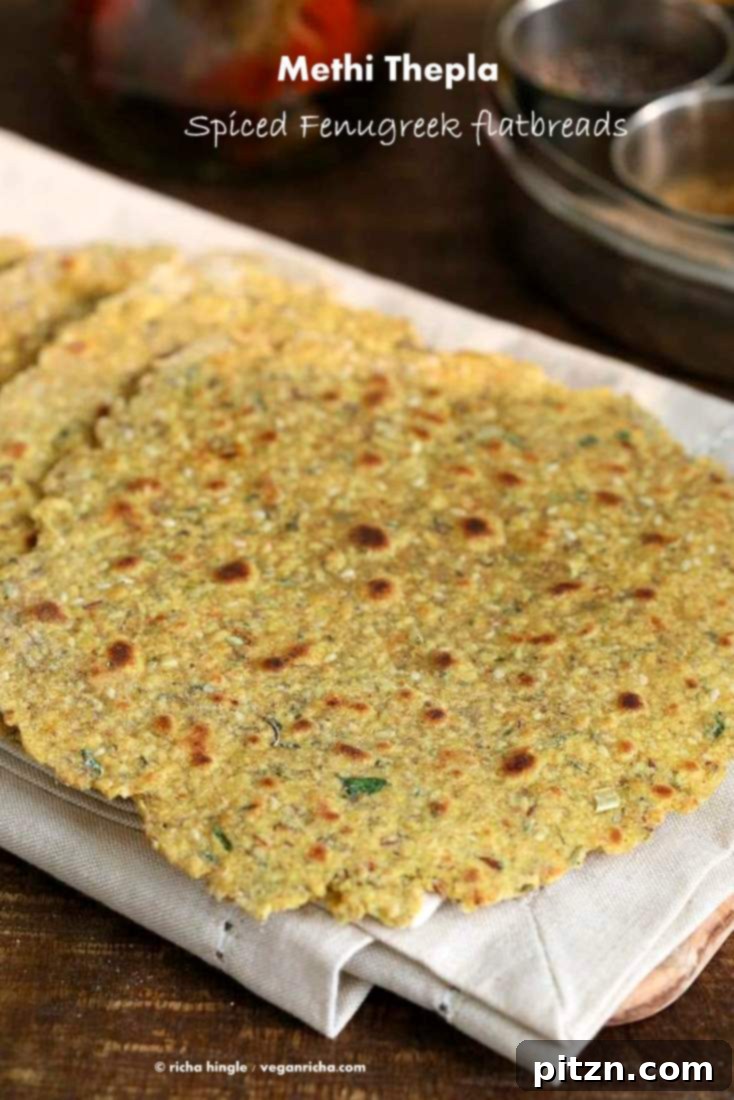
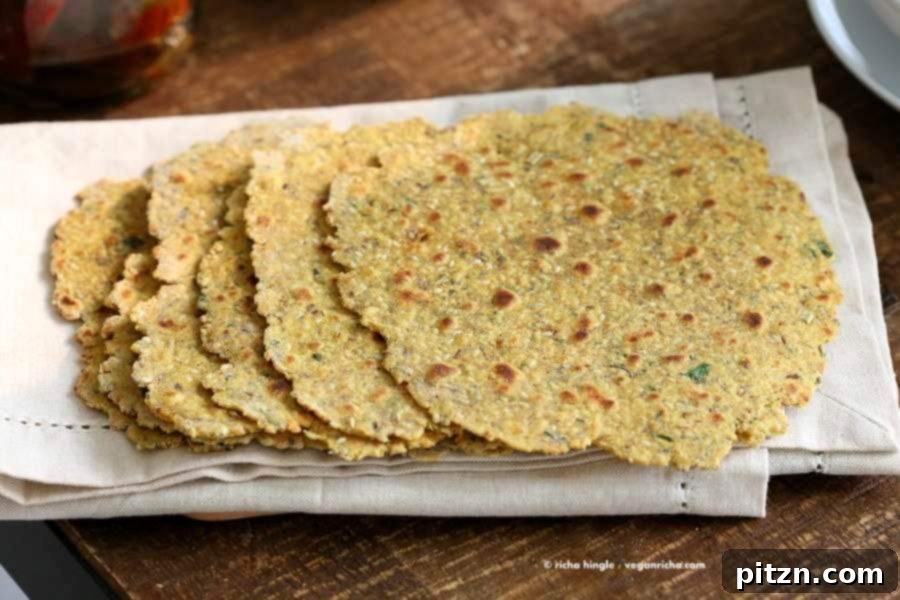
Discover the delightful world of Methi Thepla, a traditional Indian savory flatbread reimagined into a high-protein powerhouse. This unique recipe features a wholesome blend of chickpea flour, quinoa flour, and nutrient-rich sesame seeds, making it an ideal choice for a vegan, soy-free, and yeast-free diet. With simple modifications, it can also be easily prepared as a gluten-free savory flatbread, catering to diverse dietary needs without compromising on flavor or texture. Prepare to indulge in a truly satisfying and incredibly healthy addition to your meal repertoire.
Jump to Recipe
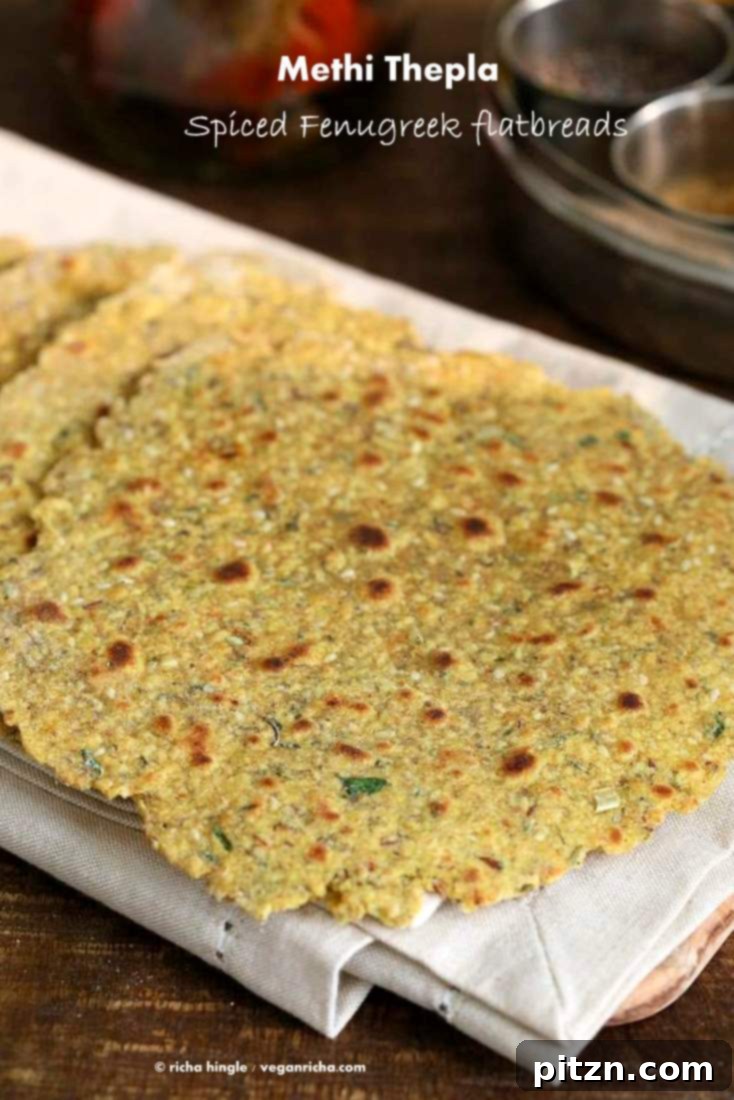
Embrace the Goodness of High-Protein Methi Thepla
Our Methi Thepla stands out as an exceptionally nourishing and flavorful flatbread. Crafted with a thoughtful combination of chickpea flour, quinoa flour, and a generous scattering of sesame seeds, this recipe naturally boosts its protein content. It’s liberally spiced with authentic Indian spices and dried fenugreek leaves (kasuri methi), infusing each bite with a captivating aroma and a savory, slightly bitter undertone characteristic of traditional Gujarati cuisine. These versatile flatbreads can be enjoyed simply with your favorite chutney, or served as a delightful side dish to complement a more elaborate Indian meal. This recipe offers flexibility; feel free to utilize the flours and spices you have on hand to create this truly fabulous savory flatbread. For an extra protein kick, consider adding a scoop of unflavored protein powder to the dough.
Crafting Your Gluten-Free Methi Thepla
For those seeking a gluten-free option, this Methi Thepla recipe is wonderfully adaptable. By substituting the whole wheat flour entirely with chickpea flour, you can achieve a delicious gluten-free version. It’s important to note that gluten-free doughs tend to be more delicate and less elastic, so when rolling them out, handle them gently and aim for a slightly thicker flatbread to prevent tearing. This ensures they maintain their integrity during cooking and provide a satisfying chew. While traditional Methi Thepla often features a higher proportion of wheat flour combined with chickpea, sorghum, or millet flours, our modified version incorporates quinoa flour and coconut flour to significantly enhance the protein profile and add a unique depth of flavor. If you prefer a more traditional approach, you can adjust the flour ratio to 1 cup wheat flour, 1 cup chickpea flour, and 1/4 cup of other flours like millet or sorghum. For an even nuttier and richer flavor, lightly roast the chickpea flour in a dry pan for 3-4 minutes before incorporating it into the dough mixture.
The Culinary Journey of Methi Thepla
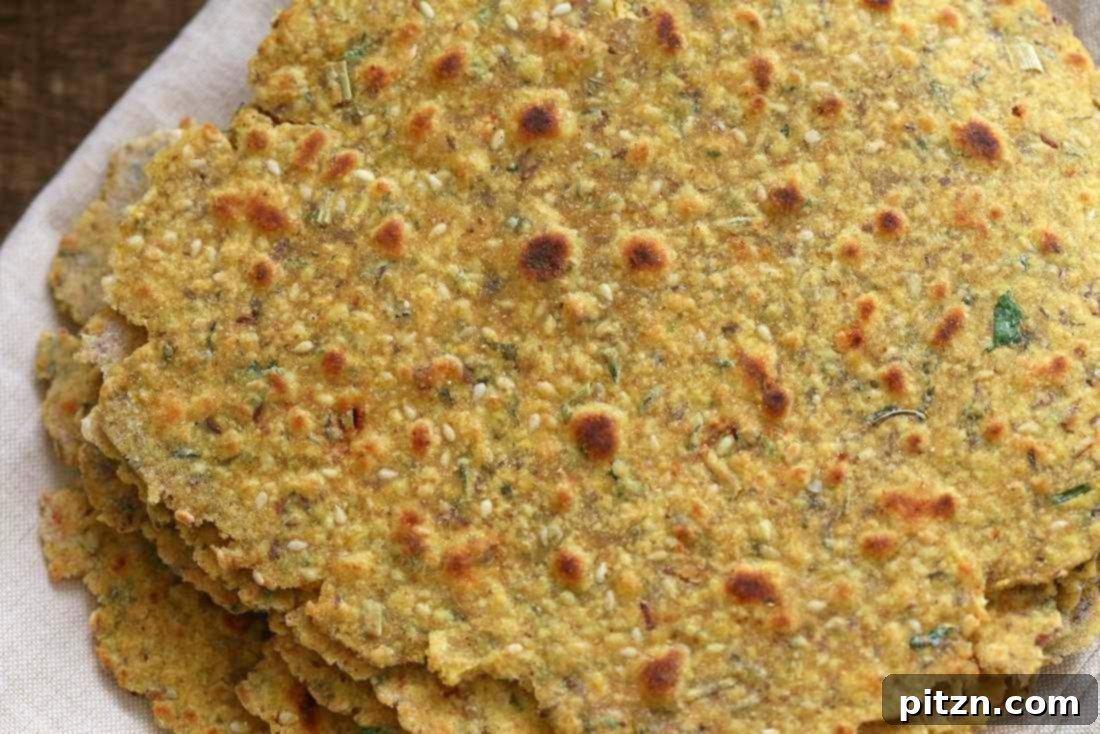
Methi Thepla is more than just a flatbread; it’s a staple in Gujarati households, celebrated for its nutritional value, ease of preparation, and excellent shelf life. The inclusion of fenugreek leaves, known as ‘methi’ in Hindi, is central to its identity. Fenugreek not only imparts a distinctive savory and slightly bitter taste but also offers numerous health benefits, including aiding digestion and possessing anti-inflammatory properties. This particular vegan savory flatbread recipe embraces these traditions while elevating the nutritional content, making it a perfect choice for health-conscious eaters and those following a plant-based diet.
Flours and Their Benefits in This High-Protein Recipe
- Chickpea Flour (Besan): A staple in Indian cooking, chickpea flour is naturally gluten-free and an excellent source of plant-based protein and dietary fiber. It lends a wonderful nutty flavor and helps bind the dough.
- Quinoa Flour: Derived from the ancient grain quinoa, this flour is a complete protein, meaning it contains all nine essential amino acids. It also offers a good dose of fiber, iron, and magnesium, contributing significantly to the “high-protein” aspect of these flatbreads.
- Coconut Flour: Known for its high fiber content and unique texture, coconut flour adds a subtle sweetness and helps in moisture absorption. It’s also gluten-free and low in carbohydrates, adding to the overall nutritional density.
- Whole Wheat Flour (Atta): When not making a gluten-free version, Indian whole wheat flour (atta) provides the classic elasticity and soft texture characteristic of traditional flatbreads. It’s rich in fiber and essential nutrients.
Flavorful Spices and Aromatic Herbs
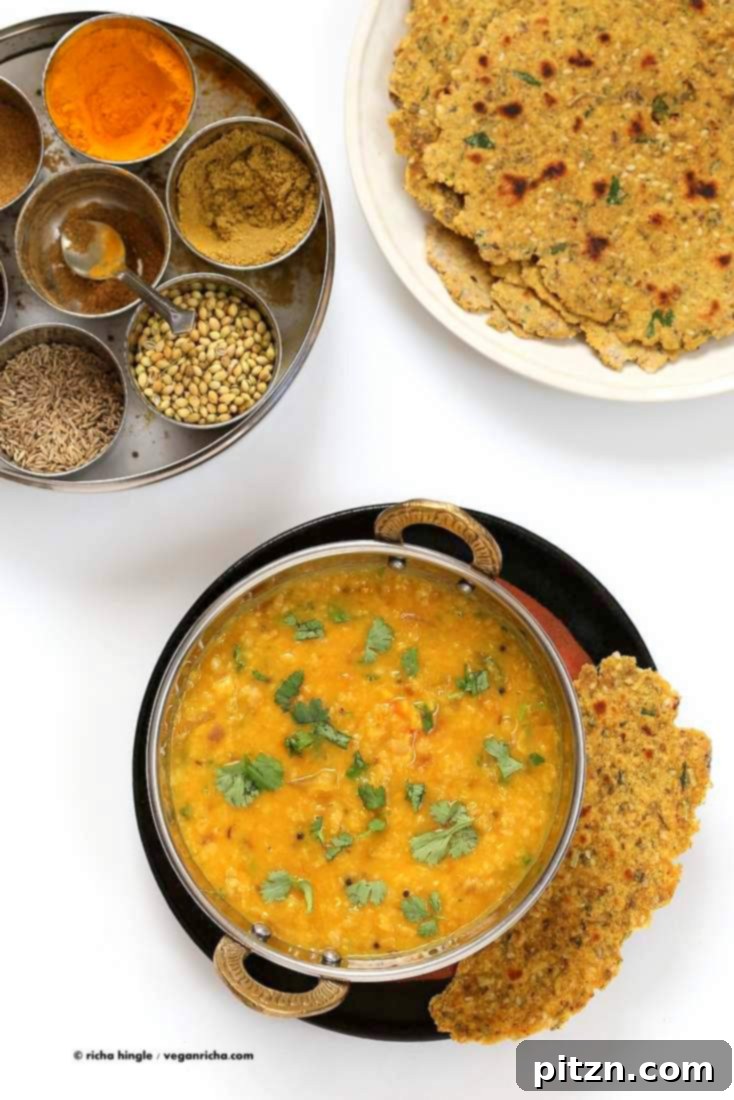
The magic of Methi Thepla lies in its exquisite blend of spices and fresh herbs. Dried fenugreek leaves (kasuri methi) are the star, providing a concentrated, aromatic flavor that defines the dish. Fresh fenugreek leaves can also be used for a more vibrant, earthy taste. Alongside methi, turmeric offers its vibrant yellow hue and anti-inflammatory benefits, while cumin and coriander powders contribute warm, earthy notes. A hint of red chili flakes provides a gentle warmth, adjustable to your preference, and asafetida (hing) adds a subtle, pungent undertone, often used in Indian vegetarian cooking to enhance digestion and flavor, especially when pulses are involved. Fresh ginger and green chili are incorporated for a burst of pungent and spicy freshness, lifting the overall profile of these savory flatbreads.
The addition of sesame seeds not only offers a pleasant textural crunch but also boosts healthy fats, protein, and calcium. Flax seeds, chia seeds, or hemp seeds are optional but highly recommended for their omega-3 fatty acids and additional fiber, further cementing this as a truly healthy Indian flatbread.
More Flatbreads from the blog
- Spinach Paratha flatbread – Yeast free
- Vegan Pita Bread Recipe
- Vegan Yeast free Flatbread and Pita bread
- Injera – 100% Teff Ethiopian Flatbread
Serve these delectable Methi Theplas with your favorite Dals, creamy sauces, rich curries, tangy chutneys, or a selection of traditional Indian pickles. Their robust flavor makes them a perfect accompaniment to a wide variety of dishes.
Step-by-Step Guide to Perfect Methi Thepla
Creating these high-protein savory flatbreads is a rewarding experience. The process is straightforward, ensuring delicious results even for novice cooks.
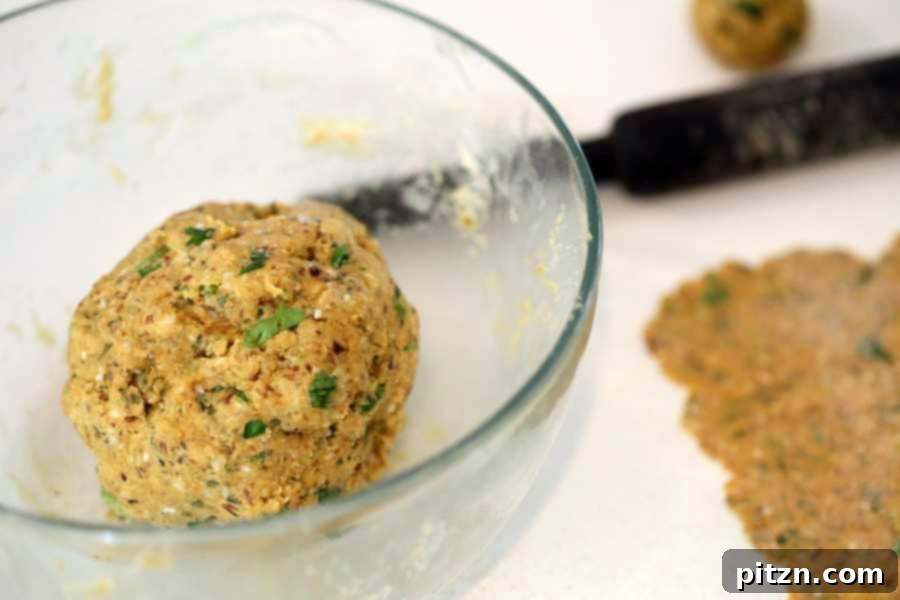
Dough Preparation: The Foundation of Flavor
Begin by combining all the dry ingredients in a spacious mixing bowl. Whisk them thoroughly to ensure the spices and flours are evenly distributed. In a separate blender, process the non-dairy yogurt, water, grated ginger, and green chili until smooth. Alternatively, finely grate the ginger and chili and add them directly to the dry ingredients along with the oil and lemon juice. Mix all the wet ingredients into the dry mixture. Start by stirring with a spoon until the ingredients just begin to clump together. Once the mixture starts to form a rough mass with a few dry patches, switch to using your hands. Lightly oil your hands to prevent sticking and gently bring the dough together. This dough doesn’t require extensive kneading; simply work it until it forms a somewhat smooth, cohesive ball that is neither excessively sticky nor too stiff. Adjust consistency by adding small amounts of water if too dry, or a tablespoon of wheat flour (or chickpea flour for gluten-free) if too soft. Once formed, brush the dough with a few drops of oil, cover it with a clean kitchen towel, and let it rest for 20 to 30 minutes. This resting period allows the flours to hydrate properly, resulting in a more pliable and easier-to-roll dough.
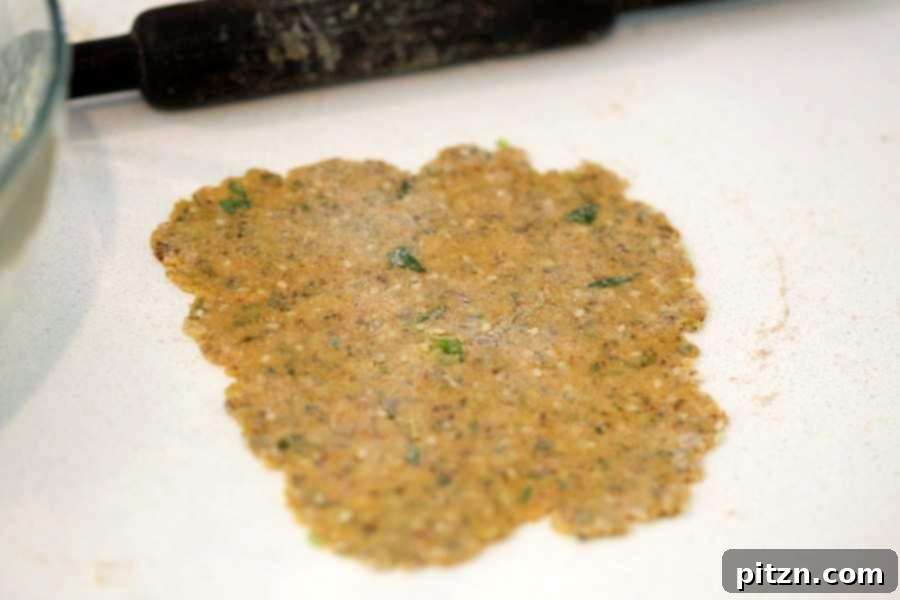
Rolling the Theplas: Achieving the Perfect Shape
After the dough has rested, lightly oil your hands again and knead it for about a minute to further smooth out its texture. Divide the dough into approximately 1.5-inch sized balls, ensuring they are roughly equal. Keep the unrolled dough balls covered with a towel to prevent them from drying out. Take one dough ball at a time and, using a dusting of wheat flour (or chickpea flour for a gluten-free version) or a piece of parchment paper to prevent sticking, roll it out into a roughly 7-inch round. Don’t be overly concerned with achieving a perfectly circular shape; the focus is on rolling the flatbread to a generally even thickness. Imperfections in shape or small cracks on the edges are perfectly acceptable and part of the homemade charm! Roll out the remaining dough balls, keeping them covered until ready to cook.
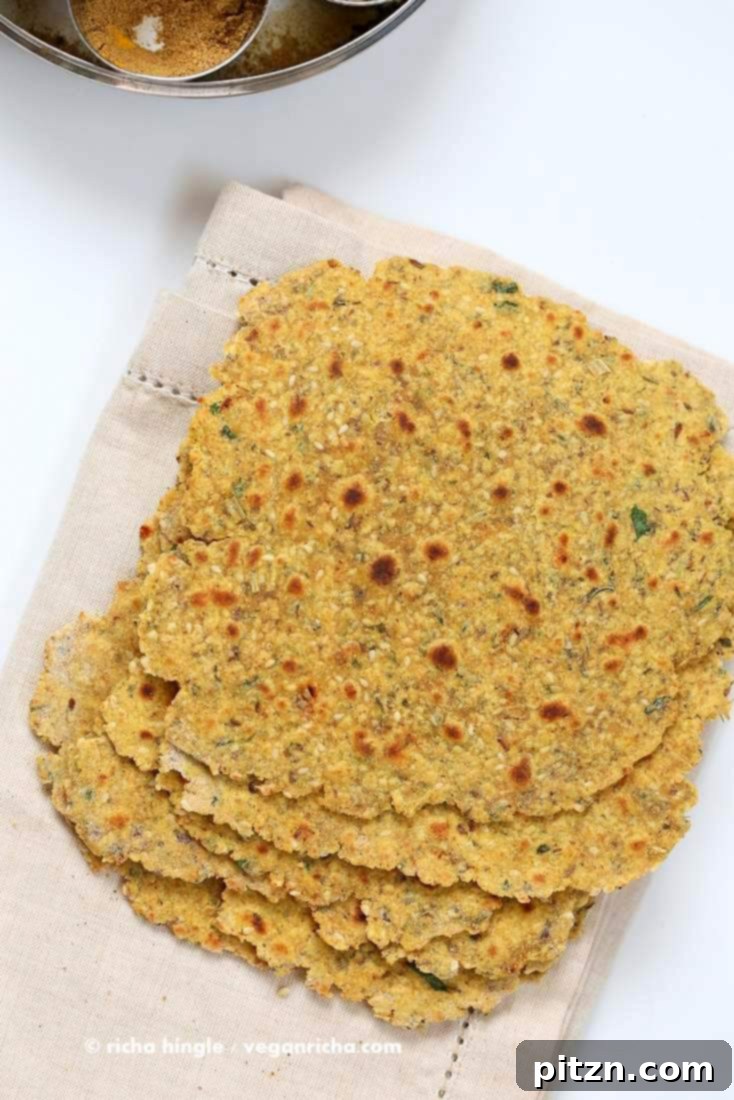
Cooking the Flatbreads: Golden Perfection
Preheat a skillet or tawa over medium-high heat until it’s hot. Once ready, carefully place a rolled-out Methi Thepla onto the hot skillet. Allow it to cook for about 30 seconds, or until you start to see small bubbles forming on the surface. Flip the flatbread and cook the other side for another 30 seconds. At this point, lightly brush or spread a small amount of oil onto the cooked side of the flatbread using a spoon or brush, then flip it again. Cook for an additional 15 seconds. Now, brush oil onto the side currently facing up, flip it one last time, and cook for a few more seconds until beautiful golden-brown spots appear on both sides. This indicates it’s thoroughly cooked and perfectly crisp yet pliable. Remove the cooked thepla from the skillet and place it on a clean kitchen towel to keep it warm and soft. Continue this process with the remaining flatbreads. Enjoy these high-protein savory flatbreads fresh off the skillet for the best experience!
Methi Thepla – High Protein Savory Herbed Flatbread
Saved
Pin
Ingredients
- 1 cup whole wheat flour, use Indian wheat flour (atta) for best results
- 1 cup chickpea flour, or besan
- 1/4 cup quinoa flour, or sorghum or millet or a mix of either of quinoa, oat, sorghum, wheat , chickpea flour
- 2 tbsp flax seeds or flax seed meal or chia seeds or hemp seeds , optional
- 1/4 cup sesame seeds, or a mix of sesame and hemp seeds
- 1/8 tsp baking soda
- 1/8 tsp asafetida- hing, optional
- 3/4 tsp salt or to taste
- 1/2 tsp turmeric
- 1/2 tsp cumin
- 1 tsp coriander powder
- 1/2 tsp onion powder
- 1/2 tsp red chili flakes , or to taste
- 3 to 4 Tbsp dried fenugreek leaves,, kasoori methi or 1/2 cup packed finely chopped fresh fenugreek leaves
- 1/4 cup packed finely chopped cilantro, optional
Wet
- 2 Tbsp oil, plus more for cooking
- 1 tsp lemon juice
- 1/3 cup non dairy yogurt
- 1/4 cup water, or more as needed
- 1 inch ginger, grated
- 1 hot green chili grated
Instructions
-
Add all the dry ingredients to a large bowl and mix well.
-
In a blender, blend the yogurt, water, ginger and chili. Or grate ginger and chili and add to the dry bowl. Add the rest of the wet ingredients to the bowl and mix until a dough is formed. Add teaspoons of water at a time if too dry, or add a tbsp more wheat flour if too soft and sticky.
Mix initially with a spoon and as soon as the mix starts to stick together a bit with some dry flour patches, get in there with oiled hands and bring the dough together. This dough doesn’t need too much kneading. Just bring it together until somewhat smooth.
-
Brush a few drops oil on the dough. Cover with a kitchen towel and let it sit for 20 to 30 minutes.
-
Oil your hands and knead for a minute to smooth out the dough. Depending on your flours and water content, you might need to add a bit of flour if too sticky.
-
Divide the dough into equal sized balls. Cover the balls with a towel while you roll.
-
Take each ball and using wheat flour or chickpea flour, roll it out into 7 inch rounds. Do not worry about the shape. Just roll the flatbread so it is generally even thickness. Roll out the rest and keep covered with towel.
-
Preheat a skillet over medium high heat. Once hot, place the rolled out flatbread on the skillet. Cook for 30 seconds, or until small bubbles start to appear, then flip. Cook for 30 seconds. Brush or spread a little oil on the flatbread using a spoon and flip. Cook for another 15 seconds, brush oil on the current side, flip and cook again for a few seconds until golden brown spots. Remove from the skillet and place on a kitchen towel. Cook all of the flatbreads.
Store on the counter for upto 2 days, in the fridge for a week and freeze for months. Reheat in the microwave or skillet
Notes
To make traditional thepla, use 1 cup wheat flour, 1 cup chickpea flour and 1/4 cup flours like millet or sorghum.
Nutritional values based on one serving
Nutrition
Nutrition information is automatically calculated, so should only be used as an approximation.
Did you make this recipe? Rate and comment below!
Beyond the Plate: Making a Difference
While we savor the rich flavors of our food, it’s also important to be aware of the world around us. In some regions, like Kerala, India, stray dog culling remains a tragic solution favored by state authorities over humane alternatives such as funding spay, neuter, and adoption programs. This means that gentle mothers with their pups and disabled dogs are being cruelly eliminated through inhumane methods, including poisoning with cyanide, beating to death, and throwing live dogs into the sea with their legs tied. The dogcatchers involved in these killing squads are reportedly paid a mere $1.75 per dog they eliminate. We urge you to stand against these practices. Please consider supporting animal welfare by signing petitions and raising awareness. You can find a comprehensive list of petitions against dog killing in Kerala here. Let’s extend our compassion beyond our tables.
We hope you enjoy preparing and sharing these delicious and healthy High-Protein Methi Theplas. They are a testament to how traditional recipes can be adapted to meet modern nutritional needs, offering a wholesome and satisfying meal for everyone.