
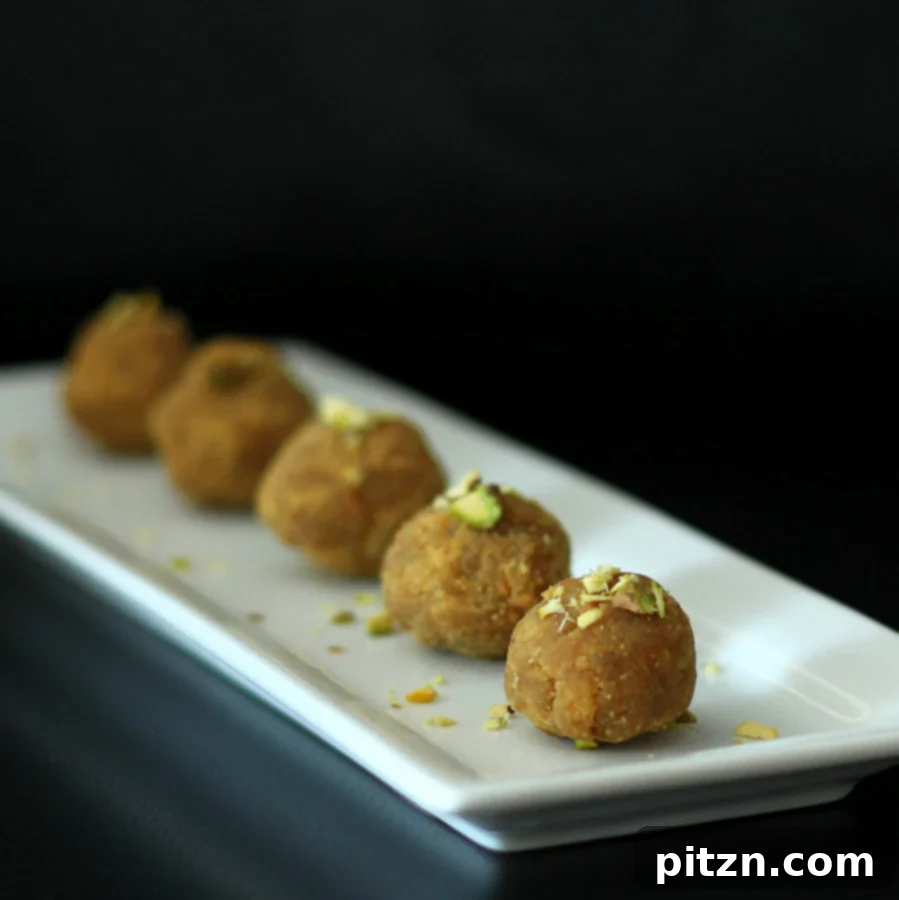
Celebrate Ganesh Chaturthi with Vegan Besan Ladoo: A Gluten-Free Indian Sweet Delight
The air is thick with anticipation and the sweet aroma of festivities – another month, another vibrant Indian festival! As the calendar pages turn, we find ourselves immersed in the joyous occasion of Ganesh Chaturthi. This auspicious Hindu festival celebrates the birthday of Lord Ganesha, the beloved elephant-headed deity, son of Shiva and Parvati. Revered as the god of wisdom, prosperity, and good fortune, Lord Ganesha is traditionally invoked at the commencement of any new venture, journey, or significant life event, symbolizing new beginnings and the removal of obstacles. His presence brings a sense of auspiciousness and joy to millions across the globe, uniting families and communities in vibrant celebrations.
Indian festivals are synonymous with an array of delectable sweets, each holding its own cultural significance and cherished memories. From rich milk-based delicacies to fragrant flour-based treats, these traditional mithai form an integral part of the celebratory feasts. Ganesh Chaturthi, in particular, calls for special preparations, with Modak and Ladoo often taking center stage as Lord Ganesha’s favorite offerings. This year, we’re bringing you a compassionate and inclusive twist to a classic favorite: a scrumptious Vegan and Gluten-Free Besan Ladoo, crafted to honor tradition while aligning with modern ethical choices.
Navigating Faith and Ethics: The Vegan Perspective
For many, the journey of faith is deeply personal and often involves introspection and evolving perspectives. In Hinduism, the worship of numerous personal gods (Ishvaras) through murtis (idols) is a profound practice. There are countless stories, human incarnations, and divine narratives that shape these beliefs. As I delve deeper into these festivals and practices, I often find myself reflecting on the vastness and complexity of the religion, realizing how much there is to learn and understand.
Lately, my personal journey towards a fully vegan lifestyle has prompted many internal questions and sometimes, a delightful conflict between long-held religious narratives and my practiced ethical beliefs. This is a common experience for many who strive to align their spiritual path with a compassionate lifestyle. How do we reconcile traditional stories that, on the surface, might seem to involve actions conflicting with our vegan principles?
Consider, for instance, one of the most well-known traditional stories of Lord Ganesha’s creation: Goddess Parvati fashioned Ganesha from sandalwood paste and imbued him with life. She then instructed him to guard her door while she bathed. When Lord Shiva returned, Ganesha, not knowing him, prevented his entry. Enraged, Lord Shiva severed the child’s head. Upon realizing his mistake, Shiva replaced Ganesha’s head with that of an elephant, thus giving us the iconic elephant-headed deity. This is but one version among many, each rich in symbolism and profound teachings.
These stories, while deeply meaningful and allegorical, can sometimes provoke modern ethical considerations. It’s a natural human tendency to question and seek deeper understanding. Why would a deity become so enraged? Why the taking of a child’s life, and then an elephant’s life to restore it? These are questions that many ponder, and perhaps the answers lie within the extensive Hindu texts and scriptures, waiting to be explored. Until then, we find solace in the essence of the celebration.
Ultimately, these festivals are about celebrating togetherness, acknowledging the wisdom and good fortune bestowed upon us, and cherishing the inherent goodness that surrounds us. Our family, like many others, continues to embrace these occasions with joy and gratitude. And what better way to celebrate than with a delightful sweet treat? While traditional Besan Ladoos are often made with liberal amounts of ghee (clarified butter), our recipe offers a delicious, dairy-free alternative, ensuring everyone can partake in the festive cheer. This particular recipe is also wonderfully gluten-free and is lovingly adapted from Dassana’s Besan Laddoos, a testament to how traditional recipes can be beautifully reimagined. For another delightful option, you can explore my Chickpea Flour and Semolina Ladoo from last year’s celebration here.
Crafting the Perfect Vegan Besan Ladoo: A Step-by-Step Guide
Besan Ladoo, with its rich, nutty flavor and melt-in-your-mouth texture, is a beloved Indian sweet. Typically, it’s prepared by roasting chickpea flour in ghee until fragrant, then mixing it with sugar and cardamom, and shaping it into delectable spheres. Our vegan version captures all the essence and charm of the classic, but without any dairy, making it accessible to those with lactose intolerance, dairy allergies, or simply those following a plant-based diet. The result is a profoundly satisfying sweet that is both healthy and utterly delicious.
The Art of Roasting Chickpea Flour
The secret to an exceptional Besan Ladoo lies in the proper roasting of the chickpea flour (besan). This crucial step develops a deep, nutty aroma and flavor, transforming the raw flour into a golden, aromatic base. Start with a modest quantity, as I often do – just 1/4 cup of chickpea flour is perfect for a small batch, ensuring none goes to waste. My partner and I rarely finish large quantities of sweets, save for chocolate, but I’m always ready to scale up for larger gatherings with friends.
Initially, dry roast the chickpea flour for about 5 minutes over low heat, stirring continuously to prevent burning. This initial phase helps to warm the flour evenly. Following this, incorporate the cocoa butter and coconut flakes. Cocoa butter provides a wonderful richness and structure that mimics traditional ghee, while coconut flakes add a subtle sweetness and texture. Mix these ingredients thoroughly into the flour.
Continue roasting patiently. This stage requires attention, as the chickpea flour needs to darken slightly and release a distinct, inviting nutty aroma. This process can take around 15-20 minutes in total, depending on your heat setting. Press down on the mixture and stir well every 3-4 minutes to ensure even roasting and prevent any spots from burning. The color change will be gradual, shifting from pale yellow to a deeper golden brown. This depth of color corresponds directly to the rich flavor of your Ladoo.
Sweetening and Spicing the Mixture
Once the chickpea flour has reached its perfect roasted state, it’s time to introduce the flavors that elevate Besan Ladoo to a truly special treat. Add the ground sugar – I prefer raw sugar for its subtle caramel notes, but any fine granulated sugar will work beautifully – along with a generous pinch of salt to balance the sweetness, aromatic cardamom powder, and a hint of nutmeg powder. These spices are quintessential to Indian sweets, imparting warmth and an irresistible fragrance. Mix these ingredients thoroughly into the warm flour mixture, continuing to roast for another 3 minutes to allow the flavors to meld beautifully.
Achieving the Right Consistency with Coconut Milk
The final step in preparing the Ladoo mixture involves adding liquid to bind it all together. Gently sprinkle coconut milk (or any preferred non-dairy milk) over the mixture. The goal is to achieve a lumpy, yet workable consistency. Start with the suggested amount and add less or more as needed. You want the mixture to just come together when pressed, not be overly wet. Remove the pan from the heat and allow the mixture to cool for a minute or two until it’s warm enough to handle comfortably.
Forming the Ladoos
Once the mixture is cool enough to touch, begin shaping it into small, round balls. This recipe, being lower in oil content compared to traditional ghee-laden versions, might cause the mixture to become a bit crumbly as it cools completely. If this happens, don’t fret! Simply warm the mixture slightly on the stovetop again for a few moments, or add a few extra drops of oil (like melted cocoa butter or neutral oil) or a dash of maple or agave syrup to help it bind. The warmth helps the mixture become pliable again. Gently press and roll between your palms until you form smooth, round Ladoos.
For those seeking an even lighter option, consider a truly fat-free (oil-free) version, much like this delicious Wheat Laddoo recipe, showcasing the versatility of vegan Indian sweets. And for more inspiring veganized Indian sweets, be sure to explore the extensive collection here.
The result is pure sweet deliciousness, a guilt-free indulgence that perfectly complements any festive occasion.
Vegan Besan Ladoo Recipe: Sweet Chickpea Flour Balls with Cardamom and Nutmeg
This delightful recipe is not only vegan but also naturally gluten-free, grain-free, dairy-free, soy-free, and corn-free. With a simple substitution, it can also be made entirely nut-free, catering to a wide range of dietary needs and preferences.
Cook time: Approximately 30 minutes.
Yields: 7-8 small balls. Easily doubled or tripled for larger batches.
- 1/4 cup chickpea flour (besan)
- 1 Tablespoon shredded coconut (dried small flakes, optional, for added texture and flavor)
- 1 Tablespoon pure food-grade softened cocoa butter (or 1-2 Tablespoons a neutral oil like sunflower or canola oil for a nut-free option)
- 2.5 Tablespoons sugar (I used finely ground raw sugar for a smoother texture)
- 1/8 teaspoon cardamom powder (for classic Indian fragrance)
- Generous pinch of nutmeg powder (complements cardamom beautifully)
- Pinch of salt (enhances all the sweet flavors)
- 1 Tablespoon coconut milk (full-fat for richness, or any non-dairy milk)
- Add the chickpea flour to a sturdy pan or Kadai. Dry roast it over low heat for approximately 5 minutes. Stir frequently, once or twice per minute, to ensure even roasting and prevent any scorching.
- Introduce the shredded coconut flakes (if using) and the softened cocoa butter (or oil) to the pan. Mix these ingredients thoroughly with the chickpea flour.
- Continue to roast the mixture over low to medium-low heat for another 15 minutes. During this time, the flour will absorb the fat, and the color will deepen. It is crucial to press down on the mixture with your spatula and mix it well every 3-4 minutes to ensure uniform roasting and prevent lumps. If you are preparing a larger batch, ensure there is sufficient cocoa butter or oil so the mixture does not appear overly dry; it should have a sandy, slightly moist consistency.
- Once the chickpea flour has achieved a fragrant, nutty aroma and a rich golden-brown color, add the ground sugar, salt, cardamom powder, and nutmeg powder. Mix these ingredients into the flour thoroughly, incorporating them evenly. Continue roasting for an additional 3 minutes, allowing the spices to bloom in the warmth.
- Remove the pan from the heat. Sprinkle the coconut milk (or non-dairy milk) over the mixture. Mix gently with a spatula. The mixture should start to come together. If it appears too dry or crumbly, add a few more drops of coconut milk, one teaspoon at a time, until it reaches a consistency where it can be pressed into a cohesive lump. (You can add just enough liquid to form one large lump, which will make shaping the individual Ladoos easier).
- Allow the mixture to cool for approximately a minute or two, or until it is warm enough to handle comfortably without burning your hands.
- While still warm, take small portions of the mixture and press them firmly between your palms, then roll them into smooth, round balls. If the mixture cools too much and becomes too crumbly to shape, gently warm it on the stove for a few seconds and add a tiny bit more oil or maple/agave syrup to help bind it.
- For a beautiful finish, gently press crushed cashews, pistachios, or golden raisins onto the top of each Ladoo as a garnish.
Store these delightful vegan Besan Ladoos in an airtight container at room temperature for up to a week, or refrigerate for longer freshness. They make a perfect offering for Ganesh Chaturthi, a thoughtful gift, or a satisfying sweet treat any time of the year. Enjoy the rich flavors and the joy of sharing homemade, compassionate treats!