
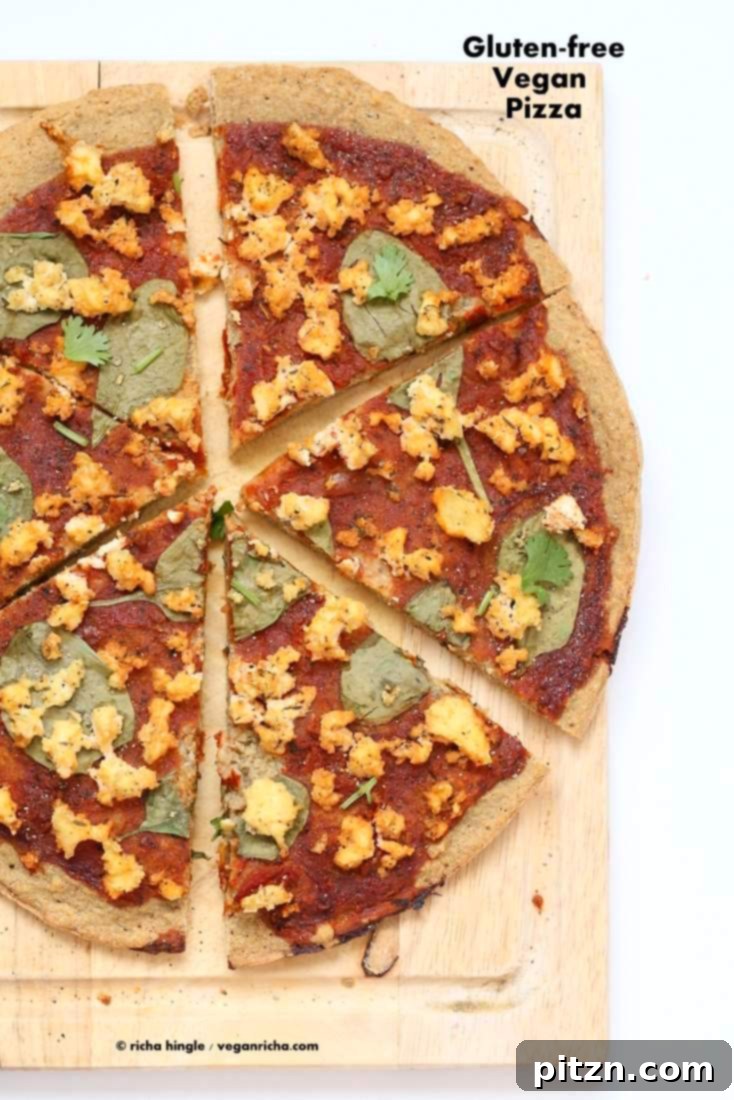
Easy Gluten-Free Yeast-Free Vegan Pizza Crust Recipe. How to make the best yeast-free gluten-free crust with just 4 main ingredients. Gum-free Soy-free Recipe
Jump to Recipe
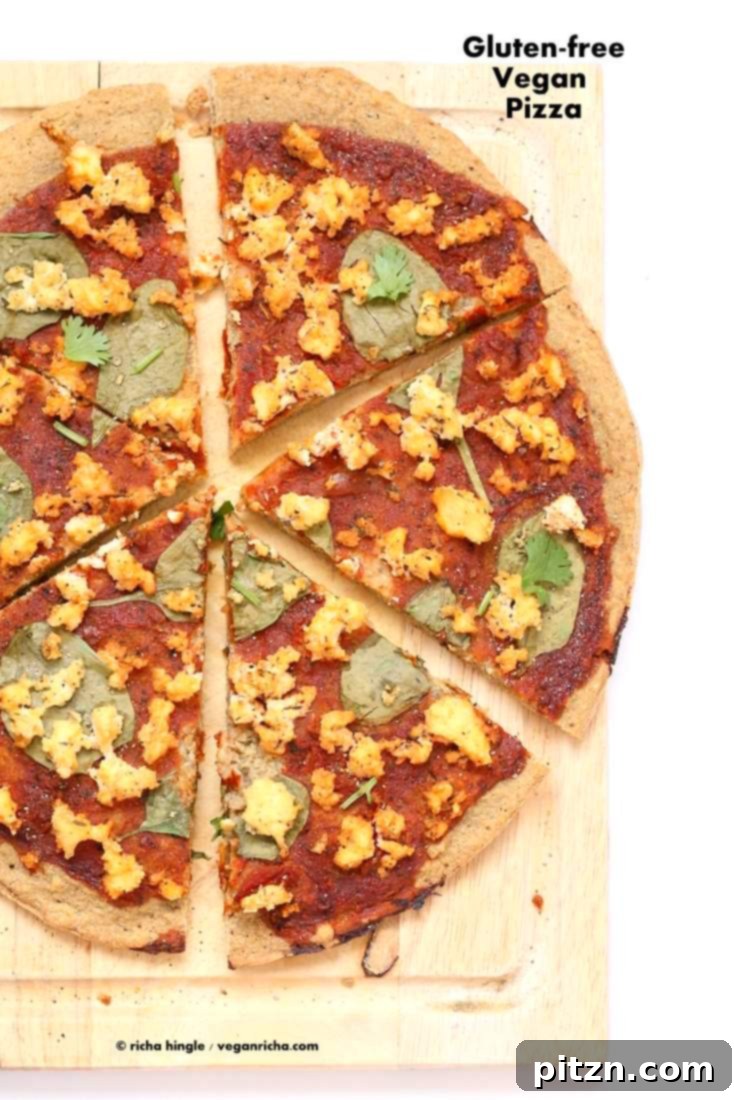
Mastering the Art of a Perfect Gluten-Free, Yeast-Free, Vegan Pizza Crust
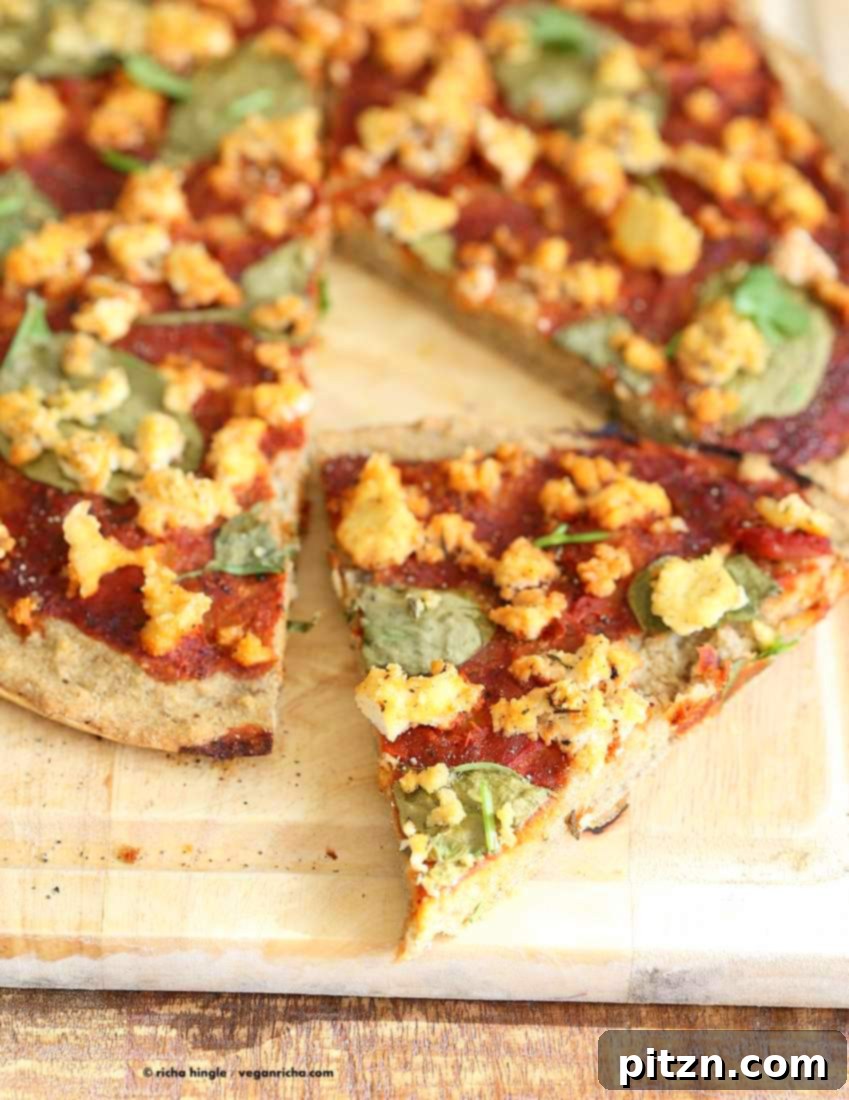
Are you searching for a pizza crust that caters to multiple dietary needs without compromising on flavor or texture? Look no further! This incredible recipe for an **Easy Gluten-Free Yeast-Free Vegan Pizza Crust** delivers a wonderfully delicious and satisfying base for your favorite pizzas. Crafted with just four primary ingredients, this recipe stands out because it’s completely **gum-free, soy-free, and nut-free**, making it an excellent choice for individuals with common allergies or sensitivities. It’s a game-changer for homemade pizza nights, offering a simple yet robust foundation that holds up beautifully to all your desired toppings.
The Versatility of Chickpea Flour: A Culinary Staple
In our kitchen, chickpea flour (also known as gram flour or besan) has become an indispensable ingredient. Its earthy flavor and binding properties make it a star in a wide array of dishes, especially for those following a plant-based or gluten-free diet. Recently, with family visiting, our meals have been rich in Indian culinary traditions, where chickpea flour shines. From savory breakfast pancakes and crispy fritters to the creamy Kadhi Pakora served with homemade almond cashew yogurt, chickpea flour consistently provides incredible results. The sheer versatility of this humble ingredient is truly astounding, and it’s what makes this pizza crust recipe so special.
Embracing chickpea flour in this **easy vegan pizza crust** allows us to create a base that is naturally gluten-free and hearty. Unlike many commercial gluten-free products that rely on gums like xanthan or guar to provide structure, our recipe achieves its fantastic texture without them. This is a significant benefit for anyone sensitive to these additives, offering a cleaner and more natural pizza experience. The robust nature of chickpea flour also contributes to a satisfyingly sturdy crust, ensuring your pizza slices remain intact, even with generous toppings.
Why Choose a Yeast-Free and Gum-Free Pizza Crust?
For many, avoiding yeast is a preference or necessity. Traditional pizza crusts often rely on yeast for their rise and airy texture, which can sometimes lead to digestive discomfort for sensitive individuals or simply requires more time for proofing. Our **yeast-free pizza crust** eliminates the need for lengthy rising times, allowing you to whip up fresh, homemade pizza much faster. This makes it perfect for weeknight meals when you crave something quick, healthy, and incredibly flavorful.
The “gum-free” aspect is another highlight. Food gums are commonly used in gluten-free baking to mimic the elasticity that gluten provides. However, they can sometimes cause digestive issues for some people. By focusing on the natural binding qualities of ingredients like chickpea flour and chia seeds, we’ve developed a crust that is both stable and deliciously soft without relying on these additives. This thoughtful approach ensures that our **gluten-free, soy-free, nut-free pizza crust** is accessible and enjoyable for even more people.
A Foundation for Culinary Creativity: Your Perfect Pizza Canvas
This **simple yeast-free gluten-free pizza crust** is designed to be your ultimate blank canvas. Once baked, it’s ready to be adorned with your favorite marinara or other pizza sauce, a generous layer of vegan cheese (or homemade alternatives like our tofu thyme basil ricotta), and an abundance of fresh vegetables or herbs like basil. The possibilities are truly endless! Feel free to explore our Pizza collection for endless inspiration on toppings and flavor combinations.
While this recipe is already **nut-free and soy-free**, you can further customize it. For a lighter-colored crust, consider using white chia seeds instead of black, as black chia seeds can give the crust a slightly greyish hue. This crust is also inherently **grain-free** if you opt to use additional chickpea flour instead of the small amount of brown rice flour. For an even more complex flavor and texture, you can experiment by adding cooked quinoa or millet directly into the batter, similar to our Millet Chickpea Kale Quiche Pizza.
Achieving the Ideal Texture: Sturdy Yet Soft
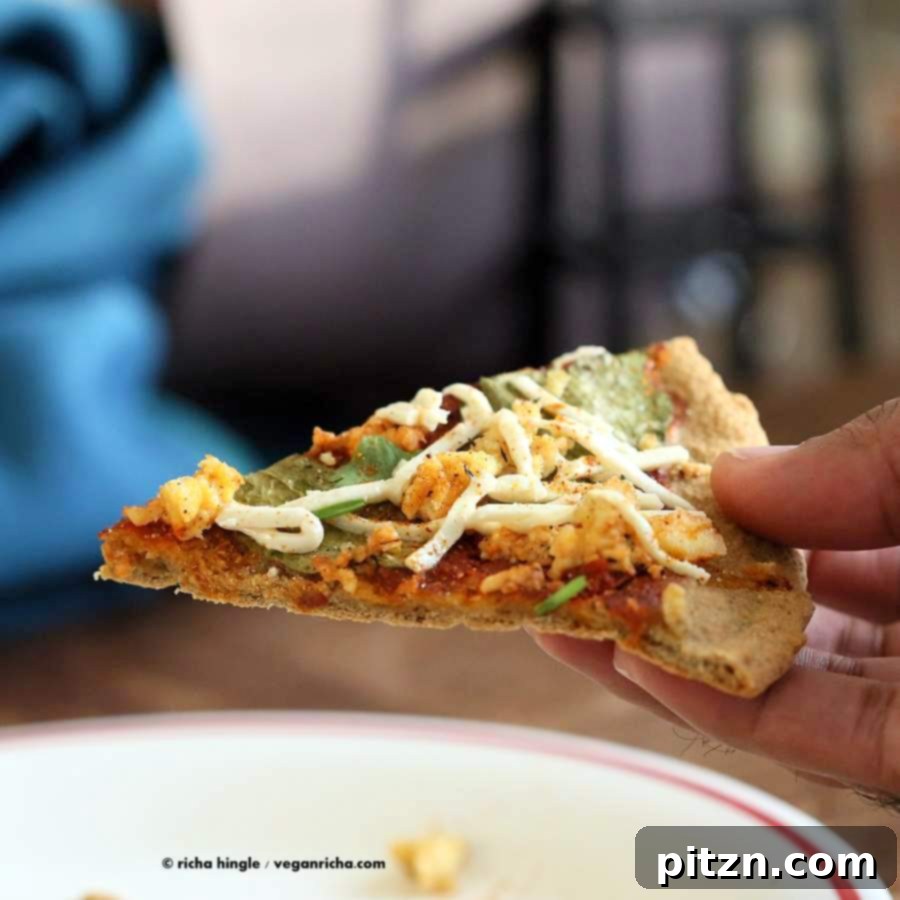
One of the most remarkable aspects of this **chickpea flour pizza crust** is its exceptional texture. It’s sturdy enough to handle a generous amount of sauce and toppings without becoming soggy or collapsing, yet it remains wonderfully soft and fluffy on the inside. Unlike some gluten-free crusts that can be dense or crumbly, this recipe yields a crust that is perfectly pliable and holds its shape beautifully. It shares a similar hearty quality to socca (a traditional chickpea pancake), but with an enhanced fluffiness that truly elevates it to an ideal pizza base.
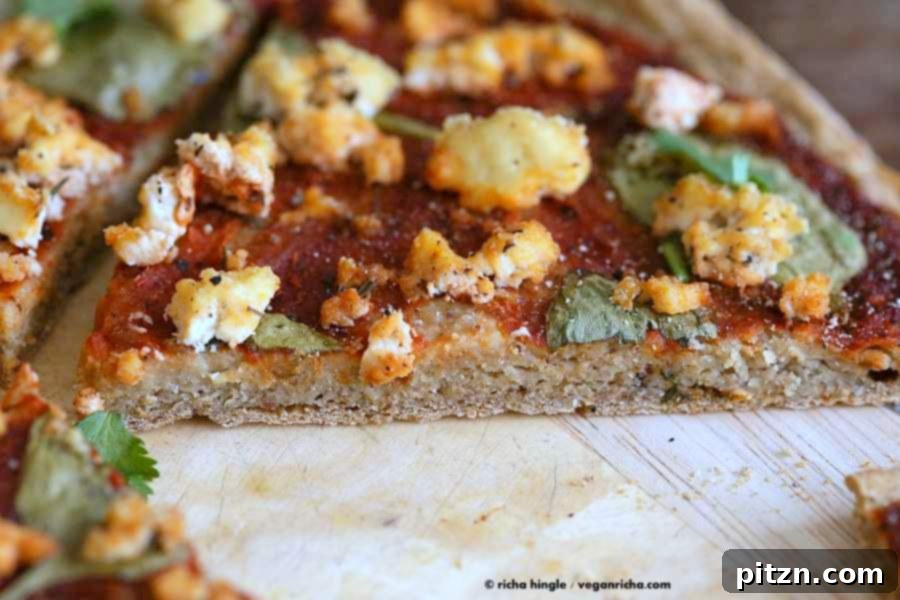
We understand the frustration of a gluten-free crust that falls apart. This recipe was meticulously developed to ensure a consistent, non-crumbly result, providing a satisfying bite every time. The combination of chickpea flour with a touch of rice flour and chia seed meal creates a natural binding matrix that eliminates the need for additional gums, resulting in a crust that is both easy to make and delightful to eat.
Expand Your Gluten-Free Horizons with More Bread & Crust Recipes
If you’re a fan of exploring various gluten-free bread and crust options, you’ll love these other recipes from our collection:
- Best Vegan Gluten-Free Pizza Crust Recipe (for a yeast-based option)
- Gluten-Free Burger Buns
- Lentil Bread: Gluten-Free, Yeast-Free Vegan Sandwich Bread
- GF Teff Crust topped with Ethiopian Lentils
- Gluten-Free Oat Focaccia Crust: Tempeh Tikka Masala Pizza
Simple Steps for a Stellar Pizza Crust
Crafting this **easy gluten-free yeast-free vegan pizza crust** is a straightforward process. Follow these visual steps to guide you:
-
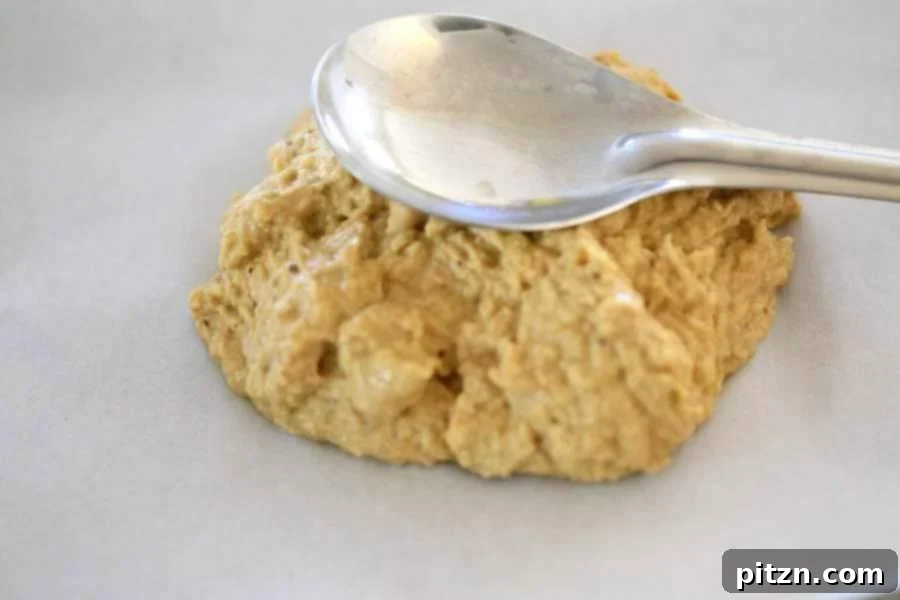
Prepare the Batter: Begin by making a smooth, consistent batter. The texture should be thick enough to spread but not too stiff.

-
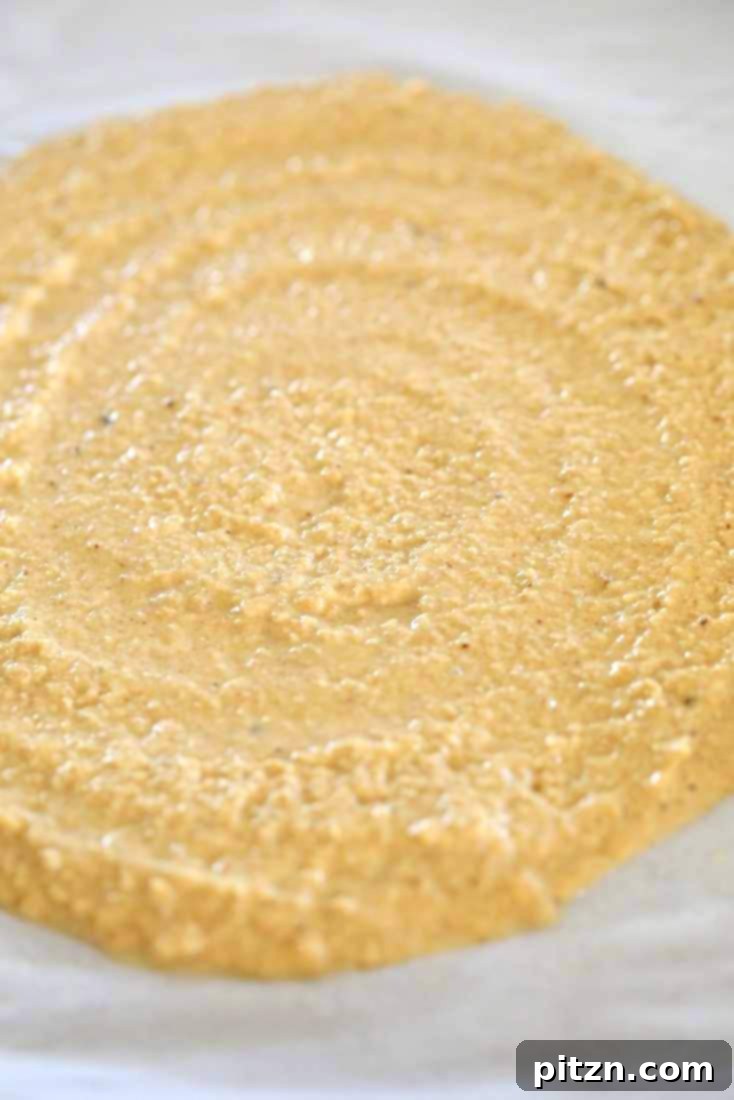
Spread the Batter: Carefully drop the prepared batter onto a parchment-lined baking sheet. Using a spatula, gently spread it into your desired circular shape. If the batter starts to stick, a light spray of water on the spatula can help. Aim for an even thickness for uniform baking.
-
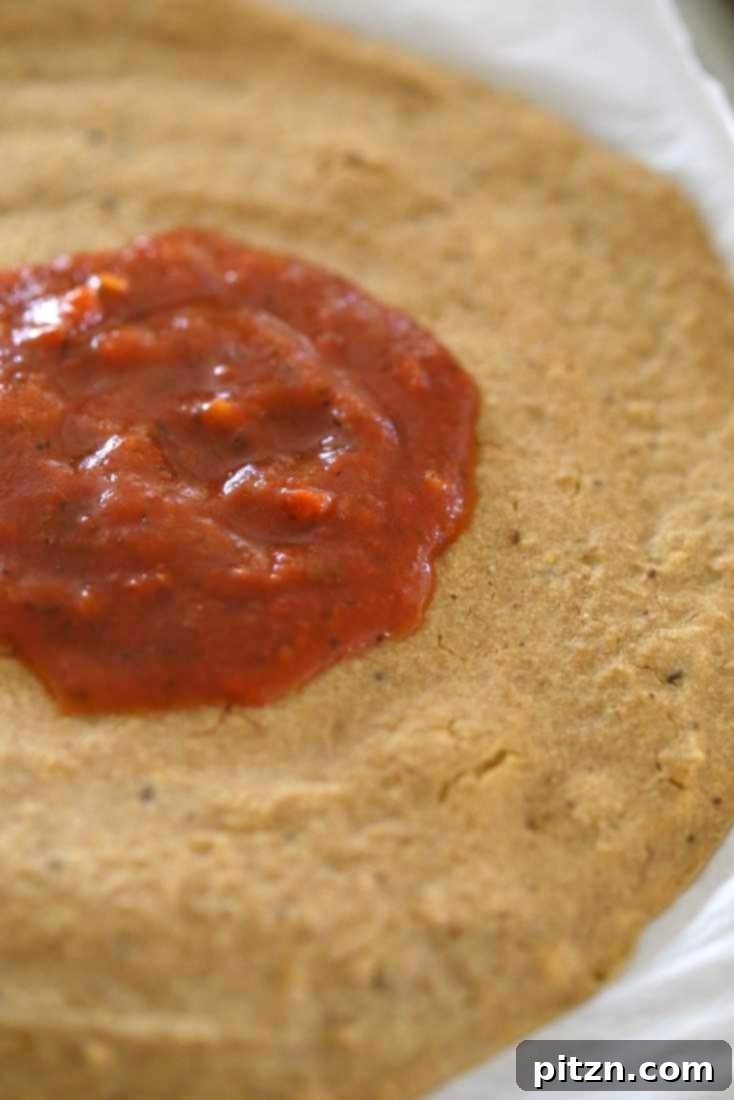
Par-bake the Crust: This initial bake is crucial for setting the crust and developing its structure before toppings are added.
-
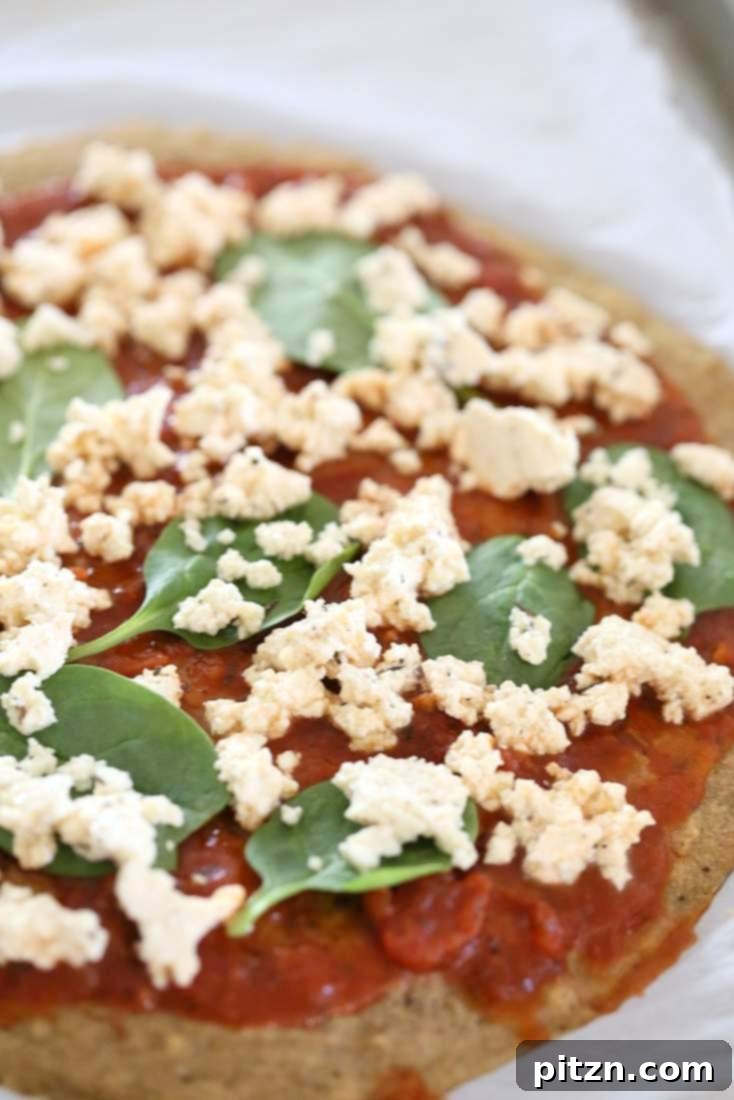
Add Toppings: After par-baking, remove the crust from the oven and unleash your creativity! Spread your favorite sauce, add a medley of fresh veggies, and a generous amount of vegan cheese or our tofu thyme basil ricotta for a burst of flavor.
-
Final Bake and Serve: Return the topped pizza to the oven for its final bake. Once golden and bubbly, allow it to cool slightly before slicing and serving. This short cooling period helps the crust set, ensuring perfect slices every time.
Gluten-Free Yeast-Free Vegan Pizza Crust Recipe
Vegan Richa
15 mins
35 mins
50 mins
2
Pizza
American
Ingredients
- 1 cup chickpea flour (flour of white garbanzo beans)
- 2 Tbsp chia seed meal
- 2 Tbsp brown rice flour (or white rice flour)
- 1 Tbsp coconut flour (or use more chickpea flour)
- 1/2 tsp baking powder
- 1/4 tsp baking soda
- 1/4 tsp garlic powder
- 1/2 tsp salt
Wet Ingredients
- 1 Tbsp oil
- 1/2 tsp lemon juice
- 3/4 cup + 2 Tbsp water
Suggested Toppings
- Marinara or other pizza sauce
- Spinach or chopped basil
- Tofu Thyme Basil Ricotta (use less thyme and add some basil, or use vegan cheese of choice)
Instructions
-
Roast Chickpea Flour (Optional, but Recommended for Enhanced Flavor): In a large skillet over medium heat, gently roast the chickpea flour for 4 to 5 minutes. Stir continuously, especially every 20 seconds after the first 2 minutes, to prevent burning. This roasting step deepens the flour’s flavor profile, adding a subtle nuttiness to your crust. Once roasted, remove from heat, allow it to cool completely, and then transfer to a mixing bowl. While optional, this step is highly recommended for an even more delicious crust. You can, of course, skip roasting and use the chickpea flour as is.
-
Combine Dry Ingredients: Add all the remaining dry ingredients (chia seed meal, brown rice flour, coconut flour, baking powder, baking soda, garlic powder, and salt) to the bowl with the chickpea flour. Whisk thoroughly until all ingredients are well combined and evenly distributed. This ensures a consistent rise and flavor throughout the crust.
-
Prepare Wet Ingredients and Form Batter: Measure 3/4 cup of water and stir in the lemon juice. Add this lemon-water mixture and the oil to the dry ingredients. Mix or whisk vigorously until a smooth batter forms, free of any lumps. The batter should be quite thick. If it seems too stiff, gradually add 1 to 2 tablespoons more water until you achieve a thick, spreadable consistency. Let the batter rest for 5 minutes. This allows the chia seeds to hydrate and the flours to absorb the liquid, resulting in a more cohesive crust.
-
Preheat Oven: While the batter rests, preheat your oven to 400°F (200°C). Prepare a baking sheet by lining it with parchment paper; this prevents sticking and makes transfer easier.
-
Spread the Crust: If your batter has thickened further, add another 1 to 2 teaspoons of water and mix gently. Spoon the thick batter onto the center of your parchment-lined baking sheet. To spread it into a circular pizza shape, lightly spray your spatula with water (or dampen it) to prevent the batter from sticking. Gently spread the batter outwards from the center to form a uniform circle, approximately 8-10 inches in diameter, ensuring an even thickness for optimal baking.
-
First Bake (Par-bake): Place the baking sheet with the spread crust into the preheated oven and bake for 12 minutes. This par-baking step creates a firm base, preventing a soggy crust once toppings are added. The crust should be lightly golden and set.
-
Add Toppings and Second Bake: Remove the par-baked crust from the oven. Now it’s time to add your favorite toppings! Spread marinara or your preferred pizza sauce, then layer with vegetables and your choice of vegan cheese or ricotta. Return the pizza to the oven and bake for an additional 12 to 14 minutes, or until the toppings are cooked through and the cheese is melted and bubbly. For extra crispiness or to get the cheese perfectly golden, you can broil for a minute or two at the end, watching carefully to prevent burning.
-
Cool and Serve: Once baked to perfection, carefully remove the pizza from the oven. Allow it to cool on the baking sheet for at least 2 minutes before slicing. This brief cooling period helps the crust firm up and makes for cleaner, easier slices. Serve warm and enjoy your homemade, healthy pizza!
Notes
Chickpea Flour vs. Besan (Gram Flour): While both are made from chickpeas, “chickpea flour” typically refers to flour from white garbanzo beans, which is often finer. “Besan” (gram flour) is usually made from split brown chickpeas (chana dal) and can be coarser. If you are using besan, you might find you need slightly less water to achieve a thick batter, as besan can absorb liquid differently. A chickpea flour made from white garbanzo beans generally yields a thicker, more robust crust compared to besan, which might result in a thinner base.
Nutritional values provided are based on one serving and are an approximation.
Nutrition (per serving)
Carbohydrates: 50g,
Protein: 16g,
Fat: 15g,
Saturated Fat: 1g,
Sodium: 357mg,
Potassium: 711mg,
Fiber: 12g,
Sugar: 6g,
Vitamin C: 0.5mg,
Calcium: 157mg,
Iron: 4.1mg
Nutrition information is automatically calculated, so should only be used as an approximation.
Tips for Success & Troubleshooting Your Gluten-Free Pizza Crust
To ensure your **gluten-free yeast-free vegan pizza crust** turns out perfectly every time, keep these tips in mind:
- Flour Quality Matters: The type of chickpea flour can influence the amount of water needed. Finer chickpea flour (from white garbanzo beans) might require slightly more water than coarser besan (gram flour). Adjust water gradually to achieve a thick, yet spreadable batter.
- Don’t Skip the Rest: Allowing the batter to rest for 5 minutes is crucial. This gives the chia seeds time to gel and the flours to fully hydrate, contributing to the crust’s structure and preventing a dry or crumbly texture.
- Even Spreading is Key: A uniformly thick crust will bake evenly. Take your time to spread the batter into an even circle. If the center is too thick or the edges are too thin, you’ll end up with inconsistent results.
- Parchment Paper is Your Friend: Always use parchment paper! It prevents sticking and makes transferring the crust a breeze, both before and after baking. Trying to move a raw gluten-free crust without it can be a messy challenge.
- Customize Your Flavor Profile: While garlic powder is included for a savory base, feel free to add other dried herbs like oregano, Italian seasoning, or a pinch of red pepper flakes to the dry ingredients for an extra flavor boost.
- Achieving Crispy Edges: If you prefer a crispier crust, consider baking it for an additional 2-3 minutes during the par-bake phase, or extend the final bake slightly. Broiling for a minute at the very end can also help crisp up the edges and melt cheese beautifully, but watch it closely to avoid burning.
- Storage: Leftover crust can be stored in an airtight container in the refrigerator for up to 3 days. Reheat in the oven or a toaster oven for best results.
Enjoy Your Healthy, Homemade Pizza!
This **Gluten-Free Yeast-Free Vegan Pizza Crust Recipe** is more than just an alternative; it’s a celebration of wholesome ingredients and simple, delicious cooking. Whether you’re navigating dietary restrictions or simply looking for a healthier, quicker way to enjoy pizza, this chickpea flour base will undoubtedly become a staple in your kitchen. Its robust structure, delightful texture, and versatile nature make it an ideal choice for any pizza lover. Gather your favorite toppings, get creative, and savor the joy of a truly homemade pizza experience!