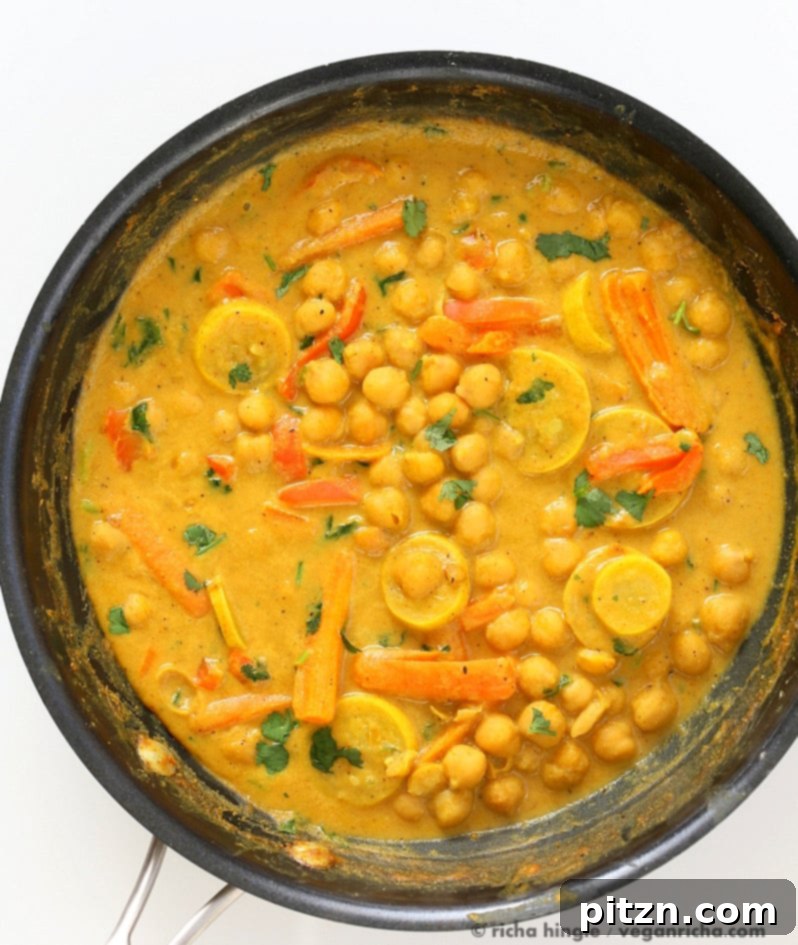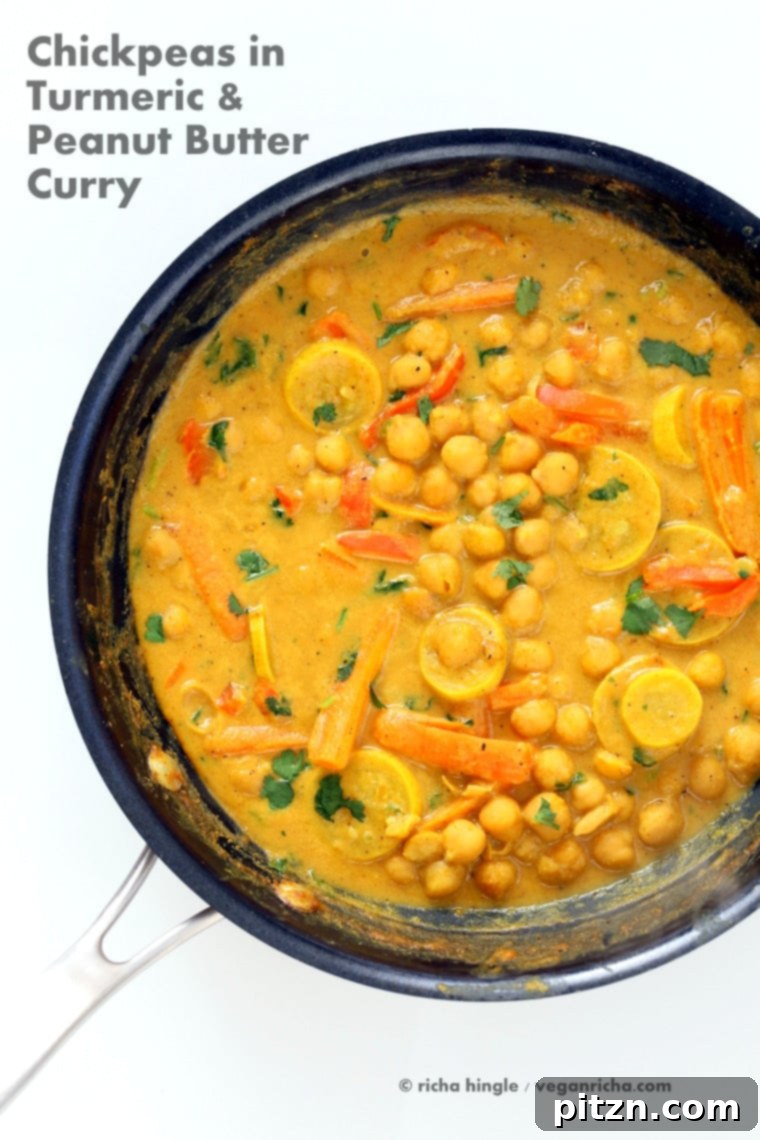
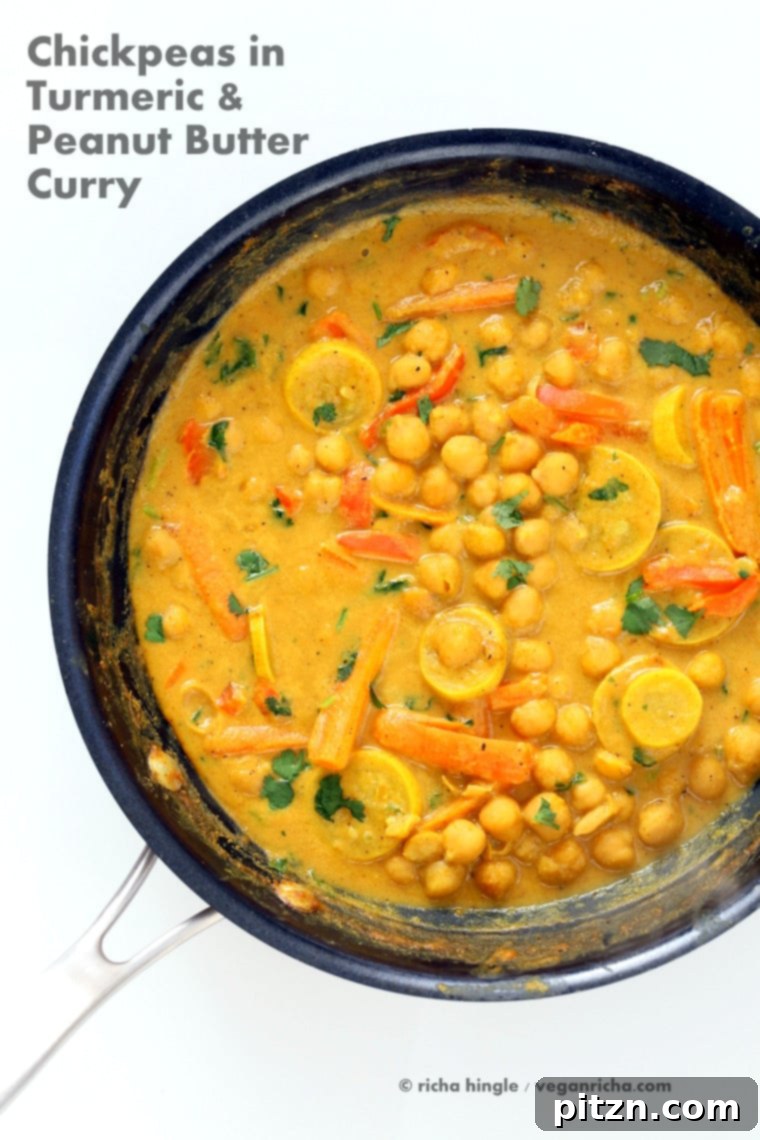
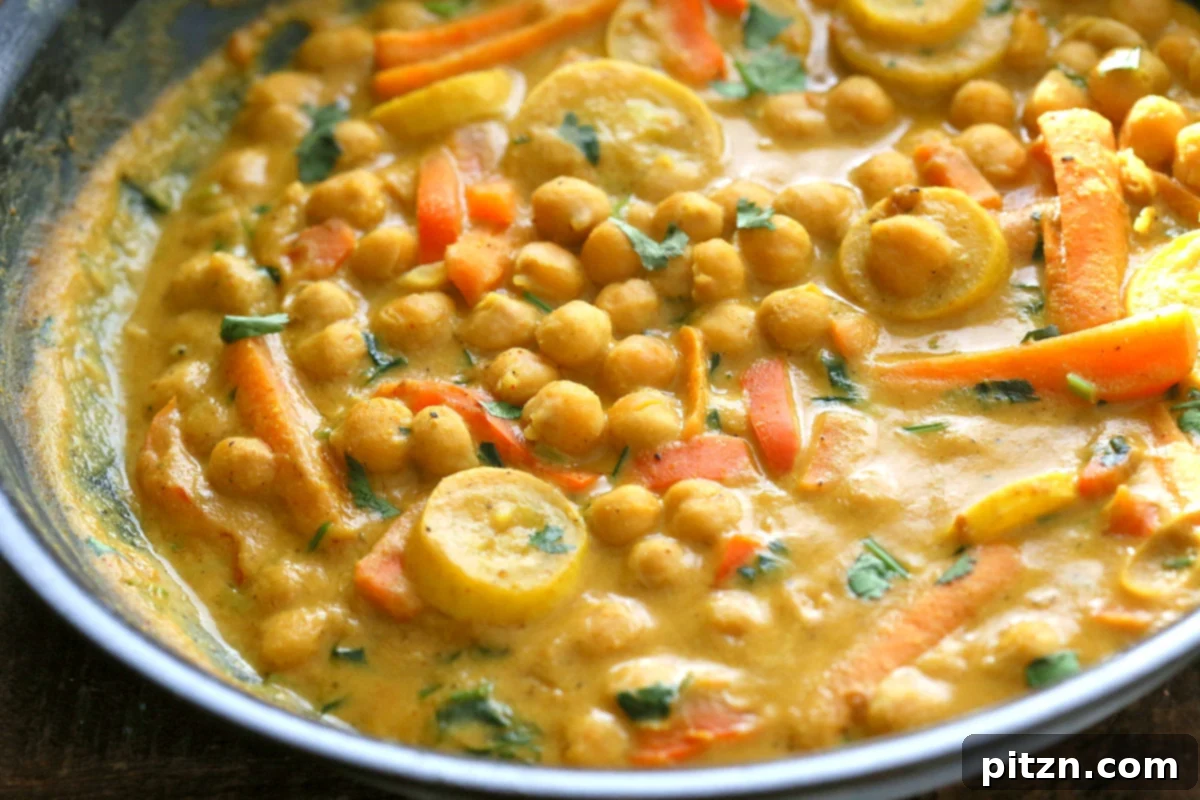
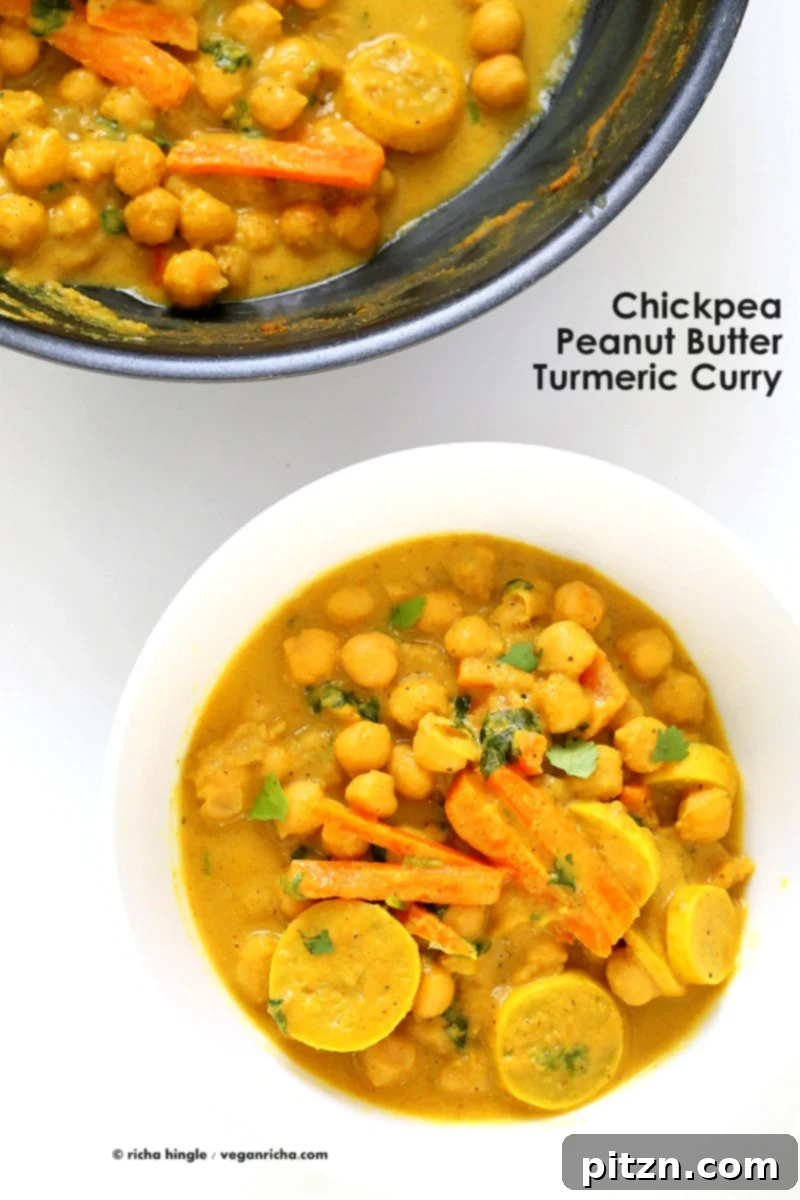
Welcome to a culinary journey that celebrates simplicity, vibrant flavors, and wholesome ingredients! Presenting our **1-Pot Chickpeas in Turmeric Peanut Butter Curry**, an incredibly easy, plant-based sensation designed for busy weeknights and leisurely weekend cooking alike. This delightful curry features a rich, creamy peanut (or almond) butter sauce, infused with aromatic Indian spices and golden turmeric, all brought together with a medley of fresh summer vegetables and hearty chickpeas. It’s a truly versatile, satisfying, and nutritious meal that is completely vegan, gluten-free, and soy-free, making it perfect for various dietary preferences. Serve this comforting golden chickpea curry over steaming rice, quinoa, or any cooked grains for a complete and utterly delicious dining experience.
Jump to Recipe
The Undeniable Allure of One-Pot Vegan Meals
In today’s fast-paced world, one-pot meals are nothing short of a culinary revelation. They promise minimal cleanup, straightforward cooking, and maximum flavor, all in a single pot. Our Turmeric Peanut Butter Chickpea Curry embodies this philosophy perfectly. Imagine a meal where all the delicious ingredients meld together, simmering to perfection, infusing every bite with rich, complex flavors, and leaving you with just one pot to wash. This isn’t just about convenience; it’s about a cooking method that allows flavors to deepen and harmonize, creating a truly memorable dish.
Beyond the ease of preparation, this one-pot vegan curry is a celebration of healthy eating. Chickpeas are a powerhouse of plant-based protein and fiber, offering sustained energy and satiety. Turmeric, the star spice, is renowned for its anti-inflammatory properties and vibrant color, turning every dish into a golden masterpiece. Combined with fresh vegetables, this curry delivers a hearty dose of vitamins and minerals, making it a fantastic choice for a nutritious and satisfying meal. It’s a testament to how simple ingredients can come together to create something extraordinary, proving that healthy eating can be incredibly delicious and accessible.
Crafting the Perfect Turmeric Peanut Butter Curry
The Versatile Peanut (or Almond) Butter Base
Nut butter, particularly peanut butter, has become a cherished staple in our kitchen, and for good reason. Its rich, creamy texture and distinct flavor profile provide an exceptional base for a multitude of sauces, especially curries. What makes it so popular is its incredible versatility; it effortlessly adapts to various culinary influences. Whether you lean towards the bold zest of Thai red curry paste, the umami depth of soy sauce, the vibrant warmth of Indian spices, or the fiery kick of an African chili blend, nut butter seamlessly integrates, offering a creamy counterpoint that enhances rather than overwhelms.
In this particular easy chickpea curry, we harness the comforting richness of peanut butter (or almond butter for those with peanut allergies or different preferences) to create a lusciously smooth sauce. It’s the secret behind the curry’s irresistible creaminess and its ability to cling beautifully to the chickpeas and vegetables. The inherent sweetness and nuttiness of the peanut butter perfectly balance the savory and spicy notes of the spices, creating a well-rounded and deeply satisfying flavor that makes this vegan curry a consistent crowd-pleaser.
The Golden Glow of Turmeric and Indian Spices
This Turmeric Peanut Butter Curry is a symphony of flavors, where traditional Indian spices meet the comforting creaminess of nut butter. The journey begins by blending fresh onion, garlic, and ginger into a smooth paste. This aromatic trio forms the foundational layer of flavor, which is then gently sautéed in a skillet until fragrant and caramelized. This crucial step, often overlooked, is key to developing a deep, complex taste in the curry.
Once the aromatics are perfectly roasted, a vibrant array of ground spices is folded in: earthy cumin, fragrant coriander, a touch of warming cinnamon, and the bright, aromatic notes of cardamom (if you choose to include it). These spices are briefly toasted to release their full potential, creating an intoxicating aroma that fills your kitchen. The star of the show, turmeric, is added next, not just for its stunning golden hue but also for its distinctive flavor and incredible health benefits. This golden spice imparts a beautiful color and a subtle, earthy warmth that is central to the curry’s identity. A pinch of cayenne pepper adds a gentle heat, which can be adjusted to your preference, making the curry as mild or as fiery as you desire. The result is a vibrant, flavorful sauce that truly embodies the phrase “Curried Peanut Butter Sauce + Turmeric = Sunshine.”
Cinnamon and cardamom, while sometimes considered secondary, contribute a truly fabulous and often unexpected depth to this sauce. Cardamom, with its sweet, floral, and slightly citrusy notes, can elevate the entire flavor profile. It’s readily available in whole pods, seeds, or powder form at most Indian or Asian grocery stores, often at a more affordable price than conventional supermarkets, or can be easily found online. While these spices add a unique character, feel free to experiment with other spices that you love. This recipe is designed for flexibility, encouraging you to make it your own.
A Bounty of Fresh Vegetables and Protein
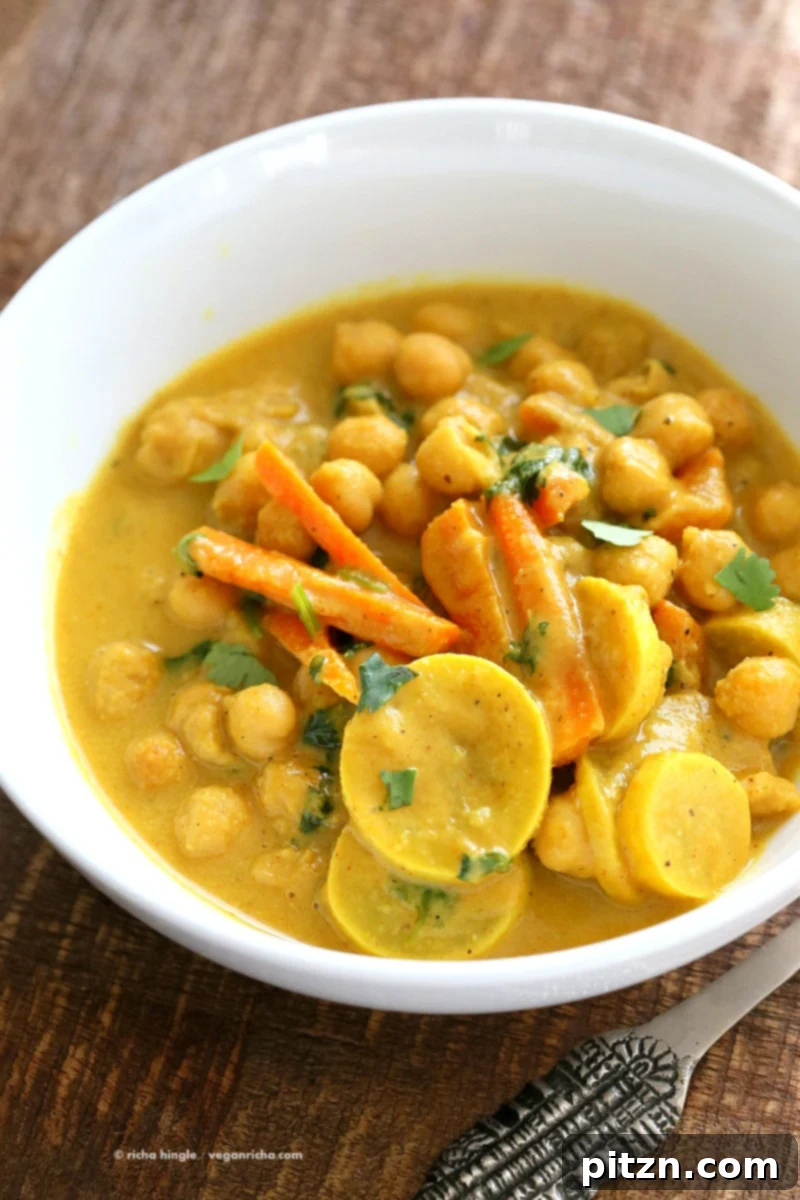
After the aromatic base and spices have had their moment, the fresh components are introduced. Sliced red bell pepper, crisp carrots, and tender summer squash (or zucchini) add not only vibrant color and texture but also a host of nutritional benefits. These vegetables are simmered alongside the star protein of the dish: chickpeas. We recommend using canned chickpeas, drained and thoroughly washed for convenience, or you can opt for 1.5 cups of home-cooked chickpeas for an even fresher taste. This combination of vegetables and chickpeas creates a wholesome and satisfying meal that is both hearty and light.
The beauty of this vegan curry lies in its adaptability. While the recipe features red bell pepper, carrots, and summer squash, it encourages customization. Feel free to incorporate other vegetables that are in season or that you simply love. Broccoli florets add a lovely crunch and extra nutrients, while chunks of tender eggplant can absorb the rich flavors of the sauce beautifully. For a different protein source, cooked lentils make an excellent substitute for chickpeas, offering a slightly different texture and nutritional profile. Don’t hesitate to play with your ingredients – the robust peanut butter and turmeric base can handle a wide array of additions.
Explore More Plant-Based Delights
If you’ve enjoyed this Chickpea in Turmeric Peanut Butter Curry, you’re in for a treat! Our blog is brimming with diverse and delicious plant-based recipes featuring chickpeas and lentils. These versatile legumes are cornerstones of healthy vegan cooking, providing essential protein and fiber to keep you energized and satisfied. Explore some of our other popular creations:
- Sweet and Sour Chickpeas, Broccoli and Peppers
- Kung Pao Lentils (Gluten-Free)
- Lentils & Veggies in Thai Peanut Sauce (Gluten-Free)
- Chickpeas in Firecracker Sauce with Crunchy Salad (Gluten-Free)
- Chickpeas in Teriyaki Sauce in Steamed Bao Buns
Tips for Customizing Your Curry
The beauty of a home-cooked meal lies in its flexibility, and this Turmeric Peanut Butter Chickpea Curry is no exception. While the core recipe is a delightful starting point, feel free to unleash your creativity and make it your own. For a change in flavor profile, consider adding a teaspoon of garam masala during the spice-toasting step for a more traditional Indian aroma, or a dash of sriracha for a bold, spicy kick. A pinch of black pepper and clove powder can introduce a deeper, more robust spice character. If turmeric isn’t your favorite, you can simply omit it, though you’ll miss out on its golden color and health benefits.
Expanding on the vegetable suggestions, feel free to toss in seasonal greens like spinach or kale during the last few minutes of cooking for added nutrition. Heartier vegetables like sweet potato cubes or cauliflower florets can be added along with the carrots, allowing them enough time to soften. To introduce a surprising and delightful sweetness, consider folding in chunks of juicy mango, pineapple, or even lychees at the very end of cooking. These fruits create a fantastic contrast with the savory, spicy curry. Adjusting the amount of non-dairy milk and broth will allow you to achieve your desired curry consistency – more liquid for a thinner sauce, or a longer simmer for a thicker, richer gravy. Each variation promises a unique culinary adventure, ensuring this recipe never gets old.
Watch the Recipe in Action!
Sometimes, seeing is believing! For a visual guide to preparing this mouth-watering 1-Pot Chickpeas in Turmeric Peanut Butter Curry, watch the video below. It offers step-by-step instructions and helpful tips to ensure your curry turns out perfectly every time.
Chickpeas in Turmeric Peanut Butter Curry Recipe (1 Pot)
Rated 4.93 out of 5 from 109 votes.
By: Vegan Richa
Prep Time: 10 mins | Cook Time: 30 mins | Total Time: 40 mins
Servings: 3 | Course: Entree | Cuisine: fusion
Summary: Chickpeas in Turmeric Peanut Butter Curry. Easy Nut Butter Curry with Summer veggies and Chickpeas. Serve over rice or cooked grains. Vegan Gluten-free Soy-free Recipe.
Ingredients
- 1/4 cup chopped onion
- 4 cloves of garlic
- 1 inch knob of ginger
- 1/2 tsp oil
- 1/2 tsp ground cumin
- 1/2 tsp or more ground coriander
- 1/4 tsp cinnamon
- 1/4 tsp cardamom, optional
- 1/3 tsp or more cayenne
- 1/2 tsp or more turmeric
- 3 tbsp or more peanut butter, or almond butter
- 1/2 cup non-dairy milk (like coconut or almond milk)
- 3/4 cup water or broth
- 1/2 red bell pepper, sliced
- 1/2 cup or more sliced carrots
- 1/2 cup or more sliced summer squash, or zucchini
- 15 oz can chickpeas, drained and washed (or 1.5 cups cooked, or use cooked lentils)
- 1/2 tsp or more salt
- 1 tsp or more sugar or other sweetener of choice
- 1/2 to 1 tsp lime juice
- 1/4 cup chopped cilantro, or use 2 tbsp Thai basil
- Pepper flakes to taste
Instructions
- Blend the onion, ginger, and garlic with 2 to 3 tbsp water until smooth. Set aside. (A small blender works well for this amount. Alternatively, finely mince the onion, garlic, and ginger.)
- Heat oil in a skillet over medium heat. Once hot, add cumin, coriander, cinnamon, cardamom, and cayenne. Cook until fragrant, about 15 to 30 seconds.
- Add the onion puree to the skillet and mix well. Stir in the turmeric and continue to cook until the mixture is well roasted and the raw onion smell dissipates, approximately 7 to 9 minutes. Stir occasionally. (If using minced onion/garlic, cook at a slightly lower heat to prevent burning.)
- Stir in the nut butter and non-dairy milk. It will take about half a minute for the nut butter to fully incorporate. Add the water or broth and mix thoroughly.
- Add the sliced vegetables, chickpeas, salt, and sugar. Mix everything, cover the skillet, and bring the mixture to a boil for about 4 minutes.
- Reduce the heat to medium-low and continue to cook for another 5 minutes. Stir in the lime juice and chopped cilantro (or Thai basil). Taste and adjust the seasoning, adding more salt or cayenne as needed. For extra heat, mix in red pepper flakes to taste. At this point, you can also stir in some baby greens like spinach, and adjust the curry consistency by adding more non-dairy milk for a thinner sauce, or simmering longer for a thicker consistency.
- Continue to simmer for another 3 to 4 minutes, allowing the curry to thicken slightly and all the flavors to meld beautifully. Serve hot over rice or your preferred cooked grains.
Notes
For variation: Add garam masala for a more complex Indian flavor, or a dash of sriracha for a spicy kick. For a deeper spice profile, consider adding a pinch of black pepper and clove powder. If you’re not a fan of turmeric, you can omit it, though it contributes significantly to the color and nutritional value.
Feel free to add other vegetables such as broccoli florets, cauliflower, or eggplant cubes. You can also swap chickpeas for lentils or other beans. For a surprising sweetness and tangy contrast, stir in chunks of juicy mango, pineapple, or lychees towards the end of cooking. Adjust the amount of non-dairy milk to achieve your preferred curry thickness.
Nutritional values provided are based on one serving and should be used as an approximation.
Nutrition Information
Calories: 345kcal, Carbohydrates: 33g, Protein: 12g, Fat: 15g, Saturated Fat: 2g, Sodium: 658mg, Potassium: 612mg, Fiber: 9g, Sugar: 5g, Vitamin A: 7060IU, Vitamin C: 34.6mg, Calcium: 89mg, Iron: 4.2mg
Nutrition information is automatically calculated, so should only be used as an approximation.
We invite you to create this flavorful 1-Pot Chickpeas in Turmeric Peanut Butter Curry in your own kitchen. It’s a dish that promises both comfort and culinary excitement. Don’t forget to share your creations and let us know what you think in the comments below!