
Delightful Vegan Marble Zebra Cake: Two Wholesome Versions for Every Baker
Discover the art of baking a stunning and utterly delicious vegan marble (or zebra!) cake. This recipe offers not one, but two incredible versions, ensuring there’s a perfect choice for every preference and pantry. Whether you’re a seasoned vegan baker or new to plant-based desserts, prepare to be amazed by the beautiful swirl and irresistible flavor of this delightful treat.
Jump to Recipe
Today, I’m thrilled to be a guest on Sudha’s wonderful blog, sharing a recipe that celebrates both flavor and conscious baking. Sudha is an inspiration with her three diverse blogs, each reflecting her profound passions. For those who appreciate unique items, vintage charm, exquisite design, and gorgeous finds, I highly recommend visiting The Design Enthusiast. If you’re a fan of authentic Indian comfort food and culinary explorations, her blog Avial and Rasam is a treasure trove of recipes and experiments.
And for her truly exceptional contributions, Sudha’s consistent dedication to fostering a greener, pollution-free world shines brightly at The Green Crusader. Her insightful posts, such as her exposé on Starbucks’ environmental claims, serve as powerful reminders that reality isn’t always as picturesque as advertised. Keep up your vital green efforts, Sudha; together, we can slowly but surely initiate the necessary changes for a healthier planet.
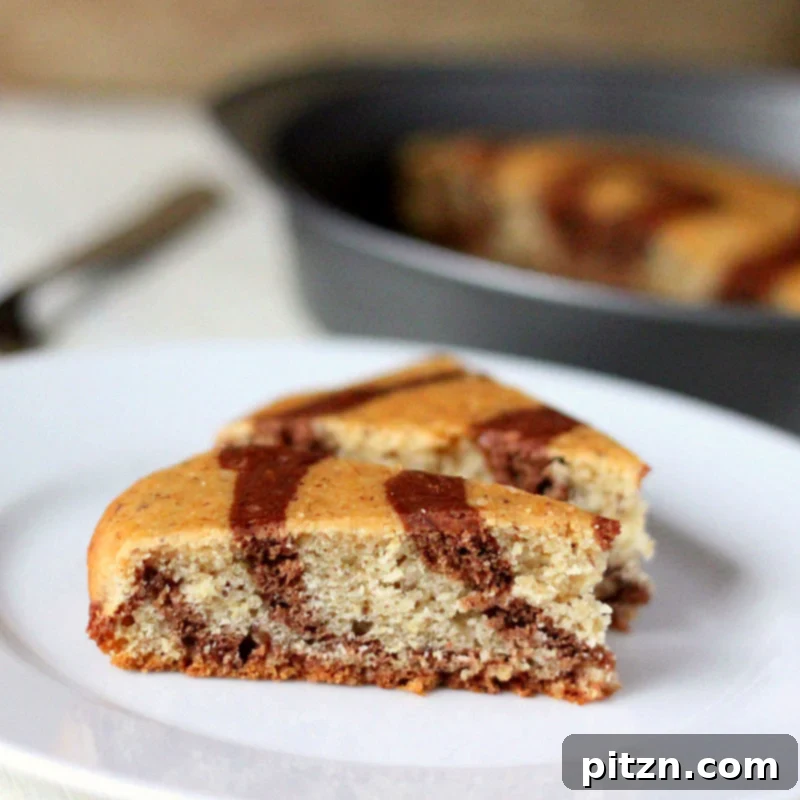
Today, I’m delighted to share my passion for baking with different types of flours by presenting two unique versions of this visually stunning vegan marble (or “zebra”) cake. This recipe has been a labor of love, with one version patiently waiting in my drafts for the perfect companion. The first iteration incorporates readily available pantry staples in many Western kitchens: a blend of all-purpose flour and whole wheat pastry flour. This combination offers a familiar texture and delightful taste. The second version, a testament to whole-grain baking, uses freshly milled soft white wheat berries flour, creating a deeper, more robust flavor profile. You’ll notice the lighter hues in the photos correspond to the all-purpose version, while the richer, light brown layers highlight the wholesome goodness of the whole wheat version.
Don’t let the detailed discussion about flours intimidate you; the recipe itself is refreshingly straightforward and easy to follow. If precision swirling isn’t your style, simply pour alternating dollops of both batters into your prepared pan and gently swirl a knife through them to achieve a beautiful, effortless marble effect. The joy of this cake lies not just in its vegan nature and delicious taste, but also in its adaptability.
Understanding Flours: The Backbone of Your Vegan Marble Cake
For a long time, the sheer variety of wheat flours was a source of confusion for me. While I still don’t claim to be an absolute expert, years of trial and error have helped me understand which flours work best for different baking applications. The choices are extensive: we have regular whole wheat flour, whole wheat pastry flour, cake flour, bread flour, Atta (Indian whole wheat flour), Maida (Indian all-purpose flour), and many more specialized options. Knowing what to use where can significantly impact the final texture and taste of your baked goods, especially a delicate vegan marble cake.
A Quick Guide to Common Wheat Flours:
- Cake Flour: This is a finely milled flour derived from soft wheat, characterized by its lowest gluten content. It’s the go-to choice for light, tender, and delicate cakes.
- Bread Flour: In contrast, bread flour is a blend of high-gluten, hard wheat varieties. It’s coarser than all-purpose flour and its high protein content is ideal for developing strong gluten structures needed for chewy breads.
- Whole Wheat Flour: Made from hard wheat, whole wheat flour also boasts a high gluten content. It includes the entire wheat kernel (bran, germ, and endosperm), offering a more nutritional profile but often resulting in denser baked goods if not used carefully.
- Whole Wheat Pastry Flour: A fantastic compromise, whole wheat pastry flour is milled from soft wheat and has a low gluten content, similar to cake flour. It allows for healthier baking without sacrificing the tender crumb desired in pastries and cakes.
- All-Purpose Flour: As its name suggests, this versatile flour is a blend of low-gluten soft wheat and high-gluten hard wheat, processed to a fine texture. It’s a general-purpose flour suitable for a wide range of recipes, from cakes to cookies to breads, though it might not excel at any one particular type as much as specialized flours.
- Atta (Indian Whole Wheat Flour): This hard wheat flour is milled finer than standard whole wheat flour and typically has a higher gluten content than all-purpose flour. While excellent for yeast breads and traditional Indian flatbreads like roti and chapati, Atta can make cakes, quick breads, and muffins coarser and tougher due to its gluten formation when mixed vigorously.
For a more comprehensive understanding, explore this informative article on Indiacurry, and delve deeper into various wheat flours on Wikipedia.
Choosing the Right Flour for Your Vegan Cakes
For achieving the desired light and tender texture in cakes, quick breads, and muffins, flours with lower gluten content are generally preferred. This is why cake flour or all-purpose flour are often recommended. However, if you’re aiming for a healthier option without compromising too much on texture, whole wheat pastry flour is an excellent choice. Its soft wheat properties and lower gluten make it suitable for delicate baked goods, providing the nutritional benefits of whole grains. You can also experiment by mixing in some gluten-free flours to further reduce gluten content or cater to specific dietary needs.
Ultimately, the best flour is often the one you have available and are familiar with. The key is to understand how each flour behaves. For instance, when using higher-gluten flours like Atta in cakes, it’s crucial to mix the batter as lightly and minimally as possible to prevent excessive gluten development, which can lead to a tough product. Adaptability is a baker’s best friend!
A truly transformative experience in baking comes from milling your own flour. If you have access to soft wheat berries and a home mill, you can create a finer flour that opens up new possibilities. I recently acquired a Blendtec and started milling my own organic soft white wheat berries. This enabled me to create a whole grain version of this vegan marble cake that defied expectations – it didn’t result in a stiff batter or a tough cake. The freshly milled flour had a texture somewhere between all-purpose flour and whole wheat pastry flour, but the batter itself was remarkably more fluid and predictable than the one made with store-bought pastry flour. And the flavor of the whole grain? Absolutely superior! I wholeheartedly recommend it, perhaps because there’s an undeniable excitement that comes with transforming whole wheat berries into flour right in your own kitchen.
For more delicious vegan baking ideas, explore my extensive collection of Cakes and Bakeshere.
Ready to bake? You can find the detailed instructions for both delicious vegan marble zebra cake recipesover atSudha’s space, or simply scroll down below for the full recipe card!
This delightful vegan marble cake has been proudly shared at Ricki’s Wellness Weekend, Slightly Indulgent Tuesdays, Srav’s Cooking Concepts for the Vegan Diet – Only Plant Based event, and the Hearth and Soul Blog Hop. It’s a versatile recipe that fits perfectly into various healthy and mindful eating initiatives.
Vegan Marble Zebra Cake
★
★
★
★
Ingredients
For Half Whole Wheat Version (All-Purpose & Whole Wheat Pastry Flour)
- 1 Tablespoon flax meal
- 2 Tablespoons virgin coconut oil, melted
- 3 Tablespoons organic canola oil
- 1 cup water
- 2 Tablespoons orange juice
- 1/2 teaspoon vinegar
- 8 Tablespoons raw sugar
- 1 cup all-purpose flour
- 1/2 cup whole wheat pastry flour
- 1.25 teaspoon baking powder
- 1/8 teaspoon salt
Spices for Half Whole Wheat Version
- 1/4 teaspoon cinnamon
- 1/4 teaspoon ginger powder
- 1/8 teaspoon cloves powder
- 3 + Tablespoons cocoa powder
Ingredients for All Whole Wheat Version (with Home-Milled Soft White Whole Wheat Flour)
- 1/2 cup water
- 7 Tablespoons raw Sugar, scant 1/2 cup. Use 1/2 cup for sweeter
- 1 Tablespoon light agave
- 1 Tablespoon coconut milk
- 1 Tablespoon Apple Cider Vinegar or 1 teaspoon vinegar
- 1/4 cup organic canola oil, or half virgin coconut and half organic canola oil
- 1/8 teaspoon salt
- 1 cup and 1/4 cup soft white whole wheat flour
- 1.25 teaspoon baking powder
- 2-3 Tbsp cocoa powder
Spices for All Whole Wheat Version:
1/4 teaspoon cinnamon, 1/4 teaspoon ginger powder, 1/8 teaspoon cloves powder or add vanilla extract
Instructions
-
In a large bowl, whisk together all the wet ingredients (oils, water, orange juice, vinegar), salt, and sugar until well combined. (For the all-purpose flour version, add the flax meal to the wet ingredients at this stage.)
-
In a separate bowl, whisk together the dry ingredients: flours, baking powder, and spices. Gradually add the dry mixture to the wet ingredients.
-
Whisk gently until the batter is just combined and has a flowy consistency. Depending on your flour, you might need to add a few teaspoons more water or flour to achieve the desired consistency. Flour absorption can vary.
-
Divide the cake batter evenly into two separate bowls. To one half, add the cocoa powder and mix until fully incorporated.
-
The cocoa powder will naturally thicken the batter. To match the consistency of the plain batter, add 2-3 teaspoons of water (or non-dairy milk) to the chocolate batter and mix well.
-
Prepare an 8-inch cake pan by lining it with parchment paper or greasing it thoroughly. Using two ladles or small bowls of similar size, pour one ladle of the plain (white) cake batter into the center of the prepared pan.
-
Immediately pour one ladle of the cocoa (dark) batter directly on top of the plain batter in the center.
-
Continue alternating layers of white and dark batter, always pouring into the center, until all the batter is used up. This creates the beautiful “zebra” pattern.
-
Bake in a preheated oven at 360 degrees F (180 degrees C) for 35-40 minutes, or until a toothpick inserted into the center of the cake comes out clean.
-
Serve the cake as is for a simple, elegant treat, or elevate it further by drizzling with melted vegan chocolate.
-
Allow the cake to cool for a bit before slicing. This will result in cleaner, less crumbly slices, perfect for presentation.
Notes
Nutrition
Carbohydrates: 30g,
Protein: 2g,
Fat: 9g,
Saturated Fat: 3g,
Sodium: 39mg,
Potassium: 128mg,
Fiber: 1g,
Sugar: 12g,
Vitamin A: 10IU,
Vitamin C: 2.1mg,
Calcium: 36mg,
Iron: 1.2mg
Nutrition information is automatically calculated, so should only be used as an approximation.
Did you make this recipe? Rate and comment below!