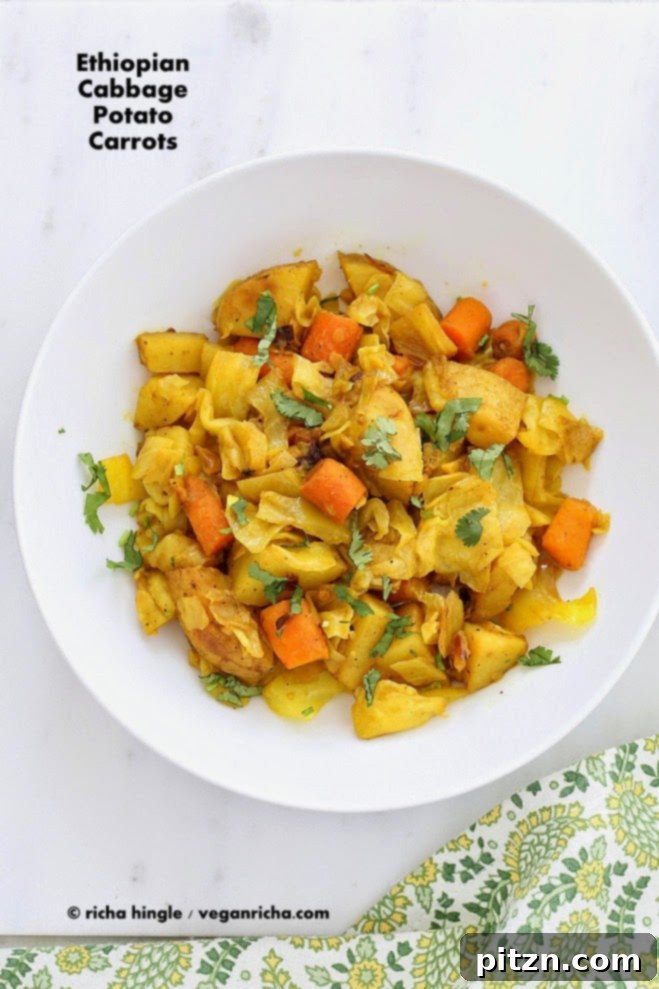
Atakilt Wat: A Flavorful Vegan Ethiopian Cabbage, Potato & Carrot Stew
Discover the vibrant, aromatic world of Ethiopian cuisine with this easy-to-follow recipe for Atakilt Wat. This traditional Ethiopian cabbage, potato, and carrot stew is a staple side dish, bursting with incredible flavor and naturally free from dairy, egg, corn, soy, yeast, nuts, gluten, and grains. Whether you’re a long-time fan of Ethiopian food or exploring it for the first time, this wholesome, spiced vegetable dish promises a delightful culinary experience that’s both healthy and satisfying.
Atakilt Wat, often simply referred to as Tikil Gomen, stands out as a milder yet deeply comforting stew within the diverse range of Ethiopian wots (stews). Its simplicity in ingredients belies the complexity of its taste, achieved through a thoughtful blend of spices. Perfect as a vibrant side to any meal, or a wholesome main course when served generously, this recipe brings the authentic essence of Ethiopia right into your kitchen.
An Introduction to Ethiopian Culinary Delights
Ethiopian cuisine is a vibrant tapestry of flavors, known globally for its rich stews, savory lentil dishes, and the ubiquitous injera flatbread. For many, including myself, the allure of Ethiopian food is undeniable. Its intricate spice blends and communal dining style make it a unique and cherished experience, often drawing comparisons to the aromatic depths of Indian cooking. In bustling cities with diverse food scenes, like Seattle, Ethiopian restaurants are celebrated for their ability to transport diners to the heart of East Africa with every bite.
A typical Ethiopian vegetarian platter is a feast for the senses, featuring an array of colorful dishes: two to four different types of simmered lentil stews, various greens, tender okra preparations, and of course, the ever-popular Atakilt Wat. All these flavorful components are traditionally served on and alongside large pieces of spongy injera, which acts as both a plate and an eating utensil. While the convenience of dining out is appealing, mastering these dishes at home allows for a personalized touch, ensuring every flavor profile meets your expectations and cravings.
The Art of Atakilt Wat: Flavors and Vegan Niter Kibbeh
Atakilt Wat, or Atkilt Wot, holds a special place among Ethiopian side dishes. It showcases how simple vegetables can be transformed into something extraordinary with the right spices. While it shares some characteristics with certain Indian cabbage preparations, Atakilt Wat possesses a distinctive flavor profile, primarily owing to its unique spice blend and traditional cooking methods.
The Secret to Ethiopian Flavor: Niter Kibbeh
Central to much of Ethiopian cooking is Niter Kibbeh, a highly aromatic, spiced clarified butter (or ghee). The traditional preparation involves slow-infusing butter with a fragrant medley of whole spices such as cardamom, cinnamon, fenugreek, cloves, ginger, and garlic over several hours. This meticulous process extracts deep flavors and creates an incredibly rich, golden oil that forms the base of many Ethiopian stews. For a vegan interpretation, Niter Kibbeh can be successfully made using plant-based oils like coconut or olive oil, which still capture the essence of the spices. Many vegan recipes, including those found in my cookbooks, provide detailed instructions for preparing this essential infused oil.
For this simplified Atakilt Wat recipe, we employ a clever technique to capture the essence of Niter Kibbeh without the lengthy pre-preparation. We infuse the cooking oil directly with ground spices at the beginning of the process. This method, similar to the “tempering” technique used in Indian cuisine, quickly releases the aromatic compounds from the spices, creating an instant flavor foundation. By gently cooking the spices in oil, we achieve a fragrant “quick Niter Kibbeh” effect that thoroughly flavors the vegetables as they simmer. This approach ensures a delicious, authentic taste with significantly reduced cooking time, making it ideal for a vibrant weeknight meal.
Expand Your Ethiopian Vegan Repertoire
Once you’ve enjoyed the comforting flavors of Atakilt Wat, you might be inspired to explore more of what Ethiopian vegan cuisine has to offer. The culinary landscape is rich with plant-based options that are both flavorful and deeply satisfying. Here are a few popular Ethiopian dishes that are worth trying:
- Kik Alicha – Split Pea Stew: A delightful and mild stew made from yellow split peas, seasoned with turmeric, ginger, and garlic, offering a gentle yet profound flavor.
- Ethiopian Flatbread Injera: The iconic sourdough-risen flatbread made from teff flour. Essential for scooping up wots and a cornerstone of any Ethiopian meal. You can find recipes for both instant and traditional fermented versions.
- Missir Wat (Ethiopian Red Lentil Stew): A robust and often spicy red lentil stew, famous for its vibrant color and deep, complex flavors derived from berbere spice.
- Yedifin Missir Alicha (Brown Lentils in Garlic Ginger Sauce): A savory and aromatic brown lentil dish, typically milder than Missir Wat, with a focus on fresh garlic and ginger.
- Fusion Ethiopian Berbere Chickpea Pizza: For those who enjoy a modern twist, this innovative recipe blends the bold, earthy heat of Ethiopian berbere with the universally loved concept of pizza, topped with a creamy tahini-garlic dressing.
This Atakilt Wat recipe has been crafted to be a simplified, approachable version of the traditional dish, ensuring that authentic Ethiopian flavors are accessible to every home cook, even on a busy schedule. Its vegan and gluten-free attributes further enhance its appeal as a healthy and inclusive meal option.
Why You’ll Adore This Atakilt Wat Recipe
This Ethiopian Cabbage, Potato, and Carrot stew is more than just a culinary experience; it’s a celebration of wholesome ingredients and vibrant spices. Here’s why this recipe deserves a prime spot in your cooking repertoire:
- Wholesome & Allergen-Friendly: Being entirely plant-based, this Atakilt Wat is naturally vegan. Furthermore, it’s conscientiously crafted to be free of dairy, eggs, corn, soy, yeast, nuts, gluten, and grains, making it an excellent choice for individuals with various dietary restrictions and allergies.
- A Symphony of Flavors: Despite its seemingly simple vegetable base, the stew delivers a profound and complex flavor profile. The harmonious blend of turmeric, cumin, fenugreek, cardamom, cinnamon, and cloves creates a savory, subtly sweet, and aromatic dish that is both comforting and exotic.
- Effortless Preparation: Designed for convenience, this recipe features straightforward steps and utilizes readily available ingredients. It’s an ideal option for both novice cooks seeking to explore new cuisines and seasoned chefs looking for a quick yet impressive weeknight meal.
- Nutritionally Robust: Packed with fiber-rich cabbage, energy-providing potatoes, and vitamin A-packed carrots, this stew is a powerhouse of essential nutrients. It contributes significantly to a balanced diet, offering numerous health benefits with every delicious spoonful.
- Incredibly Versatile: While traditionally served as a key component of an Ethiopian injera platter, Atakilt Wat’s adaptability knows no bounds. Enjoy it as a standalone vegetarian main course, paired with your favorite grains like rice or quinoa, or as a vibrant, flavorful side dish to complement a variety of protein sources.
Key Ingredients for Your Homemade Atakilt Wat
The magic of Atakilt Wat lies in transforming common garden vegetables into an extraordinary dish through the alchemy of spices. Here’s a breakdown of the essential components:
- Cooking Fat: Olive oil or vegan butter forms the initial base, crucial for sautéing the aromatics and blooming the spices. Its choice subtly influences the final richness of the stew.
- Aromatic Foundation: Freshly minced garlic, finely grated ginger, and chopped onions are the holy trinity of Ethiopian cooking. They create a pungent, sweet, and earthy foundation that is indispensable. An optional green chili can be added for a gentle kick of heat.
- The Ethiopian Spice Blend: This carefully selected blend is what gives Atakilt Wat its unique character:
- Turmeric Powder: Imparts its signature golden color and an earthy, mildly pungent flavor.
- Cumin Powder: Adds a warm, robust, and slightly bitter note, contributing to the stew’s depth.
- Fenugreek Seeds or Powder: Provides a subtle, characteristic bitterness and a complex aroma that is distinctly Ethiopian.
- Cardamom Powder: Brings a bright, citrusy, and intensely fragrant sweetness.
- Cinnamon Powder: Offers a warm, sweet, and woody spice note that balances the savory elements.
- Cloves Powder: Delivers a strong, pungent, and sweet aroma, adding another layer of complexity.
- Black Pepper: A generous dash enhances all the other flavors, providing a subtle warmth and sharpness.
- The Vegetables:
- Carrots: Sliced into rounds or half-moons, they contribute natural sweetness and a beautiful orange hue, softening to perfection during cooking.
- Potatoes: Cut into medium, bite-sized pieces, potatoes add a comforting starchiness and absorb the rich, aromatic flavors of the wat, becoming wonderfully tender.
- Cabbage: Finely chopped green cabbage constitutes the bulk of this dish. As it slowly cooks, it wilts down, releasing its inherent sweetness and absorbing the savory spices.
- Salt: A fundamental seasoning that draws out the vegetables’ natural flavors and balances the spice blend, adjusted to your personal preference.
Step-by-Step Instructions: Crafting Your Atakilt Wat
Follow these detailed instructions to create a perfect Atakilt Wat that’s rich in flavor and tender in texture:
- Prepare the Aromatic Base: Begin by heating 1 teaspoon of olive oil or vegan butter in a large, heavy-bottomed skillet or pot over medium-low heat. Once the oil is shimmering, add the minced garlic, minced ginger, chopped green chili (if you prefer a touch of heat), and the chopped onion. Stir these aromatics frequently, cooking them gently for about 4 to 5 minutes until the onions become soft and translucent. This slow sautéing is crucial for developing the foundational flavors.
- Infuse the Spices: Slightly reduce the heat. Now, add all the ground spices: cumin powder, turmeric powder (use 1/2 to 3/4 tsp depending on desired color and flavor), fenugreek seeds or powder, cardamom powder, cinnamon powder, cloves powder, and a generous dash of freshly ground black pepper. Stir continuously for approximately 3 minutes, allowing the spices to toast gently and release their vibrant aromas, effectively creating a quick, infused oil that will flavor the entire stew. Continue cooking until the onions achieve a beautiful golden hue.
- Introduce the Vegetables and Simmer: Add the sliced carrots and chopped potatoes to the skillet. Stir thoroughly to ensure all the vegetables are well-coated with the aromatic spice mixture. Next, incorporate the finely chopped cabbage and 1/4 teaspoon of salt. Mix everything well again. Cover the skillet tightly with a lid and allow the vegetables to simmer for 15 minutes. During this period, stir the contents gently once or twice to prevent any sticking and ensure uniform cooking.
- Achieve Perfect Tenderness: After the initial 15 minutes, check the vegetables for tenderness. Add the remaining 1/4 teaspoon (or more, to taste) of salt and 1 teaspoon of olive oil or vegan butter. Stir everything together. If you notice the vegetables beginning to stick to the bottom of the pan, or if you desire a silkier consistency, deglaze the pan with a small splash of water or vegetable broth, stirring it in. Cover the skillet once more and continue to cook for an additional 15 minutes, or until the potatoes are completely tender and the cabbage is soft and sweet, yet still holds its shape. The vegetables will largely cook in their own released moisture, concentrating their flavors.
- Serve and Enjoy: Your vibrant and aromatic Atakilt Wat is now ready to be savored! Serve it piping hot. For an authentic Ethiopian dining experience, present it with traditional flatbread, Injera, allowing everyone to scoop up the delicious stew. It also harmonizes wonderfully with other Ethiopian lentil wots (stews) and fresh Ethiopian greens, such as Gomen Wat, creating a complete and balanced meal.
Helpful Tips for Mastering Atakilt Wat
Ensuring your Atakilt Wat turns out perfectly every time is easy with these simple tips:
- Gentle Heat is Key: Ethiopian stews thrive on slow, gentle cooking. Maintain a medium-low heat throughout the process to allow the flavors to deepen without scorching the spices or vegetables.
- Moisture Management: The vegetables release a good amount of moisture, which is usually sufficient for cooking. However, keep an eye on the pan. If the mixture appears too dry or starts to stick to the bottom (this can vary based on your pan type and lid seal), add a small splash or two of water or vegetable broth. Stir it in thoroughly and continue cooking. Avoid adding too much liquid, as this dish is meant to be a stew, not a soup.
- Season to Perfection: Always taste your Atakilt Wat before serving. Adjust the salt content as needed. The balance of savory and aromatic spices is crucial, so don’t hesitate to fine-tune it to your preference.
- Uniform Cuts: For consistent cooking and an appealing presentation, try to chop your potatoes, carrots, and cabbage into roughly similar-sized pieces. This ensures they all reach tenderness at around the same time.
Versatile Serving Suggestions for Atakilt Wat
Atakilt Wat is an incredibly adaptable dish that can be enjoyed in many ways, beyond the traditional Ethiopian platter:
- The Traditional Way: Experience Atakilt Wat as it’s meant to be eaten – as part of a grand Ethiopian “beyaynetu” (a vegan platter featuring multiple dishes). Scoop generous portions onto or alongside fresh, spongy Injera. The Injera serves as your edible utensil, making each bite an interactive delight.
- With Your Favorite Grains: For a simple yet wholesome meal, serve Atakilt Wat over a bed of fluffy steamed rice, nutrient-rich quinoa, or even millet. The grains will soak up all the delicious, spiced liquids.
- As a Dynamic Side Dish: This vibrant stew makes an excellent side dish to almost any main course. Pair it with grilled plant-based proteins, other vegetable curries, or simply alongside a crisp, fresh salad for a balanced meal.
- Ideal for Meal Prep: Atakilt Wat is one of those dishes that tastes even better the next day, as the flavors have more time to meld and deepen. It reheats beautifully, making it perfect for meal prepping. Store any leftovers in an airtight container in the refrigerator for up to 3-4 days.
Recipe Card: Atakilt Wat – Ethiopian Cabbage Potato Carrots
Atakilt Wat – Ethiopian Cabbage Potato Carrots. Vegan Gluten-free Recipe
An easy spiced side dish brimming with amazing Ethiopian flavors. Free of dairy, egg, corn, soy, yeast, nuts, gluten, and grains.
By: Vegan Richa
Prep Time: 15 mins
Cook Time: 35 mins
Total Time: 50 mins
Servings: 2
Course: Side Dish
Cuisine: Ethiopian
Ingredients
- 2 tsp olive oil or vegan butter, divided
- 2 cloves garlic, minced
- 1 tsp minced ginger
- 1 green chili, chopped (optional, for heat)
- 1/2 cup chopped onion
- 1/4 tsp cumin powder
- 1/2 to 3/4 tsp turmeric powder
- 1/4 tsp fenugreek seeds or powder
- 1/4 tsp cardamom powder
- 1/4 tsp cinnamon powder
- 1/8 tsp cloves powder
- A generous dash of black pepper
- 3/4 cup sliced carrots
- 2 medium potatoes, chopped (approx. 1.5 loaded cups)
- 1/2 head of cabbage, finely chopped
- 1/2 tsp salt (or to taste)
Instructions
- In a large skillet, heat 1 tsp olive oil or vegan butter over medium-low heat. Add minced garlic, ginger, chopped green chili (if using), and chopped onion. Sauté for 4-5 minutes until onions soften and become translucent.
- Add cumin, turmeric, fenugreek, cardamom, cinnamon, cloves, and black pepper. Stir well and cook for 3 minutes to infuse the oil with spices and continue cooking onions until golden.
- Stir in sliced carrots and chopped potatoes, coating them with the spice mixture. Add finely chopped cabbage and 1/4 tsp salt. Mix thoroughly, cover, and cook for 15 minutes, stirring once midway.
- Add the remaining 1/4 tsp (or more) salt and 1 tsp olive oil. Mix. If sticking occurs or more moisture is desired, add a splash of water or broth. Cover and cook for another 15 minutes, or until potatoes are tender.
- Serve hot with Ethiopian flatbread (Injera), lentil wots, or Ethiopian greens (gomen wat).
Notes
- *The vegetables cook in their own moisture. If they start to stick (depending on your lid, pan, and veggie moisture), add a couple of splashes of water or broth, mix, and continue to cook.
- *Nutritional values provided are automatically calculated and should be used as an approximation only.
Nutrition (Approximate, per serving)
Calories: 259 kcal
Carbohydrates: 48g
Protein: 9g
Fat: 5g
Sodium: 753mg
Potassium: 1419mg
Fiber: 13g
Sugar: 10g
Vitamin A: 8240 IU
Vitamin C: 113.9mg
Calcium: 176mg
Iron: 8.7mg
Nutrition information is automatically calculated and should only be used as an approximation.
Watch Our Atakilt Wat Video!
See how easy it is to make this delightful Ethiopian stew with our step-by-step video guide:
We’d love to hear from you! If you tried this recipe, please share your experience in the comments section below.
Your feedback helps us and other home cooks!