
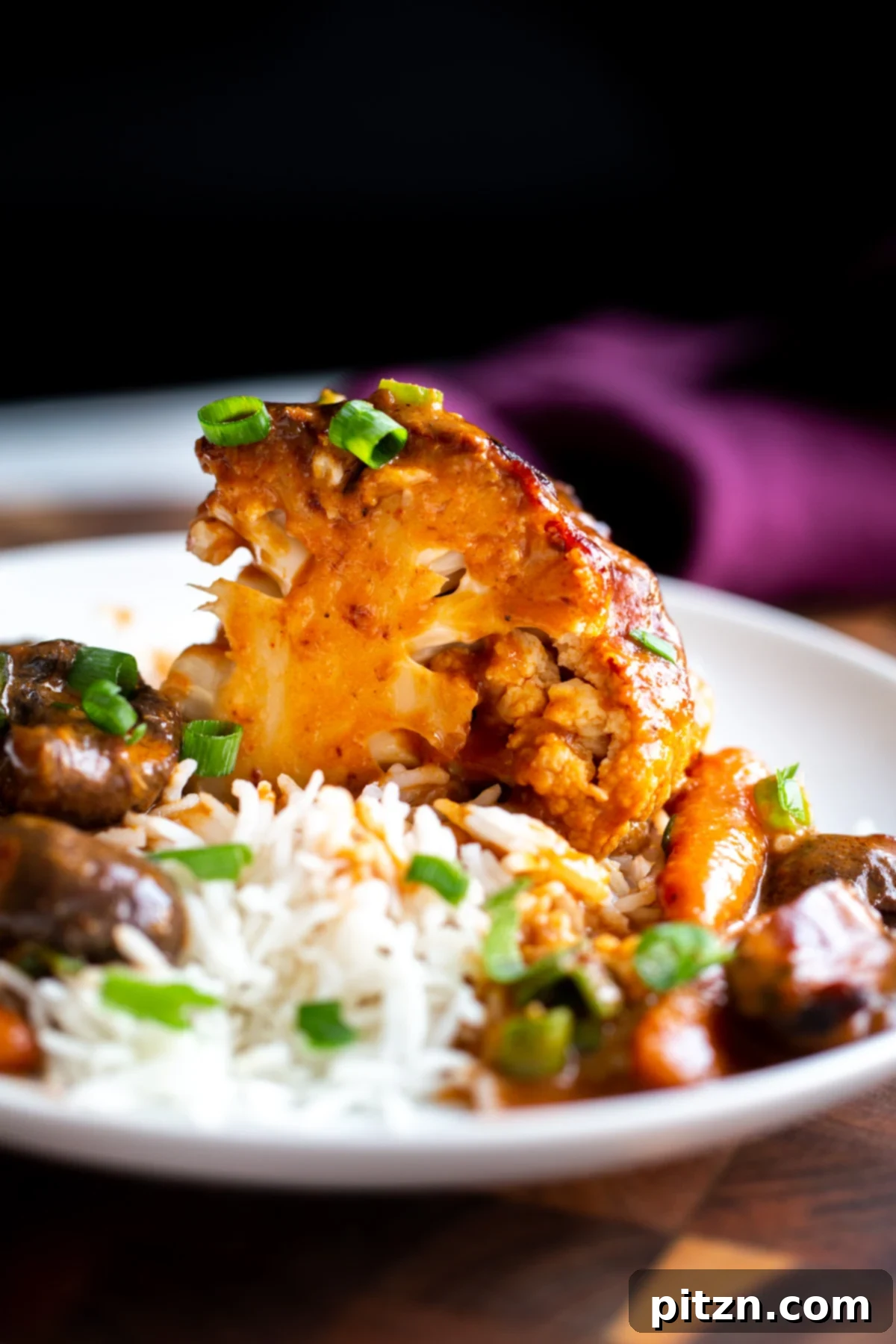
Transform your dining table with this spectacular **Miso Gochujang Peanut Butter Glazed Whole Roasted Cauliflower**. This isn’t just a dish; it’s a culinary masterpiece, radiating rich Asian-inspired flavors and a stunning presentation perfect for any special occasion, especially during the holidays. Whether you’re planning a vegan main course for a vegetarian feast or seeking an impressive side dish or appetizer that appeals to all palates, this recipe delivers an unforgettable experience. It’s naturally gluten-free and refined sugar-free, making it a healthy and inclusive choice for everyone at your gathering.
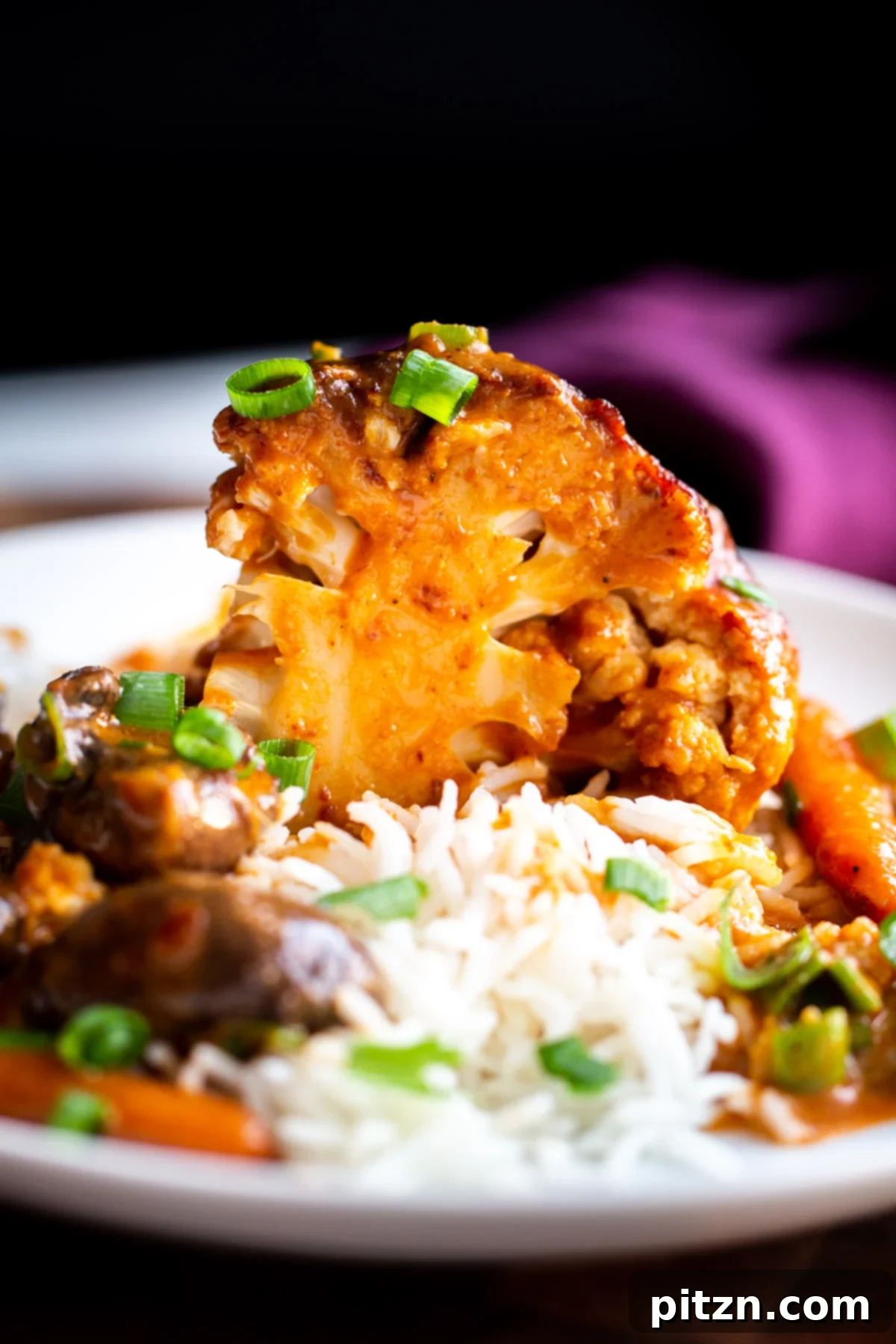
Imagine the delightful fusion of miso’s savory depth, the creamy richness of peanut butter, and the vibrant kick of gochujang, all coming together in a harmonious glaze. This incredible combination elevates a humble head of cauliflower into an extraordinary dish. This **Asian-inspired miso and peanut butter whole roasted cauliflower** recipe is surprisingly simple, requiring only about 15 minutes of active preparation time. Yet, it yields a healthy, satisfying, and visually striking vegan main course that is impressive enough for holiday entertaining or elegant dinner parties. While it shines as a centerpiece, it also makes an excellent shared side for any weeknight meal.
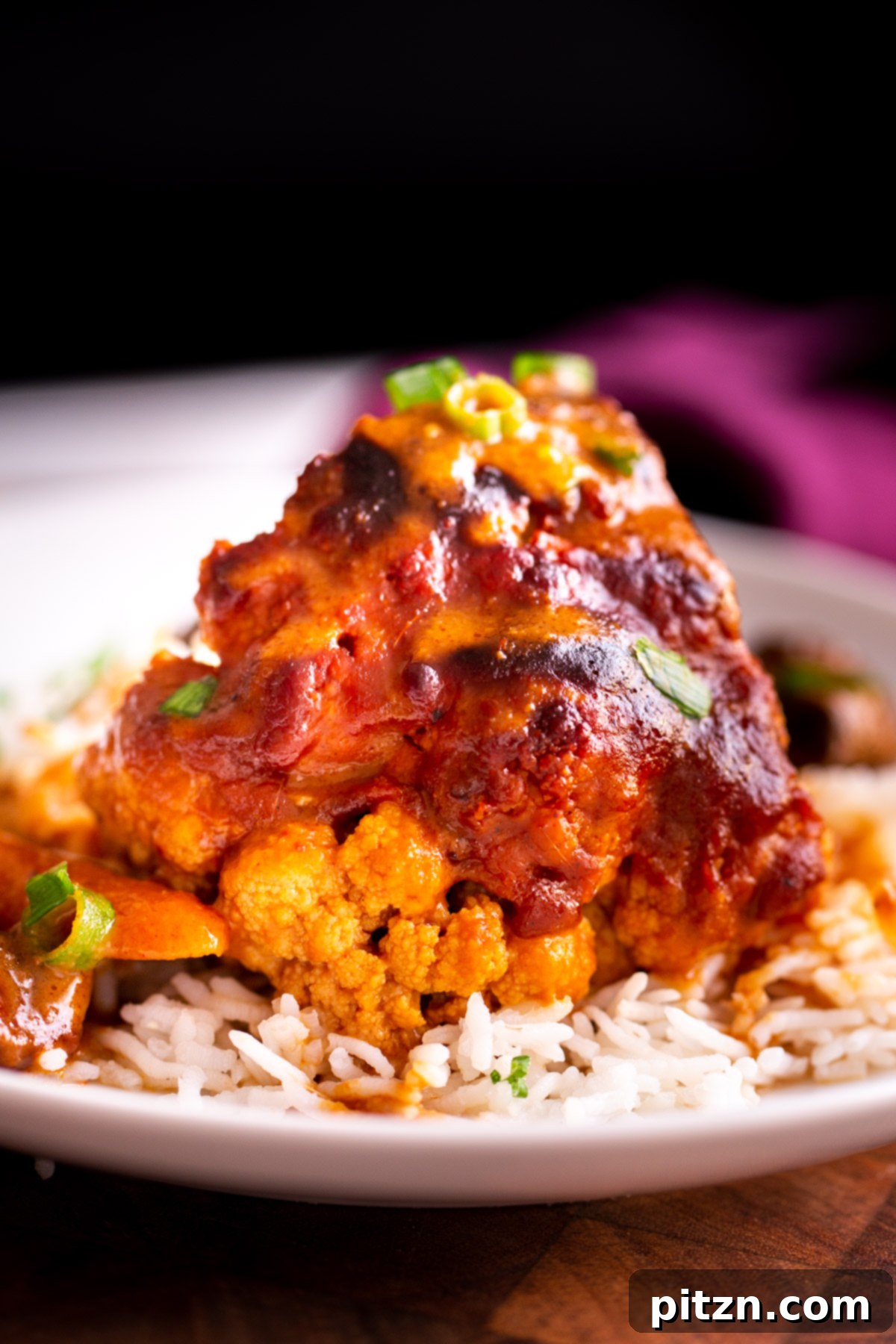
The secret to this recipe’s phenomenal taste lies in its dynamic glaze. An umami-rich, sweet, and spicy blend of peanut butter, miso, and Korean gochujang, infused with fresh ginger and garlic, coats every inch of the cauliflower. This thoughtful combination creates a deep, complex flavor profile that tantalizes the taste buds with every bite. To complete your meal, serve this **whole roasted cauliflower** alongside fresh veggies, fluffy steamed rice, or a crisp side salad, allowing the vibrant flavors to truly shine. The blend of savory, sweet, and spicy notes makes it an unforgettable experience, cementing its place as a go-to dish for plant-based enthusiasts and food lovers alike.
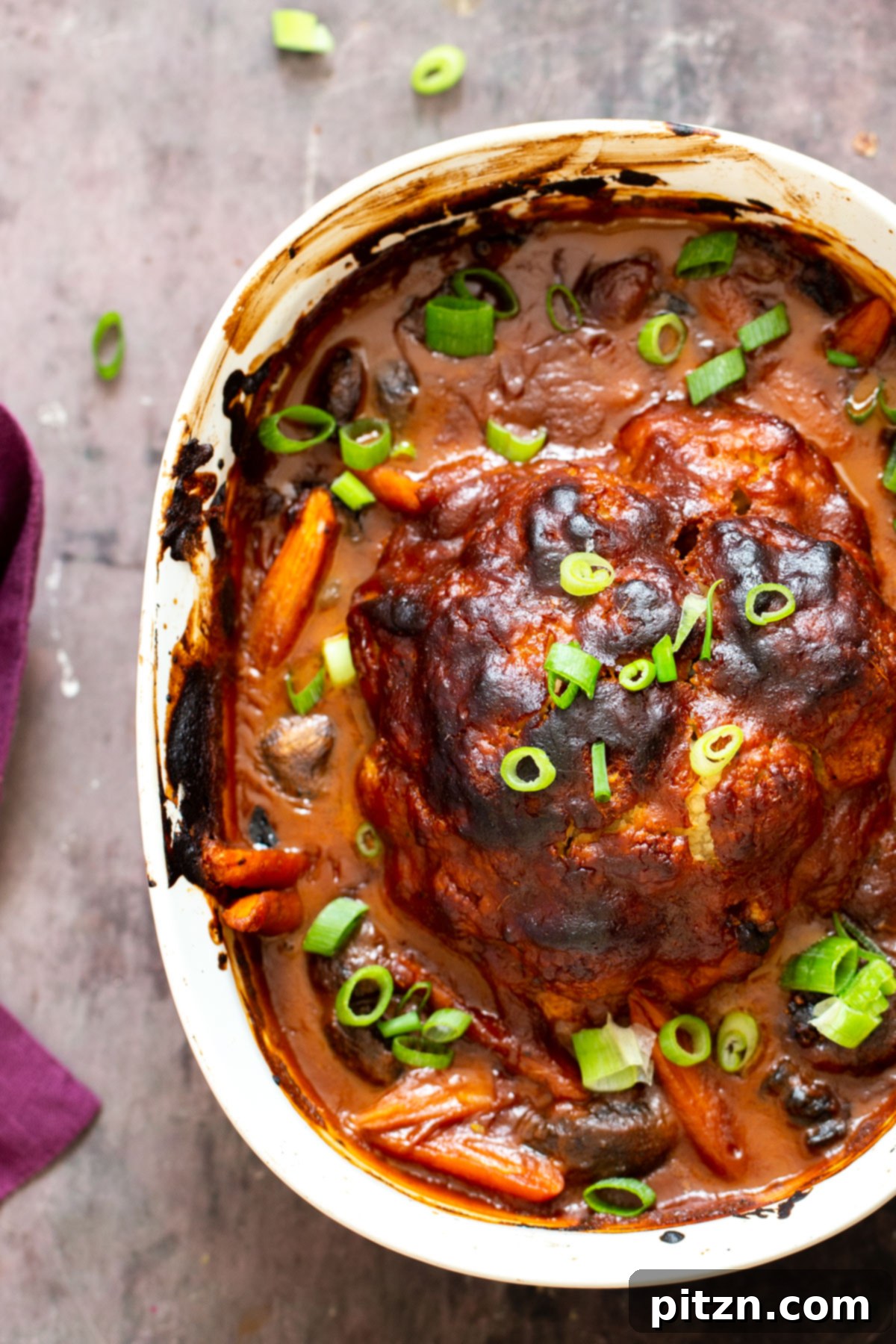
I genuinely believe this is the most flavorful **roasted cauliflower head** you will ever encounter, and I am incredibly excited for you to try it. If you appreciate the concept of a whole roasted cauliflower but prefer more traditional flavor profiles, you might also enjoy my simple oven-roasted herbed cauliflower recipe. This diverse approach to preparing cauliflower demonstrates its incredible versatility and capacity to absorb a myriad of flavors, making it a beloved vegetable in plant-based cuisine.
Why You’ll Love This Miso Gochujang Peanut Butter Glazed Whole Roasted Cauliflower
There are countless reasons to adore this incredible **vegan whole roasted cauliflower**. Beyond its striking visual appeal, the flavor explosion it delivers is truly unparalleled. It’s an ideal recipe for anyone looking to incorporate more plant-based meals into their diet without sacrificing taste or elegance. Here’s why this dish is a must-try:
- **Unforgettable Flavor Profile:** The combination of savory miso, sweet maple syrup, rich peanut butter, spicy gochujang and sambal oelek, and aromatic ginger and garlic creates a truly unique and addictive glaze. It’s a complex blend of umami, sweet, and spicy that will leave you craving more.
- **Visually Stunning Centerpiece:** A whole roasted cauliflower, beautifully glazed and golden, makes an impressive statement on any table. It’s a show-stopper that proves plant-based meals can be as grand and satisfying as any other.
- **Effortlessly Elegant:** Despite its gourmet appearance, this recipe is remarkably easy to prepare. With just 15 minutes of active prep time, you can achieve a dish that looks like it took hours.
- **Versatile Serving Options:** Perfect as a **vegan main course** for holidays and special occasions, or a fantastic side dish to complement other entrees. It also works wonderfully as a hearty appetizer.
- **Dietary-Friendly:** This recipe is naturally **gluten-free** (when using tamari instead of soy sauce) and **refined sugar-free**, catering to various dietary needs without compromising on flavor.
- **Nutrient-Packed:** Cauliflower is a powerhouse of vitamins, minerals, and fiber. Combined with nutrient-rich ingredients like peanut butter, miso, and fresh ginger, this dish is as healthy as it is delicious.
- **Customizable Spice Level:** The amount of gochujang and sambal oelek can be adjusted to suit your preference, allowing you to create a mild, medium, or boldly spicy glaze.
- **Meal Prep Friendly:** Leftovers store well and can be enjoyed for several days, making it great for meal prepping or quick subsequent meals.
More Delicious Cauliflower Recipes:
Cauliflower is an incredibly versatile vegetable, capable of absorbing a wide array of flavors and adapting to various cooking methods. If you’ve enjoyed this whole roasted cauliflower, you’ll surely love exploring other exciting cauliflower-centric recipes. Here are some more favorites from the blog:
- Cauliflower in Double Onion Sauce (Gobi Do Pyaza): A rich and aromatic Indian-inspired dish.
- Baked Gobi Manchurian: A popular Indo-Chinese appetizer, healthier baked version.
- BBQ Cauliflower Wings: A delicious plant-based alternative to traditional wings, perfect for game day.
- Diwani Handi Vegetables: A flavorful mixed vegetable curry that celebrates fresh produce.
- Whole Roasted Curried Cauliflower (Gobi Musallam): Another show-stopping whole roasted cauliflower, infused with aromatic Indian spices.
- Sticky Sesame Cauliflower: Crispy cauliflower florets tossed in a sweet and savory sesame glaze.
Spicy Miso Peanut Butter Whole Roasted Cauliflower

Ingredients
- 1 small head of cauliflower
- 1/2 cup carrots
- 6-8 ounces mushroom, like crimini or white quartered or sliced 1/8 inch thick
For the Marinade:
- 1 tablespoon sambal oelek or Asian chili sauce of choice
- 1 tablespoon Korean gochujang or you can use more sambal oelek
- 3 tablespoons soy sauce (use tamari for Gluten-free)
- 1/3 cup smooth peanut butter (or use almond butter for variation)
- 3 tablespoons maple syrup
- 2 teaspoons miso (white or yellow miso works well)
- 1 tablespoon white vinegar or rice vinegar
- 1/2 inch knob of fresh ginger, grated or minced
- 2 cloves of garlic, minced
- 1/4 teaspoon black pepper
- 1 tablespoon sesame oil
- 1/4 teaspoon salt
- 2 teaspoons cornstarch
- 1/4 cup water
- Green onion for garnish, sliced
Instructions
-
1. Prepare the Cauliflower: Carefully remove the hard stem of the cauliflower, ensuring the head remains intact. Using a sharp knife or a skewer, poke several holes all over the surface of the cauliflower, including the top and the base/stem side. This allows the marinade to deeply penetrate and infuse flavor into the florets.
-
2. Prepare Vegetables: Slice your mushrooms and carrots into uniform pieces. These will roast alongside the cauliflower, absorbing the delicious glaze and adding extra texture and nutrition to your meal.
-
3. Prepare Baking Dish: Select a baking dish that comfortably fits the whole cauliflower, ideally with just 1-2 inches of space around it. This ensures the cauliflower cooks evenly and the glaze collects nicely. Lightly grease the dish and set it aside.
-
4. Initial Bake: Preheat your oven to 400 degrees Fahrenheit (200°C). Place the cauliflower in the prepared dish, cover it loosely with parchment paper, and bake for 10-12 minutes. This initial steam helps to tenderize the cauliflower slightly before glazing.
-
5. Prepare the Marinade: While the cauliflower is in the oven, combine all the marinade ingredients (sambal oelek, gochujang, soy sauce/tamari, peanut butter, maple syrup, miso, vinegar, ginger, garlic, black pepper, sesame oil, salt, cornstarch, and 1/4 cup water) in a blender. Blend until the mixture is completely smooth and creamy.
-
6. First Glaze Application: Remove the cauliflower from the oven and let it cool for about 3 minutes to make it easier to handle. Carefully flip the cauliflower and pour a generous amount of the marinade into the stem area, allowing it to seep into the inner florets.
-
7. Second Glaze & Bake: Flip the cauliflower back upright and use a brush to generously coat the entire surface with the remaining marinade. Ensure all crevices are covered for maximum flavor. Return the cauliflower to the baking dish and place it back in the oven to bake for another 15 minutes.
-
8. Add Vegetables & Continue Roasting: After 15 minutes, remove the dish from the oven. Reduce the baking temperature to 375 degrees Fahrenheit (190°C). Arrange the sliced carrots and mushrooms around the base of the cauliflower in the baking dish. Drizzle some of the remaining marinade over these vegetables. Baste or brush the cauliflower with more marinade if needed. Add 3 tablespoons of water to your blender to rinse out any leftover marinade, then pour this flavorful water over the mushrooms and carrots in the dish.
-
9. Final Bake: Lightly cover the baking dish with aluminum foil and return it to the oven. Continue to bake for another 20 minutes.
-
10. Check for Doneness: After 20 minutes, check the cauliflower for tenderness. It should be easily pierced with a fork but still hold its shape. If you prefer it softer, bake for an additional 5 minutes or until it reaches your desired doneness.
-
11. Rest & Serve: Remove the foil and let the cauliflower sit uncovered in the oven (with the oven off and door slightly ajar) for a few minutes to allow the flavors to deepen and the glaze to set slightly. Then, take it out of the oven. Garnish generously with fresh green onions before serving. Serve warm with steamed rice or your favorite dinner rolls. Refrigerate any leftovers in an airtight container for up to 3 days.
Video Guide
Notes & Expert Tips
Tray Bake Variation: For a quicker, deconstructed version, chop the cauliflower into bite-sized florets. Add the cauliflower florets, mushrooms, carrots, and any other desired vegetables (such as bell peppers) to a large baking dish. You can also add some pressed and cubed tofu for extra protein. Ensure the vegetables can be spread in a single layer with minimal overlapping for even cooking. Drizzle the marinade generously over all ingredients and toss well to coat. Cover the dish with parchment paper and bake for 20 minutes. Then, remove the parchment paper and continue baking until the vegetables are tender and slightly caramelized.
Choosing Cauliflower: Select a small, firm head of cauliflower that feels heavy for its size, with tightly packed florets. Avoid any with brown spots or a soft texture. Smaller heads cook more quickly and evenly, allowing the glaze to penetrate better.
Miso Type: While white or yellow miso paste is generally recommended for its milder, sweeter flavor, red miso can be used for a more intense, saltier, and deeper umami note if you prefer. Adjust salt in the recipe accordingly if using red miso.
Flavor Intensification: For an even deeper flavor, consider marinating the cauliflower for at least 30 minutes, or even a few hours in the refrigerator, after the initial baking and first glaze application. This allows the robust flavors to truly meld.
Nutrition Information (Approximate Per Serving)
Nutrition information is automatically calculated, so should only be used as an approximation.
Discover the Key Ingredients for This Unforgettable Dish
The magic of this **Miso Gochujang Peanut Butter Glazed Whole Roasted Cauliflower** lies in its carefully selected components, each playing a crucial role in creating a symphony of flavors. Understanding these ingredients will not only help you appreciate the recipe more but also empower you to experiment with confidence.
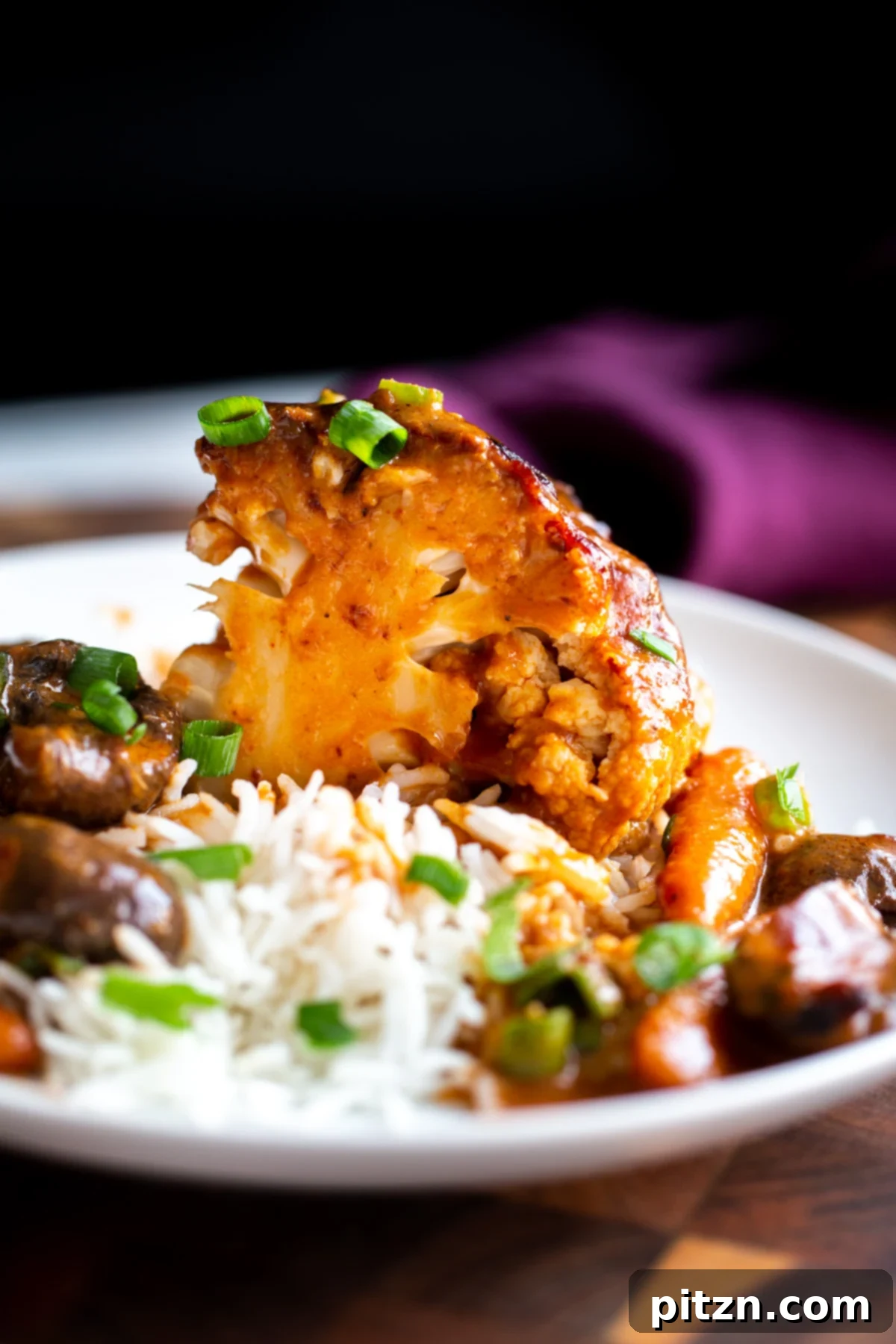
- **Cauliflower:** The star of our show! I recommend using a small to medium-sized head of cauliflower. Smaller heads tend to cook more quickly and evenly, allowing the glaze to penetrate every floret for consistent flavor and texture. Look for firm, white florets with no discoloration.
- **Companion Vegetables:** To make this a complete and satisfying meal baked in one dish, I love adding carrots and mushrooms alongside the cauliflower. Cremini or white button mushrooms work wonderfully, adding an earthy depth, while carrots lend a touch of sweetness and vibrant color. These vegetables roast beautifully in the leftover glaze, becoming tender and incredibly flavorful side components.
- **Spicy Foundation – Sambal Oelek & Gochujang:**
- **Sambal Oelek:** A versatile Indonesian chili paste that provides a straightforward, bright heat. It’s fantastic for adding a spicy kick without altering the overall flavor profile too much.
- **Korean Gochujang:** This fermented Korean chili paste is a game-changer. It offers a complex, deep umami flavor with a subtle sweetness and a balanced heat. While you can substitute with more sambal oelek, I highly recommend investing in a tub of gochujang. Its unique flavor significantly enhances the marinade, and it lasts for a very long time in the refrigerator, proving its worth in countless other Asian-inspired dishes.
- **Rich & Creamy Elements – Peanut Butter & Sesame Oil:**
- **Smooth Peanut Butter:** The backbone of our creamy glaze, providing rich flavor and a luxurious texture. It beautifully balances the spicy and savory notes. For a nut-free version, smooth sunflower seed butter is an excellent alternative.
- **Sesame Oil:** A staple in Asian cuisine, toasted sesame oil adds a distinct nutty aroma and flavor that ties all the Asian-inspired elements of the marinade together, providing a warm, inviting finish.
- **Umami Boosters – Soy Sauce & Miso:**
- **Soy Sauce:** Provides a fundamental savory, salty, and umami depth. For a **gluten-free** recipe, be sure to use tamari, which offers a similar flavor profile without the wheat.
- **Miso Paste:** A fermented soybean paste, miso is a powerhouse of umami. White or yellow miso offers a milder, slightly sweet, and earthy flavor that enhances the overall richness of the glaze without overpowering it.
- **Sweetener & Acidity – Maple Syrup & Vinegar:**
- **Maple Syrup:** Our natural, **refined sugar-free** sweetener. It provides a lovely sweetness that balances the savory and spicy components of the glaze, contributing to a beautiful caramelization during roasting.
- **White Vinegar or Rice Vinegar:** A touch of acidity is crucial to brighten the heavy flavors of peanut butter and miso, ensuring the glaze is perfectly balanced and not overly rich. Rice vinegar, with its milder, slightly sweet tang, is particularly excellent here.
- **Aromatic Enhancers – Garlic & Ginger:**
- **Fresh Ginger:** Adds a zesty, pungent, and slightly sweet warmth that is characteristic of many Asian dishes, providing a refreshing counterpoint to the richness.
- **Fresh Garlic:** A universal flavor enhancer, garlic brings its sharp, aromatic essence, deepening the overall savory profile of the marinade.
Step-by-Step Guide: Crafting Your Miso Gochujang Peanut Butter Whole Roasted Cauliflower
Creating this magnificent **whole roasted cauliflower** is simpler than you might imagine. Follow these detailed steps to ensure a perfectly cooked and intensely flavorful dish every time.
Begin by preparing your cauliflower. Carefully remove the hard stem from the bottom, making sure to keep the head intact. This provides a stable base and allows for better penetration of the marinade. Next, use a sharp knife or a skewer to poke numerous holes all over the surface of the cauliflower, including the top and the stem end. These perforations are crucial for the marinade to seep deep into the florets, ensuring every bite is bursting with flavor. While you’re at it, slice up your mushrooms and carrots. These will be roasted alongside the cauliflower, soaking up the delicious glaze.
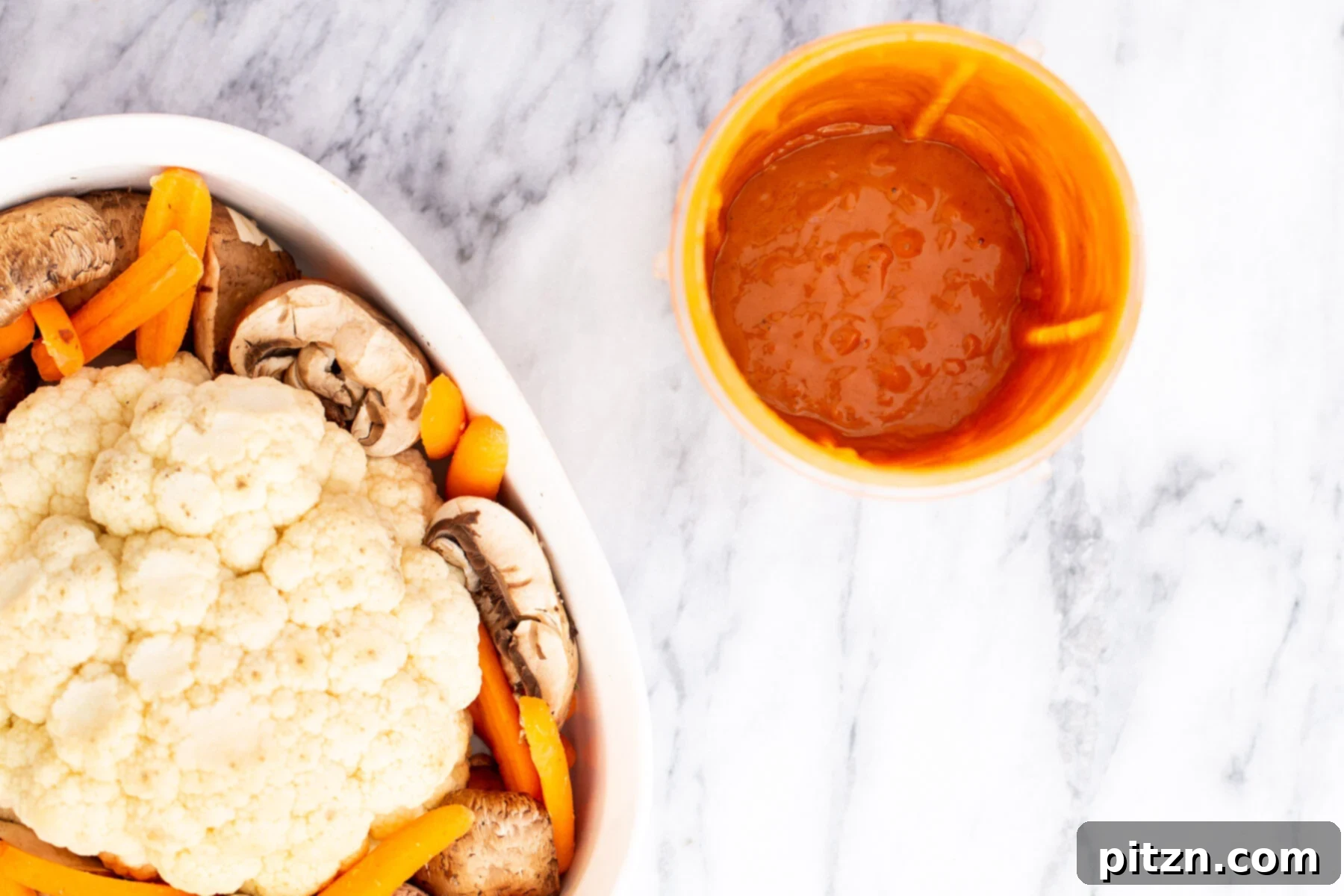
Find a baking dish that is just large enough to fit the cauliflower comfortably, with about 1-2 inches of space around it. This size helps to concentrate the heat and prevent the glaze from spreading too thinly. Grease the dish well and set it aside. Preheat your oven to 400 degrees Fahrenheit (200°C). Place the prepared cauliflower in the greased dish. For the initial baking, I recommend covering it loosely with parchment paper to help it steam slightly and become tender. Bake for 10-12 minutes.
While the cauliflower is having its initial bake, prepare the incredibly flavorful marinade. Add all the marinade ingredients – sambal oelek, gochujang, soy sauce (or tamari), smooth peanut butter, maple syrup, miso, white vinegar (or rice vinegar), fresh ginger, minced garlic, black pepper, sesame oil, salt, cornstarch, and water – to a blender. Blend until the mixture is completely smooth and homogeneous. This ensures a consistent glaze that adheres beautifully to the cauliflower.
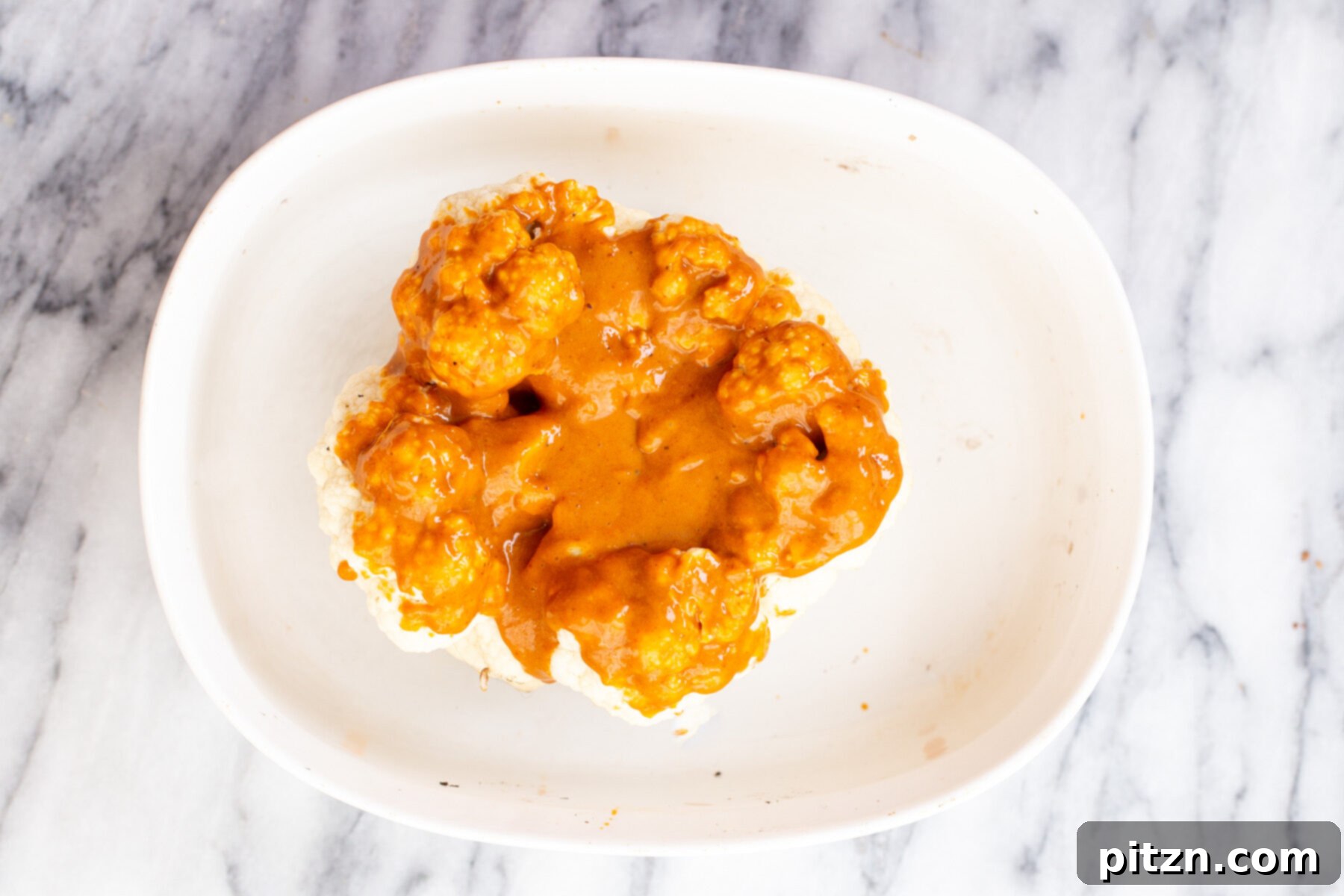
Once the initial baking time is up, carefully remove the cauliflower from the oven. Allow it to cool for about 3 minutes; this makes it easier to handle without burning yourself. Gently flip the cauliflower over and pour a generous amount of the prepared marinade directly into the stem area. This strategic step ensures that the rich glaze penetrates deep into the core of the cauliflower, flavoring it from the inside out.
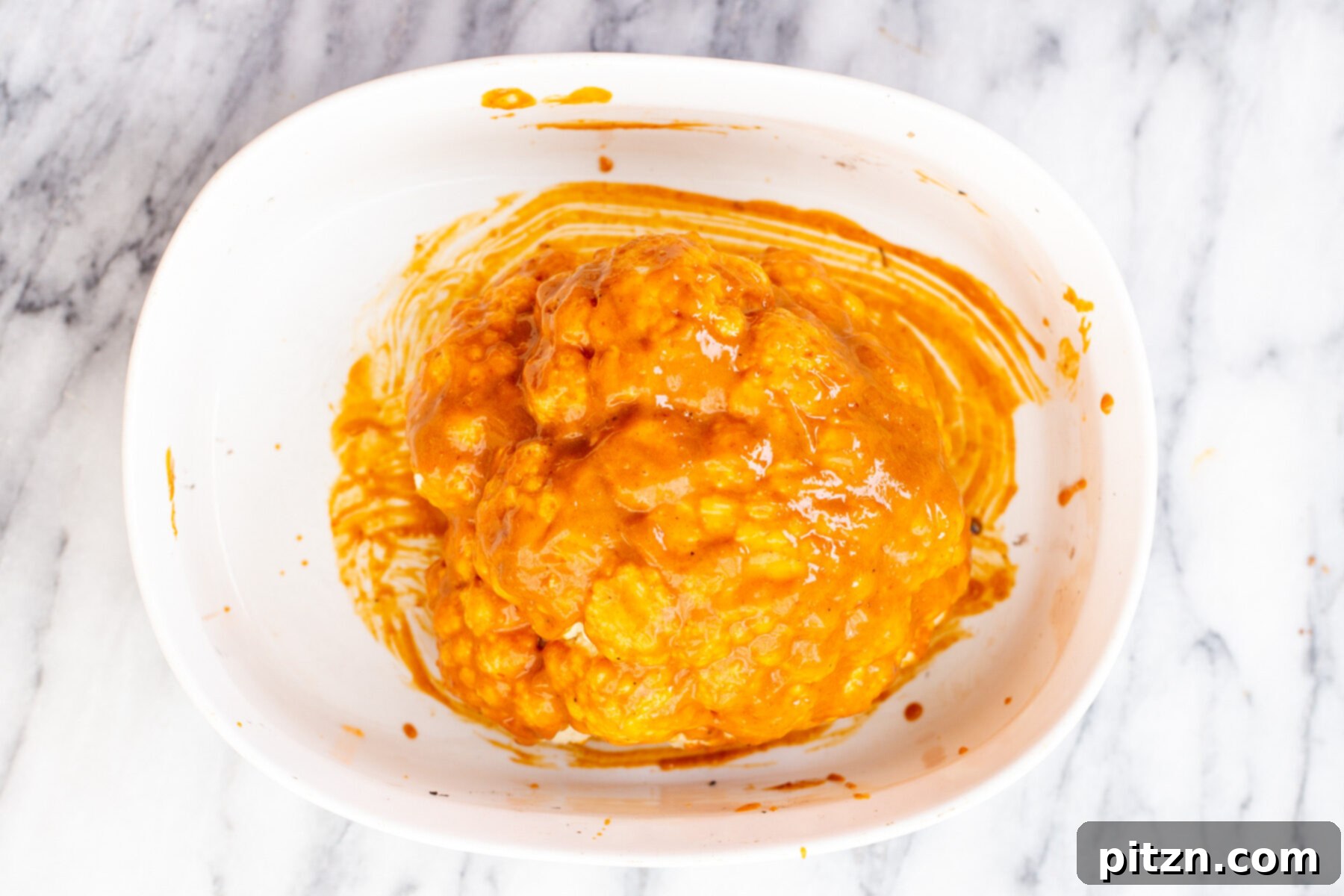
Now, flip the cauliflower back upright. Using a basting brush, liberally coat the entire outer surface of the cauliflower with the remaining marinade. Don’t be shy – ensure every nook and cranny is covered. Place the cauliflower back into the baking dish and return it to the oven for another 15 minutes. After this time, remove the dish and reduce your oven temperature to 375 degrees Fahrenheit (190°C).
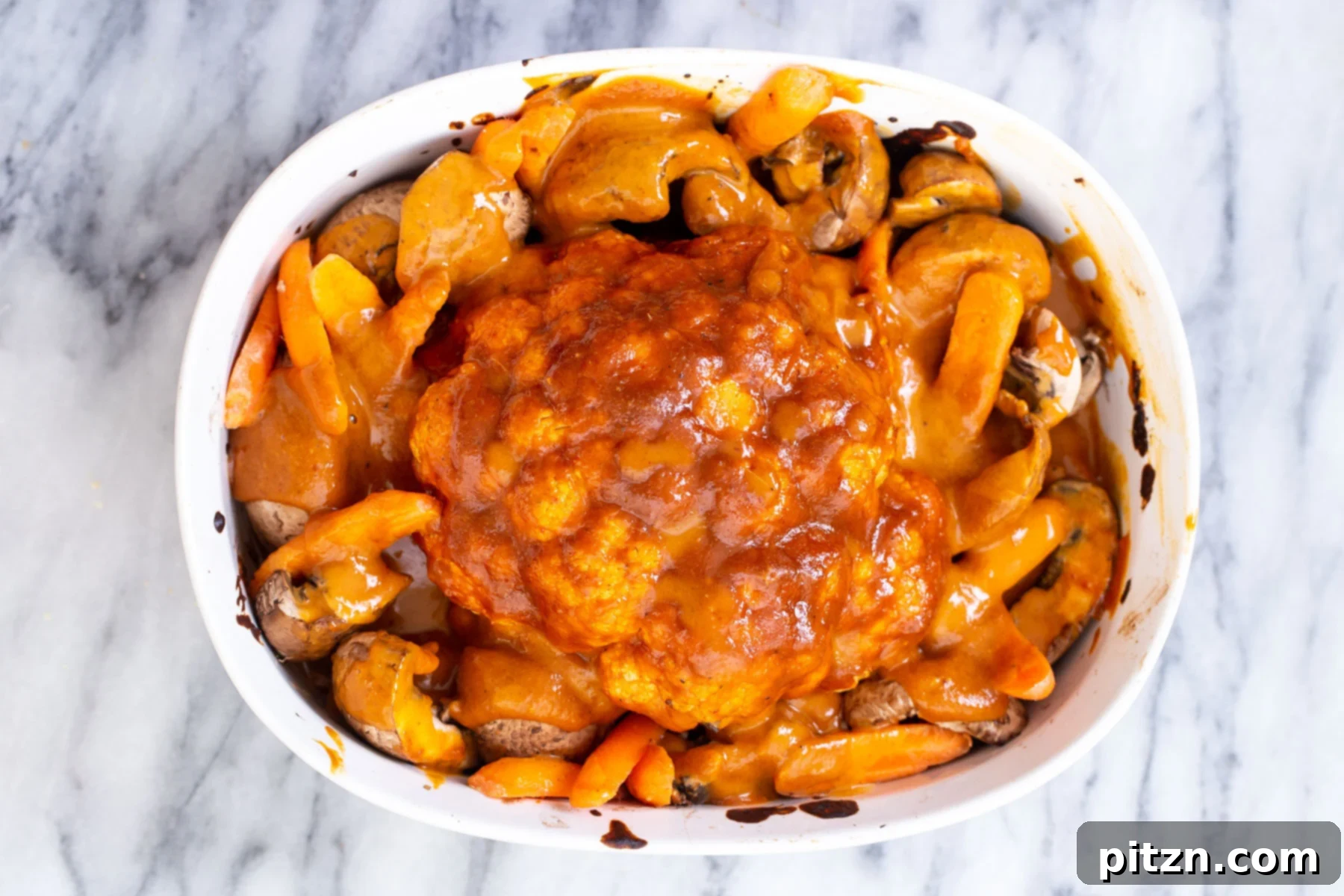
It’s time to add the companion vegetables. Scatter the sliced carrots and mushrooms around the base of the cauliflower in the baking dish. Drizzle some of the marinade over these vegetables as well. To ensure no flavor goes to waste, add 2-3 tablespoons of water into your blender to rinse out any remaining marinade, then pour this flavorful liquid over the mushrooms and carrots. This not only adds flavor but also creates a moist environment for the vegetables to cook perfectly.
Place the dish back into the oven, covering it lightly with aluminum foil. Continue baking for another 20 minutes. The foil helps to steam the cauliflower and vegetables, ensuring they become tender without drying out. After 20 minutes, check for doneness. The cauliflower should be fork-tender, and the vegetables soft. If you prefer it even softer or want more caramelization, you can remove the foil and bake for an additional 5-10 minutes.
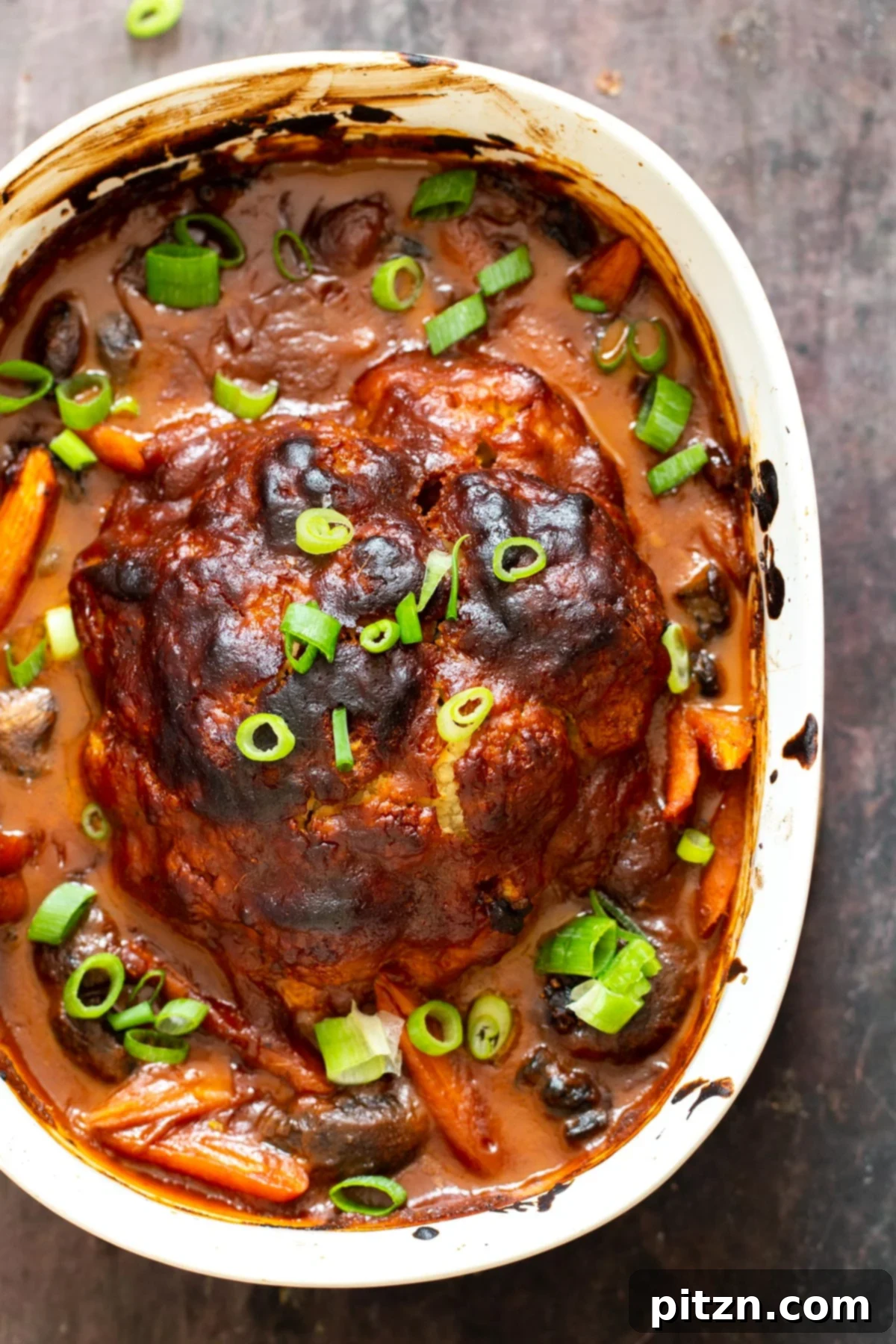
Once cooked to perfection, remove the foil. For optimal flavor and texture, let the roasted cauliflower sit in the warm oven (with the oven turned off and the door slightly ajar) for a few minutes. This resting period allows the flavors to settle and the glaze to further set. Finally, take it out of the oven, generously garnish with freshly sliced green onions for a pop of color and freshness, and serve immediately with steamed rice or warm dinner rolls. The combination of the tender, flavor-packed cauliflower and the vibrant garnishes makes for an irresistible meal.
Serving Suggestions and Expert Tips for Perfection
Elevating your **Miso Gochujang Peanut Butter Glazed Whole Roasted Cauliflower** from great to unforgettable is all about the presentation and a few clever tricks. Here’s how to make the most of this stunning dish:
- **Ideal Accompaniments:** While delicious on its own, this cauliflower pairs beautifully with a side of fluffy steamed rice, which soaks up the extra glaze, or warm dinner rolls, perfect for dipping. The roasted carrots and mushrooms from the casserole dish make for excellent, flavorful side vegetables that complement the cauliflower perfectly. Consider a light, crisp green salad with a simple vinaigrette to cut through the richness.
- **The Beauty of Resting:** Patience is key! Allow the cauliflower to cool down a bit after taking it out of the oven. The flavors of the marinade intensify as the dish cools slightly, making it even more delicious when it’s not piping hot. A rest of 5-10 minutes outside the oven, or a few minutes in the turned-off oven, works wonders.
- **Garnish for Impact:** Don’t underestimate the power of a good garnish. Freshly chopped green onions (scallions) not only add a burst of vibrant color but also a fresh, pungent note that brightens the rich flavors of the glaze. A sprinkle of toasted sesame seeds can also add a pleasant crunch and additional nutty aroma.
- **Make Ahead & Storage:** This dish is fantastic for meal prepping! You can roast the cauliflower and store it in an airtight container in the refrigerator for up to 3 days. Reheat gently in the oven or microwave, adding a splash of water if needed to maintain moisture. The flavors might even deepen overnight!
- **Leftover Creativity:** Don’t let any leftovers go to waste. Chop the remaining cauliflower into florets and add it to stir-fries, grain bowls, or even tacos for a delicious next-day meal. The glazed vegetables can also be pureed into a flavorful soup base.
- **Achieving Crispiness (Optional):** If you prefer a slightly crispier exterior on your cauliflower, remove the foil for the last 10-15 minutes of baking and increase the oven temperature to 400°F (200°C) for a short burst. Keep a close eye on it to prevent burning.
Frequently Asked Questions (FAQs)
To help you master this delicious recipe, here are answers to some common questions:
- **Can I use frozen cauliflower?** While fresh whole cauliflower is highly recommended for roasting a whole head, you could use frozen cauliflower florets for the “tray bake” variation. Thaw them completely and pat them very dry before tossing with the marinade to avoid a watery result.
- **What kind of miso should I use?** White miso (Shiro miso) or yellow miso (Shinshu miso) are best for this recipe. They offer a mild, slightly sweet, and savory umami flavor that complements the other ingredients beautifully. Red miso is stronger and saltier, so use it sparingly if you prefer.
- **Is this recipe very spicy?** The spice level can be adjusted! Gochujang and sambal oelek provide a noticeable heat. If you prefer it milder, reduce the amount of both or omit the sambal oelek entirely. For extra heat, add a pinch of red chili flakes to the marinade.
- **Can I make the marinade ahead of time?** Absolutely! The marinade can be prepared up to 2-3 days in advance and stored in an airtight container in the refrigerator. This makes assembling the dish even quicker on the day you plan to serve it.
- **How do I know when the cauliflower is cooked?** The cauliflower is done when a fork can easily pierce through the thickest part of the stem, but it still holds its shape. It should be tender, with a slightly caramelized and browned exterior from the glaze.
- **Can I add other vegetables?** Yes! Feel free to experiment with other quick-cooking vegetables like broccoli florets, bell peppers, or even chunks of sweet potato. Add them along with the carrots and mushrooms in step 8.
Conclusion: A Plant-Based Masterpiece Awaiting Your Table
This **Miso Gochujang Peanut Butter Glazed Whole Roasted Cauliflower** is more than just a recipe; it’s an experience. It beautifully demonstrates how plant-based cuisine can be both stunningly elegant and incredibly flavorful, rivaling any traditional centerpiece. Its rich, umami-packed glaze, combining the best of Asian-inspired ingredients, transforms a simple head of cauliflower into a vibrant, satisfying, and memorable dish.
Perfect for holiday feasts, special gatherings, or simply an elevated weeknight dinner, this **vegan, gluten-free, and refined sugar-free** creation is designed to impress and delight. The ease of preparation belies its gourmet appeal, making it accessible to home cooks of all skill levels. So, gather your ingredients, follow these simple steps, and prepare to be amazed by the depth of flavor and beautiful presentation of this veggie-forward show-stopper. It’s time to bring this unforgettable creation to your table and share the joy of truly delicious plant-based eating.
I hope you’ll give this recipe a try and discover your new favorite way to enjoy cauliflower!