
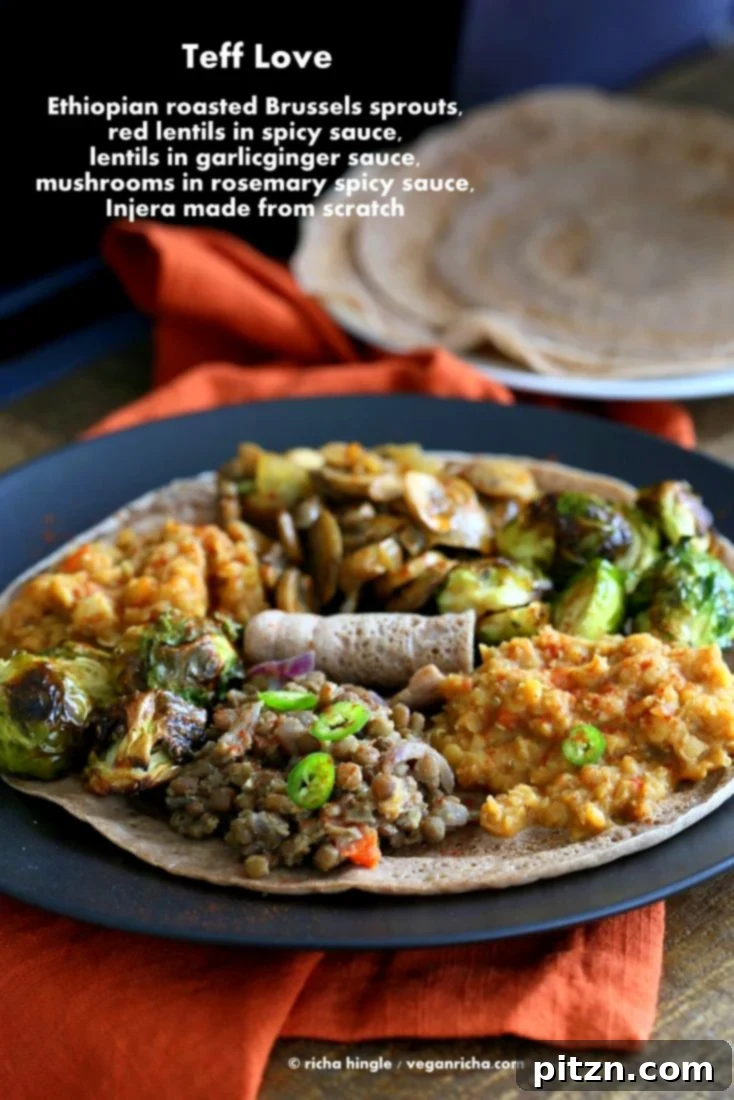
Welcome to the vibrant and flavorful world of Ethiopian cuisine, where rich spices and aromatic stews transform simple ingredients into an unforgettable culinary experience. Today, we’re diving into the delightful dish of Ye’difin Misser Alicha, a savory, mild lentil stew bathed in a fragrant garlic-ginger sauce. This easy-to-prepare recipe is naturally vegan, gluten-free, and soy-free, making it a perfect addition to any plant-based diet. Our journey into this delicious dish is inspired by “Teff Love: Adventures in Vegan Ethiopian Cooking,” a groundbreaking cookbook that has truly revolutionized how home cooks approach this incredible cuisine.
Discovering the Depths of Ethiopian Flavors with “Teff Love”
Ethiopian food has always held a special intrigue for me. Much like Indian cuisine, it boasts layers of complex flavors that aren’t immediately decipherable, requiring a deeper understanding of the unique spices and cooking methods involved. Before discovering “Teff Love: Adventures in Vegan Ethiopian Cooking,” published by Kittee Berns, I often felt intimidated by the prospect of recreating authentic Ethiopian dishes at home. This remarkable cookbook, however, effortlessly demystifies the entire process, making it accessible even for novice cooks.
The book starts with fundamental elements, guiding you through the creation of your own berbere spice blend and the essential seasoned oil, known as Ye’qimem Zeyet. These foundational recipes are key to unlocking the true essence of Ethiopian flavors. The seasoned oil, in particular, is incredibly addictive. It’s astonishing how a combination of common spices I often use, but in a never-before-tried pairing like nigella and carom seeds, slow-simmered instead of the usual high-heat tempering found in Indian cooking, results in such a profound and complex flavor profile. This approach reveals how seemingly small changes in technique can lead to dramatically different and deeply satisfying culinary outcomes.
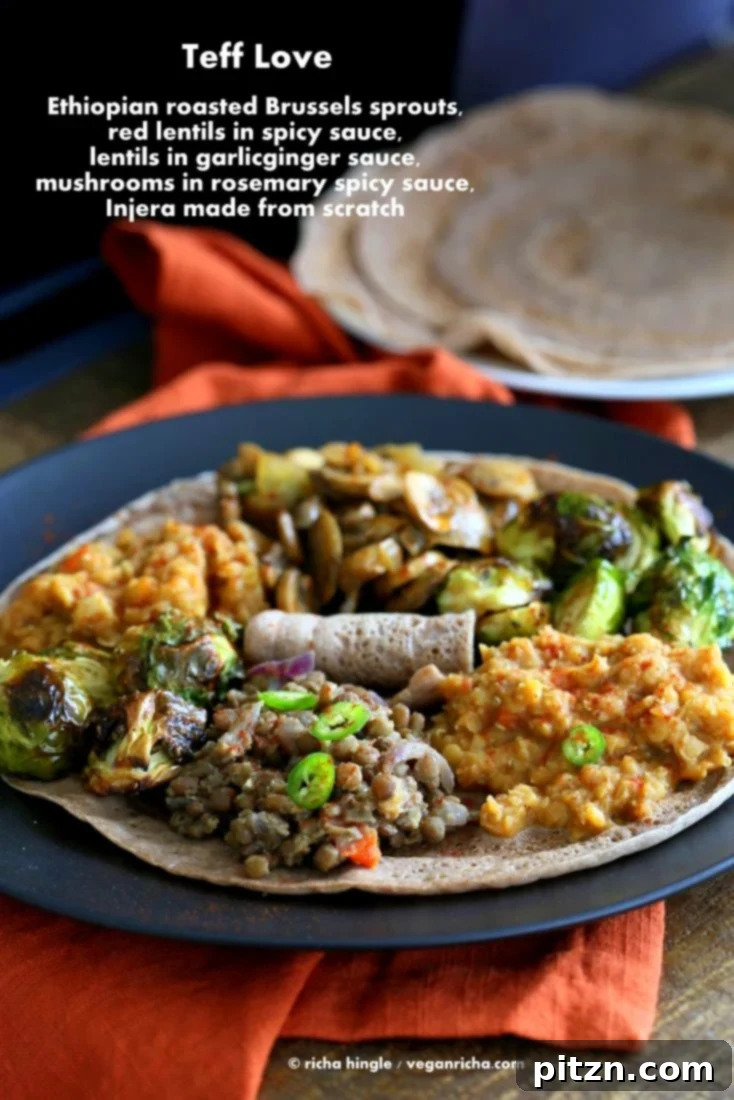
Inspired by the book’s guidance, I prepared a batch of berbere paste and Ye’qimem Zeyet, meticulously planning an elaborate Ethiopian feast for the following day. The menu was a testament to the versatility of vegan Ethiopian cooking: savory Mushrooms in Rosemary Onion Wine Sauce, fiery Red Lentils in Spicy Sauce, tender Ethiopian Roasted Brussels Sprouts, and the star of today’s feature, Brown Lentils in Flavorful Garlic-Ginger Sauce (Ye’difin Misser Alicha), all served with freshly made Injera. It was a memorable spread, showcasing the incredible depth and variety that Ethiopian cuisine offers to plant-based eaters.
Beyond the dishes I’ve already tried, “Teff Love” is brimming with recipes I’ve bookmarked for future culinary adventures. These include tantalizing options like Awaze Tofu, refreshing Azifa Salad, the traditional Butecha, flavorful Tofu Dumplings, numerous other lentil and split pea preparations, and even innovative Teff Brownies. The sheer breadth of recipes ensures there’s always something new and exciting to explore, solidifying “Teff Love” as an indispensable resource in my kitchen.

Why Ethiopian Cuisine is a Vegan’s Dream
For me, exploring ethnic cuisines has always made embracing a lentil and vegetable-heavy vegan diet incredibly easy and enjoyable. This is precisely why I adore Indian food, and it’s a sentiment that extends perfectly to Ethiopian dishes. Ethiopian cuisine is bursting with flavor, transforming simple, nutritious ingredients into vibrant, satisfying meals. It might require a small initial investment in pantry staples and time to get acquainted with the spices and methods, but once you get the hang of it, the cooking process becomes intuitive and remarkably flexible. Many of the spices used in Ethiopian cooking are shared across other rich culinary traditions like Indian and Mediterranean, meaning I didn’t need to embark on a special shopping trip for “Teff Love.” My already extensive Indian pantry, coupled with teff flour from my gluten-free baking experiments, meant I was well-equipped to start cooking.
The versatility of the foundational elements in Ethiopian cooking is truly impressive. For instance, the Ye’qimem Zeyet, or seasoned oil, isn’t just for main courses. I’ve found myself incorporating it into our morning tofu scrambles and even simple weekday dals, where it adds an extraordinary depth of flavor that elevates an everyday meal into something special. “Teff Love” is thoughtfully organized, featuring chapters dedicated to essential tips, necessary equipment, a comprehensive grocery list to help you stock your pantry efficiently, and foundational recipes. It then branches out into categories like Breakfast, Appetizers, Spicy Sauces, Mild Sauces, Legume-Based Smooth Sauces, Cooked and Cold Vegetables, Injera-Based Dishes, Stir-fries, Dumplings and Veggie Protein, Beverages, and Sweets. This structure makes it incredibly easy to navigate and find inspiration, whether you’re planning a full feast or just a quick meal.
For those new to Ethiopian food or with sensitivities to heavily spiced and oiled dishes, there are wonderful ways to adapt. You can serve drier lentil preparations alongside roasted vegetables and cooked grains for a wholesome meal. Saucy lentils, on the other hand, can be enjoyed as a hearty soup with crackers or croutons. The beauty of Ethiopian cuisine lies in its adaptability and the ability to customize dishes to suit individual preferences while still retaining their authentic charm.
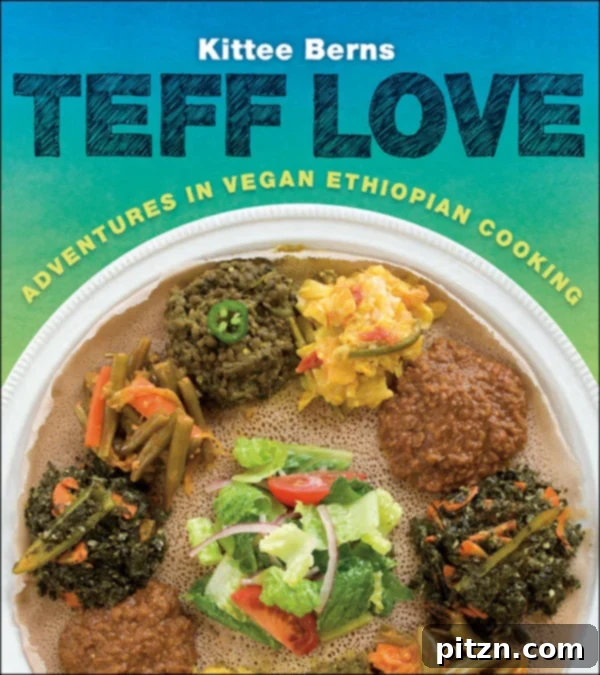
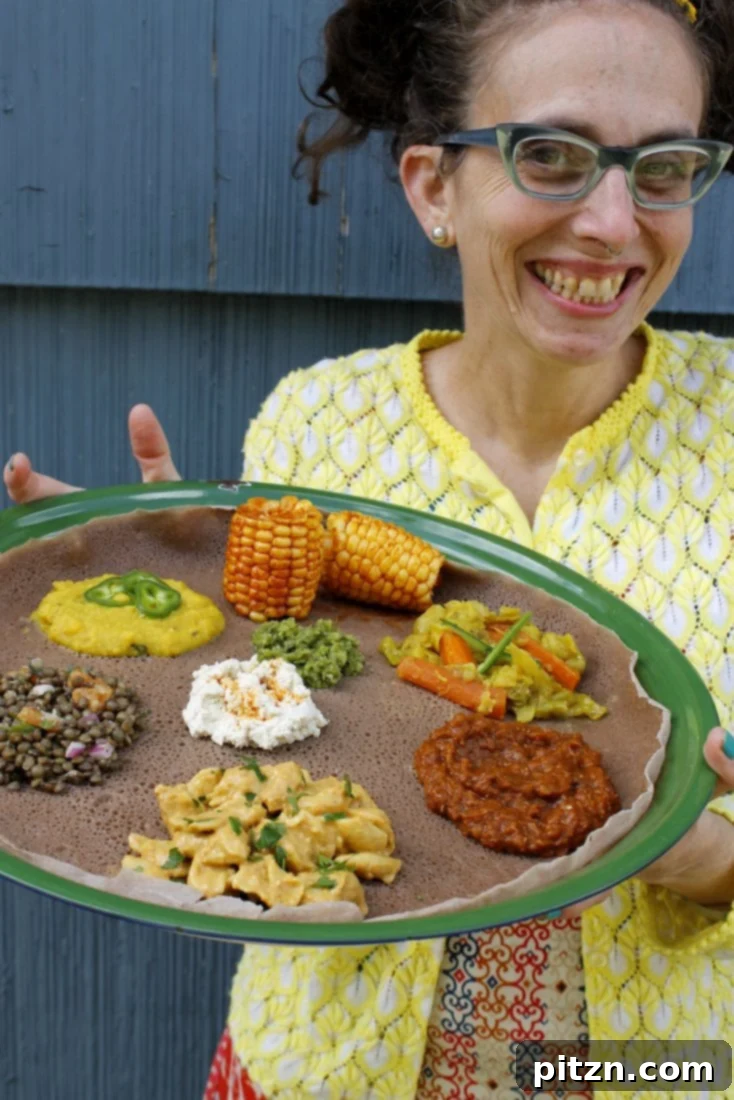
Kittee Berns, the author of “Teff Love,” has truly crafted a masterpiece, sharing her passion for fabulous vegan Ethiopian food with the world.
Mastering Injera: The Heart of Ethiopian Dining
One of the most rewarding experiences from “Teff Love” was learning to make Injera from scratch. This traditional Ethiopian flatbread, with its unique spongy texture and slightly tangy flavor, is more than just a side dish—it’s the edible utensil, the canvas upon which Ethiopian meals are enjoyed. The process involves creating an ersho sourdough starter and allowing it to ferment over several days. While it requires patience, the result is immensely gratifying. Towards the end of my fermentation process, I incorporated a small amount of regular white flour alongside the teff, which helped me achieve the beautifully porous, soft, and utterly delicious Injera I had envisioned. This perfect Injera, with its characteristic ‘eyes,’ is ideal for soaking up the rich sauces and stews of Ethiopian cuisine.
Living in an area with several Ethiopian restaurants within a 10-block radius, I’m fortunate to have easy access to Injera. However, the satisfaction of making it at home is unparalleled. I found my Dosa crepe pan to be perfectly suited for making Injera, yielding excellent results every time. The sense of accomplishment that comes from crafting this staple bread, mastering its unique texture, is truly exhilarating. Injera is the ultimate carrier for all that incredible Ethiopian food, completing the authentic dining experience.
Making Ethiopian food often requires patience, especially with processes like Injera fermentation or slow-simmering spice blends. However, every bit of effort is immensely worth it, as the flavors that unfold are simply extraordinary. Today, I am thrilled to share with you the recipe for Ye’difin Misser Alicha, the flavorful garlic-ginger lentil stew that captured my heart and palate.
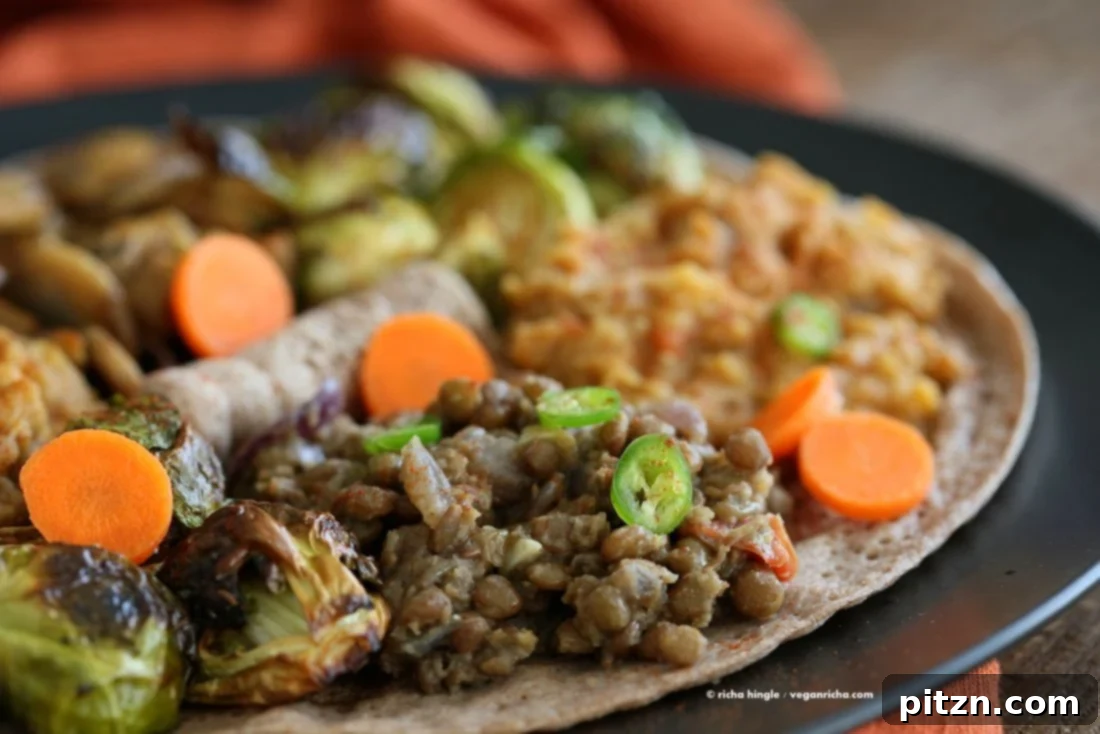
Ye’difin Misser Alicha – Lentils in Garlic-Ginger Sauce
This recipe for Ye’difin Misser Alicha is a delightful example of the mild yet deeply flavorful stews found in Ethiopian cuisine. It comes from the acclaimed book “Teff Love: Adventures in Vegan Ethiopian Cooking” by Kittee Berns. This dish is perfect for a comforting meal, and its gentle spice profile makes it approachable for everyone.
Recipe Details
- Author: Kittee Berns
- Prep Time: 15 minutes
- Cook Time: 45 minutes
- Total Time: 1 hour
- Servings: 2
- Course: Soup / Main Dish
- Cuisine: Ethiopian

Summary: Ye’difin Misser Alicha – Lentils in Garlic-Ginger Sauce. An easy, vegan, gluten-free, and soy-free Ethiopian lentil recipe.
Ingredients
- 1 cup dried green or brown lentils
- 6 cups water
- ¼ onion, minced (½ cup)
- 3 tablespoons Ye’qimem Zeyet (seasoned oil from “Teff Love” page 25) or extra-virgin olive oil
- ½ teaspoon salt, plus more if desired
- 6 cloves garlic, pressed or grated (1 tablespoon)
- 2 teaspoons peeled and grated fresh ginger
- 6 fresh basil leaves, optional
- ½ teaspoon ground turmeric
- 1½ cups reserved lentil cooking water or Sleepy Vegetable Stock (from “Teff Love” page 38), plus more if desired
- 1 to 2 jalapeño chiles, seeded, veined, and sliced into thin half-moons
Instructions
- Put the lentils and water in a large saucepan and bring to a boil over high heat. Stir occasionally to prevent the lentils from sticking to the bottom of the pot. Decrease the heat to medium-high and simmer, skimming off and discarding any foam that forms with a large spoon. Cook uncovered, stirring occasionally, until the lentils are tender but still firm, about 10 to 12 minutes. Drain the lentils and reserve 2 cups of the cooking water.
- While the lentils are cooking, prepare the base for the sauce. In a separate large saucepan, combine the minced onion, Ye’qimem Zeyet (or olive oil), and salt. Cook this mixture over medium heat, stirring frequently, until the onion becomes soft and translucent. Be careful not to let the onion brown, which should take approximately 7 minutes.
- Add the pressed or grated garlic, grated fresh ginger, the optional fresh basil leaves, and ground turmeric to the onion mixture. Continue to cook, stirring almost constantly, for an additional 3 minutes to allow the flavors to meld and the spices to become fragrant.
- Stir in the drained lentils and 1½ cups of the reserved lentil cooking water (or vegetable stock) into the saucepan with the spice mixture. Increase the heat to high and bring the mixture to a boil. Once boiling, reduce the heat to medium and allow it to simmer uncovered, stirring frequently. Continue to cook until the lentils are very soft but not mushy, and the liquid has reduced and thickened to a desirable consistency, typically 10 to 15 minutes.
- During the last 5 minutes of cooking, add the sliced jalapeño chiles. If the lentil mixture becomes too thick, you can add up to ½ cup of additional reserved lentil cooking water or stock as needed to reach your preferred consistency. Finally, season the dish to taste with additional salt if desired. Remember to discard the basil leaves before serving.
Notes
Nutritional values are based on one serving.
Nutrition Information
Calories: 369kcal, Carbohydrates: 32g, Protein: 12g, Fat: 21g, Saturated Fat: 3g, Sodium: 198mg, Potassium: 485mg, Fiber: 14g, Sugar: 1g, Vitamin A: 140IU, Vitamin C: 14.1mg, Calcium: 70mg, Iron: 3.9mg
Nutrition information is automatically calculated, so should only be used as an approximation.
Did you make this recipe? Rate and comment below!
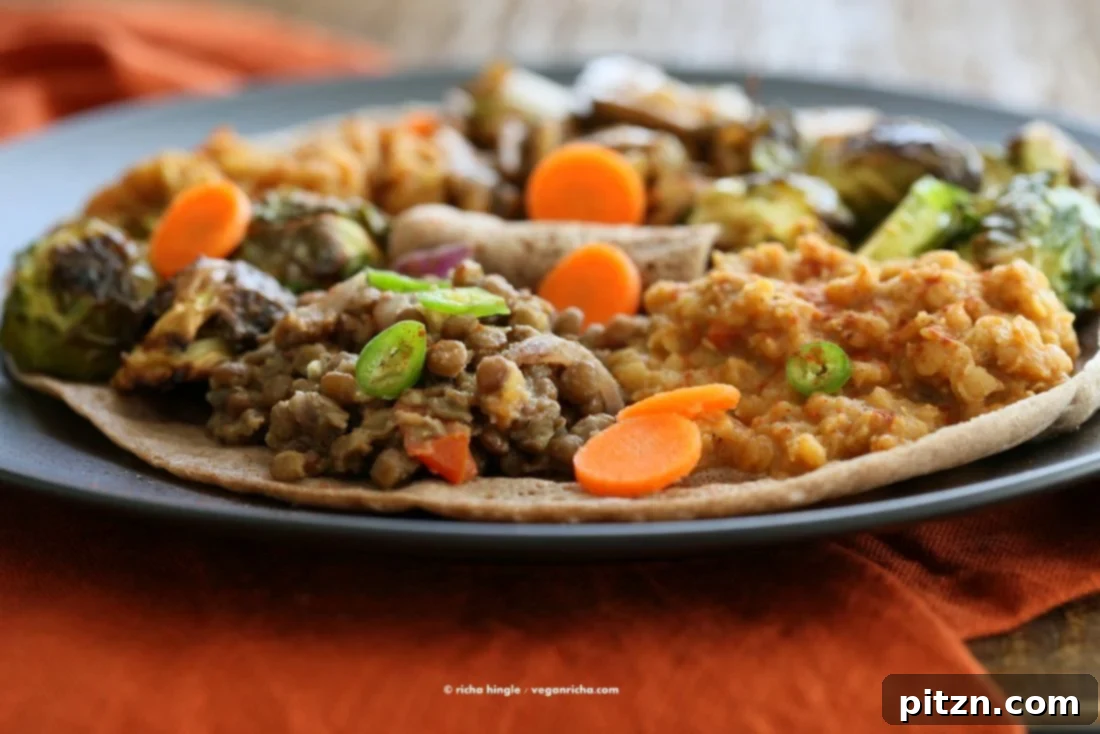
Embrace the Journey of Vegan Ethiopian Cooking
My journey through “Teff Love” and the creation of Ye’difin Misser Alicha has been nothing short of a culinary adventure. Ethiopian cuisine, with its vibrant flavors and wholesome ingredients, offers an incredible pathway to delicious and nourishing plant-based eating. Whether you are a seasoned vegan cook or just beginning to explore the world of ethnic foods, Kittee Berns’ cookbook provides an invaluable guide. The dedication and artistry involved in crafting these dishes, from the slow fermentation of Injera to the careful layering of spices in the stews, truly pay off in the rich, satisfying results.
I highly encourage you to get your copy of Teff Love: Adventures in Vegan Ethiopian Cooking today and embark on your own exploration. There’s a whole world of flavor waiting to be discovered!
(Note: A giveaway for a copy of Teff Love concluded on March 21st, 2015. Congratulations to Denise!)